+++ BATTERIES are one of the most expensive components of new EVs, driving much of their purchase price. Though pricey, the costs of EV battery packs are declining, and recent data show that they are just a fraction of the price they were years ago. In 2008, EV batteries cost an average of $1.415 per kWh, a significant expense, but that price has fallen dramatically since then. In 2023, the average cost was just $139 per kWh, more than 90 percent less than the 2008 totals. Prices fell the fastest between 2009 and 2013 and have been on a relatively steady downward track in the years since. Part of the price decline is related to engineering and technology improvements over the years, as many automakers have leaned into alternative battery chemistries that cost less to refine and produce while offering a comparable range to traditional lithium-ion units. The batteries could be sodium-ion, zinc-based, iron-air, or other. That said, Energy.gov provided the same data using a constant value of the dollar throughout the time period. Looking at the chart through the lens of 2023’s dollar values only, the price declines look slightly less dramatic. Adjusted to 2023’s values, the price of an EV battery was around $1.000 in 2008. A drop in battery prices is helpful for everyone, especially buyers, as EVs remain more expensive than their gas counterparts on average. Many analysts expect the prices to fall further, bringing EV costs closer in line with petrol models. Even so, the trend line might buck upward a bit with the introduction of solid-state batteries in the coming years. Though they are lighter, more energy-dense, and safer, the new battery designs have taken years to develop and are expensive, which will likely lead automakers to hold onto elevated prices to cover their costs. +++
+++ HONDA reported that its profit rose 8.7% in the April-June quarter as strong sales of hybrid vehicles in Japan and the U.S., and motorcycles in India and Brazil, boosted the Japanese automaker’s earnings. Honda’s profit in the last quarter totalled 394.7 billion yen ($2.7 billion), up from 363 billion yen a year earlier. Quarterly sales rose nearly 17% to 5.4 trillion yen ($36.7 billion). A favorable currency exchange rate helped Honda, while tough price competition in China hurt. The positive impact of a weak yen added nearly 48 billion yen ($326 million) to Honda’s quarterly operating profit, the company said. A weak yen works as a plus for Japanese exporters like Honda. The U.S. dollar was trading above 150 yen in the last quarter, although it recently declined to about 147 yen. Eiji Fujimura, Honda’s chief financial officer, said the currency effect remained uncertain, but stressed that Honda was focused on delivering the right products to various markets, helping making it relatively resilient to currency effects. He acknowledged the shift to electric vehicles in China was moving quicker than expected, and Honda was busy adjusting its production. All the Japanese automakers, which dominated in petrol engine vehicles, face a challenge in competing in the EV sector. Concerns also remain in the U.S. market, Fujimura said, noting uncertainties over the presidential election in November, though he would not comment directly on the political situation. American consumers have been disappointed about the rapidly falling value of electric cars they had just bought, including Honda EVs, he said. Tokyo-based Honda stuck to its fiscal year forecast for 1 trillion yen ($6.8 billion) in profit, down slightly from 1.1 trillion yen racked up the previous year, on 20.3 trillion yen ($138 billion) sales, down from 20.4 trillion yen. Honda’s motorcycle sales have fallen in Thailand due to its weak economy but are booming overall, including in India and Brazil, as well as North America. It expects to sell about 2.97 million vehicles around the world in the fiscal year ending in March 2025, and 13 million motorcycles, both about the same as a year ago. +++
+++ HUMAN HORIZONS , parent company to the once much fancied HiPhi electric vehicle brand, has filed for bankruptcy in China. The move, made official by the Yancheng’s Economic and Technological Development Zone court on Thursday, officially ends the seven-year-old company’s desperate bid to attract investment required to restart production of the HiPhi X, Z and Y. The high-profile Chinese EV start-up announced in February 2024 that it had placed production of the 3 luxury electric cars on hold as part of a re-organisation programme for the struggling company. Under the reorganisation, Human Horizons aimed to refinance its operations and seek a possible joint venture partner, following a downturn in sales and an increase in production costs due to the supply-chain squeeze in the wake of the Covid pandemic. +++
+++ JAGUAR is sticking with its plan to go all-electric from next year despite unsteady EV demand, and it is just months from scrapping its entire existing line-up and revealing a crucial concept car that will set the tone for its new era. Jaguar’s next-generation models will be unrelated (visually, technically and in their positioning) to the cars that have come before. So far, the brand has described them as only a “copy of nothing” when pressed for clues about how they might look. But all the questions will be answered in December with the reveal of a radical new concept that closely previews its first new-era EV: a €120.000 4-door GT with a range in excess of 700 km, ultra-rapid charging and a dual-motor powertrain with more than 600 hp. The new concept will set the tone for not just the debut GT but also the new-era design language that will also define the Bentley Bentayga-rivalling SUV and Flying Spur-sized limousine that are due to follow it into dealerships by 2028. Jaguar managing director Rawdon Glover told that a priority when designing these new cars was to rethink the basic principles of EV design, given that today’s electric cars “all look quite similar because they’ve spent too long in a wind tunnel, for range purposes”. He added: “If we look at it, it’s quite a homogenous sector, and I suspect that might be part of the reason why the BEV sector stalled a little bit. Actually, what you want to do is make a car that actually challenges some of those conventions”. He did not give details, but Autointernationaal.nl has already reported that the three cars will have long, probing bonnets and minimalist, imposing front ends that house a distinctive new grille motif envisioned as the new face of the Jaguar brand. Meanwhile, the LED lights at each end will be so slim as to be almost invisible when off, and it is understood the cars will have no rear windows; like the Polestar 4. Glover did say that reports of the demise of Jaguar’s leaping cat emblem have been “a bit overexaggerated”, because “for brands that want to operate in the luxury space, their provenance, history and iconography are really important. “So we have reimagined the leaper for the new brand and for the vehicle, so it will live on, but in a slightly developed format”. Similarly, Glover hinted that historic names will have some influence over what these cars are called: “When you see the naming strategy, what you will see is acknowledgements and nods to our past, but also aspects which are much more forward-thinking”. Glover said the GT will be unveiled in the US because of how crucial that market is for Jaguar, but said the brand is not disregarding its origins: “Don’t read that as ‘Britishness isn’t important’. It’s a really important part of the brand, but we’re also a global brand. And look at the size and the scale of the US market. For us it’s really important”. Jaguar’s move to pure-EV propulsion comes as direct rivals have adjusted their electrification strategies in response to flatlining demand for premium electric cars. Porsche, for example will produce the petrol-powered Cayenne beyond 2030, Audi has massively ramped up its focus on hybrids and Mercedes has extended the life cycle of several plug-in hybrid models due to “slower than expected” EV sales. Even Jaguar parent company JLR has adjusted its overarching EV strategy, boosting its €17 billion electrification investment package to €21 billion so it can develop flexible platforms for Land Rover in a bid to ensure optimal coverage of the market as buyers remain reticent towards EVs. But Glover is confident that Jaguar’s brand repositioning, technical priorities and new-era design cues will strengthen their appeal in the market. “I think our products, and perhaps the next generation of the products, will make a big difference to how the whole sector is perceived”, he said. “The rational barriers to EV ownership at the moment still remain: range anxiety and infrastructure, and the need to be charging publicly. If we take each of those in turn, all our vehicles will have significant leverage”, he added, citing the long ranges and rapid-charging speeds of Jaguar’s next EVs. Glover also said that the brand’s higher prices and lower volume ambitions (put at a maximum of 50.000 units a year) mean it is less preoccupied with mainstream market trends: “We’ve chosen a value over volume game, which is why we’ve gone to the price points we’ve gone to. “I wouldn’t say the EV market development is irrelevant, but I think it’s less relevant than perhaps it would be if I was in more of a commoditised volume segment”. Before its new era begins, Jaguar has stopped producing the XE, XF and F-Type in Castle Bromwich, and production of the E-Pace and I-Pace will come to an end at Magna’s factory in Austria by the end of the year. Just the F-Pace will remain in production through 2025 and Glover told that “we will no longer be on sale for new vehicles” in certain European markets by the end of this year, with other countries to follow “from the early part of next year”. He also confirmed that deliveries of the new electric GT won’t begin before 2026, so there will be a period of around a year with no new Jaguars on sale. In the meantime, said Glover, retailers will intensify their focus on used cars and aftersales services, “but yes, there will be a period where you will not be able to buy a Jaguar”. +++
+++ The overflow factory of choice for car makers in the Unitec Kingdom and Germany is facing an uncertain future after the planned and unplanned ending of contracts leave it with just one vehicle to build. MAGNA STEYR in Austria, a division of Canadian automotive giant Magna International, is a contract manufacturer of long-standing that has built more than 4 million examples of 34 different models to date. However, the plant is about to be reduced to just the Mercedes G-Class, threatening its future as a going concern. The storied plant situated in in the eastern city of Graz in the Alpine foothills “is experiencing uncertainty”, Magna’s financial report for the second quarter ending 30 June stated bluntly. +++
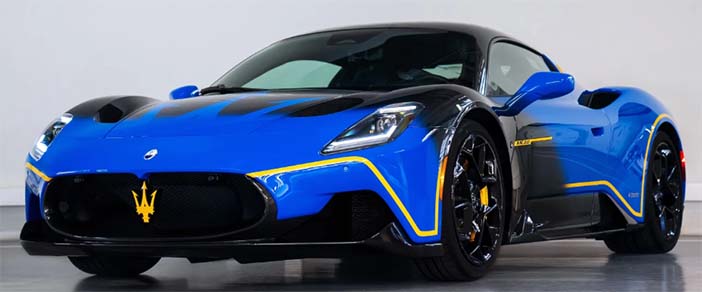
+++ MASERATI has a ton planned for Monterey Car Week, from debuts of 2 new MC20 variants to hot laps in another MC20 variant and plentiful showcases at Maserati House. The Modenese motorheads teased one debut earlier this month, an MC20-derived coupe that features innovative technological solutions and impressive aerodynamic performance for drivers “who do not wish to sacrifice extraordinary performance on the road”. The hint was that this would be a road-going version of a track car, the latter we took to be the track-only MCXtrema or the MC20 GT2 built to race in the Fanatec GT2 European Series; the fender vents in the teaser match the GT2 car. The Italians don’t want to tell us much of what to expect, though, preferring to save that for reveal at The Quail. I know there’s going to be a second special MC20, the one-of-one Tributo Modenese (pictured), honoring the brand, the birthplace, 110 years of history and the city Maserati still calls home. Again, the automaker’s gone heavy on the mum here, so all I know is what we can see. That means a sumptuous paint job in black, blue and yellow, plus special wheels and special badging. There’s going to be a third special MC20 as well, the MCXtrema being delivered to its first North American customer at Laguna Seca. Maserati Chief test driver Andrea Bertolini is flying in for the handover and taking the owner on hot laps of the track. And would you believe, a fourth MC20 is going to turn Monterey into a party for Neptune. This one is the MC20 Icona, honoring the MC12 Stradale’s best-known look with a white and blue two-tone exterior, specifically, Bianco Audace Matte and Blu Stradale with a Maserati Fuoriserie logo in Bianco Audace on the side, and the Italian flag just behind the front wheels. Maserati matched the MC12’s wheel finish with a silver look on the MC20, and the blue-painted calipers pop. As for the black and blue two-tone interior colorway, Maserati equips its optional lightweight four-way racing seats with “Icona” embroidered onto the headrests. Limited to 20 units globally, this one inaugurates the launch of Maserati Classiche on our continent. +++
+++ Electrified supercars are becoming more common as automakers look to boost power and performance without burning way more fuel in the process. NILY27 , a new company founded by designer Sasha Selipanov, is taking a different approach. Similar to Gordon Murray Automotive with the GMA T.50, Nilu27 will employ a naturally-aspirated V12 engine with no electrification or turbochargers. The Nilu hypercar, named after the company, was inspired by Formula 1 racers in the 1960s, Le Mans cars, and vehicles from iconic Italian design houses. It uses a bespoke carbon fiber monocoque with lightweight aluminium subframes. The frames’ tubular design helps dissipate heat and facilitate powertrain maintenance. A 6.5-liter 80-degree V12 engine manufactured by Hartley Engines in New Zealand provides motivation for the car. Lacking electrification or turbos, the engine is expected to generate more than 1,000 horsepower. Despite having no electric motors, the company said the engine’s large bore and short stroke will give it a rev-happy personality similar to the behaviour of hybrid and electric vehicles. That gem is paired with a 7-speed CIMA manual transmission and Nilu 3D-printed all exhaust components using Inconel; a nickel-chromium superalloy that can withstand extreme heat and stress. Michelin Pilot Sport Cup 2 R tires wrap 20-inch front and 21-inch rear wheels, and Brembo carbon-ceramic brakes provide stopping power. The car’s wild Bauhaus-inspired interior features a gated shifter and racing seats with harnesses. A center-mounted tachometer dominates the dash, while the 3-spoke steering wheel is free of everything but the Nilu logo. The only screen in the car’s cabin is its rearview camera mirror, as the company said it wants to keep an old-school, analogue feel. Nilu27 said its first vehicles will be built by Aria Group in Irvine, Calif., while it focuses on building its footprint overseas. The initial run will be capped at 15 units, but Nilu said it would make a street-going variant with up to 54 built, though 4 will be one-off designs. +++
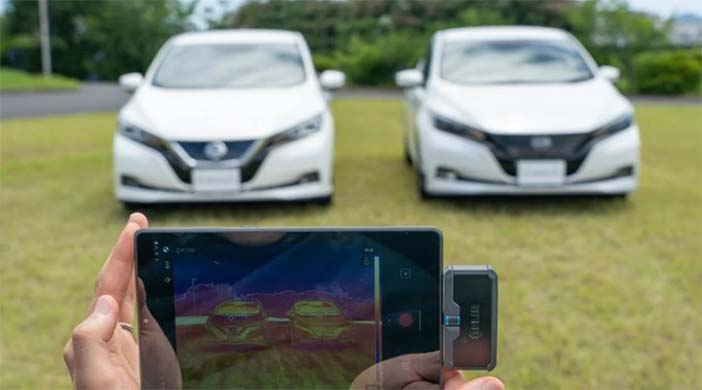
+++ NISSAN showed what it called a “cool paint” to keep people inside vehicles cooler, although the coating is 6 times thicker, making commercialization still a challenge. The company’s announcement was timely, coming as Japan was enduring record sweltering temperatures. Nissan tested the paint on vehicles scuttling around Tokyo’s Haneda airport, where there are plenty of unshaded areas that make it a good place to assess the technology. The vehicles with the special paint looked like ordinary cars, but felt much cooler to the touch. The cool paint lowered the cars’ roof-panel temperature by 12 degrees Celsius. The test vehicles’ interiors were cooler by 5 C according to Nissan. Cooler temperatures would be an advantage in particular for EVs, where energy used by the air conditioning can affect driving range. Cooling materials already are widely used on buildings. In those applications, the material is laid on thick with a paint roller and is often chalky to the touch. Nissan’s challenge was to make the specialized paint applicable by spray, and to take a clearcoat, like typical automotive paint. Toyota has also been experimenting with paint that delivers lower cabin temperatures, mostly focusing on colours that refract the sun’s rays. Nissan says its cool paint contains “metamaterial”, defining the substance as “synthetic composite materials with structures that exhibit properties not usually found in nature”. The “metamaterial” consists of 2 kinds of particles in the paint. One particle reflects near-infrared rays in the sunlight that would typically generate heat in the molecules of typical paint. The second particle is what Nissan calls “the real breakthrough”: It creates electromagnetic waves that “counteract the sun’s rays, redirecting the energy away from the vehicle into the atmosphere”. It was developed with Radi-Cool of China, which developed a film, fabric and coating that cut heat. Radi-Cool works with various other Japanese companies, offering cooler-feeling hats and sun parasols. Nissan is the only Japanese automaker partnering with Radi-Cool. Susumu Miura, a Nissan Research Center manager who led the project, said there were no discernible negative effects to people’s health from the electromagnetic waves emitted by the paint. Such waves are all around us, he said. “My dream is to create coolers cars without consuming energy”, he said. +++
+++ PROTON is on the verge of a major global export expansion that is set to take it back to the British market, sources close to its CEO, Li Chunrong, have revealed. The expansion, which is also planned to encompass new right-hand-drive markets throughout Asia and South Africa as well as a return to Australia and New Zealand, aims to significantly boost Proton’s global sales following the establishment of a new headquarters and manufacturing base currently under construction in Tanjung Malim in western Malaysia. Known as Automotive Hi-Tech Valley (AHTV), the facility is part of a multibillion-pound investment by joint owners Geely and Malaysian industrial conglomerate DRB-HICOM Berhad. The added production capacity it will provide is set to play a pivotal role in Proton’s long-held plans to expand its global sales. “With the investments in place, Proton will have the means to return to markets it departed, while also entering new markets”, a source said. No official timeframe for a return to the British market has been revealed, though major export markets will be reached “later this decade”. The brand sold models in the United Kingdom from 1989 until 2014. In 2023, Geely announced plans to invest up to €4 billion in the development of AHTV. Later, Malaysian prime minister Anwar Ibrahim said the actual investment figure from Geely was closer to €9 billion. Geely has yet to officially confirm the reported doubling of its investment in Proton. However, recent moves have significantly extended the scope and appeal of the Malaysian car maker’s line-up with badge-engineered versions of some of Geely’s best-selling Chinese models. Proton currently sells 4 models based on the Geely Binyue, Boyue, Haoyue and Ermgrand, badged as the X50, X70, X90 and S70. It also continues to produce 3 traditional models from its former operations with Mitsubishi: the Saga, Persona and Iriz. Additionally, it has established a new EV brand under the name e:MAS. The brand’s first model, the e:MAS 7, is based on the Geely Galaxy E5 SUV. The name e:MAS denotes the words electric and Malaysia. The launch of the e:MAS brand comes after the recent opening of a new Proton research and development centre within Geely’s Research Institute in Hangzhou, China, in April. Dovetailed with an existing research and development centre in Malaysia, it is planned to contribute to the development of successor models for the Saga, Persona and Iriz as well as platform integration of other future Proton models. It will also develop market-specific chassis tuning for export models, according to Proton CEO Li Chunrong. While rival Chinese car makers, including SAIC, BYD, Great Wall Motor and Guangzhou Automotive Group (GAC), are busy establishing production facilities for right-hand-drive models with the view to exports in Thailand, Geely’s decision to invest in Proton is claimed to bring strategic trade advantages. “The draw that drove them to invest is the benefit from Malaysia’s trade relations with countries such as the US and European Union”, said Ibrahim. +++
+++ RIVIAN maintained its full-year vehicle production target and profit-making goal, but warned of a looming plant shutdown next year to prepare for a new vehicle launch. The company said it expects to produce 57.000 EVs in 2024, unchanged from prior projections for this year and about the same volume as in 2023. It had previously reaffirmed the production target in July, a move that left investors underwhelmed. Rivian also kept its forecast for a full year loss of $2.7 billion and capital spending on the order of $1.2 billion. The Irvine, California-based carmaker said it’s on track to earn a “modest gross profit” by the end of the year, something that chief executive officer R.J. Scaringe has repeatedly promised investors. The uneventful financial outlook follows a 3-week shutdown in April of Rivian’s assembly lines for its R1 models at a factory in Normal, Illinois, to retool and boost efficiency. Chief financial officer Claire McDonough said that plant will be taken offline for several weeks in late 2025 for more upgrades in preparation for the debut of Rivian’s upcoming R2 model. “We expect that our Normal facility will not be producing vehicles for more than 1 month as we integrate new equipment into the plant ahead of our first half of 2026 R2 launch”, she told analysts on a conference call. Shares of Rivian fell 6.8% in postmarket trading to $13.80 in New York. The stock closed regular trading down 37% this year. Earlier this year, Rivian paused construction of a new plant in Georgia and in June announced a major partnership deal with Volkswagen. The cash infusion of as much as $5 billion from VW is a welcome reprieve for the American company, which lost about $32.705 per vehicle built in the second quarter, down from roughly a loss of $39.000 the previous quarter. The German automaker’s initial $1 billion investment has eased concerns Rivian might run out of cash before it can debut its latest models. CEO Scaringe told analysts on the call that Rivian’s suppliers are excited about the prospect of potentially leveraging the relationship by expanding into VW’s product lines. “From a supplier point of view, we absolutely are already seeing some of the tailwinds associated with our Volkswagen JV and partnership”, he said. For the second quarter, Rivian posted an adjusted loss of $1.13 per share, better than analysts’ expectations for a loss of $1.20 a share. Sales came to $1.16 billion, below the consensus analyst estimate for $1.17 billion. Revenue earned from the sale of regulatory credits totaled $17 million, compared with a “de minimis” haul in the first quarter. The EV maker has said second-quarter output came to 9,612 vehicles with deliveries totalling 13,790 in the period. Rivian is one of few pure-play electric vehicle makers in the US, and second only to Tesla in EV output. But the company has been struggling with production issues and slowing consumer demand for fully electric vehicles. Rivian currently makes 3 models: A mid-sized pickup, a mid-sized SUV and a commercial van, the latter primarily for key shareholder Amazon.com. The manufacturer is trying to cut costs ahead of the roll out of the R2, a smaller, more affordable, SUV. It expects to start making the R2 in the first half of 2026 and has plans for next-generation R3 and R3X models thereafter. +++
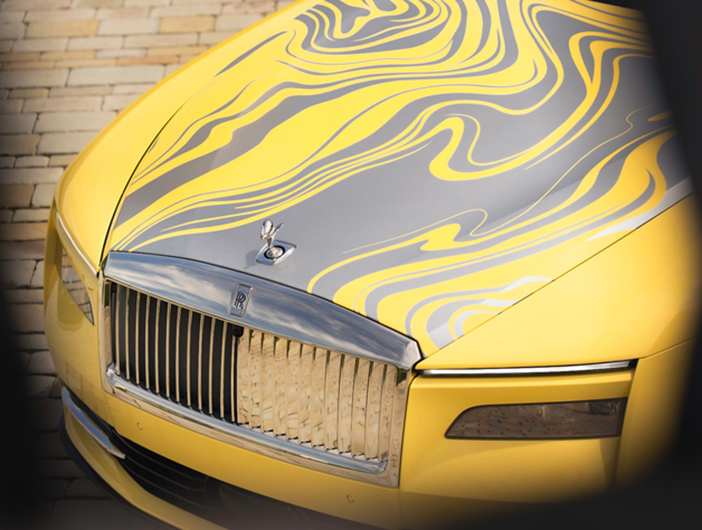
+++ 2 trends have shaped ROLLS-ROYCE ’s design department in recent years: growing demand for one-off cars and younger buyers gravitating toward the brand. The one-of-a-kind Spectre Semaphore reflects both with a striking appearance that includes a Marbled Paint Spill hood. Built at the request of a customer, the Spectre Semaphore immediately stands out with an eye-catching paint colour aptly named Bespoke Semaphore Yellow. The closer you get to it, the more unique it looks. The hood features a swirl-like finish that Rolls-Royce calls Marbled Paint Spill. It’s “inspired by the informal elegance of coastal California,” according to the British company, and it required over 160 hours of design and production work. Painters added silver lacquer and multiple layers of clearcoat to achieve a smooth, seamless finish. The yellow theme continues inside with a blend of Bespoke Lemon Yellow and Citrine Yellow upholstery on the seats, the door panels (which feature the same basic Starlight illumination that Rolls-Royce developed for its headliners), and the dashboard. Grace White and Slate Gray accents add a finishing touch to the look. The stalks are upholstered in yellow as well, and the digital instrument cluster gets yellow dials. For the interior trim, Rolls-Royce started with pieces of wood and painted them in Cashmere Gray paint that it infused with silver mica flakes. The trim consequently matches the Slate Gray accents on the seats, and I was told that it sparkles when you view it in direct light. Like the standard Spectre, the Semaphore is powered by a pair of electric motors (one per axle) linked to a 102-kilowatt-hour lithium-ion battery pack. Rolls-Royce pegs the system’s total output at 577 hp and 900 Nm. Driving range checks in at anywhere between 420 and 465 km, depending on the trim level and the size of the wheels selected, according to the EPA. Rolls-Royce will present the one-off Spectre Semaphore at The Quail, a Motorsports Gathering on August 16 in Monterey, California. +++