+++ ALPINE has confirmed plans to launch a supercar and it is expected to be an EV. The car is currently being referred to as the Future Alpine Supercar. The brand has not released any further details, except that the car will be developed at a new state-of-the-art research and development centre that will open later this year. This R&D base, named Hypertech Alpine and located at the Viry-Châtillon Formula 1 engine facility to the south of Paris, will focus on work into future EV technologies. This includes the development of the brand’s sports car batteries to be used by the likes of the upcoming A110 EV, as well as next-generation ultra-high density cells to be used in future solid-state packs. The latter will be tested in “extreme operating conditions for supercar-type applications”, said Alpine. Next-generation and ultra-efficient electric motors will also be developed with Ampere, Renault’s new EV and software arm. This suggests the new supercar will be electrically powered, and used to showcase Alpine’s future EV tech, rather than a production version of the brand’s Alpenglow concept, which is powered by a hydrogen V6 powertrain. That low-slung, technologically advanced hypercar concept could, however, give clues to the design of the future supercar. Alpine design chief Antony Villain previously told the concept (an evolution of the Hy4 concept) was created with a production car “in mind”. The new hub will also bring the firm’s sport divisions under one roof, including its WEC, Dakar and F1 teams. Alpine confirmed that this meant engine development for the Alpine F1 team would cease at the site from the end of the 2025 season. The site has built F1 engines since Renault entered the sport in the 1970s. No replacement supplier has yet been announced. “Creating this Hypertech centre is key to Alpine’s development strategy and, more broadly, to the group’s innovation strategy”, said CEO Philippe Krief. “It is a turning point in the history of the Viry-Châtillon site, which will ensure the continuity of a savoir-faire and the inclusion of its rare skills in the group’s ambitious future while strengthening Alpine’s position as an ‘innovation garage’. “Its racing DNA remains a cornerstone of the brand. It will continue to fuel an unprecedented industrial and automotive project, thanks particularly to Hypertech Alpine”. +++
+++ ASTON MARTIN has had its share of financial woes in the last decade. But recently, the company has turned things around under the watchful eye of Lawrnece Stroll, with stellar new products like the DB12, the DBX and the Vantage. But even with that recent string of success, the British sports car maker won’t be hitting its numbers this year. In a recent interview, newly appointed CEO Adrian Hallmark (who comes from Bentley) said the company will build and deliver around 1.000 fewer cars this year than originally estimated, and won’t be able to meet its gross margin target of around 40% for the year. Aston Martin aimed to deliver 7.000 cars in 2024, a marked improvement over the 6.620 vehicles the company delivered last year, but that won’t happen. “Near perfect execution was required to meet the company’s ambitious 2024 plan”, Hallmark said in the interview. “However, it has become clear that we need to take decisive action to adjust our production volumes for 2024”. Hallmark cited supply chain issues, specifically “floods” and “fires” that have affected several of Aston Martin’s suppliers throughout Europe. Flooding in Switzerland earlier in the year halted production at a large aluminium supplier, also impacting brands like BMW, Jaguar Land Rover and Porsche. Next year, though, could be more profitable for the brand as it rolls out products like the new Vanquish and Valhalla sports cars, as well as the updated DBX. Aston Martin also pushed back its ambitious EV plans and promises to keep selling combustion cars into the 2030s—which, hopefully, will keep enthusiasts interested for the next few years to come. +++
+++ BYD describes the impact of EU tariffs on imported Chinese EVs as “temporary damage” and anticipates it will be the best-positioned Chinese brand in the coming years thanks to local production plans and a flexible powertrain offering. The brand, which has grown rapidly in Europe over the past 2 years, is due to open a new factory in Hungary by the end of next year, and another in Turkey soon after. These will allow it to build European market cars in Europe and avoid the substantial tariffs imposed on Chinese-manufactured cars by the EU. Speaking at the launch of the Seal U DM-i plug-in hybrid, the first PHEV to join BYD’s European line-up, special European advisor Alfredo Altavilla told the brand was not happy with the tariffs but said plans were in motion to circumvent them. +++
+++ Stellantis has extended the production pause of the FIAT 500E , due to continued low EV demand. Originally pencilled to last a month to October 13, the pause will now end on November 1. This slump in demand has left the European electric car market “in deep trouble”, Stellantis told trade unions. The brand previously said the slump in sales is “linked to the deep difficulties experienced in the European [EV] market by all producers”. Fiat parent firm Stellantis said in a statement that the slump in sales is “linked to the deep difficulties experienced in the European EV market by all producers”. According to figures from Jato Dynamics, Fiat sold 74.885 examples of the 500 (in both petrol and electric forms) across Europe between January and the end of July, 24% fewer than it had over the same period last year. Meanwhile, EVs’ market share in Europe fell to 13.5%, down from 14.6% in July 2023. “The lack of clarity around the incentives for and future of EVs continues to present a barrier to consumers considering an EV”, Jato analyst Felipe Munoz said. “These factors, alongside the low residual value of EVs, contributed to the decline seen in July”. Slow sales of the 500e, as well as the impending end of sales of the old petrol 500 due to new cybersecurity regulations, have pushed Fiat to develop the new 500 Ibrida. Effectively the 500e retrofitted with a mild-hybrid petrol engine, it will serve as an all-important crutch for the Italian brand as it navigates the slower-than-expected transition to selling solely electric cars. Fiat CEO Olivier François recently told: “We obviously, like everyone else, thought that the world would go electric faster and the cost of electrification would go down faster. But we couldn’t imagine that Covid would happen, shortage of raw materials would happen and the European Society (not all; not the youngest part) would turn their backs on the sustainable solutions. But this is the reality. We have to face those realities”. As well as introducing the 500 Ibrida, Fiat is investing some €100 million into developing a new battery for the 500e. Stellantis chief Carlos Tavares said this will “significantly increase range of the 500e while significantly reducing the cost”. +++
+++ Huge multinational companies aren’t known for their ability to make quick decisions. But some move faster than others, a point FORD boss Jim Farley made by revealing that he signed off in 15 minutes on a joint project with Volkswagen that took the German firm 2 months to green-light. Farley was extolling the virtues of working for a family-run business at a congress in Detroit when he explained how Ford and VW came together to share platforms for a series of new EVs and commercial vehicles. VW needed 2 months to give the venture the all-clear because it had to secure a yes vote from the Piëch and Porsche families, plus the German state of Lower Saxony and unions. But in complete contrast, Farley was able to press go in just 15 minutes because all he had to do was to take a short walk to the office of Bill Ford, the automaker’s chairman, and great-grandson of founder Henry. Bill Ford agreed that a tie-up made solid business sense, so after speaking with a few more Ford execs Farley grabbed the still-warm phone and gave VW the good news. “We’re ready to go”, Dearborn’s CEO told his German counterpart. But so little time had passed that the VW suit wasn’t sure whether to believe him or not, apparently asking Farley: “Are you kidding me?” That deal was inked in June 2020 and gave Ford access to Volkswagen’s ID.4 electric car platform, which it has used to create the European-market Explorer and Capri that are both on sale this year. In return VW was able to build the T7 Transporter and Caravelle from Ford’s Transit architecture. “We all feel that we are working for something bigger than just profits”, Farley told, noting that Bill Ford’s children now work for the automaker, meaning the Ford family is on its 6th generation. “We want to make sure this family is going to prosper for another six generations”, he added. “For me personally, it adds great meaning to my work”. +++
+++ In a world where the school run has become an obstacle course of traffic jams and tight schedules, picking the right set of wheels is no joke. With families zipping from morning drop-offs to weekend football matches, it’s clear the SUV is now Europe’s go-to family car. But which one can keep up with the chaos? According to Warrantywise, the folks who know what really goes wrong under the bonnet, the HONDA CR-V is the top dog. In their latest Reliability Index, the CR-V has emerged as the most reliable SUV on the market, scoring a gold medal-worthy 85 out of 100. For parents who don’t have time for unexpected trips to the mechanic, this is good news. While the Honda CR-V stole the spotlight, the Mitsubishi Outlander and the Dacia Duster weren’t far behind. The Outlander secured a score of 81/100, and the Duster came in third with a solid 79/100, proving that you don’t have to break the bank to get a reliable ride. Other contenders in the top-10 include the ever-popular Kia Sportage (78/100) and the Ford EcoSport (77/100), making them excellent options for families on the go. The rest of the top-10 consists of the Renault Captur (75/100), the Hyundai ix35 (72/100), the Nissan Juke (72/100), the BMW X3 (71/100) and the Hyundai Tucson (71/100). The rank is measured by repair request frequency, average vehicle age at the time of fault, average mileage, and average labour time, and includes vehicles between 3 and 10 years old where there are a minimum of 250 cars on cover. All data used is from Warrantywise’s proprietary internal research. +++
+++ In many European countries, including Germany, the stereotypical image of a taxi has long been a MERCEDES-BENZ . However, this perception has drastically shifted in recent years, with Mercedes’ dominance in the taxi market quickly fading. Yet, the steep decline in sales seems to be a strategic decision rather than a mere accident. The collapse in Mercedes‘ taxi business is striking when you examine the numbers. In Germany, the brand’s taxi sales plummeted by 71 percent between January and August 2024 (497 units), compared to the same period in 2023 (1.730 units). The 497 Mercedes taxis sold in the first 8 months of 2024 included 127 units of the E-Class (a 90 percent drop) and just a single unit of the B-Class (a 95 percent drop). The Vito minivan was the only model that somewhat retained its popularity. Overall, Mercedes’ share of the German taxi market shrank from a dominant 52 percent in 2019 to 38 percent in 2023. This year, the data suggests it will fall to just 13 percent, as more taxi operators turn to other brands. The new leader in the German taxi market is Volkswagen, primarily due to the success of its Touran and Caddy vans. Even Toyota now sells more taxis than Mercedes in Germany, with special versions of the Corolla and the RAV4. In 1896, Daimler invented the modern taxi by being the first company to equip a motor carriage with a taximeter. Until the late 2010s, Mercedes proudly emphasized its “traditional partnership with the taxi industry”. So what triggered the dramatic decline in market share? The answer lies in a strategic shift regarding taxi conversions. Last year, Mercedes CEO Ola Källenius announced that the brand would cease offering factory-converted taxi models and would no longer provide special discounts to taxi operators. He explained: “After extensive testing and market analysis, we determined that sales and installation rates in passenger transport are not sustainable enough for a viable factory solution”. A Mercedes manager told that taxis “do not fit the luxury standards” of the brand, adding that rivals BMW and Audi also avoid this segment. However, a major factor is the size of the taxi market in Germany. Annually, only 6.000 to 7.000 new taxis are registered, a small figure compared to the 2.8 million new passenger vehicles sold. Mercedes will continue offering options for limousine services based on the E-Class, but future taxi conversions will need to be handled by third-party companies, making them less appealing to operators from a financial perspective. Despite the relatively small market, some argue that taxis can help brands boost sales by offering customers a chance to experience their vehicles. It seems Mercedes no longer sees the value in that strategy. +++
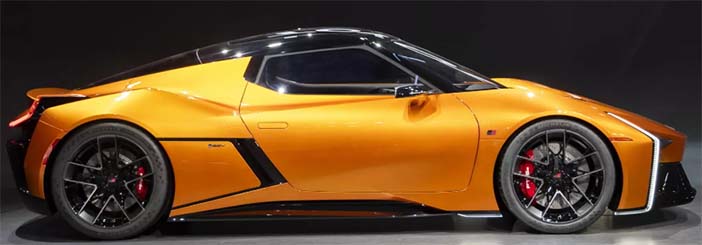
+++ Petrolheads are always chasing after more driver-focused cars, and one that’s been topping the wishlist is a new generation of the long-discontinued Toyota MR2. After years of speculation about its return, the latest rumours suggest that TOYOTA might finally be doing more than just brainstorming. Word on the street is that they’ve locked down an engine, a drivetrain layout, and possibly even set a production date. If these whispers hold any truth, we could be seeing a 400-horsepower, all-wheel-drive MR2 as soon as 2026. To be fair, rumors have swirled ever since the MR2 was discontinued 17 years ago, when the third generation was retired in 2007. But just last year, Toyota rolled out the FT-Se (pictured here), an electrified sports car that gave off some serious MR2 vibes with its design and proportions. Earlier this year, we heard that a new rear-wheel drive MR2 was on the way, possibly with an engine similar to the one found in the GR Corolla. Well, that’s apparently changed, but let’s not forget, we’re still deep in rumour territory here, so take all of this with a heaping spoonful of skepticism. Toyota is now planning to make its next-gen MR2 all-wheel drive. On top of that, it’s going to use its next-generation 2.0-liter turbocharged 4-cylinder that makes nearly 400 horsepower in street-legal form and up to 600 hp for motorsports use. The engine will evidently sit amidships and the entire car could end up with a price tag of around €€100.000. All of that sounds right about on the nose for what Toyota might want to do with its tech. The auto giant has already confirmed that it’s working on a turbocharged 2.0-liter engine. It’s building this new powertrain along with a new 1.5-liter unit in conjunction with Mazda and Subaru. The car is coming by 2026 in one form or another. If true, it would give us another non-hybrid, non-electric, mid-engine sports car option; a rarity in today’s market. While that might sound a bit wild, Toyota has somewhat notoriously bucked the EV trend that so many others have followed. In fact, Toyota’s chairman Akio Toyoda made headlines late last year when he said people were “finally seeing the reality” of EVs. All of that points toward the idea that a small-displacement MR2 could very well get the green light for production. Will Toyota be capable of playing a segment that also includes the Porsche 718 and Lotus Emira? Only time will tell, but we can’t help but root for more cars like this one. +++