+++ HERTZ ’s third-quarter financial results released this week show it’s still reeling from its decision to bet big on electric vehicles. Heavy depreciation on its fleet of electric cars played a major role in Hertz reporting a net loss of $1.33 billion, compared with a $629 million profit in the same period of 2023; news that sent its share price even lower. The rental giant splashed out on electric cars a few years ago, purchasing around 100.000 Tesla Model 3s and following up with another substantial order for Model Ys without knowing that the value of those cars would soon fall far below predicted levels. Electric cars in general have proved to be more depreciation-prone than vehicles with a combustion engine, but Tesla CEO Elon Musk had a role to play in Hertz’s misery when he cut the price of new Teslas, lowering the value of the company’s fleet. In an effort to stem the bleeding, Hertz has been offloading EVs en masse. The rental company plans to offload around 30.000 EVs by the end of 2024. Most of these vehicles are expected to be Teslas, and their arrival on the used market has put further downward pressure on resale values, compounding the depreciation problem for both Hertz and the broader EV market. As reported by Bloomberg, the sell-off is part of a broader plan to align its EV fleet to a number that its customers want to rent. The company expects to complete this fleet overhaul by the end of 2025, but until then, monthly depreciation costs remain sky-high at $537 per vehicle; nearly double the $284 average from the third quarter of 2023. Hertz hopes to reduce that figure to $300 in the coming years, but for now, it’s another sore spot on a balance sheet full of them. When asked how many EVs are currently in its fleet and how many more it plans to sell, a Hertz spokesperson told: “We have not publicly specified the exact number of EVs in our fleet, but as we’ve previously said, we’re rightsizing our EV fleet to better meet customer demand”. +++
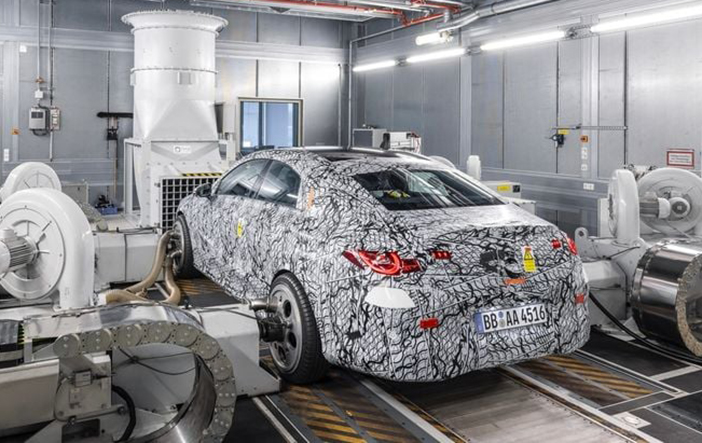
+++ The new MERCEDES-BENZ CLA will be revealed in the coming months with the choice of 2 battery-electric powertrains or an all-new petrol engine that promises diesel levels of efficiency. The first car on Mercedes’s new MMA platform has been engineered as an EV first, with heavy technical and design influence from the record-breaking EQXX concept, but in recognition that “the wishes and mobility needs of customers in different regions determined the pace” of the switch to EVs, it will also be offered with a bespoke mild hybrid powertrain engineered with a stringent focus on efficiency.
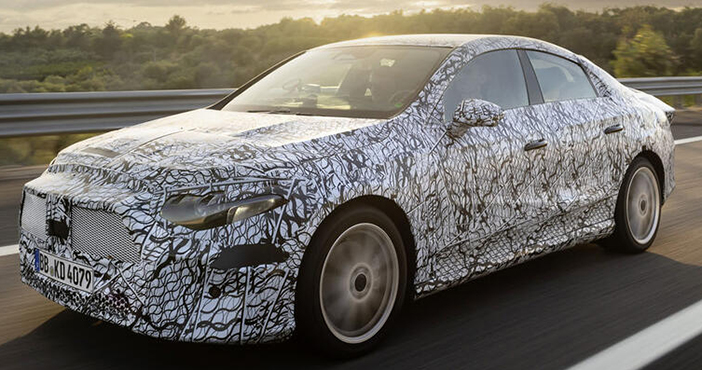
The CLA’s new ‘M252′ 1.5-litre 4-cylinder has been designed to be as small as possible, because MMA is an EV-native architecture so it has to take up not much more space than the electric car’s front motor. It is, though, described as modular in its construction, with the general design able to be scaled up for larger applications. The cylinders are positioned as close together as possible to keep the block compact, the exhaust manifolds are housed within the cylinder head itself rather than outside it, while the gearbox, electric motor and inverter are all integrated into one tightly formed unit. All in, the motor is said to be smaller in every dimension and some 17% lighter than Mercedes’s current 4-cylinder engine. A four-pot was chosen over a triple because of the heightened refinement offered by an even number of cylinders. A comprehensive array of insulation measures including foams and covers have been installed to further mitigate unwanted noise and vibration to a minimum. The engine will send 136 hp or 163 hp through the front axle, or 190 hp to both ends in the range-topping CLA 4Matic, which Mercedes notes is a “considerable output per litre”. Indeed, this will be among the most potent engines of its size. For reference, the same-sized four-pot in the Mini Cooper C produces 156 hp, and the 1.5 in the Volkswagen Golf is capped at a 150 hp maximum. Mercedes has suggested the engine will later be made available with different outputs, and though powertrain lead engineer Karsten Krebs would not be drawn on a realistic maximum power figure for the 4-pot, he did tell that the 3 initial tunes are “where we start”, suggesting there is the possibility for uptuned sporting derivatives in the future. Mercedes is still homologating the engine ahead of the CLA’s launch next year, and has not yet given any projected MPG figures, but when asked for a hint, Krebs said “we feel you’re reaching diesel levels of fuel efficiency with the hybrid powertrain”. The outgoing CLA is officially capable of around 55mpg when equipped with a 2.0-litre diesel engine and testers found it easy to achieve 60mpg+ at a cruise. If the new M252 gets close to that, it could be one of the most efficient petrol engines in its class. The 27 hp EV motor is able to power the car for short distances on its own at speeds of up to 100 kph, drawing its power from a 1.3 kWh 48 Volt battery (also packaged as tightly as possible) under the front passenger seat. Charging is via recuperation at up to 25 kW under deceleration. Using the electric motor to start the engine means Mercedes could do away with the need for a conventional starter motor, so the start-stop function is “almost imperceptible for the driver”. The quest for efficiency has underpinned every facet of development for the MMA platform and its electric drivetrains, which have been engineered with heavy influence from the EQXX concept, which recently travelled 1.000 km across the Arabian desert at a whopping 11.4 km per kWh. Shortly after, the CLA proved its efficiency credentials by breaking the record for the longest distance covered in 24 hours by an EV, with a prototype driving 3.850 miles around Italy’s Nardò ring. Mercedes says the new drivetrain has potential to achieve 5.18 mpkWh in real-world usage, a hugely competitive figure for its segment, and returns a battery-to-wheel efficiency figure of 93%. It is, the firm says, the “one-litre car of the efficiency age”. The MMA architecture underneath the CLA is equipped with 800 Volt hardware as standard, for charging at up to 320 kW, giving 10-80% top-ups in as little as 10 minutes, as proven during the Nardò run. The CLA (and the EQA and EQB replacements that will follow) will be offered with a choice of 58 kWh or 85 kW (both usable capacity) batteries; the latter with silicon oxide anodes which are said to boost gravimetric energy density by 20% compared to the cells current in use. The firm has not given an indicated maximum range figure yet, but if the CLA does crack 5.18 kWh, the larger battery should be enough for around 700 km on a charge, outpunching the Tesla Model 3, BMW i5 and even the larger Mercedes EQE it will be sold alongside. Those batteries power a newly designed electric motor on the rear axle with up to 272 hp, with 4Matic models adding a second motor with 109 hp on the front, which only contributes when needed and is otherwise decoupled from the drivetrain to minimise power wastage. The rear motor forms part of an all-new electric drive unit dubbed EDU 2.0, which contains a two-speed gearbox for optimum efficiency at low speeds and motorway cruises, and can recuperate energy at up to 200 kW under deceleration. +++
+++ “The Times They Are A-Changin’ ”, sang Bob Dylan. But sometimes, the more things change, the more they stay the same. PORSCHE , like many automakers, is recalibrating its strategy in response to shifting political and consumer winds. Once steadfast in its commitment to an electric future, the sports carmaker is adjusting its course; at least temporarily. Central to this adjustment is the Macan, which could follow a different path than originally planned. As I’ve learned, Porsche is now exploring how to integrate more combustion engines into its line-up, driven in part by sluggish Taycan sales and a surge in demand for hybrid and combustion models. This change comes on top of potential policy shifts in the US once the new Trump administration takes over next year. Although the details remain in flux, Porsche CFO Lutz Meschke confirmed during the company’s third quarter results that “We will refresh our petrol engine cars, including the Panamera and the Cayenne. Also, we will continue to rely on plug-in hybrids”. Earlier this year, Porsche officials had indicated that production of the combustion Macan would end by 2026, leaving the electric version as their sole luxury compact SUV. “The platform has reached the end of its cycle”, Porsche executive board member Albrecht Reimold said back in July. The petrolengine Macan, one of Porsche’s best-sellers, has already been pulled from European markets not due to lack of demand, but because its platform no longer meets the latest cybersecurity regulations from the European Union. Bringing it into compliance would be prohibitively expensive for such an old platform. However, the combustion version remains available in key markets like North America, where regulatory standards are apparently less stringent. “The current ICE Macan will continue to be offered in the U.S. in its current form for the foreseeable future, and will be sold alongside the new all-electric Macan”, a Porsche spokesperson told. “The length of this parallel offering will also be determined by customer demand and regulatory requirements”. While this doesn’t necessarily contradict Porsche’s earlier statement about halting production by 2026, the phrasing suggests that the ICE Macan could have a longer lifespan than previously expected if demand remains strong. How long that might be is anyone’s guess, but keep an eye on the sales split between the petrol-engined and electric Macans. The reality, however, is that the first Macan is long in the tooth, made even more apparent by the presence of the mechanically unrelated electric model. In production since 2014, it has undergone 2 facelifts in 2019 and 2021, along with numerous smaller updates in between. Despite these efforts to keep it fresh and competitive, the SUV remains tethered to an aging platform, with some inherent limitations that you simply can’t fix, such as tighter cargo space and a more cramped passenger cabin compared to its rivals. On the other hand, the Macan remains a standout in its segment, delivering some of the best driving dynamics you’ll find in an SUV. Add to that a high-quality, endlessly customizable interior (though its premium price tag makes sure you don’t forget it) and it’s easy to see why it’s still a favourite. However, competitors are advancing rapidly with newer platforms, roomier designs and far better tech features, placing mounting pressure on the Macan to keep up. If it were to go beyond 2026 in its current form, Porsche would no doubt have to work some serious facelift magic to keep it from feeling outdated. I also asked Porsche about the future of its broader portfolio following the recent comments from the Chief Financial Officer during the third quarter results. “Generally speaking, Porsche customers will still be able to choose between efficient combustion engines, powerful plug-in hybrids, and all-electric models in the 2030s”, the spokesperson told. “In recent years, the product strategy has aimed to offer all 3 powertrain variants across every available Porsche segment: sports cars, sports sedans and SUVs. Our strategy is designed to allow more than 80 percent of our new cars to be fully electrified by 2030, depending on customer demand and the development of electromobility in different regions”. So, for now, Porsche’s long-term plans remain largely intact. The brand still aims for over 80% of its new cars to be fully electrified by (or possibly after) 2030, assuming that customer preferences and global trends align. +++
+++ RENAULT is launching 3 highly anticipated new electric cars: the 5 E-Tech, the 4 E-Tech and the Twingo E-tech. But the French manufacturer is also focused on the more distant horizon. It is working on the next generation of battery-powered vehicles that, at least in its intentions, should reduce production costs by 40 percent. Announced as early as when Luca De Meo, the group’s CEO, first spoke of Renaulution’s long-term strategy for ecological transition, the new cars will be based on a platform that will be a real concentration of technology. The fruits of these efforts will see the light of day in 2028. The new platform will be used for different types of C-segment vehicles. The smaller ones are expected to consume less than 12 kWh per 100 km. Currently, the best model in terms of efficiency is the Renault 5, which claims a WLTP consumption of 13 kWh/100 km. Renault said that the new platform will be so advanced that it will basically skip a generation. De Meo said that with this new platform, the French carmaker would be able to compete on an equal footing with Chinese manufacturers in terms of product and cost, while remaining in a European context. The new family of cars will not only take advantage of the new platform, but will also be at the top in terms of aerodynamics and the adoption of particularly efficient electric motors. It will also introduce innovations in power electronics and battery chemistry. While waiting to see the fruits of this work, carried out by the engineers of Ampere, the division of Renault that focuses solely on electric cars, in 2026 Renault will introduce the revived Twingo, which will use a platform derived from that of the R5 and R4 but which should already introduce some improvements, thus representing a sort of link between the present and the future of the group. +++
+++ TOYOTA has a creative plan to add capacity for 3.5 million electric vehicles in 2030 without having to actually construct new assembly plants. It’s called Area 35, and the Japanese carmaker’s goal is to compress existing facilities by 35 percent to free up the extra space and resources to accommodate a wave of new vehicles. +++
+++ It’s not only Chinese business bracing themselves for the fallout from any import tariffs Donald TRUMP might introduce during his presidency. German automakers should be prepared to lose more than 10 percent of their current operating profits, experts warn. Although Trump hasn’t even taken office yet, let alone introduced any tariffs, he has talked seriously about doing just that, and foreign automakers can’t presume it’s an idle threat. German brands alone export 583.000 cars from Europe to the US every year and send 343.000 from Mexico, according to data from Marklines. And because many of those almost 1 million vehicles have high prices, a steep increase in duty from the current 2.5 percent to something in the region of 12.5 percent could prove devastating. One analyst from investment bank Stifel Europe suggested German automakers could suffer a drop in profits of between 11 and 15 percent. BMW remains outwardly positive about the future of its US sales operation, and it has reason to: like Mercedes and Volkswagen, it has the advantage of owning production facility in the United States. Although all 3 automakers still export thousands of cars to the US, they could ease back on those, and instead push their locally-made vehicles harder, or even rejig their production facilities to set up new production lines in their American factories. But the outlook for other brands is less certain. Every single Porsche sold in the US is exported from Europe, and Audi’s bestselling model in America is the Mexico-built Q5, which accounts for a third of sales. Trump has such a problem with Mexico, he’s even suggested applying a 200 percent tariff on cars being shipped from there to America. BMW and VW also build cars in Mexico (as does Toyota, GM and Ford), but unlike those brands, Audi and Porsche don’t have a US plant. This US uncertainty couldn’t have come at a worse time. For years, the United States and China have been the largest export markets for German-brand vehicles, and with China sales now on the skids, the last thing the Volkswagen Group, BMW and Mercedes need is disruption in the US. +++
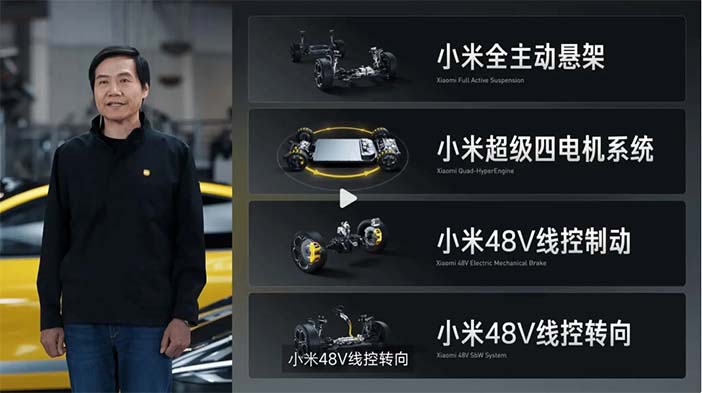
+++ XIAOMI has spent 3 years researching and developing a next-generation smart platform, which is now presented in detail. There is also a demonstration video showing it in action. This new chassis features features such as the ‘dance’ of the car that are worth a close look. To balance intelligent technology with optimised driving performance, it also incorporates advanced control algorithms coupled with hardware including Bosch’s latest DP system + ET10. The seven-link suspension system, according to the manufacturer, provides excellent stability for the 2.2-tonne SU7 Max, as it boasts a lifting force of up to 44.400 N, meaning it can lift two vehicles. The new propulsion system will be equipped with 2 new V8S engines, each with a theoretical maximum power output of 2.054 hp. The front engine revs up to 28.000 rpm and each motor reaches up to 450 hp with a maximum torque of 380 Nm. It allows for completely new movements, such as U-turns that can now be adjusted according to speed, if not several consecutive U-turns, making the vehicle more agile. Xiaomi’s chassis technology features an active suspension system: each wheel has a 4.6 kW power source to instantly adjust the damping and reduce body roll during cornering, acceleration, and braking. +++