
+++ After taking BRAZIL ’s nascent EV sector by storm, China’s automakers are facing increasing challenges in the world’s sixth-biggest auto market. A glut of cars at ports stems from moves to avoid new tariffs. Brazilian ports have been clogged this year with upward of 70.000 unsold Chinese EVs, a sign of how hard it’s becoming for China’s automakers to keep up their robust growth. +++
+++ CUPRA will launch cars that “break segments” and have “very provocative bodystyles” as part of its next wave of models, the first of which could be seen in 2025. In the 6 years since it was launched as a stand-alone brand sired from Seat, Cupra has made a series of crossover and hatchback models; a mixture of cars evolved from Seats such as the Leon and Ateca, those twinned with other Volkswagen Group models such as the new Terramar, Born, Tavascan and upcoming Raval hatchback, and stand-alone cars like the Formentor. But its next wave of cars will be “iconic” models that don’t fit in existing segments. The other option of more conventional cars like saloons “wouldn’t be a priority”, according to Seat and Cupra CEO Wayne Griffiths. He said: “We’ve deliberately gone SUV and crossover, because that’s where the market is and that’s what customers are looking for. If you want to make Cupra cool and make it iconic, then you need to start making iconic cars that perhaps don’t fit in any segment. We are working on other cars that break the classic segments between saloons, estate cars and SUVs. Things will emerge and we’ll see different opportunities. We are working on some very provocative bodystyles as well. Hopefully, we can show you one next year”. A production version of the Dark Rebel concept is still possible but “not a priority at the moment”, according to Griffiths, as the firm instead looks to “grow the range with more volume cars and make money to finance all the investments we need to make”. He said: “We’re investing €10 billion in electrification. We’re building a new brand. We have to take real care that every investment we make has a payoff, because without the payoff, we can’t do it. We can’t take too many reckless risks at this point in our early development”. Even though the Dark Rebel is not on the agenda imminently, Griffiths said Cupra “would never stop dreaming and never stop having ambition” in making alternative models. He said: “There are so many different emotional cars that I would love to do, starting with the Dark Rebel as a sports car. But I’m also challenging the team as well, looking at a kind of off-road-style buggy car. It would be electric and I think it would be fun. I think it would be a real game-changer, very emotional, but could also work in the city. I’m not talking about a car for the beaches. We have lots of ideas, lots of crazy ideas, but we have to keep focused”. New Cupra models later in the decade will come from the Volkswagen Group’s next-generation SSP platform, which is able to underpin everything from superminis to sports cars. Griffiths confirmed that a high-performance range-topping version of the Terramar will be launched with more than 300 hp. It is most likely to have a plug-in hybrid drivetrain but could potentially use the 2.5-litre 5-cylinder engine employed in various Audi RS models, should that engine be upgraded to meet Euro 7 emissions regulations in 2027. Such an engine would be “a dream” for the car, said Griffiths. Diesels are no longer on the agenda at Cupra due to the rise of plug-in hybrids but Griffiths said the firm is looking to correct the absence of the four-wheel drive in the firm’s plug-in hybrid range and has engineering prototypes testing this to that end. Speaking at a press conference following the Cupra Terramar’s shortlisting for the 2025 Car of the Year, Griffiths rejected the idea that Cupra models are too similar to other Volkswagen Group cars, in particular the Terramar next to an Audi Q3 or Volkswagen Tiguan. “All of the cars that we do at Cupra are differentiated: the design, obviously, and in terms of technology”, he said. “We share the scale and the platforms of the VW Group, but our engineers adapt every car we make. We do it in a way that it feels more Cupra and drives like a Cupra”. A US market launch remains on the agenda for Cupra and Griffiths said a larger Cupra crossover will be created with that market in mind. He also expects the Formentor to do well in the US and it was well received by potential US retail partners when they were shown the car as part of Cupra’s America’s Cup sponsorship in Barcelona. Electric and plug-in hybrid drivetrains will feature in its US launch, a date for which has yet to be confirmed. The Terramar could also be part of the American range. “We’re still looking at the portfolio for the US, and we have to be very careful about that decision”, he said. “We’re not just taking European cars and trying to sell them in the US: you need to make sure that the cars are also going to be accepted in the US”. Cupra is also investigating additional global markets, including Taiwan and other territories in Asia. “I think growing our global footprint will be important to give credibility as a strong global brand”, said Griffiths. That global footprint extends to the new Cupra Tavascan being built in China, which puts the brand at risk of tariffs for electric cars imported into the EU. Griffiths is “confident we can get a solution to avoid this” because the tariffs were “not put in place for cars like the Tavascan: they are there to avoid the dumping of cheap electric Chinese cars in Europe”. +++
+++ DS will follow up the launch of its Numéro 8 flagship coupé-SUV with a new Numéro 7. A more traditional, family-friendly SUV with the usual DS focus on comfort and premium materials, the Numéro 7 will replace the current 7, which was first launched as the 7 Crossback in 2018. In what is something of a mini-revolution for the Stellantis Group premium brand, the new all-electric Numéro 8 will go on sale early in 2025 with a fresh design direction, and introducing a new naming strategy. The closely related Numéro 7 will follow towards the end of the year, swapping the Numéro 8’s sleek roofline for a taller and boxier SUV body. The DS No7 is certain to feature a lot of the new design language that has been unveiled on the No8 flagship. The updated exterior treatment is characterised by blade daytime running lights at each corner and a Luminascreen illuminated grille. Inside, the cabin design will feature high-class materials including aluminium, leather, Alcantara and possibly wood. I expect to see the same new 400 mm wide touchscreen infotainment system as in the Numéro 8, plus the unusual ‘X’ steering wheel design with spokes at each corner of the central hub. The Numéro 7 will launch exclusively with pure-electric power, using the group’s STLA Medium platform, which also underpins the Numéro 8 and other recent mid-size Stellantis SUVs such as the Peugeot 3008 and Opel Grandland. Speaking at the press preview event for the Numéro No8, Thierry Métroz, senior vice president of DS Design, confirmed that the Numéro 7 will come next and take its technical lead from the new coupé-SUV. “The next DS, we will launch it within 1,5 years and it will have exactly the same philosophy”, said Métroz. He went on to explain that the Numéro 7 will be “more compact and more SUV-like, but still very efficient with the same DNA”. “We will lower the bonnet, we will lower the roof and we will protect the roominess of the car, compared to the current DS 7”, he continued. The Numéro 8 coupé-SUV is around 4.820 mm long and 1.900 mm wide, with the design team having stretched its body to achieve the flowing roofline and boost rear passenger space. The Numéro 7 is likely to have more classical SUV proportions, similar to those of the Peugeot 3008, which is 600 mm shorter, more than 60 mm taller and much closer in size to the existing DS 7. There are, however, no plans for a 7-seat version of the Numéro 7. Métroz explained how the role is already filled by other Stellantis cars, including the Peugeot 5008, and that a longer 7-seat version would not sit comfortably with the new DS focus on aerodynamics and style. He explained: “We don’t need the 7 seats because Peugeot has one. We don’t need another 7-seat car in the global line-up. For aerodynamics, if you add a third row, you need to have a more horizontal roof and you need to have the rear window more vertical. It’s very boxy. It’s not good. “We want to do something more elegant, more compact and more premium and the third row is to see a lot of constraints in terms of design elegance”. The Numéro 7 will use the electric powertrain technology that gives the Numéro 8 what the brand claims is class-leading driving range and efficiency; even if the figures will ultimately be blunted by the SUV’s more boxy rear end. That means we can expect the same 74 kWh and 97.2 kWh battery options, the latter offered with a choice of front-wheel drive and dual-motor all-wheel drive. The 97.2 kWh front-wheel-drive version of the sleek Numéro 8 is capable of a 750 km range on WLTP tests, so the Numéro 7 could conceivably get close to this mark. Performance will also be in the same ballpark as the Numéro 8, which offers 230 hp in entry-level 74 kWh battery form or up to 360 hp in the High Range 97.2 kWh battery 4×4 models, yielding a 0-100 kph time of 5.4 seconds. Intriguingly, DS is also leaving the door open to eventual petrol powertrains in the Numéro 7, as the rate of electric car uptake in Europe continues to trail expectations. Métroz explained that a new mild hybrid powertrain is being considered for the Numéro 7 and future new models. He said: “I remember 3 or 4 years ago Stellantis said it will be only BEV in a few years for all the brands. Now, we don’t know. We have BEV, but we are looking to introduce a MHEV mild hybrid for the new generation of DS. If we want, we can do it very quickly without expense because of STLA Medium. We can save all the design, we only have to change the front bumper for the ICE cooling system. It’s not planned for Numéro 8 at the moment, but that could change and maybe the company could decide to do it, you know, in 2025”. After the new Numéro 7 emerges in 2025, DS will turn its attention to replacing the other models in its range. The process will start with the Numéro 3 and then the Numéro 4. Executives would not be drawn on the possibility of a new Numéro 9 luxury car based on the elegantly retro SM Tribute concept shown in September 2024, but it’s clear DS has a packed schedule of new car launches until at least 2027 as it renews its efforts to become an established premium brand player. +++
+++ The fifth-generation MERCEDES C-CLASS is about to undergo a mid-life refresh, as we’ve spotted an updated version of the premium compact executive car testing for the first time. With the BMW 3 Series getting its own revamp in 2024 and the Audi A4 transforming into the A5 this year, the time seems right for Mercedes to give its saloon and estate (which have been around since 2021) some tweaks to ensure their competitiveness against its German rivals. First images showcase a car that is heavily camouflaged, although other recent Mercedes models provide strong clues as to the visual changes in store for the C-Class. At the front, the outline of the C-Class’ panamerica grille has been turned up and been made taller, effectively taking up more space. This should have a knock-on effect for the side air vents, and above we can see a redesigned headlight signature with an integrated three-pointed star light (as on the Concept CLA Class). There’s not much to be revealed at the rear of the new C-Class, although I expect it to gain a similar rear light signature to the CLE coupé and a reshaped rear bumper. The overall design changes should also mirror those on the upcoming entry-level Mercedes EV, the CLA. Expect new alloy wheels to arrive as well. The interior of the current C-Class is pretty much identical to the CLE, which launched earlier this year. As a result, we don’t expect Mercedes to overhaul the C-Class’ cabin design, and a 11.9 inch central touchscreen and 12.3 inch digital display will take up much of the dashboard space, joined by a head-up display on higher-spec models. A range of 4-cylinder units make up the C-Class’ petrol, diesel and plug-in hybrid powertrain offerings, and we’ve had no indication that this will change with the 2025 model. The range currently starts with a 1.5-litre petrol mild-hybrid in C 200 guise with the C 220d gaining a 2.0-litre mild-hybrid diesel, the C 300e utilising a 2.0-litre petrol plug-in hybrid combination and the C 300de doing the same, but with diesel power. There’s also the C 300 petrol and C 300d diesel, which feature more powerful 4-pot mild-hybrids. The upcoming CLE 63 was initially set to use the same 4-cylinder petrol plug-in hybrid as the current C 63. However, as sales of the C 63 PHEV have been so poor, Mercedes extended the development time of the hottest CLE to give it V8 power, although there’s no word yet on whether this change of tack will apply to the facelifted C 63. Given this is my first sighting of the updated C-Class, I don’t expect a full reveal until late 2025. Sales remain strong for the model however, rising to 88.800 in the third quarter of 2024 compared with 82.000 during the same period last year. +++
+++ MG will launch an electric car with a semi-solid-state battery next year and it won’t come at a big premium over existing battery technology, according to the brand’s general manager. “The first new model to be launched by the MG brand next year may be equipped with a semi-solid battery. Let me report to you first that the price is not expensive”, Zhou Yan posted on China’s Weibo social media platform. “The battery industry is making rapid progress. Friends who want to buy lithium-iron-phosphate [LFP] ternary lithium battery cars can wait”. Zhou confirmed the new battery would be standard equipment on the as-yet-unnamed electric model. Solid-state batteries promise significant improvements in energy density, range, charging speeds and thermal stability compared with the lithium ion batteries used in EVs today. However, performance challenges, intensive development, manufacturing complexity and supply chain hurdles have so far made them too costly for large-scale production in the automotive field. MG is planning to introduce a semi-solid-state battery, meaning it uses solid and liquid gel electrolytes instead of a completely solid electrolyte; all at a price commensurate with existing liquid-only batteries. MG’s push to bring solid-state batteries to volume EVs is poised to give it an edge in competition with rivals like Volkswagen, which has yet to provide a clear timeline for adopting similar technology. Another SAIC-owned brand, IM Motors, has already revealed an EV (the L7 saloon) featuring a semi-solid-state battery, which it jointly developed with Chinese battery specialist Jiangsu Qingtao. +++
+++ The SKODA ENYAQ is on track to receive a substantial facelift early next year, with the hugely popular electric SUV set to adopt the Czech brand’s latest ‘Modern Solid’ styling language and elements seen on the new Elroq. More than 200.000 Enyaqs have been delivered since the highly rated family SUV was launched back in 2020, making it the 4th bestselling EV in Europe. In fact, in October the Enyaq was the most popular electric car on the continent.
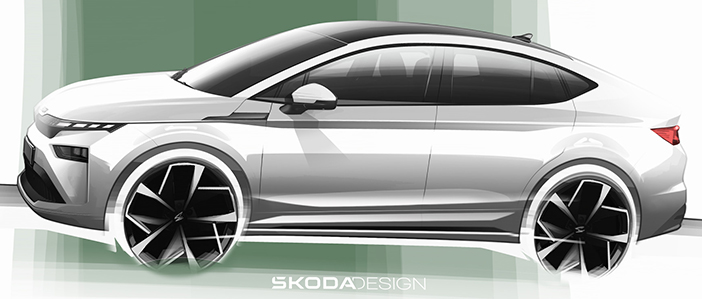
The biggest visual change to the Enyaq will be a new, much slimmer ‘Tech-Deck’ grille panel that’ll replace the current design, which is very tall and closely resembles those seen on Skoda’s combustion-engine models, such as the Superb and Kodiaq. Skoda’s sales and marketing boss Martin Jahn told earlier this year: “When Enyaq was introduced a couple years ago, the majority of our customers were still more traditional. Now we are moving into the more progressive customers that we need for this new phase, and the new design for the car”. Other changes will be made to the front end, like a redesigned bumper and swapping the traditional Skoda emblem on the nose for simple lettering. We’ve been told to expect updates to the powertrains, interior materials and software as well. Of course, all these changes will be made to both the standard Enyaq SUV and the more rakish Enyaq Coupé. Looking further ahead, the all-new, hugely important Epiq will arrive in 2026, the brand has confirmed. A concept model was unveiled earlier this year, and should be a very close representation of the final production version that’s set to cost around 27.500 in the Netherlands and is most likely going to be revealed in early 2026. Then, by the end of 2026 or early in 2027, Skoda’s 7-seat, flagship electric SUV should have been unveiled. The design will be based on the Vision 7S concept from 2022 that introduced us to the ‘Modern Solid’ philosophy, and previewed the future Peugeot E-5008 rival. The name of this model is still under wraps, however. Finally, Skoda is still working on a pure-electric estate car, which at 4.6 metres long will serve as the zero-emissions alternative to the trusty Octavia Combi. But Autointernationaal understands it will no longer be arriving in 2026 as originally planned, and is now more likely to hit the streets in 2027 or possibly 2028. +++
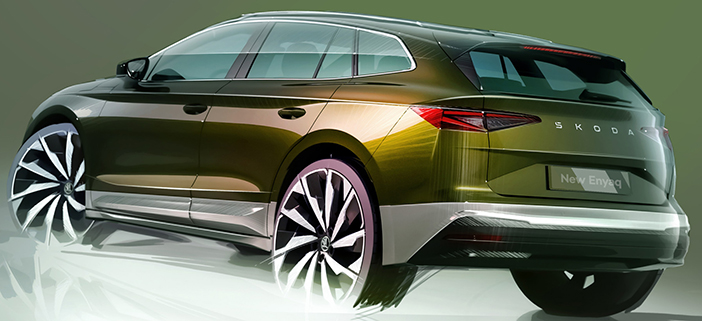
+++ The future of a potential new VOLVO estate car is hanging in the balance as the firm weighs up whether sales are strong enough to warrant an entry into the dwindling segment. That’s what Nicole Shaw, Managing Director of Volvo UK, says, backing up the thoughts of the Swedish firm’s CEO, Jim Rowan. Volvo boosted hopes of an upcoming electric estate in 2022 when Autointernationaal.nl uncovered trademarks for EV60 and EV90, which would likely be the names of all-electric replacements for the V60 and V90. On the possibility of an electric estate, Shaw said, “it’s too early to say, because it’s only December; in another quarter, I might have more of a feeling on how it’s done. When it comes to anything we evolve, the electric space is the one we evolve into”. Several all-electric estates have come to the market recently, with the BMW i5 Touring, Audi A6 e-Tron and Volkswagen ID.7 Tourer providing competition for the potential EV90. There wouldn’t be too many alternatives to a smaller EV60, however, given that there are no all-electric premium compact estates on sale right now, although we might see a Touring estate version of the upcoming BMW Neue Klasse sedan in future. Volvo is committed to launching a new model every year for the next 5 years. It initially aimed to make half of its sales EVs by 2025, and then move away from combustion power entirely by 2030, although this was recently amended to 90 percent pure-EV sales by 2030. The company has already launched new bookends to its range, the flagship EX90 and the baby EX30, along with the all-electric second-generation EX40 sitting between them. A battery-powered replacement for the XC60 called the EX60 is expected to expand the range further in 2026. The brand is also expected to spin a new electric saloon off the same SPA2 platform as the EX90, targeting customers in the United States and China. Speaking to Autointernationaal.nl at the reveal of the EX30 back in 2023, Volvo’s Chief Executive Officer Jim Rowan admitted that his team has to weigh up whether an electric successor to the V90 could make sense in terms of sales. When asked directly if Volvo needed to consider an electric version of the type of vehicle that it has been synonymous with over several decades, Rowan said, “Yes, of course we do. We need to look at our range. We’ve topped and tailed that [with EX90 and EX30]and as you know, the C40 and XC40 have been born out of a car that was, in effect, a hybrid, so it doesn’t take a rocket scientist to work out that at some point we’ll need to electrify that. And then we’ve got to fill in the rest. Some of it is pretty easy, and then for some of it, you have to make choices. And I get so many emails asking me when somebody is going to do a proper electric wagon, mainly from people in northern Europe and Maine! But then you say: ‘What if we did that?’ and ask ‘What if we did a Cross Country version of it?’. Would that be something that would work in our portfolio? I’m not going to give an answer on that right now, but I will say that it’s something that it makes sense for us to be looking at. Can we do a really nicely designed and intelligent wagon? Yes, of course we can. The point really is whether we should do it; is there enough margin there, is there enough demand for that car? Are people really going to say, ‘Okay, I’d rather have a nicely designed wagon than choose a sedan or an SUV’? Do we think the market is going to move back into that area? Because demand for estate cars and saloons has gone down in Europe. It’s a decision that we need to make, and we need to make it with the market intelligence that we have. We’re going to launch a new electric car every year for the next five years. Will an electric wagon be one of them? Watch this space”. The company’s newly installed Global Head of Design, Jeremy Offer, said that advancements in battery installation technology (such as stitching the cells directly into the car’s structure, to make the floor thinner) may be required before an EV can mix current estate-car practicality with a low enough roofline. But Offer added: “There’s always a balancing act with wagons, between maximising the amount of cabin space and optimising the aerodynamics. However, there’s no reason, if we wanted to create an estate, or a saloon, or whatever, why great design couldn’t make it sexy”. +++