
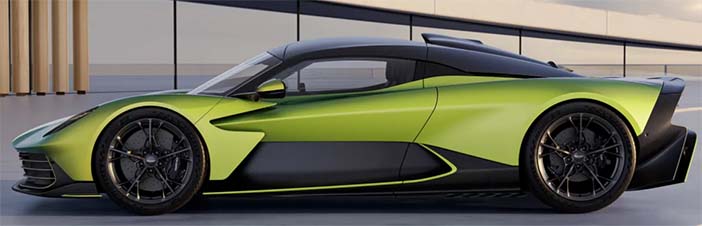
+++ The ASTON MARTIN VALHALLA , the firm’s new mid-engined hybrid hypercar is apparently undergoing final road and track validation sessions, before production starts in the next few months. Just 999 units of the model will be built. Revealed in full late last year, the Valhalla is now being subjected to on-road validation testing in the United Kingdom, as well as on-track sessions at a proving ground near Barcelona, Spain. The car’s development process has been long and drawn-out, but Aston Martin claims production will finally begin in the second quarter of 2025. Simon Newton, Director of Vehicle Performance and Attributes said: “For the engineering and dynamics teams, the unprecedented dynamic bandwidth that distinguishes Valhalla from its rivals has presented many new opportunities during development. To harness and refine the power to deliver an exceptional supercar experience on both road and track has meant tireless work has gone into the integration of active aero and integrated control systems”. This isn’t the first time we’ve seen Aston Martin’s new supercar, but the Valhalla’s long-winded gestation has meant the car initially revealed over 3 years ago isn’t quite what will go into production this year. In fact it’s even more powerful than was originally promised. Aston Martin has confirmed its mid-engined supercar will produce a peak of 1.064 hp and 1.100 Nm of torque from a hybrid-assisted, twin-turbocharged V8 engine; an increase of about 100 hp from what we were initially told. This V8 sits in a chassis built around a bespoke carbon-fibre tub with aluminium sub-frames at either end and motorsport-inspired suspension controlled via the latest vehicle dynamics management system with support from a clever active aero system. The key figures are impressive: Aston Martin is quoting a 0-100 kph time of 2.5 seconds, a limited top speed of 350 kph, a dry weight of 1.655 kg and the ability to generate up to 600 kg of downforce at 240 kph. As you might have guessed, there’s a lot of tech to go through, but as a follow-up to the Valkyrie alongside Aston’s heavily revised sports car range, the Valhalla is a fierce statement of intent for the iconic British brand with a likely price tag of 1.3 million euro for each of the 999 units planned (Dutch pricing). The Valhalla is the firm’s first ever plug-in hybrid, and the first of its cars to have a “dedicated EV range”. The powertrain is centred around a V8 petrol engine, helped along by three electric motors. The V8 itself is a 4.0-litre twin-turbocharged unit with a flat-plane crank, and features a ‘hot-V’ configuration with the turbochargers situated inside the 2 cylinder banks. Like every V8 used in modern Aston Martins, the engine is sourced from AMG, but in this case it’s taken from the short-lived Mercedes-AMG GT Black Series from 2020 and features a raft of bespoke elements designed by and for Aston Martin. These include new camshafts and exhaust manifolds, plus new twin-scroll turbochargers that have larger compressor wheels. On its own the engine is able to produce 824 hp, which equates to 206 hp-per-litre. This is a huge figure for any road-going production engine, and that’s before taking the three electric motors into account. Cooling is always a challenge with so many mechanical elements packaged into such a compact footprint, and the F1-inspired roof scoop feeds two charge coolers mounted in an unusual position on top of the engine. The exhaust system is also uniquely packaged into 2 top-mounted exits, with 2 further outlets mounted within the pair of massive venturi tunnels that make up the rear diffuser. The electric motors are then split between the axles, with the first mounted inside a new eight-speed dual-clutch transmission. Together with the V8, this powers only the rear wheels, with the help of an electronically controlled limited-slip differential. The final 2 radial flux-style electric motors are mounted on the front axle and not only allow for torque-vectoring, but can also power the car in fully electric mode for up to 14 km and operate as the car’s reverse gear. The e-motors together add up to 254 hp to the powertrain. The front-mounted motors are also responsible for capturing kinetic energy to replenish the battery pack, which is a small, high-performance unit designed specifically for hybrids. Aston Martin has not revealed the battery’s capacity, but it’ll likely be from the same family as AMG’s 6.1kWh unit found across its E Performance models. +++
+++ In the United States. BMW is offering gigantic discounts on the XM right now. Qualified customers can get up to $22.500 off for 2024 model year cars, provided you can find one on dealer lots. While $22,500 is a huge discount, you should still be prepared to spend big to get behind the wheel of an XM. With a starting price of $159.995, you’ll be paying at least $137.495 with all of the discounts applied. A 14-percent cut on any new car is still pretty good these days, though. The catch? BMW is offering the discount only on 2024 model year XMs. If you’d rather settle for a 2025 model, BMW has deals on those, too. The company is offering $12,500 off. Seeing such large discounts on the XM isn’t surprising. It was the worst-selling BMW in America last year, with just 1.974 units sold. It was also dead last in global sales for the brand. The company has maintained the XM was always meant to be a low-volume product, but these discounts suggest people aren’t as enamoured with M’s SUV as it hoped. +++
+++ ELECTRIC VEHICLES might be the future, but profitability? That’s still a rare luxury in the EV world. An interesting study has revealed that just 4 EV-only brands are currently operating at a profit, while many others continue to bleed money at impressive rates. It probably won’t shock anyone that Tesla and BYD are leading the charge, but some of the other top-performing names are a bit less expected. The study examined the operating income ratios of major EV brands and found that in 2024, Tesla reported an operating margin of 7.2%, putting it just ahead of BYD at 6.4%. However, while Tesla’s margin has declined since 2023, BYD’s has been climbing. If that trajectory holds, as many analysts expect, BYD could soon surpass Tesla in operating profitability. Key to the growth of both of these brands is that they are vertically integrated, helping them to scale and reach profitability sooner. The only other 2 brands analyzed by the study to have reached profitability are China’s Li Auto and the Series Group, which includes the Seres, Aito and Landian brands. While none of the other EV brands analysed turned a profit in 2024, a few are edging closer. Zeekr, part of the Geely group, reported an operating margin of -8.5% last year. But with sales on the rise, it may soon begin delivering profits for its parent company. Xpeng and Leapmotor are also moving in the right direction, having more than halved their losses between 2023 and 2024. Nio is another important player in China’s EV market, but not a profitable one. Its 2024 operating margin came in at over -30%, suggesting it still has a long climb ahead before it sees black ink on its balance sheet. Tesla remains the only non-Chinese EV brand to hit profitability. Polestar hasn’t crossed that threshold yet, though it did manage to reduce its losses in 2024. Similarly, Rivian also remains in the red, though like Polestar, it continues to receive substantial external funding. At the other end of the spectrum, Lucid holds the dubious honour of running the steepest losses in the EV sector. According to data from Rho Motion, its 2024 operating margin was -374%. That’s an improvement from over -500% the year before but still not exactly a sign of financial health. Heavy backing from Saudi Arabia is helping Lucid stay afloat despite the massive shortfalls. +++
+++ FORD is offering significant discounts on the 2025 Mustang in an apparent attempt to boost sluggish sales on its homemarket. The move comes after the iconic muscle car saw its sales tumble by more than 30% in the first 2 months of the year. Customers looking to buy a new Mustang can now get $1.000 off the EcoBoost model and $2.000 off the V8-powered Mustang GT. But are discounts enough to stop the slide? The biggest factor behind the Mustang’s sales slump is its rising price. The 2025 model year brought a $3.700 price hike over the 2024 version, with the GT alone seeing a $2.700 bump across its Fastback, Premium Fastback, and Premium Convertible trims. Then, in December, Ford raised the price again by $1.000. These increases may have priced out some potential buyers, especially as interest rates on car loans remain high. In January, Mustang sales were down 36.4% compared to the previous year, and in February, they were down 32.2%. Altogether, Ford sold just 5.191 Mustangs in the first 2 months of 2025, a sharp drop from the 7.886 units sold during the same period last year. In fact, the all-electric Mustang Mach-E has now overtaken the petrol-powered Mustang in sales, with Ford selling 6.841 Mach-Es so far in 2025. While price increases are a major reason for the Mustang’s declining sales, other factors are at play. Muscle cars have always had a niche appeal, and with the rising cost of living, many buyers can no longer justify spending money on a 2-door coupe. The base EcoBoost Mustang now starts at $33.515, which, while reasonable for a performance car, makes it an impractical daily driver for many Americans. The V8-powered GT coupe is even less attainable, with a starting price of $47.055, putting it in competition with the Nissan Z, Toyota Supra and BMW Z4, all of which offer compelling performance and modern interiors. Weather conditions may also have played a role. The first 2 months of 2025 have been particularly cold in much of the U.S., which could be discouraging buyers from buying a rear-wheel-drive sports car. To combat this decline, Ford is offering price cuts. +++
+++ After committing a hefty $21 billion investment into its US operations, including the construction of a new $5.8 billion steel plant, HYUNDAI has officially kicked off production at its Metaplant in Georgia. The site, which began construction over 2,5 years ago, will focus on producing a range of electric and hybrid vehicles, boosting Hyundai’s push into the EV market. The Metaplant has already started building the Ioniq 5 and, perhaps most importantly, is now also building the Ioniq 9. This model is Hyundai’s first 3-row electric SUV and serves as its alternative to the Kia EV9. Presented last November, the Ioniq 9 is underpinned by the group’s E-GMP architecture and fitted as standard with a 110.3 kWh battery. The brand has yet to announce pricing for the SUV, but we know it will be offered in several different guises. The base model has a 214 hp and 350 Nm electric motor driving the rear wheels and a quoted range of 620 km. Sitting above this version is the Long Range AWD, which adds a 94 hp motor up front. The flagship Ioniq 9 Performance has 214 hp motors at the front and rear, allowing it to hit 100 km/h in 5.2 seconds. Initially, the Hyundai Motor Group planned to build 200.000 electric and hybrid vehicles at the Metaplant. However, as part of its increased commitment to the US market, it’s expanded annual production capacity up to 500.000 units. “Hyundai Motor Group Metaplant America not only represents the Group’s advanced manufacturing capabilities and commitment to innovation, but also our investment in relationships with our partners and communities right here in Georgia”, executive chairman Euisun Chung said. “With the rich history of craftsmanship and manufacturing in this community, together with the talented workforce at HMGMA we are building the future of mobility with America, in America”. +++
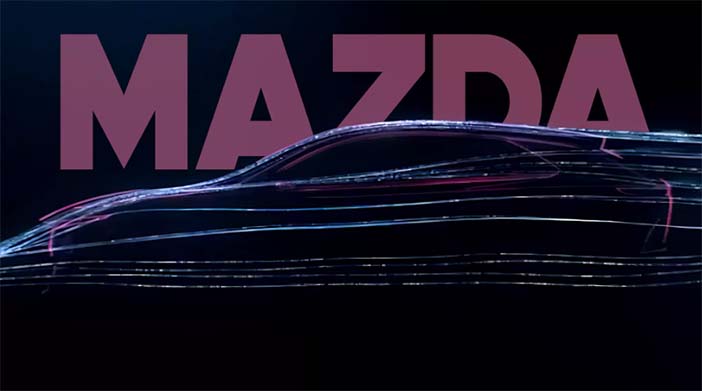
+++ Concept cars are all fun and games, but the percentage that make it to market in original form is very low. That figure ticked up just a touch today, though, as it appears like MAZDA is going to bring the Arata concept to production almost unchanged. The production version will be called the EZ-60, at least in China, though it will wear a different badge in other markets. Mazda is hoping this one lands better than the underwhelming MX-30. You might recall I recently reported that the European version of this electric SUV might end up being called the CX-6e. That tracks, because Mazda just pulled a similar move with the Chinese-market EZ-6 sedan, a car co-developed with its Chinese partner Changan, that’s being rebranded as the 6e in Europe. Mazda released a teaser to hype the EZ-60. It shows the SUV’s silhouette rendered in digital wind tunnel graphics. In short, this crossover looks identical in profile to the Arata concept from the 2024 Beijing Auto Show. That car was aimed at the Chinese market and more specifically, the Tesla Model Y. Mazda called its design theme “soulful + futuristic x modern”. In its post about the teaser, Mazda stated, “Control the wind to shape the invisible, drive the electricity to the future”. No doubt, any EV benefits from good aerodynamic design and minimal drag. Clearly, Mazda is emphasizing that with the EZ-60. A closer look at the teaser shows a long, teardrop-style rear section that should help cut through the air more efficiently. It’s noticeably more stretched out than current Mazda SUVs like the CX-50, CX-70, or CX-90. Inside, the EZ-60 will likely borrow heavily from the EZ-6 sedan’s cabin layout, which could mean a clean, minimalist setup with a few upscale touches to give it some premium feel. At this point, Mazda hasn’t released drivetrain specs, but we have a decent idea of what to expect when details do land. Like the EZ-6 / 6e sedan, the EZ-60 will ride on Changan’s EPA1 platform, the same architecture underpinning the Deepal (a.k.a. Shenlan) SL03 sedan and the S7 SUV. That likely means the EZ-60 will share more than just a few bolts with the Deepal S7. Expect similar powertrain options and tech, including both all-electric and range-extender variants. Assuming it follows the EZ-6 / 6e’s formula, the EZ-60 / CX-6e may come in a standard E-Skyactiv EV setup with 254 horsepower and a 68.8 kWh battery, good for an estimated 480 km of range. There could also be a long-range version offering 241 hp and an 80 kWh battery, stretching the range to about 550 km. For buyers not ready to go full electric, a range-extender version is also likely, using a 1.5-liter gasoline engine paired with a smaller battery pack to provide backup power when needed. That’s the general roadmap for now. As soon as Mazda reveals more concrete details, we’ll keep you posted. +++
+++ NISSAN has confirmed that it will introduce a new small electric city car based on the Renault Twingo in 2026. The deal for the new model comes as part of a wider reorganisation of some of the key aspects of the Renault-Nissan-Mitsubishi Alliance. The Twingo is due to arrive next year, priced from less than €20.000. It’s based on Renault’s Ampere Small EV platform (referred to by Nissan as CMF-B EV), which is also used by the larger Renault 5. Under the Alliance agreement, Renault is already set to produce a new electric Nissan Micra, based on the 5 and due in 2026, for the Japanese firm. Nissan’s Twingo sibling will sit underneath the Micra and larger Leaf and Juke EVs, both of which will be built at Sunderland, in the brand’s future European electric line-up. No further details of the car have been released, although Nissan said that it would design the car and that it fitted its “roadmap for reducing development costs and time”. Reducing the time taken to bring new vehicles to market is a key part of Nissan’s revival plan, following its recent financial woes and failed merger with Honda. Under the existing Alliance agreement, Renault has taken the lead on developing the Ampere Small/CMF-B EV platform while Nissan has headed development of the Ampere Medium/CMF-C/D EV platform for larger models. More broadly, the Renault Group and Nissan have agreed to a new Alliance Agreement, in which the “lock-up undertaking” of the cross-shareholding has been reduced from 15% to 10%. Meanwhile, Nissan has been released from its commitment to invest in Ampere, the Renault’s EV development firm. Furthermore, the Renault Group is set to acquire the 51% of the pair’s Indian joint venture, Renault Nissan Automotive India Private Ltd, that’s currently held by Nissan. That move is part of Renault’s international growth plan to invest in expanding its operations in India and will help Nissan to cut costs as it looks to implement its revival plan. A new agreement would ensure that ongoing projects between Renault and Nissan in India would continue and the two firms would continue to jointly own their technology and business centre in the country. +++
+++ Desperate times call for desperate measures, though to be clear, VOLVO isn’t in Nissan-level trouble, fighting for survival. Still, the company is making an unconventional leadership move in response to ongoing industry upheaval: current CEO Jim Rowan is stepping down, and his predecessor, Håkan Samuelsson, is stepping back in after previously holding the role from 2012 to 2022. Effective April 1st, 2025, Samuelsson is being appointed the new Chief Executive Officer and president of Volvo Cars for a 2-year term. According to the company, this “ensures stability while preparing to appoint a long-term successor”. Moreover, they stressed that Samuelsson’s return comes at a “pivotal time” for the brand and the automotive industry in general, due to “fast-moving technological shifts, growing geopolitical complexity, and intensifying competition across regions“. The board is betting that Samuelsson’s track record (he previously served from 2012 to 2022) will help navigate the turbulence. They point to his “deep industrial experience” intimate knowledge of the company, and a history of executing well under pressure. Volvo, which is owned by Chinese automaker Geely, recently walked back its goal of becoming an electric-only brand by 2030. Instead, it will continue offering updated internal combustion engine models with electrified powertrains, alongside its growing EV line-up. It’s a pragmatic pivot in a market that remains more transitional than transformative. Eric Li, chairman of the board, has welcomed Samuelsson back as CEO, saying that during his previous tenure he led Volvo “through one of its most transformative and value-creating decades: revitalizing the brand, expanding into new markets, and successfully executing its IPO”. For his part, Samuelsson sounds ready for the challenge: “The car industry is under pressure from many directions. I’m honoured to return at such a defining moment for Volvo. I have deep respect for the challenges ahead and look forward to working with our talented team to sharpen our competitiveness, meet the demands of key markets, and accelerate strategic execution and focus on leadership development”. Li also thanked the outgoing CEO, Jim Rowan, for his “important contributions”, adding that “His leadership over the past 3 years has accelerated Volvo Cars’ transition into a software-led, connected car company. His commitment and energy have built a strong foundation in digital capabilities, and we are grateful for his efforts during a time of significant change”. Rowan said: “It has been a privilege to lead Volvo and work alongside such an exceptional team. Together, we’ve made significant progress in building a fast-growing, trusted brand and launched some of the industry’s most advanced and safety-oriented products, benefiting our customers and the broader community. I wish everyone at Volvo Cars continued success as the journey continues”. Despite uncertainty ahead, the company is coming off a strong year. In 2024, Volvo posted the best results in its 98-year history, with 763.389 vehicles sold, record revenues and the highest operating profit to date. Still, 2025 is being framed as a “year of transition” as the company prepares to navigate what’s shaping up to be another unpredictable chapter in the auto industry. +++