
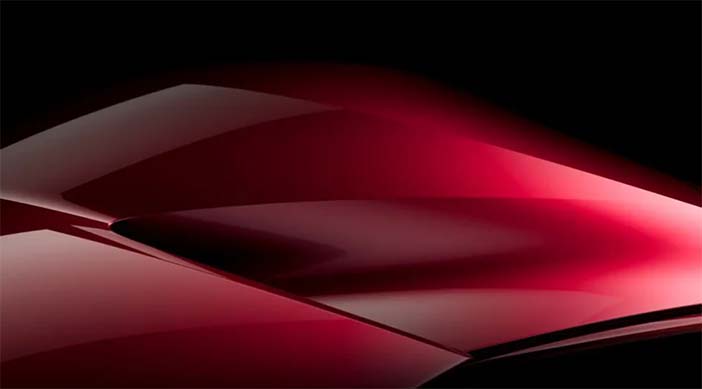
+++ ALFA ROMEO is preparing to reveal a new concept car that will embody the brand’s “vision for the future” at next month’s Paris Motor Show. In a release to tease the unveil, Alfa Romeo said its new creation will be a car “every Alfisti has been waiting for, capturing the distinctive interpretation of the automobile embedded in the DNA of the Biscione: one that transcends the notion of a mere means of transport and embraces the purest of driving emotions”. Beyond the bombast, the company refrained from giving us any concrete information on the concept. So it’s unclear what, exactly, is in store; a new SUV, perhaps, that will bridge the gap between the Tonale and Stelvio; a compact hatchback to recreate the spirit of the 147 and Giulietta; or maybe even a design that points us towards the all-electric successor to the Giulia saloon. The teaser image at least shows us the concept will be painted in familiar Alfa red, and the brand says it will add “sportiness” to make the concept a “masterpiece”. Read into that what you will. The concept is also claimed to be a driver’s car, with the release stating it is “created for those who still love to drive and seek authentic experiences behind the wheel”. The Paris show runs from 12 to 18 October, with Alfa’s big unveiling expected on the first day. +++
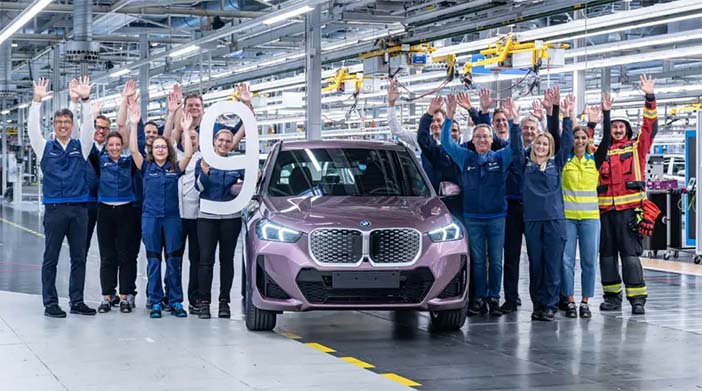
+++ BMW ’s Regensburg plant has built 9 million cars since 1986 and the one that tipped the counter over is an iX1 painted in a shade you will not see twice in a parking lot: Velvet Orchid II Metallic. The electric SUV was built to a Swedish customer’s own specification and BMW timed the milestone to land in the plant’s 40th year of production. That is not a coincidence BMW left to chance. Regensburg started building cars in 1986 with the E30 3 Series. BMW’s agreement with the city then called for 400 cars a day and 3.500 jobs. In 2025 the plant ran 3 shifts. BMW said a new vehicle was completed about every 57 seconds. That 2025 pace confirmed Regensburg as BMW’s highest-volume factory in Europe, with roughly 356.000 vehicles shipped worldwide that year. Around 9.000 people now work across the Regensburg and Wackersdorf sites, building on a workforce commitment that started far smaller. The plant’s current lineup centers on the X1 and X2 models. Gasoline, plug-in hybrid and fully electric versions all run down the same line. That flexibility let BMW build more than 150.000 electrified vehicles at Regensburg in 2025 without disrupting output of combustion models. Over 4 decades the 3 Series has quietly done much of the heavy lifting at the plant, but its exact share of the 9 million total is not broken down. BMW instead highlights that Regensburg passed 8.7 million vehicles built by the end of 2025, then reached the 9.000.000 mark in September 2026 in its 40th year of operation. Velvet Orchid II Metallic belongs to BMW’s Individual paint program, the option that lets buyers step outside the standard color chart for something closer to a one-off. As BMW put it, that shade is not the sort of paint color that disappears into a dealer’s parking lot. Ordering a custom finish through BMW Individual means the car gets built to that Swedish buyer’s own specification rather than pulled from standard stock. That is what happened with this iX1. BMW describes the 9-millionth car as more about what it stands for than its sheet metal. The automaker uses it as proof of a production system that can switch between powertrains without slowing down, and of its push toward front-wheel-drive-based SUVs. That push mirrors a broader shift already playing out across BMW’s lineup, from the shrinking future of petrol-only SUVs to electric-first architecture arriving on new BMW models. Regensburg’s ability to build all of it on one line, without a dedicated EV plant, is the real story behind the orchid-colored paint job. +++
+++ GENERAL MOTORS ’ market share in the United States slipped from 17.6 percent in the first half of 2025 to 16.8 percent over the same period this year. Toyota moved in the opposite direction, growing from 15.5 percent to 15.8 percent in that same window; a modest-sounding shift that adds up to real ground lost and gained between 2 direct rivals fighting over the same buyers. GM is quickly realizing its misstep. The mechanism is straightforward: hybrids are having a moment and GM has almost nothing to sell into it. Hybrid share of the overall US market climbed from 16 percent in February to 19 percent in August, driven largely by petrol prices spiking after the attack by Israel ands the UNited States on Iran war began, with one analyst projecting hybrids could reach a 34 percent share by 2031. Toyota captured 49.2 percent of that hybrid market in the first quarter alone. GM’s entire US hybrid line-up, meanwhile, consists of 2 Corvettes: the $111,000 E-Ray and the $227,000 ZR1X; neither remotely aimed at the mainstream buyers actually driving the hybrid surge. Reuters industry sources say GM showrooms could stay effectively hybrid-free in that mainstream sense until near the end of the decade, even though GM has acknowledged the gap and promised change since January. Volkswagen Group’s US EV numbers across all brands cratered even harder: first-quarter electric car deliveries in the US fell 80 percent year-over-year, dropping to just 4.000 units from 19.900 a year earlier, according to the company’s own delivery report. Unlike GM, Volkswagen’s problem isn’t a hybrid gap; it’s slowly closing: the VW brand currently sells zero hybrids of any kind in the US, a genuinely unusual position for a company competing directly against Toyota and Honda’s hybrid-first line-ups. That’s finally starting to change: Volkswagen announced just over a week ago that it will accelerate hybrid versions of the Tiguan, Atlas, and Atlas Cross Sport as part of what it’s calling a dedicated North America strategy. Unlike hybrids, the EV side of this story cuts the opposite way from what many expected. Market share of electric cars in the United States actually fell from 14.4 percent in September 2025 to 7.1 percent this May, following the elimination of federal EV tax credits. Europe, facing similar petrol-price pressure, has moved the other direction entirely: 1 in 4 new cars sold there is now an EV, a reminder that policy environment, not just fuel prices, is steering which electrified technology actually wins in a given market. Neither GM nor VW is ignoring the problem; they’re just starting from a deep hole. General Motors CEO Mary Barra has remained personally sceptical of hybrids even while her own company plans plug-in hybrids for North America, telling reporters earlier this year she still believes EVs will win because they’re simply “better vehicles”. That’s a notably different tone than the company she runs is now taking in its own product planning. Toyota’s advantage traces back to a much older decision: it never treated hybrids as a stopgap in the first place, a patience that’s now paying off against rivals racing to catch up on a technology they spent the better part of a decade treating as obsolete. +++
+++ Automobiles and tech have come a long way together. Today, cars aren’t just driven, but they can drive themselves too. Beyond that, operating and controlling them has also become more convenient than ever. Thanks to Mercedes-Benz, which introduced the voice command feature in 1996 with its S-Class and BMW which took things a step further with gesture control in the 7 Series in 2015, interacting with cars has become more intuitive. But have you ever wondered what would happen if voice command and gesture control were combined to make cars even smarter? HYUNDAI has already thought of that and has filed a patent for the same. So, it’s going to feel more like a human interaction than you’re talking to a robot or some artificial assistant tool. Imagine you want to roll down your window; just point at the window and say, “Hey, roll down my window”, and your car does it. Sounds interesting, right? That’s what Hyundai’s newly filed patent is all about. And it doesn’t stop at a few basic controls. The system could potentially let you interact with almost every major function of the car, including infotainment systems, climate control, opening or closing the sunroof and even door opening/closing. Well, some cars in China are already doing this, but Hyundai is taking the idea a step further by combining those gestures with voice commands.| As mentioned in the USPTO application 2026/0260654 A1, the system uses cameras, sensors, and microphones to determine your actions and analyse your voice. No matter whether you’re behind the wheel or sitting in the second row or even in the last row, the system would keep an eye and an ear on every passenger in real time and respond accordingly. It would be smart enough to recognize individual hand gestures, making sure your commands don’t get mixed up with someone else’s. It may also include a push-to-talk button in each row so that it only listens when you actually want it to. Hyundai’s “point and speak” technology remains a patent concept for now. Moving ahead, turning this idea into a production-ready system would require further research, extensive testing, and integration with Hyundai’s existing ecosystem. The automaker has not stated an official timeline for when, or even if this system will make its way into production cars. Until then, the good old voice command still does the job. +++
+++ MAZDA doesn’t exactly have a long and illustrious history of making hot hatchbacks. But on the rare occasions that it does, we can say these were solid efforts. The 323 GT-X was a homologation special for the World Rally Championship and it took decades for Mazda to follow it up with the 3 MPS. It was Hiroshima’s last hot hatch. Mazda produced it from 2007 to 2013 in 2 generations, and it hasn’t built a performance hatch since. Its 2.3-liter turbocharged engine was good for 263 hp and 380 Nm for both generations of the car. Oh, and it was front-wheel drive with a limited-slip differential instead of being all-wheel drive. Torque steer was, indeed, the order of the day. It’s been 13 years since Mazda last made a hot hatch, but a report from Japan hints it’s coming back: the ‘3’, now in its 7th year of production, will get a performance version. The basis? The Mazda Spirit Racing 3 concept shown at the 2024 Tokyo Auto Salon. It premiered alongside the Mazda Spirit Racing Roadster and later became a limited-run production model with more power and handling upgrades than the standard MX-5. It made 200hp, all without the help of any turbocharging, just old-school tuning through hardware and a little bit of software. The report cited ‘informants’ on the possible powertrain: the 2.5-liter turbo engine, available on markets outside Europe, is the prime candidate for tuning. As it is, that engine makes 255 hp and 425 Nm on premium fuel, so it has solid foundations if Mazda ever actually pushes through with it. Now, the question would be how much power it could make. The publication reckons about 300 hp, putting it right in the crosshairs of the GR Corolla. There’s a strong possibility of it being all-wheel drive, and given that the old 3 MPS was often criticized for torque steer, that might be the way to go. If so, adding all-wheel drive would be a nod to the often-forgotten 323 GTX from back in the day. The publication also claimed it might be out as early as the first half of 2027. Given that, the Spirit Racing 3 could reach production, as the commercial viability of the Spirit Racing brand proved successful for the MX-5. Besides, for a company that prides itself on Jinba Ittai and the joy of driving, a hot hatch is a strange omission that will hopefully be rectified soon. +++
+++ One of the headlines of the investment announcement by McLAREN is the long-awaited confirmation of a SUV, which has been under consideration for years (long before the merger with Forseven) and which will be charged with driving a huge increase in Woking’s luxury car market share. McLaren is the last ‘mainstream’ luxury and sports car manufacturer to not offer an SUV, having doubled down on its supercar focus as rival marques pushed for higher volumes in recent years with higher-riding, 5-door model lines, including the Ferrari Purosangue, Aston Martin DBX and Lamborghini Urus. Following the Forseven merger, the company pledged to expand its model range beyond the mid-engined supercars it has made exclusively since it was founded, but it is only now that it has confirmed a “performance SUV” is one of its upcoming models. Set to be powered by one of McLaren’s new self-developed hybrid powertrains and be launched by 2030, the unnamed new model will be a natural rival to the DBX and Purosangue, but is tipped to still be more of a supercar than a luxury car, with a spokesman revealing that it could stay true to McLaren tradition in being built around a carbon tub, like its mid-engined stablemates. “It’s one of the discussions we’re having at the moment, because nobody has ever done this before”, he said. “Every other SUV of this type has been aluminium, and we’ve got a number of options at the moment for what the body structure will be in the future. If we went that way, it would be the first. It would be incredibly special”. The spokesman acknowledged that there were “challenges we would have to overcome”, in opting for a carbon tub (such as the impact on refinement, cost and repairability) but said the company was having “some really interesting discussions at the moment as to what way we should go”. Asked if those ongoing discussions meant the SUV was still in the early stages of development, the spokesman said “yes”, but said the company still plans to launch it this side of 2030. Whatever its technical make-up, the SUV is planned to contribute significantly to McLaren’s planned volume increase over the coming years. Straughan would not be drawn on a target number, but pointed to the success of rivals like the Aston Martin DBX, Lamborghini Urus and Bentley Bentayga, which are comfortably their respective makers’ best-selling models. “In terms of volume aspirations, you can guess as well as I can as to where this could go”, he said, noting that McLaren’s volumes “are about half of the next in the league table”, referring to Aston Martin, which sells around 6.000 cars per year. Although it is preparing for a wide-reaching revamp of its line-up and production operation, McLaren will continue to produce its existing mid-engined supercars in Woking in the coming years, with no plans for a ‘firebreak’ like Jaguar imposed for a year between its previous-generation line-up and the imminent Type 01 GT. “A small company like McLaren can’t afford that”, the spokesman said, “but we will start to phase in new products as quickly as we possibly can – and it’s not too far away, either”. +++
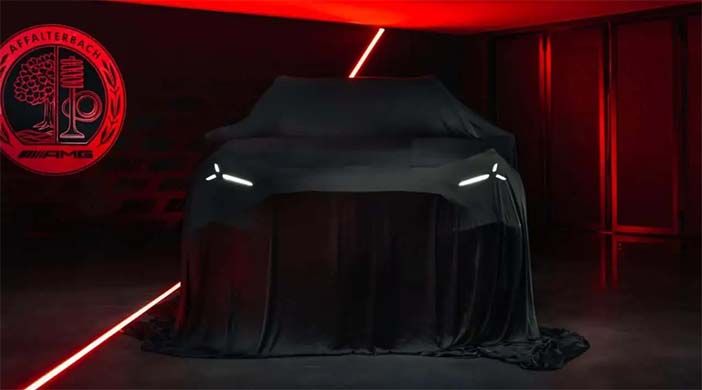
+++ MERCEDES-AMG plans for its first independently developed SUV are coming into focus, even if they are not yet official. Several outlets report that the fully electric GT model will debut on October 17, 2026. The world premiere is expected at The 140 Festival, staged by the Mercedes-Benz Museum in Stuttgart. The SUV is described as a clean-sheet AMG project rather than a reworked donor model. According to a spokesman, October 17, 2026 is the date cited for the reveal, but the SUV will not reach garages right away. Reports point to a 2027 market launch, with early deliveries mentioned for the beginning of that year and no firm month confirmed. The project itself is not new. AMG announced plans for a large electric SUV back in November 2024, describing a full-size “super-SUV” that would sit above current EQE and EQS SUVs and act as the second model on the all-electric AMG.EA platform. Production is expected to land at Sindelfingen, a plant Mercedes-Benz has already converted for electric vehicle assembly. That marks a shift for AMG products that traditionally come out of Affalterbach. Prototype coverage has linked test vehicles to advanced chassis technology, but Mercedes-AMG has yet to publish full suspension and steering specifications for the SUV. The GT SUV is the second vehicle built on AMG.EA, the dedicated electric architecture AMG developed for its own performance EVs. The first is the Mercedes-AMG GT 4-Door Coupe, a performance sedan that has been revealed but not yet launched onto the market. That sedan sets a brutal benchmark. The range-topping GT 63 4-Door is quoted with 1.153 hp and up to 2.000 Nm, an 800-volt electrical system, a 106 kWh battery and direct-current fast charging with peak power of more than 600 kilowatts at suitable stations. AMG has not confirmed whether the SUV will match those numbers. Its tri-motor electric SUV coupe layout is expected to share the axial-flux YASA motor concept, directly cooled battery cells and 800-volt electrical architecture with its four-door relative. The SUV’s proposed role in AMG’s broader shift is clear. It builds on the brand’s electrified sedan work and would push AMG.EA into a full-size super-SUV placed above the current EQE and EQS SUVs. +++
+++ OPEL will introduce the Astra GSE Line, a lukewarm, style-focused trim designed to emulate the brand’s range of hot hatchbacks and SUVs. It follows in the footsteps of the new Mokka GSE and Corsa GSE, with a similar set of visual enhancements, but none of the power or chassis tweaks … yet. Set to make its public debut at the Paris Motor Show next month and available to order from the spring, the Astra GSE Line will be offered with a full choice of petrol, hybrid, plug-in hybrid and pure-electric powertrains. While exact specifications haven’t been revealed, it’s thought that, for the time being, the most powerful variant will be the 1.6 plug-in hybrid with 195 hp. However, Vauxhall has confirmed a new “circa 280 hp variant” will be added to the Astra GSE Line range later in 2027. This is also likely to use a plug-in hybrid powertrain, with the same 1.6-litre petrol engine boosted via a punchier electric motor. All Astra GSE Line models get a host of styling upgrades that bring the family hatch (and Sports Tourer estate) in line with the full-fat Mokka and Corsa GSE. Replacing the previous GS trim, GSE Line brings a new front-end design with GSE Line graphics on the bumper, plus 18-inch diamond-cut alloy wheels. Inside, there’s yellow GSE-inspired stitching for the optional sports seats, but no retina-searing yellow seatbelts, as found in the hot Corsa. The same stitching features on the Astra’s steering wheel, doors and central armrest. Prices haven’t been revealed, but we don’t expect a significant rise over the outgoing GS. Opel has confirmed that “further GSE Line models will follow”, with more details set to be announced at the Paris Motor Show in October. +++
+++ VOLVO will launch 13 new cars by the end of 2030 in what it calls the “largest and most ambitious” range expansion in its history, and the new models are set to include saloons and estates. The incoming cars will be a mix of electric vehicles and hybrids, and will give the firm a regionalised portfolio, with separate offerings for Western markets and China. Volvo has yet to disclose details of the line-up. The company says the decision to regionalise its line-up is driven by “technology restrictions, trade tariffs and diverging customer preferences” and it aims to turn “regionalisation into a competitive advantage”. There will be 7 new cars for Western markets, which will sit on the firm’s existing SPA2 and SPA3 architectures and use its HuginCore computing platform. These will be split between cars focused on the US market, including a D-segment electric SUV, and Europe. Volvo says that in Europe it will offer a “full BEV line-up” by 2030, with the models including “new low- and high-body types”. Volvo classes high-body vehicles as SUV, and low-body types as saloons and estates, hinting at a return to its more traditional roots. Volvo technology chief Alexander Petrofski noted that different countries within Europe are electrifying at a different rate and, as a result, “an individual car will be offered with a BEV propulsion, a PHEV propulsion and a HEV [hybrid]propulsion”. The SPA2 architecture is currently used for the EX90 and ES90, while the SPA3 architecture underpins the new EX60. Meanwhile, there will be 6 new models specifically for China. They will be developed in collaboration with parent firm Geely and use shared platforms and a dedicated Chinese tech stack. The firm already offers the EM90 MPV as a China-only model. Volvo says it is aiming to double its market share in the full-BEV segment but will also invest in a new third-generation hybrid system for “customers still reluctant to go fully electric”. It has recently upgraded the XC90 and XC60 plug-in hybrids with a significantly bigger battery, enabling up to 200 km of range with the engine off; more than any other PHEV on sale. The new cars will also move Volvo into “the next era of design”, with the firm’s design efforts now led by Thomas Ingenlath, who has returned to the firm after a stint running Polestar. Volvo boss Håkan Samuelsson said the firm’s “showrooms will look very different in 2030”. He added: “This is our strongest product pipeline ever, tailored to regional needs, and emphasises our ambition to be the leading premium car brand”. Volvo says developing the new models will require less investment than previously because they will be based on existing architectures, which will help its efforts to achieve strong growth and push its EBIT (operating profit) beyond 8%. The firm says it will also introduce a new business model built on “simplicity, transparency and precision”. That will include “transparent pricing” and a line of cars tailored for fast delivery. +++