
+++ Automakers use carbon fiber as a way to keep their vehicles light, yet strong. Sports car and EV makers especially love the lightweight material for its durability and weight savings. But if the European Union has anything to say about it, CARBON FIBRE could be deemed a “hazardous material” under EU law, putting dozens of automakers at risk. An amendment drafted by the European Parliament aims to add carbon fiber to the EU’s list of hazardous materials. That currently includes lead, cadmium, mercury and hexavalent chromium; materials still used sparingly in automotive and aircraft manufacturing. The amendment was added under revision to the EU’s End of Life Vehicles Directive (the government arm directly responsible for recycling discarded vehicles). The EU believes that carbon fiber filaments could become airborne and be harmful if they come in contact with human skin. This is the first time anywhere in the world that a governmental entity has deemed carbon fiber a hazardous material. If Parliament officially adopts the amendment, it would take effect in Europe beginning in 2029. Companies would gradually have to wind down carbon fiber use in their manufacturing. Auto manufacturing alone accounts for up to 20 percent of all carbon fiber use worldwide. Stocks of Japan’s carbon fiber manufacturers fell sharply following the announcement by the EU. Asian brands would be hit hardest by the carbon fiber ban, with Teijin, Toray Industries and Mitsubishi Chemical accounting for 54 percent of the entire carbon fiber manufacturing market globally. Europe accounts for the vast majority of all other carbon fiber manufacturing. Sports car and supercar makers would undoubtedly be hit hardest by the proposed ban, but certain electric vehicle manufacturers would also suffer. EV makers like BMW, Hyundai, Lucid and Tesla all use carbon fiber extensively in their construction. The good news is that carbon fiber was a $5.5 billion industry in 2024, which means the amendment will face strong opposition from the aircraft and automotive sectors before it becomes law. +++
+++ It’s been well over a decade since FERRARI offered a manual transmission on one of their cars. The California was the last one, offering a manual box until 2012. But with only 3 (not a typo) examples making it into customer hands out of a total production run of around 17.000 units, it’s hardly a huge mystery why Ferrari went away from the vaunted gated gear selector. But Gianmaria Fulgenzi, Ferrari’s Chief Product Development Officer, has some thoughts on how that might change in the future. Fulgenzi thinks Ferrari might be reaching the “limit of performance”. With those limitations, Fulgenzi says the brand is entertaining the idea of reintroducing the manual transmission to its cars. “I don’t think all our customers want to have to train every morning just to drive our cars”, Fulgenzi says, discussing how even road-going Ferrari models are now capable of delivering Formula 1 levels of acceleration and lateral forces. Of course, that’s not to say Ferrari won’t continue racing rivals like Lamborghini in the horsepower wars, although Fulgenzi does think power will creep up more slowly over the next 10 years, relative to the current pace. The performance comment is relevant since Ferrari’s initial stance on manuals (aside from the undeniably low take rate) was that they hindered performance. Apparently, the Chief Product Development Officer is willing to make an exception, telling that “it’s something that could be in the future”. Here’s the juicy part: Fulgenzi says the manual won’t be for everyone. He claims that if the manual returns, it would show up as “probably an Icona car”. These Icona cars are the ultimate in exclusivity, represented by high-ticket flagships like the Ferrari Daytona SP3. That model specifically carried a $2.25 million price tag. While Ferrari isn’t the only automaker to feature a gated manual, it’s become almost inextricably linked to the brand, as the automaker has offered them since the 1950s. Drivers love it for the same reasons people like mechanical keyboards—tactile and aural feedback that lets you get the most of a mechanical experience. Plus, at least in the gated manual’s case, it looks nice. Ferrari isn’t looking to dilute that tradition of specialness, which is why any manual transmission variant would be strictly for the hardest to come by models. For now, anyway. Some are speculating that Ferrari has their eye on bringing an F40 successor to market, as factory F1 driver Lewis Hamilton has recently suggested. The “F44”, a name Hamilton suggested as it shares his racing number, would definitely qualify as an Icona car. The claims aren’t completely off-base, either. Fulgenzi claimed that “customers are already asking for” a manual transmission. But that’s been the case for years; perhaps it’s serendipitous that Fulgenzi’s remark comes just a couple weeks after Hamilton initially expressed a desire to build the F40 successor. +++
+++ LEXUS isn’t exactly known for rushing into things, but when it moves, it tends to do so with quiet confidence. Now, it looks like the Lexus family is set to expand once again with the addition of a new all-electric 3-row SUV. We’re getting an early sense of what it might look like, and it’s shaping up to be an interesting electric counterpart to the brand’s existing offerings. The new model, likely to be called the TZ, will share its underpinnings with a Toyota-branded sibling. It’s expected to fill the role of a 3-row alternative to the petrol-powered Lexus TX, stepping into a space that’s growing fast in the EV market, where size, range and badge cachet all matter. Little is known about the production model, but in 2023, Lexus applied to trademark the TZ450e and TZ550e names, indicating that at least 2 electric models are being prepared. Lexus could use the same 77 kWh battery offered in the new RZ, but given the size and expected weight of this 3-row SUV, it seems likely the TZ550e will need a pack with increased capacity. For comparison, the Kia EV9, one of the few EVs in this segment already on sale, offers a choice between 76.1 kWh and 99.8 kWh battery packs. Talking about the RZ, the entry-level version is the RZ 350e that features a single electric motor at the front axle with 224 hp / 269 Nm and has a 575 km range. The RZ 500e packs 2 electric motors that deliver 375 hp for a 0-100 km/h time of 4.6 seconds and has a lower estimated range of 500 km. For the 2026 model year, Lexus added the RZ 550e F Sport to the line-up. It produces 402 hp from its dual-motor setup and accelerates to 100 km/h in 4.4 seconds. That added performance, however, comes at a cost as range drops to 450 km. Since the TZ will be larger and heavier than the RZ, to quote Jaws‘ most iconic line, Lexus is gonna need a bigger boat – em, I mean battery. +++
+++ To say MASERATI is in the red would be a major understatement. Sales plummeted by 57 percent last year when only 11.300 people bought a car bearing the Trident logo. And 2025 isn’t shaping up much better, as the high-end Italian marque has already fallen another 48 percent through March compared to the first three months of 2024. As if that weren’t bad enough, the Trump administration’s new tariffs will wreak havoc. None of Maserati’s models are built in the US, which is traditionally one of the brand’s largest markets. Things are looking bleak enough that Stellantis has hired the McKinsey & Company consultancy firm to assess the worrying situation, especially in terms of the tariff fallout. That said, the parent company of Italy’s ailing luxury brand isn’t looking to offload it. Reuters cites Maserati’s new boss, Santo Ficili, who insists the struggling automaker is not for sale: “Stellantis confirms its commitment towards Italy, its workers, and all its brands, including Maserati”. That promise was included in a letter from Uilm, a trade union representing Italian metalworkers. Despite the tariffs, Ficili, who also oversees Alfa Romeo, claims: “The United States remain a strategic market for Maserati”. The fact that wealthy buyers shopping in the upper echelon are not necessarily interested in EVs isn’t helping either. Maserati had no other way but to abort plans for an electric MC20, fearing people wouldn’t buy it: ‘Market studies for the super sports car segment and especially for MC20 customers has demonstrated that they are very keen on driving powerful ICE engines like the Maserati Nettuno V6, which incorporates F1-derived technologies, but are not ready to switch to BEVs for the foreseeable future. We have decided to discontinue the MC20 BEV Project due to a perceived lack of commercial interest’. Before abruptly resigning late 2024, former CEO Carlos Tavares said Maserati’s problems weren’t about the cars. Instead, he blamed poor marketing and a lack of clear positioning: [Maserati is a brand that is not just about sports cars; it is about gran turismo, it is about quality of life, la dolce vita and technology’. Let’s not forget that someone within Stellantis hinted a sale wasn’t off the table. Last year, then-CFO Natalie Knight let it slip: “There could be some point in the future when we look at what’s the best home for Maserati.” Stellantis swiftly denied such plans and issued a press release confirming the Modena-based brand would stay in the family. And while I believe in the saying “there’s no smoke without fire”, Stellantis seems adamant about keeping Maserati. Ficili has also ruled out a merger with Alfa Romeo, explaining that while Alfa is “premium,” Maserati is “luxury.” However, he did acknowledge the possibility of closer collaboration, though without going into detail. While full-on badge engineering seems unlikely, sharing more parts to further cut costs might be on the table. Stellantis has reiterated its 2021 commitment to keep all 14 brands for at least 10 years, including Abarth, DS Automobiles, Lancia, Chrysler, and the rest of the gang. Meanwhile, the group is finalizing its search for a new CEO to replace Tavares. An announcement is expected during the first half of the year. +++
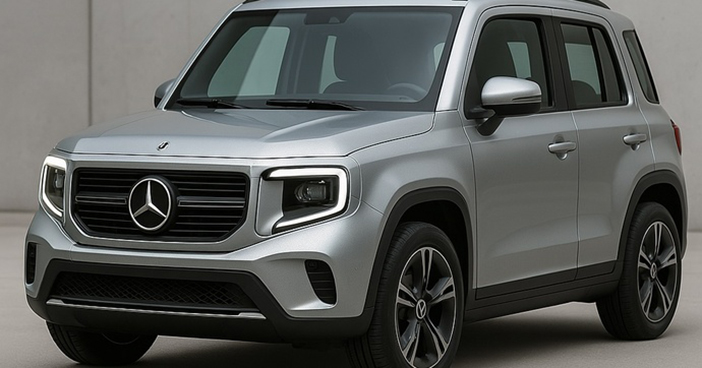
+++ MERCEDES is ramping up the development of its entry-level G-Class, a smaller electric car that will be pitched against a new breed of rugged crossovers such as the upcoming Land Rover Defender ‘Sport’. Pencilled to launch in 2027, the highly anticipated model, currently referred to as ‘Little G’, will be a sibling to the larger, legendary off-roader and sold exclusively as an EV. It is intended to give Mercedes a foothold in the popular rugged crossover market. The smaller G-Class was initially confirmed by Mercedes CEO Ola Källenius at the 2023 Munich motor show. It has been conceived to sit below the existing model in an expansion of the company’s G (for Geländewagen, German for off-road vehicle) sub-brand established in 2020 alongside Maybach, EQ and AMG variants. Unlike those siblings, which sit on a ladder-frame chassis, the new 4×4 will use the German car maker’s new, and more conventional, MB:EA platform. Also underpinning the electric versions of the upcoming GLC and C-Class saloon, MB:EA will give it a unibody construction, an 800 Volt electric architecture and a new fifth-generation battery aimed at providing it with a range of more than 700 km. Visually, the new model will take strong design cues from the “iconic DNA” of the existing G-Class, with “its own character, but it will be a G”, Mercedes design chief Gorden Wagener previously told. It is understood the car will also be marked out from its range-mates by having a lower-case ‘g’ in its nameplate. It will be far from an entry-level model, though: the Little G is expected to be priced from around €85.000 in the Netherlands. By comparison, the only existing electric G-Class model, the G 580 EQ, is priced at €150.634 in the Netherlands. This would, like the current G-Class does now, position it as a luxury option over rivals such as the incoming Defender Sport (set to be priced significantly lower than the full-size Defender) and production version of the Toyota Compact Cruiser (the new entry point into the Land Cruiser range). One key draw of the new G-Class, according to insiders, is its traditional utilitarian design. Autocar has been told it will feature a squared-off profile with flat and near-to-vertical surfaces, giving it a distinctive military-grade look. It will also adopt a glasshouse with an almost flat windscreen, side windows and rear screen. Although an earlier design proposal for the Little G featured headlights with a U-shaped graphic, a more refined version is said to have progressed to a round headlight graphic similar to that of the latest incarnation of the larger G-Class. Further signature design details include rectangular indicators mounted on top of the front wings, angular wheelhouses with flared wheel arches and a spare wheel mounted on the rear tailgate. Despite the model’s upright design and generous ground clearance, Mercedes is said to have achieved a drag coefficient “well below” the 0.44 of the G580 EQ. Inside, it will feature seating for five and offer a different design from the rest of the G-Class range. This will include a shallow dashboard design and a connecting centre console that is similar in look to that of the new third-generation CLA saloon. Power for the standard entry-level Little G is set to come from Mercedes’ new eATS 2.0 electric motors. Different from the Siemens Valeo motors used in existing electric-powered Mercedes models, this set-up adopts a 2-speed gearbox, among other changes, for added efficiency and refinement. In the technically similar electric GLC, the rear motor is claimed to develop up to 367 hp, with a second, smaller motor mounted at the front to bring an additional 150 hp for a potential 490 hp. Basing the Little G on the MB.EA platform means it departs from the ladder-frame construction of the G-Class. However, sources say an advanced four-wheel drive system is in the works ; one that will be capable of mimicking the three mechanical differential locks of the standard G-Class. Alongside this, the new entry-level 4×4 will get dedicated driving modes. A modified version of the GLC’s double-wishbone front and multi-link rear suspension, with air springs offering variable ride height, will provide it with “outstanding” off-road capability. Future performance models are also planned. Pencilled in to arrive from 2028, these models will use Mercedes-AMG’s new axial-flux electric motors, which will also be adopted by the upcoming CLA 45 and GT SUV. Underpinning the decision by Mercedes to expand its G sub-brand is an explosion of off-roader sales in its largest market, China. Last year, Mercedes recorded a 28% decline in net profit, which it blamed almost exclusively on the downturn in interest from buyers in China. Newly launched sub-brands such as BYD’s Fangchengbao, Chery’s iCar and Dongfeng’s Mengshi show a growing interest from buyers for heritage-inspired four-wheel-drive models, something Mercedes wants to capitalise on with the new entry-level car. The resurrection of the Ford Bronco and launch of the Jeep Wrangler 4xe have also caused a surge in sales for rugged, adventure-focused off-roaders in the US – typically the G-Class’s largest market by sales. +++
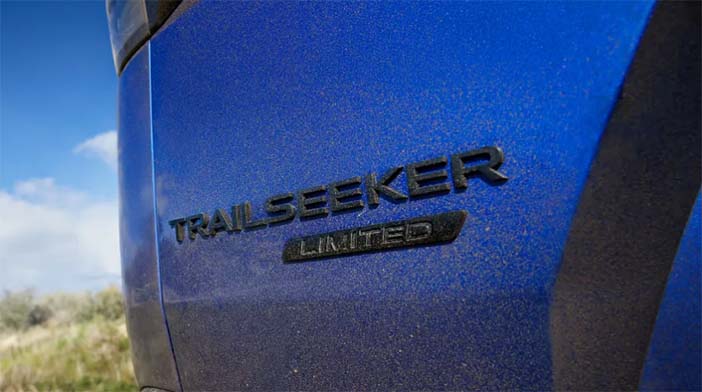
+++ A brand new family-sized electric SUV has been teased by SUBARU ahead of its official reveal at the New York Auto Show later this week. To be called Trailseeker, it will join the Solterra in Subaru’s range as a more spacious and family-friendly model, rivalling popular family EVs including the Skoda Enyaq, Tesla Model Y and the Hyundai Ioniq 5. Teased by an image showing ‘Trailseeker Limited’ badging on classic Subaru Rally blue paintwork, the new car will be the brand’s second full EV, with the ‘Limited’ bit likely to be a trim line used on other models in several markets such as the US. I expect this new model to be larger than the Solterra, with a boxier body that prioritises space and versatility. This will also be reflected in the Trailseeker’s styling, which should have a more rugged appearance with uncoloured plastic cladding, skid plates and chunky roof rails. The new car is expected to use the same e-SGP (Subaru Global Platform) architecture as the Solterra, which is Subaru’s version of Toyota’s e-TGNA platform. This means that it’ll have a bespoke EV architecture with a battery pack under the cabin floor between the axles, plus the option of 1 or 2 e-motors. As a company that’s famed for its cars’ rugged all-wheel drive capability, I expect Subaru to favour the dual-motor layout for most editions of the Trailseeker, helping it match the rest of its ICE model range that includes the Forester, Outback and Crosstrek. I don’t know much more at this stage, but the new model will almost certainly be offered in Europe as the brand readies itself for an expansion into new markets with its more eco-friendly EV and hybrid models. Internationally, Subaru has been riding a wave of popularity in the past few decades thanks to its wide range of rugged and lifestyle-oriented crossover models. This hasn’t been the case in Europe, though, where the brand has typically struggled to secure high sales due to its relatively inefficient petrol engines. This could all be an issue of the past in the EV era, though, with Subaru hoping its cars will have the same appeal as they do in other markets. We’ll find out more in the coming days when the New York Auto Show kicks off, with Subaru having a busy show. Alongside the Trailseeker, it’ll also reveal a brand-new Outback, plus potentially an update for the Solterra now that Toyota has refreshed its version of the car, the BZ4x. +++
+++ Electric vehicle sales in the UNITED STATES are gaining ground, but the road to mainstream dominance is still a long one. While EVs made a notable leap forward in the first quarter of 2025, they continue to account for only a fraction of total new car sales. Some carmakers rode a wave of growth with new models and fresh demand, while others (Tesla included) faced early-year setbacks. In total, 296.227 EVs were sold nationwide between January and March, marking an 11.4 percent increase over the 265.981 units delivered during the same period last year. New data shows that General Motors had a particularly strong showing, with more than 30.000 EVs finding buyers in the first quarter of the year; nearly doubling its output from a year ago. A mix of fresh offerings from Chevrolet and GMC helped drive the gains, while Cadillac continued to post steady performance. Chevrolet alone sold 19.186 electric vehicles in the first quarter of 2025; a 114.2% increase over the 8.957 units it moved in the same quarter last year. The big success story was the Equinox EV, which led the brand’s line-up with 10.329 sales. The Blazer EV followed with a staggering 931.2% increase: rising from just 600 units in th first quarter of 2024 to 6.187 units. The Silverado EV also posted a strong debut with 2.383 deliveries. Meanwhile, the Bolt EV and EUV were essentially absent, with only 13 units sold after GM officially discontinued the models 2 months ago. GMC contributed solid numbers as well. The Hummer EV pickup and SUV posted a combined 3.479 sales, up 108.6%, while the brand also moved 1.249 units of the new Sierra EV. According to Cox Auto, Porsche recorded the highest EV growth rate of any brand, with sales up 249% thanks to the arrival of the new Macan Electric. Toyota’s EV sales climbed 195.7% to 5.610 units, the Volkswagen Group jumped 183% and Volvo spiked 172.9% on the strength of the new EX30 and EX90 models. Tesla by contrast, didn’t share in the early-year enthusiasm. The company saw its US sales drop 9% year-over-year, delivering 128.100 vehicles in the first quarter. Still, even with the decline, Tesla holds a commanding 43.5% share of the U.S. EV market. Several other automakers also saw declines. Mercedes-Benz posted the steepest drops, going down a staggering 58%. Rivian followed with a 37% dip and Kia slipped 24% compared to the same quarter last year. Looking ahead, Cox Automotive expects the rest of the year to be anything but smooth. “The rest of 2025 will likely be a volatile one for EV sales in the U.S., despite the introduction of new product and healthy incentives”, the firm noted. Tariff-related headwinds could weigh heavily, particularly for automakers relying on imported materials. Steel and aluminium tariffs are already a hurdle, and with China supplying much of the world’s EV battery materials, the ongoing trade standoff may distort the market further. +++