
+++ After all the teasers, previews and spy shots, BMW is finally ready to reveal the next-generation 3 Series. The German automaker has a date locked in, and it’s set for September 30. This comes 6 months after its battery-powered counterpart, the i3, made its world premiere. As with any all-new 3 Series debut, this is a hugely important occasion. It’s not just for BMW either, as it’s safe to say that even its rivals will be taking a good look at this redesigned model. Internally known as the G50, it will eventually be joined by the G51 Touring version down the line. A fair bit has already been written about the G50 3 Series. We know that it’ll feature Neue Klasse philosophies inside and out. We are also aware that it will ride on a heavily-evolved version of the CLAR chassis just like the all-new X5. Think of it as a half-step towards the full Neue Klasse platform. The car is also said to carry more recyclable materials, along with more sustainable assembly methods. A recent spy shot of the car showed off its rear end, and it’s a pretty significant departure from the outgoing model. It’s similar to the i3, but the proportions are all different. There’s the higher tail, slim tail lights, and relatively clean flanks. We did see pop-out door handles, though, and safe to say those won’t be allowed in China. That said, the Hoffmeister kink is very much present. As for the interior, expect it to look similar to the i3. As BMW pushes for its Panoramic Vision layout, the traditional dash is gone as we know it. With that in mind, don’t go looking for an iDrive scroll wheel inside, either. So far, the only confirmed powertrain is from the M350. It’ll still be the familiar B58 engine, meaning 3.0-liters, turbocharged and 6 cylinders. BMW has mentioned its power output, and it’s good for 443 hp and 580 Nm of torque. That makes it even more powerful than the E90/E92 M3 from about 20 years ago that, for reference, made 412 hp and 400 m. It’ll also be paired with all-wheel drive, but for the first time ever, it’ll have a dedicated rear-wheel drive mode. As for the rest of the engine choices, we should expect a mix of turbo-fours and diesels, as well as a plug-in hybrid to keep the European legislators happy. At the very least, all have mild-hybrid assistance. Familiar badges will likely remain, namely 318, 320 and 330. This will also be the first generation that will not be offered with a manual across the board. The last manual was offered in Europe for the pre-LCI (pre-facelift) 318d. With that, the pure combustion M3 is the three-pedal enthusiast’s last hope for a 3 Series-shaped car with a clutch. +++
+++ Chinese automakers aren’t coming to Europe; they’ve already arrived. Data published today by the European Automobile Manufacturers’ Association (ACEA) shows BYD is breathing down Ford’s neck on the continent. Registrations of cars made by Build Your Dreams (yes, that’s what BYD stands for) surged by 144.1 percent in the first 8 months of the year, reaching a record 234.099 units. Meanwhile, the Blue Oval continues its free fall, dropping 14.4 percent to 244.938 through August. Yes, BYD is only 10.839 vehicles behind Ford, and if the trend continues, we won’t be too surprised if the two switch positions on the leaderboard even before the end of the year. BYD’s market share in Europe is now at 2.5 percent, compared to 1.1 percent in the January-August 2025 period. This shouldn’t come as a huge surprise, though. BYD has been doing the exact opposite of what Ford has done in Europe: expanding its lineup at a rapid pace. Ford, meanwhile, has spent the past few years shrinking its traditional European lineup. The Ka, Fiesta, Focus and Mondeo have all been axed, leaving the Blue Oval with fewer mainstream nameplates to work with. CEO Jim Farley once said these cars “were loved by a lot of customers” but not profitable enough to warrant new investments. Additionally, surviving models such as the Puma and Kuga are getting long in the tooth, having been around since 2019. But Ford has a plan to fight back by teaming up with Renault for a series of electric vehicles. The French company will build these cars, possibly including a Fiesta revival based on the Renault 5 and a small crossover related to the Renault 4. These won’t be just rebadged models, as Ford has pledged to give them its own designs and make some tweaks underneath the skin, too. The 2 models are part of a 5-car line-up of “rally-bred vehicles tailored to Europe” coming by the end of the decade. The remaining 3 models will be a Euro-specific Bronco and 2 multi-energy crossovers, possibly replacements for the Puma and Kuga. Meanwhile, the future of the Volkswagen-based Explorer and Capri EVs remains uncertain. But BYD isn’t the only Chinese automaker getting dangerously close to Ford in Europe. MG owner SAIC Motor isn’t far behind, with 230.290 registrations through August, or 19.7 percent more than in the first 8 months of last year. The Geely Group has already overtaken Ford, with 289.128 registrations, rising 11.6 percent year over year. However, it’s not an apples-to-apples comparison since the numbers include all Geely Group brands, such as Volvo, Polestar, Lotus and others. Yet another Chinese conglomerate is rising fast in Europe. Chery, including the Jaecoo, Jetour and Omoda brands, is up 279.7 percent through August, reaching 207,871 registrations. If I do the math, Geely, BYD, SAIC and Chery now have a 10.4 percent market share in Europe. That’s right: one in 10 cars registered in Europe now has a Chinese connection. I should mention that by Europe, ACEA means all 27 EU member states, Iceland, Liechtenstein, Norway, Switzerland and the United Kingdom. While it’s not the entire continent, the numbers accurately reflect the broader trend since they take into account all the major markets. +++
+++ The Huracán Sterrato was a big hit with LAMBORGHINI faithful. Unfortunately, the ruggedized supercar was short-lived, surviving for just a few years before production ended. But that doesn’t necessarily mean the Sterrato name is going away forever. Lamborghini still hasn’t confirmed a Sterrato-style version of its new twin-turbo V8 supercar, the Temerario, but executives haven’t ruled out the idea entirely. Lamborghini Product Line Director Paolo Racchetti recently told: “Definitely, there could be a car such as the Sterrato. I’m not saying we are planning to do that, but I’m not excluding that it could happen again”. That’s obviously not a confirmation, but it certainly leaves the door open for a new Temerario Sterrato. When I spoke with Lamborghini chief marketing & sales officer Federico Foschini at the Goodwood Festival of Speed in July, he said the company was still considering additional Sterrato models. He told: “It’s an opportunity that we can evaluate, for sure”. Foschini acknowledged that Lamborghini can’t pursue every possible derivative at the same time, but said the idea would remain in the background following the success of the Huracán Sterrato. He also suggested that Lamborghini’s existing platforms could make the transition relatively straightforward. He pointed to the Urus SE as an example, noting that there isn’t a huge gap between the standard Urus and what a Sterrato version could be. Lamborghini could use different tires, revised suspension settings and a greater emphasis on off-road driving to create something new without fundamentally changing the vehicle. The Temerario replaces the Huracán as Lamborghini’s entry-level supercar. Unlike its predecessor, though, it uses a plug-in-hybrid powertrain built around a twin-turbocharged 4.0-liter V8 and three electric motors. Combined output is 920 horsepower, with a claimed 0-to-100 kph time of 2.7 seconds and a top speed of 340 kph. The outgoing Sterrato sat 44 millimeters higher than the Huracán Evo, while also gaining a wider track, additional underbody protection, and a dedicated Rally driving mode. A Temerario Sterrato would presumably follow a similar recipe; expect more ground clearance, tougher-looking bodywork, underbody protection, and tires designed to perform on dirt. Lamborghini hasn’t revealed any details for this car, however, so the exact formula remains a mystery. For now, a Temerario Sterrato is still only a possibility, but the company clearly isn’t closing the door on one. +++
+++ For more than a decade, MERCEDES-BENZ has worked with Taiwanese energy company ProLogium to help bring advanced solid-state battery technology to the auto industry. The 2 firms have now strengthened their partnership, meaning Mercedes will get priority access to test the firm’s 4th generation cells, which could help to reshape the automotive industry. Solid-state batteries have long been viewed as the holy grail of battery tech. By replacing the liquid electrolytes of traditional lithium-ion batteries with non-flammable solid materials, these batteries offer higher energy density, support faster charging, are safer, and last longer. Mercedes-Benz, much like BYD, Toyota, Nissan, Honda, Volkswagen, Stellantis, Chery and others, is actively developing and testing these batteries for its next generation of EVs. Some may be ready to hit the market within the next 12 months.
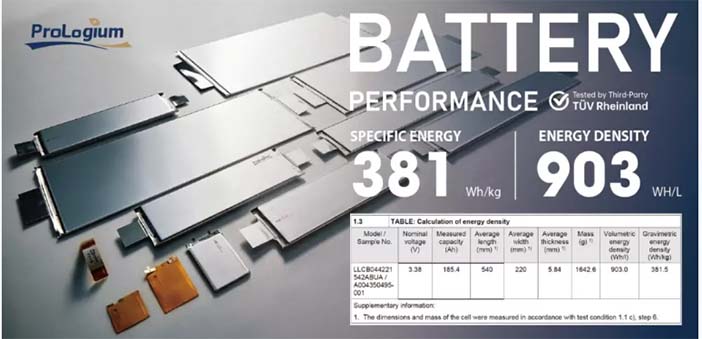
Through its deal with ProLogium, Mercedes-Benz will perform electrical, thermal, and safety testing on the company’s Gen4 lithium ceramic battery cells at its facilities and at third-party testing institutes. These batteries use ceramic separator technology and have a non-flammable inorganic electrolyte, which is said to enable not only fast charging but also high power output. “At Mercedes-Benz, we are committed to shaping the future of electric mobility through technological leadership and innovation”, member of the Board of Management, Jörg Burzer, said. “Our long-standing partnership with ProLogium is a strong example of how we bring the best expertise together to advance next-generation battery technologies. By combining ProLogium’s pioneering solid-state battery approach with Mercedes-Benz’s deep battery development, testing and integration capabilities, we are taking the next step in exploring advanced battery technologies for future electric vehicles”. ProLogium already operates a large battery factory in Taiwan and is planning a site in Dunkirk, France, with a capacity of up to 44 GWh. It says this factory will allow it to provide cells to customers across the continent, including Mercedes. The German brand has another important solid-state battery partner. In addition to working alongside ProLogium, Mercedes-Benz is also testing lithium-metal battery cells from American company Factorial Energy.
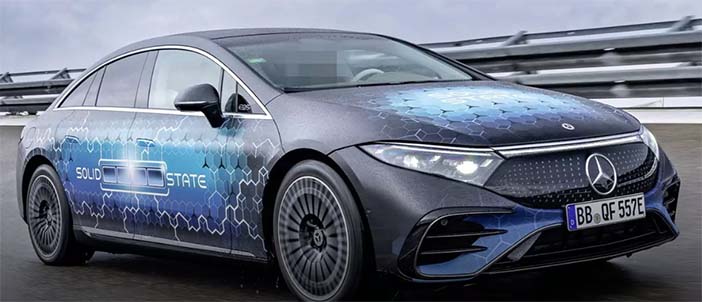
Last year, a Mercedes-Benz EQS equipped with one of Factorial’s solid-state battery packs was driven 1.205 km on a single charge. It could have been driven even further, as Mercedes says the EQS finished the test with an estimated range of 137 km left. +++
+++ At MITSUBISHI , the current Outlander has been on sale in Europe since 2024. Its underlying design goed back to 2021 and is starting to feel outdated. Now, a new report from Japan suggests Mitsubishi is planning a full redesign, giving us an early look at what’s ahead. Mitsubishi is planning a full model overhaul for the Outlander PHEV in 2028. Mitsubishi hasn’t put anything in writing yet, but the report says the next-generation will double down on plug-in hybrid know-how and push its all-wheel-drive tech even further. A 7-year run fits Mitsubishi’s usual playbook, so 2028 sounds about right for a brand-new Outlander. This time, the SUV is expected to lean harder into its electrified identity, not just serve as a hybrid add-on. Mitsubishi is also reportedly developing a larger battery and a more advanced plug-in hybrid system, which could allow for more electric-only driving. For comparison, the latest Japanese Outlander PHEV already has a 22.7 kWh battery; an increase from the previous 20 kWh version. Mitsubishi’s Super All-Wheel Control system could get a serious upgrade, first arriving with the Pajero. Right now, the Outlander PHEV runs 2 electric motors: 1 per axle. The next version might go even further, with more precise control at each wheel. Still, Response says Mitsubishi could stick with the twin-motor setup if costs get in the way. Inside, we can expect a panoramic dashboard display, an AI co-driver that adapts to the driver and a more upscale cabin. It will be some time before 2028 arrives, and Mitsubishi has not shared production details yet. +++
+ ROBOTAXIS are a pretty polarizing subject. People are still a bit distrusting of them: after all, changing out the human brain for some silicon isn’t an easy concept to grasp. And with some of the more high-profile screw-ups that the public has seen, it’s easy to wag a finger when one passes by. But when it comes to actually getting into an accident, it turns out that Waymo’s robotaxis are actually way less likely to cause injury than when us meatbags are actually in the drivers seat, at least according to the company’s publicly shared data. The data comes from Waymo’s latest blog post where it reveals that its cars have 82% fewer incidents that result in an injury when compared to a human driver. And before you think that’s just a small sample of driving, Waymo says that figure is its cumulative total as of June and represents over 430 million kilometres of fully autonomous driving. For serious crashes, that number moves the needle even more in Waymo’s favor. Data shows that Waymo’s cars were involved in 95% fewer collisions that caused serious injury of worse, which effectively represents a 20-fold reduction compared to humans. There were 93% fewer pedestrian incidents that resulted in injuries compared to human drivers. For cyclists and motorcyclists, the figures were 86% and 82%, respectively. Let’s put this into perspective a bit more. Waymo’s data shows that, on average, there are 1.2 crashes per 1 million kilometres (1.9 “Incidents Per Million Miles”) in the U.S. However, in the areas where it operates, the frequency of incidents with an injury reported is higher at around 3.77 IPMM (2.2 per 1 million kilometres). Waymo’s operational total is significantly lower at just 0.67 IPMM (4.1 per 1 million kilometres). There are some asterisks, of course. Waymo’s numbers only measured the 5 metropolitan areas where it operated during the study period. Those national numbers represent everywhere: every road, every human screw-up, and any poorly-designed road structure that might even throw the smartest, most sensor-equipped car in for a loop. Still, even a recent independent study by the IIHS backs up Waymo’s point: Its driverless robotaxis crash far less frequently than humans. So, sure, maybe those Waymos on the road can be a bit of a nuisance to the neighborhood. And maybe they’re getting a bunch of parking tickets. And they used to honk in the middle of the night while people were trying to sleep. But there is an undeniable uptick in the safety of passengers and vulnerable road users that’s pretty hard to overlook. Based on its total miles driven, Waymo interprets the data as showing that it avoiding 841 injury-causing crashes over the 271 million miles that its cars have driven without anyone behind the wheel. That’s a good figure. As the company expands to more markets (including ones with snow) we’ll see how the statistics evolve. +++
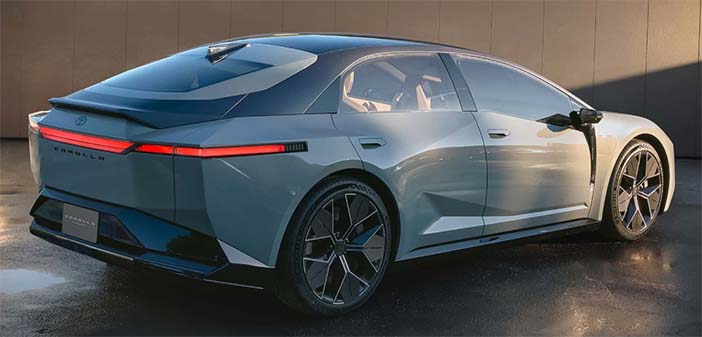
+++ The Corolla is one of TOYOTA ’s best-selling vehicles, as US dealers moved 131.403 units in the first 6 months of the year. That was a 9.5% increase, which is a tad surprising as the current model is nearly a decade old. However, a redesigned car is on the horizon, and it was apparently teased over the summer. The single image suggested the upcoming model will echo the Corolla concept, introduced at the 2025 Japan Mobility Show. Fast forward to today. The traditional sedan could give way to a new liftback body style. This could effectively combine today’s sedan and hatchback into one vehicle. While that remains to be seen, Toyota’s CEO has made it his mission to reduce the number of variants the company offers as part of an effort to increase profitability. This begs the question of whether the automaker really needs both Corolla variants, especially when they offer a Corolla Cross. Additional details are murky, but the publication expects the car to ride on an updated version of the current TNGA-C platform. They also suggest the model could be offered with up to 4 different powertrains. Starting with the hybrid, it’s expected to use a new 1.5-liter 4-cylinder engine. The powertrain will reportedly have a combined output of around 136 hp, which is roughly the same as today’s model. While that’s a bit of a bummer, fuel efficiency could climb by 10 to 20%. Furthermore, like today’s Corolla Hybrid, there could be an optional all-wheel-drive system. Buyers looking for more efficiency will reportedly be able to opt for a plug-in hybrid variant. It will presumably have a larger battery pack as well as a beefier electric motor. A fully electric variant is also expected, and it could offer an optional dual-motor all-wheel drive system. Details are hazy, but the magazine expects the EV will offer at least 400 km of range. For markets outside Europe, there will also be petrol-powered variants. The ‘regular’ model could have a turbocharged 1.5- or 2.0-liter engine, while the GR Corolla is expected to get a 2.0-liter turbo packing up to 400 hp. +++
+++ In the UNITED STATES , dozens of lawmakers, including Democrats and Republicans, want Chinese vehicles permanently banned from US soil. The bipartisan initiative comes less than 2 weeks after president Donald Trump said he’s fine with Chinese brands selling cars locally, as long as they are manufactured in the US. American automakers, including Ford, General Motors and Stellantis, have been lobbying for stronger policies to keep Chinese vehicles out, a sentiment echoed by senators on both sides of the political aisle. The rush to enact a permanent ban comes just as China’s president Xi Jinping embarks on a visit to the US. Republican senator Bernie Moreno and Democratic senator Elissa Slotkin are central to the latest efforts, proposing legislation for an outright ban which already has 100 co-sponsors. They’re looking to win Senate approval for the bill this week. While one might assume President Trump’s tricky relationship with China would have prompted him to adopt a hardline stance against Chinese cars, that hasn’t been the case. Former President Joe Biden signed legislation in January 2025 to prohibit the sale of vehicles using hardware and software systems from China, starting with the software ban from the 2027 model year and the hardware ban from 2030. So far, this rule has largely prevented Chinese companies from entering the US market. However, the Trump administration has issued a waiver to Volvo, allowing the Chinese-owned Swedish company to continue selling its cars in the States. Legislation being proposed by Senator Moreno and Senator Slotkin aims to prevent the administration from issuing waivers like this. “Whether you are a Democrat or Republican, no one wants Chinese cars in America”, Slotkin declared during a press conference this week. She also pushed back against Trump’s apparent willingness to allow Chinese companies to build cars locally, stating this would signify “the beginning of the end of auto manufacturing in the United States”. Speaking with Fox News earlier this month, president Trump declared that “If China wanted to come in and open a plant to build their cars here, I’d be okay with that”. +++