+++ For the first time since the early days of the EV boom, Tesla no longer holds a majority of CALIFORNIA ’s electric vehicle market. According to new data from the California New Car Dealers Association, Tesla’s market share dropped to 43.9% in the first quarter of 2025, down from 55.5% just a year ago, and a far cry from the over 70% dominance it held back in 2022. This isn’t a case of EV sales slowing down overall. Quite the opposite, as Californians bought more electric vehicles than ever this quarter. They’re just choosing models from Honda, Hyundai, Ford and General Motors as well. That shift has massive implications, not just for Tesla, but for the pace of EV adoption across the U.S. Tesla’s dip in popularity comes at a time when its 2 bestselling vehicles, the Model Y and Model 3, are still the most registered EVs in the state. But many shoppers seem tired of their aging designs, which have only received modest refreshes. Tesla’s controversial Cybertruck only moved 2.282 units in the first quarter of the year; less than half of what Hyundai managed with the Ioniq 5. Analysts also point to another factor: Elon Musk. The once-admired champion of electric vehicles has become a polarizing figure thanks to his political activities and increasingly erratic public behaviour. In left-leaning California, that might be hurting Tesla as much as stale design or tough competition. While Tesla stumbled, other automakers surged. Honda entered the EV market with a bang, registering nearly 4.500 units of the new Prologue in the first quarter of the year. Chevrolet saw a 63% bump in year-over-year EV sales in California, while Ford EV sales rose 44% and Hyundai climbed 35%. Even other brands like Subaru and GMC posted significant gains. Porsche more than doubled its EV sales year-over-year, and Toyota (the state’s top overall automaker) posted an 81% spike. Electric, hybrid, and plug-in hybrid vehicles now account for a combined 42.4% of all car sales in California. But Tesla’s slice of that pie is shrinking fast, down to 21.5% of all electrified vehicles. +++
+++ The Toyota Motor Corporation and the Shanghai Municipal Government signed a strategic cooperation agreement on April 22, establishing a significant partnership to see the Japanese automotive giant develop new energy vehicles in China’s economic hub. The deal’s centrepiece is a wholly-owned LEXUS electric vehicle factory to be built in Shanghai’s Jinshan District. The agreement marks a pivotal moment for both Toyota and Shanghai. It represents the second major foreign automaker to establish a wholly-owned manufacturing facility in China after Tesla’s Shanghai Gigafactory and the first such venture by a Japanese automaker. According to officials at the signing ceremony, Toyota will invest 14.6 billion yuan ($2.02 billion) in the project, with an initial land acquisition of about 277 acres. The facility will integrate research and development, manufacturing, and sales functions, focusing on producing Lexus-branded electric vehicles and advanced battery technology. The localisation strategy appears extensive, with reports indicating that domestic component usage in the Lexus vehicles will exceed 95%, significantly reducing costs and potentially allowing price reductions of 15-20% compared to imported models. This move represents a dramatic shift in Toyota’s China strategy, which has historically relied on joint ventures. The decision comes amid increasing competition in China’s electric vehicle market, where Toyota’s electric models account for less than 1% of its sales. Meanwhile, while maintaining its position as the top imported luxury brand with 18 million units sold in 2024, Lexus has seen a dramatic decline in its 3-year value retention rate from 87.5% in 2021 to 59.35% last year. For Shanghai, the Lexus project becomes its second globally influential new energy vehicle project after Tesla’s Gigafactory, further strengthening the city’s position as a global new energy vehicle industry cluster. The agreement comes as Toyota aims to expand its global electric vehicle line-up to approximately 15 models by 2027, with a production target of about 1 million electric vehicles annually. The Chinese market is considered “absolutely core” to Toyota’s goal of selling 1 million pure electric cars globally by 2030. As both Toyota and Lexus race to catch up with Chinese manufacturers and other international competitors in the electric vehicle space, the success of this project could determine Toyota’s future direction in the rapidly evolving automotive landscape. +++
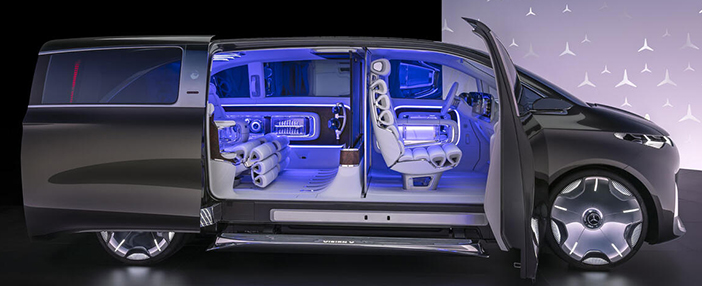
+++ MERCEDES-BENZ claims to have “set a benchmark” for the future of luxury travel with the Vision V concept. Shown for the first time at the Shanghai motor show, it previews a new VIP shuttle (dubbed the “dawn of a new era”) that will top a new-look V-Class line-up. This will range from practical family oriented vehicles to “luxurious limousines” that will all be based on the Mercedes’ new Van Electric Architecture (VAN.EA) platform; the first model will arrive in 2026. The range-topping production Vision V is being readied to push the nameplate further upmarket, said Mercedes, targeting the likes of the Volvo EM90 and Lexus LM. The concept features a striking exterior that “marks the next step” of Mercedes’s design language, it said, especially in terms of also making it as aerodynamic as possible, key in terms of maximising range for the production EV, that will likely be a heavy machine. Notably, the brand points to its new grille (similar to that found on the EQS), headlamp design and illuminated standing star, suggesting these could make production, while the machine’s futuristic-looking rear light bar will likely be toned down before it hits showrooms. The dramatic 4-seat cabin, however, is where most work has been done, says Mercedes. Key focus has been made on creating a “private lounge” for the rear passengers, that’s extensively clad in white Nappa leather. Main features include a retractable 65-inch cinema screen (that when up also acts as partition wall), a 42-speaker sound system and two airline-style seats (made with tubular cushions) that are fully reclinable. 7 projectors are also fitted to create different ambiences, the rear windows can be switched from transparent to opaque for a “unique cocooning effect” and there’s even a karaoke mode (one of seven that range from “gaming” to “relax”). The concept showcases the “dawn of a new era”, says the German brand, that “sets standards in design, comfort and an immersive user experience,” adds Thomas Klein, head of Mercedes-Benz Vans. Up front, the elements that could carry over the real machine are clear to see, such as a production-spec steering wheel, the 3-screen Superscreen (to debut in the upcoming CLA) and crystal-look airvents. The extensive interior space is made possible by the new modular VAN.EA platform. While no details have been revealed on what powers the concept, the platform is fitted with 800 Volt electricals and will be offered with front- and four-wheel-drive powertrains. The longest-legged variants will top 500 km of range. +++
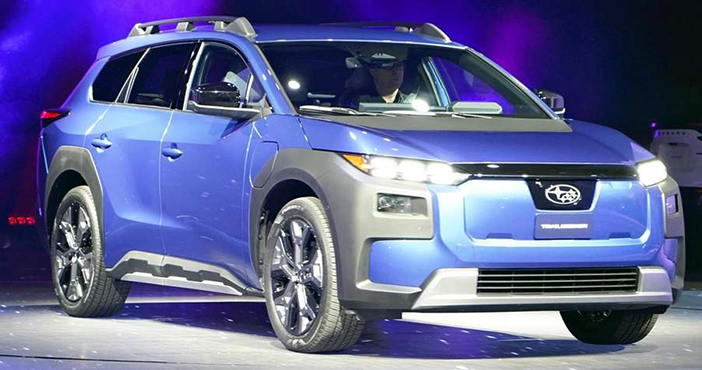
+++ SUBARU unveiled its new electric vehicle model, the Trailseeker, at the 2025 New York International Auto Show in New York on Wednesday, and is considering potentially producing it in the United States in the future. The 5-seat SUV, which was developed in cooperation with Toyota, will be Subaru’s second mass-produced EV model. Production of the vehicle, which will be exported to the U.S. and other markets, is slated to begin in 2026 at Subaru’s Gunma Prefecture plant. The Trailseeker boasts a range of more than 420 kilometers on a single charge and is expected to cost between $40,000 and $50,000 in the United States, although it is possible that the price will increase depending on American president Donald Trump’s tariff policies. While the Solterra, Subaru‘s current EV model, is manufactured at a Toyota plant, the company is evaluating the potential for future production of the Trailseeker in the United States. The automaker also announced a new model of its popular gasoline-powered Outback SUV on Wednesday, aiming to attract customers who have anxieties regarding potential issues like the reliability of EV charging infrastructure. +++
+++ Even TESLA ’s biggest fans on Wall Street are getting nervous today as Elon Musk’s core wealth builder prepares to report first-quarter earnings on Tuesday, and shares continue their downward spiral. Analyst Dan Ives, a longtime Tesla bull, even called on Musk to vacate his role with president Donald Trump’s Department of Government Efficiency, better known as DOGE. “Musk needs to leave the government, take a major step back on DOGE, and get back to being CEO of Tesla full-time”, Ives wrote in a report to clients Sunday. “Tesla is Musk and Musk is Tesla … and anyone that thinks the brand damage Musk has inflicted is not a real thing, spend some time speaking to car buyers in the U.S., Europe, and Asia. You will think differently after those discussions”. But Tesla investors can still take solace that the company’s earnings performance will continue to be subsidized by a regulatory creation of the green lobby: the sale of emissions credits to legacy automakers. It’s not a stretch to conclude these compliance credits historically allowed Tesla to survive and later thrive. In 2024, Tesla generated nearly $2.8 billion in revenue from the credits; up 36 percent from 2023, according to its annual 10-K report. In the fourth quarter of 2024 alone, it collected $692 million from the credits. It’s anyone guess if Congress will move legislation to end these credits. Even if it did, would the White House veto it? Until then, Tesla’s cash pipeline from these credits will continue unabated. +++
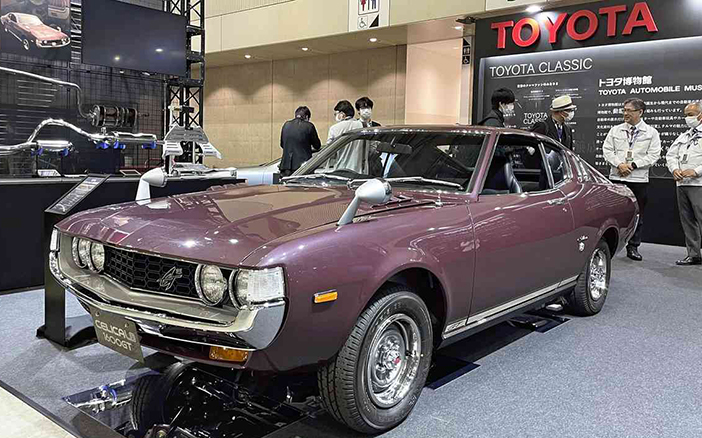
+++ TOYOTA is boosting its efforts to restore classic cars and restart sales of discontinued parts. In addition to satisfying the expectations of automobile enthusiasts who want to keep driving the cars they love, Toyota wants to ensure its techniques are passed on to the next generation. Toyota has been bringing parts for vehicles such as popular sports cars back into production and back on the market since 2020, with 294 parts now available for eight models of cars. The company will ratchet up its efforts going forward, it said. The company aims to restore one car annually. In 2024, a Celica Liftback, a popular model that went on sale in 1973, was restored by about 30 workers chosen from the company’s factories. The company is also strengthening events for car enthusiasts. “We hope to develop our activities by fostering human resource development and passing on know-how to future generations, and fulfill the expectations of car lovers”, said Yasuhiro Sakakibara, head of the company’s Automobile Culture Showroom. +++