
+++ Some cars earn a reputation the hard way, and ALFA ROMEO ’s isn’t exactly built on sterling reliability. Now, a Tonale owner in Vancouver, Canada is raising concerns over some rust forming on his SUV and the dealership’s response isn’t exactly reassuring. Whether this is an isolated case or the start of something more widespread isn’t clear yet, but the dealer’s refusal to take responsibility doesn’t inspire confidence. The Canadian owner of a white Alfa Romeo Tonale says there are issues with the tailgate drains of the compact SUV, and that this has caused rust to start forming after just 1 year of ownership. “The dealer will claim that this is how the car is built, but a brand new 1 year old car will rust on you and you’re just left to either duke it out with the dealer, or fix it out of pocket”, the owner said. “Stellantis will NOT repair this under warranty as their rust warranty only applies if the rust has rusted through the paint”. A photo shared to Reddit shows that an area of the tailgate near the reversing camera, tailgate light and opening switch has small areas of rust and pieces of paint that have started to flake and fall off. A closer inspection also reveals some bubbling in the paint. Now, production defects aren’t unusual in new cars. but dealerships should be happy to rectify any defects free of charge. That hasn’t been the case here. Stellantis declined to offer any repair, citing a technicality in the rust warranty, which only applies once rust has actually eaten through the paint. “I’ve been warned that due to the way the drain is built, that this will just keep reoccurring and there is not much that can be done”, writes the owner of the Alfa Romeo. “The drains are capped by 2 plastic stoppers, so the water in the trough on the tailgate would have to be a quarter inch or more before it’ll drain out”. When paint startsto bubble, it is often an indication that there’s rust underneath or moisture was trapped underneath when the Alfa was originally painted. The issue could be fixed by simply replacing the tailgate, but it seems the owner will have to keep fighting the dealer to get a repair done. +++
+++ BMW was very close to having a new version of the iconic M1. However, the automaker pulled the plug on that project at the last minute, and it’s unlikely BMW will build a new supercar anytime soon. BMW M Boss Frank van Meel told that the company doesn’t “want to lose focus” on its high-performance models right now, even if “we are always dreaming about” a new M1-like supercar. However, the company has to “find the right window of opportunity where we have the capacity to work on a car like that”. BMW is preparing the launch of its Neue Klasse architecture that will support both electric and petrol-powered versions of the highly anticipated M3. It’s not expected to go on sale until late 2026 or early 2027, and it’s likely consuming a vast amount of engineering resources leading up to the launch. The new combustion-powered M3 will have a engine that’s unique from the S58 twin-turbocharged 3.0-liter inline-6 that powers the current model. The new M1 that BMW was supposedly working on would have been a 600 hp plug-in hybrid with a 4-cylinder engine. BMW worked on the project throughout the Covid-19 pandemic, but the powers-that-be decided to greenlight the XM instead. It’s likely not a question of if, but when BMW decides to build a new supercar: it just has to happen at the right time. One reason the company greenlit the XM over a new M1 was that it believed today’s customers wanted SUVs instead of sports cars. However, the XM isn’t selling well and a new BMW supercar is now sitting on the back burner. +++
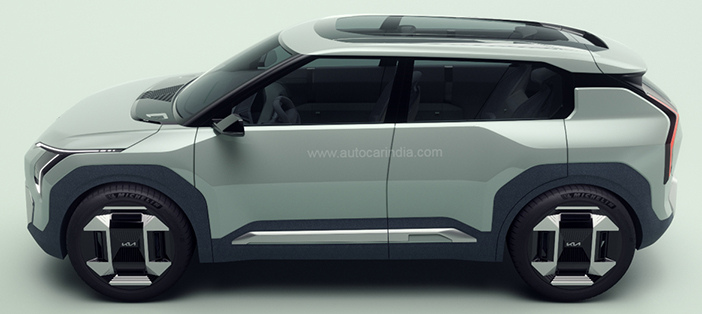
+++ From the big EV9 to the compact EV3 and the EV6 in the middle, KIA seems to have most electric bases covered. But there are still a few niches to fill and the EV2 will arrive inside a year to help plug one of those gaps. As its name suggests, the EV2 slots below the relatively new EV3 and replicates most of its features, just on a smaller scale. Although both are B-segment SUVs, the EV3 handles the upper end of the size and price scale and the EV2 targets the lower. That means rather than duking it out with the Skoda Elroq and Volvo EX30, the EV2 will battle with the new Renault 4 E-Tech, Citroën ë-C3 and Fiat Grande Panda Elettrica, and have to kick off around 29.000 euro. Hitting those price targets while still turning a profit means the EV2, like the EV3, will probably make do with simpler 400v charging technology rather than the fast-fill 800v systems used in pricier Kias such as the EV6 and EV9. Expect the hardware nestling in the cut-down E-GMP platform to consist of a couple of different single-motor setups driving the front wheels and hooked up to a small electric battery suitable for city work and giving a range of around 320 km. The Renault 4, for instance, gives buyers the choice of 40 kWh or 52 kWh batteries whereas the Kia EV3 offers 58.3 and 81.4 kWh power packs. Kia hasn’t said much about the EV2’s technical spec, but it did give us some guidance as to what it would look like by unveiling the EV2 concept at Kia EV Day in Barcelona back in February. The EV2 goes on sale in Europe in 2026, but it might not be Kia’s smallest EV for long. Bosses have confirmed they’re considering building an even tinier EV1 to replace the Picanto and compete with Volkswagen’s ID.every1. +++
+++ MAZDA is working on a late successor for the CX-3. Trademark filings and hints from company executives suggest that the new car, likely to be called the CX-20, is already deep in development. Positioned just below the CX-30, the CX-20 appears set to continue Mazda’s focus on design-driven, driver-focused crossovers. At a recent event tied to Mazda’s operations in Thailand, executives offered a few hints about what’s next, supported by early design sketches. While it may be a while before we see the final product, here’s what I know so far about the CX-20. The CX-20 looks set to embrace the latest evolution of Mazda’s Kodo design language, similar to what we’ve seen on the larger CX-60 and CX-80. Sketches revealed at the Thailand event show a compact SUV with clean, flowing lines and a sporty, low-slung stance. The front end hints at a wider, more aggressive grille flanked by slim led headlights and vertically stacked daytime running lights, features that seem inspired by the next-generation CX-5. The overall stance appears sporty and low-slung. In profile, the CX-20 almost seems to adopt a coupe-like roofline that slopes toward the rear, giving it a youthful vibe. Mazda’s concept drawings even suggest a contrasting black roof and unique circular tail light elements. Of course, sketch details are often exaggerated, but it’s safe to say the CX-20 will be a visual standout. While no images of the CX-20’s interior have surfaced, the cabin will likely be more premium and tech-forward than the old CX-3. Hiroshima has a reputation for upscale interiors that punch well above their weight, so the CX-20 should feature quality materials and a sleek, minimalist design. Interior space is also expected to improve over the CX-3, which often drew criticism for its tight rear seats and limited cargo room. On the tech front, expect a digital instrument cluster and Mazda’s latest infotainment system. However, whether or not it keeps the rotary dial remains unclear, with the automaker’s latest Chinese offerings ditching it altogether for an all-touchscreen affair. Mazda has invested $150 million into its Thai production plant, aiming to build a new generation of electrified compact SUVs. That’s a strong indicator that the CX-20 will ride on a platform designed with hybrid powertrains in mind. According to the brand’s electrification roadmap, the model is expected to feature a mild-hybrid setup paired with an inline-4 engine, likely in 1.5- or 2.0-liter form. Like the CX-3, the CX-20 will be based on a front-wheel-drive layout, with all-wheel drive possibly available as an option. A plug-in hybrid version hasn’t been confirmed yet, but it remains a possibility further down the line. This segment is one of the most competitive in the industry. The CX-20 will have to contend with strong entries from Hyundai, Honda, Kia, Toyota and Ford, including models like the Kona, HR-V, Stonic, Yaris Cross and Puma. Mazda hasn’t confirmed when the CX-20 will debut, but current signs suggest we’ll see the wraps come off within the next 18 months. The new crossover will primarily target Asia-Pacific markets, though that doesn’t rule out other regions down the road. +++
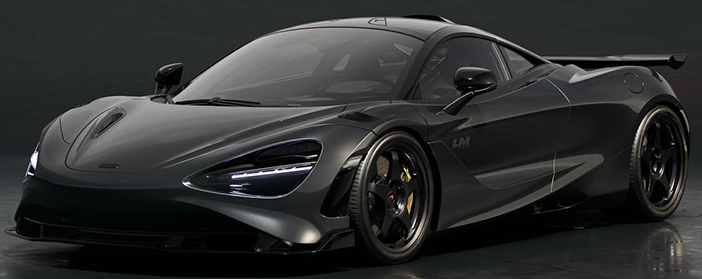
+++ MCLAREN has commemorated the 30th anniversary of its maiden victory at the 24 Hours of Le Mans with a special-edition 750S channelling the legendary F1 GTR. The centrepiece is a new aerodynamic package developed by McLaren Special Operations (MSO), comprising a larger carbon fibre splitter, a larger active rear spoiler and a new body-coloured panel under the spoiler. The tweaks are said to result in 10% more downforce being generated than on the standard 750S. The 750S Le Mans also gains a roof scoop, 5-spoke wheels and a choice of Le Mans Grey or McLaren Orange paint finishes, the former referencing the No59 F1 GTR that took victory in 1995. Inside, the supercar is upholstered with black Alcantara and leather, with contrasting Alcantara elements finished in grey or McLaren Orange. It also gets Le Mans branding on the head rests and floormats, and there’s a commemorative plaque on the centre console. A further track record plaque, detailing the Le Mans success, can be fitted in the front boot as an optional extra. Just 50 examples will be built. McLaren has yet to disclose a price, but it’s likely to represent a significant premium over the €358.174 asked for the regular 750S op the Dutch market. McLaren will again vie for Le Mans glory again in 2025, with 2 examples of the previous 720S supercar competing in the GT3 class. In 2027, the British brand will for the first time enter the top class of sports car racing, shooting for overall Le Mans glory. +++
+++ While there’s no doubt that the US administration’s tariff policies have thrown much of the automotive industry into disarray, TOYOTA is enjoying a particularly fruitful start to the year. In April, the Japanese carmaker sold a total of 876.864 vehicles, including those from Lexus, marking a new record for the month and an impressive 10% climb from April last year. The world’s largest carmaker is enjoying strong sales growth in most major regions, including North America. There, sales climbed 8.2% from 12 months ago to 270.365 units in April. Of these, 233.045 vehicles were sold in the United States, a 10% gain. Sales declined by 1.7% in Canada to 24.644 units and by 7.5% in Mexico to 9.252 units. In its sales report, Toyota attributed the strong North American results “due to continued strong demand as well as a rush in demand before the tariffs took effect”. Over in Latin America, Toyota’s sales were up to 41.552 in April; an 8.1% gain. Similarly, they rose 8.4% in Europe to 98.611 units. Some declines were reported, such as in the UK and France, where sales slipped 12.9% and 12.1%, respectively. Asia is performing particularly well for Toyota. Sales there climbed 12.9% in April to 254,773 units, and by 20.8% in China to 142,754. Toyota says sales in China grew thanks to generous dealership promotions linked to the government’s generous subsidy policies. At home in Japan, Toyota sales rose 11.8% and hit 120.674 units in April. Sales also climbed 9.9% in the Middle East and by 25.4% in Africa. However, Toyota sales were down 6% in Oceania, including in Australia (-5.8%) and New Zealand (-7.8%). The majority of Toyota’s production does not originate from Japan, but rather from international locations. In April, a total of 814.787 new Toyota and Lexus models were built at its facilities worldwide; 7.8% up from last year. By comparison, 268.957 new Toyota and Lexus vehicles were manufactured in Japan, representing a 6.9% increase from April 2024. +++
+++ Even as electric vehicles take center stage, there’s still room for traditional performance to make some noise. VOLKSWAGEN is busy electrifying its GTI line-up and preparing to turn the R division into an EV-only brand by 2030, but internal combustion isn’t done just yet. One of its possible final acts could be a new Tiguan R, a practical SUV with just enough punch to keep enthusiasts interested. Pedro Martinez Diaz, Head of Sales & Marketing at Volkswagen R, recently hinted at the possibility of another high-performance SUV. He leaves the door open: “I would never say no. The Tiguan R was very successful in Europe. We’ll see”. It’s not a done deal, but it certainly sounds like something could be brewing. If management gives the green light, a next-gen Tiguan R could make a return. Martinez Diaz also confirmed that the upcoming T-Roc will get its own R version, which is expected to debut in early 2027. The original Tiguan R made its debut in 2020 as part of the second-generation model’s mid-cycle update. At the time, it was the most potent option in the range, powered by a turbocharged 2.0-liter engine making 320 horsepower and 420 Nm. That engine was paired with a 7-speed dual-clutch transmission and Volkswagen’s 4Motion all-wheel-drive system. Despite the promising specs, the Tiguan R was a regional affair, sold only in Europe and Australia. North America never got a taste of it. By late 2023, the model was dropped, coinciding with the launch of the third-generation Tiguan in Europe. In the new line-up, the most powerful European Tiguan is now the eHybrid plug-in hybrid, which produces 272 hp and comes dressed in a sporty R-Line outfit. While it offers decent power, the eHybrid is not a full-blown performance model. However, it rides on the MQB Evo platform, which is the same architecture that underpins the Golf R. That means they’re technically compatible with VW’s more potent 2.0-liter TSI engine, which makes 333 hp and 420 Nm in its current form. There’s also the potential for a more powerful plug-in hybrid option to sneak under Europe’s tightening emissions rules. Either way, a more aggressive chassis setup and slightly lower ride height could go a long way toward turning the Tiguan into something that feels closer to an actual R model, not just one with sportier trim. Right now, performance SUVs are a rarity in the mainstream space. If a Tiguan R arrives, its main rival would likely be the new 2026 Toyota RAV4 GR-Sport, which leans on a 320 hp plug-in hybrid setup. As the days of gas-powered hot hatches wind down, models like a potential Tiguan R could help fill that gap for drivers still looking for excitement in a practical, everyday package. +++