+++ AUDI is readying its A3-sized EV for launch next year, borrowing an updated version of the MEB platform that underpins the current Volkswagen ID.3 and Cupra Born. Audi already uses this relatively compact platform for its Q4 e-Tron, but this new model is due to be a step lower in terms of size, giving buyers an electric car alternative to the existing ICE-powered A3. Audi CEO Gernot Döllnerr said: “We will build an electric C-segment car here in Ingolstadt from next year”. Given that time frame, it will be based on technologies already available within the VW group, rather than the new SSP architecture coming in 2027. As a result, I’m expecting the new Audi model will likely share any technical upgrades with the reskinned ID.3 that’s due around the same time, and feature a combination of a rear-mounted e-motor and battery pack mounted underneath the floor. We don’t know if there are any wholesale changes to the current battery technology on the cards, but we expect the new Audi will probably be available with some or all of the 58 kWh, 77 kWh and 79 kWh battery options available in the current ID.3. We can also be fairly certain about what the new electric A3 equivalent will look like, because it’ll have to share certain elements with other MEB-platform cars currently on sale. We expect a standard single motor to be available on the rear axle, plus possibly a dual-motor application for a potential high-performance derivative. But there will be specific considerations, too, including a relatively high floor and high roof, plus the likelihood of a short bonnet and an upright tail. How Audi drapes its current design language over this architecture remains unclear, but it will largely depend on how much freedom the brand has been given to redesign specific hard points including the windscreen base or floor. What I do know, however, is that the car is too far through its development to adopt the new design language being evolved by new design chief Massimo Frascella, who was installed only 12 months ago. There might have been time for some small changes, however, as has been rumoured about the forthcoming Audi Q7. Audi’s plan has been to extend its range only slightly downwards, forgoing successors to the A1 and Q2, but creating an indirect successor to the recently updated A3. That, in turn, could give the brand a cheaper entry point than the likes of Mercedes and BMW. Audi CEO Döllner, who has also taken on the role of technical development chief, admits that his team has gone through a review of its future product plans in recent years, sharpening its focus on key markets such as China (where it will soon launch a bespoke, locally made version of its new Q6 e-Tron) and the United States. Döllner said that some vehicles had been pushed aside by the review, but insisted that the planned entry point (likely to appear in late 2026 or 2027) has escaped the axe. When asked directly if Audi had cut vehicles from its plans or simply delayed them, Döllner said: “We did both, really. We stretched the timeframe to give us a little bit more time for these 20 models. I’ve never seen something like this in my career so far. And we discussed some models that we deprioritised, and put emphasis on other ideas”. Describing the new entry model directly, Döllner said, “It’s A-segment, so typically Volkswagen Golf and A3 size, or a little bit below, perhaps. But this is where we will focus. We won’t have a successor for the A1 and Q2; certainly not a direct successor. But in confirming the model below the Q4, in the C-segment, that will be our entry car”. We can expect a car shorter than the A3 in order to prevent it to steal too much of the Q4 e-Ton’s SUV image, being between 5 and 10 centimetres shorter than that vehicle. Short front and rear overhangs would allow Audi to slot the new model in at the base of its range, although it’s conceivable that the brand may opt for an even more conventional shape, including a 3-box saloon that would also be distinct from the Q4 and potentially popular in large markets like the United States and China. This new all-electric entry point is likely to mean no combustion-engined successor to the existing A3. The current model was introduced in 2020 and has just received a major facelift, so a typical seven-year lifespan would tip it over into the era when Audi will only launch new electric cars. Audi is likely, meanwhile, to develop some bespoke models for the United States, including larger SUVs. Döllner said, “That’s one thinkable option. We have a lot of ideas and what we’ll definitely do, and we have it already in our product strategy right now, is take a deeper look at North America. We’ll have bigger SUVs in consideration and they will be mainly influenced by American market requirements. That’s one reason why we’re so optimistic about our prospects in the US; we know there’s more potential there.” However, he stopped short of saying that Audi could tap into the VW Group’s Scout project, an off-road-focused brand of SUVs and pick-up trucks that will be developed and produced in the United States. “The VW Group has made a decision to revitalise the Scout brand and I was honoured to be part of that decision a couple of years ago”, Döllner said. “I was chairman of Scout motors, in fact. This is the decision that has been taken so far: to bring the brand back and have trucks and rugged SUVs, but as Scout”. +++
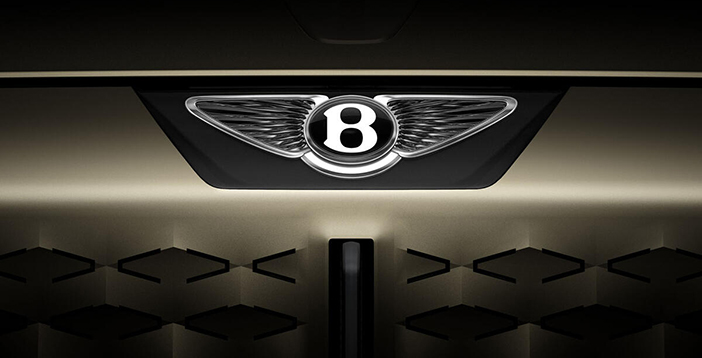
+++ BENTLEY has revealed a new version of its trademark winged B emblem that will be worn by all of its future production cars – beginning with its debut electric SUV, which will be uncovered next year. Sharper and more minimalist than the logo it replaces, this new badge takes Bentley into the digital age with a cleaner treatment that better matches the design of its next-generation cars, taking inspiration from luxury watches and birds of prey. Bentley says the new branding is “the first step of a design and brand revolution at the British marque” and “symbolic of an exciting future”. Before being affixed to any production cars, the reworked motif will appear first on a new era-defining concept car, to be revealed on Tuesday 8 July as a preview of a radical new design language for the brand’s future cars, including the first electric Bentley: an ‘urban SUV’ that will sit underneath the Bentayga. Bentley has yet to reveal official details of this new concept but has said it takes inspiration from “an iconic Bentley of the past” while setting the tone for its next-generation line-up. The design of the new logo (and the concept car it will adorn) is a manifesto for Bentley’s director of design Robin Page, who was appointed in 2023 as the replacement for Andreas Mindt, who left Crewe to lead design at Volkswagen. Page, who spent 17 years in Bentley’s design team before a stint leading Volvo’s design team, told that the arrival of a new era-defining Bentley concept meant “this was a great time to do a new logo”; this being only the fifth iteration of the winged emblem in the firm’s 106-year history. The priority for Bentley’s new emblem was to introduce an edgier, sharper look more in keeping with the shapes and cues that Page will introduce to the cars themselves – so one of the most obvious changes is the removal of the lower set of feathers that used to sit below the B. “They’re quite soft”, Page said, “and what we’ve related it to, actually, is an owl, in its soft feathers on the bottom. I like to pick characters or animals to reference things, and what I looked at then was the peregrine falcon, which has a sharper, more edgy wing profile. We’ve taken away the tail feathers to give it that speed. It was about purifying and simplifying the wings”. Page added that he took inspiration from luxury watches in refreshing the look of the central B element: “Instead of just a flat surface, it’s got a glass piece and a three-dimensional ‘jewel’ ”. He said it was important that the B can be used on its own, without the feathers attached, so that it is as clear as possible on digital platforms. As for what the new badge reveals about Bentley’s future designs, Page highlighted how the company’s emblem has evolved over the years with its cars. “If you look at form language, these old logos match very well the form language of the time. They’re a lot about solid chrome surfaces”, he said. “We’re moving into a more progressive front now, with sharper diamond shapes, triangles and light illuminations, so the new logo matches that form language”. The original Bentley logo of 1919 was created by renowned automotive illustrator F. Gordon Crosby. Briefed by Bentley founder WO Bentley to create an emblem “that summed up his quest to push the boundaries of performance”, Crosby chose to “represent the exhilaration of motion” with a pair of wings, also thought to be a nod to WO Bentley’s background as a designer of fighter plane engines. The wings were designed to be asymmetrical, with a different number of feathers, to better protect against imitation, and they remain so in the latest interpretation. +++
+++ The world’s largest car-carrying ship, with the equivalent of 20 football fields of vehicles, completed its maiden journey late last month to dock in Brazil’s Itajai port. But not everyone is cheering its arrival. BYD , China’s top producer of electric and plug-in hybrid vehicles, is offering Brazilian car shoppers relatively low-priced options in a market where the green-car movement is still in its infancy. Brazilian auto-industry officials and labour leaders worry that the vast influx of cars from BYD and other Chinese automakers will set back domestic auto production and hurt jobs. BYD has deployed a growing fleet of cargo ships to accelerate its expansion overseas, with Brazil becoming its top target, according to an analysis of shipping data and company statements. The late-May shipment was the 4th of the Chinese carmaker’s ships to dock in Brazil this year, totalling around 22.000 vehicles. BYD, the world’s top producer of electric and plug-in hybrid cars, is the largest among several Chinese brands targeting Brazil for growth. China-built vehicle imports are expected to grow nearly 40% this year, to about 200.000, according to Brazil’s main auto association. That would account for roughly 8% of total light-vehicle registrations. Industry and labour groups say China is taking advantage of Brazil’s temporarily low tariff barriers to ramp up its exports rather than investing to build Brazilian factories and create jobs. They are lobbying Brazil’s government to accelerate by a year a plan to increase Brazil’s tariff on all EV imports to 35% from 10%, rather than gradually phasing in higher levies. “Countries around the world started closing their doors to the Chinese, but Brazil didn’t”, said Aroaldo da Silva, a Mercedes-Benz production worker and president of Industrial Brasil, a confederation of unions across six industrial sectors. “China made use of that”. Brazil has emerged as a flashpoint in the China auto industry’s torrid global expansion. A growing surplus of new cars being pumped out of Chinese factories has led to an export boom over the past 5 years, helping China pass Japan in 2023 to become the world’s top vehicle exporter. Much of this excess is being shipped overseas, to markets like Europe, Southeast Asia and Latin America. Brazil offers an enticing destination due to its large market (it is the 6th-largest car market by volume) where established players including Volkswagen, General Motors and Jeep-maker Stellantis have been building cars domestically for decades. The Brazilian government has set policies aimed at growing sales of electric and plug-in hybrid cars, BYD’s specialty. Meanwhile, BYD’s path for growth elsewhere has narrowed, both domestically and overseas. At home, the company is mired in a bruising price war that has seen it slash the price of its entry-level Seagull to below $10.000, squeezing profit margins. Abroad, governments have erected stiff trade barriers for Chinese cars, including a 45.3% duty in Europe and a tariff of more than 100% in the United States, along with a ban on Chinese software in cars. For years, Brazilian officials have taken steps to protect the market from unfettered access by Chinese car companies. But it has been slower to react and less aggressive than other nations. In 2015, Brazil eliminated tariffs on manufacturers like BYD to spur electric vehicle adoption, but last year it reintroduced a 10% tariff on electric cars to encourage investment in the domestic auto industry. The tariff is scheduled to increase every 6 months before hitting 35% in 2026. Brazil’s Ministry of Development, Industry & Foreign Trade told that a request by Brazil’s auto association and others to pull forward the higher tariff was under review. “The schedule for the gradual resumption of tariffs, with decreasing quotas, was established to allow companies to continue with their development plans and respect the maturity of manufacturing in the country”, a ministry spokesperson added. BYD and other Chinese companies also are taking advantage of a policy in Brazil that allows them to import toll-free up to $169 million for plug-in hybrids imported by July 2025 and $226 million for battery-electric cars. That incentivizes front loading of vehicle shipments to fully benefit from the toll-free quotas before they expire, analysts said. BYD’s export strategy hinges on the carmaker being able to continue growing shipments without triggering resistance from local authorities. But industry representatives in Brazil have grown increasingly worried that BYD’s plans to begin domestic vehicle production are being pushed off. In 2023, government officials cheered BYD’s plan to purchase a former Ford plant in the state of Bahia, viewing it as a way to create manufacturing jobs and spur the country’s green transition. But an investigation into labour abuses on the construction site pushed back its timeline for “fully functional” production to December 2026, local officials said in May. Another Chinese automaker, GWM, also delayed by more than a year its plan to start making cars at a former Mercedes-Benz plant. The Brazilian government expects the plant to begin operating this year. “We support the arrival of new brands in Brazil to produce, promote the components sector, create jobs and bring new technologies”, a spokesman said. “But from the moment that an excess of imports causes lower investment in production in Brazil, that worries us”. Da Silva said his confederation of unions had not heard of any local supplier relationships being developed or contracts being signed for the BYD plant, as would normally be expected 18 months from the start of production. “Even if the factory is here, what value is it really adding if the components, development, and technology is all from abroad?” da Silva said. President Lula da Silva’s left-wing Workers Party government is scrambling to protect jobs and the environment as it aims to both revive Brazil’s industrial economy and restore its green credentials ahead of hosting the COP30 global climate summit this November. Still, the country’s nascent green-car movement leans on Chinese imports, which account for more than 80% of Brazil’s electric-car sales, according to Brazil’s EV association, ABVE. The country has abundant mineral resources including lithium and other key ingredients to make EV batteries. But the infrastructure to produce all the necessary components for electric cars does not exist yet, said Ricardo Bastos, director of government relations at GWM Brazil and president of ABVE. GWM, which bought a factory in Brazil in 2021 with capacity for 50.000 cars a year and is due to start producing its Haval H6 SUV there this July, is in talks with around 100 Brazil-based suppliers on setting up contracts, Bastos told. “This year, imported cars will coexist alongside cars produced in Brazil”, Bastos said. +++
+++ HYUNDAI will reveal an electric crossover, most likely an electric alternative to the Bayon, in “the next few months” as it pushes to expand its EV offerings. To be twinned with sibling brand Kia’s incoming EV2, the crossover will plug the gap between the Inster and Kona Electric. This size, thought to be near to that of the combustion-powered Bayon, will position it as a rival to the likes of the Renault 4 E-Tech and Volvo EX30. It will be revealed “in the next few months”, said new European CEO Xavier Martinet, likely meaning the car will be revealed at September’s Munich motor show. Hyundai confirmed the car will launch in the third quarter of 2026, meaning deliveries could begin as soon as next July. It is understood Kia’s EV2, previewed by the EV2 concept, will arrive a few months before it. “We are very much involved with the electrification of our line-up and to increase our electrified mix in the coming years”, said Martinet. Like the EV2, the car will be based on the same scalable E-GMP platform that is used by nearly all Hyundai Motor Group (Hyundai, Kia, Genesis) electric cars. It’s therefore likely to get a similar set-up to the slightly larger Kia EV3, which is offered with either a 58.3kWh or 81.4kWh battery pack. All versions of the EV3 are powered by a single electric motor that sends 204 hp and 300 Nm through the front wheels. Inside, the new electric car will bring a “step change” in usability for Hyundai. This includes a new infotainment system that will allow for elements, such as ambient lighting and noise, to alter depending on driving modes or style. Like the incoming EV2, it is also expected to get a combined instrument and infotainment display set-up that spans roughly half the width of the dashboard. Pricing for the new crossover is likely to be close to that of the EV2, at around €30,000. When it arrives next year, it will be the sixth electric car in Hyundai’s growing EV line-up, following the Ioniq 9 flagship that is due to hit roads in the coming months. +++
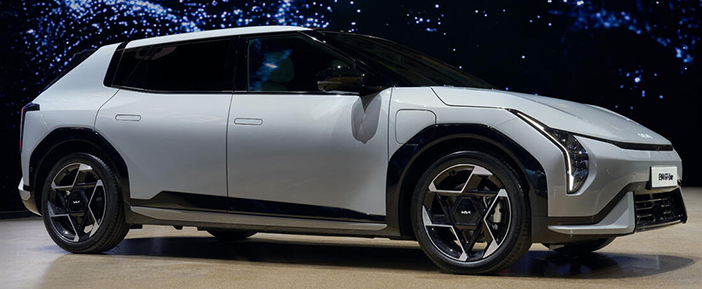
+++ The new KIA EV4 hatchback will most likely be priced from €39.995 when the first examples land in the Netherlands this autumn. Little changed from the concept shown in 2023, the EV4 shares its underpinnings with the smaller EV3 hatchback. The EV4 will be offered with both hatchback and saloon bodies, with the former roughly as large as the Hyundai Kona Electric and the latter’s stretched rump making it longer than the Tesla Model 3. It will be sold primarily as a hatch in Europe, where it will be a natural rival to the Citroën ë-C4, MG 4 and Volkswagen ID.3.
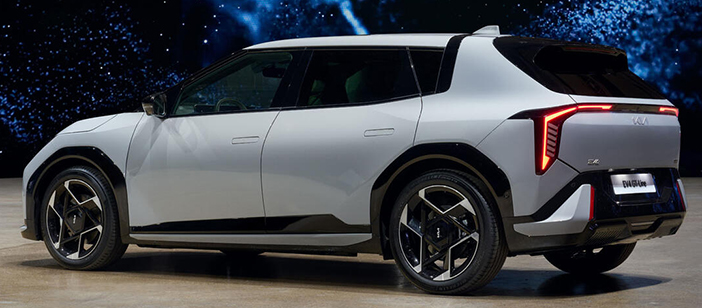
Both versions will be offered with a single front-mounted motor producing 204 hp, giving a 0-100 kph in the mid-7 seconds range, depending on the chosen battery and trim level. All Kia EVs are destined to receive hot GT versions, so a dual-motor, 4-wheeldrive range-topper with power and pace to match the MG 4 EV XPower is expected down the line. The entry-level EV4 gets a 58.3 kWh battery pack that yields a range of 450 km in hatch guise. With an 81.4 kWh battery (probably starting from 42.995 euro), the hatch delivers 620 km miles between charges. A 10-80% charge takes at least 29 minutes for the smaller battery and at least 31 minutes for the larger one. Inside, the EV4 gets the same 30 inch dashboard screen as the EV3, comprising 2 segments (12.3 inch each) for infotainment and instrumentation, divided by a 5.3 inch climate panel. It will be the first Kia to integrate entertainment apps including Netflix, Disney+ and YouTube. Prices have yet to be announced for the EV4 saloon, which will land in the Netherlands later than the hatch. This is because it will be built in Kia’s home country of Korea, rather than Slovakia, as is the case for the hatch. +++
+++ LANCIA will launch a new Delta HF Integrale next year, more than 30 years since production of the legendary hot hatch ended. As before, the Integrale name will adorn the Italian car maker’s top performance models, starting from 2026. Alongside the Delta, the new DS No8-twinned Gamma flagship, also due next year, will feature the logo in its most powerful form. The news was confirmed as part of the launch of the Ypsilon Rally6 HF Racing, the second new rally car launched by Lancia since it returned to the motorsport with the Ypsilon Rally4 HF Racing last October. In rally spec, the Ypsilon gets up to 212 hp from a 1.2-litre three-cylinder turbo petrol engine, which is paired with a five-speed manual gearbox. It also gets a limited-slip differential. However, the road-going Ypsilon HF, launched last year, is powered by the same 280 hp, 350 Nm electric powertrain as the Peugeot e-208 GTi, Alfa Romeo Junior Veloce and Abarth 600e, which all use the Stellantis’s e-CMP platform. This points to the Delta, expected to be twinned with the Opel Mokka, receiving the same treatment for the HF Integrale range-topper. That electric set up includes a mechanical limited-slip diff, hydraulic bump stops and a rear anti-roll bar. The steering is also said to have been tuned for more direct responses. The return of a combustion-engined Delta HF Integrale isn’t completely off the table, however, given that Peugeot boss Alain Favey has told yhat any decision on a new ICE Peugeot GTi model wasn’t ruled out. Lancia launched the original Delta in 1979 as a humble family hatchback, with the more potent HF and turbocharged HF 4WD not arriving until 1983 and 1986. The now famous Integrale name was applied to the road car in 1987, when the Italian brand decided to take the Delta rallying. This started with the left-hand-drive-only 185 hp HF Integrale 8v, before, in 1989, the more powerful 200 hp HF Integrale 16v arrived. As per WRC rules, 5.000 homologated road cars had to be built each year to comply with regulations, but by 1993, demand had pushed Integrale production to nearly 45.000. +++
+++ LOTUS is “investigating the feasibility” of a sports car with the high-powered plug-in hybrid technology, CEO Feng Qingfeng said on his company’s first-quarter earnings call. Lotus reported a 42% drop in sales during the first 3 months of the year to 1.274 cars. The fall was driven by a continued lack of enthusiasm for high-end EVs along with the disruption stemming from US tariff barriers, which forced Lotus to pause Emira deliveries there and cease sales of the Eletre electric SUV. The first model with the Hyper Hybrid PHEV technology will be unveiled at the end of the year, with sales starting in the first quarter of 2026, Feng said on the call. The model will be a version of the Eletre electric SUV. Demand for the drivetrain will be split equally between its core markets of Europe, China and the US, Feng said. The performance-focused hybrid drivetrain has become a core focus of Lotus after it backed away from its commitment to become an EV-only brand by 2028. The firm has postponed plans for an electric replacement for the Norfolk-built Emira sports car but it believes there is an opportunity to build a plug-in hybrid for markets where electrification is needed for regulation. “We see a wide market for combustion-engine sports cars, but we also understand that a pure-electric sports car is not going to attract a lot of attention”. Feng said “So in future we will prioritise Hyper Hybrid for both lifestyle cars and sports cars”. Lotus has previously tested a plug-in hybrid version of the Evora sports car, featuring a 1.2-litre three-cylinder engine mated to an electric motor and 17 kWh battery for a potential EV-only range of 55 km. The so-called 414E never made it to production, but last year Lotus hinted at the possibility of a hybrid Emira. Lotus is testing a potential V8 version of the Emira with a view to replacing the Toyota-sourced V6 when it no longer complies with emissions regulations, Feng said in April. This raises the possibility that the V8 could be a plug-in hybrid drivetrain, such as the compact PHEV system from Lotus supplier AMG, as fitted to the Mercedes-MG SL 63 sports car. Lotus claims the battery on the new Eletre Hyper Hybrid is large enough to enable 300 km between charges, with an overall range of over 1.000 km. Once depleted, the battery can either be topped up on the move with the engine out of performance mode or fast-charged from 10-80 % in 12 minutes thanks to its 900 Volt electrical system. The engine for new Eletre Hyper Hybrid hasn’t been specified it but won’t be the Toyota V6 or AMG 4-cylinder turbo currently powering the Emira sports car, Feng said. The car’s wheels can be directly powered by the engine on the move, according to Feng, making it a plug-in hybrid rather than a range-extended EV (REx). The distinction is important for the European Union, which levies its special China EV tariff on REx imports but not plug-in hybrids. +++
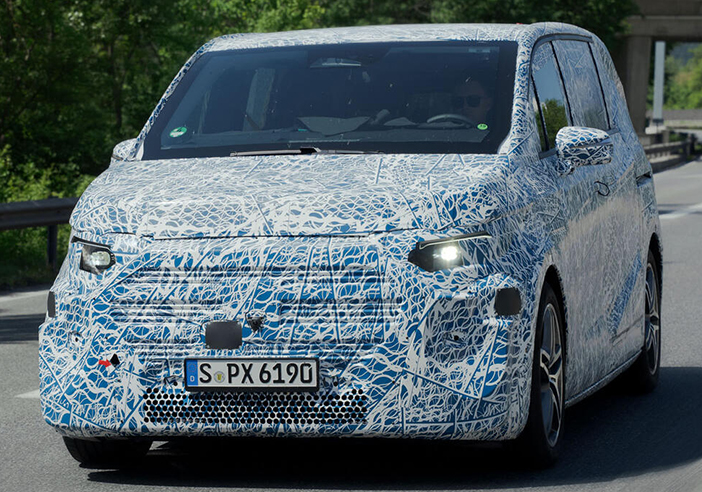
+++ MERCEDES-BENZ is putting the finishing touches to the VLE, the first in a new wave of electric vans that will arrive next year as part of a new-look V-Class range. It is based on Mercedes’ new Van Electric Architecture (VAN.EA) and will be a more focused proposition than the existing V-Class, which is based on the Vito van. Essentially a van equivalent to the E-Class saloon, it will be positioned under the more opulent VLS that Mercedes refers to as a ‘grand limousine’, and instead target large families and taxi firms.
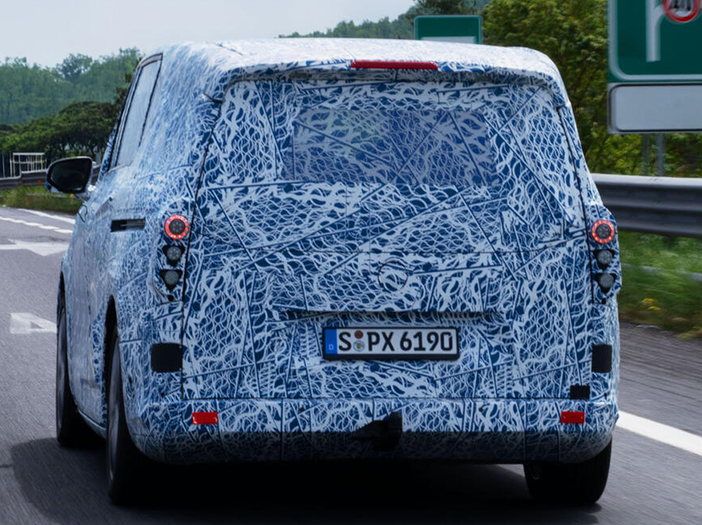
The VLE is currently being tested ahead of its launch, which is expected to take place next year. Much of the work has focused on validating the van’s efficiency and performance, with the most recent test (a run from Stuttgart in Germany to Rome in Italy, crossing the Alps) investigating its endurance. Mercedes said its test engineers drove according to “normal operation” on the road and the cabin was air conditioned to 22 degrees Celsius for the entire route. The vehicle completed the drive in 13 hours, stopping twice (for 15 minutes at a time) to recharge. Given the total route is 1.150 km long, that points to a real-world range of around 450 km, although Mercedes has yet to disclose an official figure. “Our future MPVs have once again impressively demonstrated their suitability for everyday use”, said Andreas Zygan, head of development for Mercedes-Benz Vans. In addition to eight-seat MPVs, the VLE is also expected to spawn various specialised versions, such as an electric counterpart to the Marco Polo camper. +++