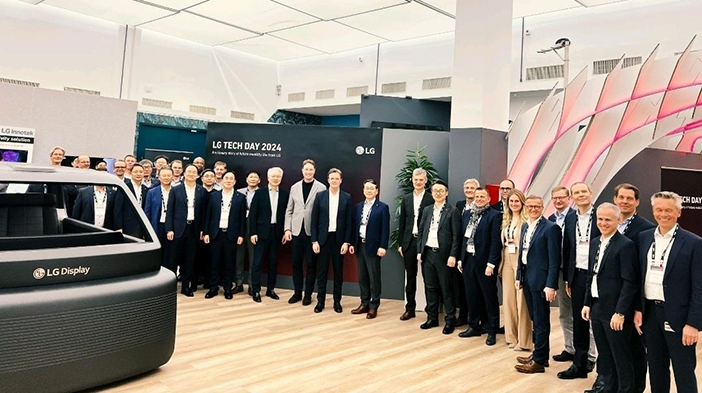
+++ LG Group is hosting a private “Tech Day” event at the headquarters of HONDA this week, underscoring its push into the future mobility sector to strengthen its foothold in the burgeoning electric vehicle components market. Led by LG vice chairman Kwon Bong-seok, a high-level LG delegation flew to Tokyo on Sunday to meet with Honda’s top executives, according to industry sources on Monday. The delegation includes CEOs from LG’s major subsidiaries such as Cho Joo-wan of LG Electronics, Kim Dong-myung of LG Energy Solution, Jeong Cheol-dong of LG Display and Moon Hyuk-soo of LG Innotek. Tech Day at Honda headquarters is likely to feature a range of LG’s cutting-edge technologies tailored for future vehicles, including infotainment systems, automotive cameras, communication modules, EV batteries and in-vehicle displays. As the global auto industry shifts from internal combustion engines to electric and software-defined vehicles, LG has been doubling down on its efforts to supply key components. The group has already secured partnerships with top-tier global carmakers including Mercedes-Benz, Hyundai Motor, Toyota and General Motors. LG is placing strategic emphasis on its EV component business, with Chairman Koo Kwang-mo overseeing its development as a key driver of future growth. The conglomerate has established a “one team for EV parts” system, fostering close collaboration among affiliates such as LG Electronics, LG Innotek, LG Energy Solution, LG Display, LG Magna and ZKW Group. The integrated approach enables the group to combine each company’s technologies and products into comprehensive solutions, which are increasingly being supplied to global automakers in the form of bundled offerings. This week’s visit to Honda marks the latest in LG’s series of targeted engagements with global original equipment manufacturers. In March 2024, LG held its first Tech Day at Mercedes-Benz’s headquarters in Germany. It followed up with similar events at Hyundai Motor’s Namyang R&D Center in Hwaseong, Gyeonggi Province, in April and Toyota’s headquarters in Japan in September. “Typically, face-to-face sales through local visits foster deeper relationships and significantly increase the likelihood of meaningful business outcomes”, said an industry source who requested anonymity. “LG Group is being highly regarded for its exceptional display quality and advanced electronics technology, as well as for its strong understanding of EV structures, including battery systems”, the source added. +++
+++ Just 7.8 percent of imported cars sold in JAPAN from January to June were from U.S.-branded automakers, industry data showed Friday, demonstrating the weak domestic demand for American-designed vehicles. Only 9.517 U.S.-branded vehicles were sold in Japan in the period, undercutting U.S. president Donald Trump’s claim that more Japanese should be buying American imports to address his nation’s trade deficit. Of the 121.243 units sold in the 6-month period, Jeep was the best-selling U.S.-brand at 4.333 units, followed by Chevrolet and Cadillac at 283 and 185, respectively, the Japan Automobile Importers Association said. In contrast, Mercedes-Benz alone sold 25.015 vehicles in the period, with 90.4 percent of the cars imported to Japan coming from European manufacturers. Tesla does not disclose sales by country, but takes up almost all of the “others” category at 4.589 units, an association official said. The EV maker’s imports were included in the U.S. figure. Despite their dire position, demand for American brands is growing, rising 17.2 percent from a year earlier, reflecting the popularity of new Cadillac and Jeep EVs, the association official said. Japan’s imports of U.S. cars have been a focus in the ongoing negotiations over Trump’s tariffs, with the president expressing dissatisfaction that so few U.S. cars are seen on Japanese roads. He has blamed Japanese nontariff barriers, such as differences in safety tests, for the situation. Japan, which does not impose tariffs on imported cars, says its rules and standards are in line with United Nations regulations, and that it does not implement particularly strict rules on such vehicles. Auto analysts say Japanese buyers are not attracted to the types of vehicle typically offered by American automakers, such as large pick-up trucks, with domestic consumers preferring smaller vehicles due to Japan’s narrow roads. Prime Minister Shigeru Ishiba also said in parliament earlier this year that foreign automakers need to be mindful of Japanese consumers’ preference for right-hand drive, fuel-efficient vehicles. “Foreign automakers have to produce cars that suit Japanese consumers and that is up to American companies,” Ishiba said, adding that limited dealer networks are also a crucial factor contributing to aversion to U.S. brands. Foreign carmaker officials in Japan agree with Ishiba’s assessment, with some stressing the key to expansion is to study and respond to domestic preferences and also to engage continuously with buyers through dealerships. “Our strength is accessibility with a network of 200 stores nationwide, allowing people in Japan to casually visit and experience our cars hands-on”, said Takeshi Sawamura, senior manager at Volkswagen Group Japan. “Japan’s regulations are sometimes noted as nontariff barriers but the rules are moving toward” the global standard, Sawamura said. “What matters is whether we can produce cars that suit the Japanese market”. Jin Narita, head of Stellantis Japan, said the company prioritizes having a wide range of products that are attractive to many Japanese drivers. “Stellantis cars are positioned between domestic makers’ models and premium models. We offer unique models, such as Jeep that appeal” to consumers’ adventurous side, Narita said. +++
+++ The next wave of KIA EVs is being prepared for launch by the end of the decade, among them an entry-level model as well as a next-generation architecture that will underpin replacements for the likes of the EV6 and EV9. Kia’s rollout of electric cars continues apace, with the current EV3, EV6 and EV9 being joined this year by the EV4 and EV5, followed by the EV2 in 2026. Now the firm’s efforts are focused on what comes next. An entry-level EV that sits below the EV2 and is priced below €25,000 is the major new addition, but replacements for the EV6 and EV9 will mark step-changes for the brand as it moves to software-defined vehicles (SDVs). New range-extender EV technology is also in the works, alongside continued development of hybrids and even internal-combustion-engined models as Kia plans to continue offering a whole range of vehicles that is now expanding beyond cars and into vans and pick-ups for the first time. Smaller Kias coming
Kia president and CEO Ho Sung Song confirmed his commitment to entry-level models and keeping his cars affordable and accessible, and to that end suggested a baby Kia is deep into its development. Song said Kia was in no rush to replace the current Picanto, which is still selling well in Europe, and the strength of Kia’s electric car range means the firm isn’t under any imminent pressure from the CO2 regulations that have doomed other city cars on the market in recent years. The Picanto, heavily updated in 2023, would therefore remain on sale up until the point that Kia was able to create an entry-level electric city car for less than €25.000. The brand feels it is important to keep such an affordable entry-level model in its range. Song said the mooted entry-level EV was “homework” for Kia at the moment, and a sub-€25,000 model was “one area we are studying and developing”. Given Song’s comments, it seems inevitable that when the Picanto does reach the end of its life (which is expected to be before the end of the decade) it will be replaced by the entry-level EV rather than an ICE model. Yet there is a scenario in which the 2 models are sold alongside each other, depending on how CO2 rules develop. Other car makers have already taken this approach. Kia design director Karim Habib said the firm was looking at Japanese brand Muji for inspiration for its smaller cars. The clothing and homeware retailer focuses on simplicity and utility, and Kia was exploring how to “reduce things to their very essence and still have a desirability to them”. Habib said this work also included customisation and “how you design something super-basic that you can customise or individualise for different types of customers”. He added: “In our view, that’s where it can be really interesting in a lower-end price bracket”. Kia is preparing to embrace SDVs and launch a new architecture for its larger models using the technology. SDVs move a car away from having a host of different subsystems to just a few core systems that are all centrally integrated. The approach allows for greater stability and reliability for the car. It is also easier to update and manage across multiple vehicles, because they all share the same ‘brain’. Song said this would allow Kia to decouple hardware and software development and allow shorter development times. He added that development work on a new SDV architecture had been ongoing for some 3 years and a pilot project concept may be shown next year. That is a reference to the ‘SDV Pace Car’ that Kia confirmed earlier this year and which is the development mule for this project. Following this timeline through to production would fit with Kia launching an EV6 replacement off this new 800 Volt architecture. A second-generation EV9 should also be due by the end of the decade. Further benefits for future Kia cars from SDVs will be more personalised user interfaces inside customers’ vehicles and “frequent upgrading of software to give them freshness for their vehicle”, according to Song, who said it could help bring down the costs of cars because “our development cycle is shorter so the cost is much cheaper”. Song added: “Because we are decoupling hardware and software, we can be more flexible making different kinds of vehicles based on the same platform”. Kia will also introduce learnings from its new range of ‘PBV’ vans into the development of its future cars, particularly around the integration of software and hardware. The PV5, Kia’s first van, will be followed by a larger PV7 van in 2027 and a PV9 in 2029. Song said Kia will continue to invest in all relevant powertrain technologies because it is a global car maker responding to different market demands. Song is a firm believer in the switch to EVs and believes that in Europe in particular Kia can “drive volume from a full EV line-up” that is “very complete” thanks to a “strong trend” towards EVs in the market, but Kia is remaining flexible in its approach. “The final destination in Europe is EVs, which is why I want to be a very strong EV player in Europe,” said Song. “But if we look at worldwide demand we should have alternative powertrains, like hybrids, plug-in hybrids and EREVs (extended-range electric vehicles, aka RExs)”. He said range-extender technology was particularly interesting for larger, heavier vehicles to which pure EV technology was less well suited. The first REx Kia is expected be to launched by the end of the decade as part of an evolution of the car maker’s hybrid offering for larger models. Combustion engines will continue to be important for emerging markets like North Africa where “they don’t have the infrastructure” for electrification. To that end, Song is not putting an end date on Kia’s development of internal combustion engines. Kia is already planning a new evolution for the design of its models, and Song said he recognises the importance of staying ahead and maintaining innovation in this area. He added: “Design is one of the highest preferences for our customers buying our cars, but today’s design philosophy has already been in the market for 5 years. We continually think about how to renew it. “If we repeat again and again with the same design, maybe customers will feel it is boring, so we have to think about how to renew vehicles. We will continue to study what can be improved and renewed for our customers”. Habib confirmed that concept cars would continue to be shown by Kia, adding that the firm was likely to unveil one later this year, although he didn’t confirm any specifics. A rollout of an AI assistant in all of Kia’s new vehicles is also on the way, to better control a car’s wider functions and introduce “more innovation” to future Kias, according Song. He added: “Customers are expecting more innovation in our vehicles. They are experiencing all-new functions from smartphones. They want the same in our vehicles”, Song said Kia has to be “more innovative” in providing new features in vehicles, and Kia is working with more partner companies, including Samsung, to help it do so. Kia will also continue to invest in the development of full autonomous driving, which Song believes will “definitely be for the convenience of the customers in the future”. This approach will be baked into the SDV architecture in development. +++
+++ The LAMBORGHINI URUS will continue as a plug-in hybrid for its next generation after the electric variant was pushed back to the middle of the next decade, CEO Stephan Winkelmann has told. Winkelmann blamed the decision on the unpredictability of ever-changing regulations; something that may also delay the arrival of the car maker’s first EV, a production version of the Lanzador concept that is due to be launched in 2029. The Urus, Lamborghini’s best-selling model, was due to go fully electric for its next generation before the end of the decade; a plan announced when the Urus went hybrid-only in 2024. However, Winkelmann has confirmed that the Urus will now continue in SE plug-in-hybrid form for an all-new generation. “We want to have a new generation again as a plug-in hybrid”, he said. “This is something very important for us and for the customers. And they were very happy to hear about this”. He suggested this car would arrive in 2029, with the electric variant pencilled in for 2035; the year all new cars on sale in Europe will need to produce zero emissions. He gave no technical details but it is most likely to build on the current model’s 800 hp output; the SUV’s most powerful iteration to date, which draws power from a hybridised V8 set-up. Lamborghini’s decision to keep the Urus PHEV on sale follows the move by Volkswagen Group sibling Porsche to continue selling the current ICE-powered Cayenne (a twin of the Urus) alongside the incoming EV in a profitability push as customer interest in electric cars stagnates. Asked if the electric Urus could be launched earlier than 2035 and, like the Cayenne, be sold alongside the third-generation ICE version, Winkelman said: “Now we have decided for the next generation, we have enough time to see what is happening in terms of acceptance, in terms of regulations, and in terms of infrastructure and, last but not least, also terms of generational change”. While the next Cayenne will be a heavily facelifted version of the current car, the new Urus will be an all-new generation, said Winkelman, so it is expected to arrive with a fresh design. Asked what we could expect, he said: “Future car designs are not yet fixed”. By the time the electric Urus arrives, it will be the second EV in Lamborghini’s stable. Winkelmann reiterated that “by the end of this decade should be the right timing” for the production version of the Lanzador, but he added that a decision on whether or not to delay it will be made at the start of next year. The car is currently due in 2029 after it was pushed back last year from 2028. “We still have 7 months of window to decide what to do next”, he said. “We are very flexible and we are constantly thinking when it should be. We already postponed the car, because we saw that the adoption curve of the electrification around the globe is under the forecast we had a couple of years ago”. However, discussing reasons for the possible delay, he said: “Life cycles are becoming shorter due to a lot of new regulations coming in each and every year. This is making our life more complex”. +++
+++ NISSAN is exploring a partnership with Taiwan’s electronics giant Foxconn in the electric vehicle sector, a source familiar with the matter said Sunday. The plan under consideration would involve producing Foxconn’s EVs at Nissan’s signature Oppama plant near Tokyo, which had previously been eyed for closure, the source added. If realized, the deal is expected to keep the Oppama plant in operation, reversing earlier closure plans prompted by Nissan’s financial difficulties. The partnership could also give momentum to the company’s ongoing restructuring efforts. Foxconn has been accelerating its EV operations, having already agreed to supply EVs to Mitsubishi. The firm is also in talks with Mitsubishi Fuso Truck and Bus Corp over the delivery of electric buses. The Taiwanese company views a tie-up with Nissan as a potential catalyst to expand its footprint in the Japanese market, the source said. Nissan’s main Oppama plant in Yokosuka, Kanagawa Prefecture, is where the firm pioneered EV production. +++
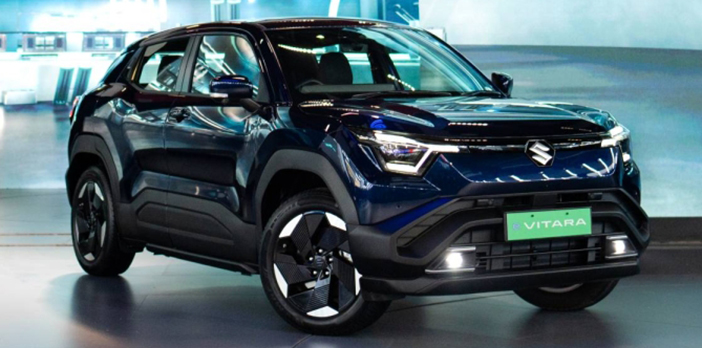
+++ SUZUKI beat out Mercedes-Benz to become Japan’s top car importer in June, thanks to the Jimny Nomad and another popular small SUV assembled in India. The Japanese carmaker brought 4.780 vehicles into Japan last month, up a dramatic 230-fold from a year earlier, overtaking Germany’s Mercedes-Benz, according to data from the Japan Automobile Importers Association on Friday. Suzuki also clinched the top stop in April. Although Honda is also known as a longtime importer of its own cars into Japan, Suzuki’s feat is notable because it’s one of the smaller manufacturers in terms of total global output, well behind market leader Toyota. Automobile imports have become a hot topic again with U.S. president Donald Trump deploying the threat of tariffs to pressure Japan to import more cars made in America. +++
+++ TESLA has reported that it delivered 384.122 vehicles during the second quarter of 2025; a 59.834-unit year-over-year decline. However, the company’s stock jumped over 4% by afternoon, likely due to the slightly better-than-expected results. As previously reported, reputable analysts like Troy Teslike anticipated that Tesla would report 355.000 Q2 deliveries. FactSet provided one of the most accurate sales predictions at 387.000 units. Tesla produced over 410.000 vehicles during the second quarter; 396.835 of which were its Model Y and Model 3, with the remaining 13.409 units representing “other models”. The automaker delivered 373.728 Model Ys and Model 3s, as well as 10.394 other models. In the second quarter of 2024, Tesla produced 386.576 Model Ys and Model 3s and 24.255 other models, with 422.405 deliveries in the former category and 21.551 in the latter; implying the company drew from existing Model Y and Model 3 inventory. International data indicates Model S and Model X sales were around 5.000 units during the second quarter, meaning that Tesla only delivered about 5.000 Cybertrucks. In 2023, Elon Musk outlined his expectations for Cybertruck sales: “I’d say a quarter million a year is a reasonable guess, and it might be 500.000, I don’t know. We’ll make as many as people want and can afford”. For comparison, Ford sold 5.842 units of its F-150 Lightning electric pickup in the second quarter. While these F-150 Lightning sales were 26% fewer than in the second quarter of 2024, it shows the model is giving the Cybertruck plenty of competition. While Tesla won’t be releasing its second quarter 2025 financial results until after market close on Wednesday, July 23, whether the automaker can remain profitable this year remains in question. Tesla’s first quarter finances received a $595 million boost from selling clean air credits to rivals whose vehicles exceeded pollution limits. The company earned almost $2.8 billion last year by selling these regulatory credits to other automakers, many of which are in California. Competitors who don’t manufacture enough zero-emission vehicles face steep fines if they don’t purchase regulatory credits from Tesla, but the Senate is working toward lowering these requirements, which would place increased financial pressure on Musk’s company. Many expected Tesla to share news that it began producing a more affordable model at the end of June before it released its Q2 delivery numbers, but no such announcement arrived. Tesla’s Chief Financial Officer, Vaibhav Taneja, said during the automaker’s Q1 investors call: “We’re still focused on bringing cheaper models to market soon. The start of production is still planned for June”. +++
+++ Lei Jun, founder and chairman of XIAOMI , the only tech company to have successfully diversified into carmaking, couldn’t resist.
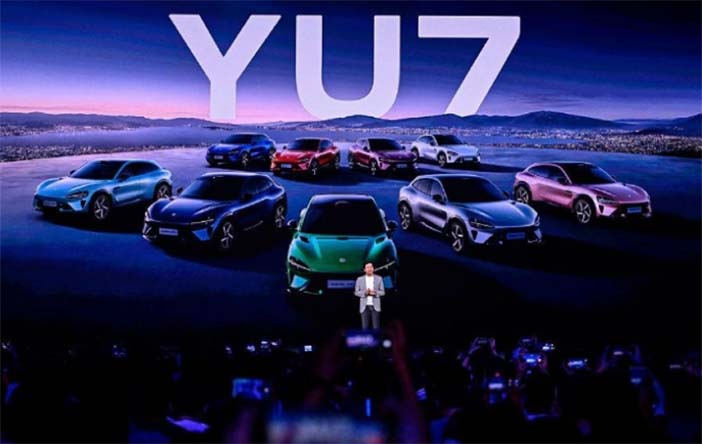
Speaking at a triumphant launch event in Beijing late last month for Xiaomi’s second electric vehicle, a long-anticipated SUV, Lei pointedly mentioned Apple, which spent a decade and $10 billion trying to make a car before giving up last year. “Since Apple stopped developing its car, we’ve given special care to Apple users”, he said, noting that owners of the American giant’s iPhones would be able to seamlessly sync their devices to Xiaomi’s vehicles. The not-so-subtle dig was followed by a flex: Xiaomi then said it had received more than 289.000 orders for its new SUV within an hour of its announcement, more than its first EV, a sedan launched in March 2024. Xiaomi succeeding where Apple failed has burnished Lei’s reputation, made his company one of the most valuable in China and shaken up both the tech and automobile industries. The collapse of Apple’s moonshot car program has only underscored the effectiveness of Xiaomi’s grounded approach, which took inspiration from proven designs from Tesla and Porsche while staying true to the affordable ethos that’s made it a cult brand for Gen Z consumers.
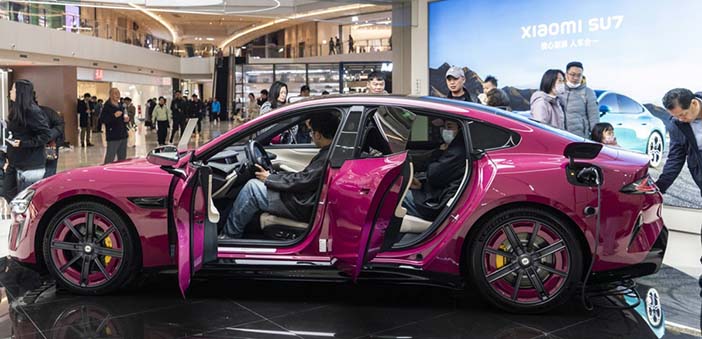
Crucially, it also launched into the most fertile EV ecosystem in the world: China. With state subsidies, existing charging infrastructure and a ready-made supply chain, Xiaomi had a structural tailwind Apple lacked. Lei and Xiaomi’s “charisma, brand recognition and ecosystem cannot be underestimated”, Yale Zhang, the managing director of Shanghai-based consultancy Automotive Foresight, said. “It’s a big influence on young consumers who have filled their homes with Xiaomi products. When it comes time to buy an EV, they naturally think of Xiaomi”. But building cars is a far more complex, capital-intensive challenge than making phones or rice cookers. It requires mastering safety regulations, global logistics and production at scale, all while competing against legacy automakers with long histories and large model line-ups. Any international expansion will also require navigating complex geopolitical landscapes. As one of the first tech giants to actually manufacture a car, Xiaomi is in uncharted territory. Apple’s car project, internally dubbed Project Titan, failed in large part because it wasn’t just an EV: it was at one point an attempt to leapfrog the auto industry with a fully autonomous, Level 5 self-driving machine. Its goals were lofty and the direction constantly shifting, the result being over a decade of effort with nothing to show. Lei, 55, was comparatively stingy with time and resources and staked his personal reputation on the endeavour, claiming that making cars would be his “last entrepreneurial project”. Xiaomi’s public narrative is that Lei and his team learned by visiting multiple Chinese automakers, including Zhejiang Geely Holding Group and Great Wall Motor, and talked to more than 200 industry experts in some 80 meetings. The reality is also that he used Xiaomi’s reputation as an innovative consumer behemoth to get close to China’s large carmakers and pick off their top talent. Geely and its billionaire founder Li Shufu welcomed Lei to the automaker’s research institute in Ningbo in the months leading up to Xiaomi’s announcement that it would enter the car business to discuss topics, including potential collaboration. It’s Geely lore that Lei added the WeChat contacts of many staff at the institute, including then-director Hu Zhengnan. Hu later joined Shunwei Capital Partners, the investment firm co-founded by Lei. Xiaomi headhunters also courted Geely staff intensely, according to people familiar with the matter. While it’s common for talent to move between companies in the same industry, it was unusual to see this level of aggressiveness around recruitment, the people said, asking not to be identified discussing information that’s private. Hu, known for his love of the German luxury marque Porsche, was one of the team members credited as being instrumental to developing Xiaomi’s EV business, Lei said at the SU7 launch in 2024. Lei added that Hu left his previous employer after his contract ended. Other executives who joined Xiaomi came from companies including BAIC Motor, BMW, SAIC-GM-Wuling Automobile (the General Motors joint venture with SAIC Motor and Wuling Motors Holdings) and auto supplier Magna Steyr. Besides assembling top Chinese automaking talent, Lei made a prescient bet on investing in a self-controlled supply chain; insulating Xiaomi’s operation from manufacturing vagaries. This came from painful lessons learned in Xiaomi’s early smartphone-producing days, when external suppliers would cut off components unpredictably. In 2016, some members of Xiaomi’s supply chain team displeased Samsung Electronics representatives and the South Korean firm threatened to halt supply of its industry-leading Amoled screens. To mend the fractured relationship, Lei flew to Shenzhen to meet with Samsung’s China head at the time. The pair drank 5 bottles of red wine during their dinner meeting, according to a Xiaomi company biography, and Lei also made multiple trips to Samsung’s headquarters in South Korea to apologize and negotiate the resumption of supply. After Xiaomi went into the carmaking business, it invested into almost all parts of the EV supply chain, from batteries and chips to air suspension and sensors. It pumped more than $1.6 billion via Shunwei or other Xiaomi-led funds into over 100 supply chain companies between 2021 and 2024, according to data compiled by Chinese analytics firm Zhangtongshe and Bloomberg. The components from some of the companies that Xiaomi invested in have ended up in its cars, such as lidars from Hesai Technology and onboard chargers and voltage converters from Zhejiang EV-Tech. With the 10 billion yuan ($1.4 billion) it committed to the first phase of its EV venture, Xiaomi also built its own factory, rather than going down the contract manufacturing route that some Chinese makers, including Nio and Xpeng, did when they started out. “Among tech companies that now build electric vehicles, those who previously had hardware products seem to be more successful than those who only had software products or information services”, said Paul Gong, UBS Group AG’s head of China autos research. Despite its early success, there are many who argue Xiaomi’s one hit car is copied from elsewhere, and that a sole successful vehicle does not a successful auto producer make. Lei’s aggressive approach has also raised hackles in China’s car industry. Yu Jingmin, vice president of SAIC’s passenger car division, reportedly described Xiaomi’s approach as “shameless” in a critique of the SU7 resembling Porsche. The SU7 has been colloquially dubbed “Porsche Mi” by netizens. Xiaomi’s design team, led by former BMW designer Li Tianyuan, has defended the SU7’s aesthetics, emphasizing that the choices were driven by aerodynamic efficiency and performance benchmarks. In late March, there was another setback after a fatal accident involving the SU7. The car had its advanced driver assistance technology turned on before the crash, which afterward led to authorities reining in the promotion and deployment of the technology. The usually vocal Lei kept a low profile on social media for more than a month after the March accident. He returned to more active engagement in May with a missive that said this period of time was the most difficult in his career. Fortunately for Xiaomi, its consumer base is sticky. Known as “Mi Fans”, the loyal customers have played a pivotal role in the company’s rise. Xiaomi cultivated this fandom early on by prioritizing user feedback and the grassroots allegiance has helped it build strong brand equity, especially in China. The SU7 has remained a top selling model even after the accident in March. Indeed, dealers have reported that nearly 50% of customers plump for the SU7 without comparing it to other brands. “A significant number of older consumers are buying the SU7 for their children, indicating that the model has built trust among more conservative buyers thanks to its safety and quality”, said Rosalie Chen, a senior analyst from investment research firm Third Bridge. Xiaomi has set a delivery target of 350.000 units in 2025, up from its previous goal of 300.000, buoyed by demand for the newly launched YU7 and a ramp-up in production. The starting prices for the SU7 sedan, at 215.900 yuan, and its SUV, at 253.500 yuan, make them competitive alternatives to models such as Tesla’s Model 3 and Model Y. The EVs are also showing financial promise. Xiaomi posted record revenue for first quarter this year, driven by car and smartphone sales. Its EV division is expected to turn profitable in the second half of 2025, Lei said in an investor meeting in June. But even if the popularity of Xiaomi’s EVs can spring beyond the company’s devoted base, production is still on a much more boutique scale. China’s top car brand, BYD, sold around 4.3 million EVs and hybrids last year, many overseas, while Tesla moved about 1.78 million vehicles globally. Toyota, the world’s No. 1 automaker, sold some 10.8 million vehicles and boasts a line-up of approximately 70 different models. Lei doesn’t seem to be prioritizing the mass market of below $20.000 yet, which drives significant volume and is where BYD dominates, Automotive Foresight’s Zhang said. Without a line-up in that segment, Xiaomi cars will remain niche purchases for middle- to higher-income consumers and Xiaomi may face the same risks as Tesla, which is seeing its sales slump exacerbated by a narrow consumer base and limited models. Nonetheless, Lei seems buoyed by Xiaomi’s early wins and is now looking at global expansion. Xiaomi will consider selling cars outside China from 2027, he said last week. Success or otherwise, the European Union, the U.S. and Turkey have all slapped tariffs on Chinese EVs, but Xiaomi wants to set up a R&D center in Munich and may test sales starting in European markets such as Germany, Spain and France when the time is right. “Xiaomi is a latecomer to the auto industry”, Lei admitted on Weibo in June. But, he said, in a market driven by technology and innovation and the rising global influence of China’s EV culture, “there are always opportunities for latecomers”. +++