+++ The BMW brand is on the cusp of releasing a wave of Neue Klasse cars and SUVs that should look and perform better than anything the automaker offers today, and judging from the latest sales figures, that shift can’t come soon enough. Because while BMW M, Mini and Rolls-Royce, 3 of the 4 other brands that make up the BMW Group alongside BMW itself, experienced healthy sales growth in the second quarter, the number of deliveries from the core brand itself went the opposite direction. BMW Group sales crept up 0.4 percent to 621.300 in April to June, but BMW brand sales were down 2.6 percent to 550.700. Ensuring the Group figures wasn’t also a negative came down to the success of the peripheral brands. BMW M sales climbed 7.8 percent to 55.400, Mini was up 33.1 percent to 69.200 and Rolls Royce delivered 1.415 cars, 9.4 percent more than in Q2 2024. The black sheep was the Motorrad motorcycle division, whose sales slumped 8 percent to 61.309. One ray of light for the core BMW brand is the growth in the electrified side of the business. EV sales were up 15.7 percent in the first half of this year (and a less impressive 2.9 percent for Q2), while the figure for combined EV and PHEV deliveries was up 18.5 percent in H1 (and 10.2 percent in Q2). Like rival brands such as Porsche and Mercedes, BMW is having a tough time in China, though not quite as tough, according to the sales figures. Deliveries in China fell 13.7 percent in Q2 to 166,700, which isn’t great, but Mercedes just posted a 19 percent decline and Porsche is down a shocking 28 percent. There was better news in other regions. though, as group sales in Europe climbed by 10.1 percent to 255.900 and US sales edged up 1.4 percent to 98.500. +++
+++ CADILLAC reached higher luxury peaks than most other automakers back in the 1960s and 1970s, both in terms of actual car design and sales. These days, German automakers easily outsell Cadillac, but the American brand is reclaiming some of its prominence in the luxury segment, and it’s all because of its EVs. Not only was Cadillac number 1 in second-quarter EV sales for luxury brands, but what stands out is the brand’s conquest sales. Conquest rates for Cadillac’s EVs are incredibly high, at 79% for the Lyriq and 76% for the newer Optiq. In other words, more than three-quarters of customers are new to the Cadillac brand. Asked which brands these customers are coming from, Cadillac vicepresident John Roth dropped some very prestigious names: “Tesla, Mercedes, Audi, Lexus”, said Roth. “Yeah, all the big luxury tier one buyers are coming our way and we’re super happy about that. We’re giving them a great vehicle and a great experience with great range, great technology, great customer experience, and a great dealer network to service them”. Interestingly, Cadillac EV buyers are around 47 or 48 years old, significantly below the average age for luxury car buyers in general. It’s noteworthy that Cadillac is selling more luxury electric cars than the likes of Audi, since the latter has been in the EV game for longer, and has an extensive EV line-up with models like the S e-tron GT, Q4 e-tron, Q6 e-tron, and Q8 e-tron. +++
+++ A new study has found that driving speed generally has a more significant impact on ELECTRIC VEHICLE (EV) RANGE than summer heat, and this threat is more pronounced on extended trips. Geotab’s study formed its conclusion using anonymized telematics data from over 3 million trips across light-duty EVs, sedans and cargo vans. The primary finding was that aerodynamic drag had a greater impact on range than cabin cooling at speeds ranging from 80 to 130 kph. Geotab discovered that a 65 kWh electric Van driving at 80 kph in 86°F heat with a range of around 230 km had its range decrease to 195 km when traveling at 96 kph. When this van’s speed increased to 110 kph, its range fell to 165 km, then to 140 km at 130 kph, representing a 39% decline between 80 and 130 kph. Electric sedans, which are slightly more aerodynamic, saw a 28% drop in range. Charlotte Argue, Senior Manager, Sustainability, at Geotab, said: “Just slowing down by 15 or 25 kph can extend your range by 20–30%, depending on the vehicle”. Temperature and airconditioning usage remain primary factors impacting range. In 2019, testing by the Society of Automotive Engineers found that an EV loses 17% of its range on average when the temperature reaches 95 degrees compared to 75 degrees. However, heat’s impact is more noticeable at lower speeds where aerodynamic drag is lessened. Geotab’s recommendations for optimizing EV range include reducing your speed, preconditioning the cabin while the vehicle is plugged in, and using airconditioning efficiently with recirculation mode and seat ventilation. Additionally, drivers can park in the shade and avoid fast-charging during extreme heat. Lucid’s Air Grand Touring has the best range of any EV in 2025 at 830 kms and its ultra-low 0.197 drag coefficient is a significant factor. Chevrolet’s 2026 Silverado EV WT offers a range of up to 790 km miles and has a drag coefficient of 0.331, far surpassing models like Hummer’s EV. If you’d prefer a Lucid SUV over the company’s Air Grand Touring sedan, its Gravity Grand Touring boasts a 720 km range and a 0.24 drag coefficient. +++
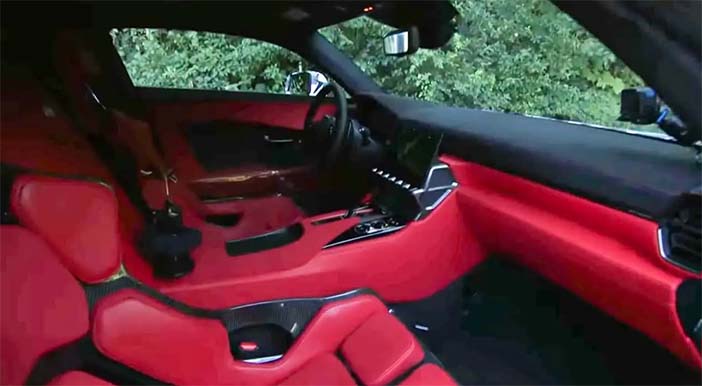
+++ The new LEXUS sports car is back at the 2025 Goodwood Festival of Speed. Both the road-going model and its race car counterpart have already climbed the famous hill again, but what really caught my attention was the post-run interview with the development drivers. I’ve learned that the cars have been in the works for over 4 years, with circuit testing kicking off about a year and a half ago. They’re still not quite finished, but judging by the interior, the official reveal can’t be far off. Since there are no press shots available yet, we’ll have to make do with screenshots from the livestream, which show the cabin of the street-legal version.
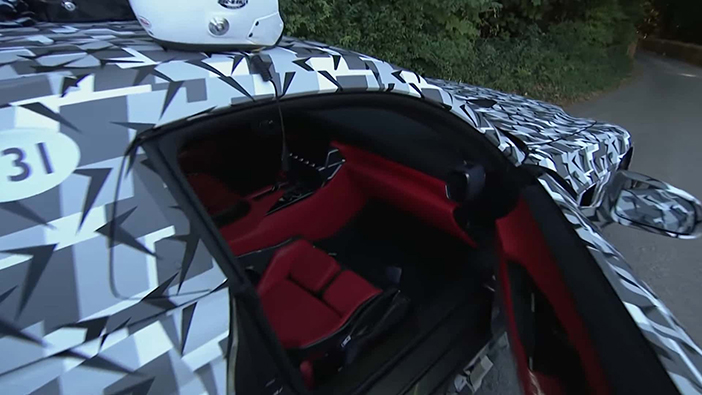
I used Photoshop and a bit of AI wizardry to enhance the brightness and exposure of the top image, bringing out more details. Featuring a predominantly red interior, the LFR (name confirmed) comes with a pair of carbon bucket seats separated by a wide center console. While a manual gearbox was never realistically expected, the new Lexus (or is it Toyota?) supercar features a small selector for the automatic transmission. The two-tone dashboard hosts a decently sized touchscreen and what appear to be physical switches located just below. Unfortunately, there are also some piano black accents and hexagonal side air vents. Much like the instrument cluster, the rear view mirror is digital, displaying footage from a rear-facing camera. Overall, the cabin feels more like that of a true sports car compared to the RC F it’s supposedly replacing. That would make sense, considering the LFR is believed to be a road-going version of the Toyota Gazoo Racing GT3. Lexus still won’t confirm what powers the two-seater coupe, but based on the sounds both cars are making at the Goodwood Festival of Speed, a V8 seems highly likely. Whether it’s twin-turbocharged and/or hybrid remains to be seen, though that’s what reports from Japan are claiming. The GR GT3 is expected to start racing in 2026, 4 years after the namesake concept debuted at the Tokyo Auto Salon. That suggests the wait is nearly over, not just for the race car, but also for its street-legal counterpart. The Toyota version will likely remain track-only, while the Lexus is expected to be the one with a license plate. Look for both to be revealed either later this year or in early 2026. +++
+++ “Never change a winning team” as the saying goes. The CX-5 has racked up precisely 4.761.329 sales since it arrived in 2012, making it MAZDA ’s best-selling vehicle in the current line-up. A third-generation model broke cover this week, and on the outside, it’s a subtle evolution of its predecessor. However, the interior is nothing short of a revolution. Judging by the comments on the debut post, you’re not a fan of the minimalist dashboard: “No knobs and buttons, No sale! Ergonomics is important to me”. “There is no way I’m going buttonless”. “What I don’t like is the removal of the buttons and rotary dia;” “Airconditioner, heater, defroster and temperature controller should be operated by physical buttons… please”. And so on and so forth. Naturally, I decided to ask Mazda why most conventional switchgear has been removed. In contrast to those comments, going nearly button-less is apparently what people want. Tamara Mlynarczyk, manager of public affairs for Mazda North American Operations, told that the decision to eliminate most traditional controls was based on an internal study showing customers prefer a large infotainment system: ‘Based on customer feedback, we developed a new human-machine interface (HMI) that prioritizes ease of use while maintaining Mazda’s safe driving philosophy. The new CX-5 changes from a commander to a touchscreen center display, which is the most suitable means to minimize the ‘hands’ away from the steering wheel while implementing: 1) Advanced voice recognition allowing the driver to operate vehicle functions like the air conditioning, audio, and navigation systems; and 2) Human-centric steering wheel switches allowing the driver to operate the controls without placing a burden on human attention resources. So, there you have it. The people have spoken. Apparently. Suddenly, I feel like I’m in the minority for preferring a more analogue layout. Having buttons for frequently used functions will always be a hill I’m willing to die on. This marks a paradigm shift for the Zoom-Zoom company, which has typically resisted overreliance on touchscreens. Mind you, the CX-5 is not the first Mazda to move in this direction. The EZ-6 electric sedan sold in China and rebranded as the 6e for other markets also features a simplified dashboard centered around a large touchscreen. The EZ-60 electric crossover, which hasn’t yet been confirmed for international markets, has an even bigger display. Both EVs trace their roots to Chinese models sold by Mazda’s joint venture partner Changan, but the new CX-5 is an all-Mazda effort and a global model. These cars also bid farewell to the BMW-style rotary dial between the seats, a move BMW itself has already made. All front-wheel-drive models from Bavaria have dropped it, and the upcoming Neue Klasse vehicles with next-gen infotainment won’t have it either. Less is more, I guess… It remains to be seen whether this trend will carry over to future Mazda models. Hopefully, they’ll at least make an exception for the next Miata and the rotary sports car revival that’s been teased for so long. A giant screen perched on the dashboard could be a dealbreaker for some. +++
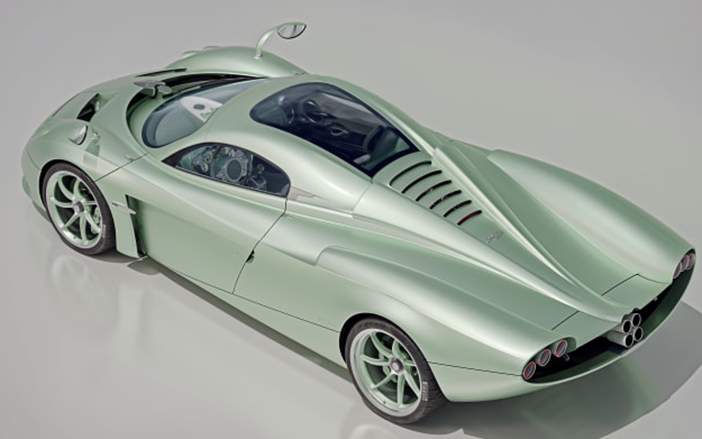
+++ While Koenigsegg chases after astonishing performance figures and record-smashing statistics, PAGANI has an entirely different idea of what a hypercar should be. Whereas Koenigseggs tend to be world-beating mega driving machines, Pagani sees the hypercar in a much more Italian sense of the word: as an artistic masterpiece on wheels. The Pagani Huayra Codalunga Speedster takes the idea of ‘art on wheels’ to an unprecedented extreme, masterfully mating mouth watering design with the symphonic underbelly tune of a turbocharged, AMG-crafted V12 engine and the visceral click-clack of a gated seven-speed manual gearbox, with just ten units planned for production. I mean, just let your eyes soak in the glorious swoops and strakes that define the Huayra Codalunga Speedster’s sensually distinctive style. Sure, a Koenigsegg Jesko Absolut will probably steamroll it in a drag race, but if you’re planning on careening along a coastal road off the Mediterranean Sea, the Pagani is the obvious candidate. That being said, with 880 hp and 1.100 of torque on tap from a twin-turbocharged 6.0-liter V12 handcrafted by the motor making masters at Mercedes-AMG, routed to the rear wheels through a 7-speed transverse Xtrac gearbox available in both “automated manual” or “pure manual” configurations, tantalizing performance has certainly not been overlooked. The Codalunga Speedster’s interior is equally as gorgeous as its achingly beautiful exterior, fusing modernism-inspired shapes akin to a Modigliani portrait with the timeless, traditional charm of a Botticelli painting. Thus, the Pagani’s interior seems to transcend the boundaries of artistic eras, and somehow manages to look classical and modern simultaneously. There is not one brand new vehicle that money can buy that possesses a more impressive and special interior than a Pagani, and that is a hill I will gladly die on. To make things even more special, the Pagani Huayra Codalunga Speedster can be equipped with a 7-speed, gated manual transmission. What a beautiful thing that shifter is: perfect example of the obsessive attention to detail you’ll find in every single Pagani masterpiece. With every shift, your eardrums will be soothed with the serene sounds of the AMG-constructed V12, vibrantly echoed through a titanium 6-way exhaust system which, according to Pagani, “reduces weight and provides an unmistakable sound signature, a defining hallmark of every Pagani creation”. Yeah, Pagani knows exactly what they’re doing to us with this one. +++
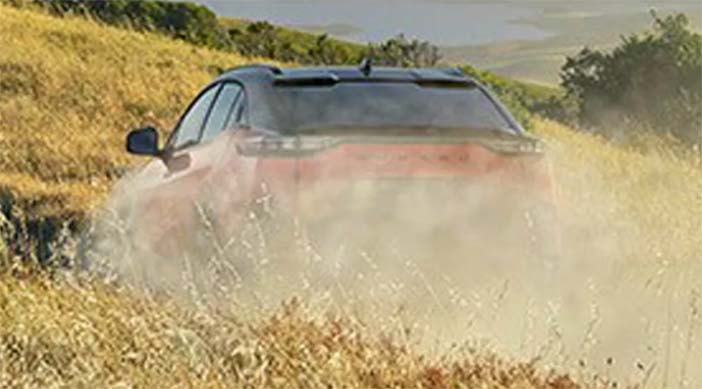
+++ SUBARU ’s American line-up has long been dominated by rugged, all-wheel-drive SUVs that actually back up their outdoorsy image. From the Outback to the Forester and Crosstrek, these aren’t just lifted hatchbacks playing pretend: they’re built with real-world capability in mind, whether you’re navigating unpaved trails or just lousy weather. Even with its first electric effort, the Solterra, it carried the same Subaru DNA, despite being co-developed with Toyota. Earlier this year, Subaru doubled down on its EV future with the debut of the Trailseeker, a larger all-electric SUV clearly aimed at adventurous American buyers. Now, a third EV is joining the lineup, and it’s a bit smaller and quite curiously named. Say hello to the Subaru Uncharted. “Uncharted” might sound like the name of a video game franchise or an adventure-filled TV show, but it bodes well with Subaru’s current line-up. Compared to the more conventional but still interesting Solterra or the slightly misleading Trailseeker, which isn’t exactly built for long-range expeditions, the Uncharted name feels like a better fit for a brand that has a penchant for outdoorsy vehicles. The Uncharted, BASI will be Subaru’s third electric vehicle, and the second all-new EV model specifically aimed at the US market. Subaru trademarked the Uncharted name last year, alongside other adventure-themed placeholders like “Getaway,” “Trailhead,” and “Highroad”. It’s unclear whether those would eventually become production models, but it’s evident that Subaru is working on a line-up with names meant to evoke dirt, distance, and a sense of discovery, even if they sound a bit weird. +++
+++ After years of speculation, TOYOTA ’s dormant Celica nameplate is finally set to return. The company has confirmed the model’s comeback and even filed a trademark for the ‘GR Celica’ name. As development of the eighth-generation continues, we’ve gathered the latest available information, along with a few intriguing (and occasionally far-fetched) rumours coming out of Japan. Toyota hasn’t released official specs for the new GR Celica, which has left room for plenty of speculation. Still, the turbocharged 2.0-liter G20E four-cylinder engine that was announced last year sounds like a no-brainer for the GR Celica. In its base form, the engine produces up to 406 hp, but according to Toyota officials, it can “easily” surpass 600 horsepower for road use with a larger turbocharger. However, the car’s layout is a point of debate. Traditionally front-engined, the Celica may break from its roots. Japanese outlet Best Car reports that the next-generation model could adopt a mid-engined configuration. If true, this would blur the line between the Celica and the also-rumored MR2 revival, with the article suggesting both projects may have been consolidated into one. Toyota previewed the G20E engine in the mid-engined GR Yaris M Concept at the Tokyo Auto Salon. That car is headed for motorsport testing, which could help refine the setup for future production models. The problem with the mid-engined theory is that an earlier Toyota teaser mentioned both the eighth-gen Celica and the fourth-gen MR2, alongside new generations of the GR 86 and GR Supra sports cars and the GR GT3 supercar. Furthermore, during a press event in Tokyo, a Toyota driver suggested that the new engine could be fitted in an “MR-something”, although the Celica was also mentioned from someone in the background. Regardless of where the engine ends up in the chassis, the GR Celica is expected to feature Toyota’s GR-Four all-wheel-drive system. This would align with the rally heritage of past GT-Four Celicas, which gained fame in the fourth, fifth, and sixth generations. A six-speed manual could be offered alongside an eight-speed dual-clutch transmission, following the approach used in the GR Corolla and GR Yaris. So far, no test mules have been caught in the wild, but that doesn’t mean they aren’t out there. Cooper Ericksen, Toyota North America’s Senior VP of Product Planning and Strategy, told that “a product that could theoretically go by the Celica name” is in the works and at a “pretty advanced development” stage. He stopped short of giving any launch timeline. The same report claims that the company has already shown prototypes of the GR Celica to US dealers. However, Toyota executives dismissed the accuracy of unofficial renderings circulating online, suggesting that the actual design is quite different. In reality, it is hard to predict the looks of the upcoming model that has to be differentiated from the GR 86 and the GR Supra in order to make sense in the future Toyota line-up. Another interesting rumor suggests that the new GR Celica might serve as the foundation for a future rally car for the top category of WRC, taking over from the GR Yaris. This would make sense as its predecessors competed at World Rally Championship stages from 1988 until 1995, winning 2 manufacturers’ and 3 drivers’ titles. Best Car speculates that the production model will be unveiled at the 2027 Tokyo Auto Salon. Of course, more information might surface before then. For now, the GR Celica looks set to carry forward a legacy that began in 1970 and ran through seven generations until the model was discontinued in 2006. +++