
+++ Yesterday, FORD dropped a pretty significant bombshell: The company is building a $30,000 electric pickup truck using an entirely new manufacturing process at its Louisville Assembly Plant in Kentucky. That car is destined to arrive in 2027. Ford promises that its EV pickup will have completely new battery technology, and even though the company touts it as a mid-sizer, Ford later confirmed that it will have a footprint similar to the current Maverick. So, it will be pretty compact. With that, there’s really only one obvious competitor in mind: The new Jeff Bezos-backed Slate truck. While there’s been plenty of hype surrounding Slate’s tiny, electric truck, there’s reason to believe that Ford’s compact pickup could have an even bigger impact. Here’s why. Prior to the Trump Administration’s rollback of Federal EV incentives, Slate promised a $20.000 starting price for its pickup. That’s since changed to “mid-twenties”, but nonetheless, Slate is aiming directly for the entry-level market. Ford’s compact pickup, on the other hand, won’t compete with Slate on the pricing front. Ford says it will start at around $30,000 and go up from there, which means it will be at least $5,000 more expensive than the cheapest Slate. The cheapest Ford Maverick, by comparison, costs just over $30.000 for 2025. Even more importantly, though, Ford says its electric pickup won’t be a stripped-down, bare-bones pickup like Slate’s truck, which has roll-down windows and no paint options out of the box. Ford’s EV-chief Doug Field noted: “This is not going to be a stripped-down, old-school vehicle as a path to low cost”. As you’d expect from most Ford models, even the cheapest version of its new pickup will have a bevvy of equipment with the ability to add on fancier features from there. The company even confirmed that it will have BlueCruise, Ford’s hands-free driver-assistance technology. The larger Ford Ranger only recently received it as an option for 2025. Ford will keep costs down, largely, through its new manufacturing process, which the company promises will be “40 percent faster” and drastically more efficient than the automaker’s current setup. Ford also promises that its new electric truck (and future EVs using the same manufacturing process) will have fewer pieces, which means fewer things to go wrong (which should, theoretically, mean fewer recalls long-term). As a compact truck, Ford’s electric pickup will have an expectedly small battery pack. But it may be even smaller than you think. Ford said its truck will use a battery that is 15 percent smaller than the BYD Atto’s pack, a Chinese crossover that has 60.5 kWh. Quick math suggests that Ford’s battery will be around 51.0 kWh. Surprisingly, 51.0 kWh would be even smaller than what Slate offers. The Slate truck has a base battery of 52.7 kWh and an optional battery of 84.3 kWh, with 240 km and 385 km of range, respectively. That’s also significantly down on the Chevrolet Equinox (85.0 kWh) and other small-ish EVs currently on the market. Interestingly, Ford touts a 400-volt architecture for its new truck in an era where many automakers are already switching to the more advanced 800-volt architecture. That said, the American-built LFP battery promises to be free of cobalt and nickel, which should help save space, reduce weight, and keep costs down. One thing we don’t know about Ford’s electric truck is the range. If Ford wants to be competitive, the new pickup would have to have at least 240 km in base form (same as the Slate truck), with options for high-density battery packs with more range. Ford CEO Jim Farley does promise that the automaker’s electric truck will have vehicle-to-lead (V2L) and vehicle-to-home (V2H) capabilities. Even though the specs aren’t immediately impressive, Ford believes that its upcoming electric pickup will make a pretty significant impact. Unlike Slate, which is essentially starting from the ground floor, Ford at least has all the pieces (dealerships, infrastructure, experience, etc) in place to move its new truck off showrooms at a pretty rapid pace. The Maverick is a good measuring stick. Even though it started slowly in its first 2 years on sale, Ford sold more than 150.000 Mavericks last year and is already on pace to improve on that number in 2025. Through the first half of this year, Ford has already sold 85.000 Maverick pickups. Granted, there’s still plenty we don’t know about Ford’s upcoming electric pickup, and how desirable (or not) it will be compared to the company’s gas-powered Maverick. But if this new EV pickup can capture even a fraction of those buyers, it may be a hit. +++
+++ HYUNDAI ’s hot N sub-brand will not restrict itself to electric cars, according to Joon Park, vice president of the N Management Group. This renewed strategy will see a series of lighter hybrid cars, including a new Tucson N, appear alongside high-power electric models such as the Ioniq 5 N and imminent Ioniq 6 N. “We’re not limiting ourselves to EVs”, Park said. “We will go further with the ICE-based cars as well; this is not the end of our journey. I cannot tell you exactly but lighter, more agile, nimble, and exciting. These are the key elements that we are heading to”. Headlining the range of new petrol-powered vehicles will be a circa-300 hp version of the new Tucson. It’s likely to use a “next-generation” 1.6-litre petrol-electric hybrid system, possibly with an electric rear axle for all-wheel drive. Regarding future hybrid N cars, Park said: “One thing I can tell you is that if we have hybrid systems, the characteristics of our hybrid systems will be different. We have two different strategies for our hybrid systems: one for efficiency and one for neutral efficiency. If we have a hybrid system in our N cars, the strategy will be different; to have more power intensely”. The Tucson is just the starting point for N’s transition to hybrid tech, with Park hinting that these downsized powertrains make good sense in a variety of smaller models, teeing up faster versions of the Kona, plus future, electrified versions of the i20 and i30. “If we can make a smaller model with a less-weighted battery, then it can be better”, Park told. +++
+++ KIA has added a new range-topping Xceed model and ended production of the Ceed and Ceed SW as part of a major line-up reshuffle. The Xceed gains a 180 hp 1.6-litre petrol-4 in top-rung guise, while the base model’s 1.5-litre has been replaced by a 115 hp hybridised 1.0-litre triple. The Ceed and Ceed SW have been axed entirely. Both were built at Kia’s Zilina plant in Slovakia and, along with the Proceed, of which production ended in December, they will not be directly replaced, a Kia spokesperson said. The new K4 will fill the void of all 3 cars when it arrives in Europe later this year, although this is yet to be officially confirmed. Kia’s new combustion-engined Volkswagen Golf rival, built in Mexico and sold in North America in both hatchback and estate forms, was spotted testing in Europe earlier this year. The spokesperson confirmed that the culling of the 3 models makes way on the Zilina production line for the incoming EV4, Kia’s first foray into the electric C-segment. Deliveries are scheduled to begin imminently. It also frees up space for the incoming EV2, Kia’s new entry-level EV, which will be manufactured at the plant from early 2026. This was previewed by a concept earlier this year and will be twinned with a Hyundai model (expected to be named Ioniq 2) that is expected to be revealed at the Munich motor show. The Ceed (originally badged Cee’d) arrived in 2006, followed quickly by the Ceed SW estate and three-door Proceed (reinvented in 2019 as a shooting brake). The raised, crossover-esque Xceed arrived in 2019. Will it be third time lucky for Kia’s Europe-only hatchback, or are established rivals from Volkswagen, Seat and Skoda still the better buy? During its lifetime, the Ceed has been one of the Korean brand’s best sellers, especially in Europe, where it averaged some 80.000 sales a year. +++
+++ LONGBOW , the British start-up which revealed a €75.000 sub-tonne electric sports car earlier this year, has brought in former bosses of McLaren, Alpine, and Lotus as it pushes to bring its car to market. Mike Flewitt, Michael van der Sande and Dan Balmer have all joined the firm’s new advisory board, which co-founder Daniel Davey (a former Tesla and Lucid engineer) dubbed the “holy trinity”. Founded in 2023, Longbow announced its first project, an open-roof Speedster and Roadster coupé, in March. +++
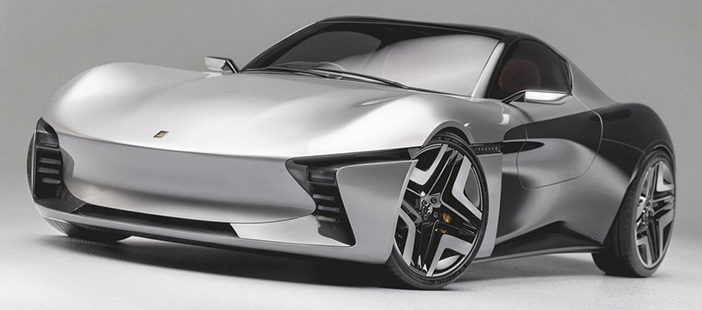
+++ MERCEDES is taking direct aim at Volkswagen Golf and ID.3 with its new third-generation GLA. The smallest member of the brand’s MMA-based compact car family will be sold in both electric and hybrid forms, replacing the first-generation EQA EV in the second half of 2026 and the second-generation ICE GLA in early 2027. It will have a sportier, more coupé-like silhouette than today’s model, with a distinctive front end featuring Mercedes’ new ‘Iconic Grille’. The car is expected to grow in size to just over 4.500 mm in length, allowing for a more spacious interior. For comparison, the current GLA is 4.410 mm and the EQA is 4.463 mm. Although pictures have yet to be taken of the new GLA’s cabin, it is expected to mirror the designs of the recently revealed CLA. They feature a free-standing full width display, AI-supported infotainment functions and more upmarket materials than today’s model; all of which aims to outclass rivals in the segment. The electric version will also receive a frunk, something not present on today’s EQA. Underneath, the electric GLA will use the same 800 Volt electrical architecture as the new CLA. That car is offered with either a 58.5 kWh LFP or 85 kWh NMC battery and a top-end range of 775 km. Drive comes from either a single-motor or dual-motor powertrain, which deliver 272 hp and 354 hp respectively. As with its MMA siblings, the GLA is planned to receive at least two AMG performance models featuring axial flux motors from British firm Yasa in 2027. ICE versions of the GLA will also draw directly from the new CLA, using a hybridised 1.5-litre four-cylinder turbo petrol engine with 136 hp, 163 hp or 192 hp, mated to an 8-speed dual-clutch automatic gearbox. Production will take place alongside the CLA at Mercedes’ recently refitted Rastatt plant in Germany. +++
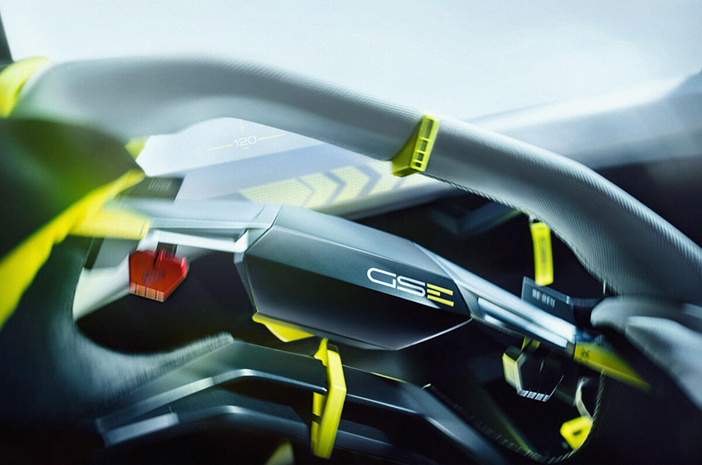
+++ OPEL will showcase the future of its GSe performance sub-brand with a new concept that nods to motorsport icons of the past, such as the Manta 400 rally car. The GSe sub-brand was relaunched in July as a badge for performance-honed versions of Opel’s EVs, starting with the 280 hp Mokka GSe. This concept, however, will go even further to “explore the boundaries of battery-electric performance vehicles”, hinting that more radical designs and upgrades will be used for future GSe models. This is shown in a selection of preview images that reveal its motorsport-derived positioning: the concept will feature a slim racing steering wheel, lightweight bucket seats and a roll-cage. Other images show aerodynamic alloy wheels and several triangular elements that Opel says provide “a subtle nod to historic and iconic motorsport vehicles such as the Opel Manta 400 rally car”. The firm has also hinted that some components of the concept could even preview more general aspects of Opel’s future design, such as a new interpretation of its Compass motif, which is most notably used in its lighting signature. It is expected that the concept won’t just be a design exercise and could preview a production model. “The concept will be very much at home on the racing track and offer a thrilling yet comfortable and safe driving experience”, said Vauxhall. Full details are expected to be revealed in the coming weeks. The car will make its public debut at the Munich motor show on 8 September. +++
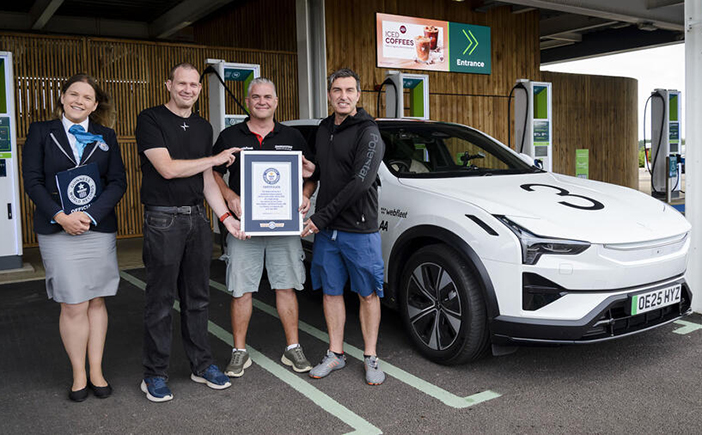
+++ The POLESTAR 3 has claimed the world record for the longest distance travelled by an electric SUV on one charge, cracking nearly 1.000 km in one hit on UK roads. The new Long Range version of Polestar’s flagship SUV, with a 107 kWh battery and a single 300 hp motor on the rear axle, managed 925 km of driving around the east of England. That comfortably beats the 3’s 700 km official range and smashes the previous record of 902 km, set by the Ford Mustang Mach-E last year. The distance travelled equates to a final efficiency figure of 19.5kWh per 160 km, which is in line with the official WLTP efficiency figures of some small electric cars weighing around two-thirds as much as the 2.4-tonne 3.
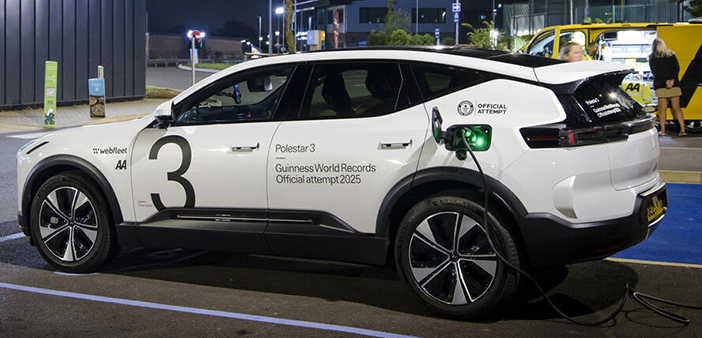
Polestar said the SUV continued for 13 km after the battery charge readout reached 0% and still managed to get to a charger, suggesting it could even have gone slightly farther. Crucially, the car used for the attempt was completely unmodified (even using the standard Michelin Sport 4 EV tyres) and the attempt was carried out on open public roads, including single-track lanes, dual carriageways and B-roads. +++
+++ TOYOTA is adamant that the internal combustion engine still has a bright future despite the rise of electric vehicles. The world’s largest carmaker has reaffirmed its long-term commitment to ICE by partnering with fellow Japanese brands Subaru and Mazda on a new family of gas engines. Smaller and lighter four-cylinder units are touted as a “game-changer solution” by the company’s Chief Technology Officer, Hiroki Nakajima. We now know the Japanese automotive giant plans to use the upcoming 1.5- and 2.0-liter engines in nearly every conceivable type of powertrain. Toyota Europe vicepresident of Product Strategy and Marketing Andrea Carlucci told the new hardware’s versatility is key: “We are trying to optimize the new engine for any type of application, whether it’s electric, hybrid, or hydrogen”. While the idea of a petrol engine in an electric application might sound odd, a plausible scenario exists. Toyota is likely referring to extended-range electric vehicles (EREVs), where the combustion engine doesn’t drive the wheels but instead serves solely as a generator to recharge the battery on the go. This setup allows the engine to run at optimal speeds for maximum efficiency. Examples include the BMW i3 REX, the Ramcharger, Mazda MX-30, Scout’s upcoming truck and SUV, and Nissan’s models equipped with e-Power tech. Toyota has already announced plans to sell extended-range electric vehicles in China through its local joint venture with GAC, giving the Highlander SUV and Sienna minivan the EREV treatment. These models are expected to use a small engine that isn’t mechanically connected to the wheels. Instead, propulsion will come exclusively from electric motors, with the engine serving only to extend range without abandoning gasoline entirely. Toyota achieved 41 percent thermal efficiency back in 2018 and could be aiming to improve that figure further. Its next-generation engines will run not only on fossil fuels, but also on biofuel, hydrogen, and synthetic fuel. Beyond full hybrids and EREVs, Toyota is also exploring long-range plug-in hybrids, with Carlucci estimating that 100 kilometers without sipping any gasoline represents the “tipping point”. Confirmed engines include naturally aspirated and turbocharged 1.5-liter units, along with a larger 2.0-liter turbo. Efficiency won’t be the only focus as the latter will also have a performance version for Gazoo Racing (GR) models, delivering up to 600 horsepower in race cars. Carlucci also discussed vehicle architectures: “Everybody has taken an ICE platform and turned it into something that is electrified to some degree. So, why not conceive a platform that is EV-native and see how much we can adapt it to be used for a plug-in hybrid or a full-hybrid without sacrificing any of the new platform’s strengths?” Of course, dedicated electric platforms are nothing new. Tesla is the obvious example, but there’s also Volkswagen Group’s MEB, Hyundai and Kia’s E-GMP, and Mercedes’ EVA, among others. Additionally, some EV-native platforms can also accommodate combustion engines, such as Stellantis’ STLA Small, Medium, Large and Frame. Scout’s upcoming models fit this category, as will VW Group vehicles on the forthcoming Scalable Systems Platform (SSP). Much like Toyota chairman Akio Toyoda, who has famously said EVs will never exceed a 30 percent market share, Carlucci maintains that electric cars are not the sole path to decarbonization. He argues for powertrain diversity, giving customers the freedom to choose: “We will not push EVs in markets where there is no demand”. +++