
+++ AUDI recently introduced the redesigned Q7 as well as the all-new Q9. However, we haven’t heard anything about a new Q8 or seen any prototypes. That suggested the model could be living on borrowed time and this was amplified by recent reports suggesting Audi and Porsche could kill off a number of SUV-Coupes to cut costs. Casualties are said to include the Q5 Sportback and Q6 e-Tron Sportback as well as the petrol-powered Cayenne Coupe. While the Q8 wasn’t named, things didn’t look promising. Fast forward to today and Audi CEO Gernot Döllner has confirmed plans for a second-generation Q8. He suggested we haven’t heard anything about the model because its fate was still undecided when he took the job in 2023. As the executive explained, “To my surprise, there was no decision for a successor, but we changed that”. He added the redesigned model will come in the “nearer future”. Döllner said the SUV-Coupe will follow in the footsteps of its predecessor, so we can expect it to continue to be based on the Q7. This means we can expect a sportier shape. It will likely be joined by a new SQ8. Another RS Q8 is also a possibility, but little is known about it. +++
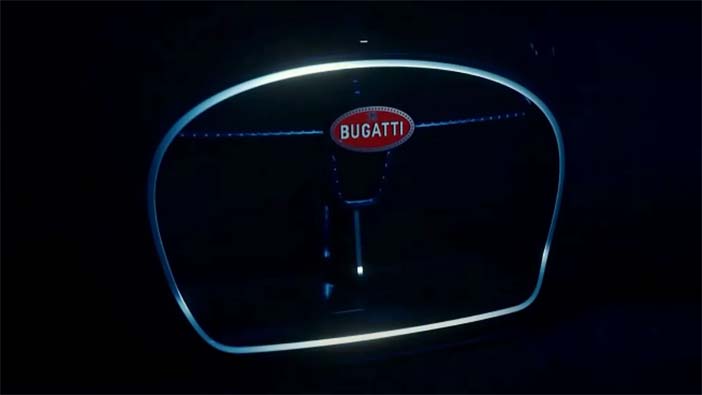
+++ While the Chiron and the related Mistral are no longer being built, that doesn’t mean BUGATTI is willing to give up on its fabled 8.0-liter quad-turbocharged W16 engine just yet. In the lead-up to Monterey Car Week, Bugatti has started teasing a new one-off model from its exclusive Programme Solitaire division, and it’ll include the famed engine which dates back to the Veyron. The teaser appears to show the cover of the almighty W16 engine on a new Bugatti model, revealing the car’s front grille. Compared to the Chiron, with which this car is expected to share its chassis and powertrain, the horseshoe grille is noticeably wider and more reminiscent of the grille from the new Tourbillon. This aligns with previous reports that the new one-off will take design inspiration from the Tourbillon, and Bugatti’s wild track-only Bolide unveiled a few years ago. Bugatti has so far launched 2 one-offs created by its Programme Solitaire division. The first, badged the Brouillard, debuted at last year’s Monterey Car Week, combining elements from the Chiron and the Mistral into one staggering-looking hypercar painted in matte green. Approximately 6 months later, Bugatti followed it up with a second Solitaire model, this time the FKP Hommage, built as a modern-day tribute to the Veyron, but powered by the Chiron’s more powerful engine. If the rumors are true about this latest bespoke creation combining elements of the Tourbillon and Bolide, then it should be an absolute showstopper. I expect to see an overall similar profile and shape to the Tourbillon, albeit with more outlandish aerodynamic componentry. As Bugatti continues to work on one-off models, it’s edging closer to finishing development of the Tourbillon and will start deliveries later this year. Unlike the Veyron and Chiron, the Tourbillon uses an 8.3-liter naturally-aspirated V16 from Cosworth, working alongside three electric motors to deliver a combined 1.775 hp. +++
+++ After years of what looked like unstoppable growth, sales of new electric vehicles in CHINA are down 14 percent year on year, dragged lower in part by a slowing local economy and the government pulling some incentives. Figures released by the China Passenger Car Association show that 4.7 million new EVs have been delivered in China this year. July treated some brands more kindly than June did, though major players like BYD and Geely are still feeling the downturn, as are smaller local firms including Xpeng and Nio. In July, BYD sold 239.370 vehicles locally, down 9 percent from the same month in 2025 but up 4.9 percent from June. Geely followed a similar pattern, with July sales up 4 percent on June yet down 29.1 percent against last July. What’s helping both automakers cushion the home-market slump is a surge in overseas exports. Brands like Xpeng, Nio and Li Auto all have some footprint abroad, but their home nation still accounts for the vast majority of sales. Xpeng’s July deliveries slipped 5.2 percent to 38.027 vehicles versus June, Nio’s fell 11.5 percent to 35.934 and Li Auto’s dipped 1.4 percent to 30.468. AlixPartners expects that by the end of this year, new car sales in China will have dropped by 10 percent to 24.6 million vehicles. The wider economy isn’t doing EV sellers any favors either. GDP grew just 4.3 percent year on year in the second quarter, China’s slowest pace since late 2022. The government’s decision to trim incentives has had an immediate impact on sales. Earlier this year, any new car purchase came with a 15.000-yuan ($2.220) subsidy. That figure was recently cut by 33 percent, and the subsidy now equals 10 percent of a new vehicle’s purchase price, capped at 10.000 yuan ($1,480). For some of the nation’s most affordable EVs, the payout is now 5.000 yuan ($740) lower than before. +++
+++ The toll of the industry’s miscalculation of ELECTRIC VEHICLE demand continues to grow. Honda expects an additional $3.21 billion in EV-related restructuring charges this fiscal year, which ends in March. Much of that amount will be paid to suppliers to compensate them for investment they made before the Japanese automaker scaled back its EV plans. Honda this year cancelled 3 U.S.-bound EVs (2 from its next-generation 0-Series line and the Acura RSX) as well as high-end Afeela models through a joint venture with Sony. Honda was the most aggressive of the Japanese automakers pursuing electric vehicles. Honda is not alone. Several automakers, including Ford, General Motors and Stellantis, collectively have reported tens of billions in EV-related write-downs. GM executives have said about 90 percent of the company’s EV-related supplier claims had been settled as of the first quarter. EVs also are creating challenges for Subaru. Incentives on the electric Solterra, Uncharted and Trailseeker dragged down operating profit in the April-June quarter. That news comes months after the automaker said it would take a $362 million EV-related charge and postpone production of an EV it’s developing independently in Japan. The EV market, particularly in the U.S., continues to reset after the end of federal tax credits and the loosening of emissions rules that have allowed some automakers to pivot back toward gasoline engines. +++
+++ MASERATI looks to be rethinking its long-term product strategy as the market shifts beneath it, and that rethink may bring back V8 power and three-pedal manuals for a handful of limited-run models. The brand had leaned hard on its twin-turbo Nettuno V6 as the internal combustion centerpiece, a stopgap ahead of a full-electric future that has since been scrapped. Now the people in charge concede what enthusiasts have been saying all along. Some buyers want more cylinders, and Maserati has the hardware in its history to give it to them. Maserati engineering boss Davide Danesin said: “My personal opinion is yes. I think the V8 could potentially be coming back… I’m sure that if we would be making it, we would be selling it but maybe not in big numbers”. Danesin, who has raised the subject before, confirmed that technical feasibility studies have already looked at fitting a V8 into the current lineup. The recently facelifted GranTurismo, GranCabrio and Grecale sit on an evolution of Alfa Romeo’s Giorgio architecture, while the MCPura supercar uses a carbon fiber monocoque shared with the Alfa Romeo 33 Stradale. The idea hasn’t received the green light from parent company Stellantis yet, but Danesin sounded upbeat about its chances: “It looks like the momentum for V8 is building up. The decision to make it or not is very much dependent on company strategies. I think that potentially that space is there”. In a separate interview, he explained why a buyer might want a V8 over the existing V6: “You don’t feel the need of a V8 because of missing performance. I think the need of V8 is more like having the proper engine for a certain vehicle; it’s more a perception issue…overall, I think this is coming back”. So which V8 would it be? The Ferrari-sourced unit left the Trident lineup in 2024 and Stellantis’ current American engines make poor candidates. Danesin noted that the Hemi’s large-block dimensions create packaging constraints, which leaves Maserati needing either a new engine or a fresh deal with a supplier. Alongside the V8, Maserati is weighing the return of a manual transmission for its most exclusive sports cars. As Danesin put it: “I see a mechanical solution with a good engine coming into a few-off car, which then provides the full experience, as it was 20 or 30 years ago”. Where other brands have gone with electronic or simulated setups, Ferrari’s 12Cilindri Manuale among them, Maserati wants the real thing. A future manual would use a fully mechanical linkage to pass authentic feedback and engine vibration up through the lever. According to Danesin, the business case for a manual gearbox is similar to a mechanical wristwatch which might be expensive to manufacture and technically superseded by the latest technology, but has value because due to its scarcity: “We already proved, since 15 years ago, that automatic gearboxes are shifting quicker. I think that it is not about making the perfect shifting experience. It is about recalling the mechanical feeling. In doing that, you would be losing some performance in terms of speed of shifting, maybe even the feeling through the lever of the engine vibrating. I think that would be part of the experience. It’s a good part”. As for the extra cost, the high-ranking official said: “To come back to a mechanical setup…all the components behind that are going to be very high-cost because of super-low volume. I think these days, a good gearbox could cost €15.000-20.000 while an automatic gearbox costs less than €3.000”. Either way, future manual and V8-powered sports cars would likely come out of BottegaFuoriserie, the joint bespoke and coachbuilding department shared by Alfa Romeo and Maserati. That points to limited production runs and prices high enough to match the exclusivity. +++
+++ While there doesn’t appear to be much interest in all-electric PORSCHE Cayman and Boxster models within the enthusiast community, the company’s boss has confirmed it’s pushing ahead with work on the 2 models, confirming they will not be scrapped as previously reported. Ex-McLaren CEO Michael Leiters joined Porsche at the start of this year, taking the reins from VW chief Oliver Blume. Under Blume, Porsche over-invested in EVs and dented its operating profit by €1.8 billion. Leiters’ job is to steer the German brand back on course. During aninterview, Leiters appeared to acknowledge the electric 718s were on the chopping block, but the company ultimately decided to push forward with the project. “With the electric 718, we have come to the conclusion that we will build the model because it is the best economic solution and will become a fantastic car”, he said. Leiters also stressed that Porsche evaluates projects on their own commercial merits before considering any Volkswagen Group synergies. Porsche is sticking with the electric 718 because Audi needs to borrow components for its own next-generation sports car, expected to be an all-electric successor to the TT. Leiters pushed back on that reading: “I initially look at each project exclusively from Porsche’s perspective: Does it make economic sense or not? Only after that do potential synergies within the group play a role”. Although Porsche will still launch the electric 718 Boxster and Cayman models, the role they play in the company’s broader line-up won’t be as important as it was initially going to be. When Porsche first started work on the electric sports cars, its plan was to sell them exclusively as EVs. However, partway through development, Porsche revealed that flagship versions would continue to be offered with petrol engines, likely using the same naturally-aspirated 6-cylinder units as models like the Cayman GT4, GT4 RS and 718 Spyder RS. Soon after, Porsche revealed it was also reverse-engineering the new 718 family to offer petrol engines lower down in the model range. As long as these ICE models are priced competitively, it’s hard to imagine them not easily outselling the EVs. Leiters also signalled that Porsche is still weighing a flagship sports car positioned above the 911. He raised it as one of several future opportunities for the US market rather than a confirmed program, and didn’t elaborate on the project. Separately, he dismissed suggestions that the Taycan could be dropped from the line-up as the company trims complexity, saying Porsche has no plans to discontinue it in the short term. “We’ve already started doing that. With the Taycan, we will further reduce the number of models and thus decrease complexity. We have no plans to discontinue the Taycan in the short term. We’ve invested heavily in the model and want to monitor how demand develops”, he said. +++
+++ The battery industry is arguably developing at a quicker rate than even the automotive world, and eager to remain at the forefront of changes and developments, TOYOTA is looking to equip its latest range of hybrid vehicles with advanced, new-generation lithium-ion batteries. Dating back to the Prius of the late 1990s, Toyota’s hybrid models have relied on nickel-metal hydride (NiMH) batteries, although the new RAV4 has shifted to a lithium-ion pack. Moving forward, other Toyota hybrids will too. Between 2027 and 2028, Toyota plans to convert battery capacity in Japan for as many as 600.000 new vehicles, noting the new cells will boost efficiency while also costing less. Toyota is doubling down on its hybrid focus as more new car buyers shift away from non-hybrid combustion engines. “We plan to gradually transition from nickel to lithium while simultaneously expanding our production capacity”, Toyota chief accounting officer Takanori Azuma noted. “This will result in a cost reduction of approximately tens of thousands of yen per vehicle. We are striving to both improve performance and reduce costs”. Specifics about the new batteries Toyota is developing are limited at this early stage. We know that in addition to developing its own new lithium-ion cells, Toyota is also working with battery specialists, including CATL. Toyota is also said to be working on bipolar lithium-ion cells for pure EVs, which are claimed to provide driving ranges of up to 1.000 km. What’s more, Toyota is also working on solid-state batteries, which can charge from 10-80 percent in under 10 minutes while providing driving ranges of up to 1.200 km. While Toyota’s overall retail sales fell 3.5 percent to 2.55 million vehicles during the April-June quarter, its electrified vehicle sales rose 12 percent to 1.41 million over the same period. +++
+++ Fast SUVs are everywhere these days, but VOLKSWAGEN has been strangely quiet where its Tiguan was concerned, while rivals piled on the horsepower. That is set to change soon, because the first proper Tiguan R is edging closer to production. An aggressive front bumper, larger cooling intakes, quad exhaust tips and an R badge will be visual characteristics of a model that’s virtually ready to step out for its debut this fall. The biggest story is what’s breathing through those tailpipes. VW is widely expected to transplant the Golf R‘s turbocharged 2.0-liter EA888 4-cylinder into the Tiguan, giving the SUV somewhere around 333 hp. A 7-speed DSG and 4Motion all-wheel drive are standard, while the torque vectoring rear differential from the hatchback is also expected to make an appearance. Volkswagen has already done the hard work with the Golf R, and now the Tiguan (which is based on the same MQB platform as the Golf) simply gets the same ingredients wrapped in a taller body with enough luggage space for a family holiday. That formula could make it one of the more appealing performance SUVs on sale. +++