
+++ MERCEDES will begin to integrate more physical controls into its digitally focused cabins, as “the data shows us physical buttons are better”, software boss Magnus Östberg has told. This starts with the new GLC and CLA Shooting Brake, which both get a host of rockers, rollers and buttons on a new-design steering wheel. This wheel will be the standard for Mercedes’s models going forward, and the plan is also to fit it to all cars already on sale, starting later this year with the recently launched CLA saloon. This, Östberg said, is the easiest and most cost-efficient way of adding physical controls to cars that are already on sale while still keeping Mercedes’ digital-first cabins. He explained: “You can see a difference if you move from the CLA saloon, which has a touchscreen and fewer hard buttons, to the new GLC, where we put back the rollers and buttons, because we see in the data that the rollers and these physical buttons are very important for certain age groups and certain populations. “So having that balance between physical buttons and the touch is extremely important for us. We’re completely data-driven, seeing that what is actually something that is used high-frequency, the data shows us the physical buttons are better, and that’s why we put them back in”. That data has come from software-defined vehicles: the CLA is Mercedes’ first SDV and the incoming GLC the second. As well as being easier to tweak (as software can be updated over the air rather than needing to drag buyers into garages), SDVs also give car makers full access to drivers’ data and usage. “This is so important”, said Östberg, as it means decisions, such as bringing back some physical controls, can be data-driven. Due to that data, he hinted that other wheel designs could be used depending on the market. For example, while Europeans like buttons, Asian drivers prefer more touchscreen and voice controls. Östberg said Mercedes is also looking at adding more physical controls elsewhere in the cabin for future models , but this will most likely be kept to SUVs, as “in larger cars we have more freedom to package” and buyers of those cars “care more about buttons”. The revelation comes as Mercedes has just fitted the new GLC with its biggest screen ever, and possibly the biggest to ever feature in any production car: a single-piece display named MBUX Hyperscreen that, at 39.1 inch, spans the entire width of the SUV’s dashboard. Speaking at the Munich motor show, Mercedes design chief Gordon Wagener said this is probably as big as screens will get. “We have reached a point where you cannot make the screen much bigger”, he said. How Mercedes will progress this design for its top-end models is what designers are currently looking at, as the GLC’s interior “is almost S-Class in terms of technology”, said Wagener. He added: “It’s such a valuable piece. To get this level of luxury inside is amazing. When you look at the interior, it’s amazing what we have done there. “But we can always do better; don’t worry”. Wagener said the next stage of luxury won’t just come from high-end materials but also from software: “How can we give [the cabin]more luxury appeal? When you look at Apple and you look at [its competitors], it’s the software that feels more premium than others, and I think our software feels more premium than others. It’s also all that craftsmanship that makes it a Mercedes and makes the difference to the other brands”. Mercedes is also looking at introducing more artificial intelligence into its cars, mainly centred around voice commands. This is an important feature for buyers in China; the world’s largest car market, in which Mercedes is trying to build back a presence. But Östberg said that European buyers will also use it, and the data suggests that voice command usage in the CLA has “tripled” among Mercedes drivers. “It’s phenomenal”, he said. +++
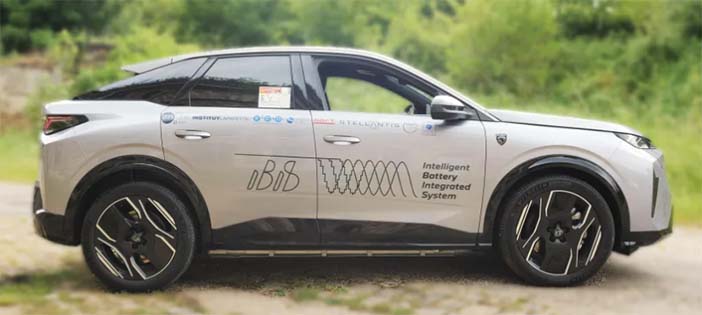
+++ Less weight, more power, better efficiency and faster charging, Stellantis is moving into the final development phase of a revolutionary new battery system, testing now in a PEUGEOT E-3008 prototype. It’s shaping up to be in production by 2030, which would mean it’s ready for the current generation E-3008. Stellantis claims the ‘Intelligent Battery Integrated System’ (IBIS), developed in partnership with battery specialist Saft and academics, is a game-changing technology that embeds the inverter and charger directly into the battery itself. Electric vehicles spend a lot of time converting Alternating Current (AC) to Direct Current (DC) and back again using an inverter. For example AC from your wallbox is stored in the battery as DC, then converted back to AC to typically power electric motors. Harvesting energy from regenerative braking undergoes the same process. Doing away with a standalone charger and inverter unlocks weight and cost benefits. A 40 kg weight saving comes from fewer electronics and revised chemistry, with the knock-on effect of improved efficiency. These ‘phase 6’ development modules have been designed to fit the E-3008’s existing battery space in the STLA Medium vehicle platform. But when the engineers reach the final phase (9) of the development cycle, the battery modules should be smaller and the next wave of Stellantis platforms designed around them instead, hopefully shaving a little height from the vehicle. And with the elimination of the inverter and charger saving 17 litres of space on board, all these gains should boost the platform’s spaciousness and/or aerodynamics, yielding more benefits. While Porsche has been working on a battery with similar principles, Stellantis is convinced it’s ahead with its testing and affordability projections. “In terms of technical maturity, we reached Technology Readiness Level (TRL) 5 and we are about to reach TRL 6”, said Anne Laliron, vice president of Stellantis technology research. “This is a huge maturity for such disruptive technology. We are running the first one on the road, and that’s a world premiere”. In its on-road testing, the E-3008 prototype is delivering a 10 percent improvement in energy efficiency on the WLTC cycle (up to 15 per cent in urban driving) and a 15 percent power bump, increasing the motor output from 204 hp to 235 hp. The technology also shows a 15 percent reduction in charging time on a 7 kW AC charger, cutting a full charge from 7 hours to 6. Ned Curic, Stellantis’ chief engineering and technology officer, emphasised the project’s focus on “simplification”, stating that the innovation will help “deliver better, more affordable electric cars to our customers”. While the prototype runs Nickel Manganese Cobalt cells, Stellantis says IBIS could be rigged up with lower-cost lithium iron phosphate (LFP) chemistry. And they won’t just be limited to the STLA Medium architecture, enabling them to spread their wings to smaller vehicles. The modules are designed to be easier to remove and not require special battery service centres, which should also cut costs and boost EV residual values. Sounds too good to be true. Crack on Stellantis! +++
+++ PORSCHE will include a combustion engine option for “top” versions of the next-generation 718 Boxster and Cayman as part of a significant shift in the company’s electric strategy that also kills the planned large ‘K1’ electric SUV above the Cayenne. The new ‘strategic realignment’ also confirms major overhauls for the Cayenne and Panamera combustion engine and plug-in hybrid models to keep them running “well into the 2030s’, CEO Oliver Blume said on a call to investors late on Friday 19 Sept. Porsche will take a €1.8 billion hit on a decision to halt development of the SSP 61 ‘Sport’ version of the Volkswagen Group platform that was going to underpin the K1 large SUV as well as an electric replacements for the Panamera and the Taycan. The K1 model (dubbed a ‘D-SUV’ by Porsche) will now be launched with combustion-engine and plug-in hybrid variants, Porsche said, without giving a precise date. The K1 was first announced in 2022, along with plans for the third-generation Porsche Panamera and second-generation Porsche Taycan. “We have seen a clear drop in demand for exclusive battery-electric cars, and we are taking that into account”, Blume said. Porsche has also been roiled by “dramatically decreasing” demand for luxury goods in China, Blume said. Also hitting profits was the US decision to increase tariffs on imported cars. The company said the combination of circumstances will cut its predicted net profit margin to around 2% this year but predicted a return to growth in the ‘medium-term’ when it planned to grow margins back above 10% with the new products rolling out. “This flexibility gives us a strong position with a compelling mix of combustion engines, plug-in hybrids, and battery electric vehicles”, Blume said. The CEO said the company was still committed to electrification. “They excite a specific and growing customer group”, Blume added. Porsche is about to launch the new Cayenne Electric based on the Volkswagen Group’s 800 Volt Premium Platform Electric (PPE) architecture, and already sells the Macan Electric. Porsche had originally intended the electric Macan to replace the combustion-engine version, back when its plan was to push for 80% of its global sales to be electric by 2030. However Porsche will now add an equivalent SUV model with both combustion engine and plug-in hybrid variants to sell alongside the Macan electric, the company said. This new ‘M1’ SUV will be its first production car with drive biased towards the front wheels, after the company decided to based it on the third-generation Audi Q5 which sits on the VW Group’s Premium Platform Combustion (PPC) architecture. In July Blume said the M1’s short, 3-year development was “speeding up the process” of bringing it to market. A new Porsche typically takes 5 years from concept to road. No more information was given the ‘top’ versions of the new 718 with the combustion engine, but it could mean the continuation of the hardore RS and GT4 RS models, with entry versions covered by the electric drivetrain. +++
+++ RENAULT is poised to launch a range-topping performance version of the Megane E-Tech next year as part of a radical styling makeover that will reposition the EV as a hot hatch. The move is motivated by a desire to revive the Megane E-Tech’s appeal and reverse a sharp fall in sales of the car over the past 18 months. Speaking at the Munich motor show, Renault brand CEO Fabrice Cambolive confirmed the Megane E-Tech will be repositioned as “a hot hatch or a hot car”, adding: “That’s the direction we want to go in”. He also told reporters that Renault is exploring the viability of a new performance model and will show the “first proposals” within 12 months. While he declined to give further details, the 2 cars are expected to be linked. The brand’s last true dedicated sporting model was the 4th generation Megane RS hot hatch, which went out of production in 2023 with the 300 hp Ultime run-out special. Renault has begun experimenting with sportier models again recently, bringing to market the exclusive, 5 Turbo 3E; a 540 hp hyper-hatch designed to show what a Renault performance EV is capable of. The new top-rung Megane E-Tech model isn’t expected to receive such a lofty power output, but a more feasible option is apparent from its Ampr Medium platform-mates. Of those, the new Alpine A390’s bespoke 472 hp tri-motor powertrain isn’t likely to be transferred to the Megane E-Tech, but the Nissan Ariya Nismo’s 435 hp dual-motor set-up could be in play. The current Megane E-Tech is offered exclusively with a single electric motor and a top end output of 220 hp. It is not yet known if the new range-topping Megane E-Tech will take the Renaultsport name. Cambolive hinted that the Renault Group could decide to continue using the Alpine brand exclusively for dedicated sports cars. Previously, in February, the Renault Group’s then CEO, Luca de Meo, described Renaultsport as being “in the fridge” and said that while “everything sporty would be building on Alpine”, that “doesn’t mean that sometimes this thing wouldn’t be revived”. On the viability of the Megane E-Tech rangetopper potentially spawning a series of new performance cars, Cambolive said “we have to find the right balance” between cost and demand before any approval is given. To that end, Renault Clio product line manager Emmanuel de Jesus Pequeno recently told that a hot version of the new 6th generation supermini is not currently on the cards. This is because of the “compromise” between the level of investment required to transform it into a hot hatch and the level of expected demand. A refresh of the Megane E-Tech has been a big focus for Renault, said bosses. The model was launched in 2022 as one of Renault’s first new-age electric cars. Following its initial success, the Megane E-Tech has subsequently been challenged by a growing number of newer rivals, some of which are delivering more for less than the hatch’s asking price. As a result, sales have fallen sharply (down 67% to 10.082 registrations) in Europe for the first half of 2025 compared with the year before. Speaking about the Megane E-Tech’s 2026 refresh, Cambolive said it will get a larger battery. This is likely to be the 91 kWh pack used in the Ariya Nismo and Scenic. In the hot Nissan, the battery offers up to 500 km of range. The facelift will bring a new grille, new daytime-running lights and a lower, wider stance, although Renault Group design boss Laurens van den Acker would not be drawn into specifics. On the need to refresh the hatch, van den Acker admitted: “We need to sell more of it” He added: “If you put a new battery in the car, which is very expensive, and you don’t change the car, then it’s really hard to seduce people to pay more for it. “So we needed to justify the change underneath the skin by showing something on the skin. And then we thought that what the world was missing was kind of a hot-looking EV. And so we thought we had nothing to lose, so we’ll just push that”. +++
+++ Things have gone from bad to worse for STELLANTIS as Citroën has now recalled even more new cars for manufacturing defects. This time the recall is for brand-new cars and includes models from sister brand Opel. The main cars concerned are right-hand drive versions of the Citroen C3, as well as the larger Citroen C3 Aircross. Also affected is the Opel Frontera. All of this is down to what a Stellantis spokesperson described as a “a pedal box assembly that is not to the correct specification” or, to put it in plain English, the brake pedal could fall off. This being the case, Stellantis has somewhat euphemistically said that the defect could cause “a loss of brake capability”. One small comfort is that Stellantis says the automatic emergency braking (AEB) and the electronic handbrake would remain fully operational, although we’re not sure how helpful this might be in such a situation. With 1.100 cars thought to be affected at this stage, Stellantis has issued a ‘stop-drive order’ for those that have already been delivered meaning owners should not drive their cars. Frontera models due for delivery will be held back a few weeks in order to receive the necessary fix. The firm also says it will provide a courtesy car for those affected, while owners have told press and online forums that compensation of up to €300 has been issued in some cases. This could not come at a worse time for the automotive conglomerate following a mass recall of over 140.000 Citroën cars over faulty Takata airbags that could be lethal if detonated. That’s not to mention another recall in which cars fitted with the 1.2-litre PureTech turbo petrol engine could suffer oil leaks that have the possibility of causing a fire. +++
+++ SUBARU is looking to “reignite old passions” with a new halo model among 7 fresh electric cars coming to the UK by the end of 2028. The brand, famous for its performance saloons and rally cars in the late nineties and early 2000s, is aiming to instil some of that sporting dynamic into its electric vehicles to rebuild enthusiasm for the niche badge. Subaru has long been pressured by enthusiasts to return to the type of cars that made it popular in Europe, before huge success in areas like the US and Australia moved the company’s focus away from performance models to rugged estates and SUVs. And electrification is the unlikely source that could prove the catalyst, sparking quick Subarus back into life. “EVs are coming and they’re making things that we’ve been dreaming of possible again, so we’re seeing almost a rebirth of that sort of blue car with the yellow paint on it. It’s becoming possible again”, David Dello Stritto, Subaru general manager for Europe, said to Auto Express. “This is very exciting; they’re not the biggest group of Subaru buyers in Europe, but they’re very vocal and keep pushing us. “Now we’ve got electric powertrains allowing us to do that, maybe at some point in the future we could start playing with that”, he continued. “There’s a recognition that Subaru has been out of the game for a long time and it would be good to get back into it, although it’s a bit early to say how that would look”, a Subaru insider told. “It’s about product that reignites old passion, which is more difficult with an EV because a lot of the love for the Impreza was the noise. If you don’t concentrate on range too much, you can get good performance, but the fun factor is more difficult”. The potential halo car is one that Subaru is likely to engineer in-house, rather than in conjunction with Toyota, which is co-developing the majority of the new EVs Subaru will bring to market, including the three already confirmed. However, Subaru is working to ensure its cars feel “more Subaru-y”, pointing to 146 differences between the Soltera and its Toyota BZ4X sibling as evidence of the efforts. As well as the Solterra, which gets a mid-life update early next year, Subaru recently revealed the Uncharted SUV, a sister car to Toyota’s C-HR+, which will also be on Dutch roads early next year. The rugged e-Outback, revealed earlier in 2025 and known as the Trailseeker in certain markets including the US, is due in the UK next summer as the third Subaru EV. Of the remaining 4 cars (one of which won’t come to Europe), the halo performance model is the only one not being developed in conjunction with Toyota. The new models will either enter segments Subaru has previously been in (potentially opening the door to a revival of the Justy small hatchback, or enter new sectors, rather than being offshoots or variants of existing EVs. Insiders admit that Subaru has been serving a niche audience of people that already love the brand’s reputation for dependable reliability, and is “behind the curve on vehicles and technology”. This makes the transition into EVs more challenging, because the brand needs to attract a new audience, with buyers of its Outback, Forester and Crosstrek less likely to be looking to transition into EVs. That’s why Subaru says its petrol models will continue as long as there is customer appetite, to retain its loyal drivers in the run-up to petrol and diesel new-car sales being banned by 2035. The brand’s huge sales in petrol-dominated America, where it registered 600.000 cars last year versus 66 in the Netherlands, mean continuing with ICE models is very much on the table as long as legislation allows. +++
+++ VOLKSWAGEN has justified its decision not to build Skoda, Seat or Cupra versions of its forthcoming city car based on the ID.Every1 concept, while insisting that such a model is “necessary” in a market very much under the threat from the unrelenting Chinese auto invasion. Kai Grünitz, Volkswagen Brand Board Member for Technical Development, said: “It is necessary to have an entry vehicle. If we don’t do that, there will be the Chinese doing that and if the first users, who just got their licence, jump into a Chinese brand, they might stay with a Chinese brand”. He admitted that building a small car on a shoestring wasn’t a straightforward task, even with the backing of the Volkswagen Group. “Is it easy? Below 20.000 Euros? No. Engineered in Europe, designed in Europe, built in Europe, with a supply chain in Europe? That’s really challenging”, he said. Back in 2011, the VW Group launched a trio of petrol-powered city cars in the form of the Seat Mii, Skoda Citigo and Volkswagen Up. But since then, the A-segment has shrunk beyond recognition, with manufacturers struggling to turn a profit as the market slowly shifts towards electrification. Justifying VW’s decision not to repurpose the ID.Every1 design with a Cupra, Seat or Skoda badge on the bonnet, Grünitz said: “When you have big segments like the supermini segment, it’s big enough to have maybe 3 brands. But when you look at the city car market, it’s not big enough for 3 brands. “Maybe the truth is that not every brand will be in every segment. So there’s one brand, and that is Volkswagen. We’ll do the volume we did with Up, with Mii and with Citigo”, Grünitz said. While it’s unlikely, given the potential of the shrunken city-car market, that the ID.1 will outsell its predecessor by as many as three to one, Grünitz’s comments suggest VW is confident its new entry model can cater for customers who may have previously bought a Seat or Skoda. It tallies with comments made by ex-Cupra CEO Wayne Griffiths earlier this year. Griffiths said: “When you go to the party, you have to pay the entrance. You want to be in a project? Then you need to pay your part of the development. You need to make your own specific investments. “It certainly makes sense for the folks at Volkswagen”, Griffiths said. “I think the Group needs an entry brand, and a brand that can attract a younger generation and offer affordable electro-mobility”. So why Volkswagen, and not Seat or even Skoda? “Because it’s in our name: people’s car”, Grünitz told me. “That’s why we decided to do that”. Recent news that Volkswagen will reinvent famous nameplates on its next-generation EVs, starting with the ID.Polo and possibly ID.Tiguan next year, could see the ‘ID.1’ reach production as the ID.Lupo; the Lupo nameplate not having appeared on a VW in more than 2 decades. +++