
+++ Remember the quirky AUDI A2 of the early 2000’s? The ultra-light, aluminuim spaceframe-based compact was Ingolstadt’s rival to the Mercedes-Benz A-Class. In many ways, it was the BMW i3 before the i3 existed, a car that felt too far ahead of its time for its own commercial good. Launched in 1999 and built until 2005, the Audi A2 was available with 5 engines, including the record-setting 60 hp 1.2 TDI, which used just 2.99 liters per 100 kilometers. Only 176.377 units were produced. Though sales fell short, the A2 has since earned cult status as a modern classic. Now, nearly 3 decades later, Audi appears ready to revisit the spirit of the A2 with the upcoming Q2 e-Tron. Positioned beneath the Q4 e-Tron and effectively replacing the departing petrol-powered Q2. It will share core underpinnings with Volkswagen Group’s next-generation small EVs, becoming the new entry point into the e-Tron range. Inside, the Q2 e-Tron is expected to largely mirror the themes set in the Q3 and Q5. A curved, high-resolution digital driver’s display will be paired with a central MMI touchscreen. Audi’s AI-based voice assistant is likely standard, with support for downloadable apps, including media streaming (such as Disney+) and navigation services. Other goodies will include a suite of level 2 semi-autonomous driver assists, ambient lighting, and sustainable trim options. Despite its compact exterior, the flat floor should free up cabin space, while boot capacity is predicted to land just below the Q4 e-Tron’s 520 litres. Underneath, the Q2 e-Tron is expected to ride on Volkswagen Group’s new MEB+ architecture. This updated platform promises a stiffer chassis, better energy efficiency, and significantly faster charging compared to earlier MEB-based models. Early technical leaks point to a front-wheel-drive base model producing 204 hp, paired with a 63 kWh battery expected to deliver around 400 km of driving range. More powerful versions could exceed 272 hp, potentially matched with a larger battery offering up to 560 km on the WLTP cycle. Quattro variants with dual motors are also in development, aimed at drivers in colder regions or those looking for more traction and performance. RS-badged performance trims are rumoUred to be in the works as well. The Q2 e-Tron will compete with a growing roster of small premium EVs. These include the Volvo EX30, Smart #1, Alfa Romeo Junior and Mini Aceman. While early speculation pointed to a 2027 launch, recent reports suggest the Q2 e-Tron could debut in the second half of next year, with production expected to be based in Germany. +++
+++ It’s been 20 years since BUGATTI began building new cars, launching the 1.000-horsepower Veyron 16.4 in 2005. Capable of reaching 408 km per hour with its quad-turbocharged 8.0-liter W16 engine, the Veyron redefined what was possible in a production vehicle. Now a special one-off from Bugatti will allegedly honor the original hypercar. It’s the next creation from the company’s Programme Solitaire, which will supposedly debut on January 22. The one-off will pay homage to chassis number 001, which wears a two-tone red-and-black exterior and a shockingly subdued beige interior. The new car will likely feature the same color scheme inside and out, and like the recently unveiled Brouillard, wear unique body panels. It’ll still ride on Bugatti’s W16 platform, utilizing the latest iteration of the engine which can produce up to 1.800 hp. This would be Programme Solitaire’s second one-of-one after the Brouillard, which debuted last August. That car drew heavily on the Mitral, featuring similar lighting elements, and added a roof. It’s unclear which Bugatti will underpin the next car. Bugatti said it plans to build just 2 vehicles per year under its new Programme Solitaire, which is an option above the company’s Sur Mesure personalization offering. The high-end hypercar company, like others, has expanded its one-off and personalization programs in recent years, giving customers new ways to spend even more money. I guess that the Brouillard costs over $30 million and the program’s second car will likely be just as expensive. When you’re asking Bugatti to make you something special, it’s going to cost a lot. +++
+++ In 2025, major automakers in CHINA will increasingly shift from broad multi‑brand expansion to internal consolidation and strategic integration, in response to a rapidly evolving market characterized by intensifying competition, rising cost pressures, and slowing growth in incremental demand. Several leading organizations publicly restructured brands, business units, and organizational systems to enhance operational efficiency and competitive positioning, according to Sina. One of the most prominent examples was Geely Automobile Holdings’ completion of the privatization and merger of Zeekr Intelligent Technology. On December 22, Geely announced that Zeekr had been formally integrated as a wholly‑owned subsidiary and delisted from the New York Stock Exchange. Geely stated that it would leverage this consolidation to strengthen strategic synergies and scale across product development, manufacturing and sales channels. The move marked a sharp departure from earlier years when many Chinese OEMs created or acquired multiple distinct brands to compete in segmented markets. Geely’s integration reunited key Geely‑related passenger brands, including Geely proper, Lynk & Co and Zeekr, under tighter centralized management, effectively dissolving the former multi‑brand fragmentation and concluding its prior expansion phase. The group’s executive leadership framed the consolidation as a response to intensifying competition and structural market changes requiring greater internal alignment. The rationale for this consolidation was echoed earlier in the year when Geely’s leadership described its ‘One Geely’ integration strategy as essential to eliminate redundant costs, enhance R&D productivity, and sharpen competitive focus. According to internal estimates cited by company executives, tighter coordination was expected to deliver significant savings in technology development, marketing, administration, and procurement. The Geely case was emblematic of a broader industry pattern. Guangzhou Automobile Group (GAC) also announced structural reforms in late 2025, reorganizing its Aion and Haobo new energy brands into a consolidated business unit (BU), with the staged integration of sales and distribution channels expected to be completed by early 2026. GAC described this as part of a broader effort to streamline operations and unify strategy across its independent brands. SAIC Motor, China’s largest automaker by volume, also pursued structural integration in 2025. The company consolidated several internal business units and optimized cross-brand operations across its passenger vehicle, NEV, and commercial vehicle segments. SAIC emphasized resource sharing, technology coordination, and centralized R&D management as part of its strategy to strengthen competitiveness and streamline operations amid a more challenging market environment. Industry observers noted that this wave of internal integration extends beyond individual headline actions to a general trend among China’s top OEMs. As the era of rapid incremental demand growth in passenger vehicles and new energy vehicles (NEVs) gives way to a more competitive landscape, automakers are prioritizing resource concentration, streamlined operations, and scale synergies over brand proliferation. In parallel, broader market data underlined the competitive pressures facing manufacturers. In late 2025, market statistics indicated that established players such as BYD continued to lead the passenger NEV market, holding a dominant share, while other domestic brands sought to maintain or increase volumes amid rising competition and shrinking margins. Part of the consolidation logic reflects broader expectations of market rationalization. Industry trend analyses have suggested that, despite the proliferation of new brands over recent years, with dozens of independent NEV brands emerging, the long‑term market structure may consolidate around a smaller set of larger, integrated players, as scale economies and brand strength become more decisive factors. Financial performance trends from major groups also provide context for these strategic shifts. In 2025, Geely reported significant growth in NEV sales and revenue, with its electrified portfolio exceeding prior volumes and contributing to increased profitability in the first half of the year. Its integration strategy was associated with efforts to enhance global competitiveness and product-mix efficiency while maintaining a strong presence across mainstream, high‑end, and luxury segments. Executives across the industry have publicly framed internal consolidation as a means to respond to an environment in which price competition, technological upgrades, and supply chain optimization are placing heightened operational demands on manufacturers. As government policies and market dynamics continue to shape the NEV and broader automotive sectors, companies that consolidate resources are positioning themselves to manage development costs better and intensify their focus on key technologies such as electrification and autonomous driving. Overall, 2025 appears to mark a turning point in China’s automotive industry, in which internal brand and BU integration take precedence over external expansion, reflecting a recalibration of corporate strategy toward sustainable scale and competitive resilience in a maturing market. +++
+++ GEELY AUTO announced its sales performance for 2025, reporting annual sales of 3.0246 million units. This represents a 39% year-on-year increase. The impressive growth was largely propelled by its new energy vehicle (NEV) segment, which saw sales skyrocket by 90% year-on-year to 1.6878 million units. This also exceeded its NEV sales target and set a new record. The Geely brand contributed 2.4499 million units to the total sales. The Geely China Star series achieved annual sales of 1.2141 million units, marking a 3% increase year-on-year and successfully exceeding its “Million China Star” goal. Geely Galaxy was a standout performer, recording 1.2358 million units in annual sales, a 150% year-on-year growth. Geely Galaxy notably reached the million-unit annual sales milestone in 29 months, making it the fastest new energy vehicle brand to achieve this feat. Lynk & Co brand reported 350.500 units sold, a 23% increase from the previous year. Its NEV family contributed 227.800 units to this total, growing by 36% year-on-year. The pure electric premium brand Zeekr sold 224,100 units in 2025. Zeekr concluded the year on a high note, delivering 30.300 units in December alone, marking a new monthly delivery record for the brand. Geely Auto’s global footprint also expanded, with overseas exports reaching 420.100 units in 2025, meeting its annual export sales target. Looking ahead to 2026, Geely Auto has set an ambitious sales target of 3.45 million units, aiming for a 14% increase over its 2025 total sales. The Geely Brand is projected to sell 2.75 million units, Lynk & Co 400.000 units, and Zeekr 300,000 units. The company’s commitment to electrification remains strong, with a 2026 NEV sales target of 2.22 million units, representing a substantial 32% growth compared to its 2025 NEV sales. +++
+++ GENESIS , the independent luxury auto brand of the Hyundai Motor Group, has topped cumulative sales of 1.5 million units globally, the group said. Combined sales of Genesis reached 1.510.368 units as of November, 10 years after the automaker rolled out the luxury vehicle in 2015, company data showed. Genesis sold an accumulated 500.000 units in 2021, just 5 years after its launch, and the model breached the 1 million unit milestone 2 years later in 2023. The luxury brand has expanded into Europe and China, with diversified models, including the electrified G80 and GV60 Magma, to increase its annual sales. Global sales of Genesis vehicles have been on a steady increase from 201.415 units in 2021 to 215.128 units in 2022, 225.189 in 2023 and 229.532 in 2024. The most popular model was the G80 sedan, selling over 501.517 units as of November last year and surpassing the 500.000 cumulative sales record as the first among Genesis models. +++
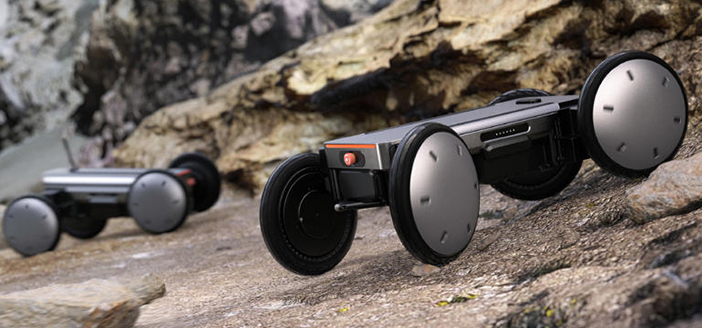
+++ HYUNDAI ’s first autonomous mobility robot platform has won a top innovation award from the CES 2026 on its versatile commercial use and safe yet precise driving performance in most terrain, the carmaker said. A concept model of the Mobile Eccentric Droid (MobED) was first unveiled at the CES 2022, and it took 3 years for the carmaker to showcase the end product. The self-driving robot will be mass-produced and available for sale in the first quarter of this year. The robot, developed by Hyundai’s Robotics LAB, received the Best of Innovation Award in Robotics from the show’s organizer, the Consumer Technology Association (CTA). The award is considered the highest-ranking innovation award, and this marks the first time that the carmaker has won the achievement. The robot is 115 centimeters long with a width of 74 centimeters. It is capable of driving at a speed of up to 10 kilometers per hour. On a single charge, the MobED can operate for more than 4 hours. The carmaker touted the robot’s technological excellence particularly on its advanced mechanism that enables the MobED to adapt to diverse environments from narrow indoor pathways to rugged terrains. The state-of-the-art robot platform drew spotlight at the International Robot Exhibition 2025 last month in Tokyo for its intuitive and futuristic design. The robot features the integration of cutting-edge sensors and drive-and-lift modules; a key driver for its balanced and safe performance under any outdoor circumstance, according to the carmaker. The CTA also spoke highly of the MobED’s versatility, as diverse top modules can be installed in line with different demand from its users. For instance, the robot is expected to carry out multiple roles in delivery, logistics and even shooting. The robot comes in 2 types: basic and pro. The MobED Pro is powered by artificial intelligence (AI) algorithm and light detection and is equipped with light detection and ranging (LiDAR) sensors for more advanced autonomous driving. “The latest award-winning represents the progress of our robotics technology in a way to enhance the value of people’s daily lives”, said Hyun Dong-jin, vice president and head of the carmaker’s Robotics LAB. “We will continue to develop more sophisticated AI-powered autonomous robots to drive mobility innovation, just as we did so by unveiling the concept model of the MobED 4 years ago at the CES,” he said. Hyundai will promote the robot at its exhibition hall during this year’s tech fair and demonstrate its wide use cases.+++
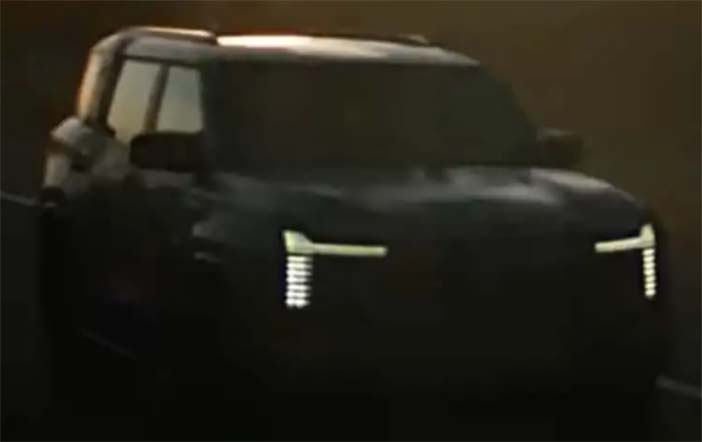
+++ There’s plenty of evidence that MITSUBISHI is preparing to launch a new SUV. In October, the automaker unveiled the Elevance Concept, which we suspected previews a new Pajero that ended production in 2021. Spy photographers captured a boxy prototype in July, and this week, an official video shows a brief silhouette of a new high-riding model. The clip, posted to the Mitsubishi Motors TV YouTube channel, highlights the automaker’s motorsports involvement and ends with a brief look at the SUV. You can clearly see its boxy shape, and it looks exactly like the SUV in the earlier spy photos. The hood line, headlight layout, and C-pillars appear identical. Mitsubishi offered the Pajero in the United States as the Montero, but the automaker discontinued it after the 2006 model year. But with the return of the Pajero, Americans might get a new Montero, too. Mitsubishi filed a trademark for the Montero name with the US Patent and Trademark Office in 2024. The Japanese automaker hasn’t confirmed the Pajero’s return, but it has announced it plans to launch a new model every year starting in 2026. Mitsubishi is likely to partner with Nissan on the Pajero / Montero revival, as Nissan is preparing a new Xterra, and the two models could be closely related. Without any confirmation from Mitsubishi, we’re left to speculate about the powertrain. I expect the new Xterra to use a version of the Frontier’s 3.8-liter V6 engine that makes 310 horsepower and 380 Nm of torque. It might even get a hybrid option, and a Montero would likely have the same setup. Mitsubishi doesn’t have a strong line-up in the United States: it currently offers the Outlander, Outlander PHEV, Outlander Sport and Eclipse Cross. It doesn’t necessarily need another SUV, but it needs something to entice enthusiasts and a new Pajero/Montero could serve as the halo model that the brand needs right now. +++
+++ XIAOMI has announced a delivery target of 550.000 vehicles for the full year 2026. The goal was revealed by Lei Jun, Xiaomi’s founder, chairman, and CEO, during a New Year live broadcast. Lei Jun also disclosed that Xiaomi Auto’s total deliveries for 2025 surpassed 410.000 units, with December 2025 alone seeing over 50,000 vehicles delivered. This performance follows a strong debut year in 2024, where Xiaomi delivered 140.000 vehicles, primarily with its single model, the SU7, and operating with only the first phase of its factory. The company’s growth trajectory is further highlighted by the performance of its YU7 model, which achieved over 150.000 deliveries within 6 months of its launch. This figure represents 2.3 times the delivery volume of the SU7 during its initial 6-month period, indicating strong market reception for Xiaomi’s expanding line-up. Should Xiaomi achieve its 2026 target of 550.000 deliveries, the company is poised to join the “Million Club”. Notably, this 2026 target alone equals the combined deliveries of Xiaomi’s first 2 years in the automotive industry (140.000 in 2024 plus 410.000 in 2025). The “Million Club” has recently welcomed several new members from the new energy vehicle sector. Leapmotor, Li Auto, and Xpeng successively joined the club in September, October, and November of 2025, respectively. Nio is also on the cusp of this milestone, with its one millionth vehicle expected to roll off the production line on January 6, 2026. While its EV startup peers have typically taken around a decade of effort to reach the million-unit mark, Xiaomi is poised to become the fastest automaker in history to surpass one million units in sales, and the first ever to deliver a million vehicles in just its third year of production. +++