
+++ Much like Mercedes rolled out a separate “EQ” line-up, AUDI sought to create a clearer distinction between combustion-engine and fully electric models. The idea was for combustion engine vehicles to carry odd numbers, while electric cars would use only even numbers. However, those plans were abruptly scrapped, though not before affecting the name of a core model. The A4 became the A5 in 2024, spawning the A5/S5 Avant, with an RS5 launching shortly. Under the old naming structure, the A6 was also supposed to become the A7, but Audi backtracked before the latest-generation model launched last year. Going forward, Ingolstadt will revert to the traditional approach to avoid confusion across its line-up. The German luxury automaker also doesn’t rule out bringing back the A4 name in the future. It’s too early to say whether that will happen with the car’s mid-cycle facelift or if the old moniker will return with the next-generation model. Audi is no stranger to renaming a car within the same generation. The e-Tron was rebranded as the Q8 e-Tron when the facelifted electric SUV debuted in 2022. That change didn’t have much of an impact on sales, as the model was pulled from production about a year ago due to weak demand. CEO Gernot Döllner told that Audi is open to reinstating the A4 badge on its BMW 3 Series rival: “Yeah, that’s thinkable. In general with the A6 as the anchor point, from there into the future we will be looking”. Reverting to the old naming convention won’t affect the rollout of new EVs. An A4 without a combustion engine is still in development and is expected to carry the A4 e-Tron name when it launches later this decade, possibly in 2028. Audi will arrive late to this segment, as both the BMW i3 sedan and the electric Mercedes C-Class are due this year. +++
+++ CANADA is working to land a Chinese-Canadian auto plant that will export electric vehicles globally, Industry Minister Mélanie Joly said. She said Canadian auto parts firms such as Magna International, Linamar and Martinrea International already have operations in China and could participate in a joint-venture assembly plant in Canada. The overtures to Chinese automakers mark a turnaround for the Canadian government as it looks to reduce dependence on the US market for cars and build a stronger domestic industry. Canada had previously said China was unfairly subsidizing its manufacturers, while security concerns have been raised over the vehicles’ technology. +++
+++ CITROEN will go “as far as possible” to ensure the next-generation C4 stands out from its rivals and range-mates as part of a push for more ‘experimental’ designs across its line-up. The third generation of the French brand’s C-segment hatchback is entering its 6th year on sale, making it the oldest model in the line-up, and will be due for replacement within the next 2 years. The current car is based on the CMP platform, which also underpins the Opel Corsa, Peugeot 208 and DS 3. But bosses have previously suggested that rather than follow those cars onto parent company Stellantis’s new STLA Small platform, the next generation C4 could use the same value-oriented Smart Car structure that’s underneath the C3 and C3 Aircross with the aim of reducing production and retail costs. Regardless of its technical relationship with any other Citroën models, though, design boss Pierre Leclercq has told that the next C4 will have a highly bespoke design that differentiates it from the rest of the line-up, which-aside from the Ami microcar, now wholly comprises crossovers. The brand’s next-generation hatchback “has to look very different” from both its predecessor and its sibling models, said Leclercq. “We always try to go as far as possible. Look at the C3: it has nothing to do with the car that it replaced, but it makes sense in the line-up”. He said experimentation has always been central to the company’s design strategy, and as part of a Stellantis-wide initiative to strengthen each brand’s unique attributes, future Citroën models will lean more overtly into that ethos. “I think Citroën has always been a bit experimental and should be the experimental brand of the Stellantis group”, he said, adding that “we always push as far as possible always”. Leclercq was adamant that the next C4 will not simply be an upsized version of the C3 or a smaller C5, so it is unlikely to ape their blocky 2-box profile and instead remain true to its traditional hatchback roots. “We don’t have just ‘cars to replace’. We always think of new concepts, or what we could do in the car industry that is also a bit experimental”, he said. Indeed, Citroën CEO Xavier Chardon told that “we have to be bolder” with future designs. “I believe that in the future of Citroën, you have to be bold in design if you want to stand out”, he said. “We are not a generic brand like Volkswagen or Toyota. We can take risks. I’m not afraid if people hate our design… but I don’t want to have anybody that thinks our design is mainstream”. Asked if the brand could offer models that are both affordable and bold, Chardon said: “This is an interesting challenge, but this is a challenge that we have to take”. +++
+++ FIAT ’s dream of a family of Panda-inspired models is starting to take shape. The rakish new, and as yet unnamed, fastback the company previewed nearly 2 years ago has finally been spotted testing in the wild. As promised, it combines a swooping coupe-inspired roofline with the chunky charm of the Grande Panda. This fastback is one of two new mid-size SUVs Fiat is hoping to launch this year. CEO Olivier François previously said it will be “affordable, spacious and desirable”. The brand will use these to mount an assault on best-selling family cars such as the Nissan Qashqai, Kia Sportage and Dacia Bigster. Each will offer a fresh take on the charismatic design language that was introduced by the Fiat Grande Panda but they’re larger cars destined to sit in the class above. I expect that the new car’s upright but slightly rounded front end will feature an evolution of the ‘pixel’ lights we saw on the Grande Panda, as well as more pixel-like details in the grille and bumper. The rear has slim rectangular tail-lights like its boxier baby brother too, plus what appears to be a ducktail spoiler at the base of that rakish sloped roofline. From the side, we can not only see the sleek side glass and appreciate the distinctive silhouette, but also realise how much longer the fastback’s wheelbase is than the Grande Panda’s. There’s more length added by the extended rear overhang, which should help provide more luggage capacity. Compared with the more traditional mid-size SUV (nicknamed GigaPanda) I know Fiat is also working on, the fastback is likely to have less black plastic cladding, instead using more body-coloured or contrast-coloured painted elements for a sleeker look. That should emphasise to customers that this model is more design-led and less focused on practicality. I still expect to see playful uses of the Fiat logo and other graphics, which will help Fiat’s new twins stand out in the crowded family SUV class and inject a bit more fun at the same time. I’m expecting the fastback to be revealed very early this year, leaving time for the SUV to go on sale before the end of 2026. Speaking about the way the two cars will look, François said: “They are not Pandas, but ‘Panda inspired’. They’re not going to be called Panda, but they will be inspired by its DNA and feeling: boxy and charming. It’s generally not easy to make boxy charming, but in smaller sizes the Panda of the 1980s captured this, and this is what we’re basing it on”. The SUV will feature the usual off-road design cues that are so popular with buyers. These will include the use of contrast-coloured plastic wheelarch surrounds, roof rails and chunky, rugged front and rear bumpers. One striking element already seen on both the concept and production Grande Panda is the combination of round wheelarches with squared-off surrounds; this is something we expect to see applied to the production SUV too. Interior and practicality
As you’d hope for with family SUVs, the cars’ interiors will focus on spaciousness and versatility, with rugged finishes designed to be practical and hard-wearing. Fiat will attempt, however, to set its offerings apart from the likes of the value-focused Dacia Duster (another key rival) by emphasising its heritage and having a greater sense of fun, not just usability. Fiat will continue to reference its famous Lingotto factory in the interior’s design elements and detailing. As such, the oval-shaped elements that are found in the Grande Panda will probably be carried across, with a similarly varied use of different soft and hard-touch materials. Both cars will also probably feature the same technology package, including a 10-inch driver’s information display and a 10.25-inch touchscreen. Fans of separate climate controls will also be glad to see Fiat retaining fixed buttons. As with the Grande Panda, Fiat’s colour and trim department will focus on using as many recycled materials as possible, including bamboo-fibre mixes and a combination of bright, high-contrast stitching. Small item storage has also been a focus, so there will be plenty of interior oddment space, and the Panda’s clever integrated charging cable, which is coiled away and accessible via the front bumper, should also be retained. The key for both models, though, will be offering enough space for families; something that the new supermini-sized Grande Panda is a little short on. In order to ensure there’s enough space in the second row, Fiat will extend the wheelbase, opening up more rear legroom. Hybrid and electric power options
The two new cars won’t only share their design language with the Grande Panda, they will also use the Stellantis Group’s Smart Car platform that underpins the smaller model, plus the Citroen C3, C3 Aircross and Opel Frontera. We’ve already seen the Smart Car architecture can accommodate a wide selection of pure-petrol, hybrid and electric powertrains, and it’s flexible enough to allow Fiat to lengthen the wheelbase and widen the track to produce these C-segment models. All petrol-powered models will use a 1.2-litre 3-cylinder engine, which hybrid versions will pair with a 6-speed automatic gearbox that has an integrated e-motor. as we’ve seen in all the Smart Car-based models. Meanwhile, the electric models will be offered with a choice of a 44 kWh or 54 kWh battery, as in the e-C3 Aircross and Frontera Electric. These should provide close to 300 km and 400 km of range, respectively. A 100 kW maximum charging speed will allow for a 10 to 80 percent top-up in about half an hour, and driving the front wheels is likely to be a 112 hp front-mounted electric motor. However, Fiat may choose to fit a beefed-up e-motor to give these bigger cars a bit more oomph than the little Grande Panda. Fiat’s slow rate of new product launches and updates to existing models over the last few years has been a worrying sign for such an iconic brand; one that’s so important not just to the Italian car industry, but also to the country’s manufacturing base in general. However, this is about to change, as Fiat exploits the Smart Car platform and access to synergies across Stellantis. The Grande Panda was a bold first step, but the SUVs have the potential to re-establish Fiat as a true volume player across most European countries. +++
++ HYUNDAI will launch 5 new electrified models in Europe over the next 18 months, including 3 small B- and C-segment cars, beginning with the Ioniq 3 hatchback in April. The Korean company has confirmed that it will unwrap its new electric hatchback (a rival to the Volkswagen ID 3, Renault Megane and Peugeot e-308) at the Milan Design Week in Italy in two months’ time. Previewed by the radical Concept Three at the Munich motor show last September, the Ioniq 3 will be closely related to the Kia EV4, sharing its 400 Volt E-GMP architecture, powertrains and battery options; the largest of which should net a maximum range of around 620 km. Due to enter production at Hyundai’s Izmit factory in Turkey in late summer, it will fill the gap between the Inster and Ioniq 5, with prices expected to start at around €35.000 in the Netherlands. It will be a similar size to the i20 but have an i30-like amount of interior space; a benefit of its EV-native platform. Hyundai said this latest addition to its range will give it “one of the most complete EV line-ups available”, with 7 pure-electric models on sale, ranging from the city-focused Inster to the new electric version of the 9-seat Staria, which was revealed last month at the Brussels motor show. The Ioniq 3 is 1 of 5 new electrified models Hyundai plans to launch by mid-2027, including another two which sit in the small B- and C-segments, where Hyundai is currently represented by the i20 and Bayon and i30 and Kona respectively. No details have yet been given, but a higher-riding, SUV-style sibling to the Ioniq 3 is possible, mirroring sibling firm Kia’s strategy with the low-slung EV4 and chunkier EV3. Hyundai is also working on a heavily updated i30, which would provide a petrol hybrid alternative in this segment. A new generation of the Tucson, Hyundai’s best-seller in Europe and one of the market’s most popular C-segment SUVs, is also in testing ahead of a launch next year. So is the second generation of the Bayon, based on the i20, which is itself in line for a substantial update. All of these models would be hybrid-only under Hyundai’s plans. The new models come as part of Hyundai’s drive to totally electrify its line-up by the end of this year, in line with what it calls the “EU-market ambition toward EVs”. Xavier Martinet, the company’s CEO in Europe, told: “We’re betting on hybrids and EVs for the next few years”. He explained that fluctuating demand for EVs in Europe has prompted Hyundai to pursue a multi-powertrain strategy aimed at sustaining its market share with a range of propulsion technologies to cater to different regional demands. “Electrification is the word of the day, but which electrification, and at which speed? That’s the big question”, he said. “Let’s control the controllables. We don’t control the speed at which the market is going towards EVs and which markets are going towards EVs, so we’re trying to be very strong in everything, which means hybrids and EVs”. He said that the scale and scope of the Hyundai Motor Group and its affiliates across a huge range of industries (including robotics, software, construction, electronics and engineering) gives its car-making division a vertical-integration advantage that means it can make decisions faster and more efficiently respond to changes in its key global markets. “The agility is key, because we know there are geopolitical uncertainties and regulation is changing, so we need to be able to have this agility”, said Martinet. He pointed to the fact that the Ioniq 3 will be built alongside the similar-sized petrol i20 in Turkey as an example of how Hyundai is “trying to get the best of both worlds”. “We have the flexibility to ramp one up and ramp one down, depending on what the market is asking for”, he said. Around 80% of Hyundai’s European models currently offer an electrified powertrain, and the company plans to boost that to 100% by 2027, although all of the cars it currently sells in Europe are at least mildly hybridised, so it remains to be seen how exactly that pledge will manifest. The company recorded significant growth in electrified vehicle sales in Europe last year, driven mainly by EVs, which clocked a substantial 48% uplift in the region, in part due to the launch of new models including the Ioniq 9, Inster and updated Ioniq 6, to give the company an 18% EV mix. Martinet hailed this as a significant achievement for Hyundai, saying: “I prefer to give money to customers and dealers rather than giving it to competitors, and I think that the fact we achieved our CO2 emissions in Europe on our own, without pooling with any other brand, shows that our approach, not only to EVs but also to MHEVs (mild hybrids), HEVs and PHEVs is the right one”. Hyundai’s HEV and PHEV sales were up 11% last year; uplifts that came in the context of the company claiming a 4.5% share of the European car market, with 603.542 sales. Martinet projected that Hyundai’s European sales figures will remain stable next year before climbing significantly in 2027 as a result of the new model introductions. +++
++ A few months ago, a few members of the press were able to experience the JAGUAR GT for the first time. However, it was more of a ride-along experience, so no one knows what the car drives like just yet. Well, that is, until now. Some of the top names in the British motoring press have driven the prototype. They’ve given their respective impressions, as well as revealed some key details about the car that are definitely worth mentioning. Jaguar’s sabbatical from selling cars has yielded an all-new dedicated platform. Dubbed the imaginatively-named Jaguar Electric Architecture, it should serve as the basis of more models down the line.
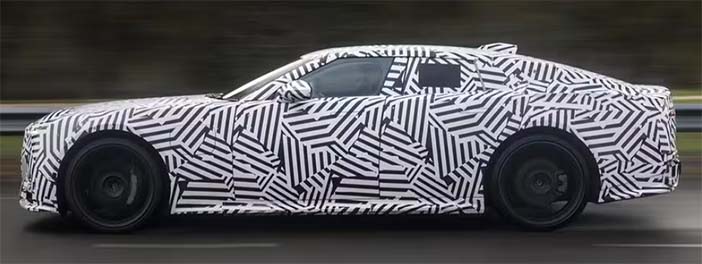
The British automaker is cashing in all its chips in electric mobility, as there no plans for a plug-in hybrid or range-extended version down the line. Now, the car doesn’t have an official name just yet, but for all intents and purposes, most have been labeling it as the Jaguar GT. It’s possible that the company could resurrect the XJ, but New Jaguar is about breaking tradition. This is a make-or-break product for the brand. If it fails, we might as well say goodbye to Jaguar for good. The GT rides on an 800V architecture that enables 350 kW fast charging. It’s claimed that a 15-minute charge can add about 320 km to the range. As for the battery, it’s about 120 kW, and the range is estimated at 640 km per full charge. Given the massive battery, that’s to be expected. Now, for the important part: power and torque. In this case, it’s “at least” 1.000 hp and another 1.350 Nm of torque. That comes courtesy of 3 electric motors with 1 in front and 2 at the back. The front has an open differential, while the rear features torque vectoring. Jaguar claims a 0 to 100 kph time of under 3.5 seconds, which is a good number for something that weighs close to 2.800 kg. Top speed is yet to be listed, although we could expect at least 240 kph out of it. It does have about 1.000 hp at its disposal, after all. The GT doesn’t utilize the typical skateboard architecture that most EVs use. Instead, it’s split at the front and rear with a 19 kWh pack in front and the rest mounted at the back. It’s an interesting arrangement, but it does allow for that low-slung profile. As for size, it’s about 5,35 meter long and rides on a 3,3 meter wheelbase. For its suspension arrangement, it rides on twin-chamber air suspension and adaptive dampers, although there’s no active anti-roll bar present. Its setup is good enough to negate the need for an active anti-roll bar. In terms of size, the most obvious answer would be the BMW i7. However, its performance figures are quite far off Jaguar’s, with the M70 version making just 659 hp and 1.015 Nm of torque, all sent to all 4 wheels. Interestingly, it’s about the same weight as the Jag at nearly 2.800 kg. Remember when anything over 1.800 kg was already considered heavy? As for the performance aspect, the Audi RS e-Tron GT and Porsche Taycan Turbo GT might be a better comparison. While much smaller than the Jaguar, both provide rapid acceleration, but we reckon the Jaguar focuses more on luxury than outright dynamics. Its best match should’ve been the Mercedes-AMG EQS 53. It’s about the same size and the same weight, and it also rides on a dedicated EV platform. The trouble is, no one really buys it, and it’s highly unlikely to survive the next decade. +++
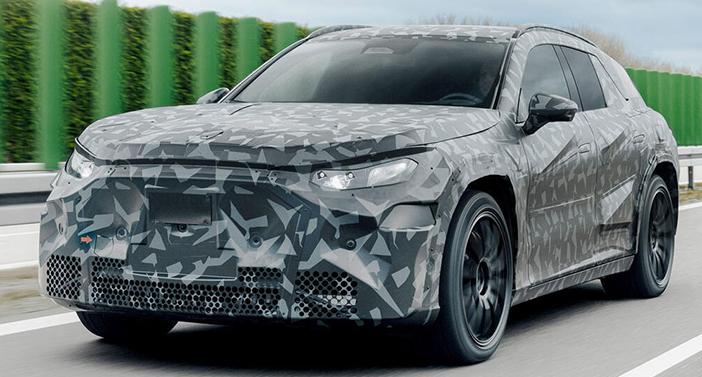
+++ MERCEDES-AMG will launch a coupé variant of its incoming 1.000 hp SUV as the third model in its EV range, CEO Michael Schiebe has confirmed. The decision to launch an SUV-coupé, which is expected to be unveiled in the second half of 2027, is because the brand “will double down on SUVs”, said Schiebe. The bodystyle currently accounts for more than half of the car maker’s global volume. The move mirrors AMG’s existing strategy with the ICE-powered GLE 63 S SUV and GLE 63 S Coupé. The new model will sit on the same AMG.EA platform as the Porsche Cayenne-rivalling SUV (due early next year) and the production version of the GT XX concept; the latter set to be unveiled later this year as a replacement for the current GT 4-Door Coupé and AMG’s first EV. It will share its platform-mate’s drivetrain, unique round cell battery pack and 800V electric architecture. Power will come from a tri-motor set-up, with 1 motor acting on the front axle and 2 on the rear axle. In the GT XX prototype, this delivered up to 1.350 hp. Confirmation of Mercedes-AMG’s new dedicated SUV-coupé comes amid a leadership change at the firm. Schiebe, who has been at the helm since March 2023, is set to become head of Mercedes-Benz’s Top End Vehicle Group, which includes both the Maybach and G-Class sub-brands. He will be succeeded by Stefan Weckbach on 1 July. +++
+++ MITSUBISHI has reported a group net loss for April-December 2025 mainly due to U.S. tariff policy while maintaining its profit estimate for the year ending next month. According to its business results released Thursday, the company posted a net loss of ¥4.49 billion ($28.7 million) for the 9-month period, against the year-before profit of ¥33.2 billion. “We’re coming out of the bottom of our business performance”, as the launches of new models are starting to pay off, president Takao Kato told a news conference. Mitsubishi is confident that it can secure a net profit on a full-year basis, he added. The company kept unchanged its net profit estimate of ¥10 billion for the year. In the 9-month period, the company’s U.S. tariff payments reached ¥37.3 billion. Another negative factor was the yen’s rise against the dollar from a year before. Consolidated sales fell 0.6% to ¥1,976.5 billion. Operating profit sank 69.8% to ¥31,627 million. The company’s global vehicle sales decreased 6% to 589.000 units. Sales fell 4% in Southeast Asia, its major market, and also decreased in North America and Europe. Domestic sales edged up. Mitsubishi expects full-year global vehicle sales to fall 1%. +++
+++ TOYOTA plans to boost its global production of hybrid vehicles to about 6.7 million units in 2028. This represents a 30% increase from the number of hybrids that Toyota plans to manufacture in 2026. The increase is reportedly in response to the slowdown in electric vehicle sales and a change in policies to promote EVs, particularly in Europe and the United States. In 2025, Toyota produced about 4.79 million hybrids, which accounted for about 45% of the 10.53 million units the automaker produced globally. Toyota plans to produce about 11.3 million vehicles globally in 2028. The proportion of hybrid vehicles, including plug-in hybrids, is expected to rise to about 60%. The adoption of EVs is expected to slow worldwide due to various developments, including the administration of U.S. president Donald Trump’s axing of tax credits for EVs and the European Union’s decision to effectively walk back a plan to ban the sale of new gasoline-powered vehicles from 2035, in principle. +++