
+++ It’s been nearly 2 years since spy photographers last spotted the AUDI RS Q6 E-TRON SPORTBACK , but it’s back on the Nürburgring and gearing up for a possible debut later this year. Designed to slot above the SQ6 Sportback, the high-performance variant features a unique front fascia with a more aggressive lower intake. It features angular accents, honeycomb mesh inserts, and triangular elements with horizontal bars. We can also expect vertical air curtains at the outside edges. A number of the vents likely channel air to the beefier front braking system, which appears to have significantly larger calipers. On the topic of air flow, the model has subtle front fender vents that are tall and skinny. We can also expect the SUV to ride on model-specific lightweight wheels. The rear end largely carries over, but the RS Q6 has been equipped with a new bumper and sportier diffuser. The latter features a prominent central channel as well as protruding elements where a four-tailpipe exhaust system would typically reside. We can also see a familiar spoiler and rear light bar. There isn’t much to see inside, but the model should have an 11.9-inch digital instrument cluster, a 14.5-inch infotainment system and a 10.9-inch front passenger display. They should be joined by sport seats, carbon fiber trim, and plenty of RS badging. Powertrain details are more mysterious, but the model should echo the SQ6 which has a 100 kWh battery pack and a dual-motor all-wheel drive system developing up to 517 hp with launch control. However, the RS variant will be significantly more powerful and likely take a page from the Porsche Macan Turbo Electric. The Audi’s PPE platform mate has a combined output of up to 639 hp and 1.129 Nm of torque. This enables the Macan to rocket from 0-100 kph in 3.3 seconds and eventually top out at 260 km/h. +++
+++ Over 60 years ago, BMW introduced the Neue Klasse models that would eventually define, and save, the company. Today, the Neue Klasse name has been brought back, again to set a new direction for BMW. This isn’t just a new design philosophy; it also includes a new approach to designing powertrains, chassis systems, and on-board technologies. All of these were first applied on the iX3, which is proving a success so far, followed by the recently introduced i3. Neue Klasse doesn’t just revolve around electric vehicles, as its philosophies will also be applied to its ICE and hybrid models. The first fuel-fed model to benefit from that will be the standard 3 Series, followed by the X5 and X7. I also expect the next-generation X1, X3 LCI, the facelifted and next-gen 5 Series, as well as future 7 Series iterations. A company-wide overhaul of that magnitude required substantial investment, which is why the Neue Klasse models will have to sell exceptionally well to recoup it. BMW is prioritizing its core models in its brand overhaul to fast-track it, meaning some of its halo models will have to take a back seat. Now, this doesn’t mean that the M cars will be delayed. BMW is already hard at work preparing for the rollout of both gas and electric versions of the M3. Performance models are, for the most part, still on track, as far as we understand. What BMW won’t have for the time being are niche models, namely a large coupe and convertible, as well as a roadster. Production of the Z4 has wrapped up, and the 8 Series will disappear from the line-up as soon as the last car rolls out by the end of the month. We won’t see potential successors launched immediately, as BMW says now isn’t the right time to introduce ‘brand shapers’. Ritu Chandy, head of BMW Group Sales Region Asia-Pacific, Eastern Europe, Middle East and Africa, also mentioned that there will be rationalization in the company’s line-up. “There is some rationalization that is happening. There will be some models that will not have successor models in the future”, said Chandy. What she didn’t say is which exact models won’t get a successor. That said, the 8 Series comes to mind, given that sales had basically become a trickle at this point. A new generation of the Z4 has a better chance of reaching production, but the core Neue Klasse models should sell strong enough for BMW to afford development of an all-new version of the roadster. The same goes for the planned off-road-oriented SUVs targeting the Land Rover Defender and Mercedes-Benz G-Class. Overall, it’s a sensible and rational move. As the saying goes, one has to spend money to make money; now isn’t the time to go for passion projects. Still, BMW says it will make special models soon, but we’ll have to wait a little longer before we see those come to life. +++
+++ The automotive world mourned the loss of the original Land Rover Defender, an icon so beloved that it transcended generations and remains relevant in modern times. Sometimes the demise is an opportunity for the birth of something new, and out of the loss of the Defender came INEOS . Ineos takes the core philosophy left behind by the true rugged off-roaders of yesteryear and adds the right modern touches to ensure that the cars they make are extremely capable and livable for today’s standards. Starting small and gradually building up has paid off; Ineos just posted record sales for the first half of 2026. Automakers are each facing their own trials and tribulations, but it’s the little niche brands like Ineos that are finding success in these trying times. Over the years, Ineos has primarily sold the Grenadier and Quartermaster through the retail segment. In 3 full years, Ineos has produced, delivered and sold around 35.000 models worldwide. For 2026, Ineos proudly announced that, for the first quarter, the brand had reached a sales milestone. Sales of the Grenadier 4×4 have risen 20% compared to the same period last year; this sales bump can also be attributed to the brand now securing significant orders from the public sector. This is a huge deal, considering the tariff restructure introduced by the Trump administration raised the price of the Grenadier in the U.S. Ineos credits new fleet sales for emergency services, utilities, rental, and even the military as the main drivers of growth. This was always part of the strategy from the beginning, says the brand, and is a reaffirmation of the warm reception of its products. Most of the fleet orders placed in the first quarter of 2026 come from around the world, from notable companies and services. Some of the fleet sales come from the Kenyan Red Cross, Hertz rent-a-car in North America, and fire and rescue services in Germany, Spain and France. This milestone has prompted positive outlooks from the brand for the future, with brand CEO Lynn Calder to say, “In the face of geopolitical challenges affecting the auto industry globally since we launched three years ago to this day, we’ve remained agile and relentlessly resiliant. The steps we’ve taken to maintain our positive trajectory are bearing fruit”. Currently, Ineos sells cars in over 50 countries across most continents. +++
+++ For much of the past decade, MAZDA has been the Japanese brand that punched above its weight, offering premium-feeling interiors, driver-focused dynamics, and dependability that kept loyal buyers coming back. Consumer Reports‘ brand reliability rankings consistently place Lexus, Subaru and Toyota at the top, and 7 years back, Mazda was right up there with them, clinching second spot on the list. Fast forward to 2026, and Mazda has seen the biggest drop in the reliability rankings of all carmakers, falling 8 spots from the previous years to land at 14, just ahead of Volvo. The worst part is that the reasons are ones Mazda chose for itself. Mazda’s downward slide traces directly to its ambitious hardware pivot. The CX-60/CX-70 and CX80/CX-90 introduced a new engine, transmission and platform, along with the brand’s first plug-in hybrid models. That is a lot of new engineering and technology hitting the market all at once. Both the conventional and PHEV versions of the CX-70 and CX-90 scored below or well below average for reliability, with the PHEVs continuing to show issues with EV batteries and electric motors. Contrast this with the Mazdas of old, models built on familiar, proven underpinnings with dependable naturally-aspirated engines and torque converter automatics. Cars like the Mazda3 rated above average and the CX-30 scored average. What Mazda did well, it did by being careful and incremental. When it threw that playbook out, quality suffered. Just as owners were reporting problems with Mazda’s most complex new vehicles, the company’s executives were busy defending that very direction. Mazda has argued in favour of the brand’s 26-inch touchscreen in the CX-6e, saying large screens offer more possibilities for displaying information clearly. Meanwhile, Mazda’s new interface strategy has been described as a ground-up redesign, citing customer feedback as justification for sweeping physical controls off the dashboard. The irony is sharp. The CX-5’s transition to an all-screen interior is arriving precisely as other automakers are heading in the opposite direction, returning to physical controls. Mazda built its reputation on safety, restraint and driver focus. The reliability data suggests its customers noticed when that changed, and they are not thrilled about it. +++
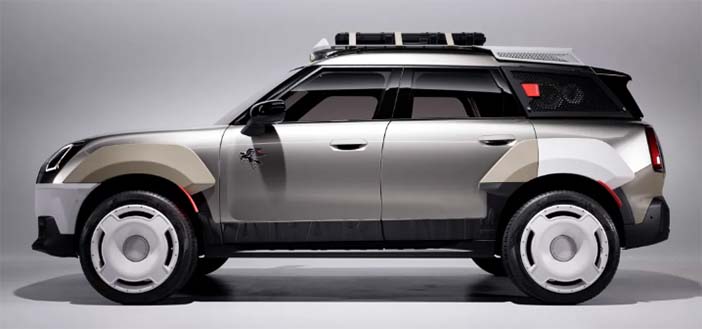
+++ MINI has revealed a pair of Countryman-based concept cars with the help of Austrian design studio Vagabund, apparently inspired by “adventure, community and festival culture”. The 2 models come with 20-inch wheels, a raised ride height, roof racks and distinctive graphics. External speakers built into the rear side windows bring the festival vibe by creating an “immersive audio experience”, according to the 2 brands. Based on the Countryman S ALL4, the 2 show cars focus on visual and audio upgrades, with no information on any engine or performance tweaks. One gets a Midnight Black colour scheme, while the other is finished in Melting Silver with contrasting trim. As mentioned, both cars get a raised ride height, plus reworked wheelarches, new bumpers and revised grilles with Vagabund branding. Further Vagabund lettering can be found on the side sills, with unique graphics on the front doors just below the side mirrors. The upgraded rims feature special 3D-printed wheel covers, with the phrase “interpreting the status quo” on the centre caps. On the roof sits a rack made up for three laser-cut aluminium plates and some stainless-steel mesh. Mini calls it an “integral design element” but from the provided images it appears pretty functional: holding a couple of hard-backed cases, tied down via lashing points on the rack itself. Hidden behind extra opening mesh trim on the very rear side windows sits a specially designed sound system. On one side of the car there is a loudspeaker made from cast polymer granite, with further tweeters and mid-range speakers integrated directly into the bodywork. On the other side there’s a retro Sony Walkman integrated into a 3D-printed housing; a supposed “counterpoint” to the external speaker system. Apparently, “each vehicle functions as an independent sound system” but together “form a mobile stage” for that aforementioned “immersive audio experience”. Mini says only 1 of the 2 cars will appear at the Beijing Motor Show next week, but is yet to detail which will be on display. Strictly show cars, Mini and Vagabund have no plans to put either of the concepts into production. +++
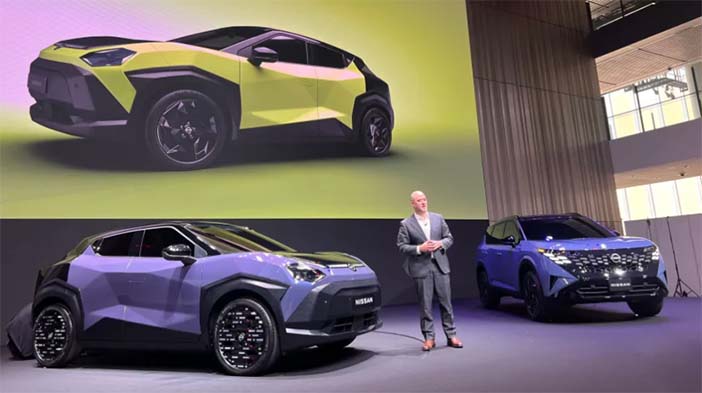
+++ NISSAN remains committed to Europe and aims to grow sales by one-third here, despite it being one of the world’s “most difficult markets”, the company’s top executives have told. The company has outlined its future product, technology and markets strategy at a Nissan Vision event at its Yokohama HQ. Nissan will invest in 45 global models, a reduction from 56 vehicles today, as it seeks to boost scale on shared family architectures, to improve cost efficiencies, its speed to market and manufacturing flexibility. Europe is not a core market for Nissan, with the dominant 3 territories being the US, China and Japan, this due to their bigger volume potential, China’s status as a new tech melting pot and domestic loyalty to Japan. But products developed for these markets will feed Europe, with the NX8 electric SUV produced in China with Dongfeng is bound for Europe. “The mission for these 3 deep markets, apart from being successful markets by themselves, is to make sure they’re feeding competitive products to the rest of the regions, specifically to Europe”, CEO Ivan Espinosa told. A good example is the X-Trail, unveiled in its latest iteration at the Nissan Vision event, which will be built in Japan, exported to the US with its first e-power hybrid drivetrain and ultimately filter through to Europe. Europe’s non-core status, and it accepting products from Nissan’s global engineering network, is industrial reality and not a new strategy; the Ariya fits that template. Espinosa vowed it wouldn’t lead to products inappropriate for European customers, but added that the numbers simply didn’t add up unless “investment is shouldered by other markets”. Does this mean Nissan’s British factory is under threat?
The strategy shouldn’t impact the mid-term future of the Sunderland plant, with Espinosa expressing his belief in the UK’s biggest volume factory. “We are committed to Sunderland”, vowed the CEO. “We are just rolling out the Leaf and you saw that beautiful Juke, which will also be European. These are examples of what we’re doing with the factory”. The fact that the all-electric Juke shares its architecture, batteries and motors with the new Leaf it’s built alongside shows that the Sunderland plant already conforms to Nissan Vision’s new efficient engineering philosophy. Nissan’s chief performance officer Guillaume Cartier revealed that “the ambition is to go for half a million units in Europe”. That’s by 2030 and a big jump on the 2024-25 financial year reporting soon, with sales projected to be 330.000. “Half a million is what we want to be and I would also say that’s what we need to be, to make sure earnings will be higher than the fixed costs”. Nissan is struggling to break even, because the total market is still smaller than pre-Covid levels and competition is intensifying with new Chinese brands taking share. “Europe is not an easy case: I think it’s one of the most difficult”, Cartier told. “But we are committed to Europe as we know this is an area where you can test and develop some technology that can have a good impact on the rest of the world”. E-power, the range extender hybrid technology blooded in the UK-assembled Qashqai, is a case in point. Cartier, like executives across the European car industry, bemoaned the cost of meeting the world’s toughest regulatory regime here, and the fact that the European Union is loosening the ‘CAFE’ emissions obligations and no longer sounds committed to totally banning sales of new combustion cars in 2035. He also namechecked the UK, which, at least officially, plans to go 100 percent electric 5 years earlier. “If you look at mainland Europe and the UK, you have some specific difficulty, because from a regulation point of view, this is not stable”. He continued: “The UK is not really clear and the government, we are asking them to help us, because sometimes politicians move faster than we can follow”. But he added that dialogue was good, with Nissan collaborating as it seeks the clarity that will help it plan its products long-term. +++
+++ The new ROLLS-ROYCE PROJECT NIGHTINGALE , a limited-run electric convertible, is the first in a new range of ultra-exclusive models from the Goodwood-based firm that, it says, will spark a change in how it designs cars forever. The 100 examples of the new 2-seater will be the first products of Rolls’ new Coachbuild Collection. Each of the 100 EVs will be priced from around 12 million euro (Dutch pricing) but the final cost is likely to be significantly higher due to extensive customisation.
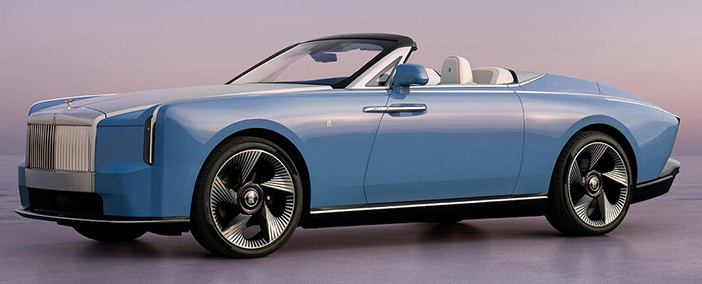
Rolls plans to launch a range of limited-run cars with bespoke designs and a high level of personalisation options under the Coachbuild Collection banner, with new arrivals every 2 to 3 years. The Coachbuild Collection models will sit between the series-production one-offs, such as last year’s Phantom Goldfinger, and the ultra-exclusive full Coachbuild models, such as 2021’s Boat Tail. All of the Project Nightingale models (not the car’s final name) are already accounted for, with owners chosen by the firm. “We’re only talking to our best clients here”, said head of future products Phil Harnett. “We want to find proper homes for them, with the people who appreciate this and want to drive them. We are making sure every single one of those clients is the right person and they are people who are going to hold on to that car”. Testing of the new model will begin this summer ahead of first deliveries in 2028. Although it is still a concept, Rolls claims Project Nightingale is 99% production ready.
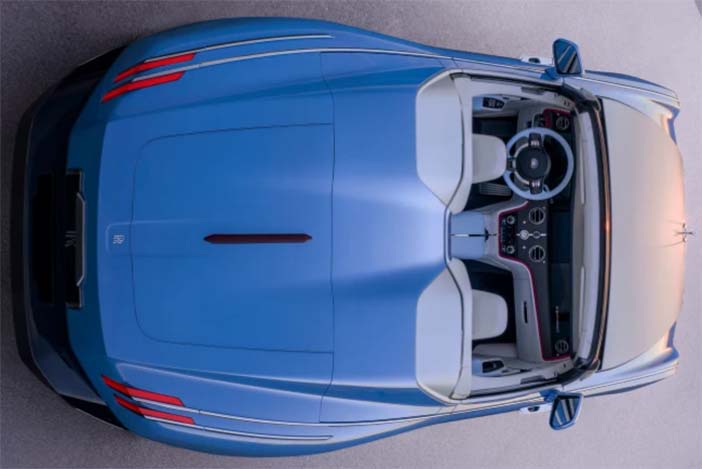
The drop-top is a modern-day interpretation of the 17EX Torpedo, a streamlined touring coachwork test chassis of the 1928 Phantom I. Like that car, much of its length (at 5.76m the new car is as long as the flagship Phantom) is devoted to the long tail. The design also points to a refreshed look for the brand under the direction of former BMW design boss Domagoj Dukec, who moved within the BMW Group to join Rolls-Royce in 2024. “It will shape everything that follows”, he said. While the model is based on the same Art of Luxury platform as the rest of the brand’s range, Rolls says most of its parts are unique and insists that it shares little with the smaller Spectre, the company’s first electric car. Harnett said the Coachbuild Collection was driven by customers who wanted a bespoke Rolls but “didn’t have the time” needed to become immersed in the full Coachbuild programme. The project also gives Rolls’ designers the freedom to create experimental and “extravagant” elements and features that will later trickle down to shape the design of higher-volume models. Crucially, it will be a significant revenue driver for the firm, which sold 5.664 cars last year. The heavy personalisation means these models should offer higher margins. “We’ve been wanting to do more”, said Harnett, “from the sales side to designers. They are always sketching something. When you go to our design offices, you’ll always see pictures of extravagant things which we want to do. Then, talking to our clients, some people want to do a Coachbuild but they don’t necessarily have all that time they need to invest. You’re talking to the clients all the time: come in again; come in again; come in again. They also said they wanted to be led by us: ‘Could you do it for me? I’m paying you. You do the work.’ They want us to deliver something. “So it’s these discussions, and we’ve been looking to see when the time is right. And then it just organically came that we said: ‘We’re ready now to do it’ ”. Harnett said the project works in a “revolutionary” fashion: instead of showing prospective owners the finished cars, Rolls brings them in at the sketch stage, so they are part of the process, but without needing the level of input required for a full ultra-exclusive Coachbuild car. “We’re doing something a bit back to front”, he said. ”We are taking our clients on a journey with us”. They will even be invited to take part in the car’s global testing programme at certain points. “Everything we have done with this is different and that is exciting”, said Harnett. “This is a new chapter for Rolls-Royce: we have rejuvenated coachbuilding so that it is relevant again. Now we are revolutionising it again”. Key for the Coachbuild Collection is to create cars that won’t just sit in garages, which is why the first car is a convertible. Harnett said: “This is not a show car. This is a car to drive”. The production version of Project Nightingale has been sold to clients in the US, Europe and Asia in both left- and right-hand-drive guises. The range of owners is “diverse”, said Harnett, who added that “they are the real, real Rolls-Royce enthusiasts”. While 100 examples of the car will be made, Harnett said future Coachbuild Collection projects could have production runs of varying sizes, although the aim is to keep them exclusive. Project Nightingale’s name is derived from Le Rossignol (French for ‘the nightingale’) which was the name of a house used by Rolls designers, situated near co-founder Henry Royce’s winter estate on the Côte d’Azur in southern France. The project was led by Coachbuild designer Jacobo Dominguez Ojea, a BMW Group stalwart of more than 2 decades who has previously worked on the exteriors of cars including the current-generation BMW 3 Series and 8 Series Gran Coupé. “We realised very early on in the project that this was a once-in-a-lifetime model for Rolls-Royce”, he said. Talking about taking design inspiration from the 17EX Torpedo, especially its long boat tail, he said: “We found that fascinating. The proportions: it had a very small cabin and this long tail, but of course for Project Nightingale we wanted to do something clearly modern, very bold and pure in its shape”. He added: “From a side view, you see the presence that it has. It’s unique. There’s nothing like it with these proportions. It’s the length of a Phantom that’s just for 2 people”. Opting for a convertible also fitted the project’s aim of creating a car that is “not just to go from point A to point B, but the experience of driving this car is the destination in itself”, said Ojea. “This car is about the wind in your hair. It’s about the feeling of openness, to feel and hear what’s around you”. The team considered offering it as a speedster without a roof but felt the addition of a cloth top makes it more usable. It also means it met the brief of being a car “that people want to drive and want to use”, according to Ojea. He pointed to a number of new elements that are the most likely to be adopted by the firm’s future series-production cars, including its 24 inch alloys, a frameless ‘RR’ badge on the rear and flanks, near-metre-wide front grille and large rear transom diffusor. Elements such as the 55 mm-wide hand-built headlights integrated into the nose and the wild side-hinged bootlid are too labour-intensive to be used in a higher-volume car. But their looks could influence future designs, including the forthcoming electric SUV. There are also new elements inside, including a centre armrest that is designed to resemble a horse saddle, and the familiar Starlight Headliner feature that, due to the car’s convertible brief, has been built into the doors and behind the seats. Ojea said it is “a bit like the stars have been blown around you”. Technical details are not yet finalised, said Harnett, given the early stage of the development (“we’ve only briefly been in a wind tunnel”), but he confirmed it will use a bigger battery than the Spectre’s 107 kWh lithium ion pack while offering “close to” the same 510 km range. Power details also remain undisclosed, but expect a dual-motor configuration with an output that is likely to match the Black Badge Spectre’s 650 hp. Project Nightingale will be offered in nine exterior colours that are exclusive to the Coachbuild Collection, as well as seven different roof and 11 interior leather options. Rolls CEO Chris Brownridge called Project Nightingale “our most ambitious work” and said it has brought “3 things together that have never co-existed within our brand: the complete design freedom of coachbuilding; our powerful, near-silent all-electric powertrain; and a uniquely potent yet serene expression of open-top motoring”. +++