
+++ Slowly and methodically, AUDI has been on a journey to revolutionise its large SUV portfolio. In a few months’ time, its plans will finally take shape in the form of the all-new Audi Q7, a next-generation interpretation of the popular 7-seater. The new Q7 will be based on Audi’s PPC platform, a large-scale upgrade of MLB-Evo, which underpins the current car. Key differences will mimic those we saw when the Audi A4 transformed into the new A5, which means there will be a new electronic architecture to support more powerful and flexible electrified powertrains. One of these will be a fresh V6 plug-in hybrid, which will pair a twin-turbocharged petrol engine with an electric motor and lithium-ion battery pack. Precise figures have yet to be confirmed by the brand, but they will substantially improve on the Q7’s existing PHEV offering. As such, expect power figures to be in the region of 400 hp, with a range of around 100-130 km in electric mode, extending to broadly 800 km with the petrol engine in play. However, the PPC architecture will still be flexible enough to support a range of mild-hybrid powertrains, too, including Audi’s new V6 TDI diesel engine. This is already available under the bonnet of A6 and Q5 models in overseas markets, and produces 299 hp and 580 Nm of torque, with the latter available at just 1.800 rpm. The engine is helped out by a mild-hybrid system that adds a further 24 hp to the driveline via a small electric motor. It can also provide drive at parking speeds and in reverse, as well as facilitate engine-off coasting on motorways. Expect this to be connected to a seven-speed dual-clutch transmission. Mild-hybrid V6 petrol options are also set to be available, plus a powerful SQ7 that should retain a 4.0-litre twin-turbocharged V8 engine. This will add some spice at the top end of the Q7 range. The powertrains aren’t the only technical elements that will be in line for some major overhauls, because the Q7’s mandate to offer a great spread of capability will also see it get lots of high-end chassis tech. This will include air suspension with adaptive dampers, plus rear-wheel steering and an active anti-roll system. The early SQ7 was a pioneer of such tech, which will help this forthcoming large 7-seat SUV drive like something that’s much smaller. All of these technological updates will be packaged underneath a brand-new body, with big and brash styling elements giving the Q7 a more distinctive appearance. However, while the Audi brand is in the midst of a total design overhaul under the new leadership of Massimo Frascella, the latest Q7 won’t wear this fresh look. Instead, this is one of the last vehicles to be penned under the manufacturer’s former design head, Marc Lichte. The newcomer’s nose will be dominated by a large grille with a split-headlight design on either side. Just as with the smaller Q3, the new Q7’s upper units are very thin and will contain just the daytime running lights and indicators. The main headlights then sit in large casings underneath, which feature matrix or full-digital headlight functionality depending on the model. The rear end has its own supersized lighting units, with larger versions of the rear lamps found on the A6. These include complex upper lights with OLED panels, a full-width lightbar and the main brake lamps underneath. The overall shape of the lights is similar to those of the outgoing Q7, but the model itself will now feature smoother and less complex surfacing. Flowing bodywork and hidden door handles will keep the sides free of clutter. Expect wheel sizes between 20 and 23 inches. Inside, Audi’s large curved panel will be borrowed from other new-age models, and integrate the same user interfaces. The panel comprises an 11.9-inch driver’s display, a 14.5-inch main touchscreen and a 10.9-inch passenger display. Materials across the different models will vary, but to rival the high-quality feel of its premium competitors, expect liberal use of leather, dynamic soft-touch fabrics and contrasting stitching to brighten up the cabin. As is the case now, the Q7 will be a key rival for the Mercedes GLE, BMW X5 and Range Rover Sport; all three of which have been prepared for battle by their makers. However, while the Q7 will enter the market with an all-new body and powertrain, the latest GLE is more of a mid-life update, and the Range Rover’s upcoming revision will be even less substantial. The BMW X5, though, will be brand new when it arrives late this year. This could pose the Audi a much bigger threat, especially considering that it will be available in petrol, diesel, plug-in hybrid and all-electric forms. All Q7 models are expected to be fitted with seven seats in a traditional 2-3-2 layout, although space will be at a premium for versions fitted with the plug-in hybrid system, despite the new SUV’s giant footprint. The latest Q7 will also form the backbone of a whole family of fresh SUVs, lending its PPC platform to new hybrid versions of the Bentley Bentayga, Lamborghini Urus and even a new Porsche Cayenne. While platform sharing to this extent has become common in the current automotive landscape, it was not the plan 12 months ago. Slow sales and worry about too much capital expenditure has forced the Volkswagen Group’s hand in the cancellation of Porsche’s pure-electric SSP-Sport platform. This has required Porsche, Bentley and Lamborghini to fundamentally rethink their future model plans, with all 3 marques now confirming future models will be based on the inherently flexible PPC platform in use on the Q7. +++
+++ The next Bentayga SUV will arrive in 2028 as the flag-bearer for a new wave of BENTLEY plug-in hybrids following a major rethink of its EV strategy. The Crewe manufacturer has scrapped plans to launch 5 new EVs by 2030, including an electric successor to the Bentayga. Instead, Bentley will invest in a new generation of PHEV-powered models. The dramatic revamp to Bentley’s product strategy is a result of the decision by sibling brand Porsche to delay a new electric platform it was developing in response to the slowing uptake of premium EVs. Bentley boss Frank-Steffen Walliser believes PHEV technology will be the best bridge for the firm in the run-up to 2035 when under current legislation all new cars sold in the UK and 90% in the European Union will need to be fully electric. However, the decision doesn’t affect the brand’s debut electric model – dubbed Luxury Urban EV, which will be unveiled in the second half of the year. Following that, said Walliser, the next Bentley EV won’t arrive until after 2030. The current Bentayga is the brand’s best-seller and made up around half of all Bentley’s sales last year. It has been on sale since 2015 and received a major facelift in 2020. The new Bentayga, like its siblings, was initially slated to arrive as an EV on Porsche’s advanced Sport (’61’) version of parent Volkswagen Group’s SSP platform. However, Porsche last year delayed the architecture until the next decade at a cost of €1.8 billion, causing Bentley to substantially rewrite its product plan. As a result, the second generation of the Bentayga will switch to the PPC platform used by the new combustion-powered Porsche Cayenne and forthcoming Audi Q9. Walliser said the delay in the transition to electric means “we don’t have to force people to change from a combustion engine or plug-in hybrid car to an electric car” when the buyer demand is not there yet. He added that Bentley has “a very loyal fan base that stays in the Bentayga and this is very, very good for our business”. His comments highlight the commercial benefits for Bentley in deciding to continue with ICE for its next-generation SUV. The PPC architecture has been engineered to accommodate a range of six- and eight-cylinder petrol engines, as well as a next-generation plug-in hybrid system. The latter uses new-era batteries and electronics systems to deliver a greater EV range than the 30 miles offered by today’s Bentayga PHEV. As a result, the next generation of the luxury SUV will be launched primarily with a PHEV system centred on a 3.0-litre V6 and offer a similar output to today’s 462 bhp. Alongside the incoming plug-in hybrid models, Walliser confirmed that Bentley will continue to offer pure-ICE power. But this powertrain option will be kept to “selective” models and depend on “markets. and legislation”, he said, noting the differences in emission laws, particularly in the key US market. As well as enabling Bentley to offer pure-petrol cars in markets such as the US, it is also possible that limited-run special models in Europe could go without electric assistance. Further details of the new Bentayga are still unconfirmed, but the design will be led by the EXP 15 concept, revealed last year, and be closely linked to the smaller ‘Urban SUV’, which will slot in underneath the Bentayga as a rival to the Porsche Cayenne Electric and Lotus Eletre. The new Bentayga’s architecture can accommodate a host of new technologies, including advanced air suspension with active ride control and the latest driver assistance functions. It is also highly scalable, which will allow the Extended Wheelbase version of the luxury SUV; the most popular among buyers to continue. Following the Bentayga, Walliser said the rest of the existing range (Continental GT, GTC and Flying Spur) will gain the next-generation PHEV tech. But to do this, they will need to move from their current MSB underpinnings to the new PPC architecture. Given that new generations of all 3 arrived in 2024, this is likely to happen close to the end of the decade. Bentley’s debut EV will be shown for the first time in the final quarter of this year before first deliveries begin in early 2027. it will use the same PPE platform as the new electric Cayenne, which suggests it will be offered exclusively with dual-motor, four-wheel-drive powertrains putting out as much as 1.160 hp. In the Cayenne, a 113 kWh battery helps it to achieve a range of up to 640 km. Walliser described it as “a different proposition” from what “other competitors are doing”. He added: “I strongly believe we have a very Interesting offer”. Although it is a similar size to the Bentayga, Walliser said Bentley will not position it as an electric equivalent. Instead, the brand is “targeting and looking for new customers”, which in turn will allow the Bentayga to keep its own position in the line-up. +++
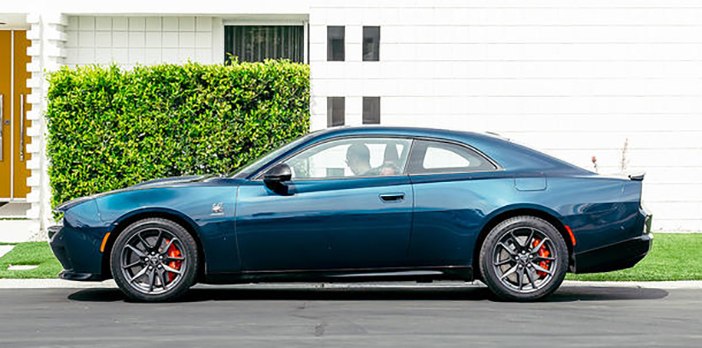
+++ The 8th-generation DODGE CHARGER , which has the difficult mission of replacing both the previous-generation Charger sedan and the Challenger coupe, is far from a commercial success. Dodge only sold 7.421 units of the new Charger in 2025, its first full year on the market. That’s about 10 times less than the almost 76.000 previous-gen Charger units sold in 2023, the LD generation’s last full year on the market, and that’s not including almost 45.000 Challenger sales in 2023. Mind you, the 2025 sales figure is only for the all-electric Charger Daytona, as the 6-cylinder petrol model only started to ship in late 2025-early 2026 and was not included in the full-year 2025 report. That said, the new petrol-powered Charger hasn’t rocked the sales charts either, with Dodge reporting only 1.672 sales in the first quarter of 2026; 2-Door and 4-Door combined. While the petrol Charger outsold the EV model 7 to 1 in the previous quarter, the sales numbers are still too low, so what is going on? Dodge CEO Matt McAlear believes there’s no need to panic as it’s too early to judge the Charger’s sales figures. “I’m still excited. I’m still bullish on this car”, he told. “I think it offers something that no one sees coming in the industry and it wakes up some mundane car segments that there’s not many of them left.” According to him, the main reason for which sales have not picked up yet is the short supply of Chargers. While the 550-hp 2-Door Scat Pack started shipping in January and there’s an adequate supply of those, the executive noted that Dodge does not have an adequate supply of the 420 hp RT 2-door and 4-door. That’s because those models only started shipping in the last 15, 20 days and they’re still on their way to dealers. “We don’t even have all of the models across all of our dealers yet”, McAlear said, adding that “as we move through the summer, we’ll see what we’re made of”. Dodge’s CEO also downplayed the view some people have that there’s not enough variety in the Charger line-up to entice buyers, i.e. no Hemi V8 and/or manual transmission. “We got Scat Packs, we’ve got RTs”, McAlear told. “This is one year in. And if we’d said we would have launched that much stuff in the first generation car within one year, you would have laughed. So the future’s absolutely bright”. He elaborated saying that one year into the launch Dodge already offers 670 hp Daytona, 550 hp Scat Pack, 420 hp R/T, 2-door, 4-door and all-wheel drive variants, while offering a rear-wheel-drive mode as well. +++
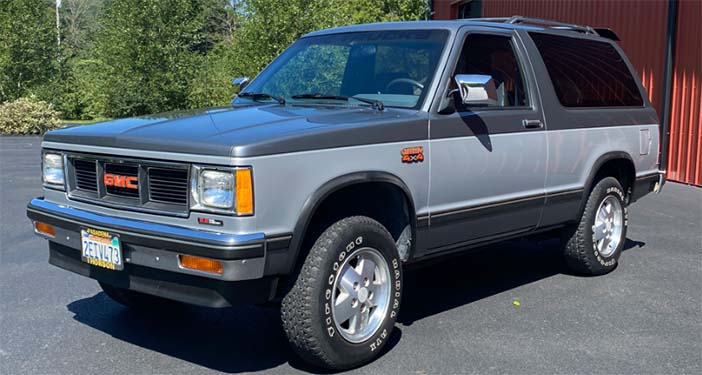
+++ Before crossovers, midsize SUVs were based on pickups with ladder-frame chassis. A whole load of those popped up in the ’80s and ’90s, and prime examples include the Ford Bronco II and Explorer, Toyota 4Runner, Nissan Pathfinder and the GM twins of Chevrolet S-10 Blazer and GMC S-15 Jimmy. Today, only the 4Runner remains true to the tried-and-tested formula in the U.S., as all of its original rivals have shifted to more car-like platforms. However, there’s been a bit of a resurgence in the body-on-frame midsize SUV class. You have the Bronco, for starters, and there’s a lot of buzz surrounding the return of the Xterra, as well as the Pathfinder potentially getting a truck-based version. Even Hyundai wants to join in on the fun. The last truck-based midsize SUVs GM made were the GMT360 sextuplets, comprising the Chevrolet Trailblazer, GMC Envoy, Oldsmobile Bravada, Buick Rainier, Isuzu Ascender and Saab 9-7x. That platform was retired in 2009 and GM has not built body-on-frame midsize SUVs since then. There was an attempt to revive it back in 2019 with the planned return of the GMC Jimmy, but it was shelved that same year. Now, development has been restarted after 7 years of sitting idle. Should everything fall into place, GM is returning to a segment it had abandoned 17 years ago. The timing couldn’t be more right, too. As mentioned, several automakers are set to introduce ladder-frame SUVs in the coming years, and GM could capitalize on that. The new-age GMC Jimmy is expected to ride on the same frame that underpins the Chevrolet Colorado and GMC Canyon. Its platform is internally known as the VSS-T, itself a derivative of the GM T1XX. Effectively a shortened Silverado and Sierra, the Jimmy will likely get some of its DNA from the Tahoe and Yukon. Powertrain is likely to be carried over from the Canyon, meaning a 2.7-liter, r-cylinder TurboMax engine with 310 horsepower and 570 Nm. But if GMC wants to give 4Runner punters a better reason to swing by its showrooms, it could (or rather, should) stick in the 3.6-liter V6 from the Chevrolet Blazer and Cadillac XT5. That engine produces the same horsepower as the 4-cylinder TurboMax (310 hp), but torque is down to 360 Nm. Still, in a segment that prefers simplicity, it might be worth considering. Who knows, it might even get a V8 option. There’s a good chance that the Jimny could echo the same trims as the rest of the GMC range. Currently, Elevation serves as the entry-level trim, the AT4 sits in the middle as the off-road oriented model, and the Denali is at the top. For other bits of hardware, it’ll likely come straight from the Canyon. Design is still up in the air, but it could either follow the current design language or go retro. GM might as well take advantage of economies of scale by maximizing the VSS-T architecture. While there’s no word yet, Chevrolet might as well get its own version of the Jimmy that could replace the current car-based Blazer. GMC could also add a smaller, petrol-fed derivative of the Hummer, too. But let’s not get ahead of ourselves right now. If GM is really developing the reborn Jimmy as we speak, it might be at least 2 years away from its premiere. Then again, basing it on an existing platform should expedite development. +++
+++ MCLAREN has announced its new design boss: Kemal Curic, who formerly led design for Ford Performance Vehicles. Curic joins the British supercar maker to replace Tobias Sühlmann, who left for Porsche earlier this year after a 3-year stint as chief design officer. Curic had been at Ford since 2004, working first as an interior designer and going on to play a significant role in the design of the Mk3 Focus, before leading the styling of the S550-generation Mustang. More recently, the Bosnian-German has been based in the US, heading up design for Ford’s luxury brand Lincoln. Stationed in Woking as of this month, he will be responsible “for shaping the design vision and creative direction of the McLaren Automotive portfolio”, the company said, with a remit that encompasses interior, exterior, CMF and digital design. McLaren is gearing up for a ground-up renewal of its product portfolio (and an expansion into new segments outside of the traditional supercar sphere) following its merger with start-up Forseven last year. It’s due to preview its first model created under Forseven this summer. It isn’t clear whether Curic will play a leading role in the shaping of these first new-era McLaren models or whether their styling was signed off under the previous design administration. Curic said: “McLaren is one of the most respected and aspirational brands in the world. I’m excited to be part of their journey to help shape the design vision of a company so deeply rooted in engineering excellence and racing heritage. I look forward to working with the talented teams at McLaren to create the next generation of breathtaking, purpose‑driven cars”. +++

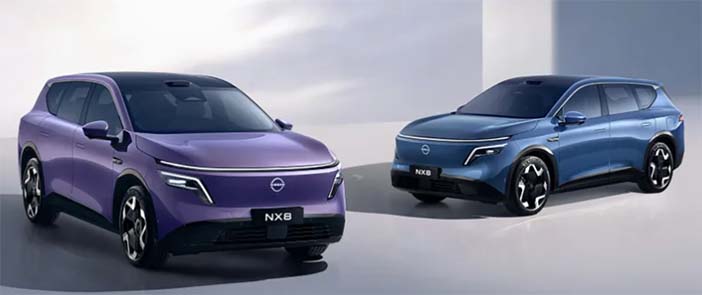
+++ NISSAN wants a new halo model for Europe and the NX8 electric SUV recently unveiled in China is in the frame. Engineered and manufactured in partnership with Dongfeng, the Nissan NX8 is a big SUV that would dwarf Europe’s 2 biggest Nissan passenger cars, the electric Ariya and petrol-electric X-Trail. Measuring 4.870 mm long, the NX8 sits between the BMW X3 and X5 in size, and has a 2.917mm wheelbase liberating plenty of space and rear legroom. The NX8 travels up to 500 km on a full battery. “We’re studying the potential of the SUV for Europe”, European vice president Jordi Vila told during an exclusive chat in Japan. “We did not take a decision yet. But we believe this size of SUV would complement our line-up very well”. The NX8 is packed with technology: sensor-equipped seats use AI to adapt to an occupant’s physiology, electronic dampers are designed to head-off car sickness, there’s a Qualcomm chip for ultrafast processing and an 800V architecture promising a 10 to 80 percent DC charge in a remarkable 12 minutes. “It has a lot of connectivity and technology, which I think is very interesting, because it shows Nissan’s ability to bring tech and innovation into our vehicles”, said Vila. “This is the value we see for Europe. Even if the new NX8 starts close to €52.000, it would still offer compelling tech for the money. “I think it’s an absolutely awesome, higher end car”, enthused Vila. Although he sounds very confident the NX8 will get the green light, there are hurdles to be cleared first. The car will need to be crash-tested as part of the homologation process and the driver assistance systems, connectivity and software prepped to European standards. “From a mission standpoint, there is zero problem, but there are always very technical elements of regulation that we need to meet”, he told. “The decision can come relatively soon, but the timeline for bringing it to Europe, we cannot tell now. We’ll try to be relatively fast, but that’s going to be part of the study”. It sounds like Nissan will gun for 2027, but the project may well slip into 2028. The SUVs will be imported from China, rather than production being established on this continent. The Nissan-Dongfeng joint-venture also produces 2 big saloons, the N6 plug-in hybrid and the N7 EV. But they are unlikely to make the trip across the ocean. “We see less space for sedans, classic sedans. We had that in the past but the market shrank a lot. There are still a few, but it’s relatively niche. And, from our analysis, these vehicles are very long with a long wheelbase”, concluded Vila. +++
+++ The first prototypes of the heavily-revamped RENAULT MEGANE E-TECH have been spotted undergoing testing. As I first reported back in February, this mid-life update is critical for the model to remain competitive against new rivals, so it will be more than just some new lights and colours. I expect major upgrades across most elements of Renault’s electric family hatchback-come-crossover. New batteries, more range, upgraded interior technology and a more distinctive design are all on the cards. “There will be a strong Megane evolution this year”, said Renault product development chief Bruno Vanel. “Megane has got an important role in the line-up: it’s our only low-riding C-segment hatchback”. When it does arrive, the updated Renault Megane will have a tough new set of rivals to compete with, including the heavily updated Volkswagen ID.3 Neo, the Cupra Born and the new Nissan Leaf. First of all, it’s clear the new Megane E-Tech won’t feature any major proportional changes from the current car, but there will be some fairly substantial tweaks up front. As is evident on prototypes, the bonnet will feature a straight edge right the way across, suggesting the diamond shaped badge will now sit lower on the nose. The basic headlights will be shared with the current car, but the daytime running lights will now sit on their own lower down on the bumper, and share the half-diamond shape seen on the new Clio. More changes will be visible at the rear, with re-shaped rear lights that feature more 3-dimensional lighting elements visible in their thin housings. There will be more changes to the lower bumpers, wheels and colour choices, too. Plus, I expect a sportier Esprit Alpine trim line to be available at launch. The bigger impact on buyers, though, comes under the skin. “The strong evolution includes new batteries”, Vanel told at the Brussels Motor Show. The current Megane has a 60 kWh Nickel Manganese Cobalt (NMC) battery, but Renault is industrialising cheaper lithium iron phosphate (LFP) cells in Europe for the Twingo and the Megane will follow its little brother in adopting them. LFP batteries are typically less energy dense than NMC, but Renault should be able to pack more cells into the same space by adopting a ‘cell-to-pack’ format. This eliminates the structure surrounding the battery modules, freeing up space and eliminating cost and weight. The upshot should be a Megane that goes further, potentially cracking the 500 km mark. Expect the revised Megane to go public in the spring, with Dutch sales later in the year. +++
+++ In February this year, a report claimed that SCOUT would only launch a SUV in 2028, something the Volkswagen-backed automaker denied in a forum post, though it did concede that delays related to setting up a new factory and launching multiple powertrains were certainly possible. Now, a new report suggests that customer vehicles may not start to reach driveways in late 2027 or early 2028 as planned, but that the Traveler SUV will only enter production in September 2028, while the Terra pickup is only expected to launch in March 2030. Scout, however, denies this. Let’s look at the full picture. Sam Fiorani, vice president of global vehicle forecasting at AutoForecast Solutions, told that the delayed forecasts were based on a weekly update Scout provides customers, adding that he and his colleagues also came to their conclusions with the help of various industry sources. It’s also worth noting that when Scout was formed in 2022, the outlook for all-electric vehicles was far rosier than it is now, and extended range electric vehicles (EREVs) were seen almost as a side project. That outlook has changed, and nearly 90 percent of Scout reservation holders have opted for the latter. As a result, Scout has undoubtedly been forced to readjust its expectations, pivoting to meet customer demand. This is one of the biggest factors influencing analysts’ expectations that Scout’s SUV and pick-up truck will launch later. “A lot of the more recent changes have been in the reengineering of the vehicle to get the EREV out first”, Fiorani said. “When the vehicle was originally announced, it was going to be fully electric, and the market has shifted since then. It makes a lot more sense to target the EREV, especially when you’re looking at pick-up trucks”. So what does Scout have to say about all this? A Scout spokesperson told that the report was unfounded, adding that it still expects to produce its first pre-production vehicles before 2026 comes to an end: “Scout Motors has not spoken with AutoForecast Solutions, and we do not have anything additional to share regarding timing beyond what we’ve already announced. As we’ve previously shared, initial production is targeted to begin in 2027. We will start producing initial validation vehicles this year. That effort will continue and mature into 2027. We expect customers will begin taking delivery of new Scout vehicles in 2028”. Whether Scout will meet its own expectations or not remains to be seen, but the pressure is on in a big way. The Ford F-150 Lightning is being turned into an EREV, and it’s quite possible that 1 of Ford’s 5 new affordable vehicles planned to arrive by 2030 will be a range-extended SUV, too. Moreover, Kia just announced plans to take advantage of the “untapped” EREV midsize pickup market with a truck of its own, following news that Hyundai will produce an SUV and pickup with styling inspired by the imposing Boulder concept. Scout was going to be one of the first to play in this space, and now it seems it may be just another competitor, depending on whose comments you believe. Will Scout customers start receiving their orders next year? I’ll keep an eye on developments. +++