
+++ Production of the AUDI A1 and Q2 has come to an end after more than a decade. Audi recorded 1.389.658 deliveries of the A1 since its launch in 2010, while a total of 887.231 Q2s have rolled off the production line since it arrived in 2016. Audi said the models were particularly popular in Germany, the United Kingdom and Italy. They will not be directly replaced: Audi is moving away from building small and more affordable cars to instead concentrate on the more profitable core of the premium sector. The incoming A2 e-Tron, a sub-€40.000 electric crossover based on the Volkswagen ID.3, will effectively take their place in the line-up, becoming the new entry-level Audi. The German brand’s smallest combustion-engined models are now the A3 and Q3. The demise of the A1 frees up space on its production line in Martorell for the Volkswagen Group’s forthcoming Cupra Raval and Volkswagen ID.Polo (the Skoda Epiq and the Volkswagen ID.Cross will be built in Pamplona). Similarly, the Q2 makes way for the new A2 e-Tron to be built at Audi’s home base in Ingolstadt, Germany. In addition, the company confirmed its new flagship sports car will enter production next year. Based on the minimalist Concept C and inspired by the TT, it will be built by Audi Sport at its Böllinger Höfe plant. The e-Tron GT, which is assembled in the same factory, will be discontinued in due course to make space for the new sports car. +++
+++ Porsche has agreed to sell its 45% stake in supercar brand BUGATTI RIMAC , fully exiting the joint venture that houses the iconic brand. Porsche and Croatian sports-car maker Rimac Group established Bugatti Rimac in 2021, with Rimac holding a 55% majority stake and Porsche taking the remaining 45%. It will sell its stake to a consortium led by New York-based venture capital firm HOF Capital, with BlueFive Capital as its largest investor. The deal comes as the automakers face mounting pressure to restructure business portfolios amid slowing growth, rising costs and intensifying margin pressure from tariffs and geopolitical disruption. Automotive and mobility deal value rebounded last year, reaching more than $35 billion by third quarter, according to Bain & Company. Under the terms of the deal, Porsche will also divest its 20.6% stake in Rimac Group, marking a complete exit from its investment in the Croatian electric hypercar maker. Following the transaction’s completion, Rimac Group will take full operational control of Bugatti Rimac and form a strategic partnership with BlueFive and HOF Capital to support the brand’s growth. HOF Capital was co-founded by a scion of Egypt’s billionaire Sawiris family. BlueFive Capital is a private equity firm led by Hazem Ben-Gacem, a former executive at alternative investment firm Investcorp. Financial terms of the transaction were not disclosed. Mate Rimac, chief executive officer of Rimac Automobili, beside a Rimac Nevera luxury electric supercar outside the company’s electric automobile plant in Sveta Nedelja, Croatia, on Thursday, July 8, 2021. Volkswagen AG will fold its ultra-luxury Bugatti brand into a joint venture with Croatian electric supercar maker Rimac Automobili, extending a lifeline to the boutique French manufacturer known for hulking 16-cylinder engines. “As an early-stage investor of Rimac Group, Porsche made a significant contribution to developing Rimac Technology into an established Tier-1 automotive technology company”, said Michael Leiters, CEO of Porsche. “With the sale of our stake, we are focusing Porsche on the core business”. The German automaker has been under pressure to sell off non-core assets as part of a broader restructuring, as U.S. tariffs and falling demand in China squeeze profit margins. “With the strong foundations Porsche’s support has provided, we now have a structure that allows us to execute even faster on our long-term vision”, said Mate Rimac, CEO of Bugatti Rimac. Rimac founder Mate Rimac had expressed interests to buy Porsche’s stake last year, making a preliminary offer that valued the joint venture at slightly over €1 billion ($1.1 billion), Bloomberg reported, citing people familiar with the matter. “BlueFive Capital approaches this opportunity as more than simply a financial transaction, and we look forward to working alongside the entire Bugatti Rimac team to honor that legacy for generations to come”, said Hazem Ben-Gacem, Founder and Chief Executive of BlueFive Capital. +++
+++ BYD-owned luxury brand DENZA has revealed its new 1.000 hp super-GT flagship in production form at the Beijing motor show. The Denza Z is a 4-seat electric supercar that packs more than 1.000 hp and is claimed to be capable of sprinting from 0-100 kph in less than 2.0 seconds; as fast as the Rimac Nevera. It was revealed as a concept at the Shanghai show last year and has now been shown in road-ready form ahead of its dynamic public debut at the Goodwood Festival of Speed in July.
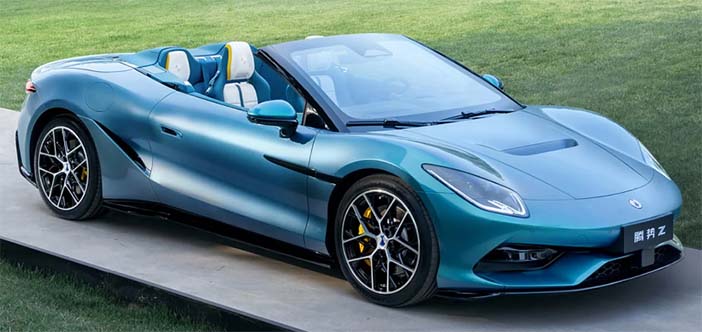
Shaped by BYD’s chief designer Wolfgang Egger (whose previous works include the Alfa Romeo 8C Competizione), the production Z remains true to the concept in its smooth surfacing and clean, cab-forward silhouette. Inside the show car’s brightly decorated cabin, with turquoise and yellow upholstery, it departs from BYD convention in gaining a smattering of physical controls on the dash and squared-off steering wheel, including what look to be drive mode and suspension adjustment functions. Exposed carbonfibre in the centre console and in the backs of the bucket seats further nod to the Z’s sporting remit. Unusually, Denza will launch the Z first in Europe, as it aims to establish a foothold for its fledgling premium brand in a market historically dominated by the British and German stalwarts, before starting sales in its home market. The brand is still keeping its cards close to its chest on precise technical information, but it previously said the Z would be equipped with a steer-by-wire system, four independently controlled electric motors and the same ‘DiSus-M’ magnetorheological suspension as the wild Yangwang U9 hypercar. This will give the 4-seater the same predictive damping technology that primes the chassis for upcoming changes in the road surface, but it’s unconfirmed whether it will be able to jump into the air on command, like the U9. Denza has yet to give a steer on pricing, but the Z’s closest rival on paper would be the Maserati Granturismo Folgore, which starts at €199.300 in the Netherlands. The brand could look to undercut the established competition with its new super-GT, but it will naturally cost significantly more than the new Denza Z9 GT, which is tipped to start at around £100,000 when it lands in the next few months.
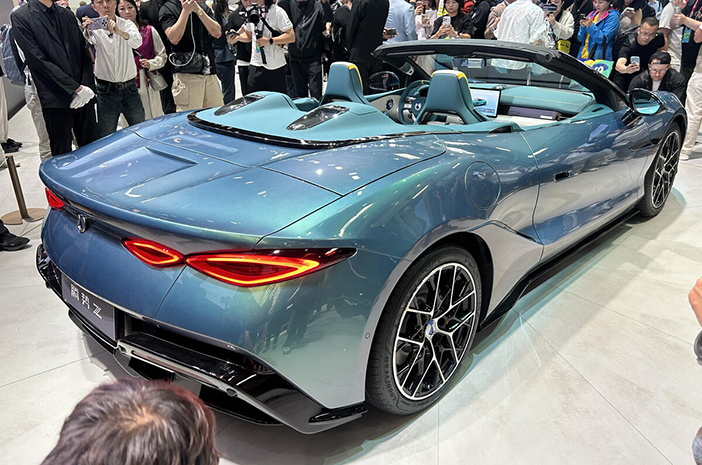
The car on the Beijing stand is a soft-top convertible, but the Z will also be offered as a coupé (and a hardcore, track-focused range-topper is inbound, too, as spotted testing with a massive wing on the Nürburgring recently). +++
+++ MORGAN has broken the 400 hp barrier for the first time with a hardcore new performance version of its Supersport flagship. With its BMW-sourced 3.0-litre straight-6 boosted from 340 hp to 408 hp, the new Supersport 400 has more grunt than the old V8-engined Aero 8, and with a 0-100 kph sprint time of just 3.6 seconds, it’s half a second quicker off the mark. The Supersport 400 is Malvern firm’s most expensive series-production car, lining it up neatly with the similarly powered and conceived Porsche 911 Carrera T. Engineered to give a “more intense and deliberate driving experience” than the standard Supersport, launched last year, the 400 is the first step in a “carefully considered” expansion of the Morgan line-up, with a range of bespoke and limited editions to follow over the next 18 months. The 400’s power boost comes in combination with a raft of chassis and visual upgrades that mark it out as the most potent and driver-focused Morgan model. The Dynamic Handling Pack is here fitted as standard, bringing adjustable Nitron dampers all round, while the suspension has been revised to give better controllability “while retaining the fluency and approachability” of the standard Supersport.
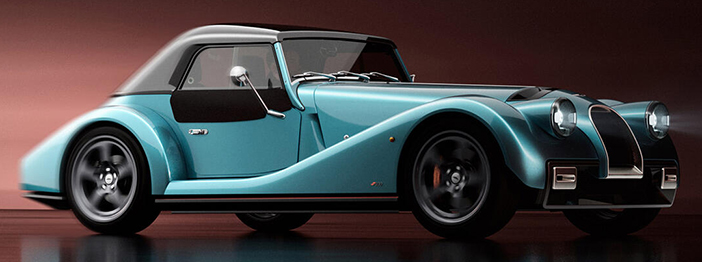
The 400 also gets bespoke, lightweight, forged wheels wrapped in Michelin Pilot Sport 5 tyres and a specially developed active performance exhaust that gives “a more pronounced and purposeful soundtrack”. The mechanical enhancements are accompanied by a visual makeover that brings functional vents in the front wings, gloss contrasting lower bodywork, a range of Alcantara upholstery options for the cockpit and bespoke instruments. It can also be painted in a choice of bespoke satin colours. The 400 also presents the option of replacing the BMW shifter for the 8-speed automatic gearbox with an anodised aluminium item. Morgan boss Matt Hole hailed the 400 as “the purest expression of Supersport”, which “signals a natural progression for the range” as Morgan readies further derivatives of its existing models for launch. “From the outset, our aim has been to create a vehicle that is sharper and more deliberate, ensuring the additional power is delivered in a way that feels balanced, intuitive and deeply rewarding for the driver”, said Hole. “We are immensely proud of Supersport 400. It stands at the pinnacle of our range and reflects the progress we are making as a business. It demonstrates how we can evolve our platform to increase capability in a way that remains distinctly Morgan, defined by handcrafted construction, human engagement in the driving experience and a commitment to delivering pure driving joy”. The 400 will go into series production next month, but volumes will be “carefully managed” to preserve exclusivity. +++
+++ 2 concept cars shown by PEUGEOT could preview a successor to the 508 SW and a new flagship that sits above the 5008. Unveiled at the Beijing motor show, the Concept 6 and Concept 8 “demonstrate our vision for a bold new future for the brand”, said Peugeot CEO Alain Favey. The company added that the concepts were “more than design studies” that “shape a new generation” of Peugeot electric vehicles. The production versions of the 2 concepts will go on sale in China first; a market Peugeot has previously said it has earmarked for expansion. As such, they are expected to be built through the brand’s partnership with Chinese car maker Dongfeng, which means they would sit on Dongfeng platforms and be built in China. Dongfeng has made China-market cars for Peugeot previously, such as the long-wheelbase 508L. However, Favey has said they are also bound “for our global market”, suggesting exports are planned too. While not confirmed, this is expected to include Europe.
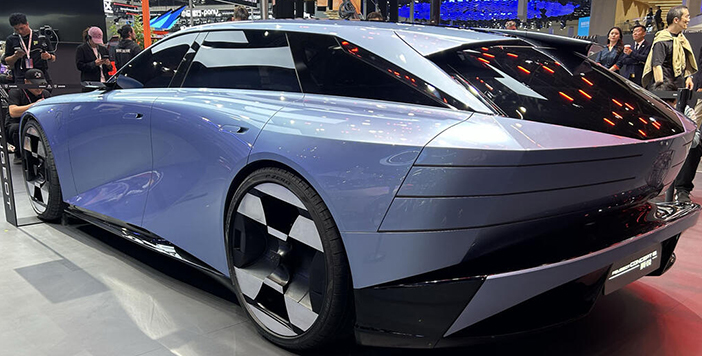
The Concept 6 is a “vision of a bold new generation of large sedans”, said the firm, and combines the “elegance” of a saloon with the “dynamism” of a shooting brake to preview a new grand tourer estate. Peugeot is mulling a successor to the 508 as it considered expanding its line-up into new segments beyond its current hatchback and crossover offering. “We are exploring what’s next after the SUVs”, Favey told at the end of last year. He added that “you feel that something else has to come in the future”. Asked if that means the firm could return to estates, he replied: “Why not?” The 508 was launched in 2010 in fastback and estate forms as a rival to the Volkswagen Passat and Volvo S60/V60. But the second-generation version was withdrawn from sale early due to slow sales, before production stopped for good in 2025.
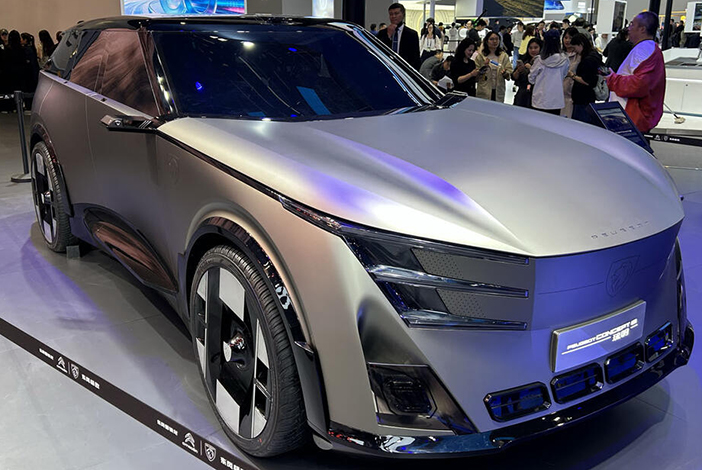
The Concept 8, meanwhile, previews the largest SUV that Peugeot will bring to market. It “announces the next chapter of Peugeot’s SUV ambition”, said the firm. This aligns with what Favey told at the Brussels motor show in January, where he explained that the brand is “thinking about” launching a model above the flagship 5008. He added that for it to be successful “it would need to be something really different”, which the dramatic design previewed by this concept suggests it will be. +++
+++ Future electric PORSCHE sports cars could be fitted with simulated gearboxes because they can boost the “fun” of driving an EV, the boss of the firm’s GT division has told. Andreas Preuninger said that when he drove the electric Hyundai Ioniq 5 N, the level of realism provided by its simulated ’box was “very impressive” and his “biggest takeaway” of driving the 610 hp EV. Hyundai’s system uses a ‘fake’ rev range to deliver power in a similar way to a traditional combustion car and paddles behind the steering wheel can be used to change gears. Sounds that simulate a revving engine are also pumped into the cabin. Preuninger said the Hyundai’s unique engine simulation and the feeling it provides in tandem with the car’s natural-feeling controls were key to a performance EV’s success. He hinted that such a system combined with Porsche steering and brake pedal feel could create a highly engaging car. “We at Porsche are automotive nerds and discussions about how to improve driving engagement are always happening”, he said. “Discussions are often intense as everybody’s got an opinion, but that only provokes innovation”. Preuninger’s comments contrast with those recently made by Lamborghini boss Stephan Winkelmann, who suggested his brand wasn’t interested in developing a similar system. He said: “You don’t want something which is not real. At least, that is my perception”. +++
+++ The first full-hybrid powertrain offered by VOLKSWAGEN will arrive before the end of the year, first in the Golf and the T-Roc. The powertrain pairs a 1.5-litre turbo petrol-4 with an electric motor and a small, 1.6 kWh battery that’s integrated into the boot floor. Power is delivered exclusively to the front wheels via a 7-speed dual-clutch automatic gearbox. Volkswagen has already confirmed it will come in 2 power levels: 136 hp and 170 hp. The Golf will receive the more powerful version in various global export markets, but it remains to be seen which version will be offered in models sold in the Netherlands. The new option will top the T-Roc line-up, but for the Golf it will sit between the eTSI mild hybrid and the eHybrid and GTE plug-in hybrids. Models using the new powertrain will be badged simply Hybrid. The system works similarly to e:HEV set-up in the Honda Civic, whereby under normal driving conditions drive is undertaken by the electric motor, with the engine used as a generator for the battery; but when a speed of above 65 kph is reached, the engine takes over and the motor is used as a torque filler. At slower speeds, the system can run as an EV; the electric-only range hasn’t been confirmed and is expected to be short. Volkswagen said its new system “enables a higher proportion of electric driving and thus lower emissions and consumption values as well as reduced fuel costs” when compared with mild hybrids, while also being cheaper to purchase and not requiring external charging like a PHEV. Pricing and on-sale information has yet to be confirmed, but Volkswagen said the Golf Hybrid and T-Roc Hybrid will be available in the fourth quarter of 2026. +++