
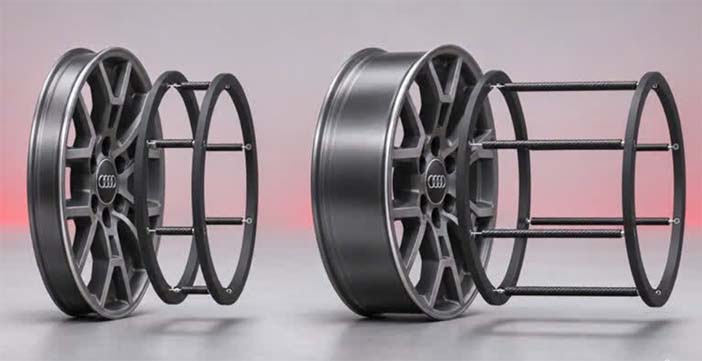
+++ Rumors about AUDI jumping into the hardcore off-road SUV game have been swirling for some time. The brand has admitted it’s looking into building something tougher than its current Q-series SUV models, especially after American buyers started asking for it. CEO Gernot Döllner has talked about the idea before, but so far, Audi hasn’t pulled the trigger on actually making one. Now, I’ve got another breadcrumb to follow. A German patent application that popped up last week shows Audi is tinkering with a new internal double beadlock system for wheels, specifically the kind you’d want if you’re planning to bash through the rough stuff. It doesn’t guarantee a full-blown off-roader is on the way, but this tech would definitely fit the bill for something built to handle real abuse. Audi’s patent sketches out a beadlock setup that uses 2 clamping rings joined by a handful of smaller spacers. The idea is to keep both sides of the tire’s bead locked down tight against the wheel, so nothing pops loose when things get hairy. That’s a bit different from the usual one-piece internal beadlock inserts, which tend to be chunky and pricey to make. Audi’s take splits the job in two: the rings clamp onto the tire beads, while the spacers hold everything in place and set the gap between them. Audi could use spacers of different lengths to fit various wheel widths, so there’s no need to redesign the whole system each time. The patent also says the rings and spacers could be made from materials like rubber, reinforced plastics, or metal. This could make the setup easier to build, lighter, and possibly less expensive. But there’s a catch. Beadlock wheels aren’t street-legal everywhere. In the US, aftermarket wheels have to play by the Federal Motor Vehicle Safety Standards. That’s why a lot of beadlock wheels you see are stamped ‘off-road use only’; the makers don’t bother certifying them for road duty. So if Audi wants to slap this tech on a SUV you can actually drive to the trailhead, they’ll have to jump through some regulatory hoops first. A double beadlock setup like this would be a game-changer for any rig built to get dirty. Airing down your tires gives you more grip on sand, mud or rocks, but it also makes it way easier for the tire bead to slip off the wheel when things get rough. By securing both sides of the tire, Audi’s setup could keep everything in place, even during demanding driving. Also, the modular design could help Audi offer different wheel options for any future off-roader they develop. For now, though, this is just an idea on paper, not a promise you’ll see it at your local Audi dealer anytime soon. Car companies love to patent wild ideas just in case, but plenty of them never make it past the drawing board. Same goes for trademarks: they’re not always a sign that something new is actually coming. +++
+++ You’d think heightened competition in the automotive industry centers on the carmakers themselves, but the truth is that the competition runs deeper. Each car is made of thousands of parts and components; not all are manufactured by the brand because of production costs. All automakers outsource parts, and the industry is becoming more competitive as manufacturers from CHINA grow. Koito is one of the world’s largest manufacturers of headlights, making various illumination parts for major car brands. It recently got candid about how the growing Chinese manufacturing sector has affected its business and how it plans to stay in the fight.
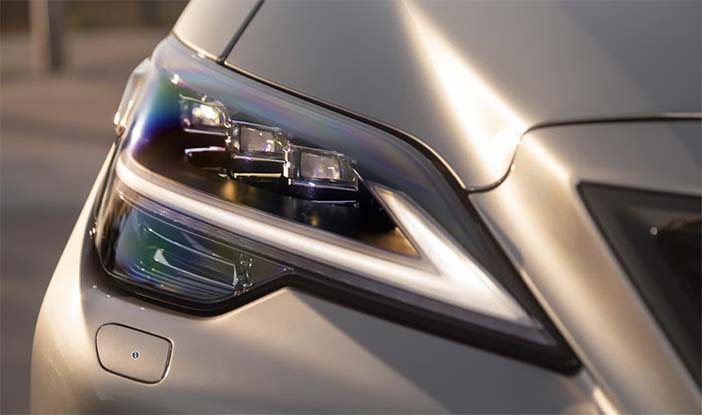
Nikkei Asia published a report on how Koito has reassessed its business model and plans to stay competitive. Its main goal is to reduce production costs by 30% by fiscal year 2030. One way it’s doing so is by analyzing the competition in depth, to the point where Koito literally takes apart and tears up rival products and components to understand them better. Inside Koito’s main manufacturing plant in Shizuoka, Central Japan, a room known as “the benchmark room” houses numerous headlights from around the world. According to the headlight manufacturer, they disassemble about 100 products a year in order to study the materials, structure and number of lights. Another facility stores over 600 headlights for further analysis and study. Most of these headlights are from rivals like BYD and Aito, a Huawei-backed auto brand. A Koito engineer was quoted as saying they don’t understand how these Chinese-made headlights achieve such low prices. He added that when they noticed the industry shifting at that pace, Koito’s chances of winning the price war were slipping away. Now, Koito acknowledges that the new industry benchmark is the prices set by manufacturers from China. To address rising competition, beyond the analysis in the benchmark room, Koito is redesigning its offerings. Instead of making headlights per car, the company will now streamline the designs that used to vary per model. Lights that have different exterior designs will now share internal components. Furthermore, the manufacturer plans to source lower-cost plastics and other products from China after confirming quality and supply-chain reliability. To boost production efficiency, the Shizuoka plant has also been modernized with AI-assisted systems. Robots with cameras transport parts across the facilities, while AI also helps design components that meet global regulations and standards. +++
+++ The National Highway Traffic Safety Administration has opened a preliminary investigation into the 2021-2026 FORD EXPLORER after drivers and front passengers suffered burns when a side airbag deployed. The probe covers roughly 1.236.155 vehicles. Ford has not issued a recall. The agency’s review is still gathering information, and its scope is narrower than the vehicle count alone suggests. NHTSA’s preliminary evaluation names the 2021-2026 Ford Explorer, covering 6 model years built with the same side airbag design now under review. The agency’s own filing lays out why it opened the case now. According to NHTSA’s opening summary, the Office of Defects Investigation received owner and manufacturer reports of burn injuries after the front seat-mounted side airbag deployed in crashes involving the Explorer. The filing describes injuries diagnosed as second- or third-degree burns that required medical treatment. The component under scrutiny is the seat-mounted side airbag in the front row, not the steering-wheel or curtain airbags. NHTSA says there is no indication the issue extends to rear seating positions or to other airbags up front. A preliminary evaluation is the agency’s fact-finding stage, before it decides whether a defect exists across the fleet. Ford has faced other Explorer-related actions this year, including a rear suspension fracture recall and a separate roof rail recall, both unrelated to this airbag inquiry. The agency has logged 11 separate incidents, 10 of which resulted in second- or third-degree burns serious enough to require medical treatment. Against the 1.236.155-vehicle population, that works out to about 0.00089 percent of covered Explorers. That ratio is the core tension here as the injury count is small in absolute terms. But burns of that severity from an airbag meant to protect occupants are the kind of complaint that pushes a preliminary evaluation open quickly. No recall has been announced, and a preliminary evaluation doesn’t guarantee one will follow. NHTSA can close such reviews without further action, escalate to an engineering analysis, or move straight to a recall request if Ford’s own data points that way. Owners who want to check whether a specific vehicle identification number carries any open action can search NHTSA’s recall lookup tool directly, since the agency’s database updates as filings like this one progress. Ford has not issued a public statement addressing the specific burn complaints described in the filing. +++
+++ The LOTUS ESPRIT is coming back, and we’ve now had our first look at the V8 engine at its heart. It comes from Horse Powertrain, a joint venture between Renault and Lotus parent company Geely, and it’s both the firm’s biggest engine yet and its first ever V8. The W40 is a 4.0-litre V8 using the popular ‘hot-V’ layout with 2 turbochargers nestling between the cylinder banks, which makes for a more compact package and a shorter intake path for the turbos. It’s a scaled-up version of Horse’s existing W30 3.0-litre V6 and I previously learned that it’ll be possible to stretch the redline to 8.000 rpm. The engine weighs 200 kg, which is more or less the same as Mercedes-AMG’s 4.0-litre V8, another hot-V design. It’s good for 670 hp and 800 Nm of torque, and it’ll be used in myriad applications beyond the new Lotus supercar, which will be its first outing. Horse says the W40’s potential for high power and “exceptional low-end torque” makes it a good fit for “sports cars, pick-up trucks and off-road vehicles”. The engine will drive the rear wheels of the car, codenamed Type 135, via a new Horse 8LDCT dual-clutch automatic gearbox with a maximum torque rating of 1.050 Nm. The engine is the main part of an all-wheel drive hybrid drivetrain that will use cutting-edge chassis tech to unleash more than 1.000 hp, as previously revealed by Lotus’s CEO, Qingfeng Feng. He previewed some of the engineering highlights of the Type 135, internally referred to as the new Esprit. “What has truly limited us is the lack of a proper powertrain, because Lotus hasn’t produced its own engine”, explained Feng. It currently sources 2 engines for the mid-engined Emira, Mercedes-AMG’s frenetic turbocharged 2.0-litre with 360, 400 or 420 hp or a supercharged Toyota V6 also producing 400 hp but differentiated by its 6-cylinder character and manual gearbox. “The problem is you have to compromise when sourcing from other suppliers: these current 2 engines couldn’t deliver the performance we intended for the Emira”, admits Feng. “But Geely has empowered Lotus to develop a V6/V8 engine to fill the gap. My role is the chief cook, and I’ve now found the very last ingredient to make the perfect dish”. The Emira was intended to be the last combustion Lotus, but the sports car company’s transformation to pure electric ‘lifestyle’ SUVs and saloons has been rocky. As a result Feng is embracing powertrain flexibility, from ICE to hybrid to plug-in hybrid and pure EV. He likens the electric element of the Type 135’s V8 to the MGU-K motor/generators on Formula 1 cars, harvesting kinetic energy to supply the battery and boosting power and torque. Feng also espouses aerodynamics and light weight as core Lotus tenets, dating back to founder Colin Chapman. The upcoming V6, set to yield up to 545 hp, is claimed to be the lightest on the market at just 160 kg. The focus on reducing mass will shape the new V8 supercar’s chassis too. It’s likely that Lotus’ engineers will re-use the carbon-fibre tub technology from the 2.011 hp Evija electric hypercar. But Feng suggests it will have a compound structure, no doubt deploying lightweight aluminium for the crash structures, axles and more. “Our material choice really depends on what is best for the product”, he explains. The new hybrid supercar isn’t tipped for plug-in capability, which will reduce the size of the battery to save cost and weight. Will it be rear- or all-wheel drive? “All-wheel drive could be a great solution”, says the boss. “With the help of torque control software, you can decide how much power you want to put to the front and rear wheels”. Feng would like the 135 to put power to all four corners on straights for ballistic acceleration, with a rear bias in corners to boost driver feel. He namechecks the new Lamborghini Temerario, which has twin motors turning the front axle and another sandwiched between the V8 and gearbox, combining for 920 hp; less than the new Esprit. The Lambo’s axial flux motors are provided by British tech start-up Yasa: are these in contention for the 135? “I spoke to the CEO last week, and they’re developing interesting new products. They’ve got great technologies, with disc-shaped motors that are extremely small in size but extremely powerful in output. Mercedes-AMG made a smart move by acquiring it”. Technologically, the Type 135 will be light years ahead of primitive, pre-Geely Lotus models. Feng repeatedly references the ‘smart’ capabilities enabled by the group’s E/E (electronic and electrical) architecture, with ultra-rapid processing power and sophisticated software controlling the hi-tech chassis and cockpit. This unified central nervous system will unleash the V8 hybrid’s power in sync with chassis hardware including air suspension with continuously variable damping and active anti-roll bars, optimising the Type 135 for real-time driving conditions. “In the past, the chassis was fixed, frozen and acted in a passive way. Nowadays, chassis are becoming more dynamic. Our smart technologies will add up to make driving really fun, really thrilling”. If our test drive of the Evija is anything to go by, this is not wishful thinking on Feng’s part.
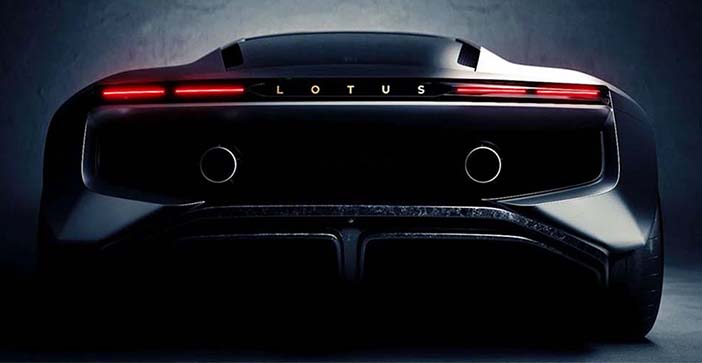
Lotus has released a teaser image showing part of the new Type 135 or Esprit. It shows a wide, clean and altogether more restrained design, with simple horizontal 2-piece rear lights and a subtle Lotus badge. There are no obvious aero devices or wings on top of the bodywork. However, the large central section, which also houses two round exhaust pipes, could contain some clever air-management functionality in combination with the large diffuser below. You can also see the use of chopped or ‘forged’ carbon fibre on the lower bumper, similar to the Lotus Theory 1 concept car. In fact, put the Esprit and Theory 1 side by side and you can see the influence of the more extreme concept car, both in the general aesthetic of the new supercar’s rear end and the clean haunches and simple glass engine cover. In total contrast to the more aerodynamically influenced Evija and Emira, the Type 135 looks to usher in a more elegant and almost classical design language – one that looks more road-biased than the racier Aston Martin Valhalla or Ferrari Testarossa. +++
+++ MERCEDES-BENZ is not done with combustion yet. Chairman Ola Källenius told reporters at a media roundtable in Pune that gas and diesel engines still have a long runway ahead, even as the automaker pushes further into electric models. Speaking to the trade press in India, Källenius laid out a timeline that stretches well past the end of this decade. He also detailed how diesel, combustion engines developed as EU-7 ready for future Euro 7 rules, and a growing electric line-up fit together under one strategy. “The combustion engine, it will be around for minimum 10, probably 15 years more”, Källenius said. He described the broader shift to electric mobility as a 20 to 25-year industrial transformation, not something that wraps up by 2030 or 2035. The company is investing in its combustion lineup ahead of the Euro 7 emissions standard, with a range of engines that Mercedes describes as EU-7 ready rather than already certified under the new rules. That includes its newest V8, which remains in production for select high-end models alongside plug-in hybrids and full electric cars. Källenius was careful to separate the combustion timeline from the company’s end goal. “As long as there’s meaningful demand for… high-tech, in our case electrified ICE, we have that as well”, he said, tying the engines’ survival to customer demand. Mercedes-Benz is running a 40-model program over 3 years, spanning both electric and combustion vehicles. That pipeline includes the automaker’s new models arriving through 2026 and 2027, mixing gas, diesel and battery power across the lineup. Källenius pointed to light commercial vehicles and larger passenger models as the places diesel still makes the most sense. “Our portfolio of diesel engines is ready for the future”, he said, adding that the fuel “will stay in the portfolio for the foreseeable future”. The case is strongest for drivers covering 60.000 to 70.000 kilometers a year. That’s the mileage band where diesel’s efficiency advantage over gas or hybrid power still pays off. In India specifically, Källenius noted that diesel’s lower pump price gives high-mileage customers another reason to stick with it. For high-mileage drivers and fleet operators, diesel and efficient petrol engines aren’t vanishing overnight. At annual use near the 60.000 km mark, the lower fuel burn of a diesel or a strong hybrid can still outweigh the higher upfront price compared with a similar petrol model. EVs gain ground fastest in areas with dense charging and cleaner grids, since lower electricity costs can offset their higher purchase prices over several years of use. Where charging is scarce or long-distance highway use dominates, Källenius’ 10 to 15-year horizon for combustion suggests buyers can still plan around traditional engines and plug-in hybrids for at least one more ownership cycle. Electrification stays in the product plan all the same. Mercedes-Benz plans to offer an electric alternative across every meaningful model position by the end of the decade, and Källenius expects EVs to take a bigger share of the brand’s Indian sales next year. The strategy also relies on existing combustion variety as Mercedes continues building its V12 engine for select applications, even as EVs expand into more of the lineup through new electric models arriving by 2027. +++
+++ SUBARU and EyeSight have been joined at the hip for years now, ever since the Japanese brand rolled out its camera-based driver assist tech. What began as a simple pair of forward-facing cameras has slowly morphed into a full-on suite of safety features. EyeSight has picked up awards, gone through its fair share of updates, and, yes, even caught some flak for its quirks.
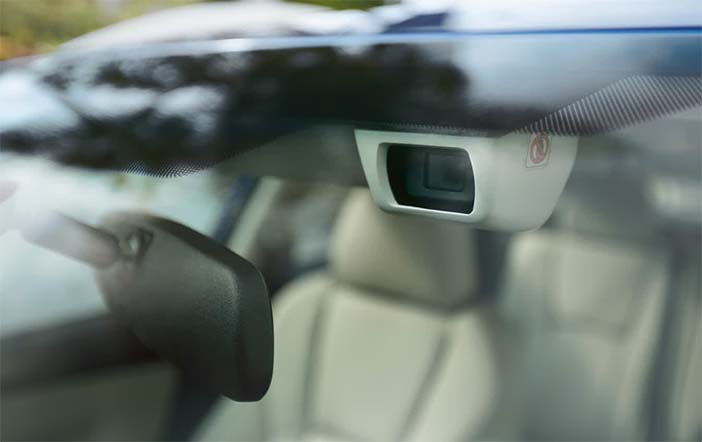
Now, Subaru is gearing up for what might be EyeSight’s biggest glow-up yet. At a recent development event in Japan, Subaru showed off a next-generation EyeSight that’s set to outdo the current system. The twist? Subaru isn’t piling on more cameras, radars or pricey gadgets. Instead, they’re sticking with the EyeSight X setup and squeezing out more magic through software. The development vehicle was a current Levorg equipped with EyeSight X. Its hardware already includes a wide-angle stereo camera, four radars positioned around the front and rear corners, and rear sonar. The system also uses high-definition map data and precise GPS information to help the vehicle understand its surroundings. Subaru wants to keep this hardware but crank up what it can actually do. The goal? Level 2++ driving assists, with the next EyeSight aiming to let you take your hands off the wheel out on real roads. Here are some of the features demonstrated during the Japanese test: 1) Hands-off driving at all speeds: Unlike the current EyeSight X, which allows hands-off operation in traffic jams at speeds below 50 km/h, the new system is being developed to work across the entire speed range, with a maximum setting of 135 km/h. 2) Hands-off lane changes: Drivers can initiate a lane change simply by operating the turn signal lever. The vehicle then handles the maneuver, with the steering wheel remaining untouched. 3) Automatic overtaking: When the system detects a slower vehicle ahead, it can decide when to move into another lane, overtake, and return to its original lane. 4) Emergency roadside stopping: If the driver becomes unresponsive, the vehicle can activate warnings, attempt to wake the driver through braking pulses, sound the horn, flash the hazard lights, and eventually pull over to the shoulder. 5) Reports from Japan say the demos went off without a hitch, especially when it came to lane changes and overtakes. Still, Subaru’s got homework left. Engineers are puzzling over how to deal with skinny shoulders, and the company is mulling over how to let drivers give the green light before the car decides to change lanes on its own. That said, all these features are still in the oven, and Subaru hints the final version could pack even more than what we’ve seen so far. Throwing more sensors and pricey hardware at the problem isn’t the only way forward. If the current cameras and radars can pull off more tricks with just a software update, that’s a win for both your wallet and your feature list. Now, retrofitting your current Subaru is another question. But here’s the catch: reliability. EyeSight has caught some heat for surprise braking and steering moves. There’s even a fresh class-action lawsuit claiming some newer Subarus with EyeSight can slam on the brakes for no reason, miss hazards or butt in on steering. For now, these are just claims, not proven facts. Let’s hope the next-gen system irons out these issues while adding all the new bells and whistles. Hands-free driving and auto-overtakes sound great, but drivers need to trust the car won’t throw any curveballs. There’s a thin line between making a car smarter and letting it run wild. Subaru’s idea to let drivers approve lane changes is a smart move. After all, not every slowpoke in front needs to be passed. +++
+++ While homegrown brands like Ford and General Motors maintain a strong presence in the United States, TOYOTA continues to challenge their dominance, so much so that the Japanese automaker has invested over $50 billion in the country. But one of the biggest headwinds in the American car market, especially for foreign automakers, is tariffs, with Toyota expected to incur nearly $7 billion in tariff costs for the fiscal year ending March 31, 2027. German luxury brand Audi recently showed that there could be a tariff workaround after announcing plans to build its first U.S. plant in Georgia, with the Trump administration reportedly offering tariff relief in return. Toyota, meanwhile, operates 11 manufacturing plants in the U.S. and plans a $3.6 billion expansion of its existing plant in Texas. Given its massive U.S. manufacturing network, Toyota is now looking to receive a similar concession. Toyota may be in an ideal position to secure tariff relief. Tim Ingle, group vice president for enterprise strategy and CFO at Toyota Motor North America, said: “We’ll always push for that level playing field and continue to make a case for the decades of investments we’ve made”. The final tariff agreement for Audi isn’t set yet. Reports say the Ingolstadt-based automaker is pushing for a 7.5% tariff, while the Trump administration is expected to offer around 10%. The Georgia plant is expected to create 4.500 jobs and produce SUVs, reportedly including the Q7, Q8 and the brand’s latest flagship, the Q9. Before 2025, Toyota paid a 2.5% tariff on vehicles imported from Japan, while USMCA-compliant vehicles built in Canada and Mexico entered the U.S. duty-free. However, the current administration’s trade policies raised tariffs on Japanese vehicles to 15%, while imposing 25% tariffs on most goods imported from Canada and Mexico. As of this writing, Toyota imports several models into the U.S., including the 4Runner, BZ, Tacoma and certain RAV4 variants. Tariffs also affect imported parts and components used in U.S.-built vehicles, adding to the automaker’s overall costs. To offset some of these expenses, the company is pursuing government refunds, negotiating with suppliers, increasing domestic sourcing, and implementing other cost-cutting measures. It expects these efforts to reduce its projected tariff costs by approximately $1.3 billion this fiscal year. Ingle also cautioned that the current USMCA trade conditions could make North America less competitive against China, whose automakers remain largely absent from the U.S. market but are gaining significant ground elsewhere in the world. +++