+++ Fully autonomous driving and ever more advanced driver assistance technologies are likely to impact day to day transportation to a great degree each year. Given that almost every manufacturer is developing advanced driver assist systems, that’s practically an inevitability. And right now, it’s the luxury automakers and tech companies that are making the most noise about it. One of them is BMW , and it has set a pretty ambitious target. According to Frank Weber, BMW director of Development, we can expect Level 3 automated driving to be featured in the new 7 Series which will be launched next year. That is what he told in a recent interview. But what exactly is Level 3 Automated Driving? An example of Level 3 automated driving is a “traffic jam chauffeur” of sorts. The car can accelerate, decelerate, and stop itself when the system is engaged. The vehicle can also steer itself with no assistance for as long as the system’s conditions are met. However, the car will still tell the driver to take over manual control if deemed necessary. That means the driver must still be aware of road hazards and override the vehicle in case of an emergency manoeuvre. In other words, it’s is a high level of advanced driver assistance. Full autonomous driving is only achieved once there is no need for driver input, or the need for a driver is no longer needed. BMW hopes to deploy its new Level 3-capable technology as early as next year. However, these systems are almost certain to be optional, not standard. In addition to offering the tech on the flagship 7 Series saloon, BMW will also make it available on the recently released iX. Because of the trickle-down effect, we can expect this sort of technology to appear in the more affordable models. We can perhaps see it next in the 5 Series, then down to the 3 Series, and, eventually, to the entry-level models such as the X1 and 1 Series. +++
+++ DAIMLER MOBILITY has announced that it has partnered with Visa to offer “native” in-car payments. The function will allow occupants to make payments through a vehicle’s infotainment screen without entering passwords or relying on mobility devices, the companies say. In lieu of entering convoluted processes for in-car commerce, an occupant will simply be able to use their fingerprint as a form of biometric verification. “There is nothing more convenient than authorizing a payment with your fingerprint”, said Franz Reiner, CEO of Daimler Mobility. “A luxury customer experience of course includes the aspect of safety, and we fulfill that through native in-car payment. We offer our customers security not only when driving, but also when paying”. Daimler Mobility calls in-car commerce an “integral aspect” of the luxury customer experience. In-car commerce is already in vehicles via Mercedes pay, which allows customers to buy goods and services right from their car, as well as Mercedes me services, and could be applied to pay for fueling and parking in the future. “We are excited to bring to life a native solution for in-car payments for the first time, together with our partner Daimler Mobility”, said Antony Cahill, Deputy CEO of Visa in Europe. “This is a powerful example of how the world’s leader in digital payments and the inventor of the automobile are able to combine their technologies to create the next generation of smart solutions for the automobility sector, providing the driver and passengers with a completely new in-car connected commerce experience”. To make the tech work, Daimler will become the first-ever automaker to use the Visa Cloud Token Framework. A cloud-based security technology, it allows flexibility across multiple devices, while removing sensitive data and storing it remotely. Visa and Daimler Mobility will begin introducing the service to customers in Germany and the U.K. in spring 2022, with other European markets to follow. +++
+++ FORD chief executive Jim Farley has told the automaker’s employees that the company can no longer ignore the threat being posed by Tesla. Farley recently led a meeting with employees and video from this meeting shows him discussing just how rapidly Tesla is expanding and what it has done to establish such a strong lead in the electric vehicle industry. Farley’s comments come just a couple of weeks after VW chief executive Herbert Diess praised Tesla and said the German automaker needs to accelerate its transition to EVs if it wants to remain the world’s largest automaker. “If Ford was a trillion dollar company, our stock would be worth about $250 a share. Think about the value creation of Tesla right now. And they have resources, smart people, the Model 3 is now the bestselling vehicle in Europe. Not electric. Flat out”, Farley is quoted as saying. “It was the bestselling vehicle in the UK. Most months, it’s the bestselling vehicle in California. Not just electric, but overall. If we’re going to succeed, we can’t ignore this competition anymore”. Farley went on to describe some of the key things that separate Tesla from legacy automakers that have dominated the industry for so many decades. “Look at Tesla, why are they doing what they’re doing and what can we learn from them. First, they have a direct model. There’s no one in between,” he added. “They make it so easy. 3 or 4 clicks configuring the vehicle with not a lot of complexity to delivering it to the customer. Simple, non-negotiated pricing. A large reservation system as well as remote service. Second, Tesla maximizes use of electrons in the vehicle. No one does it better than they do. Their customers pay less for a better battery. Third, the product itself is highly differentiated from the rest of the ICE field and complexity is tiny, compared to OEMs”. Farley also spoke about Rivian, mentioning how it has already started deliveries of its electric pickup despite being a startup. Speaking with members of the media after the meeting, Ford employee Ryan McManus said that there was a positive tone to the meeting. “It was almost like taking apart a close win after a football game. You feel good about the win. You come into the locker room, the coach says ‘great win’ and here are the places you didn’t come through, you need to work on, and this is where we’ll practice this week,” he described. “The tone of the meeting wasn’t negative, it was very positive. We need to try and get down to less complexity and fewer screens. Simplicity is hard. Challengers, especially startups like Tesla, have the advantage of a clean sheet”. +++
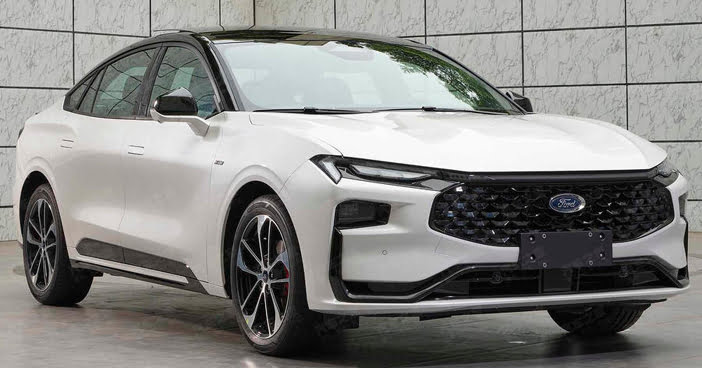
+++ The fifth-generation FORD MONDEO has been exposed in a series of photographs on the Chinese Ministry for Industry and Information Technology website. Set to begin deliveries in China during the second quarter of 2022, the new 4-door saloon will be produced in a joint venture between Ford and Chinese firm Changan in Chongqing. While European sales of the new Mondeo have been ruled out by Ford, suggestions are it could be sold in the US as a replacement for the Fusion, although details on where North American models would be sourced is yet to be confirmed by Ford. These new images serve as confirmation that previously spotted prototypes did in fact preview a Mondeo successor, but also that it won’t come here. The previous Fusion was produced at Ford’s Hermosillo plant In Mexico. However, that’s now dedicated to production of the modern-day Bronco. Ford won’t sell the new Mondeo in Europe either. The new Mondeo, known under the internal codename CD542, draws heavily on the recently launched Chinese market Evos crossover for design inspiration, featuring what Ford describes as its Potential Energy Aesthetics design lineage. Key design elements on the sporty ST-Line model revealed here include an octagonal-shaped grille, slim LED headlights connected by a light band within the leading edge of the bonnet, separate daytime running lights and an A-shaped graphic for the air duct within the lower part of the front bumper. Further back, the new Mondeo features a contoured bonnet, large wheelhouses housing wheels up to 19 inch in diameter, structured flanks with flush-fitting door handles, a coupé-style line roofline in a contrasting colour to the rest of the body and, as on the Evos, feature lines within the trailing part of the rear doors and rear quarter-panels. The rear is characterised by its short deck, Mustang-inspired tail-lights (also connected by a full-width light band) and a bumper featuring an integrated diffuser. At 4.935 mm long, 1.875 mm wide and 1.500 mm tall, the new Volkswagen Passat rival is 63 mm longer, 23 mm wider and 19 mm higher than the Mk4 Mondeo that’s set to be phased out of production at Ford’s Valencia plant in Spain next March. It also rides on a wheelbase that this 104 mm longer than that of today’s Mondeo, at 2.954 mm. Although we’re yet to get a look at the interior of the new Mondeo, Chinese sources confirm that it will receive the same basic cabin architecture as the Evos. Included is a dashboard housing a 1.1-metre wide display. It consists of a 12.3 inch digital instrument display and a separate 27 inch infotainment touchscreen. It runs Ford’s new Sync+ 2.0 UX system bundled with a Baidu-developed software packaging, offering a virtual assistant together with over-the-air software-update capability, Level 2 driver assistance functions and car-to-X technology. The new Mondeo is based on Ford’s C2 platform, which also underpins the existing Focus. It has been conceived for cars ranging in size from the Fiesta to the Edge. Elements of the platform are also found in the Tourneo and Transit commercial vehicles. Chinese market models are planned to offer a choice between turbocharged 1.5-litre and 2.0-litre four-cylinder petrol engines, the latter offering up to 240 hp. Also planned is a plug-in hybrid drivetrain, details of which are yet to be made official. +++
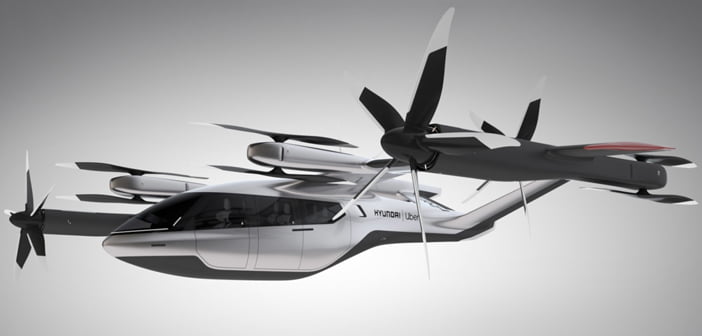
+++ HYUNDAI will soon throw its weight behind the advanced air mobility (AAM) sector, with plans to launch an electric flying vehicle in 2028. The company will then expand the segment during the 2030s, with the aim of creating a new ride-hailing service based around the tech. The company’s new aircraft will have vertical take-off and landing (VTOL) capability, a bit like a Harrier Jump Jet. But, instead of burning kerosene, it’ll move around using rotors that are powered by electric motors and a battery pack. Hyundai also says the aircraft will be autonomous-capable, and that’ll be seating inside for up to five passengers. However, the vehicle won’t be able to take its passengers particularly far, with the Korean firm saying it’s been designed for “urban and urban-adjacent routes”. The idea is that city-dwellers hail the new eVTOL vehicle using an app, jump on board at one of Hyundai’s “vertiports”, travel across the city to a landing site near their destination, then disembark and use an eScooter to get to their final destination. Hyundai gave an insight into its vision at the 2020 Consumer Electronics Show, with the flying S-A1 Personal Air Vehicle (PAV) concept, and we expect the vehicle detailed in the company’s latest announcement will closely resemble this prototype. The S-A1 is a small, electrically powered, multi-rotor VTOL aircraft, designed specifically for city trips. As such, it was engineered to be as quiet as possible, for the benefit of both passenger comfort and reduced noise pollution. So the motors have less weight to heave around, Hyundai also planned for the vehicle to be made of carbon fibre composites. Hyundai claims that the 5-seat S-A1 would be capable of cruising at 310 kph, at a maximum altitude of 700 metre for trips up to 100 km long, enabling inter-city travel. When the concept was first unveiled, Hyundai said it wasn’t fully autonomous, but the company has mentioned that the need for a pilot could be phased out in the future. The S-A1 concept was wrapped up in Hyundai’s partnership with Uber. Eventually, the duo hope to develop an air-based ride hailing network based on the technology. Hyundai has also signed a deal with the Canadian Advanced Air Mobility Consortium to help develop some of the policy for the programme and get its concept off the ground. Hyundai plays a key role in the UK government’s Future Flight Challenge, too, which was set up to explore the feasibility and promote the uptake of AAM technology and green air travel at scale. The brand even plans to open a prototype vertiport next year in Britain. The firm already plays a role in the United Kingdom government’s Future Flight Challenge, which was set up to explore the feasibility of AAM technology. Most recently, Hyundai has restructured its electric flying vehicle offshoot business into its own entity, under the new name of Supernal. So it looks like the firm is taking this seriously. Ben Diachun, Chief Technical Officer for Supernal, said: “We’re developing a commercially viable Advanced Air Mobility product from the start, designing and manufacturing our vehicle to the highest safety, noise, efficiency, and affordability standards. Our growing team, which includes veterans of aerospace, automotive, and other deep-tech industries, is engineering sustainable vehicles that have the potential to evolve how we live, work and play”. Hyundai also launched its concept for Purpose Built Vehicles at CES 2020, which were designed to work alongside the VTOL vehicles in the company’s future mobility vision. The boxy electric pods are inspired by San Francisco cable cars and their main purpose is to make ride-hailing a more personalised service. They’re stored under the S-A1’s docking station, (which Hyundai calls the Hub), and they’re designed to carry passengers from the helipad to the city. The bodies sit atop an autonomous platform, and they can be disassembled and customised at the docking station. They have adjustable lengths of between 4 and 6 metres, to suit the needs of the body, and the cabin space is completely modular. Hyundai says this latter feature means the Purpose Built Vehicles can be used as mobile function rooms, autonomous delivery vehicles or even commercial spaces, with specialised variants offering service as small pharmacies, hotel rooms or cafes, for example. +++
+++ NISSAN reported a profit for the July-September quarter, managing to reverse earlier losses despite challenges that include shortages of computer chips and rising costs for materials. The 54.1 billion yen ($479 million) profit for the last quarter compared with a 44 billion yen loss racked up in the same period of 2020. Quarterly sales edged up 1% to 1.94 trillion yen ($17 billion), as Nissan vehicle sales rose in Japan and the rest of Asia, while declining in North America and Europe. Chief operating officer Ashwani Gupta began his presentation by apologizing to customers for disruptions to deliveries of products because of the chips crunch, which has affected all the major automakers. “Our customers are waiting”, said Gupta, adding that Nissan hoped to boost its market share. “The more we can produce, the more we can sell”. Gupta said Nissan’s performance was better than expected. The company raised its profit forecast for the fiscal year ending in March to 180 billion yen ($1.6 billion) from an earlier 60 billion yen ($531 million). Gupta said the upward revision in Nissan’s profit outlook was despite an expectation that sales for the year will total 3.8 million vehicles, down from an earlier estimate of 4.4 million vehicles. The Japanese maker of the Leaf electric vehicle, Z sportscar and Infiniti luxury models has been battling a tarnished brand image after the arrest three years ago of its then-chairman Carlos Ghosn on charges of under-reporting his future compensation. Ghosn fled Japan for Lebanon while out on bail. He and another executive arrested and tried for his alleged involvement, American Greg Kelly, say they are innocent. A verdict on Kelly’s case is expected next year. Nissan, based in the port city of Yokohama, sank into a loss of 448 billion yen for the fiscal year that ended in March 2021, its second straight year of red ink. Nissan’s chief executive, Makoto Uchida, said Nissan was headed toward a recovery. “Our strong results are the outcome of diligent financial management, improved quality of sales and a continuing product offensive. This has helped us withstand several headwinds”, Uchida said. +++
+++ RENAULT will seek to keep electric car development and retail costs down by continuing to use lithium ion batteries, while other marques rush to develop more efficient solid-state technology. Renault Group CEO Luca de Meo told that “lithium ion batteries are here to stay. It’s not a disruptive technology, it’s a progressive technology and there is so much production cost invested in it already”. Speaking at the first media drive of the all-electric Mégane E-Tech Electric, De Meo wasn’t dismissive of future battery technology such as solid state, saying: “Of course, if you can use solid state in a Formula 1 car or a rocket, then great, but from a business point of view, I think lithium ion tech will continue for a long time”. Under De Meo’s leadership, Renault has been vocal about its ambitions to set a new benchmark for affordable electric cars, starting with the Dacia Spring Electric, with the retro-inspired Renault 4 and Renault 5 to follow by 2024. To do that, the company will need to do more than simply rely on the gradually falling costs of batteries. Gilles Le Borgne, executive vice-president of engineering at Renault, elaborated further: “We are still aiming for parity of cost between and EV and an ICE cars by 2025. To achieve it takes a holistic view. You have a kind of mother car: a car with a high parts carry-over, such as the windscreen wipers, the windscreen, the front pillars etc. “Then there’s the benefit of using the existing CMF platform, which is engineered at high volume and low cost. High-efficiency engineering, low diversity and parts sharing is such an efficient way to manufacture”. Meanwhile, the company’s more immediate future focuses on the Mégane E-Tech Electric. It will offer 2 battery choices delivering between 300 and 450 km of WLTP range, with prices expected to start under €40.000 in the Netherlands when it goes on sale next year. +++
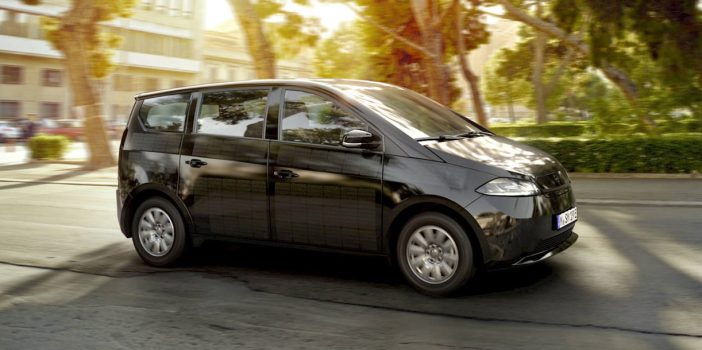
+++ Solar car startup SONO MOTORS announced today that it is launching an initial public offering of 10 million common shares, with pricing expected to be between $14 and $16 per share. The company plans to give underwriters a 30-day option to purchase up to an additional 1.5 million common shares at the IPO price and they are expected to trade on the Nasdaq Global Market under the ticker symbol SEV. Berenberg is acting as the global coordinator for the proposed offering, while Craig-Hallum will act as co-manager for the proposed offering. Sono Motors is just the latest electric startup to offer its shares publicly. It is perhaps best-known for the Sion, a prototype van with solar panels that help extend its range. It was also noted for its interior design, which included moss in the dashboard that is designed to filter air and regulate humidity. The Sion is powered by an electric motor that develops 163 hp and 270 Nm. That’s enough to get it up to a top speed of 140 km/h, while a 35 kWh battery offers 255 km of range. The solar panels could add as much as 35 km of extra range per day. At first intended to be sold for €17.500 earlier this year, the company raised the Sion’s prospective price to €28,000 in the Netherlands. The company filed for the IPO last month and confirmed that it had more than 14.000 reservations with advance payments that have created a net cash inflow of €38.8 million. Now it says it has more than 16.000 reservations. Sono Motors intends to begin customer deliveries in the first half of 2023. It also intends to license its solar technology to other manufacturers building cars, buses, boats, trains, and more. +++