
+++ DACIA boss Denis Le Vot has paid tribute to former head of design Miles Nurnberger, who left the company earlier this month after less than a year at the helm. Although the announcement of Nurnberger’s departure from Dacia gave no details of the circumstances behind the decision, Le Vot told: “I regret Miles leaving. He was a great guy. He has personal reasons for wanting to leave and we respect that”. Nurnberger came from Aston Martin to replace former Seat designer Alejandro Mesonero-Romanos, who himself spent just 9 months in the role prior to leaving for Alfa Romeo. Long-time vice president of Dacia design David Durand has now been promoted to run the team. Le Vot said: “It has been disappointing to lose Alejandro and now Miles so quickly, but the changes are out of our control, and David is an exceptional leader. “These things happen. If I reflect, I think now is perhaps the best timing. Design work on the next Duster and Bigster is 99% done, changes to our brand imagery is done and we have a few exciting ideas in the pipeline that have been developed or that are being developed”. Speaking in September last year just a few days after taking up the role, British designer Nurnberger explained a big motivation for joining Dacia was that it “wasn’t going to be going somewhere to repeat. It was something that was evolving and moving and had momentum in its trajectory”. More recently, he suggested that his influence on the styling of future Dacia products would soon become clear, telling: “We have a proper brand mindset now. That will quite naturally lead us to progress, and to make new design statements”. However, he did acknowledge that it would be “years” before a production car penned by him would arrive in showrooms. It is not entirely clear why Nurnberger is now leaving Dacia, and nor has the brand given an idea of the extent of his impact at the firm over the past 9 months. Laurens van den Acker, executive vice-president Design at the Renault Group, which owns Dacia, said: “I look forward to working with David to meet the mobility challenges of tomorrow. His creativity, experience and sense of innovation are widely recognised, both within our management and in the automotive industry. I would also like to thank Miles for his contribution and work with the teams”. There has been no suggestion of where Nurnberger might go next. In his 13 years at Aston Martin, he had a hand in the design for the Valkyrie hypercar, the DB11 and the DBX. +++
+++ Tata Motors has signed an agreement to potentially buy a FORD manufacturing facility in the western Indian state of Gujarat as it looks to ramp up its production of electric vehicles. Tata Motors already dominates India’s fledgling electric car market, which the government is trying to grow by offering companies billions of dollars in incentives. The memorandum of understanding announced on Monday covers the land, assets and all eligible employees working at the Sanand facility. The financial details of the agreement were not disclosed. Tata said it would invest in new machinery and equipment at the plant through its electric mobility unit and expects the facility to have a production capacity of 300.000 units each year after the works complete. The capacity can be increased to more than 400.000 units. “Rising customer preference for passenger and electric vehicles made by Tata Motors has led to a multi-fold growth; this potential transaction will support expansion of capacity”, said Shailesh Chandra, managing director of Tata Passenger Electric Mobility. Tata last year raised $1 billion from private equity firm TPG for its electric vehicle business and competes in the space with Mahindra. Tata Motors will invest $2B in electric vehicles after fundraising from private equity firm TPG The interest in the Sanand plant follows Ford’s decision last year to stop production in India, where it had a less than 2 percent share of the passenger vehicle market and had struggled to turn a profit for more than 2 decades. Ford said earlier this month it was seeking options for its 2 factories in the country while shelving plans to make electric vehicles in India for exports. +++
+++ JAGUAR has wiped a decade’s worth of posts from its Instagram account, raising questions as to what it could mean for the brand’s all-electric reinvention, which is set to take place in just 3 years time. Jaguar announced plans to become an all-electric luxury brand from 2025 more than a year ago but since has revealed no details about the cars that will follow the XE, XF, F-Pace, E-Pace and F-Type into showrooms once they’re phased out. So far, all that is known about the new Jaguar EVs is that they will ride atop a new bespoke platform called Panthera, will be positioned as more upmarket than the brand’s current cars and will be a radica departure (design-wise) from all Jaguar models past and present. Now the British manufacturer has cultivated fresh intrigue about its future by deleting all posts from its Instagram account, which at time of writing has some 12.6 million followers. It’s not readily apparent precisely how many posts have been removed, but the brand had posted regularly and amassed a large, active following on the social-media app since it joined in May 2012. The posts have been replaced by three close-up detail shots of the firm’s hallowed XJR-9 endurance racer, which claimed victory at the 1988 24 Hours of Le Mans – which some have taken to mean a Jaguar Le Mans entry is on the cards for the first time in 32 years. However, the brand has said nothing to suggest that this is the case, and it’s feasible that the teasers are completely unrelated to the brand’s electrification strategy. The 3 images are captioned simply Prologue, Genesis and Flash back, with no further context given. Responding to curious followers in the comments, Jaguar has gone only so far as to say: “Something vivid this way comes”. And when asked by one fan what is happening, it answered: “that’s a big question.” The fact that Jaguar’s Special Vehicles (SV) division has posted the same detail shots to its own feed suggests some XJR-9 themed news is on the horizon. The Jaguar Racing Formula E team’s account has been left untouched. It seems likely the posts preview some sort of XJR-9 themed special edition being launched to coincide with the imminent 34th anniversary of its win at La Sarthe. The most recent limited-run special from SV was the V8-powered Defender Bond Edition, of which just 300 were made. +++
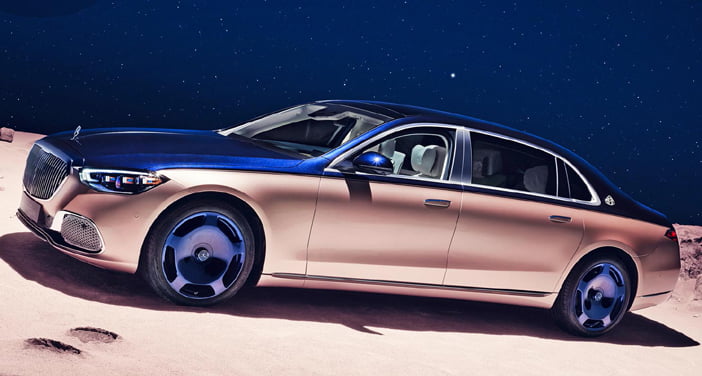
+++ MAYBACH has big plans for the maximalist limousines it’s made occasionally for the past 113 years, a line that now includes the Mercedes-Maybach S-Class and Mercedes-Maybach GLS. There is the 2-tone Mercedes-Maybach S680 sedan developed by Virgil Abloh, the late head of menswear for Louis Vuitton, which goes on sale globally later this year with a limited run of 150 units. Also by Abloh, in conjunction with Gorden Wagener, the chief design officer for Mercedes group: the electric off-road concept called Project Maybach. Meanwhile, Mercedes-Maybach’s “Haute Voiture” concept unveiled on May 18 promises bouclé door panels reminiscent of Chanel suits and a launch date next year. An electric Mercedes-Maybach SUV will soon follow. There is also a new business plan at Mercedes-Benz that focuses on higher-end, higher-margin vehicles like those from its Maybach division, which has a fresh young chief executive officer just a few months into his tenure. With all that excitement, Maybach, it seems, could be poised for a resurgence. “There has been a restart”, Mercedes-Benz CEO Ola Källenius said in an interview in Monaco on May 18. “This is the rejuvenation of the Maybach brand”. The interior of the Maybach Haute Voiture concept features faux fur trim. Named after Wilhelm Maybach, a prolific engine designer and one of Gottlieb Daimler’s earliest collaborators, and founded with his son Karl in 1909, Maybach grew synonymous at the time with speed, power, and prestige. By 1921, it was making cars like the 5 meter long 22/70 HP W3 and the opulent SW 42, which featured such novelties as electrically operated windows. After World War II, during which Maybach produced most of the engines for Nazi Germany’s tanks, the company continued making diesel engines, but infighting and disorganization caused it to implode. In 1960, Daimler-Benz acquired Maybach Motorenbau GmbH mostly to own the rights to the engines. In 1997, after decades of dormancy, Mercedes presented a Maybach concept at the Tokyo auto show and said it would produce a pair of Maybach-branded sedans within the next 5 years. The Maybach 52 and the Maybach 62 arrived in 2002, but the cars looked bloated and self-serious, and the brand later admitted it had lost $439.000 on each of the cars it sold. In 2011, Daimler announced it would sell off the remaining models, effectively tranquilizing Maybach for the time being. The signature two-tone saloons entered a long hibernation from relevancy since Jay-Z and Kanye West featured a dismembered 2004 Maybach 57 in the video for their song “Otis” in 2011. Then came the latest shift. Mercedes revived the Maybach badge at the 2014 Los Angeles auto show with the new Mercedes-Maybach nameplate, essentially a rebadged version of the S 600 flagship sedan. These modern Mercedes-Maybach vehicles were designed primarily for chauffeured trips and came cocooned so densely in creature comforts they feel closer to the business suite of a private jet than a car. Fully reclining seats, beverage chillers, retractable work tables, and DJ-caliber headphones for the entertainment system are de rigueur. Since then, sales have steadily risen. Last year, Mercedes-Maybach sold 15.730 units worldwide; up 50 percent from 2020 and boosted primarily by China, where its cars sell at a rate of more than 900 a month. “The brand is doing fantastic”, says Daniel Lescow, the new head of Maybach, during a dinner in Monaco on May 17. “There is so much potential. We spend zero media money on it”. While he declined to talk specifically about order rates on the newest Maybach vehicles, he characterized them as “in high demand”. The late designer Virgil Abloh collaborated with Maybach on a concept for an electric SUV. Maybach says it has a plan to conjure something that will appeal to the world’s moneyed class even if it cannot draw from an esteemed (or, at least, consistent) pedigree. First, it keeps the cars just out of reach. “The purpose of Maybach is not to churn out new models even every year”, Kallenius says. “You have got to keep it special. Lower volume, discerning customers. Every now and then, we will sprinkle the Maybach manufacturer brand on top of a few Mercedes products”. And then it punches you in the nose. Stylistically speaking, of course. The Mercedes-Maybach Haute Voiture, so named after a play on haute couture and the French word for car, is a prime example. The white faux-fur mats that line its floors are so long and shaggy Penny Lane herself would approve. The rose gold studs lining the arctic white seats and matching Champagne flutes in the rear recall the visual cues of a bridal shower brunch. Intricate stitching across niveous leather seats and Maybach logos festooned across the car scream for attention. Proudly unapologetic? That is the whole idea. “Some people may say it’s terrible, but that is exactly what we should do as a luxury brand: it’s a shock”, says Steffen Köhl, the director of advanced exterior design during an interview at Mercedes’s design studio in Nice, France. “Disruptiveness and contradiction are a source of creativity”. The shock comes as much from the size and price of the vehicle as it does from all of the extra cosmetic and personalization options available. A Mercedes-Maybach S-Class starts at $185.000; $74.000 more than a regular S-Class. And it’s bigger. Maybach sedans offer a wheelbase 18 cm longer than that of the standard S-Class. “Maybach wants to express wealth through footprint, how big the object is”, says Frank Stephenson, a Moroccan-born American automobile designer who has worked for BMW, Mini, Ferrari, Maserati, Fiat, Lancia, Alfa Romeo and McLaren. “It’s almost cartoonish”. There’s no question such pizzazz helps ensure the cars appeal to Chinese buyers, who tend to pay for more outré designs and skew far younger in age and far wealthier than do the consumers of Mercedes vehicles. The average age of a Maybach buyer in China is mid-40s, and across the brand it’s largely under 50, which is younger than the average Mercedes buyer. “The Chinese market is a younger market, which is not bashful about showing its wealth, and the Maybach certainly does that”, Stephenson says. It’s an attitude that is spreading, if you ask the folks at Mercedes. The power to surprise is Maybach’s best chance of grabbing car buyers’ attention (regardless of the locale) they say. “China is the biggest car market in the world. And it’s also the biggest luxury car market in the world. And naturally it’s the biggest Maybach market in the world”, says Källenius. “But the United States is very important. Western Europe is important. Korea is important. Japan is important. Middle East is of course important. There are other markets around the world that crave the same type of vehicles”. +++
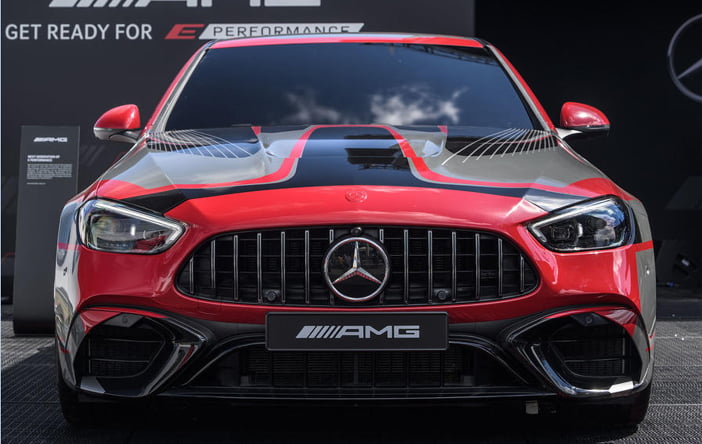
+++ The next-generation MERCEDES-AMG C 63 (which will make the landmark switch from V8 to 4-cylinder hybrid power) has been revealed in concept form ahead of a full production-spec reveal in the coming months. On show at the 24 Hours of the Nürburgring over the weekend, the upcoming BMW M3 rival is emphatically marked out from the standard Mercedes C-Class by way of an aggressive body kit, chunky AMG sports alloy wheels (covering the requisite drilled and ventilated brake discs) and a beefy quad-exit exhaust. The C 63 will be the first AMG model to feature an advanced 4-cylinder hybrid drivetrain instead of its long-standing V8 power when it goes on sale later this year. The car will be one in a line of future new AMG models earmarked to receive an electrified version of Mercedes’ new turbocharged 2.0-litre M139 engine. The potent 4-cylinder engine kicks out a maximum of 421 hp and 500 Nm of torque in non-electrified form in the new Mercedes-AMG A 45 and its related siblings. The unit has already been engineered for longitudinal mounting as well as mild-hybrid electric boosting. It’s destined to be used in not only the next C 63 but also, in a less heavily tuned form, in a follow-up to today’s turbocharged 3.0-litre V6-powered Mercedes-AMG C 43. Mercedes has confirmed that the petrol unit has been tuned to give 476 hp in its own right for the new C 63, making it comfortably the most powerful 4-cylinder engine in series production. It will then be paired with a 204 hp EV motor on the rear axle (a set-up Mercedes refers to as the ‘P1’ drivetrain) to give a total figure of 680 hp, some 170 hp more than the BMW M3, its closest rival. This is despite a 50% reduction in swept capacity and cylinder count. With the benefit of electric boosting, it has also been conceived to deliver up to 750 Nm of torque; a 50 Nm ft increase on today’s C 63 S 4Matic. Autointernationaal has been told the M139 engine will adopt a 48 Volt integrated starter motor similar to that already used by the turbocharged 3.0-litre in-line 6-cylinder M256 unit, which powers the CLS 53 4Matic+ and other recent new AMG models. In the CLS 53 4Matic+, the gearbox-mounted starter motor provides an additional 22 hp and 250 Nm ft of electric boosting. In the next C 63, however, it is set to be tuned to provide significantly more power in combination with a similar torque loading. The new EQ Boost hybrid drivetrain is also planned to run in combination with Mercedes’ nine-speed torque-converter MCT Speedshift gearbox. The entire C-Class range is powered exclusively by electrified 4-cylinder engines, with plug-in and mild-hybrid technology rolled out across the range for better efficiency and thus reduced emissions. One of the most significant advantages in the adoption of the new electrified driveline is a reduction in weight over the front axle of the new C 63 4Matic. At 160.5 kg, the M139 4-cylinder unit weighs 48.5 kg less than the M177 V8 engine used by today’s C 63 4Matic. Even with the addition of the hybrid architecture, including a disc-shaped electric motor and power electronics, the overall weight of the new powerplant is claimed to undercut that of today’s unit. Additionally, the new powerplant’s weight is concentrated lower, which aids efforts to bring about a lower centre of gravity for the new model, theoretically improving its agility and body control. Further development plans for the next C 63 4Matic include a new 4-wheeldrive system to provide a fully variable apportioning of power front to rear. This will allow AMG to engineer the new model with rear-wheel-drive properties in certain driving modes, much as with the larger Mercedes-AMG E 63 sibling. AMG has indicated that all its next-generation models will adopt this system, moving away from pure rear-driven models due to customer demand for all-wheel drive. The decision to provide the C 63 4Matic with 4-cylinder power was apparently driven by Mercedes-Benz as part of rapidly escalating efforts to reduce fleet CO2 emissions while harnessing the engineering lessons pursued during the development of the Mercedes-AMG One hypercar. +++
+++ The European Union is set to impose a significant new CO2 burden on plug-in hybrid ( PHEV ) cars that could have a dramatic impact on their success and accelerate the adoption of EVs. All PHEVs are likely to have their official emissions figures (measured in grams per kilometre of CO2) more than doubled by 2027 under new EU6e regulations. That’s because these will dramatically increase the utility factor (UF), a number used by Brussels bureaucrats to blend the CO2 figures from driving in ICE-only mode and EV mode together into an official combined figure. Autointernationaal has learned that the UF will be set at around 800 in 2025, rising 5-fold to 4.000 or more by 2027. As a result, a 50 g/km PHEV of today is expected to end up with a figure of about 125 g/km in 2027, bringing substantial implications on the cost of ownership, due to larger taxes and emissions surcharges incurred. These higher CO2 figures will also mean car makers’ fleet-average emissions figures will need to be recalculated, especially since most are currently relying on PHEVs to replace diesel. In many cases, PHEVs provide at least 50 % of sales to ease the ‘glidepath’ to the phasing out of ICE in 2035. Manufacturers will have to move more rapidly to a much stronger mix of BEVs; perhaps 2 or 3 for each ICE sale. And that will be a real challenge for an industry struggling for semiconductor and battery-cell supply. The negotiations are so sensitive at high levels in Brussels and manufacturers’ boardrooms that neither of the 2 largest automotive trade bodies, the ACEA (which represents all European car-makers in Brussels) and the SMMT (which represents the UK industry), would comment. The plan will undoubtedly undermine the economic case for PHEVs for both drivers and car makers, lumbering them with average CO2 figures of around 130 g/km at the same time as fleet-average CO2 is mandated down to 42 g/km. Difficult and expensive engineering solutions might bring plug-in hybrids’ CO2 figures down, such as bigger batteries to extend electric-only range and smaller combustion engines to cut fuel consumption, but one estimate suggests the minimum battery size required might be 30 – 40 kWh, pushing a plug-in very close to an EV’s battery capacity. And with the EU creating a hostile environment to PHEVs, manufacturers will have to think twice about committing tens of millions of pounds to development, especially with a limited product life beyond 2030, when the EU fleet-average mandate is expected to hit 0 g/km. Consequently, agreeing the numerical value of the UF has been a contentious discussion between green lobbyists, car makers and EU officials, especially given the controversial EU7 emissions regulations, which will push fleet average CO2 down to 42 g/km in 2030. Green lobbyists like Transport and Environment, which has a strong influence in EU legislation, have issued several briefings against PHEVs, including one this March that alleged up to 600.000 fewer EVs were sold in Europe last year because of PHEV sales. “Delaying implementation of real-world UFs isn’t credible, as PHEVs are a problem now”, it said. “And 2025 is a realistic timeline, as changes to UF don’t require engineering changes. An update to UF simply fixes an erroneous calculation for determining CO2 emissions”. Car makers are understood to have been surprised that the EU has chosen to hit PHEVs so hard, their expectation having been for a UF about half of that which has been proposed. The EU’s approach stems from real-world experience that many PHEVs drive more ICE-only miles than forecast when EU6 was introduced in 2015. Back then, it was assumed that PHEVs would always start their journey with a full battery. Green lobbyists have mounted a campaign for PHEVs to be hit with higher CO2 ratings ever since suspicions were raised that many PHEV drivers were benefiting from lower tax ratings yet rarely charging up. To guide the regulations, the EU has launched an in-use data capture with real-world feedback from hundreds of fleet and private PHEV drivers across the EU. Early analysis of those figures shows that private-owners of PHEVs are more likely to charge up regularly than fleet users. +++
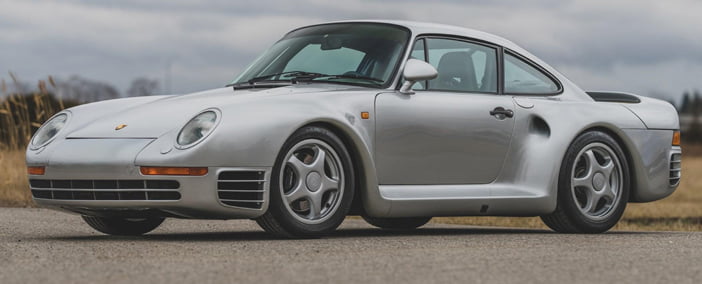
+++ When talking about the spiritual successor of the ’80s icon PORSCHE 959, the V10-powered Carrera GT will always be the first to come to mind. However, Porsche’s guest contributor Fabian Mechtel and test driver Walter Röhrl seem to think otherwise in favour of an unlikely nameplate: the Cayenne. In a recent release, Porsche raises the question of whether the Cayenne is the successor to the 959. While both are among the seven most important Porches of the past 7 decades, several other points are raised in the release; most of them along the lines of the intention and engineering put into play when both cars were being developed. For instance, the Porsche 959 supercar was conceived and built as a World Rally Championship Group B racer. With the requirement to sell 200 units to complete the homologation, the 959 became one of the automaker’s marvels during its time. But it had to have 3 things (it had to shine off-road, on racetracks, and as an everyday road car). The first Cayenne wasn’t far, according to Porsche. It was a daily car that was robust enough to challenge uncharted roads, yet it still behaved like a true Porsche sports car on pavement. Needless to say, both cars have to impress Porsche enthusiasts and challenge the best off-roaders out there at the same time. There were differences between the two, though. The Cayenne was the first 4-door Porsche, unlike the 959 that used the 911 platform and basic body. The conversation of the Cayenne as a successor to the 959 was brought up as a celebration of the former’s 20th year. It was in 2002 when Porsche introduced the SUV, which turned out to become a cash cow for the company. From then on, the rest was history. +++
+++ SKODA ’s main production facility in Mladá Boleslav is likely to build cars for other Volkswagen Group brands in the coming years as the company ramps up its electrification programme. Mladá Boleslav currently produces the Enyaq iV and the Octavia, and the Czech firm has just opened a new plant there to assemble battery systems for the MEB platform; the first such facility outside Germany. It can assemble more than 255.000 battery packs per year, which will be used for EVs built at Mladá Boleslav and sent to other factories for use in Audi, Cupra and Volkswagen EVs. There are already plans to increase annual production capacity by 125.000 packs per year by 2023. But Skoda bosses also want to produce battery cells and develop a recycling facility in the Czech Republic, and are pushing for the country to become home to 1 of 6 European battery ‘gigafactories’ the Volkswagen Group has committed to, one of which will be in eastern Europe. Michael Öljeklaus, Skoda’s production and logistics boss, said: “Battery cell production is not only important for Skoda but for Czechia as well. We believe that Czechia is ideally suited to battery production: we have lots of materials and suppliers here and good traffic links within Europe, so we would be able to supply other Volkswagen Group facilities”. Öljeklaus said that the new technology required for factories to produce EVs and the Volkswagen Group’s increased use of the shared MEB platform have “changed the way we look at production utilisation in the future”. While he highlighted that decisions about production are made by the Volkswagen Group board, he added: “The factors that affect e-mobility really alter the production of cars and how we approach it. And that means we might not only be a single-brand production facility as we are now”. +++