
+++ ASTON MARTIN is weighing up potential ties with Lucid, Rimac and Mercedes-Benz architecture for its first electric sports car, due in 2025. The firm has announced a huge investment plan aimed at paying back debts, ramping up production volumes and boosting profits, but the package will also be instrumental in the fruition of Aston’s electrification strategy. The Gaydon firm’s first plug-in hybrid (expected to be based on the DBX) will be launched in 2024, before a pure-electric model arrives in 2025 on the way to a “fully electrified GT/sport and SUV portfolio” in 2030. Both an electric sports car and SUV have previously been mooted for a 2025 launch, with executive chairman Lawrence Stroll saying: “We’re literally defining now the products we want to launch with and expect to have an answer early next year”. Details of the first electric car are unclear, but Stroll conceded that a halo supercar or hypercar car was among those being considered. The firm has previously pledged to build it in Britain and agreed to work with Blyth-based outfit Britishvolt on a new “high-performance” battery that aims to offer “new standards of repeatable on-track performance, charging time and range”. As a direct shareholder that already has many of its systems integrated into the firm’s cars, Mercedes-Benz offers the most direct route for Aston Martin into electrification. Today, it holds a 9.7% stake in the British firm, to be boosted by a further investment in the autumn. Aston already uses Mercedes-AMG V8s and Mercedes-based infotainment in its current cars and is considering the prospect of a similar supply arrangement for its electric models. A natural fit for an Aston Martin EV would be the upcoming AMG.EA architecture that Mercedes’ performance division is currently developing for use in dedicated electric sports cars, as previewed by the radical Vision AMG concept earlier this year, which will evolve into a production car in 2025. This platform is expected to feature a cell-to-chassis design that integrates the battery pack into the structure itself to lower the centre of gravity, and accommodates motors developed by British firm YASA, based in Oxford, intriguingly just 55 km from Aston’s Gaydon HQ. However, Mercedes’ stake in Aston now comes second to that of the Saudi Arabian Public Investment Fund (PIF), which will acquire a 16.7% share of the British firm for $93 million. The PIF also heavily contributed to a huge $654 million investment package in McLaren earlier this year, and notably in 2019 became the main backer of American EV firm Lucid, with an investment worth more than $1 billion. Stroll conceded that its involvement, which has been under discussion for “months”, could offer an alternative avenue for Aston’s electrification plans. Lucid currently has just 1 car on sale, the Air luxury saloon, and is developing an SUV under the codename Project Gravity, to sit atop the same 900 Volt platform. The American EV firm does not supply its architecture to any other car makers currently but has previously supplied batteries for the Formula E championship. It builds cars at a new $700 million facility it calls AMP-1 in Casa Grande, Arizona and plans to significantly ramp up its output with a new facility in Saudi Arabia that’s capable of producing 150.000 cars per year. Intriguingly, Stroll highlighted Croation hypercar outfit Rimac as a potential partner on a press call following the investment announcement. While he did not elaborate, his confirmation that a halo car is part of the product plan and Rimac’s track record of producing low-volume hypercars raises the prospect of the firms partnering for a low-volume, fast-turnaround project that could be in line with Aston’s 2025 launch plans. Stroll also highlighted that Aston plans to continue to build up electrification competency within the firm, adding: “Electrification isn’t just about batteries or motors. There’s so much more to it, and as our development investment transitions to electrification, then we plan to build up our own capabilities, too”. +++
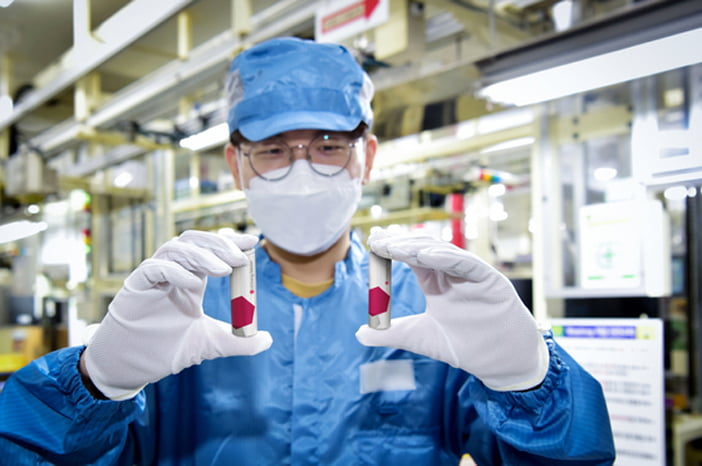
+++ With more global carmakers choosing cylindrical BATTERIES for electric vehicles (EVs), local battery makers are scrambling to ramp up their production of them. The competition is likely to intensify between LG Energy Solution and Samsung SDI, 2 of South Korea’s 3 major battery makers. SK On doesn’t make cylindrical batteries. Cylindrical batteries are cheaper to produce than pouch or prismatic-type batteries. They have better temperature control, which reduces the risk of fire. Global carmakers including Tesla and BMW have chosen cylindrical batteries as the batteries for their future EVs. Tesla previously announced that it will use the “4680” cylindrical battery, which indicates batteries that are 46 millimeters in diameter and 80 millimeters in height. They have a higher energy density than existing batteries, reducing battery costs by 50 percent. LG Energy Solution is one of Tesla’s main battery suppliers. In mid-June, LG said it will spend around 580 billion won ($440 million) to build cylindrical battery lines in its Ochang plant in North Chungcheong to make 4680 battery cells with an annual capacity of 9 gigawatt-hours. The batteries will be supplied to Tesla starting in the second half of next year. The company also bought a site in Queen Creek, Arizona, to build an 11-gigawatt-hour factory for cylindrical batteries. It initially said the company would invest a total of 1.7 trillion won in the plant, though the size of the investment is under review. Samsung SDI is developing its own cylindrical batteries 46 millimeters in diameter. The height of the battery has not been decided yet. “Though Samsung SDI has not decided the height yet, it is certain that the company is targeting Tesla, the unrivaled No. 1 EV maker in the global market,” said Lee Ho-geun, an automotive engineering professor at Daeduk University. Industry analysts say BMW could be a customer for Samsung SDI’s cylindrical batteries. Samsung SDI boss Choi Yoon-ho recently accompanied Samsung Electrics vice chairman Lee Jae-yong on a business trip to Europe. Choi and Lee held a meeting with Oliver Zipse, chairman of BMW. Samsung SDI is building a facility for pilot production of 4680 cylindrical batteries in its Cheonan plant in South Chungcheong. It is also considering additional investment in its Seremban plant in Malaysia, though no details have been announced. “Due to recent fire issues with the pouch-type batteries, cylindrical batteries are regaining attention,” said Daeduk’s Lee. “It will be the next big thing in the EV battery industry for a while”. This year, cylindrical batteries will account for 19 percent of the global EV battery market, according to SNE Research, which is expected to grow to 26 percent in 2030. During the same period, the share of prismatic-type batteries will decrease from 55 percent to 43, while pouch-type batteries will increase from 26 to 31. +++
+++ CHINA ’s vehicle makers are regaining momentum, with new auto sales soaring 23.8 percent year-on-year to 2.5 million units in June, 2 months after Covid-19 caused “the worst April in a decade”, said the China Association of Automobile Manufacturers. The sector’s resilience prompted the CAAM to forecast total sales this year could reach 27 million units, up 3 percent year-on-year. In June, passenger vehicle sales totaled 2.22 million units, up 41.2 percent year-on-year, said the CAAM on Monday. Chen Shihua, deputy secretary-general of the association, said the vehicle market’s performance is better than expected, and it has emerged from the shadow cast by Covid-19 earlier this year. Chen said it is due to a combination of factors, including the supply chain fully recovering in June as well as pent-up demand, favorable policies including a halved purchase tax. Shanghai-based SAIC Motor, which was hit hard in April, resumed normal 2-shift production from mid-June. The automaker, including its joint ventures with GM and Volkswagen, saw its June sales surge 47.2 percent year-on-year to 484.000 units. Tesla saw June sales hit a record in China, with 78.906 Shanghai-made Model 3s and Model Ys sold in the month, up 138 percent year-on-year. Tesla said its Shanghai plant began resuming operations in late April and reached “100 percent” capacity in the second week of June. The rapid recovery shows the “resilience of Chinese manufacturing”, said the new energy vehicle maker. The government’s favorable policies are boosting sales as well. Around 1.09 million vehicles benefited from China’s car purchase tax cut in June, the first month of the policy’s implementation, said the State Taxation Administration. The tax cut policy had saved about 7.1 billion yuan ($1.06 billion) for car buyers during the month, the administration said. Models eligible for the 50 percent tax cut are gasoline-powered vehicles priced lower than 300.000 yuan and with engines at or below 2,0 liters, covering around 90 percent of models in the market, said Huafu Securities. According to the State Council, the country’s Cabinet, vehicle purchase tax cuts nationwide could total 60 billion yuan by the end of this year. Ping An Securities said the figure will account for 17 percent of vehicle purchase taxes levied in 2021. Local authorities in scores of cities across the country have rolled out their stimulus packages as well, offering vouchers worth up to thousands of yuan. Metropolises including Shanghai, Tianjin and Hangzhou in Zhejiang province, as well as Guangzhou and Shenzhen in Guangdong province, are combining to issue another 165.000 license plates this year. Sales of NEVs hit a record in June, with 596.000 sold, up 132 percent year-on-year. BYD saw its sales in June hit 134.000 units, up 162.7 percent year-on-year. Its sales in the first half reached 641.350, replacing Tesla as the world’s top-selling NEV maker. Nasdaq-listed Nio saw its monthly deliveries rebound to exceed 10.000 units last month from around 7.000 units in May, saying “production and deliveries have fully returned to normal”. Another 4 startups, including Xpeng and Nezha, each sold over 10.000 vehicles in June, consolidating their momentum seen in previous months. China’s car exports continued their uptrend as well. Over 1.21 million were shipped overseas in the first half, up 47.1 percent year-on-year. +++
+++ CITROEN is not only planning to launch a new C3 in 2023, but it will be followed shortly after by an all-new C3 Aircross. Both cars will share the e-CMP platform from parent company Stellanis, allowing for full electrification. The C3 Aircross launched in 2017 and received a mid-life refresh in 2021. The PF1 architecture underpinning the outgoing C3 Aircross didn’t allow for electrification, however, so the new CMP-based model will bring a much broader scope of appeal with its EV powertrains. Laurence Hanse, Citroen’s head of product strategy, spoke to me about the future of the French firm’s small SUV. “If the question is ‘are we going to renew our B-segment cars within Citroen because they are not electric?’, the answer is yes and yes and yes”. He added: “And if the question is when, it’s soon”. The C3 supermini will also be renewed with a new model and it could launch sometime in 2023. The C3 Aircross will follow that so we would expect to see it debut later next year. The new e-CMP platform will result in pure-electric offerings of the C3 Aircross, in terms of battery size it’s almost certain we’ll see the 50 kWh unit shared with the Peugeot e-2008 and Opel Mokka-e. This means a 330 km range and 136 hp should be on the cards. I expect it to be named ë-C3 Aircross, following the naming style of the current ë-C4. There will still be internal combustion engine variants of the C3 Aircross available too. These will be made up of the 1.2-litre 3-cylinder petrol Puretech units seen in models across the Stellantis Group. Inside the C3 Aircross we’re likely to see an evolution of the interior design seen in current models. We expect a softer, more rounded approach than Peugeot’s i-Cockpit, although technology like a 10 inch central screen and digital display could be lifted from the car’s Stellantis siblings. The design on the C3 Aircross will probably mimic the new C5 Aircross. Citroën’s head of design, Pierre Leclercq, spoke to us about a ‘triangulation’ of the C5 Aircross design with an interpretation of that car’s headlight and chrome details. “For me, in terms of the front architecture, the logo, the chrome bars, the triangulation in the corner, all this is going to be going one step further”, he said. Leclercq also said Citroën will avoid the temptation to move upmarket. “I am so happy to be working for a brand that is not shooting to be premium. This is a popular brand and something I love”. Pricing is expected to undercut rivals from Opel and Peugeot, reaffirming Citroen’s position as a more budget-friendly brand. With this in mind, expect prices to kick off around the €28.000 mark in the Netherlands. +++
+++ SAIC – GENERAL MOTORS -Wuling (SGMW), based in Liuzhou of South China’s Guangxi Zhuang autonomous region, reported strong new energy vehicle sales in the first 6 months of 2022, said the company. SGMW, a joint venture between SAIC Motor, General Motors, and Liuzhou Wuling Motors, registered NEV sales of 233.970 units in the January-June period, up 23 percent year-on-year. SGMW’s NEV models include the Hongguang Mini EV, Baojun KiWi EV and the Wuling Nano EV. The Hongguang Mini EV achieved sales of 214.165 units during the period, up 17 percent year-on-year. The Baojun KiWi EV, another NEV model of the company saw sales of 15.076 units in the same period. In June, SGMW also reported strong monthly NEV sales of 49.450 units in total, up 62 percent year-on-year. +++
+++ HYUNDAI is set to launch a Level 3 self-driving Genesis G90 sedan in 2023. KIA will follow with the EV9 (a large electric SUV). The automakers aim to roll out fully autonomous driving cars by 2030 to compete with Tesla, which is the global frontrunner in autonomous driving. According to Hyundai officials on Friday, the company plans to use its Level 3 autonomous driving technology in the G90, which is due out at this year’s end, and apply the technology to other Hyundai cars later. For Hyundai affiliate Kia, its first Level 3 self-driving car will be the EV9, which is set to launch in the first half of next year. The automotive conglomerate aims to roll out fully autonomous driving cars by 2030 after pilot services on real roads in 2023. The group said the self-driving G90 and EV9 vehicles can travel at up to 80 km/h on the Korean highways, faster than the current global limit of 60 km/h. Through the over-the-air programming (OTA) updates of the software for autonomous driving-related electronics and control devices, the 2 models will be able to run at 120 km/h, the legally permitted speed limit on Korean expressways. Currently, most mass-produced automobiles with self-driving capabilities are based on Level 2 technology of partial driving automation. At Level 2, vehicles with advanced driving assistance systems (ADAS) can take over steering, acceleration, and braking in specific scenarios. But the driver must remain alert and is required to actively supervise the technology at all times. Hyundai’s current Genesis models are equipped with Level 2 driving automation (Highway Driving Assist; HDA). Level 3, known as conditional driving automation, uses various ADAS equipment and artificial intelligence to make decisions based on changing driving situations around the vehicle. People inside the vehicle do not need to supervise the technology, which means they can engage in other activities, although the driver still needs to be ready to take back control at any time. The level of automation conforms to the US Society of Automotive Engineers (SAE), which defines 6 levels of vehicle autonomy, ranging from Level 0 (no driving automation) to Level 5 (full driving automation). According to market research firm Navigant Research, half of the new cars will have Level 3 autonomous driving capabilities by 2030. Earlier this year, Hyundai Motor launched a pilot robotaxi service in Seoul. Dubbed RoboRide, the pilot service used Hyundai’s electric crossover Ioniq 5, boasting Level 3 or Level 4 autonomous driving technology depending on road conditions. To prepare for a global commercial service, Hyundai and its US mobility joint venture Motional tested Ioniq 5 robotaxis on public roads in Las Vegas last year. Hyundai aims to launch a commercial service of its driverless cars in the US as early as next year in partnership with US ride-sharing platform Lyft. Other global automakers are also muscling into the increasingly competitive autonomous driving segment. In the first half of this year, Mercedes-Benz launched an S-Class model equipped with Level 3 technology. Volvo will unveil an electric SUV with Level 3 capabilities later this year while BMW plans to roll out such cars next year. Technology firm Amazon.com acquired self-driving start-up Zoox in June of 2020 to enter the robotaxi business, while Alphabet’s Waymo has forged a partnership with Volvo and expanded its relationship with Fiat Chrysler Automobiles (now part of Stellantis) to gain ground in the autonomous driving sector. +++
+++ KIA already has plenty of experience in the all-electric crossover market with the e-Soul and the electric version of the Niro, but now there’s a new model coming called the EV4. I first caught sight of the EV4 last year, when Kia announced plans to launch 14 new EVs by 2027. Two ‘EV’ SUV models will follow the latest EV6. According to European product boss Sjoerd Knipping, the Korean brand’s second “EVx” car will be a large SUV targeting the US (the EV9). But more importantly for us, it will be followed by a model developed for the European market. Knipping spoke of “balancing” the US and other territories. Kia holds trademarks for badges ranging from EV1 to EV9. The large SUV will be the production version of the EV9 concept, which means 7-seat capability similar to that of Hyundai’s Ioniq 7, confirmed for launch in 2024. It will be followed by a crossover potentially called EV4, sized as a rival for the Renault Mégane Electric and the Volkswagen ID.3. Design cues heavily inspired by the EV6 will probably include the headlights and a full-width LED rear light bar, as well as muscular surfacing and Kia’s new logo. The dark ridge on the C-pillar should also make its way over from the EV6 as will the black wheelarch extensions. The EV4 will be based on the Hyundai-Kia Group’s E-GMP platform for electric cars. A slightly downsized wheelbase compared with the EV6 (2.900 mm) means its dimensions will be closer to those of Kia’s new European-spec, Ceed. Clever packaging made possible by the versatile platform will maximise cabin space, with fewer compromises than in a combustion-engined car. And even with a shorter wheelbase, the EV4 is likely to make use of the EV6’s battery technology. That means 58 kWh and 77.4 kWh could be offered for a maximum range of just over 480 km. Expect dual-motor powertrains, too, giving 4-wheeldrive capability and potentially up to 326 hp, although a 231 hp single-motor version is also expected to be available, lowering the entry price. With the E-GMP set-up offering 800 volt electronic architecture and a maximum 350 kW rapid-charge rate, the bigger battery should charge from 10 to 80 percent in a mere 18 minutes, or take 100 km of range in only 5 minutes. While the E-GMP platform will form the basis of many future Kia EVs, Knipping also outlined that it “won’t serve all segments, in particular some smaller sectors”. He added, “Not all cars need 800 Volt tech, so could we use our 400 Volt tech in places? We need to see if the market segments we serve can be with derived platforms (such as the current e-Niro), or will there be a new platform?” Kia plans to have a line-up of 11 electric cars by 2025; 6 standalone EVs, with 5 “derivative” EV models. Knipping says: “We have to work out what is the priority; the sectors where to push EV, and where you can lean on ICE platforms”. As part of this full-electrification charge from Kia, we’ll likely see the brand’s EV7 large SUV next year. Meanwhile, the EV4 could make its debut in 2024. +++
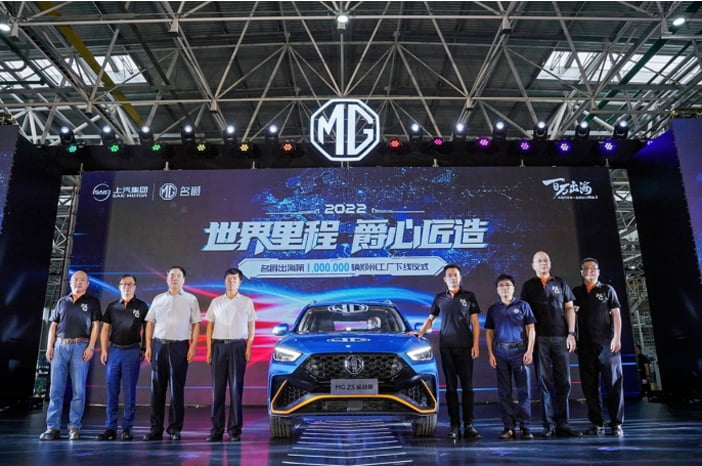
+++ A MG ZS crossover rolled off SAIC Motor’s Zhengzhou plant in Henan province on Wednesday, marking the marque’s 1 millionth vehicle to be shipped overseas. SAIC, China’s largest vehicle maker by sales, started to export MG-branded vehicle in 2007. The carmaker said MG-branded vehicles are now available in 84 countries and regions, adding that it has been the best-selling Chinese vehicle brand for 3 years in a row. Earlier this year, SAIC unveiled MG Mulan, its first electric model developed “with global markets in mind”. The model is the result of its British and Chinese teams for customers in China and abroad, said MG CEO Zhang Liang. Naming the model after the well-known Chinese folk heroine, the carmaker said the electric hatchback embodies “strength, courage, and being yourself”. SAIC expects the MG Mulan will help it realize the goal of selling over 100.000 vehicles in Europe this year. In June, SAIC’s overseas sales reached 84.000 units; up 59.4 percent year-on-year. Of them, 12.000 were new energy vehicles. In the first half of the year, SAIC’s overseas sales totaled 381.000 units, up 47.7 percent year-on-year. SAIC aims to sell 800.000 vehicles in international markets this year. China-made vehicles are getting recognized in overseas markets. A total of 249.000 vehicles were exported in June, hitting a historic high, according to the China Association of Automobile Manufacturers. In the first 6 months this year, vehicle exports from China totaled 1.22 million; up 47.1 percent year-on-year, said the association. +++
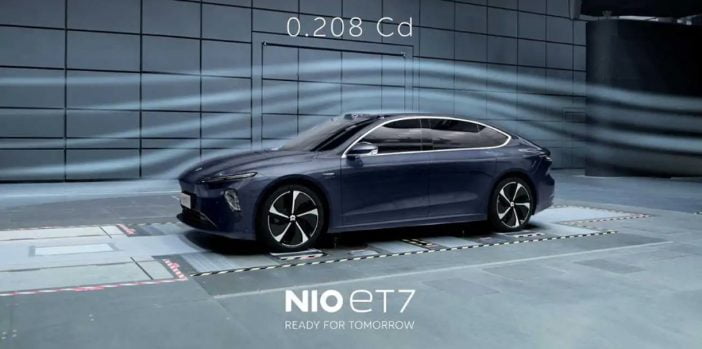
+++ On June 11, Chinese automaker NIO has officially confirmed plans to enter the German automobile market. Speaking at an exclusive interview with a German publication, NIO’s vice president for Europe, Hui Zhang, confirmed that the company was perfecting plans to launch in Germany. This is part of NIO’s plan to penetrate the European Union market as Germany would be the first EU country to establish its presence. NIO had already entered Norway with the ES8, bringing its NIO Life, Power Swap Station, and NIO House to the country in 2021. Zhang pointed out that the automaker’s first model in Germany will be the ET7 electric sedan, which will be available from the 4th quarter of 2022. The ET7 is a brand’s flagship model that comes with 3 battery options: a 70-75 kWh battery with 500-550 km range, a 100 kWh battery with a 700 km driving range, and a 150 kWh battery capable of driving up to 1.000 km. The car is equipped with 2 electric motors coughing up a combined 480 kW and a peak torque of 850 Nm. Autointernationaal expects prices to start at €90.000 without a battery (BaaS). What I know for sure is that NIO ET7 wants to go head to head with premium German automakers, mainly Mercedes-Benz, BMW and Audi. NIO is also looking to establish its first EU battery swapping stations in Berlin and Munich. Only recently, during the annual NIO Power Day, the company’s founder, William Li, announced that the automaker plans to develop ultra-fast charging piles with a capacity of 500 kW. He stated that these power plants would be installed across China and Europe before the year’s end. After Germany, the automaker looks to launch in The Netherlands, Sweden, and Denmark. During the interview, Hui Zhang further explained that NIO had suffered from financial issues due to the outbreak of Covid-19 in China and the accompanying lockdown. He, however, stated that NIO is well financed with up to 8 billion dollars due to the resurgence of its sales figures. In June alone, the firm delivered close to 13.000 vehicles across China, breaking a record for the number of cars delivered in a single month. +++
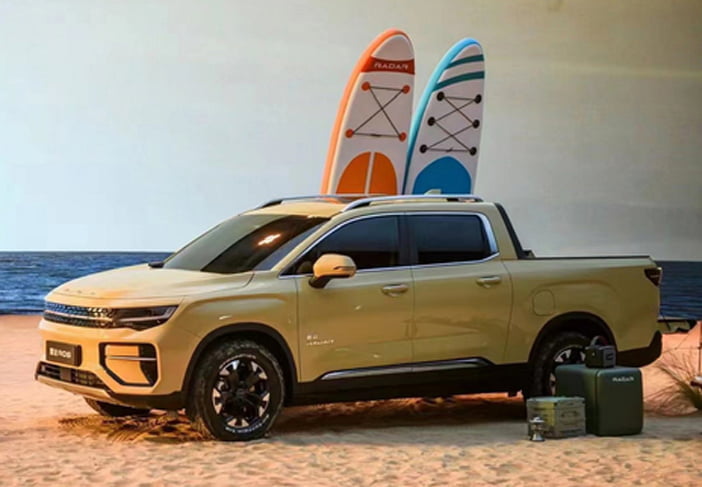
+++ RADAR , a new marque of Geely Auto, unveiled a pickup on Tuesday, as the number of travel lovers and camping aficionados continue to rise in China. The model, called RD6, is built based on Geely’s SEA architecture, a platform the carmaker has developed for electric vehicles only. The pickup can accelerate from 0 to 100 km/h in around 6 seconds and has a driving range of over 600 km on 1 charge. The electric pickup market remains underdeveloped in China but the prospects are bright as camping is gaining in popularity in the country. Statistics from iiMedia Group show that the revenue of camping sites soared from 7.71 billion yuan ($1.15 billion) in 2014 to 29.9 billion yuan in 2021. Ling Shiquan, CEO of Radar, said Radar focuses on technology but also man and nature as an diversified outdoor lifestyle brand. Radar has also teamed up with outdoor brand Naturehike and National Geographic China to build an ecosystem for its customers. China has been lifting restrictions on pickups in urban areas. Since June, cities in over 15 provinces has given pickups the green light, allowing them to travel in downtown areas, according to CCTV. China’s pickup market registered robust growth in June, with sales rising 19 percent year-on-year, industry data showed. According to the China Passenger Car Association, a total of 52.000 units were sold last month, marking strong market performance after production disruptions have eased as the Covid-19 epidemic prevention and control improves. Great Wall Motor, a leader in the pickup market, saw its sales expanding 17.7 percent year-on-year to 21.251 units in June, said the association. Previous data from the association showed that some 550.000 units of pickups were sold in China last year; up 14 percent from a year earlier. +++
+++ VOLKSWAGEN boss Herbert Diess said the traditional way of introducing car technology from Europe to China is no longer working in the age of software-defined vehicles. In a Sina Weibo post last week, he said Volkswagen needs to catch up with the Chinese carmakers who are “really fast” in the areas of onboard experience and driving-assist. “The user experience in the car is really different and complicated in China: You need karaoke, sophisticated loudspeakers, cameras to take pictures and for streaming”, he said. “The other thing is driving-assist toward autonomous driving and some of Chinese competitors are moving very fast”, Diess added. Volkswagen, the best-selling international carmaker in China, established the first subsidiary of its software company Cariad earlier this year in the country to better respond to the latest demands of tech-savvy Chinese carmakers. “We are going to have software kits in China for China”, said Diess. “I am convinced that we are going to be really, really fast because China is so fast”. Edward Wang, managing director of syndicated research at J.D. Power China, said smart features and exciting onboard experiences are becoming increasingly important factors when car buyers make decisions. “They are not necessarily buying a model solely because of these functions. But they certainly would not buy it if it doesn’t have such functions”, said Wang. He said Chinese brands are expected to lead in this age of smart and software-based vehicles because they have a better understanding of what local customers want and are quicker to adopt new technologies and launch new models. “Such innovation is injecting momentum into Chinese brands in a rapid, effective and continuous way”, said Wang. J.D. Power China’s findings released in May showed that 53 percent of the respondents said they would choose Chinese marques, and 67 percent of those who currently drive Chinese vehicles said they would choose Chinese brands again. This is most likely why international brands are speeding up their efforts to localize their research and development in China. Chang Qing, CEO of Cariad China, said in April there were more than 600 software engineers in China and the figure is expected to double by the end of 2023, with more than 90 percent of them being Chinese. “The newly established China team will enable us to quickly respond to local needs. We will develop, update and continuously improve our products at China-speed based on local customer expectations”, said Chang. The role of the engineers will be to develop and adapt software for Volkswagen’s marques including Audi and Porsche. Among other things, it will enable the first over-the-air update of Volkswagen’s electric ID. family in China in the second half of this year. Cariad China is also building a nationwide research and development network, with Beijing, Shanghai, Chengdu in Southwest China’s Sichuan province and Hefei in East China’s Anhui province earmarked as initial hub locations. Volkswagen is not alone. Tesla CEO Elon Musk said in May that he expects some “very strong companies” to emerge from China and provide stiff competition to the company in the electric vehicle sector in the years ahead. Tesla has set up a research and development facility in Shanghai, the company’s first outside the United States. The goal of Tesla’s team in China is to design, develop and produce new vehicle models and products with Chinese elements and sell them globally, according to Tesla in an earlier recruitment post. +++