
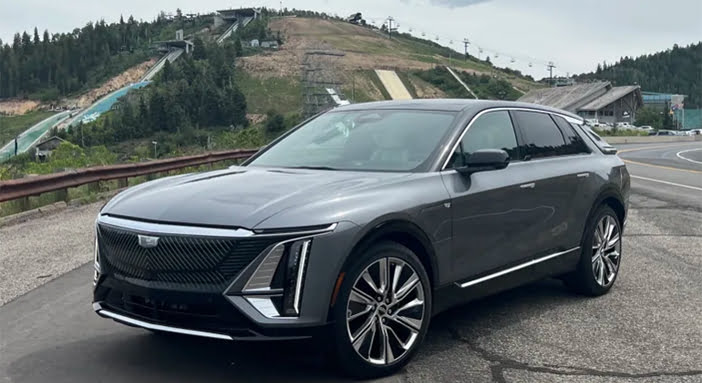
+++ Most talk about the future feature set for the CADILLAC Lyriq have dealt with added options coming to the battery-electric crossover. At least one current feature will disappear from future Lyriqs: The electronic door handles. They will be replaced by traditional door handles perhaps as soon as the 2024 model year. As it is now, the metal door handle graphics on the exterior sheetmetal are gateways to a bit of theater. When the driver or front passenger touches the shape, the door pops open a couple of inches. Then the driver or passenger pulls on a vertical fin placed at the base of the front window to open the door the rest of the way. Behind them, rear passengers press the handle outside, and after the door pops, the passengers pull on the actual door panel to open the door the rest of the way. To prevent passengers who have their hands wrapped around the door panel from accidentally slamming their fingers, a metal rod protrudes to keep the doors a few inches ajar. Touching the door handle graphic retracts those rods, and they retract on their own after the door has opened a certain number of degrees. Lyriq reservation holders have been discussing the novelty since late last year after attending Lyriq previews. A post on Cadillac fora from January praised the Lyriq highly, save for the issue with the door handles. The poster was told that the handles don’t retract on their own until the door is opened about 45 degrees, a requirement that, if true, would be untenable in tight garages and parking spaces. The post ended with “I can’t help but hope that some corporate minion is monitoring this forum and will take action to correct this very significant defect”. Seems someone got the memo. It’s not clear when the change will be made, though. Pre-orders for the 2023 Lyriq are full, but the coming model year hasn’t gone into production yet. The 2024 Lyriq is open for pre-order now, with deliveries beginning in the spring of next year, and it will bring a range of new options with it. Conventional portal openers could be one of them. +++
+++ Don’t let COPPER ’s latest rout fool you: Supply shortages will be so severe and prices so high in coming years that they risk delaying the global shift away from fossil fuels. That’s the conclusion of a new S&P Global study that warns of “unprecedented and untenable” copper shortfalls in the coming decade as suppliers grapple with a near doubling of demand by 2035. Prices that fell below $7.500 a metric ton this week are set to soar back above their $10.845 peak later this decade, driven by the metal’s key role in the clean-energy and transport industries, S&P Global said. “Either supply miraculously appears or the goal of energy transition just gets pushed out further”, said S&P global vice chairman Dan Yergin. The bullish findings are a long way from the slowdown of recent months, when copper lost a third of its value from a March peak. Analysts from Goldman Sachs Group to Bank of America have slashed their near-term forecasts in anticipation of a drop in consumer spending and industrial activity. New supply coming online in Peru and the Congo has added to the bearish sentiment. Longer term, though, the equation changes. Demand is set to reach around 50 million tons by 2035 from 25 million today, the S&P Global study found. With new deposits trickier and pricier to find and develop, the main sources of new supply would come from recycling and gains at existing mines. Based on current trends, an annual supply shortfall of almost 10 million tons would open up in 2035, the study found. That’s equivalent to 20% of demand projected to be required for a 2050 net-zero world. Even assuming aggressive growth in capacity utilization and all-time high recycling rates, the market would still face persistent deficits, including nearly 1.6 million tons in 2035, it said. The S&P research was commissioned in response to concerns raised by governments and multilateral agencies over minerals needed to meet climate goals, and was supported by copper producers including Anglo American and BHP Group. It found that the burgeoning supply gap would increase the US’s reliance on copper imports from 44% to as much as 67% by 2035. To be sure, big deficits are hypothetical, with higher prices potentially boosting supply or curbing demand. That’s the view of McKinsey & Co.’s Ken Hoffman, who sees high prices flushing out more supply via efficiencies at existing mines and increased scrap activities, as well as a push to reduce metal usage in new energy industries. There may also be more pricing flexibility than anticipated in electric-vehicle demand, Hoffman, the co-head of McKinsey’s EV battery materials research group, said in an interview. “The cure for high prices is high prices”, he said. “Markets tend to adjust”. +++
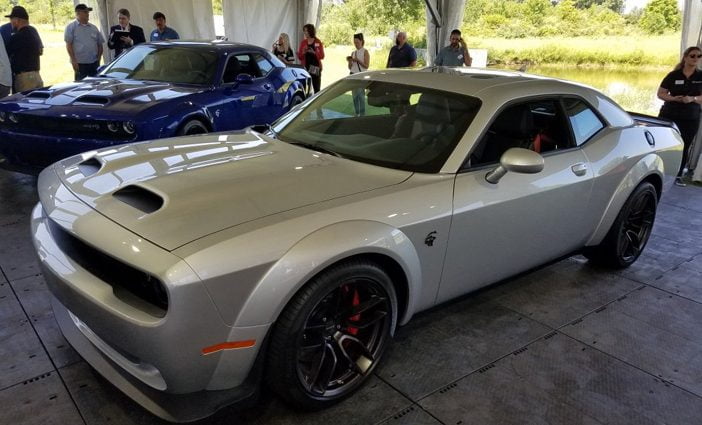
+++ Earlier this month, I reported about a special edition DODGE CHALLENGER that would help celebrate the end of the muscle car’s extraordinary production run. Said to have flex-fuel capability that could quaff E85, the new Challenger could make more than the Dodge Demon. The Demon, remember, rolled out with 808 hp on pump gas but could set fire to a drag strip when filled with 100 octane race gas, which boosted output to 840 hp. The amount of power which we can expect from the E85 version is 909 hp. The rationale for 909 hp was that the original Hellcats hit the market with 707 hp in 2015, followed by 808 hp in the Demon in 2018. A 909-hp figure for the coming special, if that does end up being the number, provides a healthy cushion between it and the 1.000 hp Hellephant crate engine. Assuming the moonshine jug on Dodge’s Never Lift calendar refers to the ethanol-powered Hellbeast, we’re in for 3 surprises over the next month. And that doesn’t include the Dodge Hornet PHEV compact hatchback (i.e. Alfa Romeo Tonale) that execs are trying to line up for an August reveal, or the battery-electric muscle car concept that brand chief Tim Kuniskis said he wants to show before the Hornet. +++
+++ The economy is a bit wobbly, but GENERAL MOTORS boss Mary Barra isn’t backing off of an audacious prediction: By the middle of this decade, her company will sell more electric vehicles in the U.S. than Tesla, the global sales leader. To fulfill that pledge in as little as 2½ years, she faces some long odds against immense economic forces that are working against auto sales. Inflation has spiked, interest rates are rising, material costs have soared and a global shortage of computer chips is still braking assembly lines at GM and other companies. But in an interview, Barra said she’s confident GM can unseat Tesla with higher-priced specialty vehicles, and it will beat Elon Musk to high-range EVs at prices that people can afford. Last year GM sold just 25.000 electric vehicles in the U.S., less than one-tenth of the estimated 352.000 sold by Tesla. Although EV sales are rising dramatically, they’re still only about 5% of the U.S. new vehicle market, with many Americans still reluctant to change. “To really get to 30, 40, 50% EVs being sold, you have to appeal to people that are in that $30.000 to $35.000 price range”, Barra said. Already the company has pledged to cut the starting price of the Chevrolet Bolt (Opel Ampere-e) to around $26,000 later this year. GM is planning to roll out a Chevrolet Equinox SUV with 480 km of range for around $30,000 in fall 2023. And on Monday night in California, it will unveil a larger (and more expensive) Chevrolet Blazer SUV that goes on sale next summer. They’ll join a couple of gargantuan Hummer EVs, an upcoming electric Silverado pickup and a Cadillac luxury SUV in taking on Tesla. And Barra said there’s more to come on the way to offering 30 battery-powered vehicles globally by 2025. “What we have coming, it’s in the heart of the market”, she said. The mainstream vehicle is something Tesla has yet to master. A rear-wheel-drive version of the Model 3 sedan, its lowest-priced vehicle, starts around $48.000 with shipping. Barra is hoping to keep prices relatively low, banking on chemistry breakthroughs to cut battery costs, offsetting huge price increases for Lithium and other key elements that make batteries work. Part of the strategy is convincing buyers that an electric vehicle can meet all their transportation needs. Many EV owners, she said, also have a gas-powered auto for longer trips. That’s why the company announced a partnership to place 2.000 charging stations at up to 500 Pilot Travel centers, spaced 80 km apart along interstate travel corridors. “If the only vehicle you own is going to be an EV, you have to feel confident of charging”, Barra said. GM has a goal of making only electric passenger vehicles by 2035. The switch to EVs would be monumental on its own for GM, a company that has made a living largely on the internal combustion engine for more than 113 years. But Barra also has to manage the finances, keeping the profits flowing from gasoline vehicles to pay for battery development, even though GM currently can’t run its factories flat-out due to the chip shortage. And at some point, money from gas vehicles will decline, so the EVs have to be profitable almost from the start. Also, auto prices have risen to an average of around $45,000, boosting carmakers’ bottom lines but pushing new vehicles out of reach of the middle class. Economists are predicting the Federal Reserve could add up to a full point to interest rates, raising the cost of auto loans. And there’s talk about the U.S. heading back into recession. “It’s pretty volatile right now”, Barra conceded. “We’re looking at many different scenarios as any prudent business leader would to make sure we’re ready for whatever, however the situation evolves”. She said she expects parts and chip shortages will last into next year, with coronavirus outbreaks continuing to crimp the flow. To deal with the semiconductor shortage, GM is throwing out its old model of letting parts supply companies acquire the chips with GM knowing little about them. Instead, by 2025, it will move toward 3 families of chips that Barra said the company will buy and control itself. They will be able to do multiple tasks, eliminating the need for dozens of chips in every vehicle. That standardization will give GM the scale to buy in bulk and make sure supplies don’t get interrupted in the future, Barra said: “We’re also working with a select group of strategic companies to source these for the volumes. We’ll have much better control and a stable supply”. Barra said new car prices are skewed right now because automakers are allocating scarce chips to higher-margin vehicles, and prices should come down as more chips become available. Still, she knows affordability will be a problem. With that in mind, she said GM offers the Chevrolet Trail Blazer starting at just below $20.000. The company also is linking used vehicle buyers to dealer inventories nationwide. And GM’s Cruise autonomous vehicle unit is starting a driverless ride-hailing service in San Francisco that will spread to more cities, offering another affordable transportation mode, she said. GM exited Europe in 2017 by selling its Opel brand after years of losses, but Barra said plans are being formed to re-enter the huge market with electric vehicles. “All I can tell you is I think it’s a huge growth opportunity for the company, and we’re excited to be back”, Barra said. She has no plans to change GM’s joint venture in China with state-owned automaker SAIC, even though Beijing has stopped requiring that foreign automakers enter such partnerships with Chinese companies. But Barra said there may be a chance for GM to bring in iconic and luxury vehicles. GM’s transition to EVs comes amid growing calls for corporations to take stands on political and social issues such as race relations and abortion. Yet opportunities for missteps are many as companies like GM walk a fine line of doing so without alienating sectors of a customer base that spans the political spectrum. Most electric vehicles, for instance, are sold on the coasts, where people tend to have more liberal views. But most of GM’s income comes from pickup and SUV sales in the country’s more conservative midsection. Regarding abortion, Barra said she didn’t want to speak broadly about the Supreme Court’s decision to overturn Roe vs. Wade, but she noted that GM does pay for employees to travel to get medical services. “We’re going to continue with that practice, really not a lot of change in what we’re doing from what we’ve done in the past, other than we will make sure we comply with all state laws”, she said. In 2020, after George Floyd was killed by a Minneapolis police officer, Barra issued a strong public statement and committed to several changes at the company, including creating an internal inclusion board and evaluating employees on inclusionary action. Throughout her career, Barra, who was GM’s product planning chief before becoming CEO in January 2014, has had to make difficult decisions. To manage the complexities of her job, she’ll need to draw on that experience. “I’m an engineer, so I’m a problem solver”, she said. +++
+++ Security researchers have revealed a vulnerability in HONDA’s keyless entry system that could allow hackers to remotely unlock and start potentially “all Honda vehicles currently existing on the market”. The “Rolling-Pwn” attack exploits a vulnerability in the way Honda’s keyless entry system transmits authentication codes between the car and the key fob. It works in a similar way to the recently discovered Bluetooth replay attack affecting some Tesla vehicles; using easily purchasable radio equipment, the researchers were able to eavesdrop and capture the codes, then broadcast them back to the car in order to gain access. This allowed the researchers to remotely unlock and start the engines of cars affected by the vulnerability, which includes models from as far back as 2012 and as recent as 2022. But according to The Drive, which independently tested and verified the vulnerability on a Honda Accord 2021, the key fob flaw doesn’t allow an attacker to drive off with the vehicle. As noted by the researchers, this kind of attack should be prevented by the vehicle’s rolling codes mechanism: a system introduced to prevent replay attacks by providing a new code for each authentication of a remote keyless entry. Vehicles have a counter that checks the chronology of the generated codes, increasing the count when it receives a new code. The counter in Honda vehicles is resynchronized when the car vehicle gets lock and unlock commands in a consecutive sequence, causing the car to accept codes from previous sessions that should have been invalidated. By sending the commands in a consecutive sequence to the Honda vehicles, it will be resynchronizing the counter. Once counter resynced, commands from the previous cycle of the counter worked again. Therefore, those commands can be used later to unlock the car at will. The security vulnerability affects “all Honda vehicles currently existing on the market” and may also affect other manufacturers’ cars. In a statement, Honda initially insisted that the technology in its key fobs “would not allow the vulnerability as represented”. However, in another statement, Honda spokesperson Chris Naughton said the company “can confirm claims that it is possible to employ sophisticated tools and technical know-how to mimic Remote Keyless commands and gain access to certain vehicles or ours. However, while it is technically possible, we want to reassure our customers that this particular kind of attack, which requires continuous close-proximity signal capture of multiple sequential RF transmissions, cannot be used to drive the vehicle away. Furthermore, Honda regularly improves security features as new models are introduced that would thwart this and similar approaches”. Honda has “no plan” to update older vehicles, redesigned 2022 and 2023 model year vehicles have an improved system that would prevent this type of attack from working. Fixing the flaw would be difficult due to the fact that older vehicles don’t support over-the-air (OTA) updates. Worryingly, there’s no way to guard against the hack and no way to determine if it happened to you. +++
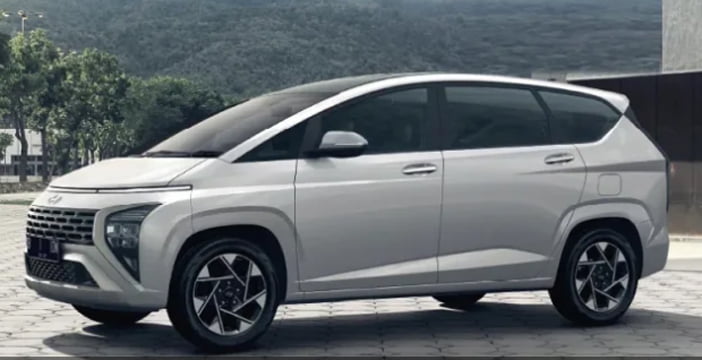
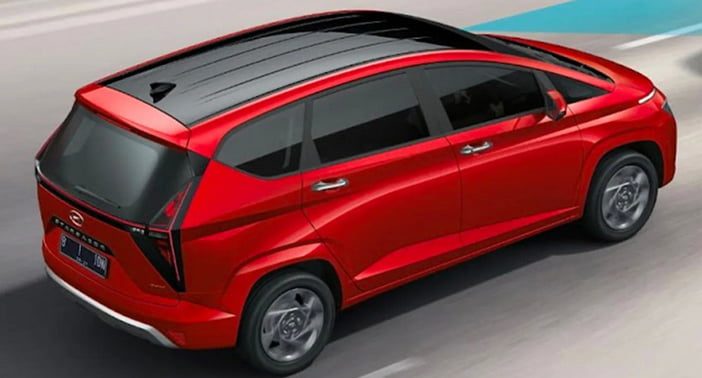
+++ The HYUNDAI Motor Group has been knocking it out of the park with its concept cars recently. There have been stunning GTs, thrilling race cars, and retro-futuristic executive saloons. Even when the vehicle is as hum-drum as a minivan, Hyundai’s designers seem to have a fresh take, as was the case with last year’s Staria. Sometimes, those concepts even make it into production largely intact. In that vein, the production Hyundai Stargazer takes elements from the funky Staria concept released last year. Before you ask, the answer is no. It’s not available in the Netherlands. In fact, it’s not even available in South Korea. Its primary and only market is Indonesia at the moment. While not as cool as the Staria, the people mover still looks quite a bit more interesting than most offerings in this category. It looks to be smaller than the Staria, which was configured with 4 rows. The Stargazer is a 3-row that can be ordered in 6- or 7-passenger layouts. Its solid led light bar that spans the prow is plucked straight from the Staria concept. But now it’s mirrored on the rear with an led taillight bar that forms the center line of what glows as a giant red H at night (how’s that for Hyundai branding?). Other interesting design details include the creases over front and rear wheel wells, the boomerang-shaped taillights, and a diamond quilt treatment at the D-pillar. From some angles, the Stargazer looks like it may resemble a minivan built by Mitsubishi, but overall the shape stands out as unique among vans. There’s only 1 engine option for now, a 1.5-liter 4-cylinder that generates 114 horsepower and 142 Nm. It’s not going to set anyone’s hair on fire, but at least it’s available with a 6-speed manual. Drivers who would prefer an automatic must go with a CVT. The Stargazer joins a popular class of people mover in Southeast Asia that includes rivals like the Toyota Avanza and Mitsubishi Xpander. These generally have the vertical volume of a minivan, but have 4 hinged doors instead of rear sliders. Typically they’re not anything we’d see as desirable, but it seems Hyundai has just injected some style into the segment. +++
+++ PANASONIC , a major Tesla supplier, is working on new technology to increase battery energy density by a fifth by 2030, the Japanese company’s chief technology officer told. That gain, if achieved, could boost the driving range of a Model Y, for example, by over 100 km with the same size battery pack. Alternatively, it could allow manufacturers to create roomier and possibly lighter electric vehicles (EVs) while keeping driving range unchanged. As more automakers roll out EV models, investors are looking for evidence that Tesla and established battery suppliers like Panasonic can keep their lead in the industry. The battery system is the most expensive element of an EV and improved performance and lower costs are seen as key to sustaining gains in global sales. Panasonic plans to achieve those gains by using a new mix of additives to allow individual cells to run at a higher voltage without damaging the batteries’ performance, Shoichiro Watanabe said in an interview. “The race among battery makers has been to come up with more potent and effective additives”, he said. His comments outline for the first time the company’s behind-the-scenes work in improving battery efficiency beyond the most cutting-edge battery technology Panasonic has made available for Tesla today. A 20% boost in energy density (essentially the battery’s ability to store energy in a given volume) would likely translate to an energy density of 900 watt-hours per litre (wh/l) for Panasonic’s most advanced cell compared to 750 wh/l today. Watanabe said Panasonic planned to achieve that gain over several years but did not say when it would begin to roll out the new chemistry. A new larger-format 4680 battery, already being produced by Tesla, is expected to lower production costs and improve range compared to the current-generation 2170 battery, the automaker has said. A Panasonic spokeswoman declined to comment on whether the company’s new battery technology would be incorporated into the 4680 or the 2170 or both. Panasonic, Tesla’s first battery supplier, plans to start mass-producing 4680 batteries in Japan during the financial year starting April 2023 and is reviewing sites for production in the United States. Tesla plans to use 4680 batteries to power new Texas-built Model Y cars. Panasonic has developed a way to slow a battery’s degradation at a higher voltage that includes the use of new, more potent additives to the battery’s electrolyte, said Watanabe who is also Panasonic Energy’s executive vice president. Higher voltages allow for increased ability to store energy but even small increases have also tended to drive outsized declines in battery performance. “Improving energy density by 20% is entirely possible” if Panasonic can deliver on the improvements described, Shirley Meng, a professor at the University of Chicago and chief scientist for the U.S. Argonne National Laboratory’s center for battery science. “I am optimistic about this goal as the research has shown promising data on all those areas”. The Argonne National Laboratory works with a number of battery manufacturers. Panasonic’s rivals, which include CATL, LG Energy Solution and Samsung SDI, are also working on technologies that promise to deliver batteries that charge faster, run longer and cost less. Panasonic’s current battery cell for Tesla uses a voltage of 4.2 volts and Watanabe said a boost to 4.3 or 4.4 volts was possible with a new mix of additives to the electrolyte, the chemical soup that separates the negative and positive charged electrodes. “If we can get that to 4.5 or 4.6 volts, I think the whole world view in terms of what’s possible for EVs would change”, Watanabe said. Panasonic has also developed ways to prevent what engineers call “microcracking”: small cracks that develop in the positive electrode when a battery is charged and discharged, shortening its useful life. One protective measure includes use of so-called “single-crystal materials” for the battery’s positive electrode, he said. In addition, Panasonic is working to replace more of the graphite used in battery’s negative electrodes with silicon-based materials to improve that part of the cell, although the trade-off there is the higher cost of silicon, Watanabe said. “It’s difficult to balance, but raising the energy density of batteries requires raising the potential of both electrodes”, he said. +++
+++ The POLESTAR 3 debuts on October 3 and the same day orderbooks open for the battery-electric SUV repeatedly pitched against the Porsche Cayenne. The comparisons were correct, based on comments from Polestar CEO Thomas Ingenlath. He said his brand’s first SUV will start at €75.000 and top out around €110.000. This means that, as with the Cayenne, the 3 is likely to be dimensionally between the Tesla Model Y and Model X, but financially well below both. The Model Y Performance is 18 cm shorter than a Cayenne and starts at €66.995 in the Netherlands, the Model X in dual-motor AWD trim is 13 cm inches longer than a Cayenne and starts at € 111.010. I don’t have specs on the 3 yet, but I do know it will pack a 2-motor powertrain. In the €55.900 Polestar 2 with dual motors, output comes to 408 horsepower and 660 Nm, hitting 100 km/h in 4.7 seconds. Those figures can be upgraded to 476 hp and 680 Nm for buyers who select the Performance Pack; the 100-kph sprint coming down to 4.4 seconds. The Cayenne in the same power bracket maxes out at 462 hp and 700 Nm of combined output, but that’s on the €106.900 Cayenne E-Hybrid. The Porsche needs 5,0 seconds to reach 100 kph. All of which is to say the template has already been established for challenging a Porsche, so we wouldn’t be surprised if the 3 is even more potent. The Polestar has a range estimate of 600 km on the WLTP. The 3 goes into production later this year alongside the coming battery-electric Volvo XC90 replacement, thought to be called the Embla. Polestar will double its attack on the Germans next year with the Porsche Macan-rivaling ‘4’ and the ‘5’ was has the same bodytype as the Panamera. +++
+++ PORSCHE plans to introduce a new electric luxury SUV and bolster profits in the coming years as the brand tries to win over investors ahead of its initial public offering. Porsche targets an automotive Ebitda margin of as much as 27% by 2026, up from 24.5% last year, the company said during its capital markets day. That would be below what Ferrari NV generated in 2021, but well ahead of Tesla and BMW. “Although we are clearly positioned in the luxury automotive segment, we benefit from significant economies of scale”, chief executive officer Oliver Blume said in a statement. Volkswagen is planning to sell a minority stake in Porsche in the 4th quarter to help finance its push into electric cars and unlock value. The company has hired more than a dozen banks to push the IPO, which could value Porsche at as much as 80 billion euros to 90 billion euros, according to people familiar with the matter. VW has pitched the listing as a way for Porsche to gain greater autonomy in areas like software and partnerships while it can continue to benefit from a symbiotic relationship with the parent. That narrative has sparked pushback from investors, who have flagged a listing structure that fails to make the asset more independent from the billionaire Porsche and Piech family and headwinds in the overall IPO market. Under the plan, the family would gain a blocking minority stake of 25% plus one share. Porsche is targeting revenue of as much as 39 billion euros this year and return on sales of as much as 18%; up 2 points from last year, according to chief financial officer Lutz Meschke. Returns are to climb above 20% in the long term. Shipments of the 911, Porsche’s most profitable model, could approach a record 40.000 units this year and help deliver luxury-level Ebitda margins, according to an analysis by Bloomberg Intelligence. Porsche is well ahead of peers including Ferrari and Aston Martin when it comes to electrifying its lineup. Its Taycan outsold the 911 last year and the company is preparing to introduce a battery-powered version of its Macan model to take on Tesla’s Model Y, with first deliveries expected in 2024. Porsche’s new luxury SUV will be positioned above the Cayenne and be assembled in Leipzig. “We are especially targeting higher-margin segments”, Blume said. So Porsche is pitching its initial public offering as a chance to invest in a company that combines the best of carmaking rivals like Ferrari and luxury brands such as Louis Vuitton. The problem is, not all investors are buying it. In early meetings with portfolio managers, the Volkswagen unit compared itself to the French handbag maker and Cartier owner Richemont as businesses that generate healthy profits and significant sales volumes, according to people familiar with the matter. It also cited Ferrari, which boasts industry-leading margins but ships only a fraction of the more than 300.000 cars Porsche makes every year. Among concerns flagged by investors is a listing structure that fails to make Porsche more independent from its parent, said the people, who asked not to be identified discussing confidential information. They’re also citing headwinds in the IPO market, which has slowed dramatically due to jitters over runaway inflation, rising interest rates and the war in Ukraine that’s sparked Europe’s worst energy crunch in decades. “Porsche isn’t a safe bet in a recession because it’s not as exclusive as Ferrari”, said Daniel Roeska, an auto analyst at Bernstein. “And if you don’t change the governance and allow Porsche to decide what’s best for itself rather than making decisions at the group level, then you’re not maximizing shareholder value”. The offering, which may launch as soon as September, is poised to be one of Europe’s biggest ever. Volkswagen has hired more than a dozen banks to push the IPO. If achieved, it could even exceed the parent company’s current market value. It comes at a time when automakers are battling supply-chain snarls and have embarked on a costly transition to electric vehicles. Still, an IPO of that size is so rare in Europe that it can defy the broader market slump, with portfolio managers forced to take a hard look at the candidate because it will automatically enter the region’s main equity benchmarks, the people said. While VW didn’t provide specific numbers or a valuation target in the meetings in Europe and the US, fund managers who attended were left with a positive impression about the brand’s potential to lift margins in the medium term, the people said. But several fund managers remain concerned about Porsche’s small free float of 12.5%, and a dual-class share structure that leaves little room for greater managerial independence. VW plans to sell a stake of as much as 25% of preferred shares that don’t carry voting rights. The powerful billionaire Porsche and Piëch clan, which controls VW through voting stock, would receive a special dividend to fund buying a blocking minority stake in Porsche. Porsche’s managers “presented their strategy to taking the company forward very well”, said Simon Jaeger, a portfolio manager at Flossbach von Storch. Still, he cautioned that the planned ownership structure is poised to weigh on the company’s valuation. Investors have in the past blamed VW’s convoluted governance structure for its sub-par stock-market performance. VW’s preferred shares have dropped around a quarter this year, valuing the entire company (which also includes Audi, Lamborghini and Bentley) at roughly 80 billion euros. Porsche argues it stands out among luxury-car makers because of its high volumes. The brand sold 301.915 vehicles last year, compared with Ferrari’s 11.155 and the 6.178 autos shipped by Aston Martin. It’s also touting Porsche’s resilience when it comes to profitability, with the unit’s operating margins coming in at an average of 16.1% in the 5 years through 2021, according to a presentation seen by Bloomberg. But there’s concern about the macro environment. The auto industry has had trouble ramping up production after the pandemic rattled global supply chains and sparked a shortage of semiconductors. Tesla, the world’s best-selling EV maker, has lost around a third of its value this year. Even Ferrari, which targets an operating margin of as much as 30% by 2026 and is seen as the gold standard of successful luxury-car IPOs, is down about 16%. “Porsche’s margin profile puts it at a discount to Ferrari”, said Dev Chakrabarti, a portfolio manager at AllianceBernstein. “I would see the company’s valuation getting closer to $75 billion in an IPO rather than $100 billion as has been touted”. Porsche “is the closest legacy brand to Tesla in terms of electrification”, Bloomberg Intelligence analyst Michael Dean said in a note this week. “It will be a key competitor to Tesla in 2023”. +++
+++ A Munich court has ordered TESLA to reimburse a customer most of the 112.000 euros she paid for a Model X because of problems with the Autopilot function. A technical report showed the vehicle did not reliably recognize obstacles like the narrowing of a construction site and would at times activate the brakes unnecessarily. This could cause a “massive hazard” in city centers and lead to collisions, the court ruled. Tesla lawyers argued Autopilot was not designed for city traffic, to which the court said it was not feasible for drivers to switch the feature on and off manually in different settings as it would distract from driving. U.S. safety regulators are investigating Tesla’s Autopilot function after reports of 16 crashes, including 7 injury incidents and 1 death, involving Tesla vehicles in Autopilot that had struck stationary first-responder and road maintenance vehicles. Tesla says Autopilot allows vehicles to brake and steer automatically within their lanes but does not make them capable of driving themselves. Musk said in March that Tesla is likely to launch a test version of its new “Full Self-Driving” software in Europe later this year, depending on regulatory approval. “It’s quite difficult to do full self-driving in Europe”, he told workers at Berlin factory at the time, saying much work needs to be done to handle tricky driving situations in Europe where roads vary a lot by country. +++
+++ Vehicle safety testing has to evolve to keep up with the times. The amount of tech and driver assistance features in new cars is staggering, so crash tests must accommodate the upgrades. Australian testing authority Ancap is making a surprising change to its crash test criteria: Starting in January 2023, it will test new vehicles on how well they perform UNDERWATER . The tests help determine how easily a vehicle’s occupants can escape once the car has been submerged. For a vehicle to receive a five-star rating, it must be “escapable” for a period of time underwater. It sounds (and looks) silly to test cars for underwater performance, but the motivation behind the tests is sound. When a driver runs into a body of water, and the vehicle becomes submerged, water pressure and panic can make it nearly impossible to open car doors. Ancap’s testing requires that vehicle occupants be able to open the doors and roll down electric windows for up to 10 minutes after the car is submerged. Automakers with vehicles that don’t meet the new standards must provide a way for occupants to break or manually open the side windows. Deaths from vehicle submersion are exceedingly rare in the United States. The National Highway Traffic Safety Administration (NHTSA) found that an average of 384 traffic deaths per year between 2004 and 2007 could be attributed to drowning. That number represented less than 1% of traffic deaths in the U.S. in 2007, so the frequency of such crashes is low. Even so, anyone who has experienced the terror of malfunctioning door locks and windows on dry land can imagine the absolute panic that would set in if the same thing happened underwater. Perhaps more alarming are the numbers of new cars with retractable handles and fancy designs for opening doors. Several Tesla owners have complained that their door handles freeze in winter weather, and plenty of other automakers with similar designs are on the market. Though the underwater testing standard is only just emerging in Australia, it wouldn’t be surprising to see a similar standard come to the United States. Vehicle safety testing criteria are updated somewhat regularly to include new tech and vehicle features, so it’s likely only a matter of time before we see similar testing. +++