+++ The next-generation ALPINE A110 will continue to play a crucial role in the French performance brand’s lineup, with the French car maker readying an electric variant. The fan-favourite 2-seat coupé (which received a minor update earlier this year) will make the switch to an electric powertrain for its third generation, lining it up as a rival to similarly conceived sports cars from Lotus, Porsche and Toyota. By the time the new A110 arrives, most likely in 2026, Alpine’s line-up will also include an electric crossover and an electric hot hatchback. While those more volume-friendly models will be crucial to Alpine increasing its global footprint, company CEO Laurent Rossi is adamant that the A110 will continue to play a core role as a halo car and as an embodiment of the brand’s sporting credentials. “Alpine is going to be sports cars, no matter what. That’s the central value proposition”, said Rossi. “It’s ‘born from racing, made by racers for racers at heart’. You need to have at least one sports car to justify that, otherwise it’s a false claim. There will always be at least one sports car, and that’s like an undertone”. Alpine has so far said little about what to expect of the reinvented A110. Rossi did suggest, however, that it could be a near-bespoke proposition, far removed technically from the Renault-based Alpine GT X-Over crossover and Alpine 5 hot hatchback alongside which it will be sold. “We hope to preserve the A110 DNA, and it might be quite different from the rest of the cars, despite platform-sharing”, said Rossi. “There’s nothing more similar than 2 electric cars nowadays: same platforms, same electric power, distributed to all wheels if you’re lucky, and it’s pretty much a matter of fine-tuning the output of the motors. “But you will still retain advantages in terms of chassis dynamics and agility if you use aluminium versus steel. Our ambition is to keep the characteristics and the DNA of the A110 intact and differentiated from others as a competitive advantage”. The next A110 is in line to share elements of its chassis with the upcoming Lotus Type 135 electric sports car. Talks between the 2 firms are centred on “the characteristics of the cars that we want to produce and the commonality of the solutions that we will apply to produce those cars”, revealed Rossi. “Lotus and us share the same preoccupation, which is trying to make light, agile sports cars while obviously adding weight and electrifying”, he explained. “So it’s only normal that we think about those challenges together, at least upstream. We will see if we partner up, but obviously we share the same problems and the same opportunities”. Rossi added that a final decision on a Dieppe-Hethel partnership will need to be made in around six months’ time, in line with the two firms’ planned launch timelines for their respective sports EVs. “By the end of this year, we need to know which platform and technological solutions we will use to produce our cars and so will they”, he said. “So we will decide whether or not the path forward is together”. Rossi said: “You won’t find in an Alpine necessarily the latest and greatest autonomous features, automatic parking etc. But you will always have sporty sensations and sporty technology, even in the SUV”. +++
+++ There are several camouflaged CHEVROLET CORVETTE C8 development vehicles testing at the Nürburgring. My spies suspect that these are the hybrid-assisted E-Ray models. Oddly, none of these Corvettes have the hybrid sticker that’s necessary for testing an electrified vehicle around the ‘Ring. Although, this decals are only necessary when actually on the track, which might explain their absence. One of the models has what appears to be external kill switches on the driver’s side front wing/fender. These vehicles mostly wear the body from the Corvette Z06, including the lower fascia and side inlets. However, these vehicles don’t have the sporty model’s centre-exit exhausts. Instead, there’s the regular ‘Vette’s layout with a pair of outlets on each side. This setup makes sense because the E-Ray reportedly shares the 6.2-litre V8 from the standard version of the Corvette. An electric motor would allegedly turn the front axle, making this the first all-wheel ‘Vette available from the factory. Rumours suggest the total power output from this system could be between 600 hp and 650 hp. Acceleration to 100 km/h might be as quick as 3 seconds. Just the electric motor would reportedly be able to propel the E-Ray at 40-55 km/h. A rumour indicates that the E-Ray would take the place of the Corvette Grand Sport in the vehicle’s range. In the past, the GS occupied a spot in the model hierarchy that was above the base model but below the Z06. The Corvette E-Ray reportedly arrives in 2023. We might see it later this year, though. With the Z06, Chevrolet debuted the model in October 2021 and only just announced pricing. After the E-Ray, the Corvette range will reportedly grow to include the ZR1 that will allegedly use a twin-turbo version of the Z06’s 5.5-litre V8 and will make around 850 hp. Then, the Zora will potentially combine the hybrid and twin-turbo V8 to produce 1.000 hp. +++
+++ HYUNDAI will build a new factory in South Korea for the first time in 29 years. The automaker on Tuesday promised to invest W2 trillion in an electric car factory capable of rolling out 150,000 EVs from 2025 (US$1=W1,310). Ground will be broken next year. Hyundai stopped building factories in Korea in 1996 due to high costs and low productivity and shifted production overseas. The automaker said its labor union agreed to the investment in the latest wage talks held on Monday. The southern port city of Ulsan is the likeliest location and it is expected to employ 1.500 to 2.000 workers. “We will re-train existing workers and hire new ones”, a Hyundai staffer said. Hiring will begin in the first half of 2023. A cluster of rechargeable battery and other parts makers is expected to form around the new plant, and industry watchers expect Hyundai will join hands with a domestic battery maker to build its own joint venture there. Hyundai currently runs 10 factories worldwide in 8 locations, while 3 of the plants are in South Korea (Ulsan, Asan and Jeonju. The plans for the new factory comes as Hyundai in May announced a 63 trillion won ($47 billion) investment blueprint for developing Hyundai Motor, Kia and Hyundai Mobis’ domestic businesses by 2025. Hyundai’s first EV factory in South Korea will play the role of a global EV production base, along with the EV factory in the US that has also targeted at a 2025 launch, the company said. Kia’s soon-to-be established Purpose Built Vehicle manufacturing facility inside AutoLand, its Hwaseong plant, is also expected to boost local EV production. Building an EV-dedicated factory was a major demand from the labor union, as employees feared less assembly work and unstable job security amid the automaker’s shift toward future mobility, including EVs. Also, for the first time in 10 years, the carmaker agreed to add more jobs to the manufacturing sector, in response to the labor union’s demand to hire more workers at the Ulsan plant that has struggled with an aged workforce and a short of hands. According to the union, 25 percent of unionized workers, or 12.600 of them, are expected to retire between 2022 and 2026. Some 3.000 senior workers on the manufacturing line have left the company each year and it is the company’s responsibility to guarantee workers’ employment, they argued. Currently, Hyundai converts subcontracted workers to regular positions at manufacturing plants. Details on the size of the new recruitment will be discussed by November and the carmaker will start hiring in the first half of next year. “There are both external and internal risks, but the company made a decision that can allow both labor and management to coexist, based on the future of domestic plants and job stability”, said a company official. Last month, about 70 percent of the Korean Metal Workers’ Union’s Hyundai branch, which falls under the Korean Confederation of Trade Union, voted in support of a walkout as wage talks continued to fail. The carmaker’s labor union, which represents 40.958 members, has held a total of 15 rounds of negotiations since May. Major sticking points included an increase in monthly pay, incentives and a retirement age extension, among other issues. While the company has been hiring for other positions, including marketing, accounting, research and development and design, it has not been hiring new recruits for production. It has been filling the positions with subcontracted. The investment promised by Hyundai followed a promise made by chairman Euisun Chung to invest $10.5 billion in the United States to build an EV-dedicated factory in Georgia and to develop future mobility technologies. Since the announcement was made, the union has demanded that Hyundai Motor come up with specific plans for constructing a new EV production plant in Korea as well. “We have made a decision based on a sustainable future for both management and labor at a time where the market changes toward future businesses and the global market suffers blows from all over”, a Hyundai spokesman said. “We will be working together so that our domestic plants become a global hub of future mobility”. Despite the promise of EV plants and new hiring, there is still a possibility of a walkout as the two sides have yet to narrow their differences on wages. +++
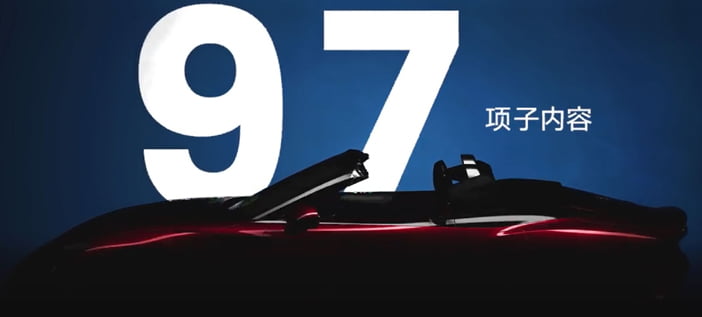
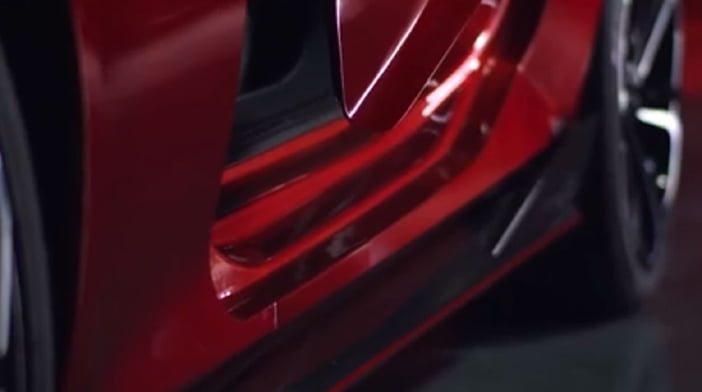
+++ A new video has surfaced online of the production-ready MG CYBERSTER , roughly 5 weeks after patent images of the car were leaked. The electric roadster takes design inspiration from the MG Cyberster that was unveiled at the 2021 Shanghai Auto Show. The video provides me with a glimpse of what to expect from the road-going model. Some screenshots from this video can be seen below. The overall shape of the car will be similar to the concept, albeit toned down. We can see that the front end will sport a set of aggressive headlights and a pronounced bumper and front grille with a particularly intriguing shape. The video also reveals that it will have traditional wing mirrors unlike the concept and that it will have a folding soft top finished in black. This teaser also showcases how the roof mechanism will operate. One of the most striking aspects of the concept that has carried through to the production model is the Lamborghini-inspired scissor doors. Elsewhere, the rocker panels will be slightly less defined than the concept. The teaser video only provides us with a small glimpse of the interior. What I could see are a pair of sporty seats bathed in red and white materials, prominent roll hoops behind the headrests, and what appears to be a yoke-style steering wheel. Other details about the vehicle remain uncertain but significant changes are expected from the concept. After all, the MG Cyberster concept was outfitted with no less than 4 electric motors, allowing it to hit 100 km/h in less than 3 seconds. The concept also had a claimed range of over 800 km, a figure that we think is unlikely to be matched by the road-going model. No launch date has been announced for the car but it will apparently be launched in 2024 to celebrate MG’s centenary. That means it will likely be showcased for the first time in 2023. +++
+++ After the PORSCHE Taycan doubled its global sales in 2021 compared to 2020, the last we heard from the electric wunderkind was that Porsche needed to pause production over supply chain issues. That’s the price of success these days. The Stuttgart maker has put together a small menu of hardware changes and a slightly larger list of software changes for the 2023 Taycan, though, because the show must go on. Regarding the mechanicals and starting from the top, all Taycans with the panoramic roof get the option of Porsche’s Variable Light Control that can adjust roof translucency through nine stages. In the cabin, the battery-electric sedan can be pre-wired for the front and rear Porsche dashcams available through Tequipment. And down below that, the polished and painted 19 inch Taycan S Aero wheel replaces the single-color painted Taycan Aero Wheel. Changes to the ones and zeroes have been applied to the powertrain and the vehicle interfaces. For the powertrain, there could be a slight range boost on dual-motor sedans thanks to the front motor being “de-energized” to cut parasitic losses in Normal and Range driving modes. There could also be better charging times thanks to faster battery preconditioning and the ability for the battery to withstand higher temperatures that improve the charge performance. Just as nice for the meticulous planners, charging stations pulled up on the infotainment system can be filtered by power output. The other upgrades will please driver and passengers. For the driver, the heads-up display has been tweaked, the chosen brake regen setting is retained when switching drive modes and an AWD indicator on dual-mode trims appears in the dash cluster to show the flow of juice to the motors. For everyone, the Porsche Connect infotainment wears a redesigned user interface and more colorful tile screen, wireless Android Auto joins the infotainment party, as does Spotify integration. Porsche says the software changes developed for the 2023 model will be available to earlier Taycans through OTA updates, with that rollout to be announced at a future date. +++
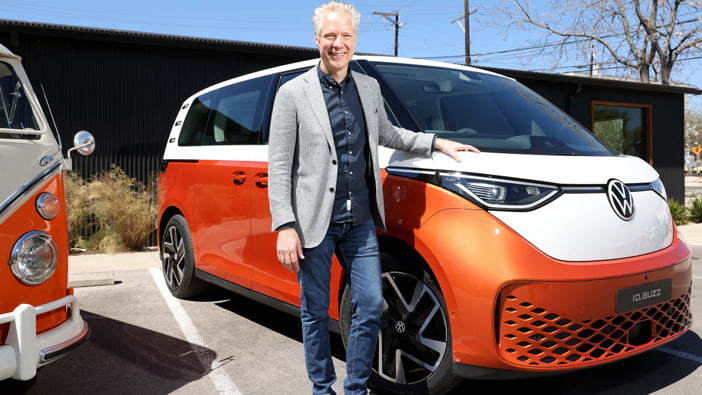
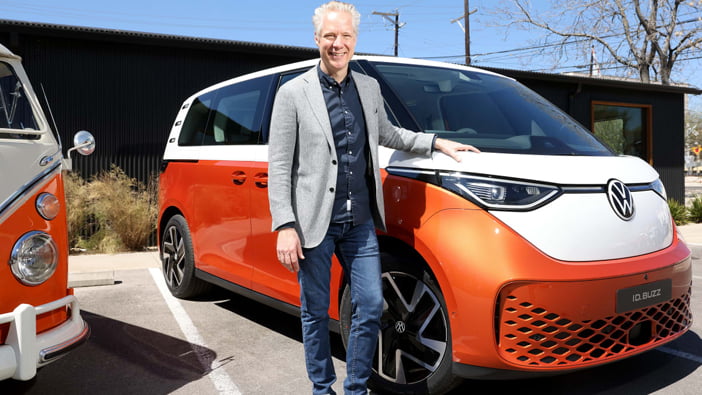
+++ The Volkswagen Group said its top North American executive would run its new U.S. company SCOUT that will build electric pickups and SUVs. Scott Keogh, who is president and CEO of Volkswagen Group of America, has been named chief executive of Scout, an independent company. Pablo Di Si, executive chairman of the Volkswagen South American region, will become head of Volkswagen Group of America, and CEO of the Volkswagen North American region. Both changes are effective September 1. Keogh, who previously headed the Audi brand in the United States, has been VW of America head since 2018. In May, VW said it planned to reintroduce the Scout off-road brand in the United States, offering new EVs. The German carmaker plans to invest around 100 million euro in the new Scout brand, 2 people briefed on the matter told. VW said in May it would create a separate, independent company to build Scout pickups and SUVs starting in 2026, that will be designed, engineered, and manufactured in the United States for U.S. customers. Sources told VW could potentially seek external funding through investors or an initial public offering to expand its production capabilities. VW last sold a pickup in the United States in the early 1980s. The company said the new Scout company was a key part of its goal of reaching 10% market share in the United States. Volkswagen has moved away from cars in the United States as it adds more electric models. SUVs now account for about 75% of the U.S. sales of the group’s VW and Audi brands, which represent about 4% of U.S. auto industry sales. U.S. sales of the 2 brands were down about 30% in the first quarter. Scout and Travelall vehicles made by International Harvester were forerunners in both function and style of popular SUVs from the Detroit Three automakers, such as the Ford Bronco and the Chevrolet Suburban. Harvester stopped building the Scout and Travelall in 1980 after the oil price shocks of the mid-1970s as it went through a restructuring. VW’s Traton SE business acquired U.S. truck maker Navistar in 2020, which owns the Scout name. +++
+++ A recent invite received by Autointernationaal.nl to a preview of TVR ’s electrified future unveilings suggests the firm is getting back on track with its revival plan, which has been beset by significant setbacks since it revealed its debut model, the Griffith, in September 2017. It follows an announcement from the beleaguered TVR marque that it will launch an electric version of its delayed Griffith sports coupé in 2024 and has partnered the Formula E race series in a bid to promote its new EV aspirations. These are the latest in a series of ambitious pledges made by the revived British marque since it revealed the Griffith in 2017, each of which has raised questions about the viability of the project, given it has yet to start producing the Griffith. Here is a summary of what we currently know about TVR and the key things we need to learn from the preview event later this month. Even before it begins rolling down the production line, the car that will spearhead TVR’s bold new era is as old as the Ferrari Portofino, Volvo XC40 and current BMW M5: all of which have long since been through extensive mid-life facelifts. Interestingly, the Griffith was revealed at the same time as the long-delayed Mercedes-AMG One, although that car is now finally on its way to customers. So the Griffith’s design, cabin and technology are no longer as cutting-edge as was presented at launch, which means established rivals should (on paper at least) edge it for technological functionality, efficiency and outright performance. Plus, it would be 1 of just 4 cars on sale still using a naturally aspirated V8, alongside the Lexus LC500, Lexus RC F and Ford Mustang. The last of which uses the same 5.0-litre Coyote unit but is tipped to go hybrid in 2024. With an ICE ban looming in Europe, the shelf life of a non-electrified sports car is vastly diminished. The last official update about TVR’s factory in Ebbw Vale, Wales, came in December 2020 and promised that work was soon to begin on an extensive renovation programme for the existing buildings with a view to getting a Griffith production line up and running (the originally intended production start date was 2019). Ultimately, TVR plans to employ 200 people at the factory and says “significant progress” has been made. Autointernationaal.nl has learned TVR anticipates signing a lease deal in the coming weeks, now that the shell of the building is ready for the installation of tooling and equipment. Delays initially stemmed from the Welsh government’s 3% stake in the sports car firm, which, under EU rules, necessitated a lengthy tendering process for the sourcing of a construction contractor. The most concrete indication that TVR is almost in a position to start building the Griffith came earlier this year, when it announced “a multimillion- pound investment” from South American partner firm Ensorcia, which describes itself as a “group of companies that are dedicated to the development of net-zero carbon technology and environmentally sustainable production and processing of battery metals in South America”. Neither TVR nor Ensorcia put a number on the investment but said it will go towards preparing the production line for the V8 Griffith, readying an electrified version of the coupé and repaying a £2 million loan from the Welsh government, which it will settle on 30 September, though any interest accrued post-January 2022 will be repaid in instalments quarterly. Ensorcia’s investment is said to be enough to set TVR on a path to production and repay its most significant debts, but it is unclear if the sports car firm has managed to gather the £25 million in required investment it was attempting to source by listing bonds on the Dublin stock exchange as long ago as summer 2020, although it says this has been “successful in raising initial funds”. The latest records show that TVR finished the financial year ending June 2021 with £8.000 in cash (down from £32.000 in 2020) and £12.1 million of liabilities and borrowings payable within 12 months (up from £10.8 million in 2020). It says it has taken deposits against orders placed but not how many it has taken, nor what the order bank represents financially or whether it has managed to retain the bulk of orders throughout the Griffith’s long gestation period. “Further investment is required”, it says, “to deliver the pre-existing order book, which is expected to realise the forecasts and financial projections”. It adds that “discussions are ongoing with a number of prospective equity investors”. TVR has promised a trio of new EVs to follow the Griffith (one will be based on the debut coupé) but has given no details of how it plans to power them, what they will look like or when we can expect them. The partnership with Ensorcia is described as a valuable asset in TVR’s electrification drive, given it claims to be a specialist in “green lithium mining and processing” with a patented brine extraction process that minimises water wastage. In June 2021, the South American firm said it had secured the right to use its extraction processes to mine lithium at a 5.000-acre site in the Atacama region of Chile and another 22.000-acre site near the Bolivian border. However, there is no sign that this work has begun and TVR is currently the firm’s only listed automotive partner. TVR would be one of a flurry of brands aiming for comfortable and sustainable sales volumes almost straight away. However, its targeted workforce of 200 people and the limited market appeal of its first model (2-seat sports cars are becoming increasingly unviable for even well-established makers) suggest that ramp-up will not come quickly. Now the brand is promising to reveal details of the cars that will follow the model it has waited 5 years to make. So it seems likely that if all goes to plan, the Griffith (in V8 and electrified forms) will ultimately serve as a halo car for a line-up comprising more mainstream and utility-focused cars. A comparable structure is the similarly revived French sporting firm Alpine, which (crucially) has been supported in its ramp-up phase by parent firm Renault. +++