
+++ ALPINE is seeking investment in its Formula 1 team to fast-track the development and global sales of its future road cars. The cash injection is believed to be being sought to accelerate Alpine’s plans to rapidly grow from a single-model, sports-car-only brand with a Europe-centric audience to a fully electrified Porsche rival with global appeal. Alpine has already committed to replacing its lauded A110 sports car, as well as launching a Renault 5-based hot hatchback and a rakish-roofed sporting crossover by 2026 in a plan formulated under the leadership of CEO Luca de Meo, and last month also confirmed ambitions to launch luxury sports car EVs in the D- and E-segments. Significantly, the SUV and 2 luxury sports cars are likely to be aimed at winning acclaim beyond Alpine’s heartland in Europe, most significantly in North America and China. As well as helping fund the vehicle developments, it is believed that Alpine also hopes an investor could be a strategic partner in helping it establish footholds in these territories faster than it could achieve by itself if it had to set up an operation from scratch. Alpine CEO Laurent Rossi has previously talked about expanding the brand’s global reach by “4 to 5 times”; a significant and costly undertaking. This raises the prospect of a deal with Lotus, which has similarly ambitious plans to grow its network and sales figures, and its owner Geely, which recently entered into a joint venture with Renault to continue making combustion engines. Alpine is already working with Lotus on the joint development of the A110 successor, as well as also exploring “the development of a joint services offer combining their engineering expertise”. Furthermore, when Alpine and Lotus announced their initial collaboration on the A110 successor last year, they also said that they would undertake “a collaboration to leverage Alpine’s motorsport platform covering Formula 1 to Endurance”, suggesting that the motorsport activities of the French brand were of interest to Lotus and its owner Geely. The deal is far from certain, however, most notably because it is not clear how Lotus could co-brand an F1 team with Alpine. Nevertheless, the deal would give Geely a foothold in the sport’s top category and give it the option of potentially taking over the team at a future date. Sources insist that no deal is done and that Alpine is open to investment from any party, ranging from another manufacturer with complementary goals such as Lotus, through to taking on investors who are excited by the potential of the F1 programme, both from a marketing perspective and from the growing value of teams as profit centres as a result of the recent cost cap initiative. Nevertheless, initial talks are believed to have begun with a suite of potential investors. Alpine sources are adamant that the firm is only seeking funding in return for a share of the F1 team. It has ruled out floating the road car division or selling the F1 team outright. There is precedent for F1 teams to be marketed by a manufacturer but owned by multiple parties, with Mercedes, which is co-owned by the road car company, chemical company Ineos and team principal Toto Wolff equally, being the most notable example. Alpine’s potential sale of a stake in the F1 team was first hinted at in the Renault Group’s so-called Capital Markets Day (CMD) event last month, which was titled ‘Renaulution, now Revolution’. In the accompanying presentation, headlined Alpine, it said: “Alpine is set to expand globally with half of its future growth outside of Europe by leveraging commercial partnerships and investor support. Alpine is open to capitalise on the financial valuation of its F1 team assets”. Asked what that meant, a Renault Group statement said: “Alpine’s roadmap presented during the CMD is funded by Renault Group and plans to access commercial partners and investors to accelerate international expansion”. No further comment was made. It is not clear if the engine division would be included in the investment plan. Based in Viry-Châtillon outside Paris, it has long been established as an independent part of the firm’s involvement in the sport, supplying engines to Red Bull in its early championship years. Alpine was 4th in the 2022 FIA Formula 1 Constructors’ Championship, beating McLaren. +++
+++ A quad-motor, fully electric BMW M car is officially in the works, with the German firm testing a concept (recently spotted in public for the first time) that will form the basis of its next generation of performance EVs. New images reveal the extent to which the prototype’s BMW i4 M50 underpinnings have been adapted, with significantly widened wheel arches. This change accommodates the electric motors fitted to each wheel, feeding power through a brand new xDrive four-wheel drive system designed to recoup energy under braking. BMW said this new drive system “opens up completely new possibilities”, with “extremely precise” torque and power delivered to each wheel “within milliseconds”. It added: “The power and torque of the spontaneously reacting electric motors can be dosed so precisely that the load demand signalled via the accelerator pedal can be realised at a level of dynamics that is unattainable using conventional drive systems”. This means that the driver is able to experience “entirely new performance characteristics” never before felt in an M car. The new images also reveal bespoke M-badging on the front grille (with what appears to be a hand-written model designation) hinting at the prototype’s experimental nature. “Electrification opens up completely new degrees of freedom for us to create M-typical dynamics”, said Dirk Häcker, head of development at BMW M. “And we can already see that we can exploit this potential to the maximum, so that our high-performance sports cars will continue to offer the M-typical and incomparable combination of dynamics, agility and precision in the locally emissions-free future”. As well as this, the M EV concept is testing a new highly integrated control, which has been built to allow the driver to access the new levels of power in a controlled way. The control permanently monitors the driving condition, as well as taking in the “driver’s wishes” to determine the ideal power transmission to each wheel, BMW said. It also allows BMW to develop new features: the manufacturer teased its ability to perform a standing donut in a promotional video entitled ‘Ready for the next chapter. We are M’. The Mercedes-Benz EQG, also featuring a quad-motor powertrain, has a similar function, dubbed the ‘G-turn’. BMW added: “This detailed work is crucial to ensure that future high-performance models will also be characterised by exactly what has rendered BMW M automobiles unmistakable for the last 50 years: a linear build-up of drive power and lateral dynamics that permits controllable handling right up to the limits”. +++
+++ When it comes to ELECTRIC cars, companies that have been in the game longer tend to build more reliable ones. That should come as no surprise, but now there’s data to back it up. If you want the most trouble-free EVs, the Nissan Leaf and Tesla Model 3 are the way to go. Consumer Reports recently extrapolated from its vast archive of owner surveys the reliability data pertaining to electric cars. It found that as a whole, EVs were less reliable than traditional gasoline and hybrid cars. The Kia EV6 ran away with top honors among battery electrics with a total score of 84. However, CR was not ready to recommend it because it was so new on the market and reliability issues can take time to surface. Also, we would be remiss not to point out that the EV6’s platform twin, the Hyundai Ioniq 5, ranked fourth among EVs at 41 points, less than half the score of the Kia. Between the siblings are the Tesla Model 3 with 58 points and the Nissan Leaf with 53. These numbers land mid-pack among reliability ratings. Internal-combustion cars like the Toyota Corolla Hybrid and Mazda MX-5 have scores in the 80s and 90s. I’ve long heard the argument that EVs should, hypothetically, be more reliable than gasoline cars as they have fewer moving parts. Think of all the valves and gears in a typical ICE drivetrain. However, CR says, “EVs reported problems associated with battery packs, charging, electric drive motors, and unique heating and cooling systems that are required on vehicles that lack a conventional engine”. It would be be interesting to know the percentage of issues associated with hardware failures versus the percentage of issues stemming from software bugs, but CR doesn’t break out those numbers. CR believes that as automakers climb the EV learning curve, the reliability numbers will improve. After all, gasoline cars have been honed for more than a century, and Tesla and Nissan have been selling EVs for over a decade each. It seems that when it comes to building a car, experience matters. +++
+++ Competition regulators in EUROPE are seeking evidence that businesses are shifting investment from the bloc due to the U.S. Inflation Reduction Act as they consider loosening state aid rules to deal with the impact, according to a European Commission document seen by Reuters. The EU executive earlier this week sought feedback from member states amid concerns about the $430 billion act, which grants consumers tax credits when they buy U.S.-produced electric vehicles (EVs) and other green products. Germany, France and some other countries have suggested that the U.S. law could disadvantage European Union companies and tempt businesses to relocate to the United States. “Do you have examples where the availability of public support in third country jurisdictions has led or will lead to the relocation of investments in strategic sectors for the green transition of the EU?”, the document sent to the 27 EU countries asked. The questionnaire also asked whether it was necessary to loosen state aid rules to allow more support for greenfield investments in sectors key to the bloc’s green goals and for which public support in third country jurisdictions has led or will lead to companies relocating. The Netherlands and others, as well as some within the Commission, have pushed back on the idea of pumping billions more euros into European companies on top of already hefty funds to offset the pandemic and impact of the war in Ukraine. “In your view, would an increase in aid intensity for undertakings active in sectors which are deemed to be in genuine risk of relocation or carbon leakage be appropriate and/or useful?” The questionnaire goes on to ask if sectors such as wind, solar, heat pumps, clean hydrogen, electric vehicles and batteries and critical raw materials are seen as strategic to the bloc’s green goals and whether state aid rules are adequate to facilitate investments in these areas. Countries have been given until December 20 to reply. “We should find out first how big is the problem before we come up with measures to alleviate these issues”, a senior EU diplomat said. “For example, we feel it’s very important to understand the decision CEOs make when it comes to big investments, because it’s not only about money”, the diplomat said, adding that he thought there were still plenty of funds available in the EU budget to back investment in the digital and green transformations. +++
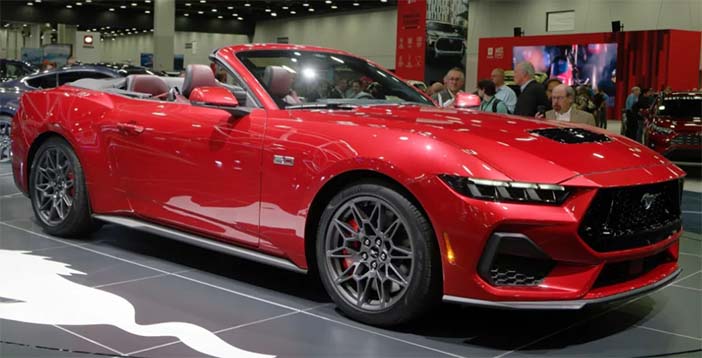
+++ When FORD revealed the 2024 Mustang to the world, it detailed the new engine lineup, but didn’t put final numbers to paper. Today, Ford is revealing the figures we’ve all been waiting for. Starting from the top with the Mustang Dark Horse, the 5.0-liter V8 in this model will produce 500 hp and 550 Nm of torque. Upgrades over the standard GT model’s V8 include a uniquely balanced crankshaft, forged connecting rods and strengthened camshafts. Slotting in behind the Shelby GT350’s 5.2-liter V8, the Dark Horse’s engine is the second-most powerful naturally aspirated V8 to ever find its way into a production Mustang. The standard Mustang GT’s 5.0-liter V8 is rated at 480 hp and 550 Nm of torque. For comparison’s sake, that’s 30 hp and 5 Nm of torque more than the outgoing Mustang GT’s engine. For a slight boost in power and an even bigger boost in sound, you can optionally spec the active-valve performance exhaust. This increases output to 486 hp and 560 Nm with its more free-flowing design. Plus, you can choose to drive around in either quiet or loud mode. As for the 2.3-liter turbo charged 4-cylinder base engine, output stands at 315 hp and 460 Nm of torque. The only gain seen here is an extra 5 hp, as torque is the same as before. You can specify an optional active-valve performance exhaust here, too, but Ford doesn’t quote higher power figures in the 4-cylinder’s case. As a reminder, Ford nixed the manual transmission for the turbo 4-cylinder, so you’re only able to have it with the 10-speed automatic now. The new Mustang is scheduled to go on sale in summer 2023, and pricing will be revealed closer to that time. +++
+++ The long-awaited LOTUS Type 133, a sleek luxury saloon to rival the Porsche Taycan, is on track for an official unveiling in 2023, having started testing on public roads in production form. Pictures published to Chinese social media platform Weibo show what Autointernationaal.nl understands to be an early development mule for the upcoming saloon, giving a first look at its exterior design and interior. Camouflage and cladding leave much to the imagination, but even at this early stage it’s clear that the Type 133 will be a close relation to the larger Lotus Eletre (a SUV). Lotus’s first saloon car since the legendary Omega (a Opel-based BMW M5 rival from the early 1990s) will be given a name beginning with ‘E’ when it reaches showrooms, Autocar understands, but this is unlikely to be ‘Envya’, as has been widely reported. It will be similar in its conception to sibling brand Polestar’s 5 grand tourer, due on sale around a year later, in 2024. But, suggested Lotus managing director Matt Windle, the two cars will be tangibly differentiated, despite their shared Geely Group origins. Asked if Lotus could benefit from the UK-based development programme for the Polestar 5, Windle told earlier this year: “Yes and no. The importance is keeping that individuality – and we are different companies”. It is not yet clear whether the two cars will share a modular EV platform from the Geely stable (the Eletre platform is said to be a bespoke architecture), nor whether the Type 133 will be available with the Polestar’s range-topping 890 hp 4-wheeldrive powertrain, but Windle said: “It will be the Lotus ethos in that car. It’s a bit more refined, further towards the luxury end of what we’re trying to do with our performance luxury brand”. Global Lotus dealers have been shown the final design for the Type 133, he confirmed, “so they know what’s coming next, and excitement was very high”. Elaborating on how Lotus and Polestar could collaborate in the future, Windle explained: “Geely is flexible and comfortable with us working with our sister companies, or third parties or other suppliers, OEMs, or anything. There’s no direct purchasing or design strategy that they imply on us. “With Lotus being a smaller company, and with us growing up, it makes sense to take technologies from our sister companies. “If you go to an OEM for their parts, you have to pay for the privilege of going in the shop to see if you want the parts. With Geely and our sister companies, we can go and see if we want the parts, and if we do we then pay for them. For a small company, that really helps. But it works the opposite way as well: our sister companies and Geely come to Lotus for powertrain development, EDU development, ride and handling development; it’s a really flexible, organic organisation. We’re stronger as a group, but we’re individual enough in that group that you don’t all become morphed together. It’s a fine balancing act and I think they do it very well”. Gavan Kershaw, Lotus’s director of attributes and product integrity, said dynamic development of the Eletre was “really, benchmarking the platform”, rather than the car itself, with a view to then rolling it out to the Type 133 and a future Type 134 crossover. Kershaw referenced the suspension technologies (“active roll control, CDC [continuous damping control], air-sprung independent active rear steer and active aero”) as features that most obviously mark the aluminium Electric Premium Architecture out as the more dynamically oriented platform in the Geely Group stable. He also said they have been ‘package-protected’ for “everything we want to do” with future electric cars, suggesting the Type 133 will follow suit with a similar set-up. “Our type of car, that we want to drive as well as it looks, requires all that technology”, he said, hinting that the ‘lifestyle’ positioning of EVs built by Lotus Technology in Wuhan, China, will not come at the expense of driver engagement. Further details of the Type 133 remain under wraps, but using the 600 hp twin-motor drivetrain from the launch-spec Eletre would line the saloon neatly up against the Porsche Taycan GTS, leaving ample room above and below for both softer and more hardcore additions to the line-up. Indeed, Lotus managing director Matt Windle confirmed that 600 hp is “where we’re starting at, there’s more to come” from Lotus EVs. Lotus senior vice-president of design Peter Horbury was keen to emphasise that while “there has to be some continuity and family identity” across the range of Lotus EVs, “families aren’t made up entirely of triplets or quadruplets. Every member of a family can have their own character”. +++
+++ The new, second generation MINI Countryman is a larger and heavily redesigned proposition that will enter the fiercely fought midsized crossover segment in 2023 with a choice of combustion and electric power. The Mini Countryman will share its FAAR front-driven architecture with the BMW 2 Series Active Tourer and the new X1, and be built alongside them in Leipzig, Germany. It is set to bring petrol and pure-electric drivetrain options, shunning plug-in hybrid power for its second generation, while a diesel version will be offered in select markets. The electric car is expected to use a similar drivetrain set-up to its BMW twin, which comes with a motor mounted on each axle for 4WD, 313 hp and 0-100 kph in 5.7 seconds. If replicated, this would make the Mini Countryman Electric the brand’s most powerful car yet. Meanwhile, the pure-combustion car will offer either 170 hp 1.5-litre 3-cylinder or 218 hp 2.0-litre 4-cylinder turbo petrol engines, both with 48 Volt mild hybrid technology. I got our first look at the hot range-topper late last year. A camouflaged test mule gave itself away with a beefy quad-exit exhaust, sports alloys and prominent rear spoiler. It is not yet confirmed whether the most powerful Countryman will wear the JCW badge traditionally reserved for Mini’s performance models, but the brand has already confirmed its intentions to carry the nameplate through to its electrified product range. Importantly, however, FAAR will not be used for Mini’s new 3-door hatchback, the electric version of which will be built in China as part of a new joint venture between BMW and Great Wall Motors and use a platform supplied by the latter, while the petrol car will be an evolution over the current model and continue to be built in Oxford. Crucially, the Countryman will be noticeably bigger than today’s car, with early estimates suggesting a 200 mm increase in length to provide enhanced load capacity and leg room. Effectively, this increase will bump Mini’s crossover into a new segment, moving it away from rivals such as the Toyota CH-R and Nissan Juke, and lining it up against larger, more premium-focused cars like the Audi Q3 and Volvo XC40. The Countryman’s tenure as Mini’s only SUV model is nearly up. It will be joined in dealerships shortly after launch by an all-new electric crossover model built in China by Great Wall Motors, as part of the ‘Spotlight’ joint venture between the 2 companies, previewed by the bold Aceman concept. +++
+++ POLESTAR will preview its next-generation technology with the reveal of a new driver assistance system, which will debut on the upcoming Polestar 3; a SUV. Set to be presented to the public at CES in Las Vegas in early January, the new system has been developed in partnership with Smart Eye, a Swedish tech firm which specialises in digital eye-tracking systems. Polestar says the system consists of two automatic cameras which track the driver’s head, eye and eyelid movements to detect distractions, drowsiness or “a disconnected driver”. The system can also perform an emergency stop or activate warning messages. The firm says the system plays a major role in the entire vehicle’s driver monitoring system (DMS) which also includes pilot assist, lane assist, driver alert control and adaptive cruise control. The system will first appear on the Polestar 3, but it will not be included as a standard feature. The 3 is already available for customer order with the first cars set to be delivered by the end of 2023. Polestar told there were no confirmed plans to implement the technology on to the existing Polestar 2 or the future Polestar 6, the firm’s convertible sports car which sold out just one week after its public debut. “This technology addresses some of the main reasons behind fatal accidents and can help save lives by prompting the driver to refocus attention on the road, and can initiate preventive action when they don’t, or can’t”, said Thomas Ingenlath, Polestar boss. “We are excited to have our fellow Swedish innovators on our stand at CES. With over one million cars now featuring our advanced driver monitoring technology, it’s a great opportunity to showcase what lies beneath the surface in one of the latest cars to join our family,” added Martin Krantz, Smart Eye CEO. +++