
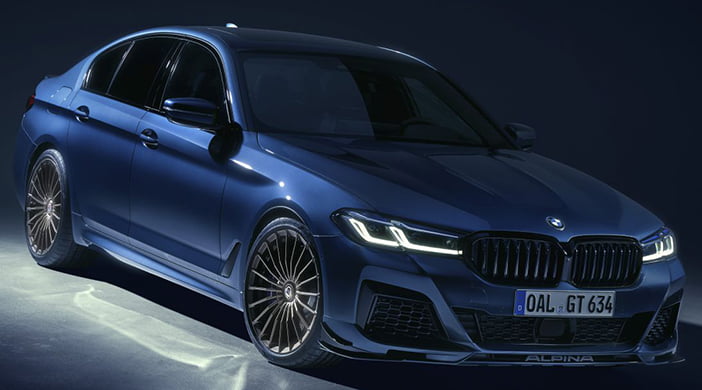
+++ ALPINA has revealed its latest ultra-limited model, which will go on sale as the most powerful yet produced by the Buchloe-based firm. The new B5 GT, which will cost about €190.000 euro in the Netherlands and will be available in both saloon and Touring bodystyles, is powered by a twin-turbocharged 4.4-litre V8 petrol engine producing 635 hp and 850 Nm of torque. It surpasses the BMW Alpina B8 Gran Coupé and the BMW Alpina XB7 SUV, both of which produce 620 hp and 800 Nm. The standard B5 produces an already eye-watering 620 hp. The saloon can boast a 0-100 kph sprint of just 3.4 seconds, while the Touring accelerates to the same figure in 3.6 seconds. Power is managed by a ZF 8-speed automatic transmission. Alpina says the increase in power over the standard B5 is down to optimised air intakes and updates to engine software and boost pressures. Other changes include bolstered handling thanks to front-end reinforcement with a new dome-bulkhead strut and optimised roll support. The B5 GT sits on a set of 20 inch forged wheels with Brembo brake discs, measuring 395×36 mm at the front and 398×28 mm at the rear. Its interior is finished with Nappa or Merino leather, walnut wood trim and B5 GT lettering. The sports seats are said to improve lateral support and gain Alcantara centres to improve comfort. A digital instrument panel sits behind the steering wheel. Each car also gains a unique stainless-steel production plaque attached to the centre console, while the engine bay displays the model’s production number. Other standard kit includes a heated steering wheel, a Harman Kardon surround-sound system and Anthracite roof lining. The B5 GT is limited to just 250 examples, with order books open now. Alpina said deliveries will start in July. +++
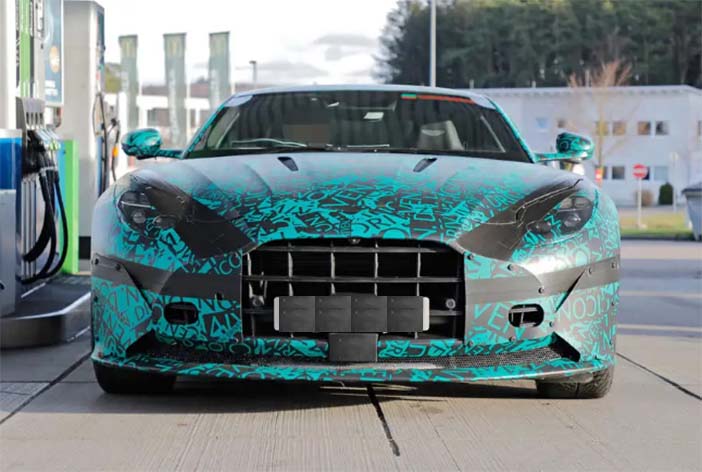
+++ ASTON MARTIN is priming the DB11 grand tourer for an extensive mechanical and technological overhaul, which will help it to compete more effectively with the newer Mercedes-AMG SL and Ferrari Roma. New images captured by spy photographers show a heavily camouflaged DB11 undergoing road testing; giving itself away as the updated car with a revised front fascia, which looks to be modelled on the Aston Martin DBR22 speedster shown in August last year. Despite being a clear continuation of the existing DB11, which arrived 7 years ago, the updated car promises to be a thoroughly modern proposition inside and out. Company chairman Lawrence Stroll previously said the new version will be more like an “all-new” car, bringing upgraded engines, gearboxes, suspension and, most importantly, an overhauled interior. “How can you have an Aston Martin that sells for €257.000 (Dutch pricing) with 3-year-old technology?”, Stroll asked early last year, referring to the ageing Mercedes-Benz-derived trackpad system the DB11 has used since launch. An agreement with Mercedes-Benz meant Aston Martin could only use the German firm’s technology once it had been used in Mercedes models for 3 years “a silly thing the previous management agreed to”, according to Stroll. He confirmed that the new car will get a touchscreen infotainment system, differentiated from Mercedes’ tech by “our own faces, our own voices so a proper English accent”. The choice between V8 and V12 models is likely to remain, with both subject to substantial revamps. The latter was recently uprated to 770 hp for the swansong DBS 770 Ultimate, thanks to a 7% bump in turbo pressure and ignition tweaks. Aston Martin product and marketing boss Alex Long told the V12 is “synonymous with the brand”, adding it has “a huge emotional connection for the customers”. The 8-pot is likely to be the upgraded version of the M177 unit found in the new Mercedes-AMG SL 63, which raises the potential for outputs of 585 hp and 800 Nm. For reference, the current DB11 V8 produces 535hp and 675 Nm. That the test mule was captured wearing 305-width rear tyres (10 mm broader than those fitted to the existing model) hints at a power uplift substantial enough to require the additional rubber. The smaller Aston Martin Vantage will receive a similar suite of upgrades, whereas the closely related DBS will go off sale once the 770 Ultimate’s 499-car run (300 coupés and 199 convertibles) is complete. It is all part of a move to ramp up sales of its front-engined sports cars to 4.000 units per year, Stroll explained. “That is the true consumer demand”, he said when confirming the round of updates was inbound. An early stage of Stroll’s turnaround plan for Aston Martin centred on reducing the company’s output to meet demand, rather than building for wholesale. Hinting at how radically evolved the new cars will be, Stroll told reporters: “You’ll be very impressed with the all-new ‘front engines’ next year. There’s no similarity at all to the current cars”, he said, but added that there will be “some carry-over” at the rear end. The updated models, said Stroll, will be “what those cars should have always felt like”. The DB11 is expected to arrive first, and is expected to make its official debut later this year. +++
+++ Sebastian Grams, managing director of AUDI SPORT , is hopeful that the electrified future will “be no less amazing” than the RS models of today. Grams has been head of Audi Sport for nearly 2 years, taking on his role at a crucial time as the high performance brand starts to build on the success of the RS e-Tron GT. Autointernationaal.nl spoke to Grams at the launch of the last R8, the GT RWD, about learning from current high performance EVs and what the F1 deal means for Audi. Question: Does combustion still have a role to play for Audi Sport, especially with regard to run-out specials like the Audi R8 GT RWD? Answer: “What you see today in the R8 GT RWD and TT RS Iconic Edition is pure fuel combustion. But we are on our way to electrification with a clear plan. By 2030, we will have 100% of partially or full electric cars. What does this mean? You have a time in between. So in the time between, where we have new models which are coming, combustion engines play a role to make a hybrid powertrain agile and fun”. Q: But an ‘element of electrification’ still means a combustion engine… A: “We are going in the direction of performance plug-in hybrid systems. This is what we are going for and I can tell you, this will be no less amazing than what you’re driving today. I personally believe that you will also have more opportunities to design the driving performance to be even cooler for the customer”. Q: So what kind of modes do you have? A: “You see it in the Audi R8 GT with the drift mode: you can play with these things that are coming more from the electrical side, and also in combination with the e-motors on board. It will be fun”. Q: Do you think there’s a way to do that without adding too much weight? A: “This is the major question, I guess for all high performance manufacturers. But yes, we can do that. It’s a trade off so we need to perfectly design that. This is exactly what my head of R&D, Steffen Bamberger, is doing brilliantly with the team: to find the perfect balance out of how much weight you’re putting in, where you’re putting the weight, how you’re playing with these components, batteries, all the the heavy parts in the car and putting them in the right place”. Q: BMW M has gone on record saying they don’t feel like their customers are particularly concerned about the lack of noise. But are you confident of keeping your fan base in this move to an EV? A: “I think we have a perfect example with the RS e-Tron GT. This was our first high performance EV out of Audi Sport and you can already see that people who drove the RS6 before are moving into the electric world and are completely open for the electric world. We believe that sound plays a major role also in electrification. Therefore, we also decided to bring a specific RS sound to the RS e-Tron GT. This is not like a combustion engine: it’s transformed into the electric world but also shows the performance”. Q: Do you feel like you’re there yet? A: “There’s more to come and we need to sharpen that. We are learning. We are happy that we had the chance to position such a car in the market, before our competitors came, to learn and get feedback from the customers. One thing I want to say is regarding the fan base. Yes, you need to adapt to the customer fan base you already have. But secondly, you need to take into account that you have a target group that is growing into your products. So in 5 to 10 years, you have our S customers who are coming out of the digital age and maybe they are not missing the [engine]sound. You need to look at what target group you are aiming for”. Q: What lessons have you learned from the RS e-Tron GT that you’re applying to this 2030 target? A: “Performance is not a problem at all. Secondly, with the Audi e-Tron GT and the RS, we also need to bring a specific differentiating design and we need to make it more sharp. So, edgy, sporty: people love to have these elements in the electric age. Also, what kind of digitalisation topics you’re bringing into your cars. Today, people are paying attention to hardware stuff, like rims, seats, exterior parts. But what is the mirror to that on the digital side? You need to create value to the customer from that side”. Q: Are you excited about the prospect of RS-branded SUVs? A: “We have our RS Q3 and RS Q8 which are very well accepted in the market. But we will definitely also bring more SUV models in the RS segment and also in the electric world. We have 16 different models within the RS portfolio and we are trying to offer the perfect product to different customer groups. But we don’t want RS ‘inflation’. So not each product should be an RS”. Q: Will Audi Sport do its own version of the SSP platform, like Porsche is rumoured to be doing? A: “What I can say is, we are trying to use the synergies in the Volkswagen Group. We are trying to use the same platforms so we are not developing our own platform for Audi Sport. We try to make it perfectly aligned with our mother, with Audi. And then we try to bring all the requirements into the platform to have the perfect baseline to make an RS model”. Q: Does that make a successor to the R8 more difficult? A: “Our biggest wish is to have a successor of the R8. Christmas is coming, maybe I can have a wish like everyone. If you’re asking if we need to do it, it depends on other things inside the group. We cannot decide these things alone. Therefore we have a board of management in Audi and we have a lot of tasks to fulfil in different fields. We are looking for different kinds of concepts. It needs to fit our strategy in the right direction of electrification”. Q: How far advanced are plans for an electric TT? A: “I cannot comment. Today, the TT is an icon. And what we want to show with the Iconic Edition is, let’s say, the ultimate TT you can get. And what the future brings depends exactly on what you asked before, on the platform strategy of the future. We, as Audi Sport, always fight for perfect, high performance products in the different segments. Let’s see what the future brings”. Q: Now that Audi is committed to Formula One, does that mean budgets will be tighter for road cars? A: “Not at all. First of all, the regulations are changing for Formula One. So you have a clear cost cap and the cost cap is giving every competitor a limit. This was important for us, as you don’t want to burn endless amounts of money. Secondly, for us, our [existing]customers are really important. But with Formula One, we want to make the brand even more visible around the world. And therefore we believe, as Audi, that Formula One is exactly the right racing series”. +++
+++ The MAZDA 6 will be axed from the firm’s line-up after 2decades, due to a decline popularity. Sales dwindled in the segment, with customers prioritising SUV purchases. The Japanese firm will now focus on the CX-60 plug-in hybrid, the upcoming CX-60 diesel and the CX-5, which has been proven popular. The 6 was removed from sale in the US last year but will remain on sale in select European countries for the time being until all inventories are sold. Its drop in sales has been felt in Europe. According to industry analyst Jato Dynamics, Mazda sold 4.865 examples on the continent in 2021, representing a drop of 28% from 2020. By November 2022, it had sold 4.104 for the year. Mazda’s crossover and SUV models, meanwhile, have taken a large proportion of its sales. By the end of November 2022, the CX-30 had sold 32.636 units, the CX-5 27.828 units and the new CX-60 8.162 units. The 6 is unlikely to be replaced, given Mazda’s commitment to the growing SUV segment. +++
+++ The MUNICH MOTOR SHOW returns on 5 September 2023 as the second edition of IAA Mobility, following its reinvention as a personal mobility expo 2 years ago. This year’s event will be split into 2 exhibitions: 1 for consumers, highlighting connected vehicles, autonomous vehicle technology, sustainability and more; and 1 for businesses. The latter, dubbed the IAA Summit, will feature BMW, BYD, Ford, Mercedes-Benz and Volkswagen, among many others. OEMs such as Bosch, Continental and ZF will also be present. BMW boss Oliver Zipse said: “The BMW Group is already looking forward to the second IAA Mobility in Munich. There, we will show how we will make the mobility of tomorrow more sustainable and at the same time more human with technology”. Mercedes-Benz chairman Ola Källenius said: “The advanced concept for the second IAA in Munich underlines once more the awareness that the goal of sustainable mobility can only be achieved together, in a close exchange between industry, science, politics, the media and customers. IAA provides an important platform for that. At Mercedes-Benz, we are looking forward to it”. The Munich motor show was rebranded to IAA Mobility in 2021, when it hosted a raft of high-profile debuts including the Dacia Jogger, Renault Mégane E-Tech Electric and Mercedes-AMG GT 63 S E Performance. The Munich show is also where the big German manufacturers typically display forward-looking concepts that hint at future production models. The 2021 edition introduced Mercedes-Maybach’s EQS SUV, the luxury sub-brand’s first electric 4×4; the Porsche Mission R, hinting at an all-electric 718 Cayman; and the Volkswagen ID.Life, previewing a circa €22.000 electric hatchback (Dutch pricing). Munich-based BMW used its home show to highlight its vision for a sustainable electric family car for 2040 and it is expected to headline the event again this year. The 2023 edition of the Munich motor show will be opened by German chancellor Olaf Scholz, reflecting the importance of the automotive industry to the country’s economy and identity. Expect many concept cars making their debuts this year, such as the Audi Activesphere, the BMW i Vision Dee and the Volkswagen ID.7, to be present, as well as some surprises reserved for the show. +++
+++ NISSAN will show a new zero-emission concept car, expected to be a physical version of the Max-Out design study, on Thursday 2 February. The vehicle’s debut has been previewed via a Youtube broadcast with a picture of somebody stepping out from the passenger side, hinting that Nissan has built a physical version of the digital-only Max-Out concept. The video’s description reinforces this impression. It reads: “Join us on February 2 to see what happens when virtual becomes physical. Discover how our latest concept car takes zero emissions mobility to the max!” Producing a real-world model of the Max-Out would signal Nissan’s renewed commitment to driver-focused sports cars amid the company’s push to electrification. The Japanese firm previously said the forward-looking design study would offer a “new driving experience with its superlative stability and comfort”, tight handling and limited body roll. Such characteristics could be imbued by the use of solid-state battery technology, which will be used in the company’s electric cars from 2028. Solid-state batteries could accept triple the 130 kW charge rate of the Ariya’s lithium/ion pack, said David Moss, Nissan’s senior vice-president for research and development in Europe. Such speed could allow the maker to reduce the size (and therefore weight) of a car’s battery pack, offering huge benefits to performance and dynamics, without compromising usability compared with current models. Nissan has committed €15.6 billion to EV development over the next 5 years in addition to the €7.8 billion it has already spent. As for the Max-Out’s interior, previous images have revealed a bare-bones layout, featuring little more than a squared-off steering wheel and a display screen spanning the dashboard. The passenger seat can be folded into the floor to further boost room, said Nissan. The Max-Out represents the sporting offering in a range of ‘-Out’ cars that hint at the next generation of Nissan EVs. The rest of the range comprised the Chill-Out, a crossover slated for production at Sunderland, the Surf-Out pick-up and the Hang-Out MPV. +++
+++ Future PEUGEOT models will take the lead from the radical new Inception concept in “challenging conventional silhouettes”, and now an official preview released by the firm shows just how dramatically they will be reinvented. Presented as part of Peugeot’s wide-reaching ‘E-Lion’ strategy update, the brand’s electric line-up preview looks to include 4 low-slung cars, seemingly including 2 hatchbacks and a saloon alongside a more mysterious model, and a trio of SUVs. Every model in Peugeot’s European line-up will be electric by 2030. No doubt this preview points to radically redesigned successors to today’s models: the 208, 308, 408, 508, 2008, 3008 and 5008. The influence of the new Inception concept, shown at CES in Las Vegas earlier this year, is evident in their rakish silhouettes and distinctive ‘claw’ headlight designs, but also because each previewed model looks to be defined by a silhouette that does not obviously belong to any one core vehicle segment. At the Paris motor show last year, the brand’s chief designer Matthias Hossann highlighted the benefits of the new Peugeot 408’s unconventional silhouette, namely that its raised ride height and spacious greenhouse boost practicality, while its rakish roofline promotes efficiency, and said future models will follow suit. “It shows the inventiveness of the brand, this new typology of product”, he said. “It’s not a sedan any more, it’s not an SUV. It’s something else: a new species, a new breed of car, and I think when you see it physically, you can really appreciate these new proportions”. Asked why it is important to rethink traditional vehicle categorisations, Hossann said “every product we are designing needs to be a worldwide product”, highlighting that China (a key focus market for Peugeot) is no longer the saloon car stronghold it once was, such is the global trend towards SUVs. He said the current Peugeot 508, launched in 2018, was the first step on the path towards “the evolution of the traditional sedan car”, with its coupé-style silhouette and sporting focus. When it came to designing the 408, Peugeot’s designers found “there was white space between the traditional sedan and the SUV, and in this white space we didn’t want to just do a sedan crossover with some plastic parts on it, we really wanted to do something else”. The 408 is part of a move to cater to a target market that, claims Hossann, wants “a new experience” when they buy a car. “We don’t want to be stuck to traditional sedans or SUVs any more”, he said. “We want to push for the future of Peugeot, so every time we design a new car, we want to challenge the conservative silhouettes that we are used to”. He stopped short of confirming whether each future model would straddle multiple segments as obviously as the 408, but emphasised the ‘non-traditional’ ethos behind the design of each current Peugeot, and said it will be emphasised in the next generation of cars. The brand explored this messaging further with the Inception concept, which (unusually for a mainstream volume brand in 2023) shunned conventional SUV design cues, in spite of its generous footprint, in favour of more rakish, GT-esque proportions. Peugeot was careful to clarify that it won’t build a production version of the Inception, necessarily, but said future models will draw inspiration from the way in which it occupies several car segments at once. Indeed, product director Jerome Micherôn has been vocal on his conviction that the days of the tradition SUV could be numbered: “We believe not everything is related to SUVs. We know the customer loves SUVs, but we see also the trend of very aerodynamic vehicles with a low roof for efficiency, so we believe there is life outside SUVs”. +++
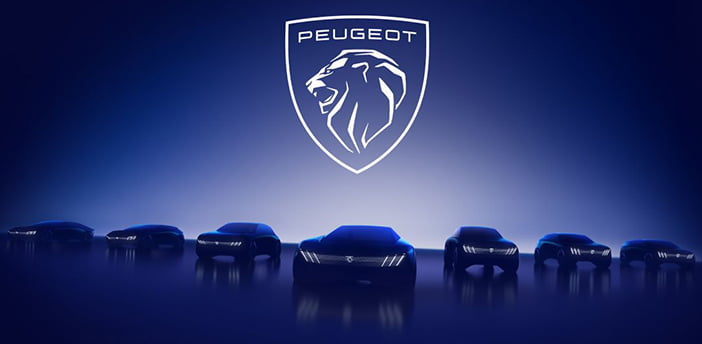
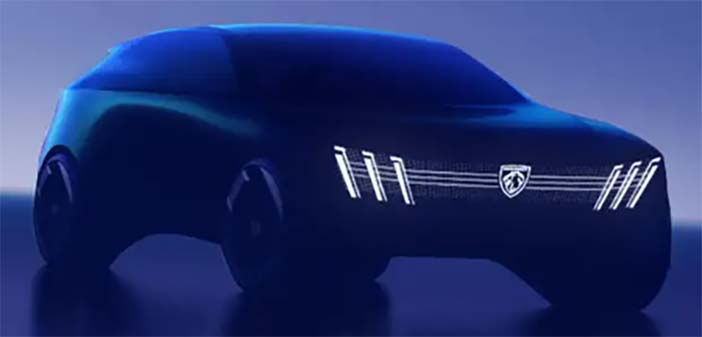
+++ The next-generation PEUGEOT 3008 will be revealed this year with pure-electric power and a totally new look modelled on the brand’s radical Inception concept. Confirmed for an unveiling in the second half of 2023, the new e-3008 will be the first car from the brand to sit atop parent company Stellantis’s new STLA Medium architecture, which promises a step-change in terms of performance and functionality compared to the legacy PSA Group platforms currently used by Peugeot EVs. Peugeot said the e-3008 will offer a choice of 3 powertrains, including a dual-motor, 4-wheeldrive option, a first for the brand. It has also promised a range of up to 700 km from the variant with the largest battery. An electric version of the larger 5008 will follow atop the same platform and likely with the same array of powertrains and batteries. Peugeot product boss Jerome Micherôn promised the new crossovers will be “born EV”, meaning they will be designed around their new EV-specific architecture, whereas the brand’s current EVs, the e-208, e-308 and e-2008, ride on adapted versions of ICE-car platforms. Further details remain under wraps, and it’s not expected that the 680 hp, 800 km Inception concept gives any real clue as to the future technical make-up of the SUVs, which are highly competitive in their respective segments. However, Peugeot has now released a preview of its future all-EV line-up, showing how each of the 7 new cars due by 2030 will be influenced by the Inception. There are 3 SUV-shaped models included in this line-up, and no doubt the e-3008 is the middle of them, sitting between the e-2008 and e-5008. Each will have much more rakish proportions than its predecessor and wear a striking new visage modelled on the Inception, defined by a new LED interpretation of Peugeot’s ‘claw’ light signature. The e-3008 will show exactly how Peugeot plans to rethink the concept of the traditional SUV with a focus on aerodynamic efficiency – and thus range per charge. Company boss Linda Jackson highlighted that the Inception’s rakish form points to a need to avoid tall, flat-fronted silhouettes in future production cars, saying: “I don’t think anybody is saying SUVs are going to disappear, because they’re still as popular as ever, but we’re all looking for ways to make them more aerodynamic, so therefore you start to move into different silhouettes”. Her words were echoed by Micherôn’s affirmation that there is “life outside SUVs”. +++
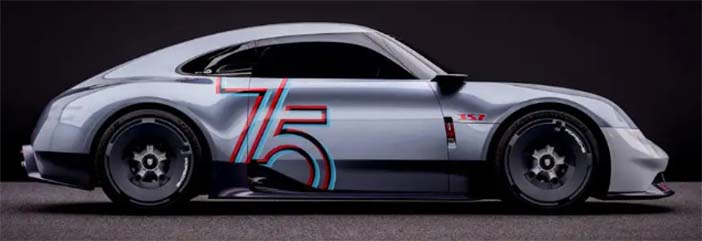
+++ PORSCHE has revisited its beginnings with this new design concept, created as one of “many” 75th-birthday presents the sports-car company will be gifting itself over the coming year. The Vision 357 is a modern take on the 356, which in 1948 became the first production car to bear the Porsche name and went on to provide the framework for the iconic Porsche 911, which itself turns 60 this year. The 357 evokes the rakish and narrow design of the 356, also featuring a modern take on its front end, a rounded rear and bullish flared wheel arches. However, although it “liberated” itself from any regulations that apply to road cars, such as those concerning safety, Porsche opted not to bring back the 356’s iconic split windscreen design. The 357 wears a special livery with 75th anniversary logos adorning the doors and the bonnet, giving it the look of a road-going racer. Michael Mauer, vice-president of Style Porsche, the team that created the concept, called the 357 an “attempt to combine the past, present and future with coherency” while also showcasing “details that visualise the outlook for the future”. Despite these comments, Mauer wouldn’t confirm whether the 357 provides an immediate look into the brand’s future stylings and said that it doesn’t preview the next-generation 911. However, he added that “there are elements that maybe will make it one day into production” and hinted these could include the bug-like headlights and body-integrated tail-lights. “It’s one possible solution, or vision, or you could almost say dream”, he said. The 357’s virtual exterior mirrors, which are used by Porsche sibling brand Audi on the Q8 e-Tron, are also likely to feature on future cars. Perhaps surprisingly, the 357 doesn’t have an electric powertrain. Being based on the revered Porsche 718 Cayman GT4 RS, it instead has a mid-mounted 500 hp 4.0-litre straight-6 engine, albeit recalibrated for running on synthetic fuels. This represents a very significant upgrade over the Volkswagen Beetle-derived 35 hp 1.1-litre flat-4 found in the original 356. As in the GT4 RS, a 7-speed dual-clutch automatic gearbox sends power to the rear wheels, in this case special 20 inch alloys. Besides the engine, nods to the 718 underpinnings include side-mounted air intakes just behind the driver’s head. No interior has been created for the 357, Mauer said, but we imagine that one similar to that of the 718 Cayman would be likely if this car were put into production. +++
+++ TOYOTA will close its Czech manufacturing plant for all of February due to a lack of components caused by the continuing effects of the Covid-19 pandemic. The Japanese car maker’s Kolín facility, situated 60 km east of Prague, produces 2 of its smallest offerings, the Aygo X and the Yaris, and the plant’s closure is expected to impact European lead times on both models. The Yaris is also produced at a Toyota factory in France. “Due to a shortage of components in the supply chain, we will be forced to halt production temporarily from 31 January”, said Toyota plant spokesperson Tomas Paroubek. On its website, the car maker notes that customers should contact local dealers for specific model lead times. The decision comes after Toyota boosted output at the plant by 34% last year, with more than 202.000 cars rolling off its production lines. This was a welcomed by the firm, which in 2021 took full ownership of the factory and invested more than €180 million to expand it, allowing production of the TNGA (Toyota New Global Architecture) B-platform. This is not the first time the factory has been forced to shut, with production halted in mid-2021 as a result of the semiconductor chip shortage that scuppered manufacturing globally across several industries. As well as the Kolín factory, the firm’s facilities in France and Turkey were also temporarily shut down then. Other car makers including Nissan, Honda and Jaguar Land Rover were also hit and mothballed plants. +++
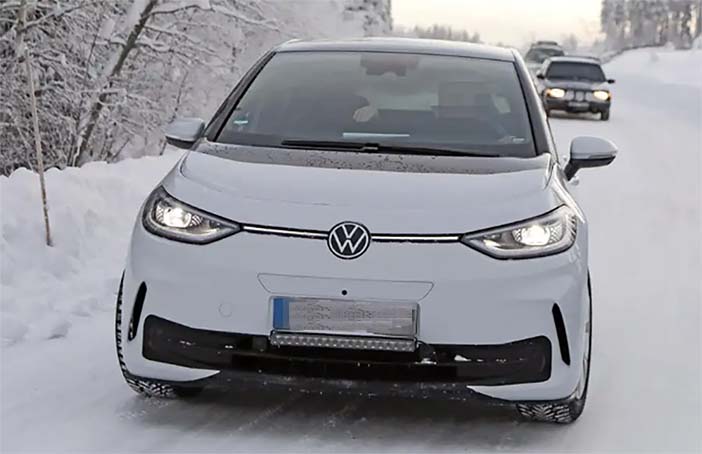
+++ The facelifted VOLKSWAGEN ID.3 will arrive in March with upgraded infotainment software, a better-quality interior and a subtle design refresh. Coming 2,5 years after the first customer deliveries of the electric family hatchback, the mid-life changes weren’t originally planned for this year, but its release was brought forward in reaction to well-publisized issues with software. As such, the updated ID.3 will arrive with the latest generation of Volkswagen’s ID software package, which is claimed to provide improved reaction times and a smoother user experience. It’s displayed on an upgraded, 2 inch larger (now 12 inch) touchscreen, which is mounted on a restyled dashboard and features illuminated controls within its base, as the old climate controls which were difficult to see in the dark. Following similar criticism of the interior quality of the original ID.3, more upmarket materials will also be used inside. It could get push-button steering-wheel controls, which Volkswagen confirmed would be returning to some models in reaction to customer feedback. However, the feature will be rolled out in the new Volkswagen Passat and Volkswagen Tiguan, arriving this year, with no date set for when it will make its way into ID models. The facelift also brings an optional Travel Assist system, which includes adaptive cruise control, lane-keeping assistance and emergency assistance, based on swarm data. The optional Park Assist Plus system also receives a new memory function. Pictures of the car testing in colder climates shows that it will also receive a new-look front bumper with new vertical air ducts on either side of a redesigned central air duct, plus lightly revised led headlights. The bonnet has also been reworked, with the black panel at the base of the windscreen replaced by a new colour-keyed panel with greater contouring. At the rear, the 2024 modelyear ID.3 adopts altered led lights. Together with changes to the appearance and interior of the ID.3, Volkswagen has confirmed production of the facelifted ID.3 will be extended beyond the existing sites in Dresden and Zwickau to include its home city of Wolfsburg. +++
+++ VOLVO boss Jim Rowan has said the car maker’s inhouse next-generation software will be its “3-point digital seatbelt” in driving future product and safety innovations. The Briton was a surprise choice to replace Håkan Samuelsson at the Swedish firm in March last year, given all of his previous experience had been in the tech industry, most recently at Dyson. He said he wants the EX90 (Volvo’s new flagship and first bespoke EV) to lead the automotive industry’s technological charge. The SUV (which is also key to Volvo’s target of selling 1.2 million cars (600.000 EVs) per year by 2025) is described as a “software-driven” vehicle. Thanks to a range of advanced sensors and technology, including the first lidar system fitted as standard on a production car, the EX90 is claimed to eventually be capable of “unsupervised driving”. According to Rowan, the EX90 showcases how Volvo will work with partner firms but keep development of key technology in-house. “Auto companies are starting to understand next-generation silicon and its importance in design”, he said. The EX90’s “application layer” (meaning the lidar, radar, camera and other sensors) is powered by an Nvidia Odin chip that can do 254 trillion operations per second (TOPS). This compares with about one TOPS for automotive chips a decade ago. “The software stack, connecting the silicon to the application layer, is the part we really care about”, said Rowan. “That for us is the 3-point digital seatbelt. “We have a team of more than 700 people who write the perception and sensor fusion software. In other cases, firms have outsourced that, but we think it’s absolutely core, so we’ve kept it in house”. Rowan said that Volvo “won’t become slaves to having 40 different models” but will “look after the demographics that we think make sense”. He continued: “We have customers who require different vehicles and different uses for vehicles. We will try to capture as much of that as we can”. Key to this will be next-generation EV platforms. The EX90 uses the new SPA2 architecture, while an upcoming compact crossover that Volvo will reveal next year (tipped to be named the EX30) is likely to sit on the SEA platform for smaller cars. That forthcoming urban-focused electric crossover will be key to Volvo’s push to reach younger, Generation Z buyers; a demographic that Rowan said “we’ve never really spoken to before”. The demographic is also behind Volvo’s foray into subscription sales. Rowan explained: “If you bring a small SUV that’s competitively priced, with subscription-based ownership that you offer for 3 months, at a reasonably low cost, they won’t even go to the dealership, they will buy online. I guarantee that”. The new electric flagship SUV has been revealed with a dual-motor powertrain, but deliveries aren’t due until 2024. Volvo is working on lower-powered versions and lesser trim levels, potentially including 5-seat cars. Expect prices for those to start at around €82.000 in the Netherlands. Volvo sold 483.304 cars in the first 10 months of last year, 15% of which were EVs. The 2025 goal is 1.2 million, 50% of them electric. That will require a major effort, especially with Volvo pushing further into the premium market. Volvo has now launched 3 electric SUVs: the XC40 Electric, the C40 and the EX90. A smaller EX30 will follow in 2024. But it has yet to indicate plans for electric saloon or estate models. Volvo has a goal to make its production facilities carbon-neutral and to reduce the life-cycle CO2 emissions of each car by 40% compared with 2018 levels by 2025. +++
+++ More than 100.000 VOLVO models have been recalled worldwide over potential issues with automatic safety brakes that affect the firm’s entire range. This problem, which the car maker has confirmed is “rare”, affects the electronic braking support function, such as when the system takes over in the event of an emergency. It does not impact when the driver manually brakes via the brake pedal. Cars affected include 2023 models of the Sino-Swedish firm’s entire range. In total, 106.691 cars have been recalled globally. Owners will be contacted, the firm told, with a free software update to fix the problem. A statement read: “Volvo Cars has issued a recall on 106.691 cars across a number of markets globally, due to a potential issue with software within the brake control module. “In rare cases, this may result in electronic braking support functions being lost during driving, although braking capability will remain via the brake pedal. “To remedy the affected vehicles, Volvo Cars will update the software relating to the brake control module. Volvo Cars is contacting owners of affected cars, informing them of the issue and asking them to book an appointment with their retailer as soon as possible to have the software update installed”. It added: “Safety is a top priority for Volvo Cars, and we take this issue seriously. We are launching this recall to prevent issues and inconvenience for our customers”. +++