
+++ Automakers from CHINA are speeding up their development of hybrid vehicles, with some introducing new models that utilize artificial intelligence to improve fuel efficiency and driving performance. The focus is now on the extent to which the Chinese automakers will be able to enter the HV (Hybrid Vehicle) market in China, which has been a stronghold of Japanese manufacturers, including Toyota. Speaking at the Beijing International Automotive Exhibition, held in Beijing from April 24 to May 3, Yan Bowen, head of the HV development team at Chinese state-owned automaker Chongqing Changan Automobile, said the company has always had ambitions of surpassing Toyota. Yan said the fuel efficiency of the company’s sedan-type HV, which is equipped with next-generation technologies, is about 26 kilometers per liter; a figure that is slightly better than Toyota’s. The vehicle also features an AI-based function that records individual driving habits and adjusts the car’s settings to optimize fuel efficiency. Chongqing Changan is keeping the price of its latest HV sedan between 89.900 yuan and 99.900 yuan. Yan said the company was able to utilize its expertise on motors and batteries, which it has cultivated through its development of electric vehicles and plug-in HVs. In and after 2021, EVs, PHVs (Plug-in Hybrid Vehicles) and other new energy vehicles rapidly started to emerge in China under policies of the Xi Jinping administration. HV development was relatively slower, as that vehicle type was not included in the same category as the others. However, tax breaks for new energy vehicle purchases expired in 2025, which has spurred a revaluation of HVs in the country. According to Chinese public security authorities, 43.97 million new energy vehicles were owned in China as of the end of 2025, accounting for only 12% of all owned vehicles in the country. In rural areas, where there are insufficient EV charging stations, and the Northeastern region, where temperatures can drop below minus 30 C, many consumers prefer engine-powered vehicles over battery-powered EVs. According to data analysis firm MarkLines, 1.01 million HVs were sold in China in 2025, with Japanese manufacturers holding an 81.5% market share. Models from Toyota and Honda accounted for 9 of the top-10 best-selling models, making Japanese firms dominant in the market. However, Chinese manufacturers, which hold an advantage in new energy vehicles, are aiming to lessen that dominance. In April, major Chinese automaker Geely Automobile Holdings announced its new AI-controlled i-HEV technology, which is said to improve fuel efficiency by up to about 34 kilometers per liter. At a press conference, CEO Gan Jia Yue emphasized the superiority of Geely vehicles by repeatedly mentioning Japanese manufacturers. Gan said the firm will completely overturn Japanese companies in terms of technology. It is also true that Chinese automakers are focusing on HV development as they rush to expand overseas, apparently giving up on the domestic market, which has leveled off due to sluggish domestic demand. There is significant room for growth in the HV market in Southeast Asia and the Middle East, where charging station infrastructure is still underdeveloped. “The speed of development is fast at Chinese manufacturers”, an official from a major Japanese automaker said. “Their EV technology-based design concept is something not found in Japanese automakers, and that’s giving rise to a distinct Chinese identity”. Fierce competition is likely play out between Japanese and Chinese automaker in the global market as well. +++
+++ BYD’s premium brand, DENZA , has pulled the wraps of the coupé version of its new Z electric hyper car. Underpinned by a new development of the e3 platform that’s also employed by the Z9 GT, it has 3 electric motors that combine for a huge 1.600 hp and 1.200 Nm ft of torque.
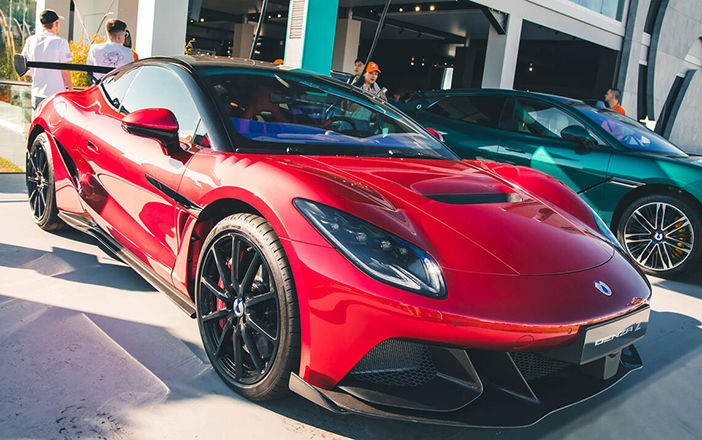
This allows the Z Coupé to hit 100 kph from rest in a claimed 2.25 seconds; the Z Spider that was revealed at the Beijing motor show takes 2.3 seconds. The Racing variant, fitted with a large rear wing and semi-slick tyres, cuts that to 1.96 seconds. The Coupé and Spider top out at 300 kph, while the Racing can hit 347 kph. A ‘Special Edition’ is also in the works, bringing more than 2.000 hp and cutting the 0-100 kph time to less than 1.7 seconds. This derivative is also claimed to bring more advanced battery cooling for track use. All versions are fitted with magnetorehological suspension: the fluid inside the dampers contains metal filaments that mean it can change its viscosity in milliseconds, responding to magnetics controlled by the car’s chassis computer. This means it can make rapid adjustments to damping based on the condition of the Tarmac underfoot. The Coupé and Spider ride on air springs, while the track-focused Racing uses traditional metal coils. All versions are stopped by carbon-ceramic brake discs with six-piston calibers up front and four-pots at the rear. They also share a 76 kWh lithium-iron-phosphate battery for ranges of 410 km in the Coupé, 400 km in the Spider and 380 km in the Racing. Rather than being a traditional pack comprising several modules, the cells in the Z are mounted directly to the chassis, boosting torsional rigidity. This packs BYD’s ‘Flash’ charging technology, allowing a 10-97% refill in just 9 minutes on a suitably fast (1.500 kW) connection. The Z weighs 2.230kg in Coupé form, rising to 2.250kg for the Racing and 2.300 kg for the Spider. The Z gets BYD’s first steer-by-wire system, in which there isn’t a traditional steering rack but instead an electronic connection. Inside, it features an 8.9 inch digital instrument panel and a 12.8 inch infotainment touchscreen. There’s also a simulated engine sound, Denza said, but we don’t yet know whether it has opted for a virtual gearbox system as pioneered by the Hyundai Ioniq 5 N and since replicated by the Porsche Taycan E-Shift and Honda Super-N. Denza has yet to confirm pricing but, given the Z’s positioning as its flagship, it’s expected to start well into 6 figures. It previously said the Z9 GT shooting brake would start around €115.000. The Z serves as a statement of intent for BYD’s premium brand, taking the fight to the likes of Porsche, Polestar and Mercedes-Benz on all fronts. Pricing starts at €166.000 for the Coupé, €185.000 for the Spider and €200.000 for the Racing. It remains to be seen whether it will spark demand for electric supercars, but it could provide a ‘halo’ effect in bringing attention to a challenger brand in an incredibly competitive segment. +++
+++ Sales of electric vehicles are on the rise in JAPAN , with the figure for the first half of 2026 reaching 59.337 units (2.1 times the previous year’s first-half figure) and accounting for a record-high share of about 3% of total passenger car sales, according to figures released on Monday by the Japan Automobile Dealers Association and other entities. While the launch of new models and government purchase subsidies have provided a tailwind, it remains unclear whether this momentum will last. The best-selling EV overall was Toyota’s BZ4X with 13.777 units; nearly 70 times the previous year’s figure. Second place among domestic carmakers went to Nissan’s Leaf with 10.012 units. Among foreign manufacturers, Tesla took the top spot, with sales estimated at around 12.000 units. One factor behind the strong sales is improved performance resulting from the launch of new models and upgrades. Until now, Japanese EVs had relatively short driving ranges for their prices, making them seem inferior to their foreign counterparts. Toyota’s BZ4X saw its range improve by about 30% following a partial upgrade in October last year, enabling it to travel up to 746 kilometers on a full charge. Nissan also launched a new genration of the Leaf with a popular crossover-style design in January this year, which features an extended range. Policy support has also played a major role. In January this year, the government raised the maximum subsidy for EVs by ¥400,000 to ¥1.3 million. While the maximum subsidy for minicar EVs remained unchanged at ¥580,000, many domestic models are receiving the full subsidy amount. One EV model benefiting from this subsidy system is Honda’s compact Super-One, launched in late May. Originally priced at about ¥3.39 million, including tax, it can be purchased for ¥2.09 million, on par with minicar EVs, when the subsidy is applied. Demand has been overwhelming, with some dealerships temporarily suspending acceptance of orders. Some local governments are also offering additional subsidies. The Tokyo metropolitan government raised its subsidy cap in July in response to rising crude oil prices caused by the deteriorating situation in the Middle East. Models from Toyota, Honda and Nissan, in principle, can receive subsidies of ¥900,000 or more per vehicle. However, the outlook for the domestic EV market remains uncertain. With subsidies becoming the norm, a “market distortion” has emerged in some sectors in which new cars are cheaper than used ones. Because new cars can be purchased at a lower price, used car prices have fallen below their actual value, raising concerns that consumers who worry about resale value may avoid EVs. In addition, because EVs do not have internal combustion engines, they contain fewer parts. Japan’s major automakers, which rely on a large number of subcontracted parts manufacturers, are reluctant to shift rapidly toward EVs due to concerns about the impact on employment and other factors. Hisashi Ando, an analyst at research firm Fourin, remarked: “While it is unavoidable to rely on subsidies until EVs become widely adopted, sales are currently concentrated on a limited number of models. Unless the line-up expands, the market will not grow”. +++
+++ LEXUS plans for its electric LFA hypercar to feel authentically like its legendary predecessor to drive, but that doesn’t mean simply faking its howling V10 engine note. Making its dynamic debut in prototype form at the Goodwood Festival of Speed, the new LFA is effectively the EV twin of Toyota’s V8-engined GR GT supercar. Precise technical details remain under wraps, but it’s understood to be the first production Lexus to use solid-state batteries (SSB), which are vastly more energy-dense than today’s liquid-chemistry packs. Built around the same lightweight aluminium architecture as the GR GT, the LFA is similar in silhouette but much less aggressive and overtly race-influenced in its styling, which concept designer Shogo Kasamatsu said is testament to the influence of the ICE original. “The LFA itself was a very humble design, very artistic, and based on its true function”, he explained, highlighting the relatively minimalist and subtle look of the new car, relative to its Toyota sibling.
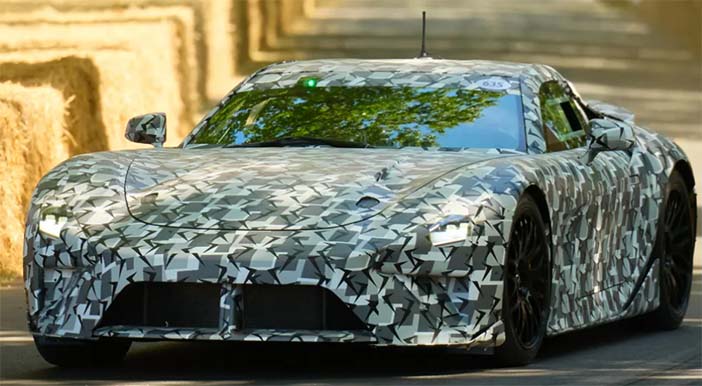
Kasamatsu added that the rationale behind the design was to “express the message, rather than our overall design language”, so the concept didn’t necessarily need to look like Lexus’s current production cars. He said the design is indicative of the final production car, which is “almost finished” ahead of a planned launch next year. Its primary raison d’être, according to Kasamatsu, is to challenge established conventions around performance EVs. “Many people don’t believe that battery power is exciting right now”, he said. “This is a huge challenge”. Yukihiro Yukita, general manager of the LFA programme, concurred, admitting that lack of demand for high-priced sporting EVs is “our biggest challenge”. However, he added, Lexus wants to be a “leader” in convincing supercar drivers to make the jump from ICE to EV power, and an authentic driving experience will be key to achieving that. “What I get from the market is that a BEV is fake”, he said, “because we imitate the sound of an ICE, but that’s not something we want to do”. Yukita said that rather than simply mimic the sound of an engine or the feel of a gearbox, Lexus wants LFA drivers to “feel like they are driving with an engine”. He acknowledged that one of the primary demerits of an EV, aside from the inherent added weight, is that “we lose the sound or the vibration, which gives a big impact to the five senses of the driver”. But on the other hand, he continued, an EV sports car can leverage the increased responsiveness and linearity of electric motors, which “we cannot get from an engine”. Plus, engineers are able to “eliminate all those sounds or vibrations that are not useful”, which means “we can reset to zero and then discuss what we want to create in redesigning the sound or vibrations, which can have a good impact on the 5 senses”. Yukita acknowledged the efficacy of Hyundai’s and Porsche’s synthesised EV powertrains but said: “We’re not just wanting to replicate the sound of the engine: we want to redesign the sound itself”. +++
+++ MCLAREN signature V8 supercar is bowing out with the new 788HS, a track-focused machine built by its Special Operations (MSO) division. It’s the final chapter in the lineage that started with the 720S in 2017, then continued through the 765LT and the 750S of 2024. The ‘High Sport’ also represents the start of a new age for the Woking-based manufacturer, which merged with British start-up Forseven in April 2025. McLaren’s focus has thus far been on stabilising its position by clearing debts and working to improve production quality, but it’s due to detail its future plans in the coming months. The swansong 788HS represents a total overhaul of the 750S, bringing additional power, an aggressive aerodynamics package and a reworked chassis. The headline figures are outputs of 788 hp / 800 Nm from its twin-turbocharged 4.0-litre V8, making it the most powerful derivative of McLaren’s mid-engined supercar (the 765LT had 765 hp). That is thanks in part to new forged pistons and a new exhaust system with four tailpipes. The latter, McLaren claims, provides greater “intensity” up to the 8.500 rpm rev limit. The engine mounts, meanwhile, have been fettled to send more feel through to the cabin. Meanwhile, new carbonfibre bodywork helps to cut dry weight to 1.265 kg, down from 1.277 kg in the 750S. Together with the additional output, this enables the 788 HS to hit 100 kph from rest in 2.8 seconds (matching the 765LT). It reaches 200 kph in 7.0 seconds and goes on to a top speed of 330 kph.
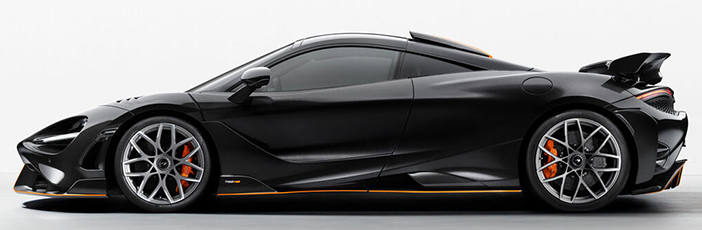
The aerodynamic package also brings a significant increase in downforce. It comprises a new front splitter, an active rear spoiler and a chunky rear diffuser said to take inspiration from Formula 1, which alone brings a 10% improvement in downforce over the 765LT. The suspension set-up has been modified, resulting in the 788HS sitting 5 mm lower than the base 750S. McLaren claims it will deliver improved body control and responsiveness. Stopping power is improved by new carbon-ceramic discs inspired by those fitted to the Senna hyper car, matched with 6-pot aluminium calibers mounted up front. McLaren 788HS Spider. These are also said to provide more feel through the pedal and greater consistency in repeated hard use, such as on track. The 788HS will be offered in both coupé and spider form. A total of 200 will be built, split evenly between bodystyles. Prices start at around €475.000 in The Netherlands; a significant premium over the €358.174 of the 750S, but will be highly variable, depending on how a buyer chooses to specify their car. Options include omitting paint in favour of a raw carbonfibre finish. +++
+++ MG will equip its next-generation plug-in hybrids with semi-solid-state battery technology from 2027. The new technology, announced earlier this year, will come first to the MG 4 EV Urban hatchback, and it has now been confirmed that it will then be used in PHEVs: first the next-generation MG ZS in 2027, then the MG HS and MG S9. In time, MG’s semi-solid-state battery technology, called SolidCore, will become the Chinese manufacturer’s predominant battery technology as it continues to develop full solid-state batteries for the future. The benefits of semi-solid-state, according to MG’s lead scientist, Li Zheng, are better range, faster charging, better performance in cold weather and, in the case of PHEVs, better low-speed, high-speed and uphill performance. Essentially, it makes the battery’s performance more consistent and more stable across a wider range of driving and climatic conditions, and in the case of PHEVs allows them to use a smaller combustion engine. These future MG PHEVs will be badged ‘Plug-in Hybrid +’ and will be offered in 2 different forms: a 1.1-litre model with 100 hp and 200 Nm in small cars like the ZS and a 1.5-litre version with 163 hp and 250 Nm in larger cars like the HS and S9. Also included in the new system is a new hybrid transmission that allows for EV-like efficiency in how the drivetrain operates. Meanwhile, much development on the engines to reduce friction and improve combustion has allowed the smaller drivetrain to operate at more than 42% thermal efficiency and the larger one at more than 43%; far above historical standards (in the low-mid-30s). The powertrains are also said to run quieter (some 5 decibels than current MG PHEVs) and achieve better performance both off the line and in-gear. Fei Jibing, MG’s chief engineer for powertrain control, also detailed a new hybrid powertrain, badged ‘Hybrid +’, that will appear first on model-year updates for the MG 3 and ZS later this year. This features the new transmission from the PHEVs and a larger 3.6 kWh battery. Jibing confirmed that MG would continue to develop hybrid and PHEV technology alongside EVs, with the goals of improving efficiency, boosting performance and making them quieter. MG Motor UK’s product boss, David Allison, told that more than 90% of MG’s sales are hybrids, PHEVs and EVs, and while the brand offers pure-ICE vehicles with manual transmissions, “nobody really buys it”. “People are now into the efficiency and that electrified feeling, particularly in the urban area that you get with a hybrid car, and that’s what people want”, said Allison. Even so, MG remains committed to offering a full range of powertrains, he confirmed. Allison also revealed plans for MG’s assisted driving technology to be made less intrusive and more reliable, as he said the “jury is still out” on the usefulness of such technologies to customers. This includes new automated parking functions and improved lane-keeping assistance technologies before MG introduces its first ‘Navigate on Autopilot’ limited self-driving technology, on highways from late 2027 and in urban areas from 2028. +++
+++ Renault, which rescued NISSAN from near-bankruptcy a generation ago and sent in Carlos Ghosn to run the Japanese carmaker, is reasserting its influence as top shareholder. The French carmaker, which holds 15% of voting rights, abstained from voting for the reappointment of influential outside director Motoo Nagai at Nissan’s annual meeting Tuesday, resulting in his ouster from the board. Nagai, a former banker from the company’s main creditor Mizuho Financial Group, played a pivotal role during Ghosn’s ejection from the company in 2018 and held sway over subsequent executive appointments as the only director serving on the nomination, compensation and audit committees.
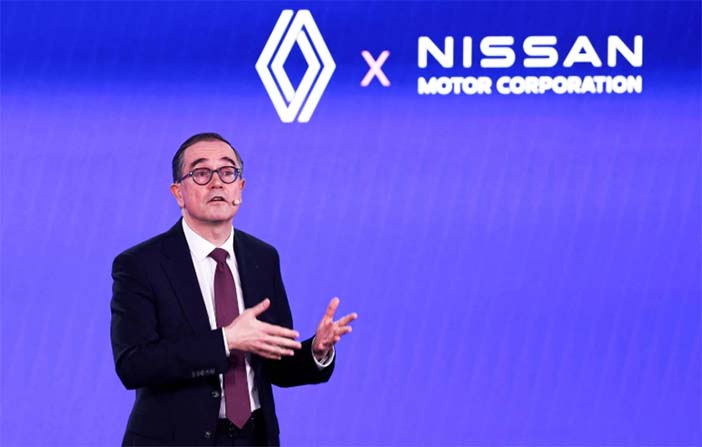
Nagai’s exit and Renault’s renewed assertiveness under Chief Executive Officer Francois Provost (photo) marks a new phase for Nissan, which has been struggling to regain lost ground since Ghosn’s arrest on charges of underreporting compensation. Merger talks with Honda in early 2025 were unsuccessful, and despite a series of turnaround plans, the stock has lost more than two-thirds of its value since 2018. The shares are down 22% this year. “Renault must be getting increasingly concerned over Nissan’s future as it’s usually quite careful when it comes to intervening in Nissan’s affairs”, said Julie Boote, an analyst at London-based research firm Pelham Smithers Associates. “If the emergency alarm is ringing, however, Renault must believe it needs to act now”. Tuesday’s board meeting did not reflect a clear-cut victory for Renault’s agenda, suggesting more tumult to come in the partnership. Junichi Shinbo, also a former Mizuho banker, was among those approved as a director by shareholders at the meeting although Renault had also withheld voting for him. In a statement, the French carmaker said it chose to abstain instead of opposing the nominees as a “deliberate decision which reflects Renault Group’s restraint, not opposition”. “We could not support their appointments as they are linked to Mizuho, the main creditor of Nissan, and hence cannot be considered independent”, Renault said. “In addition, Nagai-san has served Nissan as statutory auditor, board and committee member for 12 years”. Renault owns roughly 36% of Nissan’s stock but exercises fewer voting rights following a renegotiated alliance agreement between the companies in 2023. Their partnership had been designed to pool resources on development costs, and negotiate better deals for parts and raw materials, and was eventually expanded to include Mitsubishi. Before his ouster, Ghosn had sought to expand the alliance, which met institutional resistance in Japan among those who saw it as an irreversible merger and loss of Nissan’s independence. That played into the events that led to the charges against Ghosn, which he has denied. The former chairman now resides in Lebanon after fleeing trial in Japan in late 2019. Renault, facing its own struggles, took a range of steps to overhaul its business after it could no longer rely on Nissan to bolster its finances. That included new partnerships, including with China’s Zhejiang Geely Holding Group in South America. The French automaker’s shares are down around 30% over the past year. Nissan CEO Ivan Espinosa, who announced the results at the annual meeting, confirmed that 11 other directors had reached the majority needed to be appointed, or reappointed, including 2 directors (Valerie Landon and Timothy Ryan) nominated by Renault. The board will function with those members and no new director will be nominated in lieu of Nagai. Nagai’s removal from the board reflects shareholder concerns over his involvement in the decisions that led Nissan into its current predicament, according to Bloomberg Intelligence senior auto analyst Tatsuo Yoshida. The vote against him “can be interpreted as a symbolic rejection of the previous regime rather than a judgment on any single individual”, Yoshida said. Espinosa and his team are now under pressure to win back shareholder trust. Several disgruntled stockholders voiced their disapproval at this year’s meeting, taking jabs at Nissan’s executives, pointing to the dismal performance of its share price and a lack of compelling models. One investor openly questioned Nagai and Shinbo’s independence, and opposed the reappointment of Espinosa in a motion that was ultimately denied on legal grounds. “The biggest issue for shareholders attending this meeting is the stock price”, said the shareholder, whose remarks were met with loud applause. “That’s why most shareholders here are extremely unhappy”. Nissan has been struggling to regain its footing, having posted net losses for the past 2 fiscal years, although it’s forecasting a return to profit for the current period through March 2027. The company has ¥4.4 trillion ($27.2 billion) in debt and rating agencies have cut its creditworthiness status to junk. As management turmoil engulfed Nissan in the years following Ghosn’s ouster, Nagai emerged as a powerful broker of executive appointments. He was a key player in the departure of former COO Ashwani Gupta, and was closely involved in the selection of Espinosa, people familiar with the matter have said. +++