
+++ Semiconductor shortages that have created bottlenecks for Germany’s car industry will take years to resolve despite chipmakers’ plans to build factories in the country, a senior AUDI manager was quoted as saying on Friday. German automakers and electronics producers have been hit hard by manufacturing delays, caused by a global shortfall of chips. Executives and policymakers are re-thinking supply lines and trying to reduce reliance on a handful of Asian and U.S. chip suppliers. Berlin has been courting the world’s largest contract chipmakers with billions of euros in subsidies. Chipmakers such as America’s Intel and Taiwan’s TSMC this year announced plans to build factories in Germany. “It takes years, after all. It’s about billions of dollars are being invested”, Renate Vachenauer, head of procurement at Volkswagen-owned Audi, was quoted as saying. She said carmakers could ease the bottlenecks by reducing the varieties of chips used from the 8.000 different types in vehicles today.”We have to use many levers to stabilize the supply of semiconductors and also stock up on the broker market to some extent”, she added. +++
+++ On the back of rising sales and increased demand for its vehicles, BYD has called on its Chinese counterparts to join forces to fully establish China as a leader in the car industry, saying that they should “demolish the old legends”. While recently speaking at an event to celebrate the automaker’s latest production milestones, BYD founder and chairman Wang Chuanfu presented a video detailing the formation of 12 major Chinese car manufacturers, including the likes of FAW Group, Xpeng, Nio and Li Auto. In the video, the narrator said “Our stories are different from each other but share the same direction. There is no distinction between ‘you’ and ‘me’ ”. It ended by calling for Chinese car manufacturers to “demolish the old legends and achieve new world-class brands”. “I believe the time has come for Chinese brands,” Wang Chuanfu said. “It’s an emotional need for the 1.4 billion Chinese people to see a Chinese brand becoming global”. Reuters notes that a number of BYD’s rivals responded positively to the video. Writing on Weibo, Nio chief executive William Li said “I feel proud for China’s auto industry! We should learn from BYD’s success”. The chief executive of Li Auto, Li Xiang, echoed these sentiments, writing “Salute to BYD! Let’s give a thumbs up to every participant in the new energy era!” However, the chief executive of Great Wall Motor, Wang Yuanli, didn’t respond so positively to the call from BYD, sharing a snippet to Weibo written by an editor from China’s Auto Business Review. “At such a critical moment, how can Chinese automakers be together”, he wrote. “If we only talk about being together but keep our bitterness in our hearts, it would be better to have the fight first”. +++
+++ The transition to ELECTRIC CARS won’t be smooth, and it won’t happen evenly across the country, but high “days’ supply” numbers don’t necessarily mean consumers have lost interest. Back in July, studies showed that electric vehicles were sitting on dealer lots for longer than internal combustion vehicles. Now reports suggest that they’re sitting for more than 100 days. But what initially looks like cooling demand actually isn’t as simple as it may seem. That’s a point that is well illustrated by the volume of EVs sold by retailers in 2023. So far this year, 8.6 percent of vehicle they sold were all-electric, but they only amounted to 6.7 percent of available inventory. “The story that demand for EVs is slowing is patently false”, Tyson Jominy, vice president of data and analytics at JD Power, told Autonews. What’s making the data look weird has a lot to do with this particular moment in time. For starters, the pandemic has made supply metrics look unusual across the board. And now that automakers are finally capable of producing vehicles at the rates they’re used to, it’s having a magnifying effect on the days’ supply metric for EVs, according to Jim Cain, a General Motors spokesperson. “If you have low sales, which is common for vehicles that are launching, and rising inventory, which is also expected for launch vehicles, you get a high days’ supply number”, said Cain. “The reading can be further misleading if a significant amount of that inventory is in transit to dealers and not available for sale”. Dealers are also trying to manage the transition to increasing EV adoption, something that will not happen evenly across all markets. Whereas dealers in California have seen EV sales to grow steadily, that hasn’t been the case everywhere. For instance, in Texas, Ford dealers saw sudden, powerful demand for the F-150 Lightning. However, once the early adopters all got their orders in, and now that deliveries have caught up, the majority of buyers prefer gas-powered trucks, meaning that sales in the state are slowing, according to Stephen Gilchrist, a dealer operator with 18 locations in the region. “We are in the infancy of this EV era. You’re going to have some stops and starts as you gain higher adoption rates”, Gilchrist said. “A lot of people are starting to realize the idea that we are all going to drive EVs by 2030 is not accurate”. It’s a big country, though, and enough buyers do want EVs, so it’s too soon to say that demand is cooling. According to Mike Sullivan, the owner of the LACarGuy network of dealerships, it’s clear that EVs are destined to be a major force in the automotive industry. “I have no question of where we’re going”, he said. “It’s just the pace of when we get there”. +++
+++ Automakers in JAPAN are getting much-needed cover from an old standby, as the weaker yen helps prop up profits amid declining sales in China and the increasingly tough shift to electric vehicles. Toyota, Honda and Nissan recently reported earnings that topped analyst estimates by 6% to 21% in the 3 months through June, and all cited the currency as a factor. “If the yen stays low, they clearly benefit but it doesn’t offset any other concerns”, said Satoru Aoyama, senior director at Fitch Ratings Japan. “They are struggling in the Chinese market”, he said. “They just don’t have an immediate solution” for their problems there, he added. Nissan late last month upgraded its full-year operating profit forecast, raising it by 30 billion yen ($208 million) to 550 billion yen. About 20 billion yen of that came from the currency, CFO Stephen Ma told a briefing. A weak yen has traditionally lifted profits for Japan’s big exporters, although it is no longer as large a boon for automakers that have increased their overseas manufacturing in recent years. Automakers’ shares are quick to react to swings in the yen, although the companies themselves tend to stick to conservative forecasts for the currency. For instance, Toyota has stuck to its forecast for an average exchange rate of 125 to the dollar this business year, a level not seen since April 2022, about a month after the U.S. Federal Reserve started raising interest rates. The yen was at 144 on Thursday. At smaller Subaru, a move of one yen against the dollar has a 20 billion yen impact on operating profit, CFO Katsuyuki Mizuma said earlier this month. On Wednesday, a Honda official said its April-June operating profit came in tens of billions of yen higher than expected, with the weak yen accounting for about half of that. “The yen wasn’t only weak against the dollar, but also against other currencies, including in Asia and Europe, so that comes through as a profit”, the official said. The yen’s cushion couldn’t come at a better time for Japanese automakers, which are struggling in China. The world’s largest auto market is increasingly being dominated by home-grown players. Nissan’s China sales to retail customers slumped 46% during the quarter and those of Honda were down 5%. Sales of Toyota, including of its Lexus luxury brand, rose over the period. For the first half of the calendar year, they declined almost 3%. Japanese automakers have also been slow to pivot to the growing global market for electric vehicles with competitive offerings. It is unclear how long the weak yen will last. Japan’s central bank recently tweaked its cap on bond yields, sparking expectations it could eventually exit the ultra-loose policy that has weighed on the currency. Influential former finance ministry official Eisuke Sakakibara told Reuters the yen could strengthen to 130 by the end of the year. Subaru has kept its forecast at 128 yen, CFO Mizuma said, citing the difficulty in predicting the currency. “We’re really closely watching exchange rates”, he said. +++
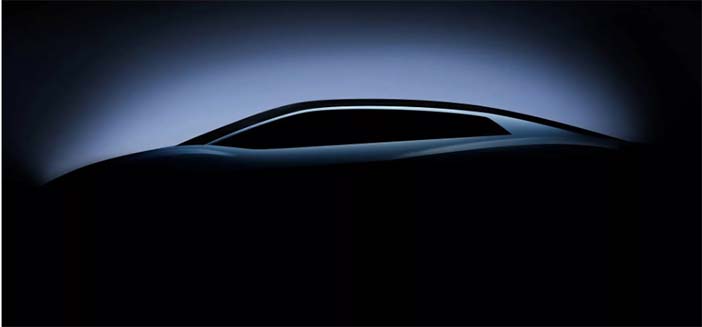
+++ LAMBORGHINI recently announced plans to use Monterey Car Week to introduce a prototype of their “first 100% electric car” and now we’re getting a look at it. In a shadowy teaser posted on social media, the company revealed the upcoming model will have a rakish windscreen that flows into a long sloping roof. Further below, there’s an expansive greenhouse which suggests we’re looking at a crossover or sedan. We can also get a glimpse of flowing bodywork and a muscular rear pillar. They’re joined by an adventurous beltline and slender A-pillars. The EV will be unveiled on August 18 and Lamborghini is billing it as “something new and truly thrilling.” That’s not much to go on, but the company has previously said the prototype will preview their long-awaited fourth model and enter production before the end of the decade. Plans for the vehicle have been in the works for a long time as Lamborghini announced their Direzione Cor Tauri program in 2021. The product plan will see the company’s entire lineup electrified by the end of 2024. This has already spawned the Revuelto and will soon pave the way for a plug-in hybrid Urus as well as an eco-friendly Huracan successor. The fully electric fourth model has been described as the “brightest star in the constellation” and the “culmination of this … journey”. The company went on to say the model will have “remarkable performance” and be positioned “at the top of its segment”. +++
+++ The electrified performance sedan C 63 S E-Performance from MERCEDES-AMG allegedly records “close to zero” sales in some cases, not being able to keep up against the less powerful but cheaper BMW M3 rival. Nearly a year has passed since the introduction of the Mercedes-AMG C 63 S E-Performance, and only a matter of weeks since its market release in Germany. However, reports filtering in from local dealers regarding the sales of this new model sound disheartening, according to German media. This performance pinnacle within the C-Class lineup, which notably swapped out the twin-turbo V8 for a 4-cylinder PHEV powertrain, finds itself grappling against the 6-cylinder BMW M3. This challenge isn’t solely due to its reduced cylinder count but also stems from a noticeable disparity in pricing. Affalterbach’s engineering team had been optimistic that potential buyers would overlook the reduced cylinder count in the new generation C63 S, presuming that the augmented power and advanced technology would enhance its appeal. Regrettably, this anticipation seems to have missed the mark, particularly based on observations from its domestic market in Germany. Based on information gathered from German dealers, orders for the electrified performance sedan are currently hovering “close to zero”. Dealers are of the opinion that the subdued interest in the C 63 S stems from the fact that its BMW rival offers superior value in terms of powertrain, pricing, and premium quality. The C63 S E-Performance makes a combined 680 hp from a turbocharged 2.0-liter 4-cylinder and a rear-mounted electric motor, making it the most powerful C-Class ever made. This number represents a healthy boost compared to its predecessor’s twin-turbo 4.0-liter V8 that produced 510 hp. Nevertheless, figures are not the sole consideration, as the V8 undeniably emitted a significantly more appealing sound, while the electric assistance in the PHEV variant tapers off past the 200 km/h threshold. Adding to this, the PHEV is also a lot heavier, tipping the scales at 2.129 kg compared to 1.690 kg of its ICE-only predecessor. +++
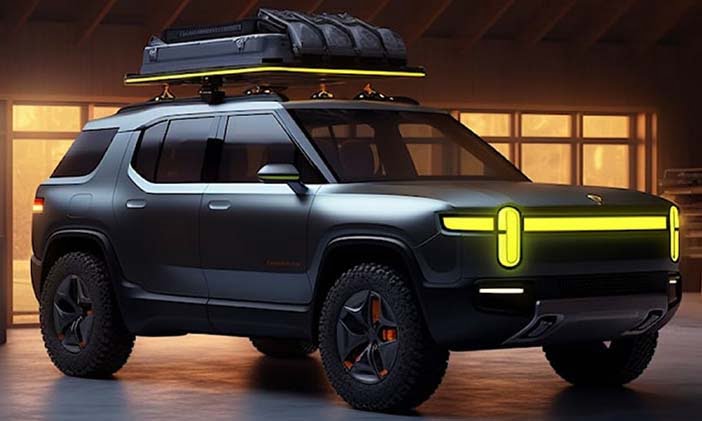
+++ The RIVIAN R1T and R1S remain far out of reach for most consumers but the company’s planned ‘R2’ family of models will be more affordable and smaller in size. As Rivian founder RJ Scaringe recently revealed, their upcoming models will also have a much simpler electrical architecture. While recently speaking on the car manufacturer’s most recent quarterly earnings call, Scaringe noted that the R2’s architecture will have 60% fewer ECUs and that the wiring harness length will be reduced by 25%. The car manufacturer will be able to do this by developing in-house components rather than using off-the-shelf parts. Rivian’s boss added that it will also consolidate ECUs into vehicle zones. These changes will allow Rivian to save “thousands of dollars” per vehicle Scaringe said and while the new R2 models will be designed to benefit from this new electrical architecture from the outset, the larger R1 models will be updated with the new design early next year, Auto Evolution reports. Rivian is also expected to make further cost savings with a new structural body design for the R2 vehicles and will also sell them with the new Enduro drive units recently introduced on the R1T, R1S, and the firm’s all-electric delivery vehicle. While speaking with members of the press, Rivian’s vice president of software development Wassym Bensaid added that the new specialized hardware manufactured in-house will give the company better control over the software stake. The first model in the R2 range is expected to be an SUV dubbed the R2S. This vehicle will adopt a similar design to the R1S but be considerably smaller and closer in size to the Tesla Model Y. It is expected to follow in the adventurous spirit of the R1S with solid off-roading credentials and will be unveiled next year before reaching customers in 2026. +++
+++ TESLA added new versions of its Model S and Model X ranges that offer a less expensive point of entry into its premium-level electric vehicles in exchange for some range. The Model S Standard Range is now the least expensive version of the electric sedan with a starting cost of $78.490. The new Model X Standard Range starts at $88.490. The lowered prices are the result of lowered range from their massive battery packs. The Tesla Model S Standard Range is rated for 510 km per charge, which is a significant 135 km disadvantage when compared to the 645 km range of the regular Model S, which is still available on Tesla’s website for exactly $10,000 more than the new Standard Range. Same goes for the Model X Standard Range and its 430 km rating. For exactly $10,000 more, the Model X crossover offers 560 km of range. There is also a slight reduction in acceleration from the two new S and X offerings. While still quite quick by any reasonable standard, the Model S Standard Range is estimated to go from 0-100 km/h in 3.9 seconds, down 0,6 ticks from its more expensive sibling. The Model X Standard Range is the same number of ticks slower to 100 km/h than the next-least-expensive X with an estimated time of 4.6 seconds. I don’t yet know what sort of batteries the new Standard Range Model S and Model X are using. In the past, Tesla has sometimes used software to artificially reduce the range of its vehicles by locking out a certain amount of battery capacity. The automaker would allow buyers to pay an additional fee after the initial purchase to unlock the battery’s full capacity. More recently, Tesla began offering versions of its smaller Model 3 and Model Y with lithium-iron-phosphate battery chemistry instead of its traditional lithium-ion packs. It’s possible that these new Standard Range editions are either limited by software or have the new battery chemistry, but we won’t know for sure until vehicles deliveries begin, which is currently estimated for September or October. +++