
+++ ALFA ROMEO will continue to use its renowned 2.9-litre petrol V6 engine beyond the July 2025 introduction of the European Union’s Euro 7 emissions regulations. Speaking recently, CEO Jean-Philippe Imparato confirmed the Italian company’s intention to use the twin-turbocharged engine in future applications, although he stopped short of hinting at what those might be. Asked if the Ferrari-derived engine would be used in the future, he said: “The answer is yes, because I’m expecting the result of Euro 7 proposals this year. I would like something compliant with the new regulation to be interesting”. The 33 Stradale’s 3.0-litre V6 is a slightly more powerful, wider-bore iteration of the 2.9-litre engine used in the Giulia and Stelvio Quadrifoglio performance models. Both are closely related to the Nettuno 3.0-litre V6 used by the Maserati MC20. As Euro 7 looms, several brands have retired engines and even models, due to the high cost of making them compliant. For example, Volkswagen has strongly hinted that it will axe the Polo and it will stop offering the Golf with a manual gearbox. While Ford has very famously ceased production of the Fiesta as a direct result of profit margins becoming too tight in the fight between efficiency and size. Some manufacturers may well have changed product development plans, but others have decided to push back. Stellantis boss Carlos Tavares has argued it could increase the cost of small cars, while Renault chief Luca de Meo thinks the changes will distract companies from going all-electric. 8 country members of the European Union have also fought back in defence of car makers, claiming manufacturers are already under enough pressure to hit the upcoming emission targets, which will see a ban on new combustion-engined cars from 2035 in the European Union. +++
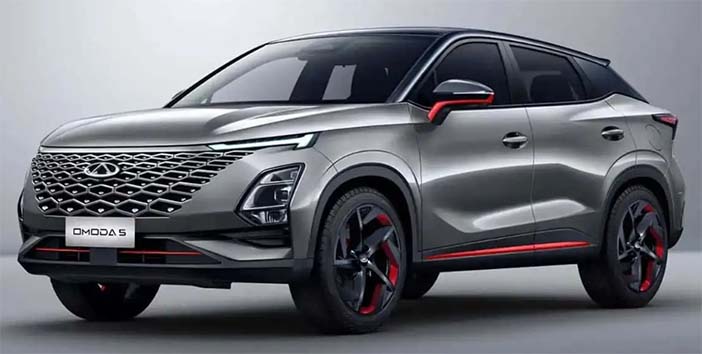
+++ CHERY AUTOMOBILE wants to sell in Europe. The Chinese-based automaker hopes to launch new models from 3 of its brands on the continent by the end of 2025. The vehicles will come from its Omoda, Jaecoo, and Exlantix subsidiaries. The Omoda 5 will launch in Spain later this year. I learned in February that the crossover will also go on sale in Germany next April as part of its rollout strategy in Europe. It plans to offer combustion, plug-in hybrid and electric vehicles to serve different regions’ needs better. When the Omoda 5 lands in the Netherlands, it’ll come in the 2 last aforementioned flavours. The EV will reportedly make 200 hp and go 450 km on a single charge of its 64 kWh battery based on the European WLTP cycle. Chery will sell the combustion-powered version in Spain, while Germany will get the petrol and electric models, starting at around €30.000, meaning Dutch prices will start at €40.000. Chery Automobile will launch Omoda and Jaecoo in all major European markets. The Omoda 5 will hit the market with Android Audio and Apple CarPlay as standard, and also with 2 screens (both 10.25 inch) serving as the infotainment and driver’s displays. It’ll have luxuries such as ventilated seats and adaptive cruise control. Chery will introduce the Exlantix, its all-electric brand, by early 2025. The automaker showcased the E03 saloon and E0Y SUV earlier this year, and it’ll be interesting to see how these new brands and models fare in Europe’s competitive market as the company’s endeavours extend beyond just selling cars. The automaker is considering buying or building an assembly plant in Europe, emphasising local production. It could decide as soon as next year, but it’s unclear when it could begin building vehicles. It might be a year before Chery decides how to further crack into the European market. +++
+++ The DS 7 will go electric-only from 2025 and launch as the French firm’s first electric SUV alongside Jeep, Lancia and Opel counterparts, as these Stellantis brands prepare to go all-electric by 2027. Part of their platform-sharing program, the new DS 7 is likely to use the same STLA Medium underpinnings as the Peugeot e-3008. It is set to be introduced by 2025, which is 8 years after the current model first went on sale. It will be joined by an electric-only replacement for the DS 9, which is set to be reborn as a coupé-style fastback in a similar vein to the Peugeot 408. The all-electric DS 7 will be produced at Stellantis’s Melfi plant in southern Italy alongside the new Jeep Compass, which also uses the STLA Medium platform but is planned to go on sale with hybrid and electric options. Currently, the plant makes the Fiat 500X, Jeep Compass and Jeep Renegade, but production for these models is expected to come to an end between 2024 and 2025. Little is known about the technical details of the new DS 7, but its underpinnings suggest the model could offer a range of more than 700 km in higher-trim levels and 500 km as standard. Its top-rung range figures would put it ahead of rivals such as the BMW iX1 (440 km) and the Mercedes EQA (438 – 532 km). The platform also uses 400 Volt charging architecture, which would allow the DS 7 to charge from 20% to 80% in 27 minutes, and it could provide power outputs ranging from 220 hp to 390 hp for the hottest editions. The most potent current DS 7 is the E-Tense 360, offering a 1.6-litre turbocharged 4-pot with 360 hp and a 0-100 kph time of 5.6 seconds. The new electric DS 7 will reportedlybe joined by sibling cars from Alfa Romeo, Jeep, Lancia and Opel. +++
+++ In EUROPE , new car registrations increased by 20% year on year in August, with demand led by a growing appetite for electric vehicles, according to industry analyst Jato Dynamics. Some 900.000 cars were sold across 28 European markets, with 22% of that total (some 196.000) being battery-powered. In total, EV registrations increased by 102%. Petrol-powered cars are still Europe’s most sought-after, though, representing 53% of registrations. Registrations for EVs increased dramatically in Belgium (+224%), Greece (+183%) and Luxembourg (+164%). Demand in Germany alone, which increased 171%, accounted for 44% of Europe’s total EV registrations in August. “Although the current industry debates often point towards a slowdown in growth for EVs, our data shows that growth in demand remains strong, due to their increasingly competitive pricing and continuous support from governments across Europe”, said Felipe Munoz, Jato’s global analyst. For the month of August, Tesla secured both the top spot for registrations. The Tesla Model Y sold 21.549 units for a year-on-year increase of 208%. The Model Y is also the continent’s highest-selling car of the year so far, with 169.420 sold. “It’s likely that the Model Y will become Europe’s most popular new passenger car by the end of the year. As a non-European model leading in Europe, it will be a remarkable and historic moment”, said Munoz. The related Tesla Model 3, meanwhile, sold 11.943 times, increasing by 307% year on year. Tesla’s surging sales come after the US firm slashed prices for the Model Y and Model 3. The discounts were introduced to stimulate sales after the firm’s supply dramatically outstripped demand by 34.000 units in the final quarter of 2022. The top-5 for August was rounded out by the Peugeot 208 (21.549 sales), Volkswagen T-Roc (15.198), Fiat 500/500e (14.469) and Dacia Sandero (14.428). +++
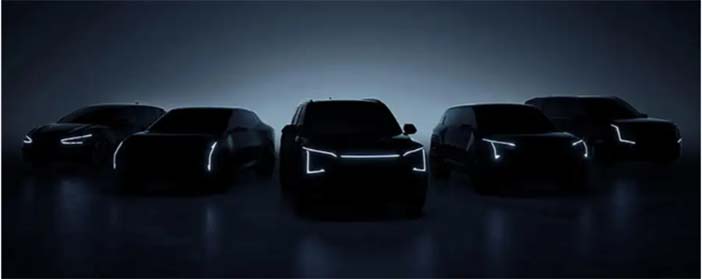
+++ KIA will reveal 2 new electric concept cars in the form of a new compact crossover and saloon at an event in Korea next week. The firm will stage EV Day, the first of a planned annual event to showcase its electric cars and technology, which it says will feature “3 new small- to medium-sized electric models”. It has released a teaser image showing five silhouetted models with their daytime running lights on. This clearly shows the EV6 on the far left and EV9 on the far right, with the new EV5; a SUV which was revealed in August, in the middle. Kia has said that “detailed specifications” of the EV5 will be given at the event. The 2 remaining cars take the form of a sleek saloon and a compact crossover. The latter is the compact crossover tipped to be called the Kia EV3 that will spied testing recently and will serve as a spiritual successor to the e-Soul. Less is known about the saloon, although given Kia’s commitment to launching a new model in every major market segment, it would be a natural next step. The EV Day will also include a strategy update about Kia’s ambitious plans to grow its market share and sales in the electric age. The firm last year anounced aims to sell 1.2 million EVs globally in 2030 through a major expansion of its EV line-up, the use of enhanced autonomous driving technology and new digital revenue streams. Those targets build on those announced as part of the Korean brand’s ‘Plan S’ electrification strategy and are broadly in line with ambitions laid out by sibling brand Hyundai. Kia’s overarching goal is to become a “global sustainable mobility leader”. The brand has 4 primary targets for 2030: sell 1.2 million battery-electric vehicles, sell 4 million vehicles overall, roll out advanced connectivity and autonomous driving functionality to all models and become the leading provider of ‘purpose-built’ (ie produced at scale for a specific purpose) vehicles for third-party fleet operators. The first of these purpose-built vehicles (PBVs) will be derived from existing vehicles, including a larger Kia Niro Plus derivative. After this first wave, the firm will introduce a new bespoke EV platform for PBVs in 2025, which will be fully scalable to suit different applications. Underpinning Kia’s sales targets will be so-called ‘eco-friendly’ vehicles, which it aims to increase from a 17% sales share to some 52% in 2030. It plans to sell 807.000 EVs per year by 2026 and on to 1.2 million four years later; up 36% on the previously envisioned 2030 target. In markets where demand for these vehicles is particularly strong (it cites Korea, North America, Europe and China), it aims for electrified vehicles to account for 78% of its global volume. Kia previously said that its pure-electric line-up will stand at 14 models come 2027, among which it will count 2 pick-up trucks and an entry-level BEV, presumably positioned as a zero-emission successor to today’s Picanto. Notably, the brand has confirmed that it plans for all future bespoke EVs to follow the Kia EV6 in gaining a GT-badged performance range-topper. It promises that these hot EVs will have “differentiated” designs from their standard counterparts. Korea will remain Kia’s “global hub for research, development, production and supply of EVs”, but it plans for other global facilities to take the lead for their respective regions. A European hub, for example, will from 2025 focus on the small and medium-sized EVs popular in that region, while a US site will develop and build mid-sized SUVs and pick-ups from 2024. It will introduce mid-sized EVs in China in 2023 and roll out “entry and mid-sized EVs” in India from 2025. Like Hyundai, Kia plans to significantly boost its global EV battery production capacity, from 13 GWh to 119 GWh by 2030. These will come from its Indonesian battery joint venture and various other global battery companies, but it is yet to name any partners in this push. +++
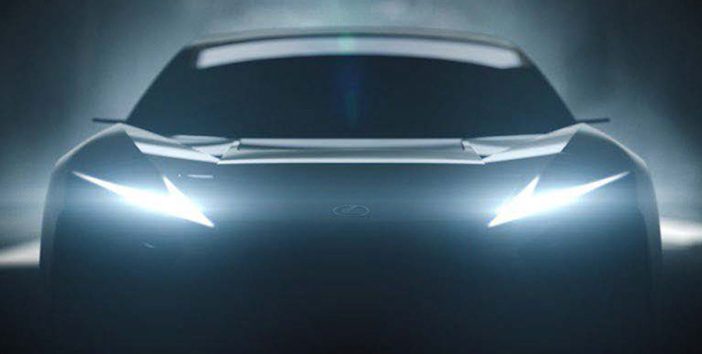
+++ LEXUS will introduce a radical electric flagship in 2026 that pioneers a bold new approach to design, construction and powertrain technology. To be previewed by a concept at this month’s Tokyo motor show, the ‘next-generation’ model promises to represent an all-out revolution in the way the Japanese marque engineers its cars. It will be the first of a new family of electric cars conceived to do battle with new-age EVs from BMW, Mercedes and Audi. The unnamed concept car being revealed at the end of October will encompass a raft of revolutionary new ideas that will lie at the heart of this new line of EVs. These models are set to bear almost no relation to the firm’s current EVs: the UX 300e and the RZ. In this sense, Lexus’s new concept serves a similar role to the recently revealed BMW Neue Klasse and Mercedes CLA concepts: giving strong clues to the brand’s priorities as it moves forward while directly previewing a car that will go on sale in the coming years. Lexus parent company Toyota has also announced that it will launch the first of its next-generation electric cars in 2026. These will bring to fruition a suite of dramatic upgrades in battery and powertrain technology, while embracing new design conventions and targeting ambitious price reductions compared with the firm’s current EVs. Lexus is expected to leverage these technological advances to reinvent its own line-up in a similar way, as it progresses towards a goal of achieving 100% battery-electric car sales by 2035. Said to “revolutionise the modular structure of the vehicle body, drastically change the production method and completely revamp the software platform”, the concept will be based on a new platform that, say Lexus bosses, will be a “key contributor to bringing costs down”. It is expected to weigh much less than today’s structures while boosting rigidity and benefiting from the integration of propulsion, suspension and steering systems into space- and cost-efficient module units. New Lexus boss Takashi Watanabe (previously chief engineer) said his brief as CEO is “to create cars that make customers smile”. To that end, future EVs are being engineered to enhance the ‘Lexus driving taste’, using Direct4 four-wheel torque-vectoring technology for sharper turn-in, and steer-by-wire functionality with a “linear” feel for added engagement. Watanabe said sustainability is a prevailing focus for Lexus as it approaches its new era, confirming that recycled and artificial materials including Ultrasuede will form part of the “high-quality” interiors of its upcoming EVs. In addition, the introduction of slimmer new battery packs and smaller motors means the car’s occupants can sit closer to the ground and benefit from roomier cabins. The concept will also give a first look at Lexus’s all-new software platform, which will no doubt offer significant improvements in usability, connectivity and functionality. A preview image released by Lexus suggests the concept will take the form of a rakish, low-slung EV, possibly derived from the IS-sized saloon concept Lexus showed in late 2021. The dramatic new front end is defined by aggressive arrow-shaped LED headlights and a muscular, sculpted bonnet that bears a notable resemblance to that of the legendary LFA supercar, while rear-view cameras replace conventional wing mirrors in an early indication that future Lexus EVs will lean heavily on both aero optimisation and digital functionality. New Lexus EVs are expected to use radical next-gen lithium ion battery technology that promises up to 800 km of range per charge while costing 40% less than the packs used today and measuring as little as 100 mm thick in dedicated, ground-hugging performance models. Parent company Toyota has confirmed that a 621-mile lithium ion battery will be productionized between 2027 and 2028, followed by long-awaited solid-state units, touting a whopping 1.200 km range, in 2028. +++
+++ SKODA boss Klaus Zellmer has confirmed that hot RS models are very much still on the agenda in the firm’s all-electric era, and that could mean a hot version of the brand’s upcoming baby EV. Autointernationaal.nl caught up with Zellmer at the recent Munich Motor Show, which was used by Volkswagen to unveil its own vision of future hot hatchbacks, the ID.GTI Concept. Asked if he fancied a Skoda vRS version of what will become the ID.2 GTI, Zellmer told me: “Yes, of course we are contemplating doing that, actually in all our model lines. If the technology is good enough to call it an RS, then there’s a high likelihood of us bringing an RS version”. Skoda’s version of the ID.2, using the VW Group’s MEB Entry (or A0) platform, is more likely to take the form of a compact crossover, as previewed by a digital sculpture revealed earlier this year. Key to any new RS models is having the right attributes to win over hot hatch fans. “It’s important to stay truthful and credible to bring an RS”, said Zellmer. “The RS is a sub-brand, which comes with a little bit more power, a little bit sharper in terms of its appearance, different interior”. Volkswagen hasn’t revealed any technical data for its ID.GTI Concept, other than it will definitely be front-wheel drive only, using an electric motor under the bonnet, and any Skoda version would have to follow this layout. It would share the same footprint as the hot Volkswagen too, meaning a length of around 4.1 metres. The as-yet-unnamed small Skoda is due in late 2025 at roughly the same time as its stablemates (the ID.2 and Cupra’s UrbanRebel). “Our value-for-money car will be the A0 battery-electric vehicle, which will be in the market in 2025”, said Zellmer. “The price range is around 27.500 euros for the Netherlands”. The new small Skoda will be built alongside its VW and Cupra siblings at the Volkswagen Group factory in Martorell, just outside Barcelona, Spain, and will benefit from a new development process that is aimed at shortening development times to get closer to those of Chinese car makers. Volkswagen’s Head of Technical Development, Kai Grünitz, told me at the Munich Motor Show: “Usually we have a 54-month development process and the Chinese competitors do it in 38 to 32 months. We decided on three pilot projects with a development process of about 36 months. One of them is the ID.2. We started in late December with sketches and it’ll come to the road late in 2025 or early in 2026”. Zellmer also revealed more on how Skoda is working with VW to produce an even cheaper EV that could replace Skoda’s Fabia supermini, although it definitely won’t take the Fabia nameplate, the Czech brand’s boss implied. “We have different names for our electric cars”, he told. “The name starts with an e, like Enyaq and Elroq”. However, it’s Fabia buyers that Skoda needs to aim for with this new budget model. “What I’m talking about is a car like Fabia starting below 21.000 euros, that’s what we need to cater for. We could come up with a car at 18.000 euros and it could be electrified, but that’s not what we’re after. We want people that are looking for an entry-level car that provides the space, the safety, the quality, the comfort, the sustainability, all of this that they know from Skoda. “Value for money belongs to Skoda: it’s our DNA. We always need to be aware of that because this is where we come from. I would never neglect that. We still have time with technology evolving, with scaling effects happening with our cost structures to then come up with a proposal where the quality, the design, reliability and everything is then incorporated into a car that will be below 22.000 euros . And we’ll see it in the second half of the decade”. +++
+++ When a chorus of automakers started announcing they would eventually phase out their internal combustion engines, the undertone was usually this: “How hard could it be?” But it turns out the answer is “very hard”, especially when it comes to software; something more crucial than ever to the future of cars. The VOLKSWAGEN GROUP knows that pain very well. Now it’s bringing on Sanjay Lal, a veteran of Rivian and Tesla, to help solve its software woes. Can he get one of the world’s largest automakers back on track? The VW Group announced Lal will lead the new Software Defined Vehicle Hub at Cariad, its consolidated software division. Boasting more than 25 years of experience in the automotive software space, Lal was most recently VP of Software Platforms at Rivian, where he led the development of its infotainment systems, among other things. He has also held engineering leadership positions at Cisco, Google and Tesla. “Sanjay is someone we can all look forward to”, Cariad CEO Peter Bosch said in a statement. “He is a true expert in the Software Defined Vehicle. Together with him we will develop a competitive advantage for the brands and the Volkswagen Group”. The “hub” Lal will lead is a small team across Volkswagen and Audi (with more brands to join eventually) focused on developing software more quickly, with less development time, and hardware built around it. “Speed is the new imperative to stay competitive”, Volkswagen Group CEO Oliver Blume said to investors this summer. Lal will likely have his work cut out for him. Cariad was formed in 2020 to unify the VW Group’s previously disparate and disconnected software platforms, often with multiple software platforms and parts from different vendors; far from ideal when competing with companies like Tesla, which keep cohesively in-house. But Cariad has had plenty of its own headaches, such that the automaker’s software game couldn’t match its aggressive ambitions to go all-electric from 2035 onward. VW’s electric cars have had rocky software feature rollouts and plenty of glitches while key cars like the electric Porsche Macan and Audi Q6 e-Tron were subsequently delayed due to bugs. Software woes are also part of the reason past Volkswagen Group CEO Herbert Diess was sacked in 2022. More disorder followed this summer when a number of other top Cariad executives were fired, as Autointernationaal.nl reported in May. These problems have also delayed the VW Group’s plan for Level 4 automated driving, putting it behind rivals like Mercedes-Benz due to get there first, to say nothing of its aggressive plans for in-car apps and subscription features to drive revenue. In short, it’s been a mess for the company that originally kicked off the move to all-electric vehicles, in part out of penance for its diesel cheating scandal. All of the features that will make tomorrow’s cars more competitive will be software-driven. So it’s no wonder the company is excited to bring on Lal; a veteran of 2 electric automakers known for their A+ software game. If he can’t help sort out these issues, the VW Group could find itself further behind the curve and with even more frustrated customers. A Cariad spokesman didn’t respond to detailed questions but officials did say “the SDV Hub’s development work will also form the basis for scaling the E³ 2.0 architecture throughout the Volkswagen Group. With the next-generation architecture, E³ 2.0, the Volkswagen Group plans to be the decisive step ahead of the competition”. It’s certainly going to need it; that’s one area where many of the startups and new players seem to have a significant edge. +++