
+++ One can describe AUDI as being stubborn at times. It refuses to let go of front-wheel drive even if its engines can be arranged for rear-wheel drive, and speaking of which, it still absolutely refuses to send power to the back wheels for its mainstream models. Ladder frame models are also a no-no for the folks from Ingolstadt. In some ways, the brand is a bit like Honda with its tight grip on its engineering principles But when it goes against the grain, we actually see great results from the German automaker. The Audi Quattro changed the face of rallying overnight; the RS2 further popularized the idea of a hot wagon and the TT was something completely unexpected from a company that was best known for making boxy (but wind-cheating) sedans and wagons at the time. Then, there was the R8 and it was a car that made people say, “This is an Audi?” The Nuvolari is a modern interpretation of that. It’s also proof that Audi still has the power to surprise people when they least expect it. During an interview, Audi’s development chief Rouven Mohr told that the Nuvolari is the brand’s ‘North Star’. That said, it won’t be around for a long time, as only 499 will be made. It’s not that it’ll be priced like a Q5, either, as you’ll need about 10 SQ5s to afford a single Nuvolari. Still, it should serve as an inspiration for the company engineers that they, too, play a role in building such a vehicle. It’s another ‘against the grain’ model, but with Audi, who’s managed to have a knack for building things it usually doesn’t do well, I expect great things from it. But while the Nuvolari is cool and all, it’s not the kind of car that will pay Audi’s bills. And with the way things have been going at the moment, there is quite a lot that needs to be paid. With that, Audi is busy overhauling its entire lineup, and it needs its redesigned models to be hits so it can build yet another ‘passion project’ model of sorts. “You’ll see other emotional products. This does not mean R8 (yes or no). This is not decided. We have different priorities at the moment”, said Mohr. That said, the Nuvolari won’t be the last of what he calls emotional models. But while Audi is currently focusing on the mainstream models, the development chief did say that some of the goodies found in its limited-run halo supercar will eventually trickle down to what much more people can actually afford. For the non-S and RS models, Audi currently uses a different kind of Quattro system. It’s called Quattro Ultra, and it no longer uses a torque-sensing differential. Instead, it’s an on-demand system that one will find in, say, a Honda CR-V or Mazda CX-50. Models like the A5 and Q5 may stick to that arrangement to achieve efficiency and emission targets, as that setup does save on fuel. But for the more exciting stuff, some differential trickery from the Nuvolari may be applied to future models. Mohr isn’t saying which ones just yet, but it’s an exciting update nonetheless. “You will find a different interpretation in the standard cars of the intelligent drivetrain, meaning that the torque distribution in the car is done on a very intelligent and self-learning base. You will see it in the future of Quattro, even on the standard cars, in two kinds of interpretations”, said the engineer. In other words, Mohr wants the brand to be considered as a fun-to-drive brand again. He has the strong backing of CEO Gernot Döllner, who himself is a self-professed car guy. While driving excitement isn’t high on the priority list of most Audi buyers, he reckons giving the cars more spark behind the wheel will help. “We want to strengthen the American market, because Audi in the past unfortunately was losing a little bit of the awareness in the US”, added Mohr. The challenge now is convincing more people to head into Audi showrooms and choose one over a BMW, Mercedes-Benz or Lexus. +++
+++ BRISTOL CARS is putting the V10-engined Fighter back into production as the first step in a long-awaited comeback that is set to bring new models to the storied marque in the years to come. With new owners at the helm, Bristol is ending 15 years of dormancy by resuming production of its final car 80 years on from the debut of its first, the 400. The Fighter was launched in 2004 as a gullwing-doored luxury GT with an 8.0-litre V10 borrowed from the Dodge Viper and producing up to 600 hp. Production of the 335 kph car continued in small numbers until 2011, when the company went into administration. Just 13 are thought to have been registered. Now, in partnership with an unnamed UK manufacturer, Bristol Cars will build 5 more Fighters to original spec, using uncompleted chassis left over from the initial build run. The 5 cars are not traditional continuations but rather will be sold via Individual Vehicle Approval (IVA) and will wear a period-correct 2008 numberplate, reflecting the year in which they were technically ‘built’. Left- and right-hand-drive models will be available.
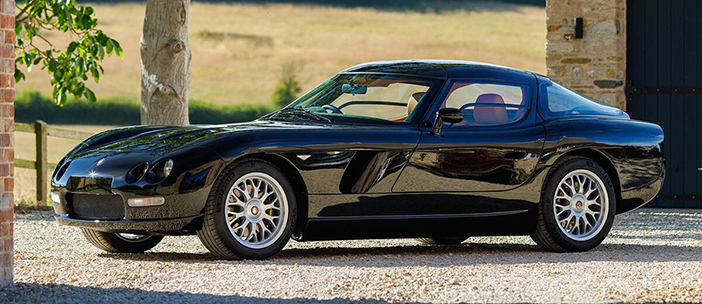
The first car of Bristol’s new era makes its debut at Salon Privé this week. That example will be black with a tan interior, but the 4 unbuilt cars can be finished according to the owners’ specifications. No pricing has been given, but each will no doubt cost far more than the original car’s list price. The company said: “Confirming these last 5 Fighter chassis and build slots exist, with one already completed, represents more than the revival of a model. It completes a programme left unfinished when manufacturing ended, reconnects Bristol Cars with a tangible part of its history and establishes the first chapter in the marque’s return”. It adds that the completion of the Fighter production run will provide “a natural bridge between what Bristol was and what it intends to become”. Precise details of the company’s plans after the Fighters have been finished remain unclear, but it emphasises that this is “the first step in Bristol’s return, not the full extent of it”. Further cars are possible, possibly including all-new additions rather than resurrections of past models. The firm promises it will stay true to the “individuality, engineering integrity and craftsmanship that have always defined the company”. Bristol’s revival is being steered by new owner and director Paul King, working alongside chairman Richard Hackett. Hackett worked with former Bristol boss Tony Crook in the company’s original guise and is said to be regarded as “a leading authority on the company’s history, cars and loyal customer base”. He also co-ran one of the world’s leading Bristol dealers for the past decade. Hackett described Bristol as a firm known for “doing things differently” and emphasised it “was never a mass-market manufacturer”. He said: “It built exceptional cars in small numbers for people who appreciated their individuality, engineering and character. To return as chairman, in Bristol’s 80th anniversary year, is a tremendous privilege. This is an opportunity to respect everything that made Bristol special while giving the marque a future. +++
+++ With the Trump administration imposing 50% tariffs on about $20 billion worth of Canadian goods, trade relations between the 2 countries are expected to remain strained. This could create opportunities for other players to step in, including those from China, which faces strong U.S. trade restrictions. BYD is among the automakers looking to capitalize, having reportedly asked about taking over Stellantis’ Brampton Assembly plant in Ontario. Brampton Mayor Patrick Brown said BYD inquired about the plant 6 months ago. The factory has been idle since late 2023, initially for retooling. It was supposed to produce the next-generation Compass, but Stellantis halted the plan after U.S. tariffs complicated the business case. This helps explain why the U.S.-market Compass remains in its second-generation model, which debuted about a decade ago. Securing the Brampton plant would deepen BYD’s presence in Canada as the country opens its market to more Chinese-made EVs. Under a recent agreement, the Great White North is allowing up to 49.000 Chinese-built EVs annually at a reduced 6.1% tariff. Tesla has already capitalized by importing Shanghai-built Model 3s, giving Canadian buyers a lower-priced entry point than U.S. models. However, BYD discussed building electric buses at the idled Stellantis plant rather than passenger cars. Bus production is not new to the automaker, which already manufactures electric buses in Lancaster, California. Its buses are used by transit agencies, universities, and transportation services around Disneyland Resort. Fellow Chinese brand Leapmotor has also considered using the Brampton plant. Earlier reports suggested it could assemble vehicles from knock-down kits, meaning they would be largely built in China before final assembly in Canada. Such an arrangement would create fewer jobs than full-scale manufacturing and could face pushback from Unifor. Brown also said Canadian defense firms Roshel Inc. and Dominion Dynamics had asked about the facility. Given these developments, the U.S. strengthening its trade barriers could force Canada to rely on other potential investors to preserve jobs and support local businesses, even if that means welcoming companies from China. The U.S. has imposed strong restrictions on Chinese vehicles, and its ambassador to Canada has said Chinese-made cars would not be allowed to cross the U.S. border. For now, the Brampton facility remains idle, while North American production of the next-gen Compass has been assigned to the Belvidere Assembly plant in Illinois, where it is scheduled to begin in 2027. +++
+++ Electrification is well underway at Land Rover, with more battery-electric test mules continuing to emerge. One of the latest sightings is this camouflaged SUV, described as the new all-electric DEFENDER . The charging port on the left rear quarter panel is one clue. The spy shot were shared by Richard Pierce. He said he saw what he believes is the electric Defender at Eastnor Castle in England and suggested that the vehicle was being tested off-road. It is under heavy camouflage, so details are difficult to make out, though such an outing suggests development is ongoing; important as several expensive EVs have been discontinued amid shifting market demand. A walkaround shows blacked-out wheels and what appear to be roof-rack crossbars, fitting its apparent use at an off-road test venue. Such capability is a core characteristic of the Defender. In addition to the charging port, the apparent lack of a prominent traditional grille is also consistent with an all-electric vehicle. However, it is worth noting that the full-size electric Defender has reportedly been pushed back into the early 2030s. More imminent is a smaller Defender model, possibly called the Defender Sport. It is expected to follow the Range Rover Electric and Range Rover Sport Electric, which JLR says will launch later this year.
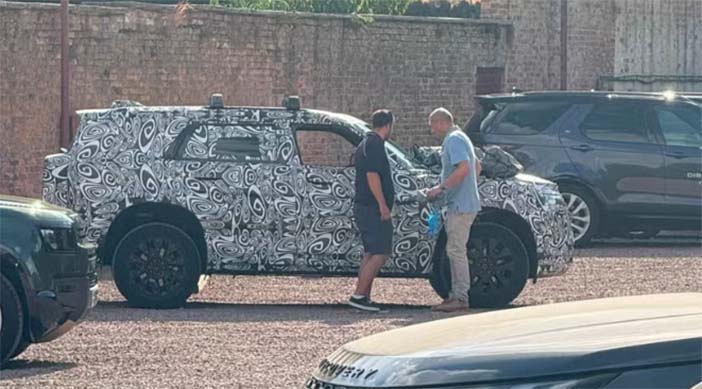
As such, this recent sighting could instead be a development mule related to the smaller Defender. Because that model is expected to ride on the Electrified Modular Architecture (EMA), it was initially believed to be all-electric. However, JLR has since modified the platform to support a full-hybrid setup, meaning the off-roader could eventually be offered with a gasoline engine as well. The post did not provide further details, so it’s still unclear whether this is a full-size Defender EV test bed or a mule connected to the smaller Defender. What is more notable, however, is that JLR’s upcoming EVs are now appearing in the metal after repeated delays. In addition to the Range Rover Electric and Range Rover Sport Electric, Range Rover has unveiled a fifth model, the Range Rover GT, which will run on electricity only. Meanwhile, the chapter of models such as the E-Type and F-Type is long gone, and Jaguar has now named its electric future: the Type 01, a luxury four-door GT expected to produce about 1.000 horsepower. +++
+++ A modern car without an instrument cluster sounds like something from a very cheap rental fleet, not a brand-new HYUNDAI . Yet that’s effectively what buyers of the base versions of Hyundai’s new Ioniq 3 can get. Hyundai has made its 9.9-inch Digital Supervision instrument cluster non-standard on the entry-level version. Buyers who want an actual screen behind the steering wheel will either have to pay extra for the option or move up to a higher trim where it comes as standard. It is an unusual way to save money, particularly when even affordable cars treat digital displays as basic equipment. The Ioniq 3 can be ordered without the 9.9-inch digital cluster on their base configurations. Instead, Hyundai offers the display as an additional option, giving buyers a choice between spending more money or living without the conventional driver-facing screen. For buyers who don’t want to pay extra, the base car’s setup is obviously intended to provide the essential information another way: on the central infotainment display. That helps explain why Hyundai can remove the cluster without making the car undrivable, but it doesn’t make the decision any less strange. And that’s where the cost-cutting logic starts to make sense. Removing equipment from the base car lets Hyundai advertise a lower entry price while nudging buyers toward options and more expensive trims. The same strategy has been used for years with wheels, upholstery and convenience features. Applying it to the driver’s display just makes the penny-pinching much harder to miss. There is another way to look at the decision. Making the cluster optional allows Hyundai to offer a lower-priced configuration for buyers who genuinely don’t care about having a large digital display directly ahead of them. Not everyone wants every available gadget, particularly if the cheaper car still provides the information needed to drive it. Hyundai isn’t the first automaker to strip equipment from entry-level cars, and it certainly won’t be the last. Still, making the instrument cluster a paid upgrade is a particularly effective reminder of how aggressively manufacturers are trying to separate a car’s headline price from its fully equipped version. +++
+++ The PORSCHE MACAN used to be one of the brand’s best-selling products, but after it was turned into an EV with no combustion-powered offering, sales plunged. But Porsche is working on a solution to its mistake: a new SUV. Porsche may have also settled on a name for it: Octan. The front end of a spotted Octan prototype has 2 grille openings, one above the other, each segmented in the middle. Porsche may add mesh to these portholes to prevent the radiators and other cooling elements from being pepper-sprayed by road rash, but as high-dollar premium offerings like BMW’s CS models show, buyers may be happy to put up with an open design if it looks special. Elsewhere, the only other hints we have of the Octan’s final look are tacked-on wheel arch extensions and a dual exhaust outlet setup. The former elements seem to confirm Porsche CEO Michael Leiters’ comments claiming that, while the Macan replacement will continue to share a platform with Audi, it’ll be a “real” Porsche, with a wider track improving handling ability. Speaking of the platform, the new luxury crossover will be built on the Premium Platform Combustion architecture, capable of accommodating a range of electrified engines. 4-cylinder engines and V6s alike are expected to be offered, all with all-wheel drive, and some with a plug-in hybrid setup. The PHEVs are expected to be capable of over 100 km of all-electric driving, so buyers may eventually be tempted by the Macan EV. At least, that’s what Porsche hopes so it can recoup some of its hefty losses. Another measure Porsche may take to increase profitability is to introduce another body style, potentially similar to the Q5 Sportback. The relatively quick development of the Macan replacement and rumors heard in regions in which the Octan has been spotted testing have led spies to believe that nearly finished prototypes will be spotted “by winter at the latest.” The fact that this mule is undergoing hot-weather testing in Spain with a new front end also supports that theory, which should translate to a full debut sometime in the first half of 2027, though it’s also possible that the Octan will only launch later next year for the 2028 model year. I’ll bring you more information as I get it. +++
+++ TESLA ’s global expansion has been rapid; this is the brand’s way of keeping up with the increasing competition from the new Chinese automakers who have succeeded in eating into Tesla’s EV market share. Tesla has, over the past year, aggressively expanded not just its presence but also its model lineup. One of the latest models born out of the expansion is the 3-row Tesla Model Y L. It first made its debut in the Asian markets and has become a sales hit due to its 6-seater capacity; however, it seems the Y L has an issue pertaining to its suspension that has sent customer complaints surging in China. After a year of production and sales in China, the Tesla Model Y L is facing a new wave of criticism and complaints because some owners are claiming that the rear wheels or suspension keep “collapsing”. The issue is apparently widespread enough that it has already gone viral on social media. Owners said that the gap between the rear wheel arch and the tires drastically narrows after long-distance driving or when fully loaded. Some owners even say that the gap is so narrow that not even a finger can fit through it in some instances. Interestingly, the mileage at which the “collapse” occurs varies; one owner claims it happened after just 10.000 km, and another one at 30.000 km. According to a testimony, when the rear wheel collapses, the chassis swaying increases and the underbody scrapes on the wheel. Other owners are complaining that the initial collapse issue is also leading to other parts being damaged as a result. These owners say that the suspension drop has also affected the wheel alignment, causing uneven wear on the tires; a few of these owners have even claimed that the issue has worn their tires well beyond the safe use condition. Tesla hasn’t released a statement to address the issue but has instead asked owners to book appointments for servicing. Tesla will only warrant a suspension change if the measurement of the gap falls below 764 mm. Worryingly, one owner who had already had his suspension replaced claims that it has collapsed 10 days after being replaced. This owner says that Tesla refused to do a second suspension replacement, with no final resolution in sight. No word yet on whether the European market Y Ls are experiencing the same issue. +++
+++ The VOLKSWAGEN GROUP is doing everything it can to bounce back from a tough 2025. With many of its brands seeing sharp drops in profits, the company is pulling out all the stops to turn things around. That includes the mothership in Germany tightening the reins in crucial markets, North America included. Volkswagen of America will soon be getting a new CEO, but that’s not the only change Germany will be imposing on North American operations. VW Group CEO Oliver Blume will also be keeping a closer eye on how things are run stateside. One of the first moves under greater Wolfsburg control is the assignment of a new CEO for VW of America. Kjell Gruner is out and will leave the company, and in his place will be Marco Schubert. Schubert is currently the head of sales and marketing for Audi and is a board member of the Volkswagen Group. As head of sales and marketing, Schubert’s next role sees him pumping numbers up for Volkswagen of America, not just in terms of volume but also in margins. We should expect more noise coming out of VW once he takes the helm, and noise is exactly what the American operations of the brand needs right now. Also, as a board member, he will be working even more closely with group CEO Blume. The change in leadership was triggered by the overspending during the Atlas development. It’s said to be the very reason why Blume will be keeping a closer eye on North American operations and that division was largely responsible for that SUV. As the group aims to curb spending and boost revenue, cost overruns are absolutely off the table. The report mentioned that Blume is tightening the budget by exercising spending discipline, simplifying vehicles and streamlining operations by centralizing functions. It won’t be easy, but Schubert was chosen to lead VW of America for a reason. That said, the incoming CEO has other brands to look after, namely Audi and Porsche, which have been taking tariff hits, and Scout Motors, whose rollout has been hit by one issue after another. If possible, Schubert has to find ways to get some of Audi’s most popular models built in the U.S in order to curb tariff penalty payouts. He should also be instrumental in finally getting Scout off the ground within his tenure. He could hit 2 birds with 1 stone by getting cars such as the Q5, Q7 and the primarily made-for-America Q9 built in Scout Motors’ future plant in Blythewood, South Carolina. That way, VW can recoup more of its investment in that facility at a faster rate, provided it all works out. The company could also maximize the Chattanooga, Tennessee plant by building more models there aside from the Atlas and Atlas Cross Sport. Of course, nothing is set in stone at the moment, and these are merely possibilities and not action plans. We will see how Schubert steers the ship, not just for VW, but with Audi, Porsche and Scout in tow. +++