
+++ The AUDI A4 will make the switch to an all-electric powertrain, 3 decades after its introduction, as the Ingolstadt brand gears up to contend with BMW, Mercedes, Tesla and a raft of new disruptors in the crucial electric executive segment. Due on sale towards the end of 2025, the electric A4 will be sold alongside a new-generation combustion equivalent; evolved from today’s car but wearing the A5 nameplate in line with Audi’s new naming strategy, which allocates even numbers to EVs. The electric car will be marketed clearly as a stand-alone product, despite its similar footprint and positioning, with a design that closely matches that of the A7 e-Tron and Q6 e-Tron with which it shares Audi’s and Porsche’s new co-developed PPE architecture. Audi technical boss Oliver Hoffmann has told that switching to the new platform means the firm’s upcoming EVs “have great proportions, which makes our designers very happy”. Short overhangs, low slung bodywork and rakish glasshouses will be defining features of the new e-Tron family. This will obviously mark out the A5 e-Tron (set to be available in Limousine and Avant forms) from its more subtly overhauled fuel burning A5 sibling. Following in the footsteps of the Q6 e-Tron, which will arrive in early 2024 as the spearhead of Audi’s new line of bespoke EVs, it will bring significant technical advances compared with the marque’s current electric cars. Most notable among these will be a new-generation battery sited between the axles, with a usable capacity of around 100 kWh. Based on the fact that the A5 e-Tron will be inherently lower, sleeker and lighter than its 600 km Q6 e-Tron sibling, it should be good for a maximum range of nearly 640 km. Equipped with 800 Volt charging hardware as standard, the A5 e-Tron will be able to top up at a maximum 270 kW; double the speed of the current, MEB-based Q4 e-Tron. This will allow for around 250 km of range to be added in just 10 minutes. The new nickel-manganese-cobalt battery comprises 15 individual prismatic cells, arranged to maximise space usage within the floorpan and boost interior space while optimising energy density. Equally instrumental in optimising the PPE architecture’s endurance credentials is a new approach to electronic management. Silicon-carbide semiconductors are used throughout the wiring structure of PPE-based cars, chosen for their lower heat emissions and thus reduced energy wastage. In addition, the new electric motors have square-section stator wiring, which eliminates the microscopic wasted spaces between each winding on conventional round wires. The A5 e-Tron is expected to be launched with a familiar spread of variants, ranging from an entry-level, rear driven A5 e-Tron 45 to a 4-wheeldrive twin-motor A5 e-Ttron 55 Quattro that should match the equivalent Q6 e-Tron with 400 hp and a sub-6.0 seconds 0-100 kph time. Above that, a hot S5 e-Tron is tipped to ramp total output to 515 hp in its most potent setting (substantially more power than even today’s V6-engined RS4 Competition makes) to cut the 0-100 kph sprint time to nearer 4.0 seconds. Plus, Volkswagen Group boss Oliver Blume’s plan to “put more focus on the RS brand” over the coming years means a hardcore RS5 e-Tron is unlikely to be far behind. Recently departed Audi Sport boss Sebastian Grams told that RS-badged EVs will have their own “special character”. This will come courtesy of outlandish design cues that mark them out clearly from the standard cars on which they are based, distinctive acceleration soundtracks and bespoke powertrain set-ups that exploit the lofty reserves of these hot range-toppers. Inside, the A5 e-Tron will take its lead from the Q6 e-Tron, with a ‘human-centric’ arrangement based around a trio of high-definition screens, including a standalone touchscreen in front of the passenger, which lets them input routes and select music, for example. It is likely to be offered with the same augmented reality head-up display as the Q6 e-Tron and a cross cabin led lighting system that greets occupants and shows the state of charge when the car is plugged in. As for pricing, the A5 e-Tron will no doubt command a premium over the same-sized petrol car, reflecting its billing as an alternative to the likes of the BMW i4 and Mercedes EQE. Expect a start price at around the €60.000 mark in the Netherlands and for the hot S4 to nudge towards €80.000. +++
+++ FORD is issuing 2 separate recalls totaling 273.127 vehicles. The recalls affect the Explorer and the Mustang Mach-E. According to Ford’s filings with the NHTSA, a faulty mounting bolt for the rear axle of the Explorer could break, causing the vehicle to roll away even when the transmission is in park. The issue is that the bolt experiences repeated bending forces as torque is sent through the powertrain during acceleration. After enough launches, the bolt could fail. and once that happens the axle can move out of position, separating the driveshafts or half-shafts from being one interconnected powertrain. If the parts fully separate, the transmission is effectively unlinked from the wheels, so putting it in park won’t prevent wheels from freely spinning, causing the roll-away risk. Ford reports says that 396 customers notified them of this failure, which may be accompanied by loud clunking or grinding noises. Of those customers less than 5% reported a roll-away or an inability to drive the car. Nevertheless, Ford will replace the bolt and a redesigned subframe bushing to better hold the axle in place. Ford will send out notices to owners starting November 6 but owners. The second recall involves the Mustang Mach-E with extended-range batteries. An overheating battery contactor can cause a loss of motive power` while driving. Ford says this can happen after the car has been plugged into a DC fast charger and then accelerated at “wide-open pedal”. This is the second recall to involve battery contactors on the Mustang Mach-E. Last year a similar issue prompted Ford to recall 48.924 units of the Mach-E and replace a diagnostic control module with one that could monitor the battery conactor’s temperature. That apparently didn’t fix the problem entirely, so with the latest recall Ford will replace a high voltage battery junction box. Ford has determined that last year’s recall sufficiently resolved the loss of power issue with the standard range Mach-E, so this affects only extended range models. Until the repairs are made, Ford recommends limiting DC fast charging and repeated wide open pedal acceleration. +++
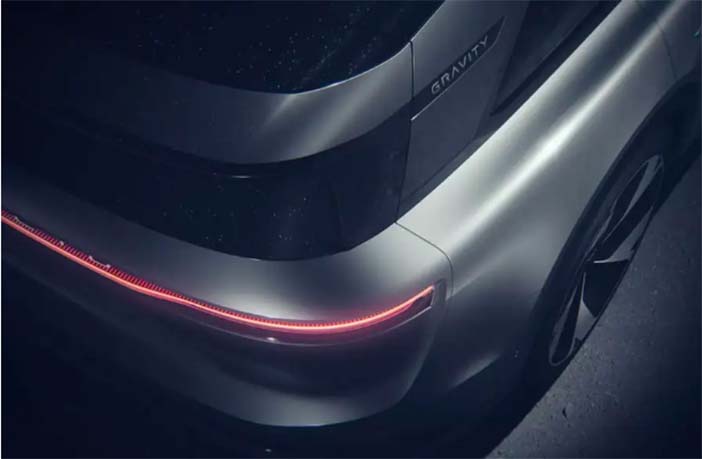
+++ The LUCID GRAVITY has been confirmed for a 16 November launch as a tech-rich and highly luxurious electric SUV aimed squarely at the BMW iX and Mercedes EQS SUV. Due on sale in 2024, it is the second model in the California-based EV start-up’s portfolio, after the Lucid Air luxury saloon. It is tipped by the brand’s CEO to launch in Europe in June or July 2024 and will share the bulk of its technical make-up with its ultra-aero-efficient sibling. The final production design remains to be finalized, but teasers indicate the Gravity will bear a strong resemblance to the Air – most notably in its aero-optimised silhouette and distinctive wraparound light bars. The electric car will offer a flexible seating arrangement with space for up to 7 adults, Lucid promises, and will feature the latest version of Lucid’s ‘Glass Cockpit’ digital dashboard, running off the firm’s own software. Lucid’s design boss Derek Jenkins hinted that innovative packaging solutions will make the Gravity feel bigger than it looks: “I’m so thrilled with the results we are seeing with Lucid Gravity, sparing no opportunity to build on everything we learned with Lucid Air to create something that warps the vehicle-class continuum. It is both a supercar in disguise and an SUV with flexible passenger and cargo space that seems impossibly big relative to the exterior size of the vehicle. And it does this all with Lucid’s distinctive post-luxury design, inspired by California”. Technical details remain under wraps, but any top-rung ‘Dream Edition’ variant, as offered on the Air, would be one of the world’s most potent and quickest series-production EVs, let alone SUVs. The Lucid Air Dream Edition features a 1.080 hp twin-motor, 4-wheeldrive powertrain which shoots it from 0-100 kph in less than 3.0 seconds, drawing its power from a 113 kWh battery (the largest of any production car) for a claimed range of around 825 km. No doubt Lucid will also offer the Gravity with the choice of 618 hp and 800 hp 4-wheeldrive powertrains, and could also market an entry-level rear-wheel-drive version with 400 hp. A smaller 75 kWh battery is offered in the Air, which would endow the taller and heavier Gravity with a range in the region of 370 km. A rapid tri-motor version of the Air is inbound with more than 1.600 hp, though it is unclear how advanced this project is, nor whether such a system would be used in the Gravity. Intriguingly, Lucid promises the Gravity will offer “supercar levels of performance”, implying that pace will be a priority. Further information will be released when Lucid starts taking reservations early next year. The company is understood to initially be targeting Austria, Belgium, Denmark, Finland, Iceland, Italy, Monaco, the Netherlands, Spain, Sweden, Switzerland and Norway when it launches in Europe, with a United Kingdom launch to follow. Peter Rawlinson, both CEO and chief technical officer of Lucid, said: “Gravity builds upon everything we have achieved thus far, driving further advancements of our in-house technology to create a luxury performance SUV like none other. Just as Lucid Air redefined the sedan category, so too will Gravity impact the world of luxury SUVs, setting new benchmarks across the board”. +++
+++ Elon MUSK said that Tesla “dug its own grave” with the Cybertruck, as he warned that it would take years for the company to ramp up production of the electric pickup. Speaking on Tesla’s Q3 earnings call on Wednesday, the Tesla CEO said that the Cybertruck’s unique design meant the company faces immense challenges in scaling production, with Tesla aiming to produce a quarter of a million trucks a year by 2025. “We dug our own grave with the Cybertruck”, Musk said. It’s “one of those special products that comes along only once in a long while. And special products that come along once in a long while are just incredibly difficult to bring to market to reach volume, to be prosperous”, he added. Musk said that he wanted to “temper expectations” for the electric truck’s imminent launch, which Tesla announced would be on November 30. He warned that the challenges of scaling up production meant that it would likely be around 18 months before the Cybertruck is cash flow positive. “I do want to emphasize that there will be enormous challenges in reaching volume production with the Cybertruck and then making the Cybertruck cashflow positive; this is simply normal”, he said. “When you’ve got a product with a lot of new technology or any brand new vehicle program, especially one that is as different and advanced as the Cybertruck, you will have problems proportionate to how many new things you’re trying to solve at scale”, he added. The launch of the Cybertruck comes at a crucial time for Tesla. Although the company dominates the EV market, its market share has slipped in recent years as competitors like Ford and Rivian expand their operations. The Cybertruck is seen as vital for Tesla to fend off this burgeoning competition. First announced in 2019, the futuristic pickup truck was expected to ship in 2021, but has experienced several delays as Tesla grappled with the vehicle’s unique design and the complexity of producing it at scale. According to CNBC, Elon Musk sent an email to Tesla employees in August saying that the Cybertruck should be as precisely designed as a Lego brick, with measurements that could not vary by more than 10 microns. A micron is equivalent to one-thousandth of a millimeter. Earlier versions of the pickup seen in the wild have been called out for scratching and finish issues by prospective buyers, as well as being fingerprint magnets because of their stainless steel body. Despite this, demand for the Cybertruck is through the roof, according to Musk, who said on Wednesday that over one million people have reserved the truck. +++
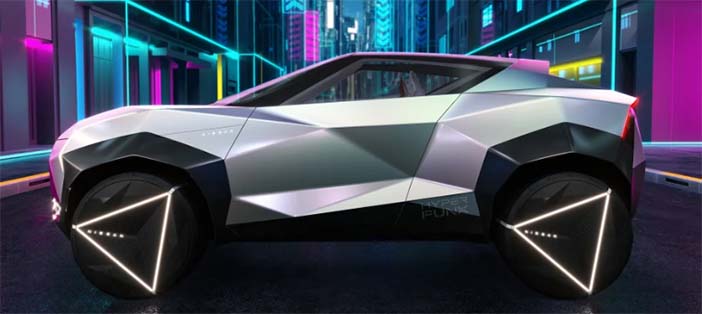
+++ NISSAN ’s futuristic electric concepts keep coming. The 4th installment in the series, which will make its public debut at the Japan Mobility Show, is a crossover called Hyper Punk with a striking exterior design, wheels that light up, and an interior inspired by origami. Like the previous concepts, the Hyper Punk was designed for a very specific target audience. Nissan expects it will appeal to “content creators, influencers, artists and those who embrace style and innovation”. It’s certainly not for those who embrace keeping a low profile. It takes the form of a coupe with a generous amount of ground clearance and triangle-shaped panels that give the body a textured design. Accessed via butterfly doors, the interior is just as distinctive as the exterior. The driver sits on a seat upholstered with red fabric and faces a rectangular steering wheel as well as three screens integrated into a single unit. Oddly, they display eyes in Nissan’s press images. Origami-like trim surrounds the driver’s seat. If you’re riding shotgun, you get a gray seat and travel in a far more basic-looking environment. There are some interesting tech features packed into the Hyper Punk. The exterior cameras record the scenery around the car, and an artificial intelligence-powered tool converts these images to either a manga-style landscape or graphic patterns. Once you’ve picked one, you can decide to have the AI-generated images projected onto the three aforementioned screens.Powertrain details haven’t been released. Nissan simply noted that the Hyper Punk is electric. Nissan will bring the Hyper Punk to the Japan Mobility Show opening its doors on October 23, and the crossover will be displayed next to the Hyper Urban, Hyper Tourer and Hyper Adventure concepts. While nothing suggests any of these wild-looking design studies will ever seen the light that awaits at the end of a production line, they’ll be available to drive in the video game Fortnite starting on October 25. +++
+++ TESLA ’s price cuts this year show customers are no longer willing to pay a premium for its vehicles. That raises a key question on Wall Street: Does its lofty stock-market valuation make sense anymore? The immediate verdict after the electric-vehicle maker reported earnings was, not so much. The shares sank 9.3% to $220.11 in New York on Thursday, wiping out more than $70 billion in value. Tesla’s nearly $700 billion market cap still dwarfs that of its competitors, but profitability in Elon Musk’s core car-selling business plunged to the lowest in over four years in the third quarter. That squeezed margins to near what General Motors and Ford generate. Pricing tension is a broader issue facing Corporate America, with companies testing consumer spending fatigue. Some companies are weathering it better than others. Netflix for example had a surge in subscribers that enabled the streaming-service provider to raise prices for a large swath of customers. To justify Tesla’s stock price, investors have to believe it “can achieve very high volumes and high operating margins, akin to technology or software companies, not traditional auto companies”, said Sanford C. Bernstein analyst Toni Sacconaghi. Tesla “is increasingly looking like a regular auto company”, he said. Its bigger problem is the company’s price cuts aimed at boosting demand haven’t worked as planned. “Tesla has had to institute these price cuts only to sell fewer vehicles than analysts earlier expected”, said Ryan Brinkman, an analyst at JPMorgan Chase & Co. At this time last year, before the price cuts, Wall Street estimated about 2 million vehicle deliveries in 2023, he said. That’s dropped to 1.8 million. Tesla’s “valuation looks increasingly unsustainable”, he said. The stock is still up almost 80% year and remains one of the top gainers in the S&P 500 Index for 2023. Most of that strength came as investors bet on artificial-intelligence plays, with some saying Tesla has the potential to become a leading AI company. However, it may take Tesla decades to deploy its self-driving software. Moreover, becoming a dominant player in the future self-driving car industry would still require the company to maintain its current lead in the EV industry amid growing competition. Wednesday’s results and Musk’s commentary on the company’s earnings call are raising questions around that as well, even among those who have been bullish on the stock. Tesla’s caution, expressed on the call, around growing too fast amid elevated interest rates is fair, said Morgan Stanley analyst Adam Jonas. Still, he added, “how much of the caution is related to slowing demand for its already ubiquitous product lineup and increased competition?” +++
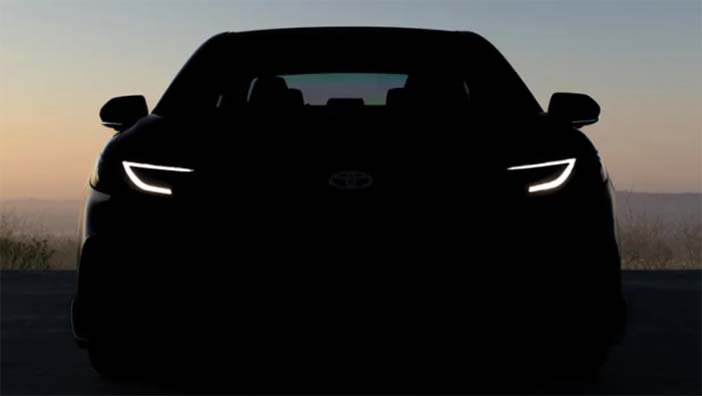
+++ TOYOTA is really honing its teaser game. The latest one is shrouded in mystery as much as the shaded parts of the photo. The company didn’t give any dates, names or anything. In fact, it was a one-sentence release: “Can you guess what’s on the horizon?” The headline was “A New Dawn is Coming”. Not a lot to go on. Toyota also made sure that most of the car was blacked out to prevent any photo editing shenanigans. But looking closely, it seems like it has a relatively low nose and roof, and it looks like the rear pillars are close to the rear headrests. That all seems in line with a sedan shape, and there’s only two left in the Toyota line that haven’t been updated in a while: the Corolla and Camry. We’re placing our bets on this being a new Camry. The current generation is older than even the Corolla, having been introduced for the 2018 model year. It also hasn’t received much in the way of updates for a couple years, whereas the Corolla has seen some hybrid updates and the addition of all-wheel drive via said hybrid updates, and of course the amazing GR Corolla. And we have an outside, roundabout theory that could could support our Camry theory. Thinking about “horizon” and “new dawn” had me thinking about possible names that could be associated with them. Maybe something about the sun. Certainly there was the Corona nameplate from long ago, but no company would touch that name for reasons that should be obvious post-pandemic. Then I thought of Solara, which was a coupe based on the Camry, which would make sense as a new Toyota to be teased. Yeah, it’s a stretch, but you saw what little we had to work with. If it’s a new Camry, I’m expecting it to be completely redesigned from the ground up. It will probably have hybrid options and some kind of all-wheel drive available. With how Toyota’s teasers have gone, a reveal is probably not far away. The L.A. Auto Show is where I would expect to see this possible new Camry revealed. Stay tuned for more details later, and probably more teasers in the meantime. +++
+++ The UNITED AUTO WORKERS and the Detroit Three automakers are stuck in a standoff over wages and union representation at future electric vehicle battery plants, with Tesla and Chinese rivals looming over the bargaining tables. UAW president Shawn Fain is pushing negotiators for General Motors, Ford and Chrysler-parent Stellantis to open the doors for the union to organize future battery plant workers, and to raise wages at their respective joint-venture battery plants to match assembly workers’ pay. UAW and Detroit Three negotiators are exploring different options, including deploying workers displaced from UAW-represented factories to new battery operations, said people familiar with the discussions, who asked not to be identified. But a breakthrough has eluded bargainers as costly strikes drag on. “The UAW is holding the deal hostage over battery plants”, said Ford chief executive Jim Farley on September 29. Without disclosing details, Fain told UAW members on October 6 that GM had agreed to include workers at Ultium LLC joint venture battery factories under the umbrella of its national agreement with the UAW, even though Ultium is a separate company that GM could choose to exclude from the talks. Since then, the union has not announced an agreement on battery plant issues with GM or the other automakers. In effect, Fain is demanding that workers get a greater share of the $35 per kWh in U.S. government battery cell manufacturing subsidies the plants hope to reap from U.S. president Joe Biden’s Inflation Reduction Act (IRA). The flow of cash from the IRA could be substantial. For example, 1.300 workers at GM’s Ultium LLC battery plant in Northeast Ohio could some day produce 35 gigawatt hours of batteries annually, or 13 kWh for each hour in a worker’s 40-hour week. At full capacity, the plant could generate an average $454 in subsidies per worker per hour in return for wages starting at $21 per hour, based on figures disclosed by Ultium. The actual subsidies would depend on the real production of usable batteries, and achieving domestic content targets for the materials. Automakers would split the subsidies with their battery partners. The automakers see the IRA subsidies as necessary to cover more than just direct labor costs. Automakers want the federal money to offset billions invested in new factories, domestic battery supply chains and vehicle development in order to comply with regulatory demands to slash their carbon output, people familiar with the discussions said. GM told investors last year that U.S. subsidies could add $3,500 to $5,500 per vehicle in pre-tax profit for each EV it sold. Automakers have said their labor costs must be competitive with Tesla and other battery manufacturers whose U.S. operations will get the same federal subsidies, but have more flexible work rules and pay less than the $32 an hour top wage earned by UAW workers in Detroit Three factories. Detroit automakers also worry that Chinese battery makers such as CATL, whose costs are substantially lower than theirs, could eventually breach trade barriers that have discouraged them from entering the U.S. market. CATL has a deal with Ford to produce low-cost lithium-iron batteries at a Michigan factory, though that project is now on hold. Fain has rejected the automakers’ concerns about Tesla as a “race to the bottom”. GM’s proposal to the UAW would create an independent bargaining unit under the UAW master contract for Ultium production workers, people familiar with the discussions said. The company would use data on the labor costs at competing battery makers, including Tesla, as benchmarks to determine what wages and working conditions should be at Ultium factories to assure they are producing battery cells at competitive costs, the sources said. Stellantis has discussed opening jobs at joint venture plants to workers displaced from operations such as the shuttered Jeep assembly plant in Belvidere, Illinois, people familiar with the situation said. Stellantis and Samsung SDI have announced plans to build two EV battery plants in Kokomo, Indiana, employing up to 2.800 workers in total. The first factory is scheduled to start production in early 2025. Ford officials have not disclosed details of their proposals for battery plant wages or unionization. “It’s a very complex area, because these are joint ventures. The plants aren’t even built yet. We haven’t hired the workforce yet. The workforce isn’t unionized yet. Yet, we are very open to working with them on a way forward on the battery plants”, Ford executive Kumar Galhotra said on October 12 of talks with the UAW. +++