
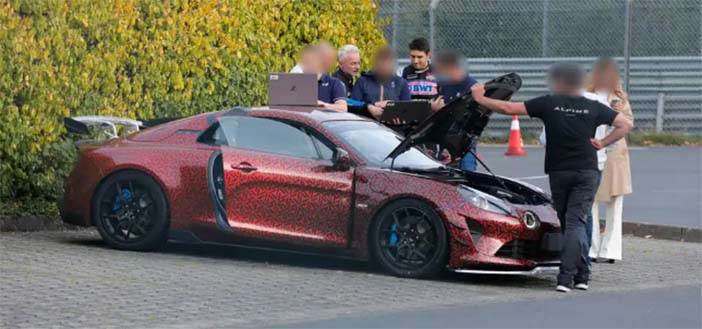
+++ ALPINE is preparing to send the A110 out on a high note with a stripped-out, track-focused variant to rival the Porsche 718 Cayman GT4 RS. Developed with input from Alpine Formula 1 driver Esteban Ocon, the climactic variant of the A110 is understood to be a strictly limited proposition priced well above the A110 R. Just 110 examples will be built, starting at €325.000 on the Dutch market. The sports car was previously spotted testing at the Nürburgring, revealing its significantly more aggressive aerodynamics package. The A110 R-sourced rear spoiler is much more aggressively raked and its endplates have sprouted small winglets to boost downforce. Below the spoiler is a new lip, presumably designed to aid stability at high speeds. Up front, the new A110 wears a new set of canards and the bonnet gains a pair of deep nostrils above the radiator to provide better cooling for a more powerful engine. The 4-cylinder unit’s output will be boosted from 300 hp to around 330 hp, and it will put out 350 hp running on 102Ron race fuel. Torque is expected to increase by nearly 50%, meanwhile, from 320 Nm to 450 Nm, which is said to necessitate a switch from the standard 7-speed automatic gearbox to the stronger 6-cog unit from the final-edition Mégane RS Ultime; Renault Sport’s final car. It’s reported that a gearbox swap will require the A110’s engine bay to be redesigned, but it isn’t confirmed how extensively the coupé’s structure has been revamped. Alpine is also targeting a kerb weight below 1.000 kg, giving the new A110 a similar power-to-weight ratio as the Cayman GT4 RS, rated at 350 hp per ton. Alpine’s ambition is to beat the GT4 RS’s Nürburgring lap time of 7 minutes 4.51 seconds. In October, spy photographers clocked the A110 at 7 min 18.77 seconds with Ocon behind the wheel, suggesting there’s still more for Dieppe to unlock. The new variant is expected to be the final outing of the current A110 before it’s retired to make way for the next-generation electric model, and it could wear the Ultime name to reflect this position. A110 sales are set to be severely restricted over the next couple of years, due to the European Union’s new GSR2 safety standards. The current car doesn’t comply with the standards, which will come into effect this July, but has been granted a 2-year stay of execution on the condition that Alpine sells fewer than 1.500 units per year in the EU until the model is withdrawn from sale. Roberto Bonetto, Alpine’s vice-president of engineering, told: “We believe we can use that to keep the A110 on sale in its most important European markets until July 2026 and hope to develop our market presence outside of the EU in order to export the balance of our cars and maintain a viable production volume for the factory”. +++
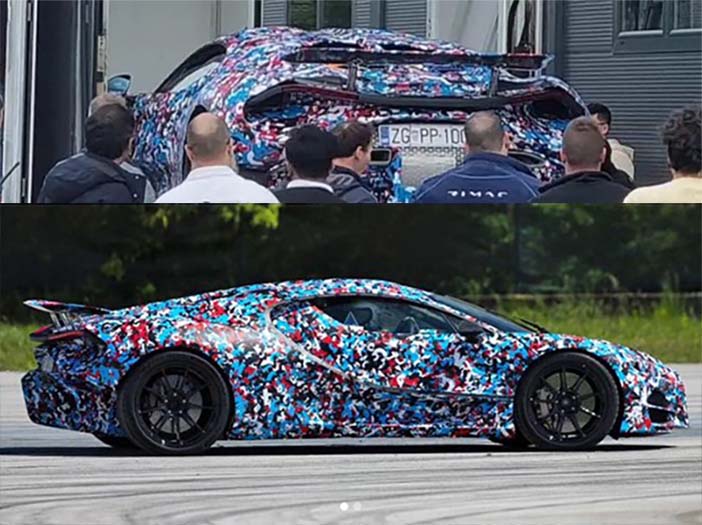
+++ When BUGATTI teased the new V16 that will go into the successor to the Chiron, the early word was that the new coupe would still be recognizable as a Bugatti. Here you can see proof. At the prototype shown, the design trademarks are there: low nose rising to hug the front wheels, the C graphic along the side, thin light bar stretched across the rear and a whopping deployable wing. Looks like the new monocoque underneath has been lowered and stretched compared to the current car, though. The front overhang is longer, the curve of the C has been pulled back like a bow string at the top, and there’s a noticeably larger span of sheet metal between the diagonal of the C and the rear wheel arch. Also, that C design element cuts higher through the side of the car, about two-thirds of the way down the door instead of just above the rocker panel. And it’s tough to make out details through the camo, but the doors have new lines, too. In back, the current horizontal line of a taillight is curved in two dimensions to follow the coupe’s rear edge. The latter third of the car gives us Super Sport vibes, the standard Chiron variant that channeled the Super Sport 300+ created to hit 480 km per hour, especially in the rear diffuser area. Part of the extra length could be about fitting the new hybrid and quad-turbocharged V16 powertrain. The Chiron’s yet-unnamed successor will use a plug-in hybrid system, Rimac-Bugatti previously describing the power unit as “heavily electrified”. This suggests (though nothing is official) that the model will be capable of running on electricity alone for short distances. If other super sports cars are useful indicators, all-electric running might last no longer than 10 kilometers or so. Rumors about that the ICE portion is an 8.3-liter unit developed with the help of Cosworth, aided by 3 electric motors that make 340 horsepower apiece. That suggests not only appreciably more horsepower than the 1.600 in the Chiron, but all-wheel drive. We’ll find out on June 20, when the new car is anticipated to debut at Bugatti’s Molsheim headquarter in France. +++
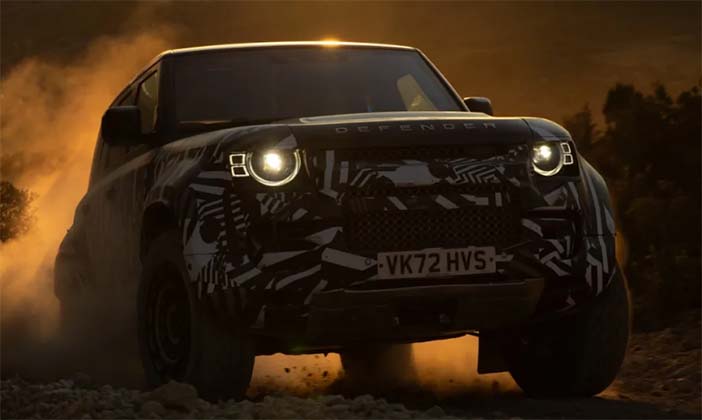
+++ ‘ DEFENDER ‘ recently made the leap from a nameplate in the Land Rover portfolio to a standalone brand within the JLR group. The first SUV the company will launch after gaining independence is a high-performance evolution of the Defender named Octa making its debut in July. While this isn’t our first look at the Octa, the new images released by Defender give us a better idea of what to expect from the off-roader. Tall and wide, it stands out from the existing Defender variants with a bigger grille, additional air intakes chiseled into the front bumper, and what looks like a taller bulge on the hood. The massive wheel arch flares cover up a wider track, and it rides on specific wheels wrapped by off-road tires. We also spot a pair of red tow hooks poking out from the rear end and, in one picture, beefy skid plates along the underbody. Skid plates are needed, because it sounds like the Octa is being developed for serious off-roading. It will come standard with the 6D Dynamics suspension system already available on the Range Rover Sport SV, which is a hydraulic-based technology that keeps body roll, pitch, and squat in check while increasing wheel travel. Engineers have triple-checked the Octa’s off-roading capabilities by testing prototypes in some of the harshest environments on the planet, including the deserts outside of Dubai and on off-road courses near Moab. It’s not all about off-pavement performance; the Octa needs to be quick and capable on the pavement as well. The twin-turbocharged V8 will tick the “quick” box, while the 6D Dynamics system should give it better on-road performance than the ground clearance suggests. Defender notes that prototypes were also tested on the Nürburgring track in Germany, which is the benchmark for high-performance vehicles. Defender will unveil the Octa on July 3, but a hand-picked group of clients will have the chance to order one before the model makes its public debut. Availability hasn’t been announced yet, but the British brand notes that a limited number of vehicles will be available during the first year of production. That doesn’t necessarily mean it’s a limited-edition model, but it signals the Octa will initially be hard to come by. +++
+++ FISKER is nearing bankruptcy, but there might be a light at the end of the long, dark tunnel it’s been traveling in for the past few months. 4 companies have shown an interest in buying the troubled brand, according to comments made during a meeting by founder Henrik Fisker. “We still have some time to get other offers on Fisker. We do have 4 car companies that have signed NDAs”, the executive said during what’s described as an “all-hands meeting” for staff members held earlier this month. “However, they obviously need time to get some diligence”. Fisker didn’t reveal the identity of the 4 companies. He specified that they’re car companies, but that’s a vague term that could refer to anything from a small startup with shady backing to a major group that’s been around for over a century. Similarly, there’s no word on how long it will take for these companies to decide whether to make an offer on Fisker. In spite of its setbacks, including damning reviews of the only model it has managed to bring to production, a National Highway Traffic Safety Administration (NHTSA) probe and reports of thousands of canceled orders, Fisker seemingly remains fairly attractive to investors. Nissan briefly considered buying the carmaker earlier in 2024 but the talks ended without a deal, according to an earlier report. Deutsche Bank is helping Fisker look for takeover candidates, and the company has already turned down one offer that wasn’t “sufficient”, its CEO said. Meanwhile, Henrik Fisker has listed his personal home (a mansion in Hollywood Hills) for sale at $35 million, though you can also rent it for $125.000 per month. This ($35 million) is more than Fisker’s market cap, which stood at $33.7 million when it was delisted from the New York Stock Exchange. +++
+++ FORD has suggested it will offer smaller, lower-slung electric cars from 2026, once it has launched a family of 4 electric SUVs in Europe. The firm has already retired the Fiesta and the Focus will bow out in 2025, leaving just the Mustang as its only non-SUV dedicated passenger car. Confirmed new cars on sale by the end of next year include the Explorer, ‘Capri’ (a SUV-Coupe), electric Puma (called Gen-E) and updated Mustang Mach-E; all crossovers. But asked if there’s a space for lower, non-SUV models in the future, the company’s boss in Europe, Martin Sander, said: “Definitely”. As to whether Ford will still cater in the future to customers who don’t want an SUV, Sander said: “I think so”. He told: “There are values which have made us successful over the last couple of years, like solid quality and value for money. We’re not walking away from this. These are basic fundamental values Ford has had globally for many years. “You will see different quality in terms of design, interior, performance and equipment”. He cited the fit and finish of the new Explorer as being of “a different level than you would have seen from Ford before” and said “this is what the brand deserves”. He added: “The brand is so rich and so powerful, and we have to do a better job of building the strength of the brand into our products in Europe”. Irrespective of the shape and size of any cars after the Explorer and Capri, Sander said Ford still has “not made a decision on future products after the two MEB products we are launching now”, referring to the Explorer and closely related Capri crossovers, which use the Volkswagen Group’s modular EV platform. Ford’s supply deal with the German giant in theory could give it access to the new MEB Entry platform from the Volkswagen ID.2, Skoda Epiq and Cupra Raval for its own compact urban EV in the mold of the Fiesta. But Ford revealed recently that it has a small ‘skunkworks’ team focused on its own entry-level electric car, tipped to cost as little as $25,000. Led by Tesla Model Y engineer Alan Clarke, the project was started 2 years ago in light of waning demand for high-priced premium electric cars. Asked if this model could soon form the entry point into Ford’s European car line-up, Sander told: “We are looking into the opportunities of bringing future global Ford products to Europe, but the key principle of our future line-up for Europe will be iconic, emotional products. We are not going back into a volume race just to hit a certain number at the plant or be in a segment where others are”. +++
+++ GENERAL MOTORS posted quarterly results that topped Wall Street targets and raised its annual forecast, citing stable pricing and demand for its gas-engine vehicles, sending shares up 5%. The Michigan automaker upped its adjusted pre-tax profit projection for the year to $12.5 billion to $14.5 billion, from its previous range of $12 billion to $14 billion. “Our consumer has been remarkably resilient in this period of higher interest rates”, GM chief Financial Officer Paul Jacobson said. He said demand held up well in the first quarter and pricing was stable in April, but GM still is planning for pricing to decline 2% for the rest of the year. Despite the company’s struggles in China and with EVs, stronger-than-expected vehicle pricing with gasoline-powered trucks pleased investors. “There is the reality that the pricing is staying stronger for longer than anybody anticipated”, said Tim Piechowski, portfolio manager at ACR Alpine Capital Research in St. Louis, which owns GM shares. “The engine of the company is truck and SUV at this point”, he added. “They’re just generating substantial profit and free cash flow that will continue to fund the initiatives in EV. Full steam ahead”. GM could lose additional market share in the near and intermediate term due to its lack of hybrid gasoline-electric vehicles and cash flow will be hampered by heavy planned spending on electric vehicles, CFRA Research analyst Garrett Nelson said in a research note. The automaker reported that net income in the first quarter rose 24.4% over the year-ago period to $3 billion, on a 7.6% rise in revenue to $43 billion. Revenue topped the Wall Street target of $41.9 billion in the March quarter. While the company started 2024 strong, CEO Mary Barra still has 2 large challenges ahead: turning around GM’s shrinking sales in China, and salvaging Cruise, its robottaxi unit. Cruise halted operations late last year after one of its self-driving cars dragged a woman down a San Francisco street. Company officials shared earlier this year that GM would cut spending on this unit by $1 billion. The robottaxi business lost $2.7 billion last year, not including $500 million in restructuring costs incurred in the 4th quarter as the unit cut staff. GM spent $400 million on Cruise in the first quarter, and expects full-year expenses to hit about $1.7 billion. Barra said the business is making progress, citing the return of its vehicles to roads in Phoenix, Arizona, earlier this month, with human drivers and no passengers. She told analysts on a conference call that GM is exploring funding operations for Cruise, including taking outside investment. GM’s business in China, previously the automaker’s largest market, has also been faltering. Chinese automakers and Tesla have gobbled up market share in the region, aided by deep price cuts and refreshed technology offerings. GM lost $106 million in China in the quarter, which CFO Jacobson told reporters was less than his team expected, as it worked through inventory. Jacobson said the company expects a profit in China for the second quarter and the year. Asked if GM would close or sell its business there, Barra said GM was committed long term to the world’s largest auto market. “There’s a place for GM to play and grow share”, she said of China. The carmaker and its crosstown rival Ford are counting on profit from petrolengine trucks to ease investors’ concerns as they continue to funnel cash into costly EV development. GM said it gained more than 3 points of market share in full-size pickup trucks in the quarter from rivals, which includes Ford and Stellantis. GM has not broken out financial results for its EV business, but Jacobson stuck to previous forecasts for turning a profit. He still expects so-called variable profit, which excludes fixed costs, to be positive by the second half of 2024. “We also continue to see sequential and year-over-year improvements in profitability as we benefit from scale, material cost and mix improvements”, Barra said. The company’s joint venture with LG Energy Solution, called Ultium Cells, is ramping up production of battery cells at plants in Ohio and Tennessee, Barra said. Questions about the market for battery-powered vehicles have increased as EV leader Tesla laid off more than 10% of its global staff earlier this month and slashed prices on its models across several markets. GM outlined last year a $10 billion stock buyback on the heels of reaching a costly new labor agreement with the United Auto Workers union. The first tranche of this was completed in the first quarter, and the company is on track to reduce its outstanding share count to under 1 billion, Barra said. +++
+++ TESLA shares surged nearly 14% after the electric-car maker eased some worries about slowing growth with a prediction that sales would rise this year and plans to roll out more affordable models in early 2025. Investors had been bracing for the worst after a tumultuous week at Tesla that saw big layoffs, executive exits, price cuts and the postponement of a highly touted meeting with the Indian prime minister. The newly minted plans also helped Wall Street shrug off the company’s weak first-quarter results, including a lower-than-expected profit and the first drop in quarterly revenue in nearly 4 years. “First impression is CEO Elon Musk appeasing the market by accelerating new product launches”, Jefferies analysts led by Philippe Houchois said in a note. Based on the premarket jump in its stock price, Tesla was on track to add nearly $50 billion to its market value of $460 billion. The stock has slid 42% this year as high borrowing costs have dampened demand for EVs and a price war in major market China intensified. Tesla’s growth strategy could strengthen support for a shareholder vote in May on Musk’s $56 billion compensation package, which was voided by a Delaware court in January. Some Tesla investors (such as Ross Gerber, president and CEO at Gerber Kawasaki Wealth & Investment Management) said that they planned to oppose the package, citing a decline in Tesla’s share price and a compromised board. Several analysts took Tesla’s remarks that a cheaper model will be built using a current platform and production line as further confirmation that it had retreated from more ambitious plans for an all-new model that had been expected to cost $25,000. “We read ‘more affordable’ as potentially de-contented Model Y/Model 3 versions with improvements in software and AI/hardware capability, but at lower prices”, Morgan Stanley analyst Adam Jonas said. Musk declined to provide details of the more affordable models and instead spent much time on Tesla’s efforts to diversify its business into AI, humanoid robots and operating a fleet of autonomous vehicles, all based on software and hardware products it has not yet fully developed. Investors and analysts have long given Tesla a premium valuation for efforts such as its driver-assistance technology. Tesla’s shares jumped to roughly $160 apiece in trading before the bell, a price at which short sellers have lost $1.62 billion on paper. However, short-sellers are still up almost $8 billion in profit this year. “While the details (on the new models) are thin on the ground, this was a clever move by Musk, as it justifies the negative cash flow and the higher capital spend”, said Kathleen Brooks, research director at XTB. “Unlike many companies that are shrinking capital spend in the current environment, Tesla is going against the grain and puts it in a strong position as the EV market gets more competitive and price sensitivity increases”, Brooks added. +++