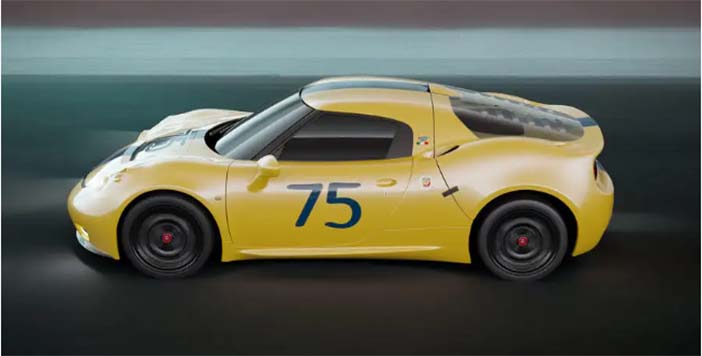
+++ ABARTH has revealed a retro 2-seat sports coupé to celebrate its 75th anniversary. Called the “Abarth Classiche 1300 OT”, it’s based on the Alfa Romeo 4C and is described as a ‘modern reinterpretation’ of the 1965 Fiat-Abarth OT 1300 race car, which claimed high-profile victories at the Nürburgring, Monza and Mugello in period. The 1300 OT follows the similarly conceived 1000 SP special edition from 2021, also based on the 4C. As with that car, which “sold out in record time”, according to Abarth, just 5 examples of the 1300 OT will be produced, with production set to begin soon following the unveiling of a scale model at parent company Stellantis’s Heritage Hub in Turin this weekend. Orders are open now, but Abarth has not given any indication of pricing. Abarth says the new special edition “retains the essence of an authentic Abarth”, with its bespoke carbonfibre bodywork wearing a retro race livery and decorated with various 1960s-inspired cues, like the roof-mounted ‘periscope’ intake and louvred rear window. One of the most notable features is the full-width engine cooling vent at the rear, decorated with large Abarth lettering, in a bid to “emphasise the bond with the historic design”. The engine in question is the 240 hp 1.75-litre turbo-4 which sent the 4C from 0-199 Kph in 4.5 seconds and on to a top speed of 260 kph. Abarth has not given any indication of the OT’s performance potential, nor has it detailed any revisions to the chassis. The 75-year-old brand recently revealed its second electric car and first SUV, the Abarth 600e, and is due to give full technical specifications in the coming weeks. +++
+++ BMW ’s sales of fully electric vehicles at its core brand surged in the first quarter, outperforming rivals like Volkswagen and Tesla, which have struggled to cope with faltering demand. Customer deliveries of battery-powered models such as BMW’s i4, iX1 and i7 jumped 41% in the 3 months through March compared to the same period last year, the company said. The results helped group EV sales rise by 28%. BMW’s results contrasted with the broader slowdown in demand for EVs, particularly in Europe, where battery-powered cars have flattened as a share of overall sales after governments withdrew incentives for EV purchases. Volkswagen said its EV deliveries fell 3% in the first quarter as gains in China failed to offset a 24% decline in Europe. Mercedes-Benz said its sales of EVs fell 8% in the first quarter, citing supply-chain issues, the phase-out of its Smart Fortwo 2-seater and sluggish demand in Germany after state subsidies programs were scrapped. Earlier this month, Tesla reported its first year-on-year global sales drop since 2020. BMW, Volkswagen and Mercedes-Benz released their first-quarter figures as chief executive officers from some of Europe’s biggest carmakers met in Brussels to discuss risks facing the transition to EVs. Luca de Meo, CEO of Renault and president of the ACEA auto industry lobbygroup, said Europe needs to bolster demand for EVs by expanding charging infrastructure, ensuring supplies of raw materials, improving financing options and introducing market incentives. BMW is banking on EV sales success after rolling out a significant number of new battery models, including the high-volume i4 and more recently the iX2. The Munich-based company moved earlier in the EV shift than many competitors with the development of the i3, garnering deeper experience with battery technology and having to work through a mixed reception of the model. “The key thing is that BMW has more of a volume-based strategy than Mercedes”, Citi analyst Harald Hendrikse said. “BMW is more willing to compete if the market is more difficult”. But in the future, this will be more difficult as growth is slowing in the luxury segment and in China, he added. EVs made up roughly 15% of BMW’s total deliveries last year and are expected to rise to 20% this year. The company aims to boost that share further this year with half a million EV sales, drawing on 15 fully electric models across its brands. BMW is, however, facing stiff competition in China, its biggest market, where a subdued economy and price war led by Tesla is weighing on the industry. Sales of BMW and Mini brand vehicles in China declined 3.8% in the first quarter, while deliveries increased 5.5% in Europe and 1.2% in the US during the same period. Volkswagen signaled EV demand in Europe could bounce back. The company said more than twice as many fully electric models were ordered in the first quarter than last year, bringing the current order bank to roughly 160.000 vehicles. +++
+++ BYD received at least €3.4 billion in direct government subsidies as part of Beijing’s push to dominate electric vehicles and other clean technologies, according to a new study. Aid for China’s leading EV maker jumped from €220 million in 2020 to €2.1 billion only 2 years later, the Kiel Institute for the World Economy said. BYD also is benefiting from support for local battery manufacturers and rebates for buyers of its cars, according to the report, which comes as the European Union investigates allegedly unfair aid for China’s EV sector. Subsidies like those handed to BYD “have allowed Chinese firms to scale up rapidly, to dominate the Chinese market, and to facilitate increasing expansion into EU markets”, said the institute, which advises the German government. The EU is facing calls to re-balance trade with China as countries including France flag an economic threat from a glut of Chinese-made products flooding the bloc’s market. BYD and its peers Nio and Geely are expanding in Europe after growing in China, where Western manufacturers including Tesla and Volkswagen are losing market share in a bruising EV price war. Virtually all of China’s listed companies received direct handouts in 2022, the Kiel Institute said, flagging support for wind, solar and railway rolling stock companies. Industry aid in China is “at least 3 to 4” times higher than in large EU and OECD countries, the group said. The European Union has set up a €40 billion innovation fund to compete with China and subsidies earmarked in the U.S. Inflation Reduction Act. In October, the European Commission launched a probe into whether Chinese aid for companies including BYD, SAIC and Geely had given the country’s industry an unfair advantage. Initial tariffs could come as early as July. China has labeled the subsidy probe protectionist and says its carmakers are winning the EV race because of superior products. Chinese EV manufacturers are relying on “continuous technological innovation” and advanced local supply chains rather than the government, Chinese Minister of Commerce Wang Wentao said last week in Paris. German chancellor Olaf Scholz’s trip to China in the coming week represents an “excellent opportunity,” to negotiate with Beijing about its subsidies, said Dirk Dohse, one of the report’s co-authors. BYD started as a battery maker but invested large sums in researching EV and plug-in hybrid technology. It grew significantly when China’s domestic cars market took off thanks to generous EV purchasing subsidies. The company, which reported 2023 net income of around 30 billion yuan ($4.2 billion), also has been able to undercut Western manufacturers on price in China. Its Seagull hatchback that comes with a 10-inch rotating touchscreen retails for under $10,000. +++
+++ If you are considering buying a FISKER OCEAN because of the recent deeply discounted prices, think twice. In fact, the car-buying site Edmunds doesn’t merely suggest you reconsider, it headlines a piece on the battery-electric SUV it bought in January, “Do not buy a new Fisker Ocean; Fisker’s uncertain future makes buying an Ocean too much of a gamble”. What makes the Edmunds piece more interesting than information you already know or mere piling on is that the site details much of its time with the Ocean, from the sorely under-baked delivery version that they paid $69.012 for, to the slightly more livable but still misfit version missing promised features and recently hammered by at least 43% in depreciation. The Ocean’s dashboard loved to throw up warning lights and errors before the OS 2.0 software update. The key fob had separation issues, occasionally needing to touch the door handle to unlock the SUV; Edmunds didn’t mention the door latch issue the NHTSA is investigating. The Ocean’s audio system enjoyed giving the silent treatment, and the e-motors wouldn’t hold the vehicle when stopped on a hill. The 2.0 software apparently fixed the fob, the dash lights, and infotainment responsiveness, while adding features like data on solar panel energy and trailer sway control. But the anticipated adaptive cruise control didn’t materialize, and the new brake hold feature relies on a fiddly driver’s-seat sensor that can put the Ocean in Park if the driver shifts their weight in the seat. So, you can get an Ocean in dealer inventor today for a very low price, no matter the options. Edmunds advises: Don’t. Meanwhile, the latest report is that Fisker has withdrawn its financial guidance for the year while it tries to scare up a rescue plan. Even brand-specific forum Fiskerati jumped ship: it’s now a general EV-focused site called CH4RGE. The All Things Fisker forum remains, though, and its current trade-in prices thread is brief, wild reading, from dealers unwilling to take the car, to initial offers in the $20,000s to $40,000s dropping to zero, to a few posters determined to stick it out with their delivered cars. It’s not like the Ocean’s alone in foibles, though. The Issues, Repairs, Warranty and Recalls page at the Cybertruck Owners Club is already 6 pages of individual threads, from blank screens to rubbing seats to non-charging batteries to high-speed “shivering” to self-opening windows to “Blue Gunk Beware,” and that gamble will cost you a lot more than the discount you got. +++
+++ FORD has seen ups and downs with the Mustang Mach-E, most recently down as the automaker cut prices on inventory models to curb flagging demand for the electric crossover. The move helped sales rebound, and now Ford is introducing the 2024 modelyear Mach-E despite the fact that we’re already into the second quarter of the year. The new EV gets increased range estimates and an available Performance Upgrade for the GT trim that makes it quicker than the Tesla Model Y Performance and Porsche Macan 4 Electric, at just 3.5 seconds from a standstill to 100 kph. All variants gained more range, with non-GT models seeing a 35 km boost. The GT picked up 15 km of range. Ford said the EV now charges 20 percent faster, allowing a 10-80 percent charge in just over 36 minutes for the extended-range battery; an 8.8-minute improvement over prior models. Standard-range models can charge from 10 to 80 percent in a little over 32 minutes, 5.7 minutes faster than before. The Mach-E can charge at the Tesla Superchargers, and new navigation functionality uses Android Auto or Apple Maps to route you to open charging locations. Ford’s excellent BlueCruise hands-free driving assistance system is available for all trims, and the automaker improved the infotainment system with a new interface and streamlined controls for USB and Bluetooth features. A new settings screen also combines all options onto one page to eliminate endless scrolling to make changes. +++
+++ LUCID reported first-quarter deliveries above market expectations as price cuts helped boost demand for its luxury electric sedans, sending its shares up about 4%. The company handed over 1.967 vehicles in the first quarter, compared with estimates of 1.745, according to 8 analysts polled by Visible Alpha. Lucid’s deliveries remained resilient after the electric vehicle startup cut prices of its flagship Air sedans by 1% to 10% in February. However, demand for EVs overall has been slowing in the U.S. owing to high interest rates and relatively elevated ownership costs, compelling buyers to turn towards more affordable hybrid alternatives. EV giant Tesla reported a quarterly decline in deliveries for the first time in nearly 4 years earlier this month and missed Wall Street estimates. Lucid made 1.728 vehicles in the first quarter ended March 31, below estimates of 2.123, and compared with 2.391 in the preceding 3 months. The EV maker said in February it plans to introduce a midsize car late in 2026 to attract a broader customer base, while Tesla scrapped plans for its inexpensive car. Lucid CEO Peter Rawlinson said the new vehicle will target a $50.000 price point, a highly competitive pricing range that includes Tesla’s Model Y electric vehicle. The company said last month it is raising $1 billion in capital from Ayar Third Investment Company, an affiliate of Saudi Arabia’s Public Investment Fund. The capital injection boosts Lucid’s funds, giving the firm an advantage over other cash-strapped EV startups burning through cash as they ramp up production. Lucid’s deliveries mirror that of sector peer Rivian Automotive which also beat estimates for quarterly deliveries fueled by strong demand for its electric pickup trucks and SUVs. +++
+++ MERCEDES-AMG has started engineering a new high-powered flagship SUV based on its own electric car platform. Set to be unveiled in 2026, the new super-SUV has been conceived to lock horns with several high-end rivals, including the BMW XM, the Lotus Eletre and Porsche’s upcoming K1. The new SUV is not based on other Mercedes-Benz models. Instead, it is being developed wholly by Mercedes-AMG and, like today’s GT Coupé and GT 4-Door Coupé, will be a totally bespoke proposition with its own individual styling and interior layout. In positioning terms, though, it will be a natural successor to today’s Mercedes-AMG GLE 63. Sources have told that the styling of AMG’s first bespoke SUV will be previewed by an upcoming concept. The model is said to be similar in length to the Vision AMG concept, at around 5.100 mm, and will have a wheelbase of more than 3.000 mm to provide generous interior accommodation and versatility. By comparison, the XM is 5.110 mm long and has a 3.105 mm wheelbase. Among the new model’s key features are an 800 Volt electric architecture, patented axial flux electric motors and a specially developed version of the German car maker’s MB.OS operating system, known internally as AMG.OS. The luxurious new performance SUV will be the second production model based on the company’s new AMG.EA platform, following the second-generation GT 4-Door Coupé – a sleek new Porsche Taycan saloon rival that is due to be launched in 2025. Mercedes technology boss Markus Schäfer said the new architecture “is a technological trailblazer, which will pioneer several new innovations. The AMG.EA drive concept is based on axial flux motor technology, which offers an unparalleled mix of power density, size and weight. Furthermore, the innovative power unit operates in conjunction with a new high-performance high-voltage battery”. The AMG.EA structure shares elements with the MB.EA platform set to be used by less performance-focused Mercedes-Benz models in coming generations. But in a departure from that more volume-oriented platform, the AMG.EA architecture has been conceived to accommodate advanced electric motors from Yasa; the Oxfordshire-based company purchased by Mercedes-AMG in 2021. Yasa’s patented disc-shaped motors, to be produced at volume for the first time at Mercedes-Benz’s Berlin factory in Germany, are claimed to offer significantly higher power and torque density than the more conventional synchronous electric motors used in Mercedes-Benz’s and AMG’s existing electric cars. Although secrecy surrounds the technical specification of the new electric performance saloon and SUV duo, AMG says the set-up can accommodate a variety of different electric motor layouts. These include single- and dual-motor rear-wheel drive along with dual-, tri- and quad-motor, four-wheel-drive configurations; the latter similar in principle to that set to feature on the upcoming production version of the Vision EQG, an electric-powered variant of the Mercedes-Benz G-Class, albeit with different hardware. Not all configurations will be used, though. Sources have told that the new SUV will receive similar set-ups to the upcoming GT 4-Door EV in the interests of development and production efficiency. Yasa says the axial flux motor developed for AMG’s new dedicated electric models weighs just 24 kg. Each unit develops up to 490 hp and 800 Nm of torque. This suggests that the new AMG SUV could potentially offer well over 1.000 hp, with advanced four-wheel drive and torque-vectoring qualities set to provide it with what one AMG insider describes as “a whole new level of variable traction possibilities”. The flux motors to be used by Mercedes-AMG’s next generation of performance models have been designed to operate in combination with a new 800 Volt electric architecture and an in-house-developed high-performance battery pack that features unique cell chemistry and silicon anode material from US company Sila. The suspension for the new AMG model draws on the technology used by the Active Ride Control system introduced on the second-generation Mercedes-AMG GT Coupé. Under this set-up, individual pumps control each wheel to give self-levelling capacity in combination with four-wheel steering. Inside, the super-SUV is set to use a new-look interior architecture with a unique AMG dashboard display that features an AMG.OS operating system and unique graphics. Production is planned to take place at Mercedes-Benz’s manufacturing plant in Sindelfingen, Germany, alongside the new GT 4-Door Coupé. Sources at the factory say preparations are already being made to accommodate 2 new electric AMG models, which will be produced on the same line. The two AMG.EA-based models will serve as flagships for an expanding family of sporting EVs from AMG. In 2025, the Affalterbach-based division will launch a hot electric version of the third-generation CLA, based on the new MMA platform that will underpin a new generation of compact models offering the choice of combustion or EV power. Technically related performance versions of the next-generation GLA and GLB are planned as well. +++
+++ NISSAN senior vice president and chief planning officer Ponz Pandikuthira also talked with me a bit about EVs, and more specifically model lines and nameplates. We’ve seen a few strategies ranging from almost completely new and parallel model lines (such as Hyundai’s Ioniq and Kia’s EV), to reusing old names on still similarly parallel models (such as Peugeot’s e-208 and e-308), and of course blends of the two. So far, Nissan has gone with the separate model route with Leaf and Ariya, but that may not be as much the case in the future. Pandikuthira noted that now, consumers don’t have as much interest in their EVs being some completely unique, statement piece. As such, both Nissan and Infiniti will be adding EVs to existing nameplates more so than totally new model lines. He didn’t say whether they would simply be electric variants of existing internal combustion models or something like Peugeot’s model, though. But he did note that the Ariya was, at one point, considered as a possible Murano successor. It certainly would make sense to us. The Ariya is a distinct-looking crossover, and one with a very upscale interior, both key tenets of the Murano from that model’s introduction in the early 2000s. Plus, the Murano is in pretty dire need of a replacement, as the current generation dates back nearly a decade ago to the 2015 model year. The reason Pandikuthira gave for the Ariya decision was that the crossover represented enough of a change in Nissan’s EV technology and capabilities that the brand wanted to highlight that with a unique nameplate. Nissan won’t be ruling out the possibility of new EV-only models, though. Just like with Ariya, Pandikuthira told me that if a planned car is unique enough, the company will still be open to a new line. But expect more, say, electric Jukes and Qashqais than totally new names. +++
+++ The car industry is facing a possible crisis concerning real-world fuel economy data which could have wide-ranging repercussions as significant as the fallout from the Dieselgate emissions test cheating scandal. 2 reports have emerged from the European Union over the past few weeks, the latest from the European Commission (EC), and both could have far-reaching effects on the type of vehicles that manufacturers will be selling as soon as 2026. What has happened? The European Court of Auditors and the EC both say the first real-world data obtained on fuel consumption shows that petrol, diesel and plug-in hybrid cars are all well adrift of their official laboratory calculated fuel consumption and CO2 emission figures. The first estimates for a sample of cars registered in 2022 show that the WLTP test regime overestimates the fuel economy of petrol cars by 23.7% and of diesel cars by 18.1%. PHEV cars average CO2 emissions of 139.5 g/km, which is some 23% better than the internal combustion engine average. However, the real-world monitoring suggests that PHEVs aren’t being charged as often as was estimated by the WLTP regime. The upshot of the analysis is that larger-engined models, the heaviest SUVs and luxury cars and PHEVs, along with underperforming mainstream ICE vehicles, will now face renewed scrutiny by the European authorities. The EU Court of Auditors also recommends that the EU follows the United Kingdom’s legislative lead and drops the current laws that make car makers meet ‘fleet average’ CO2 targets (currently 115.1g/km, dropping to 93.6g/km from next year) in favor of “targets based instead on a minimum share of zero-emission vehicles”. Although the UK market is no longer directly affected by CO2 fleet average laws in the European Union, 53% of cars made in the UK are exported to the EU market, so British car makers’ offerings will remain under scrutiny. What went wrong? After Dieselgate, the EU moved to replace the standardised New European Driving Cycle (NEDC) laboratory fuel economy tests, which dated back to 1992, with a new economy test format. The Worldwide Harmonised Light Vehicles Test Procedure (WLTP) then arrived in 2017. The WLTP test cycle was longer (30 minutes instead of 20 minutes), conducted over a greater distance (20 km instead of 10 km), included less stopping, took in higher average speeds and required greater levels of acceleration. Assurances were given that the WLTP driving cycle “was based on a global statistical survey of real driving profiles”, but new in-car technology quietly deployed by the EU in new cars since 2021 has now proved the test to be significantly overestimating cars’ real-world economy. It wasn’t widely discussed, but the EU legislated for the installation of on-board fuel consumption monitoring devices (OBFCMs) in vehicles sold in member states. These had to be fitted to cars registered from 2021 and in vans registered from 2022. The European Commission said: “Regulation EU 2019/631 also tasked the Commission with monitoring the ‘realworld’ CO2 emissions of vehicles on the road, using the data read out from the OBFCM devices and comparing it with the corresponding official WLTP data”. Now the first results of this real-world monitoring have thrown the EU’s fleet CO2 targets into doubt. With the exception of its reaction to the real-world charging patterns for PHEVs (it will change the way their CO2 emissions are calculated next year), the Commission’s report was relatively mild in tone. It said the initial data wasn’t yet “broad or representative enough to draw firm conclusions” but did express concern about the predominance of heavy SUVs and luxury vehicles, which stray even further from the WLTP results than mainstream cars. However, a parallel report from the European Court of Auditors was harder-hitting. It admonished the European Commission and member states for not submitting realworld CO2 data in time, and wasn’t interested in simply refining current legislation for descending fleet CO2 targets. Firstly, it said: “The key challenge for meeting emission-reduction targets for 2030 and beyond will be to ensure a sufficient uptake of zero-emission vehicles. In particular, it will be important to address electric vehicle affordability, provide sufficient electric vehicle charging infrastructure and secure the supply of raw materials to produce batteries”. Secondly, and more radically, the Court of Auditors wants the European Commission to tear up today’s emissions legislation by 2026. It said: “The Commission should assess the feasibility, costs and benefits of the following changes to the [current]CO2 regulation, replacing the current EU and manufacturer level targets with targets based instead on a minimum share of zero emission vehicles”. Such a move would mirror the policy on car sales that the UK adopted after Brexit. Furthermore, the Court of Auditors wants to see a “real-world emissions cap at manufacturer level, one that should not be exceeded for combustion-engine cars and including all types of hybrid”. This demand will put all non-electric cars in the spotlight. Reading between the lines, it could easily mean that the sale of larger-engined vehicles, and heavier vehicles such as SUVs and luxury cars, could be throttled back. It’s possible that the Court of Auditors has seen the detail in the EU document that suggests buyers are opting for the more highly specced and therefore heavier and more consumptive versions of ICE cars. However these reports shake out, it looks like the car industry is set for another earthquake in Europe. +++
+++ POLESTAR saw a 40% drop in first-quarter deliveries, the Swedish electric vehicle (EV) said on Thursday, as the sector struggles with slowing demand. While carmakers and suppliers are betting on future demand for EVs, sales growth has slowed, with investment in capacity and technology development outrunning demand, boosting pressure on companies to cut costs. Polestar said it delivered 7.200 vehicles in the first quarter, down 40% from 12.076 a year earlier. A ramp-up in deliveries of its Polestar 3 and Polestar 4 will contribute to revenue in the latter part of the year, CEO Thomas Ingenlath said in a statement. “These 2 cars will provide the basis for a strong revenue and margin progression during the second half of the year, supporting our 2025 targets”, Ingenlath said. Polestar aims to deliver 155.000-165.000 cars in 2025. Ingenlath said it had delivered 1.200 of the Polestar 4 (a SUV coupe) in China in the first quarter, which was the first country to receive the car at the end of 2023. Global deliveries of the Polestar 3 are set to begin in the second quarter of 2024 while the Polestar 4 is expected to reach first customers in Europe and Australia in August, with deliveries in America expected later in the year. Investors’ enthusiasm for EV makers has cooled as growth in sales has slowed and financial losses have piled up, making life especially hard for start-ups like Polestar. Financial backer Volvo said in February it would cease further funding of Polestar, which has struggled to meet targets, and hand over most of its stake to its shareholders such as Geely. The company is set to report its postponed fourth-quarter results on April 30 and first-quarter results on May 23. +++
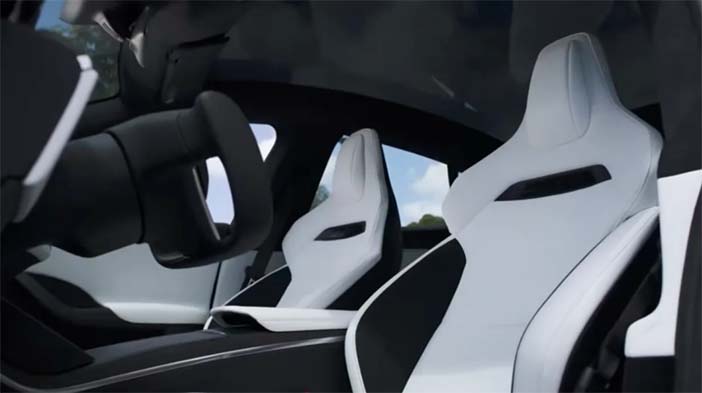
+++ The TESLA MODEL S PLAID sports an advertised 2.2 seconds 0-100 kph time, which can exert an awful lot of force on our fragile human bodies. To help remedy some of those extremes and make the car better to drive on track, Tesla recently introduced new sport seats and said that they’re installed on all Model S Plaids built since the beginning of April. While you might think softer seats would be better for such extreme performance, the more heavily bolstered sport seats have more robust support and don’t give up creature comforts. Tesla still installs heating and ventilation, and the seats retain their 12-way power adjustability. They’re also covered in a performance suede material that cuts weight and helps grip during aggressive cornering. Upgraded seats at no additional charge are a welcome development for the pricey Plaid. Its purchase price starts at almost €111.000, and that’s before adding any of Tesla’s numerous and expensive options. Despite the steep sticker price, the automaker charges €1.500 extra for any color other than black, and the same goes for the interior, where white and cream colors add €2.000. If you want Enhanced Autopilot or Full Self-Driving Capability for your Plaid, be prepared to shell out €6.000 or €12.000, respectively. Additionally, the 21-inch wheel option costs €4.500, and the outlandish yoke steering wheel bumps the price by €1.000. If that’s too crazy for your wallet, the “regular” Model S starts at €95.990 and still offers a 3.2-second 0-100 time, more than quick enough to get into trouble. To be fair, you’re really paying for performance with the range-topping Model S, and it doesn’t disappoint. Beyond that neck-snapping acceleration, the car delivers a staggering 1.020 horsepower. It also gets a solid range estimate, torque-vectoring all-wheel drive system, high-temp brake pads, and a carbon fiber lip spoiler. +++