+++ For ALFA ROMEO , this is the year of the Junior. In 2025, we will see the new Stelvio and in 2026 the new Giulia. Following this, an electric SUV based on the STLA-Large platform, or a C-segment family saloon, could arrive in 2027. The boss of Alfa Romeo, Jean-Philippe Imparato, said this during an interview, specifying that a final decision on what form this model will take will be made by the end of this year. The hypothesis of a large SUV rival to the Porsche Cayenne remains the most likely at the moment. Thanks to the STLA-Large platform from Stellantis, the new Alfa Romeo could benefit from ultrafast charging, a range of high-powered engines and large batteries. “The question is: will we increase in size? For me the answer is ‘yes, we have to go up’. We have everything: the platform, the engines, the software. We can push the envelope and I have some design sketches that are very good”, Imparato said. In the coming months, Imparato will make the decision based on a few key factors, which he explained in the interview. First of all, it will be necessary to see how electrification will proceed in North America; then it will take into account the performance of the Asian market and, finally, the popularity of large SUVs in Europe. “The alternative is to go back to the C-segment saloon, because we have everything: D-saloon, B-SUV, C-SUV, D-SUV”, he added, hinting that any future saloon using the STLA Medium platform could open the door to a Duetto spider. +++
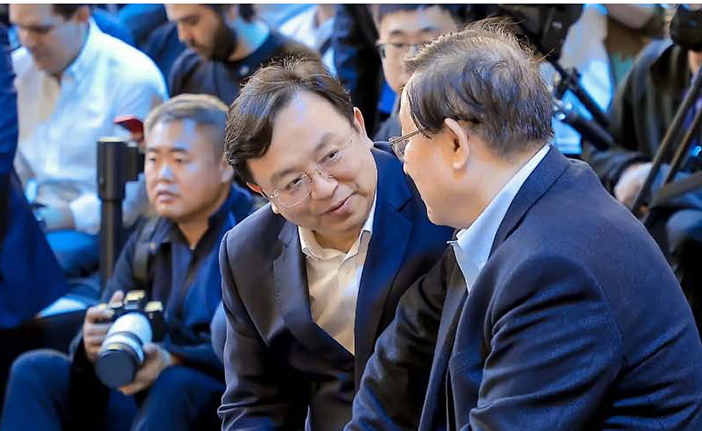
+++ “If you’re not strong enough, they won’t be afraid of you”. So said Wang Chuanfu, founder of BYD , during a speech at an industry summit in the Chinese city of Chongqing. He was referring to Chinese industry, which, with its competitive products, could scare off Europe and the United States. “There are many examples of politicians in other countries who are worried about electric vehicles in China”, added Wang Chuanfu. He did not make any explicit references, but the tariffs that Europe wants to introduce soon on Chinese car imports or the list of Chinese companies “banned” in the United States immediately spring to mind. The vote to renew the European Parliament took place this past weekend, and the issue of tariffs was on the agenda. According to Dataforce, electric vehicles produced by Chinese brands such as MG and BYD accounted for just under 9% of battery electric vehicles sold in Europe last year, but these figures are set to rise. According to analysts, Chinese brands are already selling cars at such high margins that European tariffs should not pose too many problems for them. However, China will not stand idly by and, if tariffs are imposed, it has already hinted that it will respond by imposing a 25% tariff increase. Trade tensions will therefore continue to rise. BYD has grown very rapidly. By 2023, it will have produced and sold 3 million electric and plug-in hybrid vehicles, making it one of the world’s top ten carmakers in terms of sales. Wang Chuanfu called on the industry to be more open to competition to manage the transition to electric vehicles, and is convinced that electric vehicles and plug-in hybrids are set to overtake conventional engines: “This is the dominant and irreversible trend”, he said. After all, one of BYD’s latest slogans in his country is: “Electricity is cheaper than oil”. +++
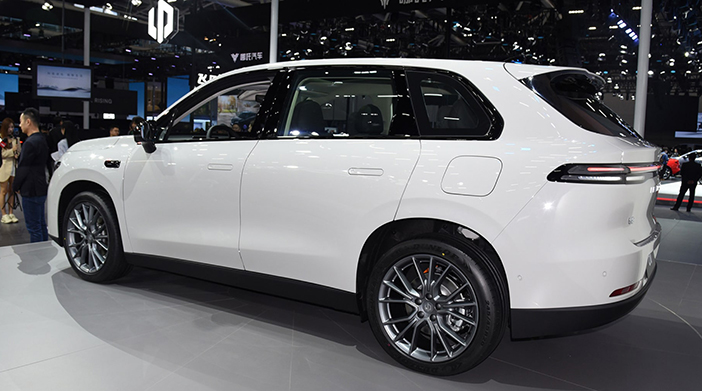
+++ The electrification race between the West and Asia is a never-ending story. Many car manufacturers are trying to play an important role in order to excel in the years to come, when a large proportion of the world’s population is expected to drive emission-free cars. China is setting the pace for global mobility, which will become purely electric. The West is watching and trying to catch up. Meanwhile, traditional European carmakers are trying to buy time by flirting with their fast-growing Chinese rivals. After decades of learning from others, the Chinese are proving that they have surpassed their masters and are capable of producing high-quality, efficient and affordable cars. If the solution to pollution is electric cars, then Europe, the United States, South-Korea and Japan need China. The recent acquisition of a 20% stake in LEAPMOTOR by Stellantis is one of many examples of how Western carmakers are facing increasing competition from China. The deal follows others, such as those between BMW and Great Wall Motors, Mercedes and Geely, and Volkswagen and Xpeng, but how suitable is Leapmotor for Stellantis? The agreement between the 2 companies is a win-win situation. Leapmotor is not one of the big 8 Chinese players (BYD, Chery, Changan, Dongfeng, Geely, GAC, GWM and SAIC), but the brand is not fighting for survival. Last year, it sold 144.200 cars, of which 99.500 were purely electric. It is considered a large and healthy start-up, along with Nio (160.000 units), Xpeng (141.600 units), Hozon (127.500) and Li Auto (376.000 units). More than just volume, Leapmotor can provide Stellantis with expertise in electric cars and their technology. There are already plans to exploit this advantage in Europe with the introduction of the Chinese brand in the second half of 2024. However, the match could run into difficulties, given the range of products offered by Leapmotor. There are plans to introduce the T03 and C10 on 9 European markets. These 2 products are part of a wider range that also includes the C01, C11 and C16 models. In fact, 2 mid-size SUVs, 1 large SUV, 1 saloon and 1 city car. None of these are of interest to European motorists. The T03 is a small electric car that looks as cheap as the Dacia Spring. Stellantis currently occupies a solid position in the A segment in Europe, thanks to the Fiat 500 and the Panda (which is doing very well in Italy). However, sales in this segment continue to fall. In 2014, these cars accounted for 8.9% of total registrations in Europe. This year, up to April, their market share was 4.9%. Do European motorists really need another city car from an unknown brand? Then there’s the C10, a medium-sized electric SUV (it’s 4.73 meter long) with 5 seats. It’s almost as big as the Tesla Model Y (4,75 meter), the Toyota BZ4X (4,69 meter) and bigger than the 7-seat Mercedes EQB (4,68 meter). So far, all attempts to take on the Model Y’s strong position have failed. Why should an unknown (by European standards) large SUV succeed? Their only advantage should be their competitive price, but at a time when many European consumers are thinking twice about going electric, Stellantis and Leapmotor should be working on products dedicated to European tastes. Time will tell. +++
+++ NISSAN says it’s well advanced in the race to introduce solid state batteries to production cars, a move that could be revolutionary for EV range and cost. The Japanese giant has been developing solid state batteries since 2018, with the technology having the potential to address many of the key barriers to widespread electric car uptake by consumers. Now it says development cars will be on the road in 2026 with a view to the first production car going on sale in 2028. Nissan was an electric car trailblazer in 2010 when it launched the world’s first mass produced EV in the shape of the Nissan Leaf. It’s lost ground in the years since, but sees solid state batteries as a way of closing the gap to the likes of Tesla and BYD. Speaking on solid state batteries, Matthew Wright, Nissan Europe’s vice president of powertrain engineering said: “They’re going to be a game changer. Charging speed is better, energy density is better, which means you get a smaller battery with the same energy. It addresses one of the problems you’ve got with EVS, at the moment: the fact batteries make your car heavy”. Wright also explained that despite challenges in the production of solid state batteries, including the need to rigorously control cleanliness and air moisture levels in the production environment, they have the potential to be significantly cheaper than current lithium-ion cells. A further benefit is less reliance on rare earth metals, the mining and processing of which present their own ethical and environmental issues. Nissan also says that solid state batteries have the capacity to charge up to 50 percent faster than lithium-ion equivalents. As for how Nissan will deploy its solid state batteries from 2028 onwards, Wright says they will first appear in “a Japanese produced vehicle”. Asked if it would be fitted to a brand new model or added to an existing EV, such as the next Leaf, thought to be due in late 2025, he said: “We’re doing solid state in trials in 2026 and in production in ‘28, right? So yeah it would tally with that”. “Once we’ve got it, it will be about how we manage that and get them into current production vehicles, but it might be that actually, you want to put it on the new vehicles”. Nissan’s broader plan as the switch to electrification gathers pace is to use its novel e-Power hybrid technology as the stepping stone from mild-hybrid to full EVs. Wright doesn’t see plug-in hybrids as viable long term. “We don’t see a plug-in hybrid as an option. To be honest, the way the regulation is changing. The benefit you get today from CO2 is going to disappear in 2025 and 2027”. Instead, the brand is developing the second generation of its e-Power powertrain, a system that uses a petrol engine as a generator to power a battery and electric motor combo that drives the wheels. It delivers a more EV-like driving experience than conventional hybrids, which need to shuffle between power sources. It’s currently available in Nissan’s Qashqai and X-Trail. The second generation of e-Power will offer more performance and efficiency with Nissan aiming for 20 percent improvements in each. “We want to actually increase the power”, added Wright. “ We obviously want to improve the fuel consumption and CO2, and we’re trying to bring the cost down so it gets to a similar level to the ice engines”. +++
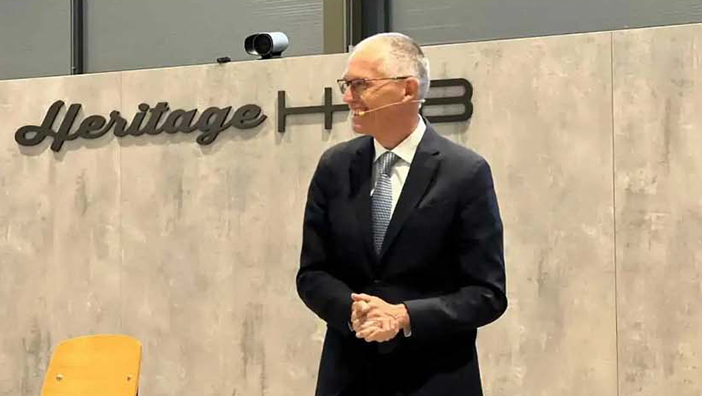
+++ To reduce the price of STELLANTIS cars, Stellantis is prepared to abandon certain suppliers. CEO Carlos Tavares told journalists during a conference call from Melfi in southern Italy: “When suppliers don’t work at the same pace as our teams, our teams see a big advantage in insourcing. You come to the conclusion that you can finally do it in-house”. The company, along with other carmakers, is putting pressure on its suppliers for further cost reductions. This news must, of course, be read in the light of the increasingly imminent arrival of Chinese competition, whose prices look set to be particularly competitive. BYD, for example, plans to offer its small Seagull at a price of around €20.000 (Dutch pricing) next year. The European Union is expected to take a decision soon, probably after the general election. In any case, according to analysts, Chinese carmakers already have a certain margin on profits which should not make them fear this measure too much. The company’s suppliers include Valeo, Continental, Magna International, Forvia and Aptiv. Tavares said that Stellantis and its partners are also adjusting levels of investment in electric vehicle batteries to meet the needs of these vehicles. Finally, speaking about Melfi, where Jeep and Fiat models are produced, Tavares said that “productivity and quality have improved” and that he plans to allow the plant to produce its own electricity. Energy prices in Italy would be “totally uncompetitive”. +++
+++ TURKEY woke up with new taxes. With the new regulation made by the Ministry of Commerce “in order to increase and protect the falling share of domestic production in the domestic market”, 40 percent customs duty was added to models from China. Chinese cars, whose sales have been on the rise in the country in recent years, managed to increase their market share to nearly 10 percent as of the 5th month of 2024. Among these brands, prominent names Chery and MG made statements about the additional customs tax. Both brands look favourably on the transition to domestic production. Chery Turkey’s official Instagram account shared and Chery Turkey president Si Fenghou signed the statement as follows: “Turkey is one of our most strategic markets and also an important part of Chery’s European strategy. For this reason, in order to better serve our customers as the Chery brand, we established Chery Turkey, our subsidiary company, with our own equity in September 2022. We respect the government’s decision on tax regulation. Considering the current situation; on the one hand, we are working to adapt to the changes made, on the other hand, we are intensively working on the feasibility analysis of factory construction in Turkey and production in Turkey together with the relevant Ministries. We are endeavouring to realise production in Turkey as soon as possible. We are and will continue to be with our customers with our sales and service with our authorised dealer network spread throughout Turkey”. However, we also know that Chery has chosen Spain for its production in Europe. The statement on the MG side came from Kağan Dağtekin, CEO of Doğan Trend Otomotiv. Dağtekin made a statement under Emre Özpeynirci’s tweet. Stating that Doğan Trend Otomotiv has been keen to move MG’s production to Turkey for some time, Dağtekin said: “MG Management has officially announced that they will establish production facilities in Europe to continue their development in Europe. As Doğan Trend, we are working to ensure that the first of the planned facilities in Europe will be in Turkey. We have reached the stage of signing a letter of intent with MG last week”. Dağtekin shared that they also receive support from the Ministry of Industry and said, “We also receive good support from the Ministry of Industry. In fact, last December, we visited SAIC-MG headquarters with a large team under the leadership of our Minister of Industry, Mr. Fatih Kacır, and conveyed the industrial capabilities of our country, especially our strength in automotive production”. For now, there is no clear statement about whether the facilities will be moved to Turkey. But let’s say that both the European Union and the United States have special additional customs duties on Chinese brands. +++
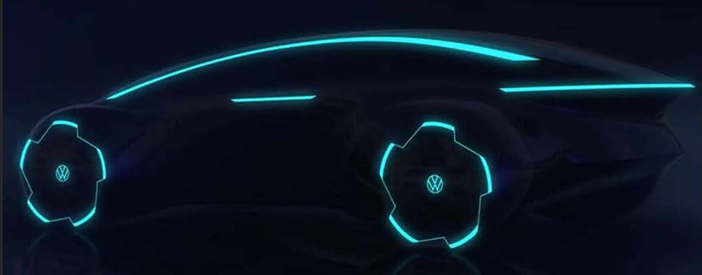
+++ VOLKSWAGEN has made its decision: electric cars based on the new SSP platform will finally arrive in 2028. A few years behind the schedule announced a few years ago, but in line with the original plans. That’s according to the brand’s CEO, Thomas Schäfer, who explained at an event organised to celebrate the 50th anniversary of the Golf that the group’s next generation of battery-powered cars would be ready within 4 years, and not, as announced in 2021, by 2026. There were several reasons why management took this decision. On the one hand, the difficulties in developing what will be a software-oriented platform, and on the other, the current situation, which is seeing a slowdown in the growth of electric cars worldwide and which is pushing many manufacturers to put the brakes on the race towards the ecological transition. Returning to Volkswagen, the SSP will be a platform that replaces both the current MEB and EPP, continuing the theme of zero emissions, but also a pair of platforms capable of adopting internal combustion engines. Thomas Schäfer also confirmed that the first electric model of the next generation will be a mid-size SUV rather than an extremely sleek saloon. This vehicle will be built at the German plant in Zwickau and will be followed by a whole family of new models, including the next generation Golf, which will also be electric and built on the SSP at the Wolfsburg plant, also in Germany. The first car based on the SSP will be the result of what has long been known as the Trinity project. The switch from saloon to SUV is a consequence of the fact that, with the arrival of Oliver Blume at the head of the group, a decisive change of direction was desired in Wolfsburg, including in terms of styling. The current electric cars in the ID family, led by the ID.3 and ID.4, are selling less well than expected, and the company believes that it is necessary to work on models that are better adapted to market demands. A new style for the electric cars of the future is also being defined. A style that, according to management, is “more distinctive and recognisable”. It’s hard to say what this means just yet, although the ID.2all, the concept that anticipates Volkswagen’s next low-cost electric car, has received positive reactions everywhere, precisely because of its slightly retro look that brings it closer to certain icons of the past such as the Golf and Polo. +++