
+++ CAR SHARING , once considered exclusive to those in their 20s and 30s, is gaining popularity among people in their 40s and 50s in South Korea. Initially appealing to younger users who are comfortable with the sharing economy and technology, older adults increasingly use car-sharing as a “second car” for specific purposes like golfing and camping. According to Socar, the country’s largest car-sharing service with 9.7 million members, total usage time by customers in their 40s and 50s increased by 25% and 30%, respectively, in the first quarter of this year compared to the same period last year. In contrast, usage by those in their 20s and 30s grew by only around 10%. Notably, the total usage time for the 20s and 30s last year had already decreased by 5.9% and 7.6%, respectively, compared to 2022, while usage by the 40s (1.6%) and 50s (5%) continued to rise. Since the end of the coronavirus pandemic, the increased demand for car-sharing has mainly been absorbed by those in their 40s and 50s. Industry experts note that car-sharing is now viewed not as an alternative to car ownership but as a “second car” for specific occasions. Initially driven by the travel needs of carless individuals in their 20s and 30s, car-sharing has evolved to meet the demand for different vehicles for various purposes, especially during and after the pandemic. With the rise in activities like camping and golfing, which require transporting larger groups, people in their 40s and 50s have turned to car-sharing instead of buying new vehicles. As they become more accustomed to the service, their resistance has decreased. People in their 40s and 50s are becoming significant customers for the car-sharing industry, willing to pay more for additional services such as home delivery of vehicles. Socar reports that 40% of customers using their “Socar-2-you” service, which delivers and picks up cars at the customer’s doorstep for an additional fee, are aged 40 and above. A Socar staffer said, “Customers using the delivery and pick-up service often travel or carry heavy loads,” adding, “Customers in their 40s and above visited campsites and golf courses more frequently than other age groups and often rented cars near KTX stations for business trips or funeral visits during weekdays”. Customers in their 40s and 50s also rent and use more expensive cars for longer periods. Socar reports that these customers prefer mid-sized sedans and SUVs over compact cars, with an average rental time of 20 hours, compared to 15 hours for those in their 20s and 18 hours for those in their 30s. In response to this trend, the industry is enhancing services for this age group. Socar has expanded its camping car rental service, previously limited to the metropolitan area, to Jeju and Gangneung. This service provides Hyundai Staria vehicles equipped with rooftop tents and various camping tools, targeting fathers in their 40s and 50s with families. It also introduced a product that combines KTX train tickets with car-sharing services for business trips and funerals. Greencar, South Korea’s first car-sharing company, promotes its services through screen golf tournaments and offers discounts in partnership with domestic and international golf courses. +++
+++ FORD reported May U.S. auto sales that jumped considerably, once again powered by hybrid vehicle and truck sales. For the month, Ford sold 190.014 vehicles; an 11.2% increase from a year ago and up 6.4% sequentially from April. Ford delivered 17.631 hybrid vehicles for the month, driven by the new F-150 hybrid and Maverick hybrid. The Maverick was a standout, with sales jumping nearly 96% to 13.616 trucks sold in May. The hybrid version of the Maverick saw sales jump 111% to 7,687 trucks. Ford said Maverick pickup and hybrid sales hit a sales record in May. The all-new F-150 pickup, which saw sales slip earlier this year because of a delayed rollout, rebounded in May. Ford’s overall truck sales climbed 11.2% in May to 109.143, with total pickup sales jumping 7.7% on sales of 87.786 pickups. Ford said sales of the hybrid version of the F-150 rose 51% on sales of 5.766 trucks. Ford’s recent pivot from EVs to hybrids appears to be paying off on the sales floor, a success that Ford CEO Jim Farley sees sticking around for some time. “We should stop talking about hybrid powertrains as transitional technology”, Farley said. Ford’s EV sales are still seeing momentum, however. Ford said EV sales totalLed 8.966 vehicles in May, up 64.7% year over year. Ford’s EVs are still popular with consumers, with the Mustang Mach-E SUV up 45.9%; F-150 Lightning up 91%, and E-Transit commercial van up 77%. Though sales of Ford EVs are higher, Ford has increasingly had to use incentives to move the vehicles. Though strong EV sales in May follow an 86% jump in EV sales in Q1, Ford’s EV unit lost $1.32 billion in Q1 and is expected to lose over $5 billion in 2024. Ford has projected in the past that it sees the EV unit hitting some profit metrics by 2026 but hasn’t updated its timeline recently. Farley did say this week in an interview that he has a date in mind for EV profitability, but he declined to share it. “We wouldn’t allocate capital if I didn’t think it was profitable”, he said. In the meantime, Ford will likely continue to focus on trucks, hybrids and SUVs. Ford said its SUV sales climbed 7.4% to 67,371 vehicles sold, powered by the full-size Bronco (up 18%), Ford Explorer (up 15.1%), and all-new full-size Expedition (up 16.4%). +++
+++ The HYUNDAI MOTOR GROUP is aiming to list its Indian subsidiary, Hyundai Motor India (HMI), in the coming months, raising up to $3 billion in a landmark initial public offering, according to industry sources. HMI reportedly plans to file for the IPO in June, with Kotak and Morgan Stanley newly joining the syndicate as the deal advisers. If successful, it could surpass the $2.5 billion raised by the Life Insurance Corporation of India in 2022, potentially setting a new record in the Indian stock market. India presents a key market for Hyundai, the world’s third-largest carmaker, offering vast potential as a production base and a massive consumer market. The company, already a major player in India, plans to leverage both the surging demand for high-margin hybrids and the fast shift to EVs. “If HMI goes public, it could become the largest IPO in Indian stock market history, using the potential $3 billion for local hybrid and EV investments”, said Kim Geun-a, an emerging markets researcher from Hana Securities. Hyundai’s IPO strategy in India is also informed by its recent experiences in China, where it has been forced to sell off factories at a loss and exit the market. In 2015, Hyundai built 2 plants in Changzhou and Chongqing. However, following the Covid-19 crisis, sales plummeted, leading to a costly restructuring. The Chongqing plant, operational since 2017, was sold for a quarter of its investment cost, and the Changzhou plant is also up for sale. “If Hyundai’s Chinese subsidiary had been publicly traded, things might have turned out differently”, Lee Jae-il, an analyst at Eugene Investment & Securities who specializes in EV and mobility sectors. “Beijing Hyundai was a joint venture with BAIC Motor, which should have aligned their interests. However, BAIC also had partnerships with Mercedes-Benz and its own brand to focus on, so they weren’t motivated to save Beijing Hyundai. If there had been more private shareholders involved, the company wouldn’t have collapsed so quickly”. Listing its Indian subsidiary would allow Hyundai to align interests with a broader range of stakeholders, according to his view. This approach also enables the company to raise capital through equity markets, reducing reliance on debt and enhancing its ability to respond to market changes. The group’s IPO preparations reportedly gained momentum following Executive Chair Chung Euisun’s visit to India in April. As of April, Hyundai holds a 14.9 percent market share in India, second only to Maruti Suzuki. Combined with Kia’s 5.9 percent share, the group’s presence exceeds 20 percent. This dominance is due to Hyundai’s early and substantial investments. Hyundai established its Chennai plant in December 1996 and began producing the Santro (Atos) in 1998. “Unlike competitors who entered India through joint ventures, Hyundai’s independent, large-scale investments allowed for swift decision-making and economies of scale. Planning for a 400.000-unit capacity from the start enabled Hyundai to outpace rivals”, Lee, the Eugene analyst said. Following the planned filing, the IPO is set to undergo a thorough review by the Indian regulator. The approval could take almost three months, sources said. A Hyundai official in Seoul declined to further elaborate on the planned IPO, saying “We are reviewing the plan but nothing has been confirmed”. With the surging popularity of SUVs and rising car prices in India, Hyundai is ramping up local production of hybrids and EVs. “The Indian market is incredibly profitable because it produces high volumes of just a few vehicle models, leading to high component standardization and lower manufacturing costs. Plus, with the economy growing, the average price of new cars, especially SUVs, is rising rapidly each year”, said Kim of Hana. By 2025, the company aims to reach an annual production capacity of 1.4 million units, including output from the Talegaon plant, up from 1.08 units last year. Hyundai acquired the Talegaon plant, located 90 kilometers east of Mumbai, which GM had shut down in 2017. The company plans to invest 1.1 trillion won ($797 million) in the facility, allocating 810 billion won for upgrades and the remainder from parts affiliates. The expanded Talegaon plant will support Hyundai’s eco-friendly powertrain diversification. Analysts expect Hyundai to launch an electric vehicle based on the Creta, a popular compact SUV, in 2025, followed by a hybrid version in 2026. Kia is also expected to introduce a small multi-utility vehicle and 2 electric vehicles based on the Carens, a mid-size MPV, in 2025. “Kia’s focusing more on hybrids now, and we could see the launch of the hybrid version of the Kia Seltos, another very popular compact SUV, in India by 2025. This fits right in with their plan to ramp up hybrid electric vehicle production to 19 percent by 2030”, said Lee. +++
+++ KG Mobility is facing difficulties in obtaining the trademark rights for the three-letter acronym ‘ KGM ‘ at home and abroad after the Korean carmaker failed to do so previously for its full English name, according to intellectual property offices in Korea and other countries. Last November, the company decided to use the acronym of its name as an alternative to its full name after the Korean Intellectual Property Office (KIPO) rejected its registration of “KG Mobility” 2 months earlier. The rejection of the full name (KG Mobility) came as a Turkish trademark troll, Cihan Turan, had registered the name in the European Union in March last year. KIPO prioritized Turan’s applications based on the Paris Convention. “Our use of ‘KGM’ in the global market will prevent the trademark dispute from affecting our exports”, a KG Mobility official said at the time. However, the firm failed to register both “KGM” and “KG Mobility” trademarks in Turkey, one of its most important export markets. The Turkish Patent and Trademark Office even refused the registration of “KGM”, because the Turkish government-run General Directorate of Highways, which is written as Karayollari Genel Mudurlugu in Turkish, had been already using the same acronym. The registration of “KG Mobility” had also been rejected in the country due to the trademark troll. Even in Korea, the trademark for “KGM” is also under KIPO’s review, following an objection filed last year by KTM, an Austrian motorcycle manufacturer, which claims consumers are likely to be confused by the 2 similar acronyms. The European firm is reportedly preparing to object to the “KGM” trademark in many other countries. “If KIPO decides to side with KTM, all trademark applications and registrations filed by KG Mobility under the mark ‘KGM’ worldwide will be cancelLed in accordance with the World Intellectual Property Organization (WIPO) procedure”, a source familiar with this issue said. KG Group renamed SsangYong Motor to KG Mobility in March of last year, after the chemical giant acquired the debt-ridden carmaker in 2022. The company was reportedly asked by Cihan Turan to pay a significant amount of royalties after he registered “KG Mobility” in more than 30 countries and filed applications in Australia, Korea and Turkey. Earlier this year, Turan also filed an objection to KG Mobility’s trademark registration with the EU Intellectual Property Office. +++
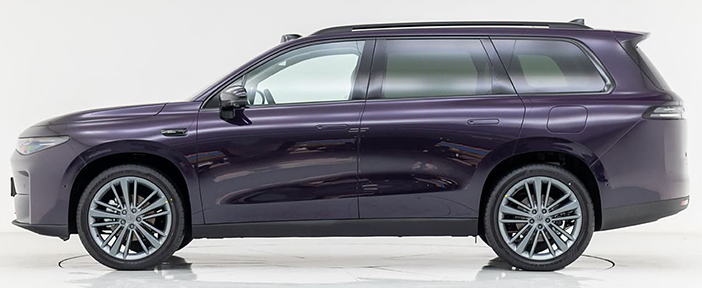
+++ Stellantis backed LEAPMOTOR will officially list its latest car the C16 on June 28 and according a previous comments by an official the price won’t be more than 200.000 yuan ($27.600). After opening pre-sales during the Beijing Auto Show the C16 attracted 11.950 orders within 24 hours. Leapmotor is once again pushing its boundaries with this car which seems not only to be a step more upmarket but is also the first car equipped with 800V architecture. The C16 is a mid-size electric SUV with a 2+2+2 seating arrangement. Design wise it is a fairly inconspicuous SUV with one of the most eye-catching features being the roof mounted Lidar unit. In many ways it looks like an enlarged C10 (see specs), which was the brand’s first world car, and up until the C-pillar there is little to distinguish them. This may well be a deliberate attempt to copy the Li Auto strategy where the L series are largely only differentiated on size and price with a very distinct look carried across the range. Certainly positioning wise in China the C10 is sold as a cheaper L7 and the C16 aims to be a half price L8 and compete with cars such as the Aito M7. By the time the C16 reaches the D-pillar there is considerable difference with the C10 and the third window is much bigger due to the car being longer and having a third row of seats. The C16 measures in at 4.915 x 1.905 x 1.770 mm and rides on a 2.825 mm wheelbase. It is based on the Leap 3.0 architecture and is the largest Leapmotor model to date. Buyers get a choice between 20 and 21-inch wheels and can also choose from 6 exterior colors: Star Silver, Star Purple, Sky Gray, Pearl White, Metallic Black and Glazed Emerald. Inside the C16 marks a definite step up in terms of quality and overall look for Leapmotor. For the first row there is a fairly standard separate 10.25-inch instrument screen and floating 14.6-inch infotainment unit setup. A Qualcomm Snapdragon 8295 chip powers the infotainment system and it runs the Leap OS. The car comes with a 21 speaker sound system and a wireless phone charger. Earlier reports indicated that the C16 would come in both 6 and 7 seat versions but so far there has only been an application for a sales license for a 6-seater. Rear occupants are treated to a 15.6-inch roof mounted fold-down entertainment screen. Additionally the backs of the front seats house fold-down trays for the second row passengers. Seats in the second row are electrically adjustable and along with the third row have a one-button adjustment mode. In addition to three-zone independent air conditioning there are electric sunshades. The C16 will be available as both an all-electric EV and a range extended EV. Power for the former comes from a engine providing up to 295 hp of power. Coupled with a 67 kWh lithium iron phosphate battery pack from Zenergy it has a range of 520 km (CLTC). On the other hand the EREV version has a 1.5 liter H15R self-aspirated engine with maximum output of 70 kW as a range extender with actual power coming from a 284 hp electric motor. The EREV uses a 28.4 kWh LFP battery pack from CALB which is good for 134 km all-electric CLTC range. Stellantis took a 20% stake in Leapmotor last year. Since then the 2 parties have formed Leapmotor International, with Stellantis holding the controlling 51% share, which will be used to expand the global reach of the brand, particularly in Europe. In September the Leapmotor T03 and C10 cars will launch in nine European countries: Germany, the Netherlands, Belgium, Italy, Greece, Romania, Spain, Portugal, and France. Designed as a world model the C16 will likely follow onto the international market with sales possibly commencing overseas by early next year. +++
+++ Western auto media is currently full of stories that a Chinese partner is helping RENAULT produce an electric Twingo car due to go on sale in 2026 in Europe priced below €20.000. Currently the Chinese partner is unknown but the 2 most likely candidates are either Geely or Dongfeng. Development of the all-new Twingo is being led by Ampere. This is a separate company within Renault set up in late 2022 with the aim of designing, engineering and producing electric cars for the Renault Group. The first model resulting from this is the Renault 5 E-Tech. Interestingly at about the same time that Ampere was established Renault signed the Horse project JV with Geely to develop ICE and hybrid powertrains. This recently resulted in the creation of Horse Powertrain Limited on May 31, 2024 as a 50:50 owned company between the 2 partners. However, this is not the only cooperation between the 2 companies. In 2022, Geely acquired a 34% stake of what is now known as Renault Korea, a company which started life as Samsung Motors. Under the agreement with Renault there is collaboration dedicated to bringing fuel-efficient Hybrid Electric Vehicles (HEV) and Internal Combustion Engine (ICE) models to the South Korean market as well as for export sales. Cars produced by Renault Korea will use Geely’s compact modular architecture (CMA) along with taking advantage of Geely’s hybrid powertrains. The existing relationship between the 2 companies is probably the strongest evidence for the Chinese partner in the Twingo project being Geely along with Ampere and Horse being initially announced around the same time. Furthermore Geely has expertise in smaller EVs, not only does it have its own micro EVs like the Panda but also has worked with Smart to create the Smart #1 and created its own Zeekr X car. The other main contender is Dongfeng with whom Renault had a joint venture until 2020. Dongfeng continues to produce the Dacia Spring which initially debuted in China as the Renault K-ZE and was subsequently sold in China as the Venucia e30. However, Dongfeng given the continual decrease in Renault involvement seems less likely than Geely. Also the only small EV that currently appears to be part of the Dongfeng line up is the Nammi 01. The Chinese partner has been embedded in the development process of the electric Twingo since inception and is not the result of breakdown of talks on the project with Volkswagen. Development is being undertaken in France with the electric Twingo due to be produced in Europe. A project insider said: “The development of the car will be done together with the Chinese partner to reduce the development lead time and costs”. Renault has previously said the car would go from concept to production within 2 years. +++
+++ In SOUTH KOREA , Audi and Cadillac are gearing up for potential sales rebounds with their strategic electric vehicle (EV) lineups, in an unexpected twist after they have suffered sales doldrums amid toughening rivalry in the premium vehicle industry here, according to data and company officials. Local subsidiaries of the 2 once-touted luxury automakers have yet to recover their old glory, after the market for premium vehicles has in recent years started to be dominated by only a few players, such as BMW, Mercedes-Benz and Genesis. But Audi and Cadillac are seeking to break through the rivalry with a strategic focus on their EVs, as the industry is still in a transition period after entering an early chasm phase. Audi Korea is attracting favourable market responses with its Q4 e-Tron. The compact EV is serving as a key sales driver for the company. According to the company’s data, 325 units of the Q4 e-Tron were sold in April here, the largest sales among all imported German EVs. The line-up has been the top-selling German EV for 2 consecutive months since March. “The vehicle is enhancing its position as one of the most beloved imported EVs here, driving the popularization of premium EVs, as it met demands from local customers in multifaceted areas, such as large indoor space and decent mileage performance”, an official from the company said. Cadillac Korea is also betting big on the premium EV market, having recently launched its first-ever EV, the Lyriq. Cadillac is an iconic American premium auto brand which enjoyed its heyday here in 2018 when it sold around 2.100 vehicles. But its sales figure plummeted to 975 in 2023, as more customers opted for German counterparts and Genesis. Cadillac expects the vehicle to help rev up its falling sales here, as the initial response for the vehicle remains robust. It typically takes more than a year for customers to receive their vehicle after placing an order. The rise of imported EVs poses a growing threat to 2 home-grown players, Hyundai and Kia. According to data from the Korea Automobile & Mobility Association, imported EV sales jumped by 102.9 percent for the first 4 months combined this year, while that of domestic EVs suffered a sharp decline of 32 percent during the same period. Hyundai and Kia are placing their focus on defending against the burgeoning rivalry from imported carmakers by releasing cheaper line-ups, including Kia’s EV3. Hyundai plans to launch an electric version of the Casper by the end of this year to drive the popularization of EVs. “Competition will remain fierce among imported and domestic carmakers to attract more customers in the market for smaller EVs, as the industry faces cyclical slowdown and customers remain price-sensitive due to prolonged high interest rates”, an official from an imported carmaker here said. +++
+++ SUZUKI will halt production of cars and trucks in Thailand by the end of next year to focus resources on producing electric and hybrid vehicles elsewhere, the company said Friday. The company plans to continue its sales and after-sales services in Thailand by importing vehicles, including EVs and hybrids, from plants elsewhere in Southeast Asia, Japan and India. “In the course of promoting carbon neutrality and electrification globally, Suzuki had been considering optimizing global production sites within the group”, the company said in a statement, adding it had decided to close the plant by the end of 2025. The 12-year-old plant in Thailand’s Rayong province, southeast of Bangkok, was run by local subsidiary Suzuki Motor Thailand and has an annual production capacity of 60,000 units. It employs approximately 800 people. The announcement comes at a time when Japanese automakers are facing intense competition from Chinese rivals in Thailand as well as pressure to produce more electric and hybrid vehicles. Suzuki aims to have a line-up of 6 EV models by 2030-31. It plans to launch its first EV in India by next year, which it intends to export to Japan as well as Europe. +++