+++ We’ve seen how FIAT is planning to reinvent its iconic Panda to sit alongside the 500 and 600 in the small-car market. But the Italian giant is also going to bring fresh offerings to family-car customers, especifically with 2 all-new mid-size SUVs that will battle big-selling models such as the Nissan Qashqai, Skoda Karoq and Hyundai Tucson. At Fiat’s 125th anniversary event, where the firm also revealed new information on the upcoming Grande Panda, brand CEO Olivier François confirmed that his team is working on returning to the C-segment with 2 “affordable, spacious and desirable” new models. But rather than focusing on a simple hatchback or estate, Fiat is aiming to offer variations on the compact SUV format that has proven so popular across Europe in the past decade. François said: “A stationwagon is iconic for Fiat in Italy, but we know that’s not what buyers elsewhere want. Instead, we’re going to build utility vehicles, because that’s what we know people want”. The 2 cars will take the form of a traditional boxy SUV and a more rakish ‘fastback’ coupé-SUV. Each will feature a fresh take on the charismatic design language already seen on the new Fiat Grande Panda; not just a larger body with the same face, but also distinct evolutions of the Panda’s new ‘pixel’ visual cues, with even more bold colours and quirky shapes. The pair will find their aesthetic basis in 2 of Fiat’s Panda Concepts revealed last year, but feature more production-relevant proportions and details. Speaking about the way the two cars will look, François told: “They are not Pandas, but ‘Panda inspired’. They’re not going to be called Panda, but they will be inspired by its DNA and feeling: boxy and charming. It’s generally not easy to make boxy charming, but in smaller sizes the Panda of the 1980s captured this, and this is what we’re basing it on”. The first, more traditional SUV model will feature the usual off-roader design cues that are so popular with customers. This will include the use of contrast-coloured plastic wheel arch surrounds, roof rails and chunky, rugged front and rear bumpers. One striking element already seen on both the concept and production Grande Panda is the combination of round wheel arches with squared-off surrounds; this is something we expect to see applied to the production SUV too. The fastback will share many fundamental design themes with its sister model, including its front-end styling and general detailing, but it will also feature a more aggressive, sloping roofline and sleeker side glass. Unlike the SUV, I expect there to be less contrasting black plastic and instead greater use of body-coloured or contrast-coloured painted elements. This should help Fiat to nudge this model towards more design-led but less practicality-focused customers. In both cases, the nose will be dominated by clever LED lighting for the headlights and a distinctive daytime- running-light signature, and even the possible use of an illuminated Fiat logo. On top of this, we expect to see more playful uses of the Fiat logo and other new graphics integrated into many of the design details. The 2 cars won’t simply share their design language with the Panda, because they will also use the Stellantis Group’s Smart Car platform that underpins the smaller model. Already seen supporting the Citroën ë-C3, the Smart Car system is said to be flexible enough to allow Fiat to lengthen the wheelbase and widen the track to produce a C-segment model that will be competitive in the sector. The same principles are also expected to be used by Citroën for its next generation of C4, because Stellantis sources have already suggested that Smart Car could support as many as seven models within the next couple of years. The use of the Smart Car platform gives us a good idea about powertrain choices for the two new Fiat SUVs. Combustion-engined versions are likely to use a 1.2-litre 3-cylinder hybrid powertrain, complete with a 6-speed automatic gearbox. And the electric models should feature at least a 113 hp front-mounted electric motor, although Fiat may also choose to offer a beefed-up version with a higher output. Equally, the Fiat models are unlikely to get the smaller battery that Citroën is planning to add to the ë-C3 line-up. But entry-level versions of the Italian duo could get the 44 kWh pack that has been used at launch by the French supermini. The modular battery configuration should allow Fiat to exploit the longer wheelbase and increase the overall capacity; it’s likely that a range of 320 km would be seen as a minimum for the new models, rather than a benchmark. The interior will focus on spaciousness and versatility, with rugged finishes designed to be practical and hard-wearing. Fiat will attempt, however, to set its offerings apart from the likes of the value-focused Dacia Duster (another key rival) by emphasising its heritage and having a greater sense of fun, not just usability. Fiat will continue to reference its famous Lingotto factory in many of the interior’s design elements and detailing. As such, the oval-shaped elements that are found in the Grande Panda will likely be carried across, with a similarly varied use of different soft and hard-touch materials. Both cars will also probably feature the same technology package, including a 10-inch driver’s information display and a 10.25-inch touchscreen. Fans of separate climate controls will also be glad to see Fiat retaining hard keys. As with the Grande Panda, Fiat’s colour and trim department will focus on using as many recycled materials as possible, including bamboo-fibre mixes and a combination of bright, high-contrast stitching. Small item storage has also been a focus, so there will be plenty of interior oddment space, and the Panda’s clever integrated charging cable, which is coiled away and accessible via the front bumper, should also be retained. The key for both models, though, will be offering enough space for families; something that the new Grande Panda is a little short on. In order to ensure there’s enough space in the second row, Fiat will extend the wheelbase, opening up more rear legroom. The rear overhang is also expected to grow, giving both SUV and Fastback plenty of floor space, but the latter’s outright boot capacity will be compromised by the sloping roof. Timelines for the new Fiat models have yet to be confirmed, but we could see one, if not both, revealed in full by the end of this year, before they enter production some time in 2025. Fiat’s slow rate of new product launches and updates to existing models over the last few years has been a worrying sign for such an iconic brand; one that’s so important not just to the Italian car industry, but the country’s manufacturing base in general. However, this is about to change, as Fiat exploits the Smart Car platform and access to synergies across Stellantis. The Grande Panda is a bold first step, but the SUVs have the potential to re-establish Fiat as a true volume player across most European countries. +++
+++ HYUNDAI set a new quarterly earnings record between April and June on its improved vehicle sales mix, focusing on profitable hybrid cars even amid falling demand for electric vehicles (EV), the carmaker said. It attained an operating profit of 4.27 trillion won ($3.08 billion) in the second quarter, up 0.7 percent from the previous year. Its sales also widened by 6.6 percent to 45.02 trillion won during the same period. This was driven by its optimized sales and production for diverse vehicle line-ups. The company said it will focus on expanding sales of SUVs and value-added vehicles to address the ongoing slowdown in the global EV industry. “We will continue raising our profitability and global market share by improving the product mix with the focus on SUVs and value-added vehicles”, an official from Hyundai said. The carmaker also expected demand for hybrid cars to grow further from a short-term viewpoint, as the EV market here and abroad entered a stagnation phase, known as the “chasm”, before its mass adoption at some point in the not-too-distant future. However, most major countries are moving to increase investment toward the environment, as demand for EVs will drive the eco-friendly vehicle market from a mid- to longer-term viewpoint, according to the company. Toward that end, the company shared plans to diversify the line-up of its Ioniq subbrand and successfully launch its Casper Electric compact vehicle globally (Inster on exportmarkets). It also reiterated its firm willingness to enhance its technological prowess for hybrid vehicles. The carmaker also said the prolonged high interest rates and its subsequent demand slowdown will keep posing a downward risk for its additional growth. Macroeconomic uncertainties in emerging economies will also make it harder for the carmaker to forecast its management environment down the road. Hyundai also decided to fix its dividend per share at 2.000 won in the second quarter, up 33.3 percent from a year earlier. “We will keep reviewing an active set of shareholder return policies and enhancing shareholder value”, the official said. The carmaker also set a new record in sales for the first 6 months combined, with the figure reaching 85.67 trillion won, up 7 percent from a year earlier. But its operating profit slightly declined during the same period, after the figure reached 7.83 trillion won in the first half of this year, down 0.68 percent from the previous year. +++
+++ It’s looking like the new INEOS FUSILIER will be launching sometime in 2028, based on comments the British brand’s CEO. The electrified 4×4 was originally meant to arrive in 2027, before development was halted in response to poor uptake of electric cars and industry uncertainty around government policies. The baby brother of the Ineos Grenadier was unveiled earlier this year, and we’re told the company was well down the road on development of both the pure-electric version and range-extender plug-in hybrid models. The latter features a small petrol engine generator that would make it better suited to more remote environments without charging facilities. Ineos Automotive CEO Lynn Calder explained why the Fusilier was delayed: “It was 2 reasons, and the first was just policy. I think this year in particular, with so many elections going on in so many different countries, it’s really quite difficult to work out what’s going to happen. And for a really small brand that’s a little bit terrifying because we can’t spend many, many, many millions and have a car that nobody buys. We can’t do that, we can’t afford to do it, we’re not established enough. So we want it all to settle down and understanding what the policy is going to be will provide clarity. The other reason was, partly because of policy clarity and partly the lack of infrastructure, consumer confidence in EVs has taken a nosedive in a lot of our main markets and a lot of people need to be persuaded that it’s the right car for them. So I don’t need to rush at it, right? We’ve developed the car, we love the design and we’re really confident in our 2 powertrain options”. When asked about when the Fusilier might now arrive, Calder replied “We had indicated May 2027 but that’s unlikely, so probably 2028. I don’t think we’re going to be paused for very long, but I think that getting it out in 2027 will be quite difficult. We just need a little bit of confidence this year which I think we’ll get from getting out of the back end of elections. We’re going to need to see plans from governments though. You can’t just set a target and then say ‘right, go do it’ when no one’s actually doing it. There’s also not enough infrastructure for electric use, 100% use for new cars in 2035”. The 4×4 maker previously cited the UK government’s plan to ban sales of all new petrol and diesel cars in 2035 as one of the factors involved in the Fusilier’s delay, and pointed to the Labour party’s promise that it would bring forward that date to 2030 before it was elected into power. I asked Calder if the lack of charging infrastructure for electric cars would make Ineos prioritise the plug-in hybrid version: “To be honest that was already pretty much the plan. The May 2027 date was for the range extender. We’ll definitely launch that first and we think that will be the more popular vehicle. But that’s part of the clarity point because that is currently a car that would be banned because it’s got a really small combustion engine in it that charges the battery to get rid of the range anxiety that people have. By our calculations, it takes away 70 to 80 percent of the CO2 emissions, so it’s a very low emission car. It’s not a zero-emission car, but a very low emission car and a great transition technology we think, but it would still be banned so that’s kind of part of the clarity that we’re looking for”. What does the pause in the Fusilier’s development give Ineos more time for? Calder said, “One is to focus on what we’re trying to do, which is make and sell really high-quality Grenadiers in what will be 50 countries at the end of this year. We’ve got a lot to do with that, and I think we really underestimated how hard that is, and sometimes when you try to run before, you can walk to spread yourself too thinly”. However Calder added, “We’re really, really pleased with how it’s all going. We hit profitability in November last year which was after like less than a year’s worth of sales actually and we’re so pleased with that”. +++
+++ KIA announced Friday that it achieved record quarterly sales and an operating profit in the second quarter, driven by an increased share of SUVs and electric vehicles (EVs). According to the carmaker’s regulatory filing, the firm’s operating profit reached 3.64 trillion won ($2.62 billion) between April and June, up 7.1 percent from a year earlier. Its sales also jumped up 5 percent to 27.56 trillion won during the same period. The improved product mix enabled the carmaker to set a new record in its quarterly earnings. “We achieved the earnings thanks to an improved product mix, industry-leading low incentives and stabilized raw material prices”, a Kia official said. Of particular note was its highest-ever operating profit-to-sales ratio of 13.2 percent in the second quarter. The firm’s sales growth was also driven by robust sales in major overseas markets, such as North America, where solid sales of its SUVs and hybrid cars there served as its key sales growth driver. The carmaker also expected the geopolitical risks to continue throughout 2024 during this period of global EV slowdown. Global economic uncertainties, stemming from the prolonged high interest rates and lingering inflationary pressure, also come as major risk factors for the carmaker, according to Kia. “We are closely monitoring the changing automobile market characterized by intensifying competition and the adjustment of the EV adoption stage”, the official said. “Kia will maintain optimal inventory levels through flexible production operations in line with market demands, while we will also continue placing management focus on enhancing profitability and customer value”. The carmaker reiterated its unwavering willingness to drive the popularization of EVs with the latest launch of its EV3 compact SUV. It will also keep expanding its sales with popular hybrid models and launching more diverse vehicle line-ups. “In the United States, one of the key strategic markets abroad, Kia will enhance its brand value and improve sales volume through new vehicles, such as the Sorento Hybrid and the K4 compact sedan”. The company also shared its plan to tap deeper into the European market with the successful launch of the EV3 there and a string of other subcompact vehicles. +++
+++ On July 21, multiple Chinese news outlets claimed that LEXUS was going to start producing cars in China, with production due to commence in 2026. The story is false however, with the official statement coming from LEXUS as one of “no domestic production plan for the time being”. The plans originally reported regarded a wholly owned factory located in Shanghai that would produce the UX hybrid model and a new electric car. The electric car would be a production version of 1 of the 2 new concept cars, the LF-ZC and the LF-ZL, shown at this year’s Beijing Auto Show. A production version of one of these would unlikely be ready until 2026, which fits in with the timeline for the factory. New reports show that the original story was not without foundation, but the announcement was premature. Furthermore, it seemed strange that Lexus would want to produce the UX 300h in China. There is a very limited market in China for hybrids, as it is not a PHEV, and making such a move even stranger is that there is a fully electric version, the UX 300e, which would be a better fit. A person familiar with the matter told local reporters: “Of course, if Lexus builds a wholly-owned factory in China, it will produce pure electric models, not hybrid products”. The whole story likely has its origins in a June 29 report stating that Toyota was seeking a similar treatment to Tesla for Lexus in China, including tax breaks, policy support, land grants and conditions for direct operation without the need for a local joint venture partner and this report originated from media outside China. “Shanghai has indeed been in contact with Toyota, but there are still many uncertain factors whether Lexus’ plan to build a wholly-owned factory can be implemented”, said the same source familiar with the matter. Unlike Lexus, both Nissan’s Infiniti and Honda’s Acura brands built joint ventures in China in 2013 and began local production. Lexus, on the other hand, has often said that once sales reached a certain figure, they would consider local production, only to keep increasing that figure over the years. In 2019, Lexus sales in China, including Hong Kong, amounted to 202.000 cars, but last year, with rapidly increasing electrification, this had dropped to 181.400. Lexus aims to have 100% electrification by 2035. Cui Dongshu, Secretary General of the China Passenger Car Association, has said that Lexus building a manufacturing plant in China for EVs will have definite advantages due to the competitiveness of the Chinese market. Earlier reports about Lexus building a factory in Shanghai claimed that the company would use 95% locally sourced parts. Furthermore the factory, like that of Tesla, would be used both to meet local demand and to export. This seems to be far from a matter of story over. We were surprised by earlier reports that Lexus would consider making the UX hybrid in China, and that rumour has now been quashed. However, it seems that Lexus may well be seriously investigating setting up an EV plant in Shanghai, China, but the details have yet to be finalized. +++
+++ Cars don’t typically get major updates until a few years after they launch as part of a mid-life refresh. It looks, however, like the RENAULT AUSTRAL is about to get a facelift despite the mid-size SUV only being unveiled in 2022. I suspect this is happening earlier than usual because Renault wants to bring the look of the Austral in line with the rest of its range. Newer models like the pure-electric Scénic, Rafale and Symbioz family car all feature Renault’s latest brand identity and design language. The same goes for the facelifted version of the Captur. The Austral will probably borrow a lot of styling cues from the Rafale, which shares the same CMF-CD platform. This means the facelifted model should get a bolder look, as well as the Rafale’s three-dimensional front grille that consists of individual scales. The Austral is going to receive a sharper set of headlights and tail-lights. It should also get the same vertical led strakes found on the Rafale and the other Renault models I mentioned. The changes could help the Austral stand out more in the hotly contested mid-size SUV class, where it competes with best-sellers like the Hyundai Tucson, Kia Sportage, Peugeot 3008 and Volkswagen Tiguan. The interior may also benefit from some new material choices and updated graphics, which again would be taken from the Rafale. I expect the updated Renault Austral will arrive sometime in early 2025. The brand has a lot going on at the moment, having just introduced its new Symbioz hybrid SUV and preparing for the launch of the hotly anticipated Renault 5 E-Tech. +++
+++ In the first half of this year, American electric car company Tesla took the lead in SOUTH KOREA ’s electric vehicle market, surpassing Hyundai and Kia. Industry analysts suggest the influx of ‘made-in-China’ electric vehicles has begun. In the second half of last year, Tesla switched production of its flagship Model Y from the United States to China, reducing the price by 10 million to 20 million won from the previous model. Previously considered a luxury car in Korea, with prices reaching up to 100 million won in 2022 during the automotive semiconductor crisis, the Model Y’s starting price is now in the 50 million won range, comparable to Hyundai and Kia’s Ioniq 5 and EV6. This price reduction has driven a strong consumer response, increasing Tesla’s market share. Historically, due to quality concerns, Korean consumers have hesitated to purchase expensive Chinese products. However, Tesla’s reputation and competitive pricing change this perception, showing that a global brand with strong market power can thrive in the EV market despite temporary downturns. BYD, China’s top electric car maker, and Zeekr, Geely Auto’s luxury brand, are set to enter the Korean market soon. Additionally, Volvo’s compact EX30 and BMW’s Mini Cooper SE are expected to intensify competition, along with new electric vehicle launches from Hyundai and Kia. According to a July 21 report by the Carisyou data research institute, Tesla sold 17.380 EVs in the first 6 months of this year, narrowly beating the second-place Kia with 16.537 and the third-place Hyundai with 16.056. This is the first time Tesla has surpassed Hyundai and Kia in electric vehicle sales since entering the Korean market in 2017. The Model Y rear-wheel drive, which accounted for more than half of all sales, was pivotal to this success. At the beginning of last year, Tesla’s flagship in Korea was the U.S.-made Model Y Long Range, an all-wheel drive car with a nickel-cobalt-manganese (NCM) battery capable of traveling 511 km on a single charge. In the second half of last year, Tesla switched to the Chinese-made Model Y Rear Wheel Drive, featuring a slightly less powerful but cheaper lithium iron phosphate (LFP) battery, now sold for 52.99 million won. This change resulted in a price drop of over 25 million won for the flagship model within a year, despite the reduced range of 356 km per charge, and was well received by consumers. In April, Tesla introduced the Model 3 mid-size sedan in China. It has a partially redesigned interior and exterior, with a starting price of 51.99 million won, down from 59.99 million in February last year. The increased sales of Chinese-made Teslas in South-Korea are also linked to the reorganization of the global supply chain. Tesla produced around 900.000 vehicles at its Shanghai factory last year, which is nearly half of its global sales. With the U.S. and Europe recently tightening restrictions on Chinese-made electric cars, including higher tariffs, Tesla has been boosting exports to Asia and other regions, even cutting prices to accommodate the volume. In the import market, the Tesla Model Y outsold BMW’s 5 Series and Mercedes-Benz E-Class, including internal combustion vehicles, in the first half of this year. These models have led the import market for over a decade. Tesla also surpassed Volvo and Lexus to rank third in brand sales, behind BMW and Mercedes-Benz. +++
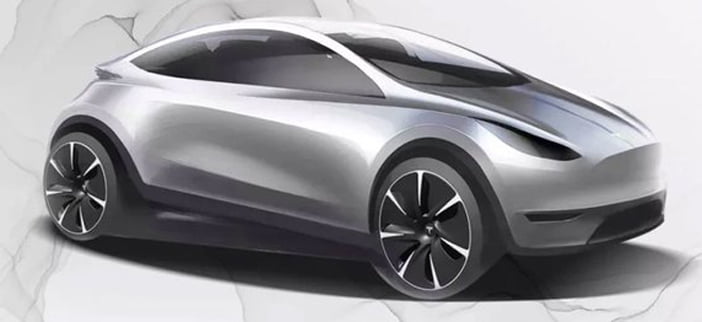
+++ TESLA ’s long awaited affordable, entry-level electric car (commonly referred to as the Tesla Model 2) is on track to arrive in the first half of 2025. Tesla CEO, Elon Musk, reaffirmed this timeline during the company’s latest financial results call. It’s possible we might get our first proper look at the eagerly anticipated EV very soon, as Musk said: “We postponed the Robotaxi product unveil by a couple of months to 10 October. This is because I wanted to make some important changes that I think will improve the Robotaxi – the main thing we’re going to show, and we’re also going to show off a couple of other things. So moving it back a few months allowed us to improve the Robotaxi, as well as add in a couple of other things for the product unveil”. The timing would make sense, as presentation slides for investors reveal that Tesla’s more affordable model will enter production in the first half of 2025. It’s set to utilise elements of the company’s next-generation platform with some from its existing architectures, and will be built on the same production lines as its current vehicle line-up. Tesla admits this approach won’t allow for as much cost reduction as was previously predicted, but will enable the company to “Prudently grow our vehicle volumes in a more capex efficient manner during uncertain times”. Adding, “This should help us fully utilise our current expected maximum capacity of close to 3 million vehicles, enabling more than 50% growth over 2023 production before investing in new manufacturing lines”. Pitched as a more affordable addition to Tesla’s 4-strong model range, the Tesla Model 2 has been in the works for some time as the firm aims to lower the price of entry to its range of EVs below the base Model 3. Just one official teaser image of the new ‘baby Tesla’ has been released so far. It was shared in 2023 at an annual shareholder meeting, and shows the curving roofline of a car with similar design cues to those of the existing Model Y. The new car could borrow plenty of design language from the Model Y. I also expect it will reflect the newly facelifted Model 3 with thinner headlights than Tesla’s older models. The Model 2 should be positioned as a rival for conventional family hatchbacks, with a length of around 4.4 metres. That could be achieved through a more aggressive rear roofline, while still allowing a conventional bonnet with luggage space beneath it. Despite speculation referring to the car as the Tesla Model 2, this badge is by no means guaranteed to be used; not least because Model 3 was chosen as a reverse of Model E, which Ford originally warned Tesla off using. Musk has said “We’re going to take everything we learned from the models S, X, 3 and Y, the Cybertruck and the Semi into that platform. We’re trying to get to that 50 percent number again”. That’s a reference to the Model Y, which has bare construction costs significantly lower than the Model 3’s. Tesla used improved processes to cut huge amounts of complexity out of the Y; a fresh pair of larger stamped components in its bodyshell alone do the job of 171 separate parts in the Model 3, for example, saving more than 1.600 welds during manufacturing. Tesla is expected to utilise its “revolutionary” new manufacturing process called ‘unboxed’ to build its entry-level EV, which is designed to be more efficient than current production lines and should be quicker too. Musk told analysts in 2023 that the next-generation vehicle “Will be about half the cost of the Model 3 and Y platform”. But as I mentioned, Tesla doesn’t expect to reach that level of cost reduction. Even so, prices of the baby Tesla could feasibly start at around the €32.000 mark. That would open Tesla’s potential market up considerably, giving the company a rival for European-made electric hatchbacks such as the Volkswagen ID.3, and even Chinese models from the likes of MG and BYD. Considering the Model Y was not only the world’s best-selling EV but the most popular car full stop last year (with 1.23 million units sold), a cheaper alternative from Tesla itself will certainly have the potential to match that level of popularity. In addition to the Model 2 being more affordable to buy, former Tesla CFO Zach Kirkhorn claimed the total cost of ownership for the company’s entry-level model per kilometer over 5 years will be significantly less than a base Model 3 or Toyota Corolla. In 2023, Tesla’s now-former powertrain boss Colin Campbel revealed the new vehicle’s electric motor won’t use any rare earth materials and that the powertrain will be compatible with any battery chemistry, allowing for better flexibility for sourcing. Tesla’s ability to make the new smaller car cheaply enough is all but certain to hinge on its choice of battery chemistry and how the cells are installed. The company has already used lithium-iron phosphate cells (LFP), which are cheaper to produce than nickel manganese cobalt (NMC). The manufacturer is currently using LFP in some of its vehicles, and this is likely to form a key part of the cheaper model’s technical make-up – along with a novel installation. The firm is said to be preparing to roll out ‘cell-to-chassis’ technology on German-built Model Ys, as part of a tie-up with China’s BYD. Lighter and more compact than conventional module-based construction, this technique saves yet more space that can be used for additional cells to help redress LFP’s lower energy density and deliver comparable range. Musk believes that Tesla can take its recently achieved 3-million-cars milestone and expand it to a tally of more than 100 million vehicles on roads by the end of the decade. To achieve this, he says the firm will need “roughly a dozen factories”, and while the original plant in California is “just running out of room”, most of the facilities would be capable of making up to 2 million cars per year. +++