
+++ BMW reported a lower-than-expected profit margin in its core automotive segment during the second quarter on Thursday, hitting its shares as heightened competition and weaker demand in China weighs on the sector. The German automaker’s earnings before interest and tax (EBIT) margin in its car segment fell to 8.4% from 9.2% in the same period last year, falling short of the 8.7% expected by analysts, according to a company-compiled consensus. BMW and its peers are under pressure in their key market China, where local carmakers are gaining share with lower-cost electric vehicles, forcing their European rivals to slash prices. The Munich-based carmaker saw a 4% slump in its China sales in the first 6 months of the year but performed better in the region than Mercedes and Volkswagen. BMW, whose heavy investment in model revamps also weighed on second-quarter results, is seeing strong demand for its all-electric models, setting the company apart from its rivals. “In our view, e-mobility will continue to be the core technology of the future and our primary growth driver”, CEO Oliver Zipse said in a speech to investors, adding that BMW was the world’s third-largest e-car manufacturer. BMW and its smaller brands Mini and Rolls-Royce increased sales of purely electric cars by a quarter to just over 190.000 in the first half of 2024. +++
+++ Pricier models such as the Daytona SP3 and growing demand from buyers for personal touches helped FERRARI beat second-quarter results forecasts on Thursday and raise its full-year expectations. The Italian company said it now saw adjusted earnings before interest, tax, depreciation and amortization rising to at least 2.50 billion euros this year, versus a previous forecast of at least 2.45 billion euros. “Our net revenues and profitability were up double digit, sustained by the enrichment of the product mix and the increased demand for personalizations, which led us to upgrade our 2024 guidance”, CEO Benedetto Vigna said in a statement. In contrast, Porsche last month cut its sales and profit guidance due to an unexpected aluminium alloy supply shortage, hammering its shares. “Ferrari handsomely beat today pretty much across the board”, Bernstein analysts said in a note. “It reinforces our contention that there is only one Ferrari …. sitting at the pinnacles”. Ferrari’s second-quarter adjusted profit increased 14% to 669 million euros, just ahead of analysts’ average forecast of 650 million. The company known for its prancing horse logo also generated 121 million euros of cash in the quarter. It said pricing power contributed 122 million euros to quarterly earnings, supported by demand for the 2-million euro, 12-cylinder Daytona SP3, as well as a “few sales” of the limited series, track-only 499P Modificata, which costs 5.1 million euros. Demand from customers for personalizations (both inside and outside the car) boosted the results too, along with a strong performance in the Americas. In 2023, this accounted for around 19% of Ferrari’s 6 billion euros of revenue, mainly relating to paint, liveries and use of carbon. +++
+++ FORD is considering fielding a hybrid hyper car in the top class of world endurance racing, which could see it go toe to toe with Ferrari for all-out victory at Le Mans for the first time since 1969. Since the original GT40 bowed out, Ford has not been represented in the upper echelons of sports car racing (except for the ill-fated C100 of the early 1980s), but now as the firm dramatically enhances its focus on motorsport, a return to the front of the grid at La Sarthe is possible. That’s according to Mark Rushbrook, global director of the Ford Performance motorsport division, who has told that the firm is “constantly studying or looking at where we can race, or should race”. With entries in the World Endurance Championship (WEC) GT3 class, the Dakar Rally, the World Rally Championship, Nascar, Australian Supercars and Pikes Peak, plus a return to F1 with Red Bull in 2026, Ford Performance is already “competing in more places than any other manufacturer”, Rushbrook said. But Ford (unlike Toyota, Ferrari, Peugeot, Lamborghini, Alpine, Cadillac, Porsche, BMW and others) does not currently compete in either the Le Mans Hypercar (LMH) or Le Mans Daytona h (LMDh) classes. Asked if the company would consider adding a hyper car to its motorsport portfolio, Rushbrook told: “To be responsible for what we’re chartered to do, we need to be aware of all opportunities”. He cited the growing visibility and competitiveness of endurance racing, plus the FIA’s decision to allow LMH and LMDh cars to race together, as particular incentives that could spark Ford’s return to top-flight endurance racing. “Motorsports is very strong, overall, globally, and all different disciplines; they’re all strong. But I think, relatively, sports car racing in these last 3 years has really come on, and a lot of that is because of global convergence. GTE and GT LM converged with GT3, so now we’ve got one focus for GT racing, which helped us make sense out of having the Mustang GT3, and the same at prototype level, which has not truly converged in many ways, because there’s still the LMdH formula, or the LMH formula, but at least there’s the ability to race them together, so that convergence has been great”. Rushbrook did not say whether Ford would be more likely to opt for LMDh (which mandates manufacturers must use a high proportion of off-the-shelf components, including a specific electric motor arrangement and a chassis supplied by one of four licensed constructors) or LMH, which allows a much greater degree of design and engineering freedom. “You look at the number of manufacturers involved in it, and some choose LMDh while some choose LMH. So yeah, of course, we’re looking at it, but that doesn’t mean we’re going to tell you what we’ll do”, said Rushbrook. Ford revealed the P1 hyper car in 2020 as a futuristic, virtual GT racer to take part in online esports racing series. The brand has never voiced any plans to build a running version, but did later build a full-scale concept that could give clues to how a track-bound Ford hyper car might look. Asked if he would like to see a reprieve of Ford’s successful campaign to beat Ferrari at Le Mans in the 1960s, Rushbrook said only: “We raced them at Le Mans this year and we’ll race them again”, he said, referring to the Mustang taking on the Ferrari 296 in the GT3 category, but he stopped short of alluding to an ambition to bid for the outright win at La Sarthe. Ford CEO Jim Farley, as a renowned motorsport fanatic and keen racing driver himself, is highly supportive of the company’s racing efforts, which, Rushbrook says, is a boon when it comes to obtaining sign-off for new programmes. “Where it is easy is him understanding what motorsports is and what it takes to do it, and truly understanding the benefits from it. But he certainly holds us accountable from a business perspective – to do it in a responsible and sustainable way”, said Rushbrook. Farley himself has previously said such exploits will only get the green light if they are demonstrably commercially viable, which means Ford does not run motorsport teams itself. “We’ve stretched our racing to make a sustainable business”, Farley told recently. “In the past, we’ve sponsored people to help them become successful, but now we’ve launched a customer business”. In line with Ford’s other motorsport efforts, then, any hyper car programme would likely be run by a specialist motorsport outfit. Indeed, Rushbrook highlighted that “everywhere we compete, we don’t own a team”, suggesting this would also be true of any prototype effort. Notably, Ford’s new Formula 1 partner, Red Bull, has just revealed its own hybrid hyper car (the V10-engined RB17) and boss Christian Horner has hinted that a Le Mans entry isn’t off the table. Red Bull approached Ford about the project in the early stages of development, but it was deemed incompatible with the Blue Oval’s product strategy. Rushbrook explained to Autocar why Ford Performance chose not to collaborate with Red Bull: “It was a case of: is there incremental benefit from doing it? Because when we had that discussion with Christian Horner, we knew we were bringing the Ford GT MkIV to market, which is not quite an RB17, but it’s a fantastic track-day car. “So we felt our ambitions in that space were being met with the GT MkIV, and that’s true to our heritage, for the most recent GT, but also with a nod back to the original GT40″. While he acknowledged the possibility that Ford could take a hybrid hyper car to Le Mans, Rushbrook was less open to the prospect of the company participating in any pure-electric motorsport series in the near future. He said Ford Performance’s electric vehicle strategy currently centres around headline-baiting, stand-alone demonstrator vehicles like the Supervan, F-150 Lightning Supertruck and Mustang Mach-E 1400, and there is no plan to adapt any of these for an EV racing programme. “We have to see how things progress”, said Rushbrook. “For us right now, given the success we’re having with the demonstrators, is there any urgency for us to join a full-electric series? To be honest, there’s not right now, but if one comes along that makes sense that we think meets our pillars, then we would certainly consider joining it. It’s got to be genuine motorsport. And we don’t want to force a change to the format. If suddenly you say the 24 Hours of Le Mans is going to go all-electric, well that just doesn’t make sense, because the technology doesn’t support the format. And if you change it from the 24 Hours, it’s no longer the 24 Hours”. +++
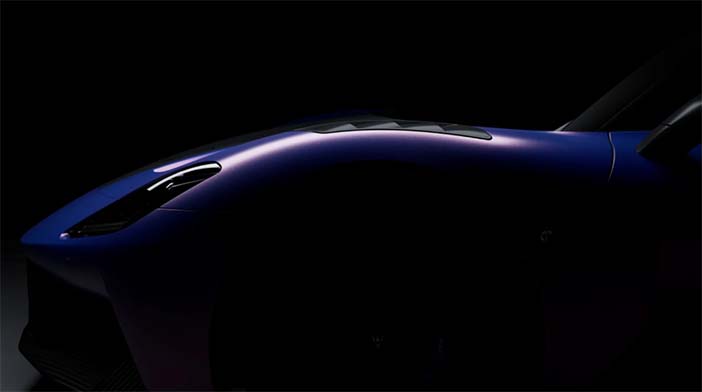
+++ In 50 years, enthusiasts will praise the MC20 as one of the most significant cars in MASERATI ’s history. It inaugurated the fantastic 3.0-liter Nettuno V6 that has since spread to other members of the range, it ushered in a new design language, and it brought the Italian brand back to racing after a long hiatus. Now, it’s about to spawn a new super-sports car designed to bridge the gap between street cars and race cars. Details remain few and far between; we don’t even know what the model is called yet. Maserati tells us it developed the MC20-derived car for drivers “who do not wish to sacrifice extraordinary performance on the road”. We’re also told it features innovative technological solutions and impressive aerodynamic performance, though we’ll need to wait a couple of weeks to see precisely what the company has cooked up. However, there’s a potentially big hint in Maserati’s press release: “From the outset of the MC20’s technical development, a racing evolution was envisaged that would come to life in two directions, with the track version and its road counterpart developed in close synergy”. We’ve already seen a track-bound MC20: it’s the GT2 that was unveiled in June 2023 and that started racing shortly after. Could the dark teaser image preview a street-legal variant of the GT2? It’s not terribly far-fetched, though keep in mind that this is pure speculation. The model seemingly features a redesigned front bumper with a carbon fiber splitter as well as GT2-like vents over the front wheel arches. Maserati will unveil the new supercar in Monterey, California, on August 16 . Enthusiasts who attend the unveiling will also get to check out the MC12-inspired MC20 Icona, which will make its North American debut at the event, and the track-only MCXtrema. There’s no word yet on how much the model will cost or whether production will be limited. +++
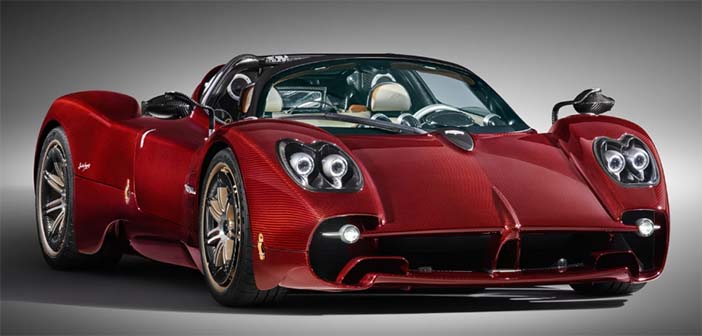
+++ There’s more to the PAGANI Utopia Roadster than its name suggests. Although it’s indeed a convertible variant of the Utopia, which made its debut in 2022 with a twin-turbo V12 and a 7-speed stick, it benefits from advanced weight-saving techniques and rides on talking tires. While the roof-less versions of the Huayra and the Zonda were developed after the coupe models, the Utopia was designed with coupe and Roadster body styles from the get-go. The 2 models look pretty much alike from the rocker panels to the beltline, and both use butterfly-style doors. Above the beltline, the Roadster gets a look of its own characterized by a composite panel that integrates a window and roll hoops. It comes standard with a removable hardtop that can be placed on a stand and a removable soft top that can be folded and stored in a suitcase-shaped storage bag located behind the seats. Pagani notes it integrated a window into the hardtop to let light into the cabin. Broadly speaking, a convertible weighs more than its coupe counterpart due to the reinforcements required to maintain structural rigidity. Pagani broke this rule: The Roadster tips the scale at 1.280 kilos, so it weighs exactly as much as the coupe. The company explains that it pulled this off by using no less than 40 formulas of weight-saving composite materials. Carbon fiber played a significant role, of course, but the brand also used Carbo-Titanium HP62-G2 and Carbo-Triax HP62. The monocoque was notably entirely redesigned for added rigidity. Like the coupe, the Roadster is powered by a twin-turbocharged, 6.0-liter V12 built by Mercedes-AMG and rated at 864 horsepower and 1.050 Nm of torque. “No heavy batteries, no hybrid system, just the wonderful roar of a V12 engine”, the Italian company proudly points out. The 12-cylinder spins the rear wheels via a 7-speed manual transmission that’s linked to one of the coolest shifters we’ve seen in recent memory. Alternatively, an automatic transmission that can be controlled using a pair of steering wheel-mounted shift paddles is available. Speaking of the steering wheel, look closely and you’ll notice it’s a work of art. Pagani starts by feeding a 94.8-pound block of metal to a 5-axis milling machine that works continuously for 28 hours to make the part. That’s why the rim, the spokes, and the hub form one piece. The final part weighs just 1.5 kilo, and Pagani says the discarded 90 or so pounds are recycled in other industries rather than thrown away. Pagani stresses that it will put a big focus on its customization program, which allows buyers to choose from a nearly endless selection of interior colours and materials. While coupe buyers can configure a one-of-a-kind as well, the company expects this service will be particularly popular among Roadster buyers because the interior will be easier to see. Additionally, every Utopia Roadster will come with two matching suitcases made with leather-upholstered carbon fiber. They’re designed to neatly slot into compartments on either side of the engine. Cyber Tyre technology developed by Pirelli creates a link between the car and the road. These tires feature sensors on the inner part of the tread that communicates details about road conditions to the car’s driving aids, such as the ABS, the ESP and the traction control system. The Pagani Utopia Roadster will make its debut during Monterey Car Week in August 2024. Production is limited to 130 units (versus 99 examples for the coupe), and each one is priced at €3.1 million, which represents approximately $3.3 million at the current conversion rate. +++
+++ Car seat manufacturer RECARO Automotive has filed for bankruptcy. The German firm, which supplies major brands including BMW, Ford and Volkswagen, was yesterday approved for self-administration by the Esslingen District Court. Local reports suggest that employees hadn’t been informed that it would be filing for bankruptcy. The IG Metall trade union said it’s currently unclear what insolvency means for the 215 workers at the factory in Kircheim unter Teck and has called for transparency. +++
+++ You know how sometimes you set yourself a challenge you know might hurt, then get a third of the way into the challenge and realize, “This is, um, too much hurt?” That might be what’s happened at STELLANTIS . In May 2021, CEO Carlos Tavares said at the Financial Times’ Future of the Car event, “We’re giving each brand a chance, giving each a time window of 10 years and giving funding for 10 years to do a core model strategy. The CEOs need to be clear in brand promise, customers, targets, and brand communications”, With results for the first half of 2021 hitting Stellantis with a 48% drop in net income, Tavares started firing public warning shots to some the conglomerate’s 14 brands, underlined with, “If they don’t make money, we’ll shut them down”. Analysts began writing about the suddenly shaky ground under Italian brand Lancia and French brand DS, while Maserati took the brunt of the hit, Stellantis CFO Natalie Knight saying, “There could be some point in the future when we look at what’s the best home for Maserati”. Even profitable brands heard their names called over the public intercom. Ram prints money for the corporate mothership, and is in large part responsible for Stellantis’ average transaction price in the U.S. being $57.266 in May, a whopping 18% above average. But after Tavares left a Carlos Ghosn-led Renault to take over PSA Peugeot-Citroen and fixed the balance sheet, then bought GM’s European Opel/Vauxhall division and got it back into the black, he earned a reputation as a CEO who coaxes profits out of industrial barrens. You don’t mess with the man’s money. Tavares was chiding a subset of Stellantis’ U.S. factory operation for less-than-acceptable build quality, singling out the Sterling Heights Assembly Plant that builds Ram 1500 pickups as an example. He told reporters, “The direct run rate of some of our plants, starting with SHAP (Sterling Heights) is not good. And that is something that we need to fix with our plant management team”, The direct run rate (DRR) is the number of vehicles off the line that don’t need more work before being sent to dealers; the closer to 100%, the better. A declining direct run rate not only means more vehicles held up at the plant, costing the automaker money, it opens the door to follow-on problems from incorrect fixes, costing even more money. In dire situations, it can hinder production or cause a plant shutdown. Ford got mired in DRR problems when launching the latest Explorer and Lincoln Aviator in 2019; thousands of SUVs off the Chicago factory lines were first driven to Ford’s Flat Rock plant outside Detroit for fixes instead of being driven to dealers. Pickup assembly isn’t the only issue in the U.S.; Tavares also noted a suboptimal inventory model mix that kept dealers from receiving enough of the most popular trims, a contributor to Stellantis’ overall issue of having some of the highest inventory figures among automakers. On top of that, ineffective marketing is said to have kept buyers out of showrooms. This is an interesting one, because Tavares isn’t putting the blame on high prices, he’s blaming the fact that buyers aren’t finding out about incentives that would lower the price early enough in the buying process. Tavares said the company needs to do a better job of presenting incentive offers. And another issue besides all of this is Stellantis’ disputes with suppliers, in at least a couple of cases needing to go to court to compel the stream of components. The CEO comes to the U.S. in August with work to do on all of these points. “The job is not done in the U.S. and we are now going to take care of that work”, he said. +++
+++ TOYOTA posted a 17% increase in first-quarter profit on Thursday, as cost-cutting and a weaker yen helped offset lower sales and a decline in production at home. The world’s top-selling automaker said operating profit for the 3 months through June totalled 1.3 trillion yen ($8.70 billion), matching the average of six analyst estimates. But with that growth being the weakest in 7 quarters, the results disappointed investors who had been betting the automaker would knock the lights out. Tokyo-listed shares in Toyota, which declined more than 5% before earnings were released, extended losses and fell almost 9% on Thursday. Toyota has been on a record profit run that has boosted its share price. But its outlook has been complicated by a tough market in China and the fall-out from a certification scandal. Retail sales of Toyota and luxury Lexus brand cars declined 2% in the quarter, with the share of petrol-electric hybrids in sales reaching about two fifths. Toyota, a pioneer in hybrid technology, has benefited as demand for EVs has slowed in markets such as the United States. The automaker maintained its forecast of 4.3 trillion yen profit for the full year, versus a 5.3 trillion yen average of 18 analyst estimates. +++
+++ The VOLKSWAGEN Group reported mixed results and a downbeat forecast, reflecting some of the deeper challenges facing large multinational automakers as they come grips with cost-cutting, and an evolving marketplace where EV uptake has been choppy. The company, which also counts brands like its Audi, Porsche, Bentley and others in its portfolio, reported second quarter revenue of €83.339 billion vs. €81.697 estimated, a rise of 4.1% compared to a year ago. Operating profit came in at €5.464 billion vs. €5.486 billion, a slight miss compared to estimates but a drop of 2.4% compared to the same period a year ago. Operating margins fell to 6.6% in the quarter from 7% a year ago, though higher than the overall first half margin of 6.3%. Volkswagen said its operating results were impacted by unplanned items like severance payments at VW, with margins hit by higher fixed costs, the closing of a gas turbine business, and the winding down of VW Bank in Russia. “A margin of 6.3% after 6 months is below our ambitions and potential, given our array of great vehicles, our brand portfolio, and our global footprint”, Volkswagen Group financial boss Arno Antlitz said in a statement. “However, we must make significant efforts on the cost side in the second half and beyond in order to achieve our targets”. Across its sales territories, VW saw overall growth in North America and South America, which nearly offset losses it said in regions like China, the company said. Q2 global vehicle deliveries fell 3.8% to 2.244 million, with a rise in revenue due to financing activities, and reflecting better product mix. The German automaker has also recently taken advantage of partnerships to lower costs. In the U.S., Volkswagen announced it will work with Rivian to create next-gen software-defined vehicles (SDV) to be used in future EVs from both companies, with Volkswagen infusing up to $5 billion through 2026. Most recently, Volkswagen backtracked and said its ID.7 would not come to the U.S. +++