
+++ Several thousand AUDI Q5 TFSI e and A7 TFSI e models need to be recalled as there’s a possibility their high-voltage battery modules could experience thermal overload, triggering a fire. Audi says it’s still investigating the root cause of the problem but believes deviations may have occurred during manufacturing of the battery modules at Samsung SDI’s plant in Hungary. The automaker was first notified of 4 field cases on cars that experienced thermal events in their battery packs back in August 2023. Earlier this year, Audi was informed of other field cases and decided to collect 50 high-voltage batteries from the field to conduct a lifetime analysis on them. Even though the root cause isn’t fully understood as this analysis is still ongoing, Audi has determined that 4.616 units of the Q5 TFSI e and A7 TFSI e models should be recalled. Impacted Q5 models were built from August 10, 2021 to December 10, 2022, while A7 models involved were produced between July 2, 2021 and May 4, 2022. Audi is not aware of any injuries, crashes, or fires related to the battery fault. Audi will introduce new onboard diagnostic software in the second quarter of 2025, which will detect potential issues with the battery modules and alert the driver before any problems occur. In the interim, impacted vehicles with online services enabled will need to have any modules or high-voltage batteries replaced, should online data indicate a critical fault. If this is the case, owners will be instructed to stop charging their vehicles from external sources and not use the combustion engine to charge the battery. The same applies to impacted Q5 TFSI e and A7 TFSI e models without the online data system, but here the owners are advised to stop charging their batteries until the new diagnostic software becomes available. +++
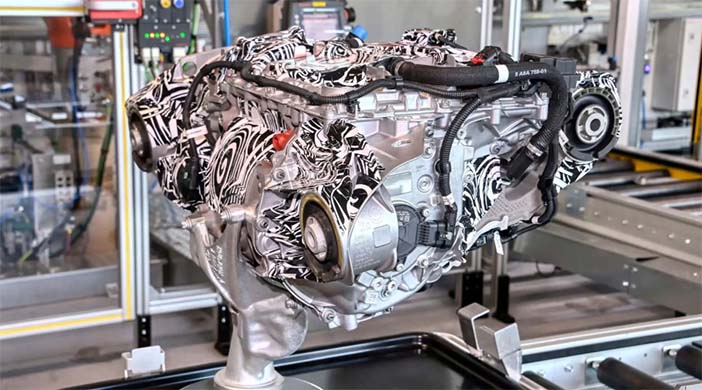
+++ A few days ago I showed you what the BMW iX3 (the electric X3 of the ‘new era’, the first SUV based on the Neue Klasse platform) could look like. Now the German manufacturer announces that the first electric motor has been shipped from the BMW Group Steyr plant to the Debrecen factory in Hungary. Here the powertrain will be used in the Neue Klasse test vehicles. “Our Steyr plant has been delivering the first 6th generation electric motors to the development department in Munich since September”, said Klaus von Moltke, SVP Engine Production at BMW AG and Managing Director of the BMW Group plant in Steyr. “We have also recently started to send our electric motors directly to the BMW Group plant in Debrecen, where they are installed in test vehicles. The Steyr site in Upper Austria is the BMW Group’s largest engine plant in the world. It employs 4.700 people, producing more than one million petrol and diesel engines annually, and also includes a major centre for research and development of new powertrains. In June 2022, the company announced that it would start production of e-drives in 2025, and 3 months ago, production of the first next-generation electric motors began. Helmut Hochsteiner, vicepresident of Electric Engine Production at the BMW Group Steyr plant, said: “In the coming months, we will continue to validate and optimise the complex production process for the new electric engines”. The delivery to Steyr’s Debrecen electric motor plant is therefore the start of series production of both the Neue Klasse and its electric motors from Austria. When fully operational, a production capacity of 150.000 units per year is estimated for the Debrecen factory, but more importantly it will have a neutral environmental balance to give further impetus to the plan to cut CO2 emissions per vehicle by 80% by 2030. This plan includes energy and water savings, renewable energies, recycling of waste production materials according to closed-loop processes and machinery and cars that are easy to repair and upgrade. +++
+++ GENERAL MOTORS ’ troubled China business is going to cost the automaker big. The American carmaker revealed Wednesday that it would take charges and asset writedowns of more than $5 billion for its investment in a joint venture with Shanghai’s SAIC Motor and to restructure operations in China, including closing factories. In a country that not long ago counted Buick and Chevrolet as 2 of the most popular foreign brands, GM’s profits and market share have tumbled. So much so that, like other foreign carmakers, the company’s long-term presence in China is now uncertain. Over the past 6 years, US, Japanese, Korean and European automakers have closed or sold plants and walked away from joint ventures. GM’s moves mark the culmination of years of decline in the market. The company lost $347 million in China through the first 9 months of this year after posting a $2 billion annual profit as recently as 2017. +++
+++ Is there a more confusing, esoteric car company than HONDA ? One capable of astonishing ambition and technical innovation, yet also of missing industry trends and producing anonymously uninspiring models. Here’s a firm bold enough to enter Formula 1 just a year after producing its first four-wheeled vehicle, take on Ferrari with the NSX and push hot hatch boundaries with the Civic Type R. It has even built a luxury jet. Yet it also produces distinctly beige fare such as the Jazz and the e:Ny1, was late to diesel engines and SUVs, and squandered early technical leads in hybrid and even electric vehicles. In Europe, Honda is far removed from its mid-2000s peak of more than 100.000 annual sales, eclipsed by ambitious rivals and now lacking the EV range required to push volume in the era of the zero-emission vehicle mandate. Honda is not alone among Japanese car firms in being hesitant about EVs, but its line-up lacks the truly market-pleasing combustion models that rivals such as Toyota can fall back on. Honda’s recent EV efforts exemplify its frustratingly uneven approach. The defiantly different Honda E won plaudits for its distinctive design when it was launched in 2020, but the tiny car was doomed by a low range and high price and is already out of production. It was followed by the e:Ny1, a compact SUV that fails to shine in almost any aspect. In the US, Honda’s only EV, the Prologue, is built by GM on one of the US firm’s platforms as part of a now-canned partnership. And yet, at a time when numerous rivals with larger EV line-ups are rolling back their ambitious targets, Honda remains committed to selling only battery-electric or hydrogen fuel cell cars by 2040. Honda’s plans to do so revolve around a new line of at least seven models that will sit on a new bespoke platform, featuring new batteries, new compact electric motors and a focus on efficiency. Previewed at the start of this year with the radical Saloon concept, the line is called the 0 Series, representing a desire to go back to Honda’s starting point and create new EVs from scratch. But can Honda realistically expect to go from zero and overhaul rivals currently far ahead of it in EV development in a single model generation? I put that question to Toshihiro Mibe, the firm’s long-time R&D boss who was named CEO in 2021 as part of a push to return Honda to an engineering focus. “I don’t think we’re lagging behind when it comes to EVs”, he insists. “We’ve been working on the technology [for EVs]for a long time, but we believe it was not good to increase the number of units when the market has not been profitable and there hasn’t been infrastructure such as charging stations. As society is starting to move from the early stage to the widespread adoption stage, the time has come to invest in our EV strategy. It’s not like we don’t have the technology to produce EVs, and we can compete globally with other car makers”. Basically, while the 0 Series may mark a reset of its EV approach, Honda isn’t throwing out all of its car-making knowledge. “We recognise we are not a top-runner in EVs”, adds Katsushi Inoue, who heads the firm’s Electrification Business Development Unit. “But rather than creating something completely different, we believe that our basic strength in automobiles can also be utilised in EV production”. Much of the groundwork for Honda’s new-era EVs is being done at the firm’s Automobile R&D Centre in Tochigi, where it is refining new production techniques and approaches that it will introduce on the 0 Series. The mantra here is ‘thin, light and wise’. What that means in practice is thinner battery packs to allow for vehicles that sit lower yet offer more interior space; are lighter to offer ‘sporty’ handling and increased efficiency; and are wise through the use of software-based platforms to offer connected technology and semi-autonomous driving. The most visible sign of Honda’s new approach is the vast 6.000 tonne megacasting machine that now occupies a large workshop space. Megacasting moulds large sections of car in a single piece of aluminium. Honda will initially use it for battery packs, reducing the number of parts required from more than 60 to just 5, saving a lot of weight on the car as well as time and complexity in manufacturing. It is, just as significantly, substantially cheaper too. Megacasting machines are complex, uniting whirring robot arms with thick mould presses that look like the sort of thing Boba Fett would deploy to freeze bounties, so it has taken a lot of work to refine. With the Tochigi development unit now running, work will soon begin to install 6 megacasts at a US plant in Ohio, where the 0 Series models will be built. Honda isn’t alone in developing megacasting: it’s already used by Tesla, and Toyota and Volvo will soon introduce it on production cars, which perhaps explains why it was also keen to highlight other technology as we toured Tochigi. That included friction stir welding and CDC (constant DC chopping) welding, which fall under the marginal gains mantra of increasing rigidity and efficiency. The work in Tochigi isn’t just about developing new production methods: Honda is also looking to rethink its production lines, with a new ‘flex cell’ approach, in part to allow combustion-engined and 0 Series models to be produced in the same plant. The new system essentially breaks the car production process into a number of cells instead of one long line, so that if demand varies it can more easily shift production capacity between different car types. Doing that requires some complex AI wizardry to plot how autonomous machines can whizz parts and part-assembled cars round the factory floor. The 0 Series models will start arriving in 2026 with the production version of the Saloon (you can expect a closer preview at CES in January) with a goal for entry-level versions to offer 500 km of range and ‘sporty’ handling. Just as significant as the hardware is the new software platform: like many car firms, the focus is on software-defined vehicles that can be updated with new functions and features. Honda is thinking bold: envisaging, for example, a system that lets users put on a VR headset and join their friends for a virtual ride-along. Of course, Honda isn’t abandoning its roots just yet: thanks to its various divisions, it’s the world’s biggest manufacturer of combustion engines. Mibe notes Honda’s current hybrid line-up is “doing well”, adding that “we believe this will be our main business until 2030”. There will also be direct crossover too: the new e-axle that will be used on the front axle of some 0 Series models will be shared with future hybrid Hondas. The company has already confirmed the return of the Prelude as a hybrid-only coupé for Europe. Another facet of Honda’s future plans has been a string of partnerships with other manufacturers: as well as the now-scrapped US tie-up with GM, there’s Afeela, a 50/50 EV joint venture with Sony. The cars it produces are tipped to use the same platform as the 0 Series, but Honda denies there will be crossover. “The interior user interface has been developed using Sony’s technology, so the positioning is different”, says Inoue. He adds that “I think the price will be higher”, but quickly points out that nothing is confirmed or official yet. However, the most notable partnership is the one with Japanese rivals Nissan and Mitsubishi. Exact details are still being ironed out, but Mibe says joint development has already begun on software and talks are ongoing for collaboration in “various other areas”. While Honda has generally ploughed its own furrow, it has had a number of alliances in its history (think back to its sometime tie-up with Rover, and the recent moves show just how serious the firm is about accelerating development in new technology areas. Of course, unlike many car firms Honda isn’t just working on electrification in a single space. It remains a huge motorbike manufacturer, and also builds power products, generators, lawnmowers, robots and even luxury jets. So its plan involves developing a mobile power pack (a swappable battery) for use by electric motorbikes and ‘mini-EVs’; likely to mean quadricycles or vehicles that fall under Japan’s kei car rules. “We are aiming to be carbon-neutral as a company by 2050, so we will introduce carbon-neutral technology not only to cars but also motorcycles and power products”, says Mibe. As is often the case, China is a different story: Honda is aiming to become EV-only there by 2035, and will launch 10 EVs (mostly bespoke to that country) by 2027. The brand remains strong in its homeland of Japan and the US, so beyond electrification its big challenge in the coming years will be trying to restore its footing in the European market. In recent years Honda has struggled with exchange rate fluctuations (a key factor in the firm’s decisions to shutter its European factories in Swindon and Turkey), a line-up focused on the US and Japan, and being caught flat-footed by the shift away from diesel. But despite no longer having a manufacturing presence here, Mibe insists that “car culture is mainstream in Europe, and there will be no withdrawal from sales”. The firm insists the 0 Series has been developed with an eye on Europe, and not just in terms of powertrain. With the company not intending to offer all 7 planned cars in each market, that could create room for more European-flavoured machinery. “We want to release a car that can compete in Europe”, says Mibe. “Although we ceased production in Europe due to changes in the market, I believe there will continue to be opportunities there. We aim to shine in Europe again in the future”. Regardless of its experience, Honda is playing catch-up in the EV world, and now faces far stiffer and more varied competition than when it first shook up the market in the 1980s. So can the firm reassert itself? It will certainly be tough, but not quite an impossible dream. This is a company, after all, that went from not making cars to winning F1 grands prix in just two years, and has a history of developing truly pioneering game-changers. Perhaps Honda is at its best when innovation is forced upon it. +++
+++ LOTUS could electrify the Emira and extend its lifecycle as the brand moves to hybridise its line-up and pushes back the sports car’s long-awaited electric replacement. It’s responding to flagging uptake of electric luxury cars by reducing its sales volume ambitions over the coming years and introducing a new range-extender (REx) powertrain option in a bid to boost the appeal of its EVs. The move marks a reversal of Lotus’s plan to go all-electric by 2028 and raises questions about the future of its last remaining sports car, which was due to be effectively replaced by an EV equivalent in the coming years. Lotus launched the Emira in 2021 as its final pure-combustion car and as an effective replacement for the Evora from which it was evolved. The firm has never put an end date on Emira production, but under its now-axed plan to go all-electric, it was due to usher in an EV successor known as the Type 135 in 2027, and it was expected that the Emira would be phased out in kind. Now, however, Lotus’s new European CEO Dan Balmer has suggested the Hethel-built coupé could live on with an electrified powertrain instead. Asked about the prospect of an Emira hybrid, he said: “In today’s world? ‘Never say never’ is the current rule, because we have to be open-minded and understand what the marketplace wants and also what technology is available to us at the time. “So the potential for hybrid powertrains is there. Equally the potential for all-EV platforms is there. It’s just a question of what technology is available for the attributes that we spec in a Lotus”. The Emira is currently available with a 2.0-litre turbo petrol engine supplied by Mercedes-AMG, producing 360 hp, or a Toyota-derived supercharged petrol V6 with 400 hp. Both Mercedes and Toyota use these respective units (or at least versions thereof) as part of hybrid powertrains in their own line-ups. The AMG engine, for example, is mildly hybridised in the AMG A35 hot hatch, and the Toyota V6 is closely related to that used in hybrids sold in various global markets. If an Emira hybrid became reality, Lotus would no doubt extensively modify and retune any third-party components to ensure the coupé’s performance and dynamic attributes were retained, but it would at least seem to be technically possible, pending any modifications that need to be made from a structural point of view. The Anglo-Chinese firm’s new ‘Hyper Hybrid’ REx technology, which it will add to its EV models in 2026 in a bid to drive sales, uses 900 Volt electricals and is compatible with the EPA platform that underpins the Emeya and Eletre, so it’s unlikely to find its way into the Emira. The future for the Emira is especially unclear now that the Type 135 that was due to replace it has been pushed back in line with Lotus’s freeze on new product launches. Lotus has also been open about the need to wait for new lightweight battery technology to come on stream so that an ‘electric Elise’ holds true to the dynamic prowess of its petrol forebear. Balmer said: “We have to look at the technology available to achieve the attributes that are important to us for those products, and at the right time as well. If we were to do it today, then we don’t feel we could achieve that”. +++
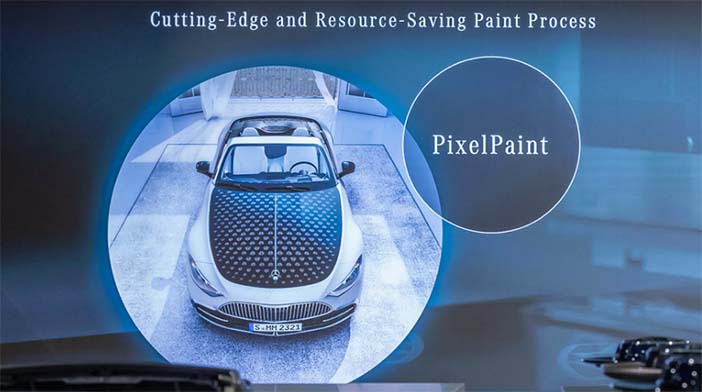
+++ Personalization has exploded in popularity and automakers are loving it because pricey options pad their bank accounts. Given this, it’s not surprising to learn MERCEDES is elevating their Manufaktur program and opening an all-new Manufaktur Studio. Located within the company’s Sindelfingen complex, the Manufaktur Studio is being billed as an exclusive area where customers can experience the “highest degree of customization”. In particular, they can see handcrafted components being installed into their new car. As the company explained: “After customers have configured their dream vehicle at the Centre of Excellence, individual components … are manufactured at the Manufaktur with elaborate precision and by hand. In the new Manufaktur Studio, they can then experience first-hand how the vehicle is customized according to their individual wishes”. Craftsmanship is the name of the game and Mercedes said the Studio will only work on up to 20 vehicles per day. Besides opening the new Studio, Mercedes confirmed plans to offer a variety of new Manufaktur colors and interior options for the S-Class next year. The automaker didn’t elaborate, but confirmed further customization is coming to the AMG line-up as well. While the automaker was coy on specifics, they did mention a new PixelPaint technology. It’s being marketed as an “innovative high-resolution painting process” that draws inspiration from inkjet printers. Designed to enable a wide range of multi-colored paint jobs, the PixelPaint process “applies high-quality paint directly onto the vehicle body with incredible precision”. This printer-like capability enables custom patterns and designs to be easily applied with the “highest level of accuracy.” The possibilities are virtually endless and we’re interested to see what customers come up with. +++
+++ Rules of ROLLS-ROYCE. Agree or disagree: Luggage should always be lifted, not rolled, to avoid tracking dirt. Vintage champagne should be stored at 11°C, and imbibed at night. You never know when you’ll need a lint roller, a USB or a pocket knife. No one, and I mean no one, wants to be asked, “How was your flight?” If you agreed with all of the above, you might pass muster with Andi McCann, a driving coach and de facto headmaster of the Rolls-Royce School for Chauffeurs. About 20% of Rolls are sold to owners with drivers, and McCann makes sure they’re elite. +++
+++ Now that STELLANTIS has parted ways with CEO Carlos Tavares a year earlier than expected, it can push the search for its new top executive to a higher level: urgent. Today’s developments in this saga, which broke Sunday with news of Tavares’ departure, started with a public denial of a report saying Apple’s outgoing CFO Luca Maestri is taking the Stellantis job. Maestri is Italian and the report came from an Italian newspaper. Go figure. Soon after that report was denied, reports surfaced explaining how Tavares and the Stellantis board went sidewise over the last month. CFO Doug Ostermann said divergences between Tavares and Stellantis board members included priorities for the 15 months left before Tavares’ term was set to expire. “Those related to tactical issues on how to run the business over that short-term time period, and what actions should be taken in regard to short-term metrics versus longer-term benefit of the company”, he said. Stellantis insiders told that Tavares’ plans quickly became too “radical” for his board. The story of how Tavares failed is still emerging, but the real question is this: Can a new CEO even fix this troubled automaker with 14 brands and historical roots in 3 countries with political allegiances to mend? Stellantis in its current form may be ungovernable. It is certainly in need of a major overhaul on both sides of the Atlantic; work that will not come easy for whomever its board finds to permanently succeed Tavares. Brands will have to be culled and many jobs are likely to be lost. It will be a dirty business, and Tavares’ history of confrontational relationships with dealers, suppliers and workers has left few natural constituencies eager to help his successor without evidence of fundamental changes ahead. +++