
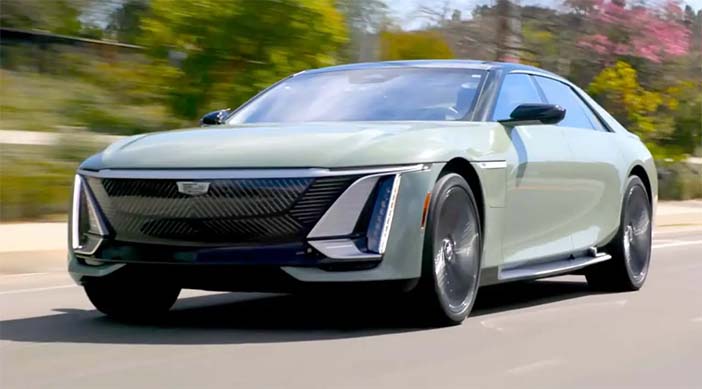
+++ No one expects the CADILLAC CELESTIQ to be a big seller for the brand. It’s a hand-built electric vehicle that costs $340.000 and it can take customers weeks or months to finalize the design. So Cadillac won’t be popping them out like Escalades. Tony Roma, Cadillac’s chief engineer of performance cars, revealed in a recent episode of Jay Leno’s Garage that the automaker doesn’t expect to make more than 250 cars per year in the United States. “This is super low volume”, Roma told Leno. “We’re not announcing the exact volume, but think more like hundreds, not thousands”. For some context of the Celestiq’s rarity, Bugatti plans to build just 250 examples of the Tourbillon, its V-16-powered hybrid hypercar. With the Celestiq, Cadillac plans to use to fight Rolls-Royce and Bentley; not easy targets. The carmaker revealed the production version 2,5 years ago, showing off a sleek sedan with a longer wheelbase than the 3-row Escalade. The Celestiq is a flagship for Cadillac brand, with a pair of electric motors making an estimated 650 horsepower (more than previously announced), which will help motivate the 2.800 kilo sedan. It’s also an important car for General Motors, utilizing the automaker’s new Ultium architecture that’s underpinning a wide range of vehicles from the American automaker. It has all the luxuries you’d expect from a $340.000 sedan: Super Cruise, air suspension, 4-wheel steering, and tons of technology. It has a 4-quadrant tinting panoramic roof, a pillar-to-pillar HD display, a 38-speaker sound system, heated armrests and more. +++
+++ FORD became the latest big name to warn that president Donald Trump’s trade war is about to do significant damage at home. The iconic US company said it suspended its full-year financial guidance, pinning the blame in part on auto tariffs. Ford said it expects Trump’s levies to reduce 2025 adjusted earnings before interest and taxes by about $1.5 billion on a net basis this year. Several automakers have warned of the steep costs they expect to pay due to Trump’s chaotic tariff campaign and subsequent retaliation by other nations. Trump has argued that the 25% tariffs he’s imposed on imported vehicles and parts are needed to bring more production and jobs to the US. But most economists predict the opposite will be achieved, while a growing number of lawsuits contend Trump’s entire tariff initiative is illegal under US law. In the meantime, automakers have said that broad, lasting tariffs will boost costs, jeopardize employment and potentially increase new-car prices that are already nearing $50,000 on average. +++
+++ Buying into the latest automotive trend can feel like stepping into the future, until that future leaves you stranded at the service center. Sometimes the cutting edge cuts a little too deep. That’s exactly what went down with one LUCID owner who picked up an Air Pure AWD in 2023. Less than a year later, he’s moving on to an Acura. The car itself? Sold. The ownership experience? Not so much. “When you buy a Lucid, you’re buying into an experience. And sadly, that experience has been underwhelming”. Those are the words of a now-former Lucid driver in what he openly admits is a bit of a rant, posted online. Posted to Reddit, this story details one owner’s experience with what it’s like to own a car from a young automaker. They report leasing the vehicle in 2023, and that it spent 2 out of 12 months at the dealer for repair. Reported issues include malfunctioning windows, a stuck frunk, buzzing speakers, trim problems, unreliable phone connectivity, and what the owner describes as a company that is “completely lost, unable to tell its right hand from its left”. It gives the impression that different departments aren’t communicating and some representatives don’t bother reviewing customer notes before reaching out. One Lucid employee said a lease buyout was possible, while another insisted it wasn’t. After inquiring about the buyout, the owner was then contacted, ironically, not with answers, but with a sales pitch for another Lucid employee. All companies screw up from time to time, but this owner reports that they haven’t received a single call or message to ask about why they wanted out of their lease. To this (now former) owner, Lucid is missing one big thing: “They’re not just selling a car, they’re selling a luxury experience. And right now, they’re only delivering half of that”, they say. On the plus side, that last comment hints at the silver lining here. Lucid might still be trying to figure out the service and customer experience side of the business, but they have built a very good EV. “The car itself? Terrific. A blast to drive”, the owner said said. Ultimately, this seems like a pretty typical example of what can happen when you buy a car from a startup EV company. Sure, issues like these can crop up with any brand, but they tend to hit early adopters of newer automakers more often. +++
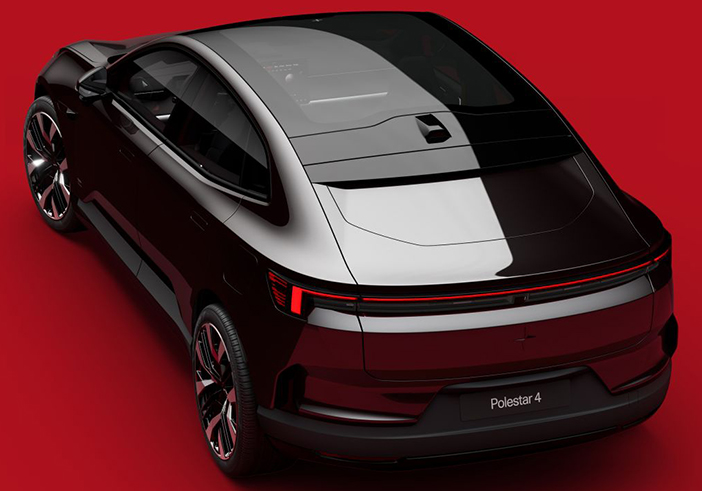
+++ There are plenty of reasons to like the POLESTAR 4 , including its modern coupe-SUV design, high quality interior and generous equipment levels. But if you remember anything from the 4’s debut I’ll bet it’s that it doesn’t have a rear window, Polestar reasoning that we don’t need glass back there because a camera can do a better job. But now the Geely-owned company has been forced to issue a second recall for faulty back-up cameras, reminding us why most cars have had a window in the back for more than a century and why they probably ought to hang on to them for a while yet. To be clear, this recall doesn’t relate to the 4, but rather the Polestar 2, which does have a rear window. However, given how widespread camera glitches are on cars from almost every brand (Ford, Hyundai, Kia, JLR, multiple Stellantis brands and more have issued related recalls) it wouldn’t be much of a surprise if the 4 ends up with a problem at some point. And unfortunately, like mentioned above, if this happens, the driver doesn’t have a backup window (pun definitely intended). In this case, Polestar is recalling 27.816 examples of its ‘2’ so it can update the software, something that unfortunately can’t be done over-the-air. The campaign affecting 2021-25 MY cars comes in response to some owners claiming their cameras were totally inoperative. Instead of showing the road behind them when reverse was selected, the screen displayed a message saying “camera is temporarily unavailable”. The carmaker says the fault is down to a synchronization error between the Parking Assist Camera (PAC) and the infotainment system. If this sounds familiar it’s probably because Polestar already issued a similar recall in June 2024 covering almost 26.000 examples of the 2. In that case, the recall fix was an OTA update, but it also wasn’t much of a fix. Polestar’s upcoming 5 is also designed without a rear window, as is Jaguar’s controversial-looking new electric sedan. Do you think automakers should be forced to retain a window for safety reasons or are these cases too isolated and designers may continue to go wild? +++
+++ TESLA ’s sales slump in Europe isn’t letting up, and now it’s starting to look like more than just a temporary dip from the Model Y changeover. For the 4th month in a row, the EV company’s numbers are sliding in several key markets, and this time the declines are steep. In April, at least 3 major countries reported year-over-year drops of more than 59 percent. Tesla may be running out of time to figure out how to stop the bleeding. Tesla’s sales are diving headfirst into the red. In France, deliveries were down 59.4 percent compared to April last year, with just 863 vehicles sold. Denmark saw a 67.2 percent decrease, bringing the monthly total there to only 180 cars. But, as reported by Reuters, Sweden takes the prize for most dramatic plunge: sales dropped 80.7 percent, from 1.052 units last April to just 208 this year. The broader trend doesn’t look much better. Tesla’s overall European sales dropped 28.2 percent in March, and April seems poised to show even worse results once full data is available. In Norway, figures from OFV show that Tesla’s market share has slipped from 18 percent to just 11 percent compared to the same period last year. Chinese carmakers, meanwhile, have moved ahead, claiming 12 percent of Norway’s market. “Tesla is nowhere near the level we are used to; you can’t pretend otherwise”, OFV noted. Much of this feels like a perfect storm against Tesla alone. Tesla has chalked up its weak performance in the first quarter of the year to a production switch from the outgoing Model Y to the updated version. But that’s only part of the story and it doesn’t apply to Europe which received the facelift model early on in the year. At the same time, it’s facing pressure from rival brands and even more from Chinese EVs that often sell for less. On top of all that, Elon Musk’s political views have distanced many of his customer base in the area. That said, it’ll be interesting to see what, if anything, comes of this sales dip from an official Tesla standpoint. The company openly said that production slowdowns from the first quarter are done, so what will it say if this downward projection continues? Will it reverse course on its public statements about searching for a new CEO? How will it explain a sales dip when its most popular model, the Y, is struggling to sell despite just launching a heavily updated version? Only time will tell. +++
+++ Electric vehicles may dominate headlines and political agendas, but the road to a cleaner future isn’t a one-way street. At least, not according to TOYOTA , the world’s best-selling brand and long-time champion of hybrid technology. While other automakers sprint toward full electrification, Toyota is still holding its ground, cautiously expanding its EV line-up while doubling down on hybrids. Despite recent moves in China with the broader BZ series, Toyota has taken plenty of flak for its relatively slow EV rollout. But if you ask chairman Akio Toyoda, there’s a method to what critics call hesitation. Known for his firm stance on a multi-energy strategy, Toyoda once again explained why Toyota hasn’t followed the all-electric herd. In an recent interview, Toyoda said: “When the term carbon neutrality became popular, we said as a company the enemy is carbon. We have to focus on what we can do immediately to reduce carbon dioxide. That is the basis of our decision. It has not changed and will not change”. Toyoda also pointed to Toyota’s history with hybrid vehicles. “We have sold some 27 million hybrids”, he said. “Those hybrids have had the same impact as 9 million BEVs on the road. But if we were to have made 9 million BEVs in Japan, it would have actually increased the carbon emissions, not reduced them. That is because Japan relies on the thermal power plants for electricity”. While the Toyota chairman didn’t break down the math behind those figures, he clearly wanted to show that EVs aren’t a silver bullet. Sure, battery electric vehicles offer zero tailpipe emission, but that’s only part of the equation. The environmental impact of producing EVs and generating the electricity to charge them tells a more complicated story. Add to that the patchy state of charging infrastructure in many regions, and it becomes easier to understand why hybrids still make sense, at least for now. Toyota’s deep roots in hybrid development go back to the original Prius in 1997. Since then, hybrids have grown to become a major part of the company’s global sales. Today, hybrid variants are offered across nearly every Toyota model line. Demand is particularly strong in markets like Europe and North America, where self-charging hybrids are often seen as a practical, lower-commitment step toward electrification. And while EVs continue to grab market share, there’s a sizable segment of buyers who remain unconvinced, whether that be due to cost, range anxiety, or lack of infrastructure. Toyota seems content to serve that middle ground. Toyoda’s multi-pathway approach includes more than just hybrids. He’s also supporting plug-in hybrids, hydrogen fuel cell vehicles, battery EVs and even combustion engines powered by synthetic fuels. For Toyota, it’s less about betting on a single winner and more about keeping all options open. “We should look at all options and work in all directions”, Toyoda said. “As a company, we have been very consistent in saying what we’re fighting against is carbon dioxide”. This isn’t new rhetoric from Toyoda. Last year, he made headlines for suggesting that even in the long term, fully electric vehicles will only make up 30 percent of global sales. He also warned that a sudden shift to an EV-only future could put 5.5 million Japanese jobs at risk. +++
+++ Last September, VOLVO rowed back from its previous pledge to go all-electric by 2030, and now, 8 months later, that looks like a very smart move. The Geely-owned automaker just announced its latest sales figures, and they show registrations of fully electric Volvo vehicles fell by almost one-third. Volvo’s EV sales fell 32 percent in April versus the same period last year. The company sold 17.090 EVs in April 2024, compared to the 11.697 EVs sold in the month just gone. PHEV sales actually grew fractionally (by 2 percent) to 14.688, but MHEV and ICE registrations also dropped 5 percent to 34.315. That means Volvo’s combined electric sales were down 16 percent, and total sales for all power types for April stood at 65.838, or 11 percent lower than they were for the corresponding period last year. And April’s terrible performance really dragged down the overall EV sales figures in the first quarter of the year, which showed a 6 percent sales decline and are down 7 percent Jan-April. The lacklustre demand for EVs comes despite the EX30 being rolled out to the US and sales of the big EX90 also now having begun. But Volvo is one of the automakers affected by president Trump’s tariffs, albeit not as badly affected as Audi or Porsche. Although it does build the EX90 at its South Carolina plant in the US, other models like the XC90, XC60, XC40 and EX30 are all made overseas and subject to import levies. Volvo is looking to address that issue and is planning to build a second model (probably the XC60 or XC90) at the same site. Volvo recently dropped the S90 from the US market due to tariffs, though the newly facelifted sedan will still be offered in Asia. The man tasked with managing the turnaround is Håkan Samuelsson, who returned to the CEO role on April 1st on a 2-year contract while the company looks for a permanent new boss. He replaces Jim Rowan, who took over from Samuelsson in 2022 but was shown the door this spring after 3 years in the big chair. +++