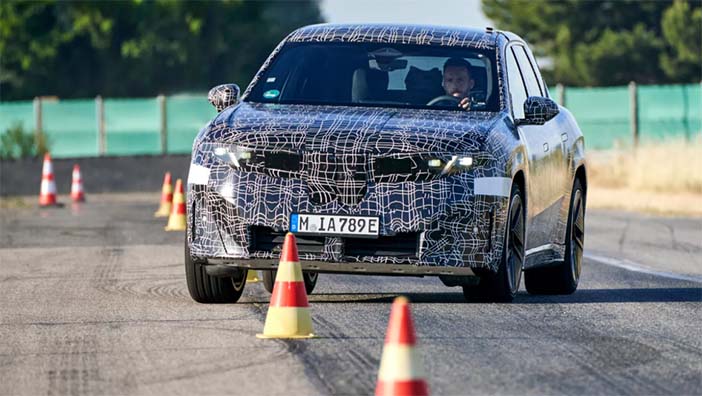
+++ BMW has released new details about the redesigned iX3, ahead of its debut at the Munich Motor Show this fall. Set to become the first Neue Klasse vehicle, the crossover promises to be a major leap forward. That isn’t just hype as BMW confirmed the model will use new cylindrical battery cells that have a 20% higher energy density than the prismatic cells being used today. Thanks to this change, the iX3 50 xDrive is slated to have a range of up to 800 km (WLTP). That’s a truly impressive number, but it’s just the tip of the iceberg as the model also has a 400 kW DC fast charging capability. This will enable the crossover to get more than 350 km of range in as little as 10 minutes. Speaking of charging, the iX3 has an “intelligent charging flap” that automatically opens thanks to the use of artificial intelligence. As the automaker explained, when the driver approaches a familiar or learned charging point, the flap automatically opens when it arrives to make the recharging process a little faster and convenient. Customers will also find bidirectional charging capabilities including Vehicle-to-Load, Vehicle-to-Home, and Vehicle-to-Grid. The latter functions are enabled by a new 19.2 kW Wallbox and they enable the crossover to act as an emergency power source. While most of the cabin is covered by cloth camouflage, the iX3 features a Panoramic iDrive system that consists of a pillar-to-pillar display as well as a large center-mounted screen running BMW Operating System X. They’re joined by a funky, “shy-tech” steering wheel that has buttons that illuminate when various functions are available. They’re joined by slender air vents, door-mounted seat controls, and an optional 3D head-up display. On the topic of technology, BMW confirmed the iX3 will have next-generation driver assistance systems that use AI. The crossover also has processing speeds that are 20 times faster than the previous system. The automaker was hazy on specifics, but mentioned hands-free highway driving as well as an automatic lane change function. They’ll be joined by a new Motorway & City Assistant system, which “helps the driver in complex driving situations in urban areas”. It can reportedly handle tight corners and roundabouts as well as automatically brake for red lights, before resuming when they turn green. There’s even cooperative steering and braking, which will allow drivers to turn the steering wheel or apply brakes “just a little”. Doing so will adjust the response of the automated driving system without shutting it off. We can also expect an advanced parking system that offers an “AI-based selection of parking assistance services, parking space recognition, maneuver planning, and an improved parking experience”. Production of the iX3 will begin late this year and deliveries will, presumably, begin shortly thereafter. +++
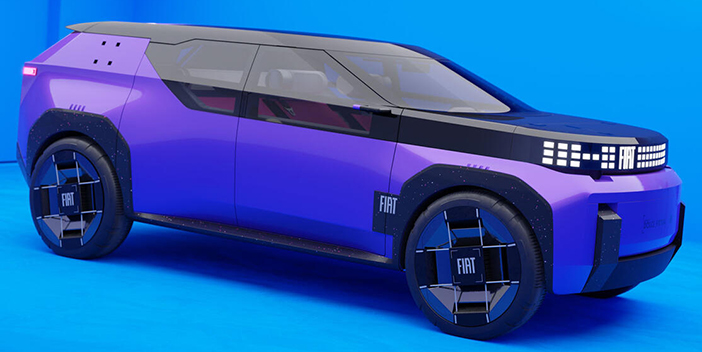
+++ FIAT ’s forthcoming Dacia Bigster rival could channel the spirit of the cult-classic Multipla when it arrives in 2027. The new SUV is one of two C-segment models that the Italian brand is set to launch in the next 2 years, alongside a rakish, raised hatchback. They were previewed by Panda-inspired SUV and Fastback concepts unveiled early last year. Those models will be a maximum of 4.5 metres long and sit on the same cost-conscious Stellantis Smart Car platform as the smaller Grande Panda, enabling them to be offered with electric and hybrid powertrains. While the new SUV will sit broadly as part of the Panda design family and distinct from the range inspired by the classic 500, Fiat bosses have hinted it won’t necessarily feature that name. Asked about the risks of Fiat expanding beyond its core city car market into the C-segment, Fiat Europe boss Gaetano Thorel said: “It will be a challenge, because it seems we don’t have the same legacy with family movers as we do with the 500 and Panda, but in reality we have, because when you think about the Multipla, then Fiat has a story on that. “But thanks to Stellantis, we have a possibility to offer our customers and dealers a full passenger car line-up from 2.5 metres to 4.4 metres. That is the Fiat territory”. The Multipla arrived in 1998 as a 4 meter-long compact MPV with 2 rows of 3 seats and a host of space-saving features. The styling was divisive and the model was not a commercial success, but it won praise for its innovative design. The new model will have more of a traditional SUV appearance but could echo the Multipla in terms of maximising space in a small footprint. The Citroën C3 Aircross, which uses the same Smart Car platform as the Grande Panda, seats 7. The Fastback concept is likely to morph into a raised hatchback that will serve as a spiritual successor to the Fiat Tipo. Fiat design chief François Leboine said future models would use design cues from the Grande Panda and elsewhere in its heritage line-up, but he insisted the brand wouldn’t fixate on retro designs. “There is a retro flair on the products, but if you don’t know the past, the products still have to work”, he said. “We play with the codes of pop culture and car culture, but they have to work for a new generation”. +++
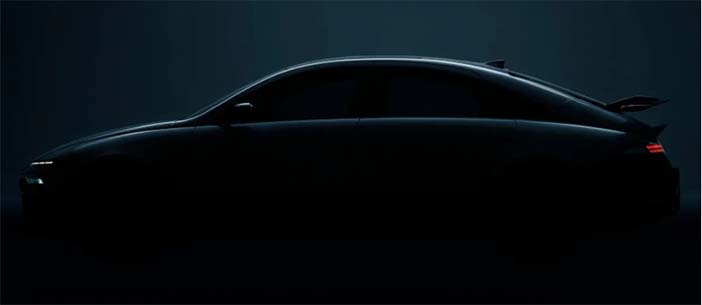
+++ It’s official: the long-awaited HYUNDAI IONIQ 6 N , Korea’s answer to the Tesla Model 3 Performance and the iconic BMW M3, will finally be revealed at the Goodwood Festival of Speed next month. This makes perfect sense because, as well as being one of the most highly anticipated events on every petrolheads’ calendar, the Goodwood FoS was where the sensational Hyundai Ioniq 5 N was unveiled back in 2023. This summer will also mark 3 years since Hyundai revealed the RN22e concept, which previewed the incoming performance saloon and served as a rolling laboratory for the N division boffins to work on some of the technology that would go on to feature in its high-performance EVs. Hyundai promises the Ioniq 6 N will embody the 3 pillars of the N division (‘Corner Rascal’, ‘Racetrack Capability’ and ‘Everyday Sports Car’) while some of the changes over the regular, recently facelifted Ioniq 6 include flared wheelarches, a wider stance and lightweight wheels. The brand has also released some more teaser images of the car; they still don’t give much away, but we can see a massive rear wing that sits just in front of a ducktail spoiler. There’s also the new rear end that has a completely black panel with laser-etched openings for the LED lighting. Hyundai’s head of design, Simon Loasby, also revealed: “With the Ioniq 6 N we had the chance to widen the fenders front and rear, which we couldn’t do on the 5 N, and who doesn’t like a wide body?” However, he continued, the job wasn’t quite so simple, because to ensure that the Ioniq 6’s streamlined body will cope with the much higher speeds and stronger performance that the N is capable of, more changes were required. “On the Ioniq 6, with all those curves over the top”, he said, “we’re pulling the air down, which means we’re lifting the car up. When you’re counteracting lift, when we’ve got 600bhp plus, you need a spoiler”. But Hyundai will go further to contrast its new saloon with the Ioniq 5 N, adjusting its powertrain software to give the car a distinct personality. “The opportunity this software gives us is the ability to change into different outfits,” Loasby told us. “It’s just software to create different feelings. “Our engineers have done such a good job at looking at what is electronic (the steering, damping, throttle, regenerative braking) and creating algorithms to connect that. There’s lots more we can play with”. Through this system, Hyundai will be able not just to mimic a different form of petrol engine through the speakers and paddle shifters, but also to map the throttle to feel different as you accelerate. It means there’s no need to develop a brand-new powertrain, as you would in a traditional high-performance ICE model. So while the 6 N will have a different personality, we expect that it’ll use the same fundamental powertrain as the 5 N: a dual-motor set-up with 650 hp. The battery pack will also probably be the same as the 5 N’s 84 kWh unit, and the car will be able to sprint to 100 kph in around 3.4 seconds. In terms of chassis hardware, the 6 N will still have a coil-spring suspension set-up, but given the saloon’s lower centre of gravity, it could be even more engaging to drive than the more upright 5. Inside, the 6 N will probably pick up more sporty design elements, such as the 5 N’s new steering wheel and bucket seats. However, the basic interior architecture won’t change too much, and the standard Ioniq 6 already feels quite cosseting, thanks to its large centre console. Order books for the Hyundai Ioniq 6 N should open a couple of months after the car’s debut in July, and the first cars could even reach customers before the end of 2025. +++
+++ It’s wild to think that the MASERATI MC20 is already 5 years old. The car made its official debut in September 2020, and the automaker might already be readying the supercar’s successor. Maserati has recently filed a new trademark that sounds like a natural progression of the company’s current naming scheme for its supercars. The Italian-based automaker filed a trademark application for ‘MC25′ to be used on cars and scale model vehicles with the United States Patent and Trademark Office. That seems like the perfect moniker for a new car that would debut this year. However, there’s no public indication Maserati is preparing an MC20 successor as the company faces a chaotic industry. Sales for the brand were down 57 percent last year, declining from 26.600 cars in 2023 to just 11.300 units in 2024. The brand has also culled its line-up in recent years, discontinuing bestsellers like the Levante and Ghibli, with replacements still a few years away. The company also had to fend off rumors last year that alleged Stellantis was preparing to sell the struggling brand. Stellantis then reiterated its commitment to Maserati in April, confirming that the brand was not for sale. It might not have the resources for a completely new car, but Maserati could easily make some significant upgrades to the MC20 for a new iteration. The automaker previewed what could be possible with the powertrain back in 2023 with the MCXtrema, a track-only super making 730 horsepower from the Nettuno twin-turbocharged 3.0-liter V6 engine. A new iteration of the car featuring revamped styling, a new name, and other performance upgrades might be in the works. However, we’ll have to wait for something official from the company. It has a lot to sort out as it navigates the ever-changing auto industry. +++
+++ It hasn’t been an easy ride for SUBARU AND TOYOTA ’s first major foray into the EV market. The BZ4X and Solterra stand out for their unconventional styling, but unfortunately, not for reasons that win over buyers. Now, Toyota has been hit with a lawsuit in the US that claims the vehicles have 12 volt batteries prone to premature failure, and that the carmaker knew about the problem before it began selling the vehicles. Filed in California, the class action lawsuit targets 2023 to 2025 model year Toyota BZ4X and Subaru Solterra models. According to the complaint, the 12 volt batteries in these EVs are prone to draining quickly and dying altogether. Although the vehicles are still under warranty and dealers have reportedly been replacing the batteries, the lawsuit alleges that replacements are just as unreliable. As with over EVs, the 12 volt battery in question isn’t the one powering the car’s electric motors. It handles secondary systems like the windows, seats, HVAC fans, radio, lights, and wipers. It’s also believed to activate a relay that connects the main battery pack to the electric drivetrain. In other words, it may be small, but when it fails, the car is effectively dead in the water. Just a single plaintiff has been named in the lawsuit: John Wade. He bought a 2023Toyota BZ4X in March 2023 and says he began experiencing issues within weeks. According to the filing, a series of warning lights lit up the dashboard before the vehicle completely shut down, requiring roadside assistance just to get moving again. Less than 2.000 miles later, the 12 volt battery failed a second time. This time, even a jumpstart couldn’t revive it. Wade claims he was forced to tow his EV to a nearby Toyota dealership, which replaced the 12 volt battery. In December 2024, this replacement battery died. While attempting to diagnose the problem on his own, Wade paid $4,800 for a Level 2 home charger as he believed the issues may have stemmed from “not using a sufficient EV battery charger”. Toyota now has until July 3 to officially respond to the lawsuit. For both Toyota and Subaru, the case raises questions about how well early EV issues are being addressed, particularly when they involve something as basic as the 12-volt battery system. +++
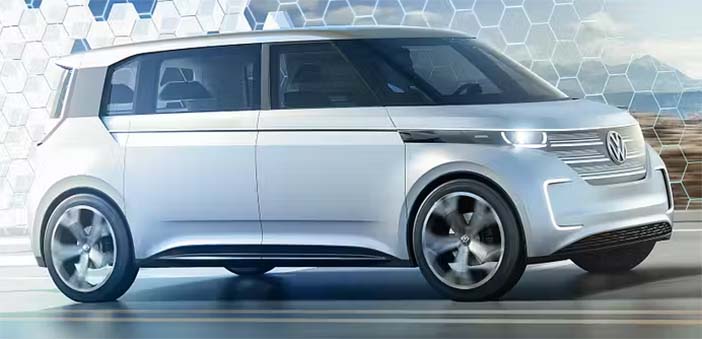
+++ VOLKSWAGEN ’s van line-up is already one of the most expansive in Europe, covering everything from compact urban haulers to full-size electric people movers. And now, there’s a strong chance the family might be getting a new member, this time, a smaller electric MPV aimed at reviving a body style that’s mostly disappeared from the mainstream. The German carmaker currently fields the compact Caddy, the Ford-based Transporter, the in-house developed Multivan, and the all-electric ID. Buzz. But those might soon be joined by a more compact, electric alternative that could quietly take over for the aging Touran. Over the last decade, SUVs have more or less steamrolled minivans off the European market. Buyers swapped sliding doors for high ground clearance, leaving few traditional MPVs standing. Despite the trend, VW seems to think there’s still a case to be made for family-friendly vans, especially considering the format’s continued popularity in markets like China. Insider sources say VW recently dusted off some old minivan concepts as part of early-stage planning for a new model. Among them is the Budd-e, a study first shown back in 2016 at CES. Built on the MEB electric platform, the Budd-e was VW’s early attempt at blending heritage cues with forward-looking tech. The Budd-e measures 4.597 mm long, which makes it slightly more compact than the standard-wheelbase ID.Buzz by 115 mm, yet longer than the second-generation Touran by 70 mm. It’s sized just right for the compact MPV segment, with dimensions that promise decent cabin space without overwhelming urban streets. Thanks to a flat EV floor and short overhangs, the Budd-e’s interior packaging could be far more efficient than the Touran’s. Its microbus-inspired silhouette doesn’t just serve as a nostalgic throwback, it also helps maximize usable space. VW designers would also have more freedom to experiment with the seating layout, while sliding rear doors would add a dose of everyday practicality. More importantly, the new compact van would be more affordable than the ID. Buzz that starts from around $60,000 in America, targeting family buyers and taxi fleets. It is described as a “no-nonsense, high-utility electric vehicle with sliding rear doors and strong day-to-day usability”. The minivan project has yet to receive the green light from VW’s top brass, and remains in early development stage. Still, if it does get the green light, production could start closer to 2028. The choice of underpinnings will largely depend on the launch date, as the EV could either ride either on an evolved version of the current MEB architecture or the upcoming SSP. Volkswagen also plans to phase out the ID naming strategy in favour of more familiar nameplates. So if this model does come to life, don’t be surprised if it wears the Touran badge once again, this time powered by electrons rather than diesel. +++
+++ In the UNITED STATES , General Motors is having a great year when it comes to electric vehicles. Sure, some reports indicate sales might be cooling off in some corners of the market, but for GM, things are hot. The company says its EV sales have jumped 94 percent year over year, and one of its brands, Chevrolet, now ranks second only to Tesla in U.S. EV sales. That’s not a small gap, though. Tesla still held nearly 44 percent of the U.S. EV market in the first quarter of the year, with 128.100 vehicles sold, or roughly as much as everyone else combined. However, Tesla’s May figures aren’t available yet, making a direct comparison with GM impossible. Still, GM managed to sell 62.830 electric cars, trucks, and SUVs between January and the end of May. The first quarter alone saw a 94 percent year-over-year jump, and that momentum hasn’t let up. May turned out to be the company’s second-best month ever for EV sales, pushing GM to a 15.5 percent share of the current EV market. Chevrolet carried much of that weight, accounting for over half of those numbers with roughly 37.000 deliveries during the same period. Leading the charge was the electric Equinox, which became GM’s best-selling EV with 21.804 units delivered. “Customers are responding in record numbers to our world-class portfolio of electric and gas-powered vehicles”, said Rory Harvey, executive VP and president of global markets. “In the first 2 months of the second quarter, we more than doubled our EV sales compared to the same period last year”. Lots of those sales are coming from the top EV seller, Tesla. In fact, according to Scott Bell, vice president of global Chevrolet, over half of the sales GM has this year are conquest sales, meaning customers are switching over from other brands. He told the Detroit Free Press that the Equinox is a major player here. “It’s certainly the most affordable EV out there with that kind of range. It is by far the leader in the clubhouse; it doubles our Blazer volume easily on a monthly basis”, said Bell. “Once you convert to an EV, you’re not leaving. Especially once you’ve invested in the infrastructure, a home charger, 86% of them will stay”. Interestingly, General Motors’ figures are even more impressive when compared to Ford’s. The Blue Oval brand delivered 34.132 cars during the first 5 months of the year, marking an 8.3 percent drop from the same period in 2024. That’s right, Chevrolet outsold Ford, and that doesn’t take into account any of the sales from Cadillac and GMC. No doubt, some of that success comes from GM’s wider range of available EVs. At the same time, both GM and Ford are doing just fine when it comes to their combustion-engine businesses. Hybrids are selling great, too. We’ll get a clearer picture of the EV sales landscape soon. GM will announce its second-quarter sales numbers on July 1. Other automakers will no doubt do the same around the same time. +++
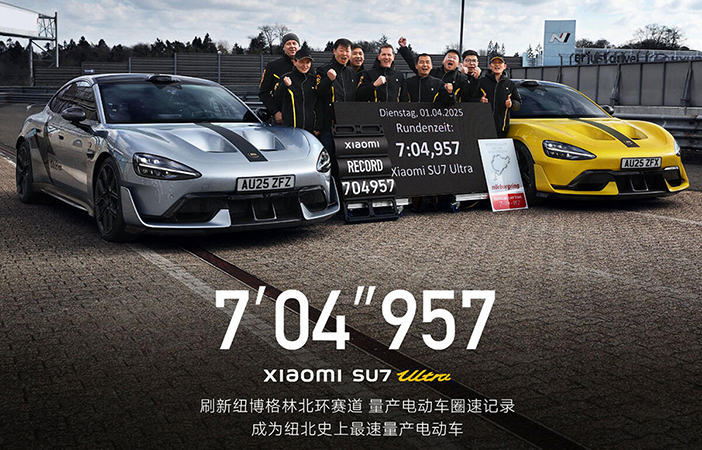
+++ XIAOMI has shattered the Nürburgring lap record for electric production cars, sending its mega-powered SU7 Ultra saloon around the Green Hell almost 3 seconds quicker than the Porsche Taycan Turbo GT. The smartphone giant’s 1527bhp tri-motor super-saloon, equipped with an optional track package, went around the German track in 7 minutes 4.957 seconds, outpacing the hottest Taycan’s 7min 7.55sec time. The road-legal version of the SU7 Ultra was only around 20 seconds slower than the extreme track-only prototype that Xiaomi created last year with support from British engineering firm Prodrive. With four-wheel drive, it can hit 100 kph in 1.98 seconds and go all the way to 330 kph, making it one of the fastest EVs currently on sale anywhere in the world. Customer deliveries in China started earlier this year, and exports haven’t been ruled out. The SU7 Ultra is the first recipient of Xiaomi’s HyperEngine V8S electric motor; so named because it has been conceived to deliver power on a level similar to that of a modern-day petrol V8. It’s claimed to rev to 27.200 rpm. Each of the rear-mounted V8S motors delivers 570 hp, while the front-mounted V6S motor develops 390 hp. This gives the SU7 Ultra a combined 1530 hp, representing an 870 hp increase over the existing four-wheel-drive SU7. By comparison, the tri-motor Taycan Turbo GT delivers a combined 1.100 hp. The Taycan Turbo GT delivers respective figures of 2.3 seconds and 270 kph. The SU7 Ultra is based on Xiaomi’s Modena EV platform and proprietary 800V electrical architecture, in combination with a CATL Qilin 2.0 battery with an energy capacity of 93.7kWh. Maximum range is quoted at 370 km. In a departure from milder versions of the SU7, the range-topping SU7 Ultra adopts Bilstein Evo T1 dampers alongside other chassis changes. Reining in the SU7 Ultra’s towering performance is an AP Racing brake system. Departing from the Brembo-developed system seen on other SU7 models, it combines 430 mm front and 410 mm rear carbon ceramic discs with six-pot front and single floating rear calipers. A prototype version of the SU7 Ultra, featuring a carbonfibre body among other unique developments, has set an officially recognised lap record for four-door saloons at the Nürburgring, achieving a time of 6min 46.874sec in the hands of British racer David Pittard. The production version features a less extravagant aerodynamic and cooling package than the prototype, with a smaller front splitter, an altered bonnet and a milder-looking carbonfibre rear wing in combination with an active diffuser that tilts through an angle of 16deg for added downforce. All up, Xiaomi claims 285 kg of downforce at the SU7 Ultra’s 207mph top speed. +++