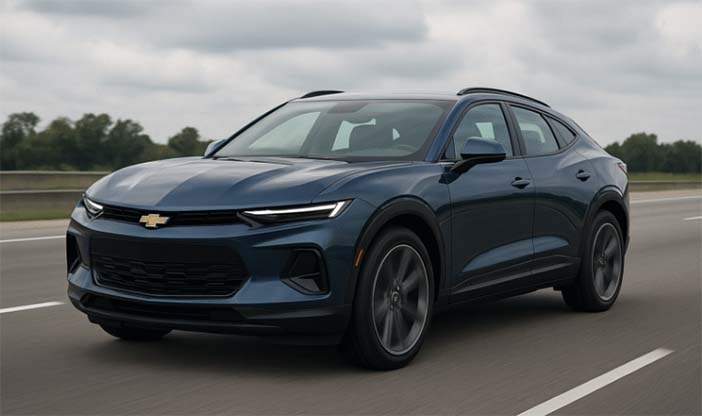
+++ When CHEVROLET announced plans to phase out their 6th generation muscle car, they were adamant it was “not the end of the Camaro’s story”. I’ve heard quite a few rumours since then and the latest is claiming the model could return in the fall of 2026 as a Ford Mustang Mach-E competitor. This stands in stark contrast to a recent report indicating Chevrolet is working on a sporty sedan, which could debut in 2028 to challenge the Dodge Charger. It’s believed that model would effectively replace both the Camaro and Malibu, and feature a hybrid powertrain. While everything should be taken with a grain of salt, the Camaro crossover will ride on the Ultium platform and likely raid the GM parts bin. As a result, the model could be offered with 85 and 102 kWh battery packs sourced from the Blazer EV. The crossover could also use familiar electric motors as the rear-wheel drive variant may have one producing 370 hp and 440 Nm of torque. The all-wheel drive model could also mimic the Blazer EV by offering 404 hp and 481 Nm. An SS variant is also rumoured and it would presumably share its powertrain with the Blazer EV SS. That means we could be looking at a combined output of 615 hp and 880 Nm of torque. More interestingly, the report suggests the Camaro ZL1 could return with a tri-motor powertrain sourced from the GMC Hummer EV line-up. This could result in a mind-blowing crossover as the professional grade model offers outputs of 830 hp and 1.176 hp. +++
+++ GENERAL MOTORS (GM) is an autonomous driving pioneer as Super Cruise was introduced in 2017 and the company was working on an autonomous robotaxi known as the Cruise Origin. While the company continues to improve the former, Cruise effectively died last December. At the time, General Motors said they were realigning their autonomous driving strategy to prioritize development of advanced driver assistance systems for personal vehicles. The automaker also decided to absorb some of Cruise’s teams and technology. While that was supposed to be the end of things, the company is making a renewed push to develop autonomous vehicles. As part of this effort, they’re reportedly looking to rehire some former Cruise employees. The move appears to be the brainchild of Sterling Anderson, who led Tesla’s Autopilot team and co-founded Aurora before joining GM as chief product officer in May. Given his experience with autonomous driving technology, he reportedly believes it’s the future and is looking to secure GM’s leadership position. With that goal in mind, the company is reportedly looking to rehire some of the roughly 1.000 employees who were let go. It’s not immediately clear how many, but the company reportedly wants to develop a fully autonomous vehicle. A spokesperson told: “We’re accelerating the development of autonomous driving technology capable of operating without active human oversight”. This seems to suggest the company is focused on a Level 3 or Level 4 system, which could operate without any human interaction under certain conditions. From there, the automaker would presumably chase a fully autonomous Level 5 system. +++
+++ HONDA has long enjoyed a reputation for building dependable engines, but a new lawsuit in the United States suggests that some of its recent 1.5- and 2.0-liter four-cylinder models may be facing serious problems. The complaint claims these engines struggle to cope with high compression and heat, leading to overheating, head gasket failures and other potentially costly issues. One of the central allegations is that the head gaskets in these 4-cylinder engines are prone to cracking. If that happens, coolant can pool in the grooves of the cylinder head. According to the filing, a lack of coolant may then cause the engine to overheat, seize, or in extreme cases, catch fire. Owners might also see white smoke from the exhaust, which could mean coolant is leaking into the pistons and burning off. Another concern raised is that coolant mixing with engine oil can lead to corrosion of internal parts. The plaintiffs claim Honda has refused to repair or replace affected i-VTEC engines, even when the vehicles remain under warranty. According to the class action, engines like those found in the listed vehicles are generally expected to remain reliable for at least 300.000 km, something they say doesn’t apply here and their life is cut short. Five vehicles appear in the lawsuit: the 2018-2022 Honda Accord, 2016-2022 Honda Civic, 2017-2022 Honda CR-V, 2021-2022 Acura RDX, and 2019-2022 Acura TLX. 6 plaintiffs are named in the case, 5 of whom have owned 2018 or 2019 Accord models, while 1 plaintiff has owned a 2018 Honda CR-V Touring. The plaintiffs are suing Honda for breach of warranty, unjust enrichment and violations of numerous consumer protection laws. In addition to seeking a jury trial, they are after damages, fees, and costs. This isn’t the first time the Japanese brand’s 1.5-liter i-VTEC engines have been named in a class action. In late 2024, a lawsuit filed in California alleged the engines suffer from inadequate sealing and cooling, potentially causing coolant to leak into the engine, contaminate the oil, and cause overheating and a loss of power. +++
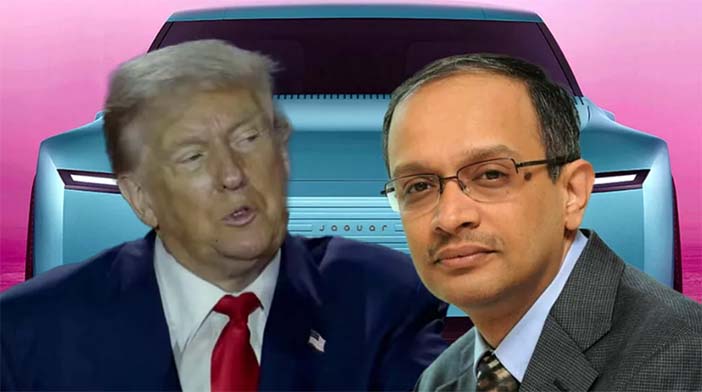
+++ A change at the top at JLR and savage criticism from America’s man at the top, Donald Trump, won’t change Jaguar’s controversial rebranding plans. That’s according to the company’s new CEO, who claims the customers it is targeting love the new Type 00 EV concept. “We have put our plans together, the cars are being revealed, they’re getting exciting response from the customers on the ground”, incoming Jaguar boss PB Balaji told reporters. “Therefore that’s what the strategy is”. PB Balaji, previously finance chief at JLR parent company Tata, made his comments only days after president Trump singled out Jaguar’s recent marketing campaign as an example of terrible ‘woke’ advertising, and claimed the company was in “absolute turmoil”. Trump even suggested, without proof, that former CEO Adrian Mardell had resigned from his post in disgrace. Mardell, 65, retires this fall after 35 years with JLR. Jaguar revealed a daring electric concept car at Miami Art Week last December previewing an upcoming 4-door luxury sedan that will move the brand upmarket and into Bentley territory. But before that debut the automaker endured widespread ridicule for a fashion-style campaign that didn’t feature a single car and was meant to prepare us for the brand’s rebirth. Balaji also hit back at Trump’s claim that Jag was in turmoil, saying JLR’s current performance should be considered in the context of struggles being endured across the industry. “You need to compare our numbers vis-à-vis how others are delivering” Balaji said. This isn’t the first time JLR’s most senior people have responded to criticism of the “copy nothing” marketing campaign. “We definitely weren’t saying ‘we’re about diversity’ ”, Jaguar MD Rawdon Glover told earlier this year, denying the brand was trying to be ‘woke’. “The creative concepts and the individuals were chosen because they were very modern, striking, and bold. And we presented a car that was very exuberant, bold and modern”. But Glover conceded that it expected to alienate some older, conservative customers in the transition, so the fact that Trump revealed he wasn’t a fan probably didn’t surprise Jag too much. +++
+++ As China continues to grow its electric vehicle (EV) industry, it has expanded to several new markets in recent years, opening multiple production and assembly plants across LATIN AMERICA . Chinese EV companies now offer a wide variety of EV models at competitive prices, making them well-suited to the Latin American market, with a growing uptake of Chinese EVs being seen in Brazil and Mexico. However, while its Latin America prospects might be good, developing successful nearshoring activities for the United States market is less certain due to the ongoing trade war. The Chinese EV production capacity has boomed in recent years thanks to favourable national policies, financial incentives and easy access to parts. Chinese automakers are now projected to contribute 30 percent of global car sales by 2030, up from 21 percent in 2024. China is in the fortunate position of controlling most of the EV component supply chain, from lithium to semiconductors and batteries. This has led to the launch of multiple Chinese EV-makers that can produce competitive and affordable vehicles. As these companies expand beyond the Asian market, one of the places where they are doing especially well is Latin America. The Chinese EV manufacturer Build Your Dreams (BYD) has quickly risen to compete with several EV makers from around the globe, including Tesla, thanks to its advanced capabilities. BYD promises to offer consumers a full charge in just 5 minutes, similar to the time it takes to pump petrol, as well as offers ranges like those of high-end American and European EVs at a lower cost. As BYD and other firms, such as Great Wall Motor and SAIC, look to expand, they are developing operations in Europe and Latin America. Great Wall Motor recently took over a former Mercedes-Benz plant in the industrial town of Iracemápolis, near São Paulo in Brazil, after the automaker suspended activities in 2021 due to a decline in luxury car sales. Meanwhile, BYD took over a Ford facility in Brazil following several years of poor sales and Chery joined forces with the Brazilian company Caoa to produce cars in the central state of Goias. Natalie Unterstell, the president of the Rio de Janeiro-based climate research and advocacy organisation Talanoa Institute, said: “For the first time in decades, we’re seeing a real challenge to the dominance of American and European brands, not just in terms of market share, but in shaping the future of mobility”. Brazil is the world’s 6th-largest car market. In recent years, the government has encouraged Chinese automakers to set up shop in Brazil to avoid becoming overly reliant on EV imports alone. It aims to make Brazil part of the value chain, as EV uptake in Latin America expands, which is encouraged by import duties on vehicles not produced domestically. This has come as a shock to the Asian, European and American automakers that have long dominated the Brazilian market. Some players in the industry criticise the Chinese automakers for flooding the market with impossibly low-priced vehicles. While others accuse Chinese automakers of assembling cars with components imported from China rather than using regional supply chains. To adapt to the Brazilian market, Chinese automakers are producing hybrid vehicles that run partly on a gas-ethanol blend (made from sugar cane) and partly on batteries, to make the most of Brazil’s strong ethanol industry and adhere to government gasoline standards. Marcio Renato Alfonso, Great Wall’s director of research and development for Brazil, explained: “We need to produce what customers are looking for… high technology with an affordable price”. Chinese automakers have also shown an interest in Mexico, which has a strong history of automaking, for nearshoring activities. While the ongoing trade war between the U.S. and both China and Mexico means greater uncertainty for nearshoring, Chinese companies still have significant potential to solidify their regional market by developing operations in Latin America’s two biggest markets. In 2023, China was the leading car supplier to Mexico, with vehicle exports worth $4.6 billion, according to the Mexican Ministry of Economy. Mexico’s free trade agreement with the U.S. and Canada also opened other markets, before the uncertainty of the current trade war. In 2023, BYD announced plans to develop a plant in Mexico capable of producing around 150.000 vehicles a year and generating 10.000 jobs. However, in July, the EV maker said it had cancelled plans following months of trade uncertainty. While nearshoring activities now appear less certain, the launch of operations in Brazil and Mexico, which both have strong automaking capabilities and well-established regional supply chains, is helping Chinese EV makers to gain a solid foothold in the Latin American market. Several Chinese newcomers are rapidly rising to compete with reputable Asian, European and American automakers by offering high-quality vehicles at a low cost. +++
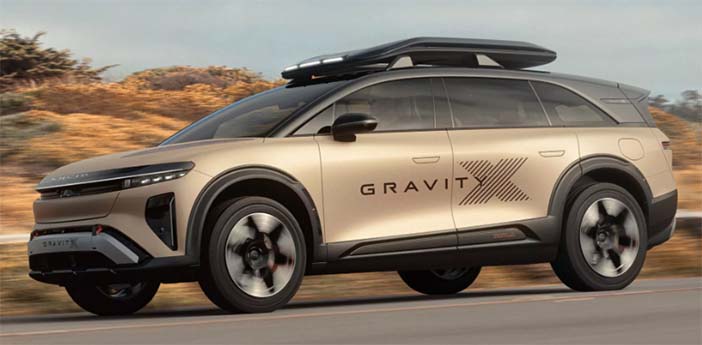
+++ Designing a capable off-roader from the ground up is one thing, but adapting a luxury electric crossover that leans more toward minivan than SUV is a different challenge altogether. LUCID took on that challenge with its latest concept, creating a tougher-looking version of the Gravity SUV meant for off-pavement exploration or at the very least, to give the impression it could. Unveiled at the Pebble Beach Concours d’Elegance, the Gravity X concept adds off-road-focused hardware and distinct styling touches that set it apart from the standard model. The most immediately noticeable changes are up top: integrated crossbars support a roof box equipped with auxiliary LED lighting. Suspension has been lifted to boost ground clearance, and the 21- and 22-inch wheels are wrapped in aggressive all-terrain tires. A revised bodykit helps reinforce the Gravity X’s off-road persona. The front bumper now features a prominent skid plate and integrated tow hooks. Plastic cladding surrounds the wheel arches, continuing along matching side skirts and into the rear bumper. Lucid chose a satin-finished Astral Drift paint for the exterior, accented with brushed metal elements and a contrasting black roof. The concept also wears the Stealth Appearance package, swapping in darker trim pieces throughout. On the hood, a topographical map design showcases Big Sur and Death Valley, while the sill plates and rocker panels display the geographic coordinates of Pebble Beach. The interior keeps the familiar comforts but adds a few thoughtful upgrades, including more durable floor mats, premium leather seats with subtle orange accents, a microsuede-wrapped steering wheel, and walnut wood trim on the dashboard and center console. Performance hardware remains unchanged from the standard Gravity Grand Touring. The dual electric motors produce 839 hp, drawing power from a 123 kWh battery. Lucid claims the SUV can deliver 800 km of WLTP-estimated range and hit 100 km/h in just 3.6 seconds. It’s not yet confirmed if the off-road additions might affect those performance figures, but with a taller ride height compromising aerodynamics and chunkier, less efficient tires, a trade-off seems likely. Derek Jenkins, SVP of Design and Brand at Lucid, described the Gravity X as a natural evolution of the company’s SUV platform: “The Lucid Gravity has redefined the limits of what an uncompromising SUV can achieve. The Lucid Gravity X concept expands on these core principles to explore new possibilities off the beaten path while showcasing the incredible capabilities of the Gravity. Lucid’s range, power and versatility make it an ideal vehicle for those adventurers looking to explore further offroad”. The concept will be on display at the Concept Lawn of the Pebble Beach Concours d’Elegance. Whether it leads to a production-ready off-road trim remains to be seen,but given the relatively modest changes from the standard model, there’s little reason it couldn’t make the jump, giving Lucid a viable rival to the more outdoorsy Rivian R1S. +++
+++ VOLKSWAGEN is preparing for one of the most comprehensive product offensives in its 87-year history, with 10 new electric and combustion-engined models due to be launched over the next 3 years as it reshapes its core line-up. Against a backdrop of stalled sales, deep cost cuts and workforce layoffs at home, the aim of VW’s reinvention is to propel the German company back to its former strength, profitability and global competitiveness. At the heart of this renewed push are the ID.1, ID.2 and ID.2X, the new front-wheel-drive, entry-level electric cars that have been conceived as electric successors to the Up, Polo and T-Cross. Alongside this new trio, the company will look to bring to market a wider range of electric cars (such as a Golf EV) while upgrading its current crop of combustion-engined best-sellers as part of a renewed push for its ICE models. Seen by VW as probably the most vital of all its upcoming models, especially in terms of mass EV adoption, is the ID.1. Previewed by the ID.Every1 concept earlier this year, the new entry-level model has been billed by VW CEO Thomas Schäfer as “the last piece of the puzzle” in the firm’s electric transformation. “This is the car the world has been waiting for”, he said at its unveiling in March. The production ID.1 is scheduled to hit the road in 2027 and will be priced from €20.000, which will position it as a premium rival to the cheapest EVs currently on sale, such as the Leapmotor T03 and the Dacia Spring. The arrival of a 3880mm-long, 5-door hatchback will also give VW a foot in an increasingly popular market segment that is expected to experience robust growth in future years with the imminent arrival of models from ‘legacy’ brands, such as the Renault Twingo. Key to the ID 1’s low price is MEB Entry, a new cost-optimised platform developed specifically for compact electric models. This will be used first by the ID.2, which is set to be fully revealed at the Munich motor show in September. Unlike the MEB platform used by VW’s existing EVs, MEB Entry features a front-mounted electric motor in a layout designed exclusively to provide compact dimensions, claimed class-leading interior space and a luggage compartment with a lower fl oor and greater capacity than competitors. The ID.1 will be powered by a newly developed front-mounted electric motor developing 95 hp. It has been conceived to deliver a top speed of 130 kph and offer at least 250 km of range from a lithium-iron phosphate (LFP) battery of around 38 kWh in capacity. It will also feature a relatively simple torsion-beam rear axle (based on that of the current Polo) and be VW’s first model to feature a fundamentally new software architecture, developed through a partnership between VW’s software division, Cariad and American EV maker Rivian. The software’s zonal structure, adapted from Rivian’s R1 off-roader, is claimed to allow for faster updates, improved functionality and more flexible hardware integration than the system in use by today’s VW models. VW design boss Andreas Mindt said the design of the ID 1 was conceived to project warmth and accessibility, drawing inspiration from both the Up and the Golf. “We wanted to give it a friendly face; something that makes you smile even before you get in”, he told. “That slightly cheeky expression at the front is intentional. It’s a car with character, not just a functional object”. Before the ID.1 will come the slightly larger ID.2. The first car to be based on VW’s new MEB Entry platform and the car that kick-starts the German firm’s affordable EV push will be shown in production spec at the Munich show before going on sale early next year. It will be the base for what VW boss Schäfer has described as the wider Volkswagen Group’s new Electric Urban Car Family, which will be made up of the larger ID.2X, Cupra Raval and Skoda Epiq. The VW Group is planning a mass assault on the electric B-segment (which has gained life since the release of the Renault 5 earlier this year), with its cars set to start at less than €29.000 to undercut rivals such as the Peugeot e-208 and Opel Corsa Electric. Power outputs for the ID.2 are set to range from 160 hp to 190 hp, while a flagship GTI hot hatch is set to deliver in the region of 230 hp. It will offer a top-end range of 450 km from a 56 kWh nickel-manganese-cobalt (NMC) battery pack. Inside, the ID.2 will feature a functional but spacious interior with both physical controls and a 12.9 inch central infotainment touchscreen. A year after the arrival of the hatchback, the raised ID.2X will go on sale. The model will be shown in concept guise for the first time at the Munich show. It will be near-identical to the ID.2 underneath but feature a higher ride height, more rugged design elements and increased ground clearance. The definitive naming of VW’s 3 new entry-level electric models remains a closely guarded secret. However, insiders suggest they could forgo the ID.1, ID.2 and ID.2X names for a combination of the ID sub-brand label and VW’s traditional models, such as ID.Up, ID.Polo and ID.Cross. Away from new models, VW will update heavily its range of current cars. This will start next year with the brand’s two best-selling EVs: the ID 3 hatchback and ID 4 SUV. Key to the upgrades will be a comprehensive makeover both inside and out, one that technical development boss Kai Grünitz said will be reflective of the new range of smaller EVs to bring the whole line-up together while improving the user experience inside. This is part of a move to keep the pair fresh until deep into this decade, when replacements are due. The facelifted ID 3 is scheduled to be revealed during the second quarter of next year, while the ID 4 should arrive later in 2026. VW boss Schäfer said the new ID 4 in particular is “really beautiful” and “will be a completely different car; a huge step up”. He added: “We felt it needed to fit in with the new design language going forward, since it is still our most important electric vehicle in numbers”. The new ID 4 is understood to be known internally as the ‘electric Tiguan’, hinting at a move to present the two similarly sized SUVs as siblings. The company has not confirmed that it will change the electric model’s name, but Schäfer previously suggested that the Tiguan badge would always have a place in VW’s portfolio, even as it goes all-electric. He said: “We’re not going to throw away the traditional, successful names that have carried us for so long, like Golf and Tiguan. Why would you let them go?” Above the ID.4, Autointernationaal.nl has been told Volkswagen has decided it will retire the ID.5 from its line-up. Launched in 2021 as a more sporting, coupé styled sister model to the more upright ID.4, it was primarily aimed at the Chinese market but failed to gain traction there. In Europe, too, it has been overshadowed by the more practical ID.4. Its planned cancellation, set to take effect in 2027, forms part of broader efforts to streamline the line-up and concentrate on highvolume models. Potentially one of the biggest years for VW’s growth in sales of EVs will be 2028, when its most famous badge finally gets fully electrified. The electric Golf, currently under development at the company’s Braunschweig R&D centre in Germany, will be the first VW model sold in the UK based on the company’s new Scalable Systems Platform (SSP). It will use an 800 Volt electrical architecture and feature more advanced battery technology, faster charging and more advanced software functions, marking a significant technological step forward from today’s MEB-based models. Grünitz previously told that the real benefit of the new architecture was that it was “highly flexible and highly updateable”. He added: “With over-the-air updates, I can introduce new functionality to our customers even after they bought the car, without them needing to bring it in for a service. That means it’s really the next step”. The electric Golf’s design will be inspired by the incoming entry-level EVs, suggested design chief Mindt, while still building on the traditional and familiar Golf design traits. VW could also merge the Golf model name with the ID sub-brand, resulting in the car being called the ID.Golf, although this has yet to be confirmed. Following the standard car, both GTI and R hot hatch variants will follow. The electric Golf is being developed in a joint programme with an electric version of the T-Roc, with both models set to be produced at VW’s Wolfsburg plant. “Our goal is to build the electric Golf on the new SSP platform there, along with the electric T-Roc”, confirmed VW CEO Schäfer. “This will establish Wolfsburg as the capital of our new all-electric compact class”. The new SSP-based electric T-Roc will feature new styling, improved interior space and added digital functionality. Positioned above the upcoming ID.2X but below the ID.4 successor, it’s expected to become one of VW’s best-selling electric models in future years. Daniela Cavallo, chair of Volkswagen’s General Works Council, said the electric Golf and T-Roc together “represent a volume in excess of 500.000 units per year”. She added: “The SSP models will be just as important to VW’s future as the MQB has been”. Alongside the electric Golf and electric T-Roc, VW will continue to sell ICE versions of some models as part of a new strategy that represents a shift in customer sentiment and a growing industry consensus that a mixed drivetrain portfolio will be needed well into the 2030s. This has been driven by sales of EVs not accelerating as fast as anticipated and infrastructure concerns remaining in many markets. As such, Volkswagen is realigning its model cadence and development priorities to offer buyers more flexibility. In the case of the Golf, this will be an upgraded version of the current hatchback, and a second-generation ICE T-Roc will be launched at the end of this year. Set to be revealed at September’s Munich show, it is tipped to be the final new ICE model that Volkswagen will bring to market. Despite them sharing a name, the ICE T-Roc will be an entirely separate model from its new electric sibling. With the new ICE T-Roc, VW will introduce a full hybrid powertrain to its line-up for the first time. The new set-up, similar to that used by the Toyota Prius, combines a petrol engine with an electric motor and battery, enabling limited electric-only driving without the need for external charging. The petrol engine is expected to be a turbocharged 1.5-litre four-cylinder petrol engine. As well as providing direct drive, it will also function as a generator to recharge the battery. Various outputs are planned, ranging from 201bhp to 268bhp and 258lb ft to 295lb ft. The technology differs from VW’s current mild-hybrid and plug-in hybrid systems, offering a cheaper alternative in some of its most popular models. The powertrain will be available not only on the new ICE T-Roc but also across other MQB Evo-based models, including the Golf and Tiguan, as well as others across the VW Group stable. This pushes the lifespan of those cars until at least 2033. A significant facelift for the Golf next year will bring improved infotainment, mild styling tweaks and a engine range that will include the new full-hybrid powertrain. VW has committed €60 billion (£50.8bn) in further investment into ICE development through to the end of 2028, including this new hybrid push. +++
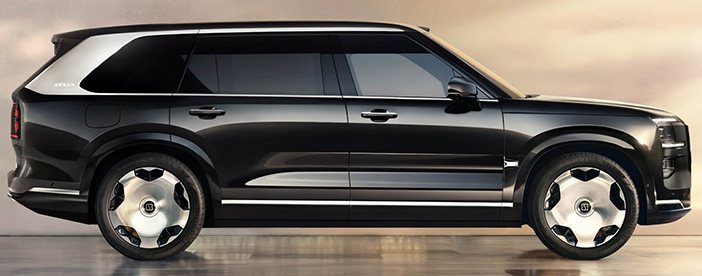
+++ Four months ago, ZEEKR previewed its all-new luxury SUV, known as the 9X, at the Shanghai Auto Show. While several photos of the full-size premium model were released, the company announced precious few details about it. Now, official specs of the new range-topping Zeekr are out, and as we’re becoming accustomed to with new models from China, the specs make some Western competitors’ offerings seem archaic by comparison. The 9X is Zeekr’s first plug-in hybrid, as up until now, its line-up was exclusively electric. Under the hood, a 2.0-liter turbocharged 4-cylinder engine with 275 hp works in concert with three electric motors. Together, they generate a combined output of 1.381 hp, an extraordinary figure for an SUV. Thanks to this sky-high power figure, the Chinese brand claims the 9X can sprint from 0 to 100 km/h in just 3.1 seconds and hit a top speed of 240 km/h. Its performance credentials, however, are only part of the story. Data from China’s Ministry of Industry and Information Technology confirms that buyers will be able to choose between 55 kWh and 70 kWh battery packs. The larger option is currently the biggest battery offered in any plug-in hybrid, enabling up to 302 km of electric-only range. A 900-volt electrical system allows for rapid charging from 20 to 80 percent in just 9 minutes, further setting it apart from most competitors on the market. Measuring 5.239 mm long, 2.029 mm wide and 1.819 mm tall, with a wheelbase of 3.169 mm, the 9X is a substantial presence. Zeekr has released an animated interior preview showing a 2+2+2 seating layout. Highlights include a digital instrument cluster, a large central infotainment screen, and a fold-down entertainment display for rear passengers. When it comes to intelligent driving, the Zeekr 9X debuts the Qianli Haohan H9 system, also known as G-Pilot H9. This setup combines five LiDAR sensors, including one long-range unit and four dedicated to blind-spot monitoring and full surround coverage, with dual Nvidia Drive Thor-U chips. While official pricing remains unconfirmed, early projections indicate the 9X will be priced below €130.000 when pre-sales begin in China later this month. +++