
+++ You could say that ALPINE has a lot on its plate over the coming years. We’re going to get the new A390 midsize coupe-SUV, then the electric A110 sports car, then the A310 2+2 coupe. Beyond that, the bold product plan gets a little more fluid, but Alpine’s stated aim of growing the EV line-up to 7 cars remains and one of those cars is likely to be a flagship SUV, of sorts. Speaking at the 2025 Goodwood Festival of Speed, Antony Villain, head of design for Alpine, said, “We need something for the D and E segment”, strongly suggesting a new flagship SUV will be introduced to sit above the recently revealed A390. At the launch of the A390, Alpine CEO Philippe Krief revealed how the firm’s thinking has evolved since then. There are no firm plans to enter the US market but it’s on Alpine’s radar and it’s felt a larger car would be needed in addition to the forthcoming electric A110 that rides on the new APP (Alpine Performance Platform) architecture. “We will be ready to go to the US with APP. We need to go to the US with A110 because this is the heart of Alpine. But in the US, maybe, it won’t be enough for dealers and our partners to sell. Maybe we need to have something more. The thought we had 1 year ago was a big SUV. Now we are back in the phase of thinking what we need for the US market. We certainly need a model with higher volumes, but don’t want to make the mistake of going to the US with a big car that is outside the DNA of the brand”. Alpine is reluctant to describe the A390 as an SUV and has coined the term ‘sports fastback’ for its sleek midsize model. The car is only 1 centimeter taller than the A290 hot hatch with a curving roofline and pronounced haunches that limit rear-seat space but create a sporty look to support the engaging driving experience. With up to 470 hp from its tri-motor all-wheel-drive powertrain, this is Alpine’s large car DNA and could be replicated by a future A590 flagship SUV. Krief sees the A390 as an alternative take on the SUV blueprint applied by other brands, with driving emotion at its heart: “Certainly, we will never travel from that. The A390 feels like an SUV that is completely different. This is something we need to guarantee and if we are not able to do a car with this kind of feeling, we won’t do the car”. Although unconfirmed, the Alpine 590 model name would adhere to Alpine’s existing naming structure. The vehicle would sit above the A290 hot hatch and the A390 coupe SUV in the brand’s line-up of models with the ‘90’ suffix. This range is known internally as ‘Versatility’ and it’s separate from the ‘Iconic’ line of cars, which includes the A110 and future A310, with ‘10’ suffixes. Unlike the new electric A110, which uses Alpine’s APP platform, the A390 rides on a heavily modified version of the Renault AmpR Medium technology that also underpins the Scenic and Megane. This platform doesn’t currently support anything larger than the A390 and Nissan Ariya, both of which are around 4.6 metres long. The A590 would need to be either a D or E-segment SUV, giving Alpine a competitor for the likes of the BMW iX, Lotus Eletre and the Porsche Cayenne EV. Renault has previously said that the platform has capacity to underpin cars with up to 7 seats but with these rival large SUVs getting close to 5 metres in length, it’s unclear whether the French firm’s tech could be stretched that far. +++
+++ BENTLEY ’s first EV is due to be unveiled at the end of next year. The shape of the so-called Luxury Urban SUV is clearly inspired by the recent EXP 15 concept. Inside the EV, the a cabin combines features of the Bentayga (notably its round, metal air vents) with technology from the closely related new Porsche Cayenne Electric (a 14.25 inch curved digital instrument panel and a 14.9 inch infotainment touchscreen). Other than the fact that the EV will be based on the Porsche and Audi developed PPE platform, details are still thin but Bentley R&D boss Matthias Rabe recently revealed that the SUV will be one of the fastest-charging EVs on the market, being able to gain 160 km of range in just 5,5 minutes. It means that the new EV could offer charging speeds of up to 350 kW. The fastest-charging EV currently on sale is the Lotus Emeya which can accommodate speeds of up to 400 kW. However, to achieve such a speed, it will need to use a capable charger. Rabe also said the EV (of which its official name has yet to be announced) is “very comfortable like a Flying Spur and agile like a Continental GT” while also possessing “very fast” 0-100 kph times. He added that it will be “the best Bentley on the road”. When it arrives, the unnamed newcomer will also be the shortest Bentley SUV on sale, at less than 5 metres long, and slot in underneath the Bentayga. Given its length, the EV has been configured to offer a “good turning radius”, something that will be important to its “urban positioning”, said Rabe. Further details were not shared by the Crewe firm, but as the EV will be based on a version of the PPE platform, its capabilities can be gauged by looking at the incoming Porsche Cayenne Electric. The new Cayenne is offered exclusively with dual-motor, four-wheel-drive powertrains putting out between 408 hp in the base car and 816 hp in the top-rung variant (rising to nearly 1.000 hp with launch control). A 108 kWh battery is estimated to supply a range of up to 600 km. There has been no confirmation of how closely related the 2 cars will be, but the Cayenne Electric is expected to be almost exactly the same size as the Bentley EV, suggesting scope for close collaboration. Bentley CEO Frank Walliser confirmed that the car will be launched “towards the end of 2026” before deliveries begin the following year. Walliser said this timeline will not change, even if wider EV demand falls. Rabe also shared some lean information on the car’s interior, confirming it will be clad in 30 m2 of leather which will be held together with 130.000 stitches from 150 meter of thread. Walliser said: “Our first fully electric Bentley, the world’s first true luxury urban SUV, represents a bold step forward. It embodies our vision for sustainable luxury and technological excellence. “With industry-leading charging capability and unmistakable Bentley character and design, it marks the beginning of an exciting new era for our brand; a future defined by innovation, craftsmanship and sustainability”. +++
+++ CHINA grants first approvals for highly automated Level 3 driving. BAIC and Changan have become the first manufacturers to receive approval from China’s Ministry of Industry and Information Technology (MIIT) for Level 3 highly automated vehicles. Specific electric vehicles from these companies are now permitted to begin test drives in designated areas of Beijing and Chongqing. The approvals specifically relate to the Deepal SL03 from Changan and the Arcfox Alpha S from BAIC. The Ministry of Industry and Information Technology (MIIT) has granted regulatory clearance for Level 3 automated driving functions for both vehicles. However, this does not mean these functions can be deployed nationwide immediately. For now, the Deepal SL03 is permitted to operate in automated mode only on predefined road sections in Chongqing, including urban and expressway traffic, in congested conditions and single-lane operation at speeds of up to 50 km/h. Under these conditions, drivers may take their hands off the steering wheel and eyes off the road (‘hands-off, eyes-off’). Meanwhile, drivers of the Arcfox Alpha S may use the Level 3 function in single-lane mode on expressways and urban motorways in Beijing at speeds of up to 80 km/h. While this may sound like further localised testing (similar to what Mercedes-Benz has been conducting with its ‘Drive Pilot’ system already approved in Germany) the approvals for the Deepal SL03 and Arcfox Alpha S are far more significant. For the first time, these are not merely local authority approvals for test drives but national product regulatory clearances for Level 3 functions. Although these functions cannot yet be used nationwide in China and are initially limited to specific areas, the MIIT’s approvals pave the way for expanding the service to additional cities soon. However, local approvals will still be required for each new deployment. Level 3 describes highly automated driving using an Advanced Driver-Assistance System (ADAS), where the vehicle assumes control of the driving task under specific conditions. However, the driver must always be prepared to regain control when prompted. For example, in Mercedes-Benz’s ‘Drive Pilot’ system, drivers are permitted to take their hands off the steering wheel and eyes off the road, such as to check a mobile phone. However, they must be able to retake control within ten seconds of a prompt from the vehicle. Additionally, ‘Drive Pilot’ is currently approved for use only on motorways and at speeds of up to 95 km/h. Similar restrictions apply to the Arcfox and Deepal models under the Chinese approvals. While Level 3 automated driving is expected to become increasingly common in fleet and private vehicles over the coming years, the next level, Level 4, is currently primarily associated with robotaxis. Vehicles approved for Level 4 can operate entirely without a driver in predefined and mapped areas and do not even require a steering wheel or pedals. The highest level, Level 5, refers to vehicles capable of fully autonomous operation without any geographical or speed restrictions. However, this remains a distant goal. +++
+++ Silicon stall. In San Francisco on Saturday last week, Waymo’s DRIVERLESS CARS stalled mid-ride across the city as traffic lights went dark during a widespread power outage. The cars became stationary roadblocks as traffic backed up, during one of the city’s busiest shopping periods. Meanwhile, Uber and Lyft are charging ahead abroad, teaming up with Baidu to trial robotaxis in the United Kingdom, starting in London next year. +++
+++ The boss of DS AUTOMOBILES , Xavier Peugeot, has hinted that a replacement for the brand’s smallest model, the 3, is on the horizon, but suggested that it won’t be easily pigeonholed into a traditional segment. The high-riding ‘3’ is up for renewal, having been launched in 2018 as the second model from the then newly independent DS marque. Sharing its platform and powertrain line-up with the similarly sized Opel Mokka, Jeep Avenger and Fiat 600, the DS 3 has played a crucial role in helping Stellantis’s French premium marque to establish a foothold in the European market, but sales have been disappointing. Xavier Peugeot suggested the brand plans to maintain a small car offering, but hinted that, like the new N°8, a successor would be likely to straddle traditional segments in a bid to both stand out in a crowded segment and appeal to different demographics. “There is room for a premium car in the small, medium or large segments, but I think we should also probably invent some new segments, if we can”, he said. “There is room in the various segments for a premium player”. He stopped short of giving any concrete details of DS’s plans for a new entry model, but DS product director Audrey Amar said Xavier Peugeot is always asking her to “invent a new concept” for upcoming cars and suggested that future models will follow the N°8 in straddling various market segments. She said: “When you look at previous segments, it was very clear that you had B-hatch, B-SUV, C-hatch, C-SUV. But now it’s not that obvious any more”. Amar added that the N°4, which occupies a similar footprint to the likes of its Audi A3 and BMW 1 Series rivals but adopts more of an SUV-inspired silhouette, is “the beginning of this new segmentation”. Similarly, the new N°8 is referred to internally as a D-Cross, as a reference to its conception as a D-segment ‘crossover’ that isn’t easily described as either a saloon or an SUV. “We are mixing the different codes of the different segments to create new concepts”, said Amar. The next-generation DS 3 (set to be renamed N°3 under the brand’s new naming strategy) would no doubt follow the Opel Corsa and Peugeot 208 in swapping from the current CMP platform onto Stellantis’s new STLA Small architecture. That platform is designed primarily for electric cars and indeed Opel has said the next Corsa will be electric only, but the current car is likely to remain on sale in order to maintain a combustion offering in the price-focused small car segment. DS could follow suit, introducing a new-generation, electric-only ‘N°3’ on STLA Small, while also heavily overhauling the current model in line with its new design language and keeping both cars on sale simultaneously. The brand has given no indication of a potential launch date and test prototypes have yet to appear on public roads, but with the Corsa and 208 both due on sale next year and the current 3 now having been on sale for seven years, first details could be expected in the coming months. +++
+++ Carlos GHOSN , high-profile auto-executive-turned- escape-artist, has a new outlet. He has taken to LinkedIn, the social media platform for business professionals, as a sort of oracle, dispensing wisdom to his nearly 1 million followers on business management questions or scenarios playing out globally. The auto exec’s online musings is dubbed “Carlos Ethos”. One recent example: “This week I urge you to reflect on this thought: Leadership is Getting People to Do What They Resist, Then Find Gratification in It”. Or, “This week remember that Pride is the Lifeline of a Company”. Some of his posts hearken back to his days running a car company. For instance, on why alliances and not mergers are preferred: “I don’t believe in mergers. The reason is simple. Every merger creates winners and losers, first-class and second-class citizens. One brand dominates, one culture prevails, one workforce feels defeated. You destroy the very pride that drives performance. I built an alliance instead”. Ghosn led the Renault-Nissan-Mitsubishi alliance before being jailed in Japan for alleged financial misconduct and hatching a daring escape from that country inside a musical instrument case (for a double bass). His Houdini act caused a viral social media craze in Japan of people stuffing themselves (or their children) into instrument cases, which prompted warnings about the potential for suffocation. I’m sure Ghosn hopes to take readers’ breath away with his punditry instead of having them crawl inside an instrument case. +++
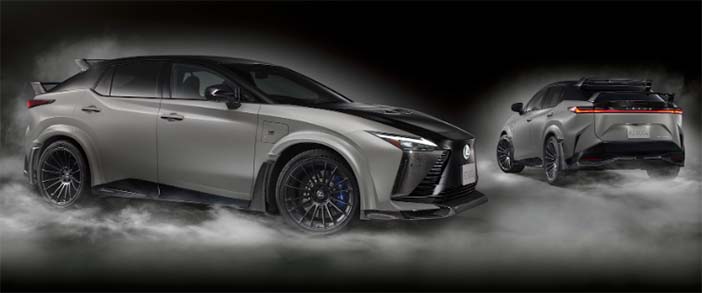
+++ LEXUS has revealed a new range-topper for its all-electric RZ: the 600e F Sport Performance. Not only does it get a wild bodykit, but there’s also more power, beefier brakes and the latest version of Lexus’s virtual steering system. The 600e F Sport Performance is based on the 550e F Sport, but sadly for fans of hot electric SUVs, the new car won’t make its way over from Japan. The RZ was already one of the more eye-catching SUVs, especially in 550e F Sport trim, but the 600e F Sport Performance takes things to the next level. The new bodykit is optimised for aerodynamic efficiency, but also provides downforce. There’s a new splitter, extended wheelarches, a unique bonnet, two new spoilers (one on the roof and one on the bootlid), a rear diffuser and new vanes to direct air away from the wheels; all made from carbon fibre. Lexus has also fitted aluminium 21-inch wheels that are bespoke to the 600e F Sport Performance. These sit over a new brake system that features larger discs and six-piston calipers up front, finished in blue. Buyers can also get the same blue on the wing mirrors, front bumper and window trim, along with a choice of black and white, or black and grey two-tone body colours. The bespoke look is set off by a 20 mm lowered ride height, which Lexus says helps towards “delivering stable and confidence-inspiring performance”. At the same time, the 600e F Sport Performance’s power has been bumped up to 428 hp from the 408 hp you get in the 550e. The 0-100 kph time is unchanged however, at 4.4 seconds, and the RZ’s dual-motor layout is retained. WLTP figures haven’t been revealed, but given that the new range-topper uses the same 77 kWh battery as the 550e, I expect a similar range to that car’s 456 km. Inside, there’s a yoke-style steering wheel that is connected to the latest version of the RZ’s steer-by-wire system. Lexus claims the technology delivers “an even more engaging and satisfying driving experience across every scenario”. Although the RZ 450e F Sport Performance in 2024 was limited to 100 units, Lexus hasn’t restricted production numbers of the 600e. +++
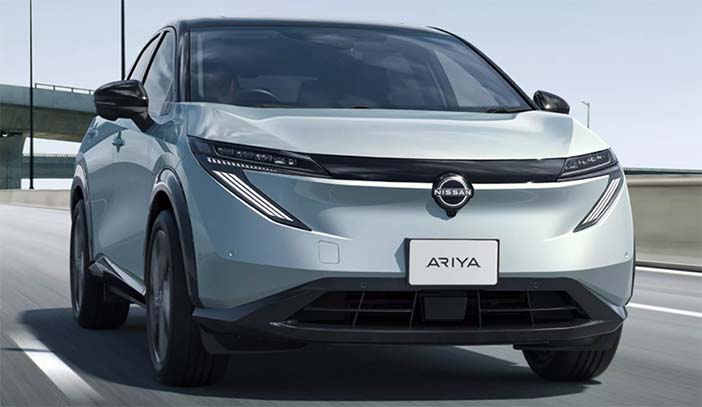
+++ NISSAN has released the updated Ariya in Japan, bringing fresh looks and a few upgrades to the electric crossover nearly four years after its original debut. While the Ariya is bowing out of the North American market, it continues to hold its ground at home, now with enhancements to its design, tech suite, and suspension tuning. The 2026 model was first previewed at the Japan Mobility Show earlier this year, but Nissan has now revealed the full domestic line-up. The same round of changes is expected to roll out in other markets in the coming months. The most noticeable change is up front, where a cleaner, grille-less design replaces the previous fascia. A reshaped bumper and more aggressive LED fangs sharpen the look, though the side profile and rear end carry over unchanged. The visual tweaks are complemented by a new set of 20-inch alloy wheels, combining aluminium and resin materials. Buyers can also spec a new Hisuinohikari paint option, pairing a bold Plasma Green body with contrasting Midnight Black accents on the roof, pillars, and lower cladding. Inside, the cabin layout remains familiar, but the tech sees a step forward. NissanConnect now runs on Google’s software architecture, which supports new functions like Navi-Link Battery Conditioning and Intelligent Distance Control. The materials team has added a new leather option in a subdued green tone, paired with light gray elements for a softer, more tailored interior finish. Practicality gets a bump as well, thanks to an upgraded AC external power connector capable of supplying 1.500 Watt, even when the vehicle is locked. Mechanically, the Ariya sticks with the existing 66 kWh and 91 kWh battery packs, offered with single-motor FWD or dual-motor e-4ORCE all-wheel drive. The suspension has been optimized specifically for roads in Japan, prioritizing comfort and delivering a more refined ride. The Ariya Nismo will also return as part of the updated range. However, it skips the visual updates found on the standard models, sticking with its original aggressive body kit. The Nismo variant continues with its dual-motor e-4ORCE setup, tuned specifically for this version. Its updates are limited to the new Google-based infotainment system, the high-output external power connector, and the Intelligent Distance Control feature. +++
++ VOLKSWAGEN ’s battery division PowerCo has commissioned its Salzgitter plant as planned and produced the first unified cells. Production of the PowerCo unified cell will be gradually ramped up next year. In the first phase, Salzgitter will establish an annual production capacity of up to 20 GWh, which can be expanded to 40 GWh if required, as PowerCo announced at the start of series production. These figures were essentially already known. However, given that the VW Group is apparently scaling back further investments in PowerCo, it is significant that the planned capacities have now been reaffirmed. Herbert Diess and then German Chancellor Olaf Scholz laid the foundation stone for the “SalzGiga” in July 2022. The hall constructed since then is approximately 600 metres long, 350 metres wide and 30 metres high. The 69.000 square metre area is equivalent to around 10 football pitches. The first expansion stage of 20 GWh is expected to produce battery cells for around 250.000 electric vehicles, naturally depending on the battery size of the cars. The unified cells now being mass-produced in Salzgitter are described by the VW division as a “milestone for the Volkswagen Group and the European battery industry”. Not only is production taking place in Europe, but the cells were also designed and developed locally. This sets it apart from, for example, the CATL factory near the Erfurter Kreuz, where the Chinese market leader relies on technologies developed in China. The unified cell dates back to Herbert Diess’ tenure as CEO of the Volkswagen Group. It is a prismatic battery cell with a standardised, uniform size; specifically, 256 x 24.8 x 106 millimetres. “The standardised cell architecture enables worldwide use across all brands and regions and offers economies of scale, cost advantages and technological flexibility”, PowerCo stated. However, to adapt the cell to the requirements of different vehicles (ranging from small electric cars to large luxury SUVs or Porsche sports cars) the standardised format can be filled with various cell chemistries, including future solid-state cells. This is already being implemented in the first series application of the unified cell: the Electric Urban Car Family, including the ID.Polo, will be offered with both LFP and NMC cells. This flexibility, based on the standardised architecture, is also intended to ensure that the insights gained in Salzgitter can be utilised in PowerCo’s other factories. Salzgitter will serve as the lead plant for subsequent projects in Valencia (Spain) and St. Thomas (Canada), all of which are based on PowerCo’s standard factory concept. In Salzgitter, PowerCo has commenced production of an NMC cell, which the company claims is “one of the most powerful battery cells in the volume segment”. Specifically, the energy density is expected to be around 10 percent higher than that of currently used NMC cells. Additionally, the cell’s design is optimised for the Cell-to-Pack concept of upcoming VW electric models. “More variants will follow, for example the PowerCo Unified Cell with LFP technology”, PowerCo announces, though no further details are provided. However, even with production in Salzgitter and the 2 additional PowerCo plants currently under construction, the VW Group will not fully meet its demand for unified cells; PowerCo will produce only about half of the required volume in-house. The remainder will be sourced from external suppliers, which also manufacture battery cells in the ‘unified cell’ format for Wolfsburg. Among these is the Chinese manufacturer Gotion High-Tech, in which VW holds a stake. Gotion has recently started producing its unified cells; apparently an LFP cell with a capacity of 91.5 Ah and an energy density of 190 Wh/kg, as well as an NMC cell with 115.8 Ah and 265 Wh/kg. In other words, even if Salzgitter cannot directly supply the unified cells required for small electric vehicles during the ramp-up phase, the supply chain for both cell chemistries is secured so there is no risky single-sourcing. Since Gotion has already begun production, PowerCo’s recent announcement refers only to the first unified cells “made in Europe” (not the first overall). “The PowerCo Gigafactory in Salzgitter sends a strong technological signal for Europe and serves as a cornerstone on our path to becoming a global automotive tech leader”, said Oliver Blume, CEO of the Volkswagen Group. “We are the first European carmaker to establish our own battery cell development and production. This strengthens our position and independence in the global competition”. Thomas Schmall, Group Board Member for Technology, emphasised: “With PowerCo, we are consistently expanding our knowhow in battery technology. In combination with the new battery system, the Unified Cell ‘made in Salzgitter’ brings a real technological leap for our customers. This puts us in the driver’s seat when it comes to a key technology for e-mobility”. “In just 3 years, we have built an entirely new company, developed a competitive product, and completed a cell factory along with its upstream supply chain. At the same time, we are already constructing the next cell factories in Spain and Canada”, says PowerCo CEO Frank Blome. “In short: we deliver. This achievement is the result of an outstanding team effort by many colleagues at PowerCo and Volkswagen, and I’m deeply grateful for that”. The quotes from Schmall and Blome are noteworthy, as internal resistance within VW to in-house cell production has reportedly increased recently. Given the Group’s declining profits, the Porsche and Piëch families in particular have questioned the rationale behind the high investments in cell production. The fact that the responsible managers are now emphasising the technological lead and competitiveness of the product is therefore aimed not only at external audiences, but also at internal critics. +++
+++ VOLVO is big on safety. The Swedish automaker practically invented the traditional 3-point seatbelt, and it’s been innovating in the space ever since. Now, Volvo is turning its attention to making its in-car screens safer; not through better technology or more buttons, mind you, but through typefaces. Yes, typefaces. With more screens in vehicles than ever, Volvo wants to make sure its fonts are easy to read, especially while driving. That’s why its user interface team developed a new font aimed at improving safety on the road. The font is called Volvo Centum, and it’s a nod to the company’s 100th anniversary in 2027. Designed in collaboration with typeface studio Dalton Maag, Volvo plans to debut the font in the new EX60 in early 2026. Speaking with Dezeen, Volvo explained that the font is designed to “directly influence eye movements”, so drivers aren’t distracted by anything on screen other than the text. Volvo also reduced unnecessary graphics and visual clutter; the font keeps drivers’ eyes focused on what matters. “Every design choice (form, weight, proportion) is made to help people read faster, understand better, and stay focused in the car”, says Pablo Bosch, Font Developer at Dalton Maag. It may sound silly, but a more readable font can have a real impact on safety. A study found that drivers spend 18 to 40 seconds on average looking at the center touchscreen, depending on age. At just 40 kph, a car can travel nearly 5 football fields in 40 seconds. A clearer, cleaner font could help reduce time spent on screen. Of course, there’s a simpler solution to all of this: bring back physical buttons. With studies highlighting the dangers of in-car touchscreens and drivers frustrated by touchscreen overload, automakers are starting to reintegrate buttons into their cabins. Finally. After years of replacing traditional dials with screens and touch-capacitive controls, brands like Hyundai, Porsche and Volkswagen are reemphasizing the value of tactile controls. Volvo still hasn’t gotten the memo. The new EX60 looks promising, but like the current EX30 (still one of the most frustrating cars I’ve driven) it features 2 large screens and very few buttons. Simple tasks like adjusting the fan speed or opening the glove box are still buried in the touchscreen interface. At least Volvo is starting to listen. In October, the company said it’s considering replacing its key card entry system with a traditional fob. Hopefully, that’s a sign more buttons are on the way, and soon. +++