
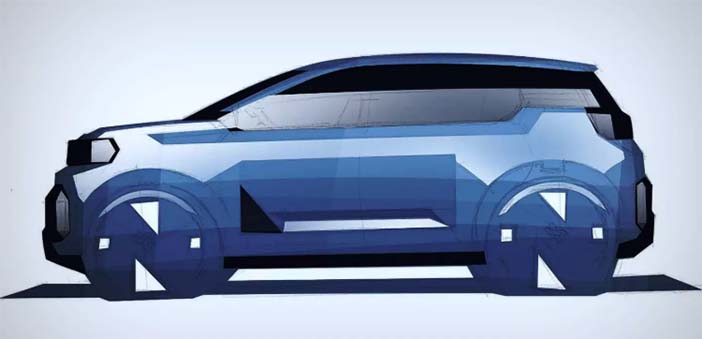
+++ DACIA will continue to sell the Spring alongside its upcoming Renault Twingo-based electric car, making it the only firm to offer a choice of 2 electric city cars at once. The company’s new entry electric car is due to be revealed in the coming months ahead of a public debut at the Paris motor show in September. It will go on sale by the end of the year at less than €19,000. Heavily based on the Twingo but with its own bespoke styling and a lower price point (mirroring the relationship between the Clio and Sandero) the new model is pitched as the successor to the Spring, but now bosses have confirmed that both cars will be offered simultaneously. Dacia product boss Patrice Lévy-Bencheton explained that the 2 cars can co-exist because while they are both A-segment EVs, “they are still quite different, you will see when we reveal the car: size, shape, etc”. The newer car will be slightly larger, matching the Twingo at around 3.8 meter long and 1.7 meter wide, and previews show that it will be a radical departure in terms of styling, taking heavy influence from Dacia’s chunky, 4×4-inspired SUVs. It will also be slightly more expensive, with the targeted €19.000 start price representing a small premium over the cheapest version of the current Spring, but nonetheless the 2 models will occupy the same segment and have a similar remit. Lévy-Bencheton suggested the 2 models will co-exist for around a year, with the Spring being phased out in different markets “depending on the situation” with regard to local incentives and demand. “The 2 offers make sense and will stay on the market, and this is then the job of the sales team to position them”, he said. Frank Marotte, Dacia’s sales and marketing boss, added that the 2 cars will be offered “at different prices with different designs, and we’ll figure out what the customer will buy”. The Spring is derived from the Renault City K-ZE that has been on sale in various global markets since 2019 and is imported to Europe from a factory in China with only light adaptation for European customers, whereas Dacia’s new entry electric car has been designed in Europe specifically for the local market. It will also be built in Europe (likely alongside the Twingo in Slovenia), meaning that it avoids the heavy import penalties imposed on Chinese electric cars (including the Spring) by the EU, boosting profitability. Introducing another electric car when in the A-segment where it already has one on sale, is an unusual move, and especially so because the Spring has just been heavily refreshed for 2026 in a bid to boost its competitiveness as it enters its 7th year in production. Power for the 2 available powertrains has been significantly increased (with the more potent car now producing 100 hp), the maximum charging speed has been raised and the suspension has been tweaked for improved handling, addressing several key criticisms from European consumers. The updates come just months before the Spring’s de facto replacement arrives, but while Marotte admitted that “it might look a bit strange, so late in the life cycle, to keep updating the product”, it is important to keep the car fresh to protect its position in the market and commercial appeal. He added: “We have upgraded the Spring because, in the electric car world, if you want to sustain your residual values, you need to upgrade your product, whichever it is. We strongly believe that that’s a need, otherwise you can clearly see, from some competitors, that your residual values will decrease because your technology is not updated any more. “We want to keep constantly updating the product and make it up to date in terms of technology”. +++
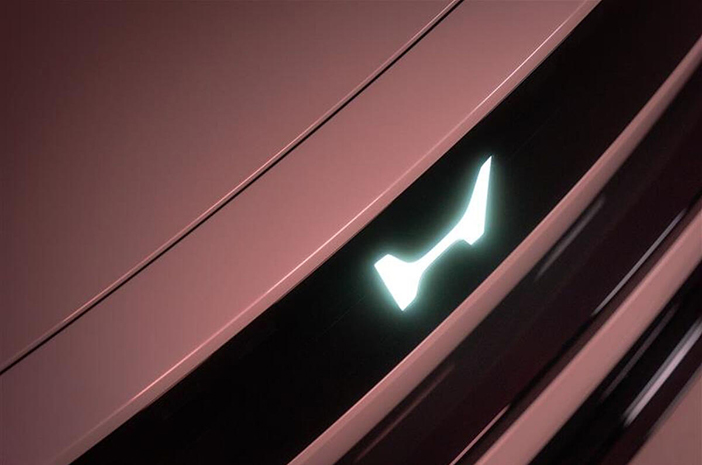
+++ HONDA ’s next generation of hybrid and electric cars will wear a new interpretation of the brand’s famed ‘H-mark’ logo. It’s intended to represent “2 outstretched hands”, Honda said, and will be used on passenger cars from next year. The logo was revealed in 2024, worn by the first iteration of the radical 0 Series saloon and Space-Hub concept cars. The production 0 Series saloon, due to be launched in the US later this year, is set to be the first car to wear the new badge. The new logo comes as Honda effectively resets its approach to developing new cars, having so far struggled to establish itself as a mainstream EV manufacturer. That new wave of EVs is being developed to be “thin, light and wise”, Honda has previously said, majoring on aerodynamic performance and driver engagement. This reset will most clearly manifest itself in these cars’ designs, as demonstrated by the 0 Series saloon, 0 SUV and Alpha concepts. Honda’s hybrids will undergo a similarly dramatic evolution. At least 13 new models are due between 2027 and 2030, utilising what Honda claims to be “the world’s most efficient” combustion-engined powertrain, promising a 10% improvement in fuel economy. These models will also use a new platform that is said to be 90 kg lighter than the brand’s current architectures, while also being more scalable than currently. To that end, the new wave of hybrids will share 60% of their components under the skin, including their engine bays and rear floors. Confirmation that the new logo will be deployed from next year suggests that Honda’s new cars due in the Netherlands this year, the Prelude coupé and Super-N city EV, will be the last to use its old badge. +++
+++ KIA hasn’t ruled out creating a hot GT version of its new EV2 compact crossover, which could rival the forthcoming Volkswagen ID.Polo GTI. The smallest model in the Korean firm’s line-up of bespoke electric cars was unveiled at the recent Brussels motor show, alongside new GT versions of the EV3, EV4 and EV5. That means every other one of Kia’s electric car line-up has a range-topping GT model. Asked if an EV2 GT was on the cards, Kia Europe’s planning boss, Alex Papapetropolous, said: “At launch we’re going to have Air and Plus trims, with GT Line following in June”. But he added: “Of course, we’re looking at life-cycle animations on EV2, and it’s a segment that customers are very keen and receptive to have those life-cycle updates in, so we’re looking at adding more trims in the future”. Kia’s current GT electric cars all feature a dual-motor powertrain to offer extra power output and four-wheel drive. The version of the E-GMP platform used for the EV2 hasn’t been engineered to allow for a motor on the rear axle, so any EV2 GT would likely have to retain front-wheel drive, limiting the power upgrade. However, Kia is adamant that its GT models are about more than pure power, instead being focused on “everyday performance” with upgrades to enhance handling and cornering. A front-driven EV2 GT would be in line with popular combustion-powered hot hatches. +++
+++ LEAPMOTOR is preparing a second generation of its tiny T03 city car to take on upcoming European rivals including the Renault Twingo and Volkswagen ID.Up. The value-focused electric car went on sale in Europe 2024 as one of the Chinese manufacturer’s first 2 cars in the region, alongside the C10. Measuring just 3.6 meter long and priced from less than €20.000, it’s one of the smallest and cheapest cars in Europe, undercut only by the similarly conceived Dacia Spring, which is also its only direct rival. The T03 has played an important role in building Leapmotor’s visibility in Europe but has been far outsold by the C10, and is likely to also be comfortably outperformed by the incoming B10 crossover, A05 hatchback and B03X supermini. It will also soon face off against a wave of new electric city cars from the likes of Dacia, Renault and Volkswagen, which are set to be more overtly designed for European customers while offering superior performance for only a minimal premium. However, Tianshu Xin, CEO of Leapmotor International, said the T03 still has an important role to play in Europe. “I think the T03 is a perfect car for European applications, the road conditions and the customer preferences”, he told. “So we will certainly keep the T03 to address the A-segment needs. Based on our market research for the A-segment, it’s not about demand, it’s about supply. And a lot of OEMs stopped producing A-segment cars because of the profitability challenges, so the T03 is a perfect product to address the customer needs. “Many customers are buying T03 as a second car in their family, to handle their daily commute to the office, to take the kids to school and do the grocery shopping. There’s a huge demand now. The T03 is a perfect car for European market”. Xin confirmed that Leapmotor is already “developing the next generation of the T03”, because while the model is new to Europe, it has been on sale in China since 2019. He wouldn’t be pressed for specifics but said Leapmotor would overhaul “the design, styling, interior and software”, likely with a view to better catering to European consumer tastes. +++
+++ MAZDA is pushing back the launch of the first EV based on its highly important new scalable architecture yet again. The car was scheduled to arrive last year, but it won’t touch down until 2028 at the earliest. Mazda is ramping up its efforts in the electric car market, with the 6e saloon and the CX-6e mid-size SUV (its rivals to Tesla’s Model 3 and Model Y) currently on offer. However they’re based on a Chinese platform, not an in-house-designed Mazda architecture. The Japanese brand announced it was developing its own dedicated electric car platform, the very matter-of-factly named Mazda EV-scalable architecture, back in 2021. At the time, it said this would be used as the basis for several new models launching between 2025 and 2030. Some time later, Mazda shifted its timeframe and said the first of this next generation of EVs would instead arrive in 2027. But now an official presentation confirmed this wouldn’t be happening until at least 2028, although it will be before the end of the decade. Deputy General Manager of R&D Mazda Europe, Christian Schultze, spoke about the challenges it had faced while developing the scalable architecture: “electric car technology is not something stable. So while you’re developing, things are changing and advancing”. The “availability of resources and expertise” also posed a challenge, which isn’t surprising for a smaller manufacturer such as Mazda, which isn’t part of a major automotive group like Volkswagen. That’s why we decided that this mix of vehicles we are having right now with partner technology and with our own vehicles gives us opportunities and a certain relief and the ability to do it right”. Using Changan’s EPA1 platform doesn’t give Mazda total freedom to create whatever shape and size of EV it might want, but it “gives us now the right car we need at this point in time”, says Schultze. He also highlighted some of the “disadvantages of being faster” when it comes to developing electric cars, because “other manufacturer’s architectures have already disappeared, or have been recognised as too expensive or too heavy and so forth. We give ourselves some more time to prepare the best possible solution”. Mazda says it will be able to efficiently build electric cars of all sizes based on this one scalable platform, similar to what Volvo can do with its new SPA3 architecture or the Volkswagen Group with its tried-and-tested MEB underpinnings. However, Mazda still hasn’t said what the first model based on the new architecture will be. We’re all but certain it will be an electric SUV of some description, but not the same size as the new CX-6e to avoid making that obsolete or cannibalising sales of both. Moritz Oswald, product planning supervisor for Mazda in Europe, told: “When we develop cars, we always look at the customers. So we look at our customer base, we try to make sure that we can safeguard our loyal customers and we try to expand to new customers”. He continued: “So these cars (6e and CX-6e) that we have now launched, are still true Mazda cars and they deliver on every attribute that is important for us. And the next car, even if it’s built really from us in probably Hiroshima, let’s see, it will also be exactly that, a true Mazda. So in the eyes of the customers, this will just be the next generation. Of course we need to make sure that our portfolio is targeting different customers. And I think if you look at it right now, with CX-5, CX-60 and CX-6e, we have quite a distinctive portfolio. You could say they’re quite close, at least from a size perspective”, he said. “But if you dive a little bit deeper, or you imagine a customer going into the showroom, they will very quickly understand the differences between those. And that will be true also when we launch the next electric car”. +++
+++ MERCEDES-BENZ will shortly reveal a dramatically overhauled version of the S-Class, complete with a fresh look, uprated interior tech and a new V8 with a flat-plane crankshaft. The company said this is the “most extensive update in one generation” for its flagship car, which is in its 7th generation, having been launched in 1972. More than 50% of the components have been redeveloped or re-engineered for this facelift, with the refreshed S-Class “taking a leading role in the most ambitious product launch programme in Mercedes-Benz history”. The camouflage is set to come off in the next few weeks, as prototypes of the revamped S-Class are said to be “very close to series production”. Full details of the changes under the skin are yet to be revealed, but the current V8 in the most potent S-Class variants will be replaced by a new M177 engine that swaps the conventional cross-plane crankshaft for a flat-plane design, like in the old AMG GT Black Series. The ‘M177′ (still 4.0 litres in capacity and twin-turbocharged like its forebear) already features in various top-drawer AMG models (including the S63, as well as the Aston Martin DB12, DBX and Vantage) but the mild-hybrid S 580 will be the first to use the new flat-plane-crank format. There’s no word on when AMG will reveal the updated S63, but it will no doubt follow suit. The engine is also set to be introduced to other AMG models, including the upcoming CLE 63. A flat-plane crank has its pins arranged at 180 degree intervals around the shaft, giving a flat end-on profile, while a traditional cross-plane V8 has its pins at 90 degree intervals, giving an X-shaped profile, hence the names. The 2 can be most obviously told apart by their soundtracks, with a cross-plane V8 characterised by the off-beat, low-rev ‘burble’ that comes with an uneven firing order, while a flat-plane crank engine has evenly spaced firing and has a distinctive higher-pitched engine note at high revs. The move will help to reduce emissions, but not at the expense of power: the new engine increases output from 507 hp to 540 hp, which should help trim the S580’s 0-100 kph sprint time down closer to 4.0 seconds. The straight-6 variants (including the plug-in hybrid S580e) will continue to be sold. The S580 will be boosted from 368 hp to 450 hp, with the accompanying electric motor kicking out 163 hp (up from 150 hp) to give a combined 587 hp. Inside, meanwhile, the new S-Class will be recipient of a significantly updated version of Mercedes’ MB.OS operating system, which comes with “a new service-oriented electrical and electronic architecture”. The new S-Class is set to go on sale later this year, commanding a slight premium over its predecessor. +++
++ “What we’re working on now is really the next big thing for us: the new 208”, PEUGEOT brand CEO Alain Favey told in an exclusive interview. He said the recent Polygon concept (a small hatchback which gives big hints to the Peugeot 208’s design and technology) fired the starting gun on the new hatch’s introduction, with an unveiling likely at October’s Paris Motor Show. The 208 will be the first model on a new ‘STLA’ electric-car chassis. “The car is on STLA Small and it will be launched as a BEV”, Favey said. “We were first within Stellantis with STLA Medium as well (beneath the 3008). It’s Peugeot’s role to bring innovation among mainstream brands”. The new chassis incorporates ‘Hypersquare’ steer-by-wire, where the mechanical link between the steering and wheels is replaced by digital impulses. This will also help unlock 2 fundamental 208 goals: dynamic handling and maximum space in a compact package. The CEO explained: “More people live or work in urban areas, where space is becoming more and more constrained and the roads are more and more congested. So you need compact exterior dimensions together with a very spacious interior. That’s what we’re trying to explore with Polygon and the rest”. The Polygon’s proportions (with the windscreen pushed forward, shrinking the nose, and a longer wheelbase) show how electric cars can put more space into a small footprint. Eliminating the steering column, combined with a new dashboard architecture, will boost roominess, too. And will this focus have a knock-on effect in minimising weight gain, which saps EV range? “Absolutely: that’s what we’re trying to do with the next 208”, Favey said. “And the concept car is a way for us to push our designers and engineers to find solutions. Polygon was sponsored by Ned Curic, our chief engineer; he’s trying to push his engineers to find solutions to make lighter cars and to increase recyclability. Some of this will find its way into the next 208, and later models”. The Polygon will certainly shape the next 208’s look. The design cleverly mixes details inspired by the 205 with modern clean surfacing and sheer edges. The front and rear light strips mirror the original 205’s striped grille and rear hatch cover, but execute them in a very contemporary way. “The horizontal, 3-line light signature is something that you’ll find on future Peugeots” confirmed Favey. “Same for the back. The very prominent red lights, and the fact they are horizontal lines, are a hint at what’s to come in future Peugeots. Our designers like to mix modernity and some positive elements of our heritage. We wish to use elements of the past to create the future”. Stellantis planned the next 208 when demand for electric cars looked unstoppable, with STLA Small subsequently engineered primarily for EVs. But Favey wouldn’t be drawn on whether the architecture and Spanish manufacturing base can be revised to accept hybrid drivetrains. That’s one option, with an alternative being to refresh today’s combustion 208s and sell them alongside the new EV model for as long as there’s demand. Opel is facing the same conundrum with the next Corsa, which is also based on STLA Small and twinned with the new Peugeot. Favey plans to offer the inaugural electric 208 GTi, launching this year as the crowning glory for the current, 7-year-old supermini, alongside the next e-208, but performance levels will be quite different. Favey said: “As long as there’s demand, we will keep the GTi on sale; the new 208 in 2027 will attract a different kind of clientele and that’s fine”. While the halo GTi will pack 280 hp, the e-208 will start with more modest power outputs. Stellantis is developing a new range of motors, producing between 100 hp and 450 hp. In the e-208 power will need to span from 130 hp to 220 hp to match the Volkswagen ID.Polo and Cupra Raval line-ups. Those small VW Group EVs will be built in Spain to exploit its lower cost base, and Stellantis is taking the same approach: the Zaragoza plant which makes the current Corsa and e-208 is earmarked for the next-generation cars, with other STLA Small cars also set for the Vigo factory. The 208’s longer wheelbase will enable bigger battery packs than today’s 51 kWh maximum. STLA Small can accommodate up to 82 kWh to yield a maximum range of around 480 km. Smaller packs (just under 40 kWh) will be available to create city runabouts. A 400 volt electrical architecture will ensure charging is a bit quicker than today’s e-208, which DC charges from 10 to 80 percent in around 30 minutes, and that’s with a bigger battery. Favey says charismatic design, high-quality cars and customer service plus “driving sensations” will underpin the new Peugeots delivered on his watch. And steer-by-wire will provide a unique supermini driving experience, thanks to the oblong-shaped yoke dubbed ‘Hypersquare’. Peugeots have long been known for their direct steering, with small steering wheels as the centrepiece of its ‘i-Cockpit’ set-up. Hypersquare will take things to the next level, with sophisticated software assessing the car’s speed and surroundings to deliver variable and precise levels of steering-motor assistance. Favey believes this tech leadership will help Peugeot fend off gadget-packed Chinese challengers. So could this hi-tech new Peugeot be such a generational leap that it’s worthy of reviving the ‘09’ suffix last seen on the nineties 309? Favey won’t be drawn on 209, but the smile on his face suggests, at the very least, he’s thought about it. +++