
+++ ARTIFICIAL INTELLIGENCE has been widely adopted across multiple sectors, with applications ranging from productivity tools to more unconventional uses, such as a BMW owner using ChatGPT to generate a custom performance tune. While the technology is primarily leveraged to streamline workflows and improve efficiency, a report from S&P Global suggests that broader adoption could disrupt automotive production, echoing the pandemic-era supply chain shock. The report stated that a Dynamic Random-Access Memory (DRAM) shortage could emerge in 2026. DRAM serves as the primary working memory for computing systems and is especially critical for AI data centers, which require vast amounts of high-speed memory to process workloads. The concern is that chipmakers may prioritize higher-margin customers over automakers, potentially triggering another disruption across the automotive supply chain. With the integration of advanced in-car technologies such as connected services, automakers increasingly rely on high-performance computing chips. These components also enable Advanced Driver-Assistance Systems (ADAS), which are now standard even on entry-level models. Tesla is taking this dependence on computing even further with its planned robotaxi program, which is expected to use the Cybercab; a vehicle designed to operate without a human driver, steering wheel, or pedals. The semiconductor shortage triggered by the pandemic caused widespread production delays that continue to affect the industry today, with models such as the Volkswagen ID.4 among those heavily impacted. Looking ahead, a potential DRAM shortage is expected to spark panic buying and further production disruptions across the automotive sector, particularly if chipmakers raise prices by as much as 70 to 100 percent, as some analysts suggest. Another emerging concern is the planned phaseout of legacy memory chips by 2028. Automakers will therefore need to redesign and validate their systems around newer memory technologies; a process that can be both time-consuming and costly, especially as advanced in-car features are increasingly becoming a dealbreaker for consumers. At this point, it seems automakers have limited leverage when it comes to the overall supply of memory chips. What they can do instead is focus on improving software efficiency to reduce memory demand and, more importantly, place greater emphasis on sourcing strategies that include strengthening long-term partnerships with semiconductor suppliers to secure allocation and mitigate future disruptions. +++
+++ HONDA has a pretty neat little EV that’s coming soon to Japanese showrooms. That car is the Super-One EV, and in some ways, it’s a modern rendition of the City Turbo II from the ’80s. Its short and stubby bulldog stance is reminiscent of the classic subcompact hatch.
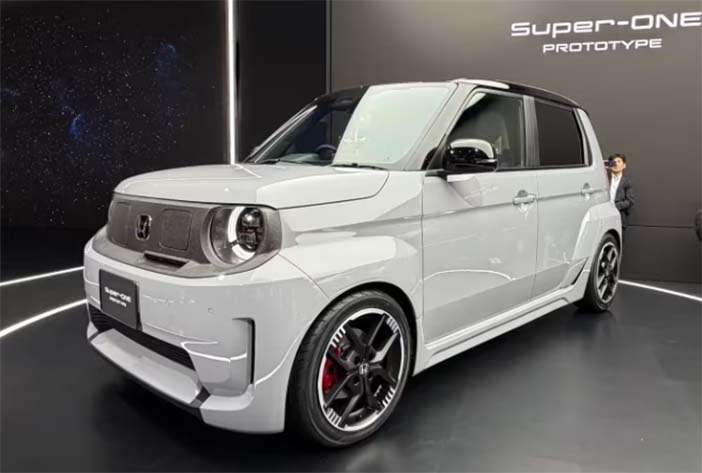
The Super-One is just about ready to reach home market customers soon; however, specs and pricing are still up in the air. However, a report from Japan claims it’ll be in the region of ¥5 million. Convert that to euros and add taxes, that’s about 36.000 euro at current rates. That’s not as affordable as first thought, especially given its size. Aren’t kei cars supposed to be cheap? Well, yes, but despite appearances, the Super-One isn’t a kei car per se.
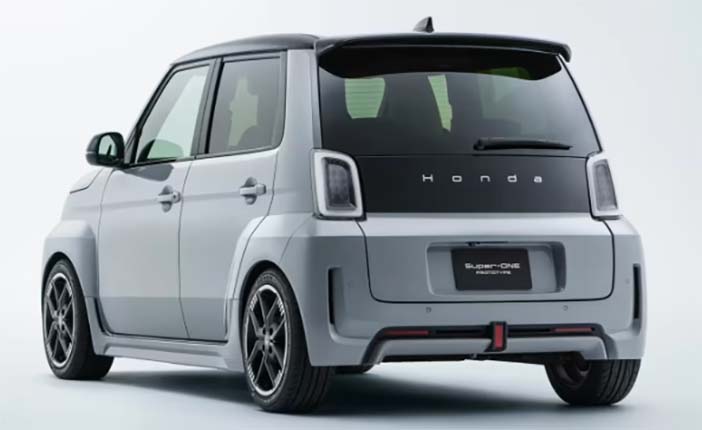
While its underpinnings are straight from the Honda N-One, its dimensions push it out of that category. Its width breaches the limit for what could be classified as a kei car, pushing it to a higher tax bracket. On top of that, kei cars are restricted to 63 hp, and the Super-One will reportedly pack way more than that. It is said that its punchier motor will put out about 95 hp, again, breaching kei car rules. Still, it’s not exactly cheap, as the Honda Jazz in Japan maxes out at under ¥3 million. At 36.000 euro, there are a lot larger and more affordable EV options. Should it be sold in Europe, it’ll be a niche product at most, and not Honda’s true entry into the mainstream EV market. Do note that the ¥5 million mentioned is indicative pricing and not the final price. It could be less, but hopefully, not more. +++
+++ The second-generation HYUNDAI KONA only launched in 2023, so it’s still new by most standards. Normally, Hyundai would give it a mild facelift halfway through its run; just enough styling tweaks and tech updates to keep buyers interested. But a prototype spotted in Korea hints that Hyundai is taking a different route. Instead of the usual mid-cycle update, they seem to be working on a full next-generation Kona. This suggests Hyundai might skip the usual facelift and go straight for a full redesign. What stands out is how the prototype was largely influenced by the Crater Concept; a design study that once seemed out of reach for a production car. Now, it looks like those bold ideas are making their way into the next Kona sooner than anyone expected. Even with the heavy camouflage, the prototype already looks different from the current Kona’s rounded, playful shape. The front now gets a clamshell hood, tighter panel gaps, and a wider look overall. It sits lower and feels more planted than the outgoing model. While the prototype hides some details, expect a full-width horizontal DRL across the nose, using pixel-style LEDs like the Crater Concept.
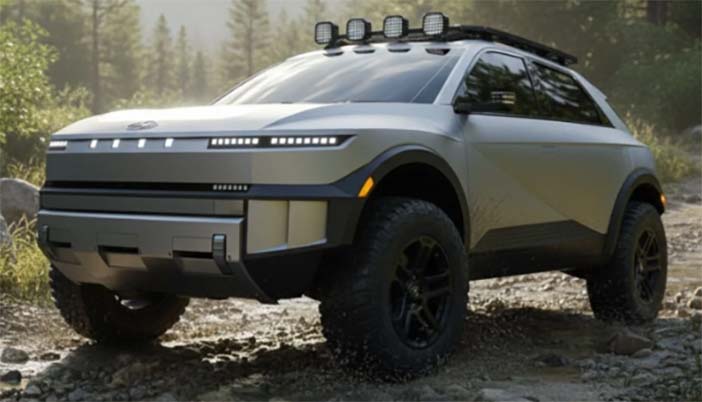
The main headlights sit lower in the bumper, matching the look of Hyundai’s bigger SUVs. Down the sides, the thick black cladding is gone, replaced by sculpted, body-coloured fenders. The window line is sharper, the roof more angular, and the prototype looks taller than the current Kona. At the back, most details are still covered, but the proportion speaks for itself. There’s a roof spoiler, a wide tailgate, and a lower bumper that makes the car look wider.
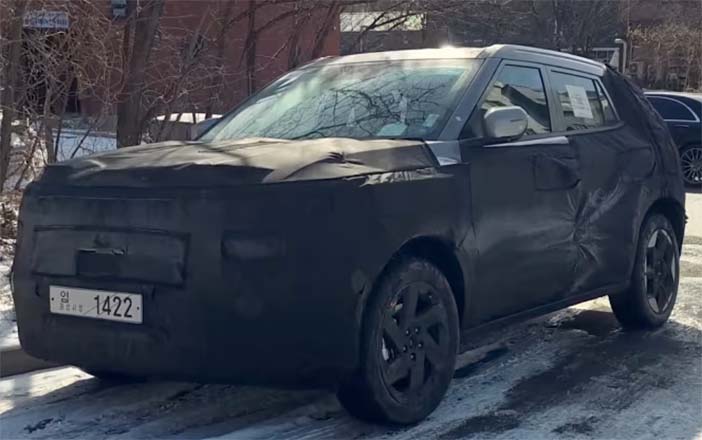
The new Kona is clearly aiming for a more confident stance this time around, moving away from the quirky style of the past. Inside, the biggest change will be Hyundai’s new Pleos Connect infotainment system, also expected in the next-gen Tucson. It looks like the dashboard will be completely redesigned to fit a large, unified display, but we still expect physical buttons as Hyundai promised. The Crater Concept’s influence shows up inside, too, with horizontal lines and stripe patterns on the doors and seats. The bridge-style center console and storage are still there, but don’t expect a big jump in rear-seat space. Early info points to the same wheelbase, so design and tech take priority over making the car bigger. As for timing, this next-gen Kona could arrive around 2027, lining up neatly for the 2028 model year. That would put it roughly five years after the current model’s global debut. +++
+++ Toyota Times is making a direct argument for how battery electric vehicles could feel more appealing to mainstream buyers, and it is using the updated LEXUS RZ as its proof point. In a new segment titled “A Catalyst for Popularizing BEVs? A Closer Look at the Steer-by-Wire RZ”, Toyota’s in-house newsroom follows a test drive of the latest RZ and frames its steer-by-wire system as more than a novelty, describing it as a feature designed to make EV driving feel simpler, more natural, and more fun.
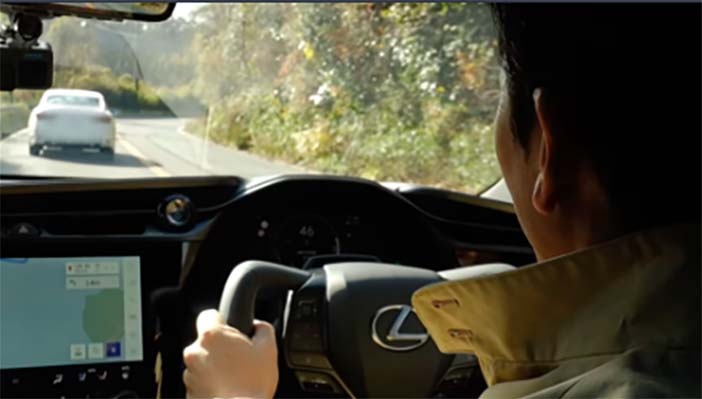
The segment features Toyota Times host Yuta Tomikawa driving the updated RZ and reacting to how the steering changes the experience, especially paired with the compact, squarer steering wheel used with the steer-by-wire setup. Toyota Times explains the system as an electronic link between the driver’s steering input and the front wheels, with no physical steering shaft connecting the wheel to the steering rack. That allows the steering ratio to be tuned more freely, and Toyota Times highlights a key usability claim, about 200 degrees of steering from center, which reduces the need for hand-over-hand movement during tight turns and low-speed maneuvers. A Lexus executive in the segment points to low BEV adoption as a real concern among potential RZ customers, and describes steer-by-wire as a way to turn an EV into something that feels distinct and desirable rather than merely different. Steer-by-wire is arriving alongside broader improvements aimed at day-to-day EV ownership. Lexus has positioned the refreshed RZ around better charging convenience and updated driver-focused technology. Toyota Times also spotlights features that lean into engagement, including an Interactive Manual Drive mode that uses paddle shifters to simulate stepped gear changes, showing that Lexus is trying to make the RZ feel less like an appliance and more like a performance product. Toyota Times is effectively betting that driver feel is a missing piece in EV adoption, especially for buyers who are not motivated by technology alone. If steer-by-wire can reduce awkward steering motions in city driving while still feeling stable at speed, it offers a tangible benefit that does not depend on charging infrastructure or incentives. The most performance-oriented versions of the RZ are also being pushed harder. Even if steer-by-wire delivers on its promise, most shoppers will still anchor their decision around monthly cost and ease of ownership. That is where lease programs can shape adoption faster than any single technology feature. +++
+++ LUCID ’s production numbers doubled last year, but the EV automaker is still being held back by a small line-up of exclusively full-size, high-end vehicles. That’s set to change soon, as Lucid is planning to introduce 3 midsize models at a lower price point, with at least 2 of these being SUVs. Lucid has just taken a massive step towards getting these cheaper models into showrooms, as it has completed the first midsize prototypes. The news comes from Nick Twork, Lucid’s head of communications, who had a first look at the new prototypes.
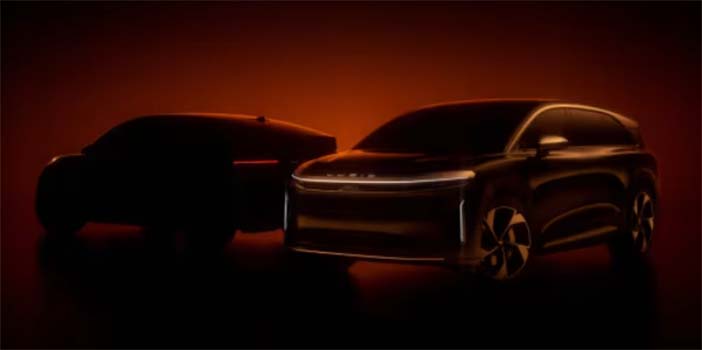
Even though the new Lucids will be smaller and cheaper, Twork promised the “same Lucid DNA” as the Gravity and Air in terms of range, efficiency, dynamics, and space utilization. However, he also promised “dramatically improved manufacturability and cost structure” for the new midsize models. Lucid will be hoping these new models don’t suffer from the supply chain issues and software foibles that plagued the Gravity. While it’s not known how much the new EVs will cost, one will be a Tesla Model Y rival. The Tesla is still the best-selling SUV in the U.S. and starts at just under $40,000, a price point Lucid will need to get close to or beat if it is to be truly competitive. This Model Y rival is expected to be revealed later this year. Furthermore, a new off-road SUV is also on the way, but the last midsize EV’s body style is unknown. What we do know is that it won’t be a sedan, as the company’s interim CEO said recently he has no plans to compete in the sedan segment. +++
+++ While MAZDA insists that it will keep the internal combustion engine alive for as long as possible, it has had to dip its toes in the electric vehicle arena to keep up with the times. Currently, its full electric vehicles are based on Chinese models from Changan, some of which are making their way to Europe. The first fruit of that collaboration was the EZ-6. Also known as the 6e outside of China, it’s a midsize, rear-wheel-drive liftback. More recently, Mazda rolled out the EZ-60 and renamed CX-6e in other markets. That one’s a crossover.
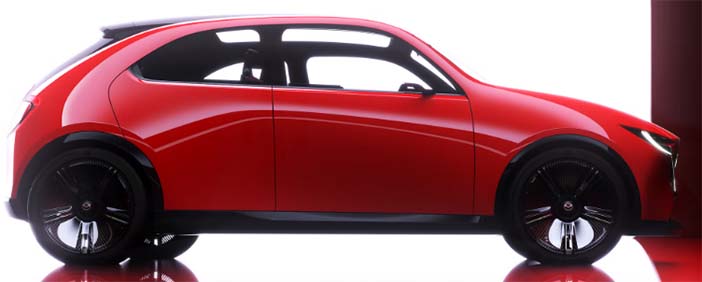
In a bid to boost EV production, the company has chosen a second country to build its EVs. That country is Thailand, which, in recent years, has become the Detroit of Southeast Asia. All of Japan’s major automakers have assembly lines there, along with several Chinese and European companies, and even Ford. Mazda is among the many that have set up shop in Thailand, and its Rayong plant currently builds the Mazda 2, Mazda 3, CX-3 and CX-30. The Mazda 2 and CX-3 are facing the axe soon, which shouldn’t be much of a surprise given their age. However, new models could soon fill the void left by aging models. It’s likely that the Changan-Mazda partnership could yield more EV compact crossover models. However, “electrified” also covers hybrids, and with the next-generation CX-30 confirmed to get a hybrid option, there’s a good chance those will be assembled in Thailand. Speaking of, the current CX-30 is only offered as a mild-hybrid in some countries, and its successor will finally get a full-hybrid option. It’s slated to be released in 2027, and it’s possible that it use one of two powertrains. The first is the Toyota-based system already used in the CX-50, while another could come from the upcoming CX-5 hybrid, scheduled to arrive in 2027. The same could apply to the rumoured CX-20 that will replace the CX-3 and Mazda 2. That model is said to be based on the Vision X Compact show during the 2026 Japan Mobility Show. In fact, one can see a sketch of what appears to be the said concept in the signing of the agreement, so it’s a safe bet that the production will be produced there. Another likely candidate is the CX-6e, given the current partnership. Mazda will invest about $150 million (on top of its current investment) in Thailand as the manufacturing hub of its electrified compact crossover product range. It’s a massive deal, not just for Mazda but for Thailand itself, further strengthening its position in ASEAN as the biggest hub for automotive manufacturing. “The vehicles to be produced will be high-performance compact SUVs that meet international standards, both in terms of environmental friendliness and hybrid technology. This large-scale comprehensive production investment is to support domestic sales and exports to Japan and other countries, such as ASEAN countries, targeting a production of 100.000 units per year”, said Masahiro Moro, president and CEO of Mazda. Yes, you read that right, they’ll be sending the built cars over to Japan, meaning Thailand will effectively be the second-biggest hub for Mazda’s electrified crossover. It’s interesting to see how more and more cars from the Land of Smiles are being exported to Japan. +++
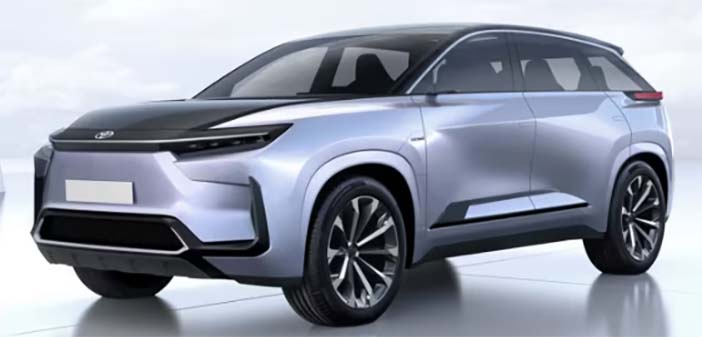
+++ “Something new is on the horizon”. That’s all TOYOTA has to say in the latest teaser it’s dropped today. But Autointernationaal.nl has been able to scratch out some details and, indeed, there’s something big coming in barely 2 weeks. The Japanese automaker has been one of the big skeptics when it comes to battery-electric vehicles. Ironically, even as key rivals like Ford, Stellantis and Volkswagen pull back on their EV plans, Toyota is accelerating its own product campaign. On top of new models like the Toyota BZ4X Touring and C-HR+ that it’s getting ready to roll out, this teaser image previews the all-electric 3-row SUV set to debut on the evening of February 10. When it comes to low-emission technology, Toyota has long hedged its bets, former CEO (now chairman) Akio Toyoda developing a multi-energy strategy using a mix of powertrain technologies: internal combustion engines, conventional and plug-in hybrids and hydrogen fuel-cell vehicles, as well as pure battery-electric vehicles. What one source described as the new “D-SUV” set to debut early next month will further expand the options for family buyers who need a third row. Significantly, that model will also be the first Toyota EV to be produced in the U.S., rolling out of the same Georgetown, Kentucky assembly plant currently producing the Camry hybrid, according to Sam Fiorani, lead auto analyst with AutoForecast Solutions. So far, Toyota has kept the lid on details, though the 3-row model is expected to deliver notably more range than Toyota’s earliest offering, the BZ4X, addressing initial concerns about its relatively small battery pack, as well as its less-than-enthusiastic performance, several sources indicated. And since it will go up against well-reviewed Korean competitors, the Hyundai Ioniq 9 and Kia EV9, we can expect it to be more lavishly equipped than either the BZ4X or Lexus RZ. Expect plenty of family-friendly technology onboard, including an upgraded version of Toyota’s cloud-based, voice-controlled Intelligent Assistant system, as well as lots of smart safety features. Suppliers have hinted that there actually are 2 versions of the 3-row EV in the works, noted Fiorani. The question is whether the additional package will be marketed as an upgraded Lexus or if it instead will be sold through the Subaru brand. The smaller Japanese automaker’s first U.S. EV is the Solterra, a variant of the Toyota BZ4X. Even with all the new models in the works, Toyota continues to take a cautious approach to EVs, putting its primary emphasis on various hybrid technologies for the U.S., Europe and Japan.
The Chinese market is the exception, reflecting the Beijing government’s New Energy Vehicle mandate. It worked with domestic Chinese partner Guangzhou Automobile Group to develop the BZ3X launched last March and it is following up with the BZ7X, both specifically targeting China. Not all that long ago, Toyota was taking hits from U.S. environmentalists for seemingly lagging behind some key rivals when it comes to EVs. The strategy now seems prescient in light of the steps the Trump administration has taken to reverse Biden-era policies. Among other things, it convinced Congress to phase out federal EV tax credits last September 30. Sales of all-electric models have since gone into a slump. Tesla’s EV market share shrank amid an overall sales slide in 2025. General Motors on the other hand was the biggest winner. But Toyota officials have stressed they remain ready to flex with the market and could put more emphasis on EVs should U.S. consumers demand them. A key element in that strategy was the opening of new battery plant in North Carolina last November, a move Toyota Motor North America President Tetsuo Ogawa called “a pivotal moment in our company’s history”. +++