
+++ Both Toyota and Honda sold fewer new vehicles in CHINA in March than they did in the same month last year, the 2 companies have announced. In addition to reduced incentives to purchase new energy vehicles, including electric vehicles, rising gasoline prices are causing consumers to increasingly avoid gasoline-powered cars; an area in which Japanese manufacturers are strong. Toyota sold 142.700 units in China, down 8.0% year-on-year, marking its second consecutive month of decline. Its sales of gasoline-powered vehicles, which account for 39% of total sales, were sluggish due to soaring fuel prices. Sales of EVs and other electrified models exceeded the previous year’s figures, driven by the popularity of SUVs, but they were unable to offset the decline in gasoline-powered vehicles. Honda sold 36.201 units, a 34.3% decrease from the same month last year. This marks the 26th consecutive month of decline since February 2024. Gasoline-powered vehicles account for 85% of Honda’s sales, so the company was heavily impacted by rising gasoline prices. Honda continues to struggle with competition from Chinese manufacturers and has postponed the planned market launch of its new EV. +++
+++ ELECTRIC VEHICLE SALES have jumped in Southeast Asia as cost-conscious buyers have poured into dealerships looking to dodge the fuel price spikes driven by the Middle East war. Asian nations have been particularly hard hit due to a sharp fall in the crude shipments they rely on and have few alternatives to replace them. Yet the energy crisis has been a windfall for Vietnam’s leading electric vehicle maker Vinfast as well as Chinese manufacturers.
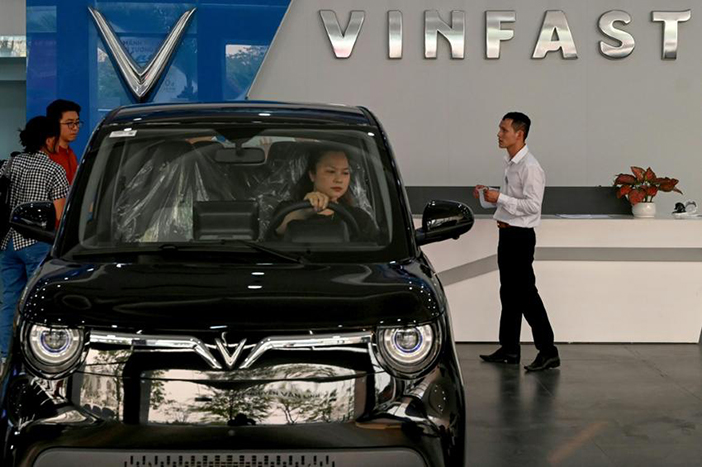
Vietnamese office worker Do Thi Lan explained the simple math of the cars’ appeal at a Vinfast showroom in Hanoi. “We have to calculate our monthly expenses, as the money we spend on petroleum has been on the rise”, she said. She said her family owns a car that runs on petrol but was considering buying an electric vehicle to save money. Dao Thi Hue, also at the showroom, was looking to go electric too. “Driving an EV is so much better than driving a petroleum vehicle, in terms of costs and also in terms of saving fuel, queuing to fill up”, the school teacher said. Crude oil prices have soared by around 50 percent since the start of the Middle East war and again exceeded $100 per barrel on Monday, driving up the cost at the pump. Vinfast, listed on the Nasdaq, saw a 127 percent surge in annual sales in Vietnam in March, reaching 27,600 cars. About 40 percent of cars sold in Vietnam in 2025 were electric, but the trend has been accelerating. “At this point in time, clients consider fuel costs a lot when making a decision on which cars to buy”, said Pham Minh Hai, deputy head of sales at a Vinfast showroom. “In March we sold 300-400 cars”, he said, noting that the showroom normally sells between 200 and 250 cars a month. Hai said more than 50 percent of his clients changed from petroleum to electric cars last month, while the number of customers at the showroom was up by around 30 percent. He added that opening hours had been extended to deal with the rush. Outside Vietnam, Chinese manufacturers specializing in electric vehicles, particularly Tesla’s main rival BYD, are booming. At the Bangkok Auto Show earlier this month, BYD secured the most orders of any manufacturer, surpassing Japan’s Toyota for the first time. “I drive a lot, nearly 100 kilometers a day. With the current fuel situation and no idea how long it will last, it’s become a major factor pushing me to make the switch”, said Pleng Nawintham, a 36-year-old pharmacist from Thailand. BYD was also seeing increased sales in the Philippines. Mae Anne Clarisse Bacquiano, manager of a BYD showroom in the suburbs of Manila, said foot traffic at the dealership was “at another level”. “It was all because of the rise in fuel prices”, she said. “Earlier today, I had a customer, a doctor who was ranting to me about how he is being punished by petrol prices. He was in a hurry to go full electric. There’d be a huge difference in expenses”. She added that all of her stock for the month had already been reserved by buyers. “I don’t expect the petrol prices to go back down over the next couple of months”, said Arlone Abello, an entrepreneur who was browsing BYD models at the showroom. As BYD sales decline in China due to fierce local competition, the manufacturer hopes to gain international momentum. The company told analysts that it now expects to exceed 1.5 million exported vehicles in 2026, well above the 1.3 million target announced in January. Exports of Chinese electric vehicles (for which Southeast Asia is a major market) doubled in March, compared to the same month last year across all manufacturers, according to the industry association CPCA. Economic factors are at the forefront of the increased demand for greener vehicles. “You have the individual consumer response to what they are seeing in terms of the price of petrol or diesel suddenly surge”, said Euan Graham, an electricity and data analyst at energy think tank Ember. The installation of charging stations in the region is also growing rapidly. Jakarta promised last week to take “more serious steps to accelerate the development of a national electric vehicle ecosystem” to combat its “high level of energy consumption”. Electric vehicles are gaining momentum beyond Southeast Asia. “There are signs that global demand has already picked up substantially”, Capital Economics said, adding that registrations of electric vehicles in Japan, South Korea and New Zealand more than doubled in March, and rose by over 50 percent in India, Australia. +++
+++ It’s been nearly 2 years since FORD announced it would cancel its 3-row electric SUV. The company was supposed to launch the car in 2025, but consumers simply weren’t snapping up EVs as the company had hoped. Instead, the Dearborn-based automaker abandoned the project before an official debut, but it didn’t completely disappear. Doug Field, Ford’s former head of EVs, posted a photo of the model on his LinkedIn page as the header image, which apparently has been up since sometime last year.
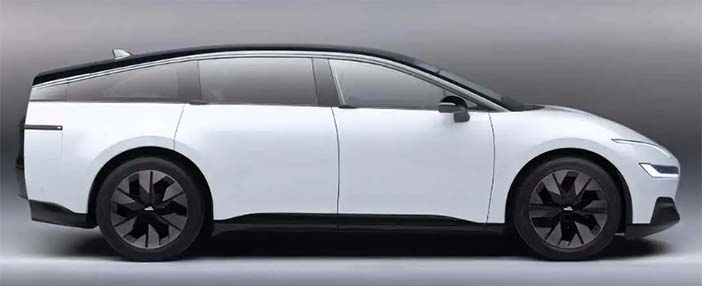
It shows the profile of the 3-row SUV, which has a Genesis GV60-like front end, an incredibly long, sloping roof and a truncated rear reminiscent of the 1964 Shelby Cobra Daytona coupe. Ford first teased the 3-row SUV in May 2023. At the time, the company’s CEO, Jim Farley, called it “a personal bullet train”, and it was supposed to have more than 560 km of range. Ford never provided much more about the EV beyond that before killing the project. The EV now serves as a “research vehicle” that is “informing” its next generation of EVs, according to a spokesperson who confirmed that the vehicle is the cancelled 3-row SUV. In late 2025, Ford announced a new strategy that would expand its hybrid offerings, with nearly every model featuring some type of multi-energy powertrain by the end of the decade. It also revealed that the next-generation F-150 Lightning would become a range-extended electric vehicle with an on-board generator. This doesn’t mean Ford ditched EVs altogether. The automaker shifted toward a new Universal EV platform designed to underpin several affordable models. The first will be a mid-size pickup, with the architecture flexible enough to accommodate a range of body styles. Ford says the new electric truck will go on sale sometime in 2027. That’s when we will know just how much the three-row SUV is influencing Ford’s future. +++
+++ HONDA on Friday released a new Insight in Japan. The electric model, made in China, is the third EV the company has marketed in Japan. Honda has already marketed 2 lightweight EV models in the country. The Insight is based on the ‘e:NS2’ EV sold in China and adapted for the Japanese market with modifications such as right-hand drive. It is sold in a limited production run of 3.000 units.
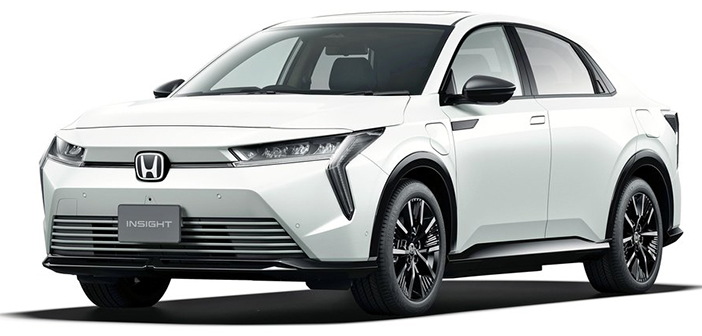
The model has a maximum range of 535 kilometers and is priced at ¥5.5 million, but it can be purchased for ¥4.2 million with the help of government subsidies. Insight was the name of Honda’s first hybrid vehicle launched in 1999. The latest launch bearing the name marks a return of vehicles with the name to the Japanese market for the first time since 2022. Honda aims to enhance its presence in the EV market by utilizing the name of the model that led the company’s shift toward electric vehicles. +++
++ HYUNDAI is making its boldest attempt in years to win back Chinese consumers, betting on China-tailored Ioniq electric vehicles to fuel a comeback in the world’s largest automotive market. Last week, Hyundai officially introduced its flagship brand Ioniq to the Chinese market, unveiling 2 concept cars at a brand launch event: the Venus sedan and the Earth SUV.
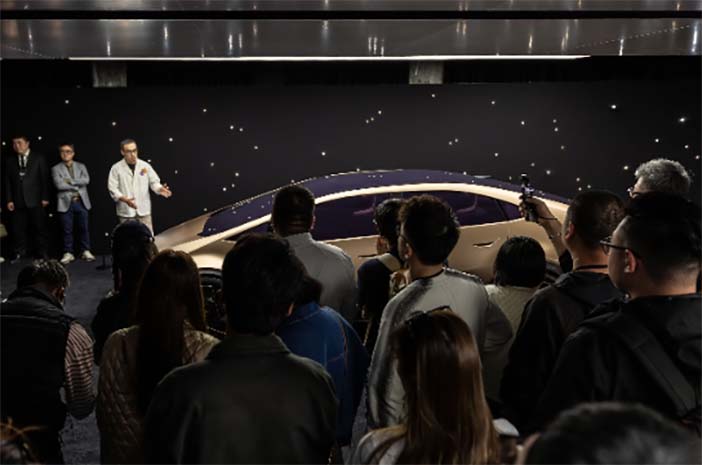
Hyundai is gearing up to roll out a broader electrification strategy and debut its mass-production Ioniq model later this month at Auto China 2026, which runs April 24 to May 3. “The newly launched Ioniq brand in China evolves beyond a traditional product lineup into a broader mobility ecosystem”, the company said in a statement. “While drawing on strong global experience, Ioniq was shaped specifically for the Chinese market, integrating local technologies and partnerships with Hyundai’s established standards of safety and quality”. Li Fenggang, president of Beijing Hyundai Motor, the company’s joint venture with BAIC Motor, said that, beginning with the 2 concept cars, Hyundai will continue to present products that “reflect deep insight into Chinese customers and our genuine commitment to this market”. Li’s appointment as the head of Hyundai’s Chinese operation in November was widely seen as a sign of that focus. By naming a Chinese national to lead the joint venture for the first time in its 23-year history, Hyundai signaled its determination to deeper localization and to give local leadership greater strategic authority in one of the world’s most competitive auto markets. Hyundai is betting that with its renewed EV push, it could reclaim its former glory in China, once counted among the carmaker’s most lucrative markets. From 2010 to 2016, Hyundai sold over 1 million cars every year in China, peaking at 1.1 million in 2016, making China the carmaker’s largest market, surpassing even South Korea. But its fortunes took a sharp turn after a diplomatic row between Seoul and Beijing over the 2017 deployment of THAAD, an advanced US anti-missile system, in Korea. Annual sales plunged 30 percent to 785.000 units in 2017 and continued to erode, falling to around 440.000 units by 2020. The slide has yet to bottom out and by 2025, annual sales had dwindled to roughly 130.000 units, leaving Hyundai clutching less than 1 percent of the market. The decline was hastened by China’s aggressive EV push, which propelled the surge of homegrown brands and steadily wrested market share away from established foreign automakers. Chinese brands, led by BYD and Geely, now capture nearly 70 percent of China’s auto market, which sell over 34 million units annually. Struggling to keep up with homegrown EV makers (backed by generous state subsidies, tax incentives and a local battery supply chain that drove prices down) some global automakers choose to scale back their investments or pull out of the Chinese market altogether. Hyundai, however, is taking the opposite approach and doubling down on the market under its “In China, For China, To Global” strategy. “Hyundai cannot afford to give up on China, even though the market has become far more difficult”, said Kim Pil-su, an automotive engineering professor at Daelim University. Kim said even a 0.5 percentage point gain in China would mean more than 1 million additional vehicles. “That is why it remains such a critical market and why Hyundai believes that, depending on how well it executes, it still has a chance”. Hyundai Motor CEO Jose Munoz said in a shareholder letter in March that the carmaker plans to launch 20 new models over the next 5 years, with a goal of reaching 500.000 annual sales. To that end, Hyundai is rebuilding its China strategy by tailoring designs, technology and services to local preferences rather than relying on imported models or globally developed products tweaked slightly for Chinese buyers. For its China-specific Ioniq models, Hyundai plans to adopt a new naming system based on planets instead of the numerical labels used globally, such as Ioniq 5 and Ioniq 6. The company said it is working with Chinese autonomous-driving startup Momenta to develop driver-assistance features tailored to local road conditions, which would be key in competing with Chinese EV brands. Alongside its battery-electric models, Hyundai also plans to introduce extended-range EVs to China for the first time; a powertrain that pairs an electric motor with a gasoline engine that recharges the battery on the go. The move is widely seen as a bid to cater to one of the most popular powertrain references in the Chinese market. All eyes are on whether Hyundai’s new Ioniq models can gain traction and win back a meaningful slice of the market, which has become the world’s largest for EVs, accounting for more than half of global EV sales. To hit its target of 500.000 annual sales by 2030, Hyundai would need to more than triple its current volume and persuade Chinese consumers that its next-generation EVs offer something the homegrown alternatives do not, observers say. “Hyundai and Kia are priced slightly above many Chinese brands, so the key question is whether consumers feel they are getting something better in return”, said Kim. That does not necessarily mean Hyundai has to cut prices, he added. “The real issue is value for money: a combination of price, features, technology, quality and brand image”. “Whether Hyundai succeeds in China will depend on how well it can combine 3 things: a product tailored to Chinese tastes, strong value for money and a clear brand identity that sets it apart from Chinese rivals”, he said. +++
+++ Recalls are starting to pile up at Stellantis as the automaker has issued 2 new campaigns. This puts them in a 3-way tie with General Motors and Toyota for having 11 recalls this year. Kicking things off is an engine recall that involves 2,689 turbocharged 2.0-liter 4-cylinders that were designed for use in the JEEP Grand Cherokee and Wrangler 4xe plug-in hybrids. These are Mopar replacement engines, which could have internal debris that can result in failure. The safety recall report says the engines might be contaminated with sand from the casting process. It follows an earlier recall of 112.859 vehicles for the same problem. Following that initial recall, a 2024 Jeep Grand Cherokee 4xe experienced an engine compartment fire. That model wasn’t involved in the earlier campaign, but had an engine manufactured during the suspect window. This kicked off an investigation, which ultimately resulted in the initial recall being expanded. 4.3% of the engines in the latest recall are believed to have sand contamination, but the automaker isn’t aware of any accidents or fires at the moment. To address the issue, dealers will inspect and replace the engine as necessary. Engines not installed in vehicles will be inspected and, if necessary, repurchased. The second recall involves 6.605 Ram 2500 pickups from the 2026 model year. They’re equipped with steering column control modules that can cause a loss of electronic stability control. Little is known about the issue, but Stellantis opened an investigation in January and it eventually determined that the steering column control modules can experience an internal fault, which can disable electronic stability control. This means they run afoul of federal motor vehicle safety standards. Thankfully, only 0.5% of the recall population is believed to have the defect. This equates to approximately 33 vehicles and dealers will replace the steering column control module to address the problem. +++
+++ Toyota has begun laying the groundwork to bring the GR GT to the U.S., with more than 100 LEXUS dealers already expressing interest in handling sales. The automaker is said to be taking a more controlled approach, creating a customized sales and service process to ensure proper customer delivery. This appears to be a much more deliberate rollout than when the Lexus LFA was launched, though, to be fair, Toyota did not initially anticipate demand would later grow.
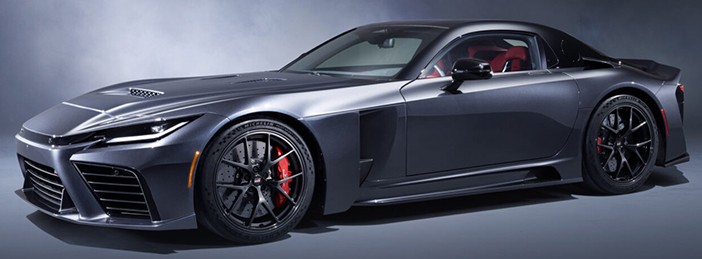
Now, the company wants to avoid past mistakes and plans to train prospective dealers at a dedicated facility at Eagles Canyon Raceway in Texas, with the program eventually extending to customers once the GR GT arrives in the U.S. The report said Lexus dealers seeking a GR franchise will not need to build a separate new building. However, one dealer owner noted that the franchise is not intended for every market, but rather for those where “these prestige customers are”. The target market for the Toyota GR GT is well-heeled enthusiasts. With an expected starting price north of $200.000, it would land in upper-Porsche 911 territory. Power comes from a new 4.0-liter twin-turbo V8 paired with a hybrid system, with output expected to reach at least 650 hp and 850 Nm of torque. That is roughly 90 horsepower more than the previous halo car, the LFA. This time, the successor also benefits from the global motorsports success of the Gazoo Racing brand. In fact, the aforementioned dealer owner experienced the vehicle firsthand in Japan and said he was “blown away”, describing it as “extraordinary”. There is also a GT3-spec version of the GR GT, revealed last year, that is intended strictly for track competition. For now, however, the road-going customer car is expected to arrive in the U.S. next year. The report suggests buyers can expect a highly attentive, detail-oriented purchase experience; one that could help place the car in the hands of genuine enthusiasts rather than collectors who may never fully use it. After all, GR GT customers will gain access to Toyota’s first GR Academy, where a fleet of 42 GR vehicles (including the GR Yaris, GR 86 and GR Supra) will be used for hands-on training in disciplines like autocross and drifting. +++
+++ A few years ago, wild rumours alleged MERCEDES would get rid of all wagons by the end of the decade to focus on higher-volume products. According to reports, the CLA Shooting Brake, C-Class Estate and the E-Class Estate are the last of the long-roof breed. Although there has been no official confirmation from Stuttgart, the company’s Head of Exterior Design is now painting a grim picture. Robert Lešnik revealed that car designers and journalists appreciate wagons, but the reality Mercedes is seeing is that “nobody is buying them” anymore. Consequently, the German luxury brand is reluctant to approve for production a more practical take on the electric C-Class sedan revealed yesterday. ‘We have 3 regions. Nobody is buying them in America; we tried the shooting brake of the CLS and nobody bought it. The Chinese don’t understand them and don’t buy them. Then Europe is left, and if you look at a Mercedes E-Class, it’s pretty expensive, so who can actually buy a car like that in Europe?’ Mercedes still sells a C-Class Estate with combustion engines and is about to give the “S206” a mid-cycle facelift, meaning it will continue for several years to come. Additionally, the new CLA Shooting Brake is available with both ICE and EV powertrains, while the larger E-Class is not going anywhere for the time being. The gorgeous CLS Shooting Brake is now, sadly, only a distant memory, but it’s unrealistic to expect a carmaker to sell so many wagons. Looking at what the competition is doing, BMW has recently teased an i3 Touring that would directly compete with an electric C-Class wagon if the three-pointed star were to build one. Then again, Munich doesn’t have a rival for the CLA Shooting Brake, so it needs a model that’s smaller and more affordable than the 5 Series/i5 Touring. BMW is open to building another 3 Series wagon with combustion engines, but it hasn’t made any commitments yet. The electric C-Class is considered the nameplate’s 6th generation and if a wagon won’t follow, it would be the first of its kind to skip the body style. Ever since the “S202” debuted in the mid-1990s, Mercedes has offered an Estate version. The Slovenian car designer would love to keep the wagon flame alive, but demand just isn’t there anymore. His favorite Mercedes? Today’s “almost perfect” E-Class Estate. +++
+++ NISSAN said it plans to add an autonomous driving system employing artificial intelligence to 90 percent of its future models as it aims to revive its sluggish sales. The Japanese automaker will introduce the next-generation driving technology by the end of fiscal 2027 in its new large minivan Elgrand, which is expected to be launched this summer.
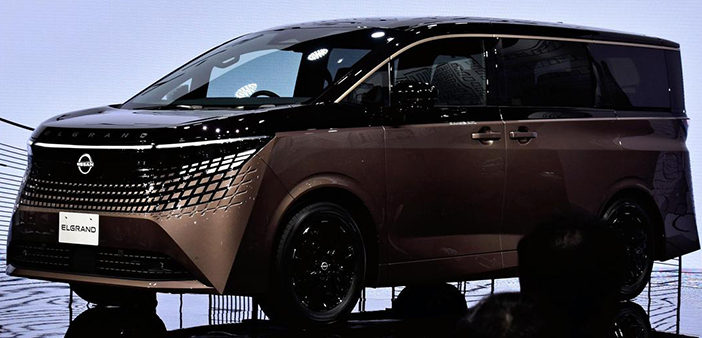
By restructuring its global market strategy, the company aims to sell 550,.000 units in Japan and 1 million vehicles each in the United States and China by fiscal 2030. For fiscal 2025, it projected sales of 420.000 units in Japan, 653.000 units in China and 1.3 million vehicles in North America. The struggling Japanese automaker said it will reduce the number of its models to 45 from the current 56. It also unveiled plans to launch several new models, including a hybrid version of the X-Trail and an electric version of the Juke crossover. The company is pushing restructuring steps that include closing 7 plants in Japan and overseas, including the Oppama plant in Yokosuka, Kanagawa Prefecture. The plan also calls for reducing its workforce by 20,000 employees. +++
+++ RENAULT KOREA said it will launch its first software-defined vehicle in South Korea in 2027, while its Busan plant will manufacture electric vehicles in 2028, as part of a broader push to transform the Korean unit into a hub for the French carmaker’s premium vehicle and future mobility.
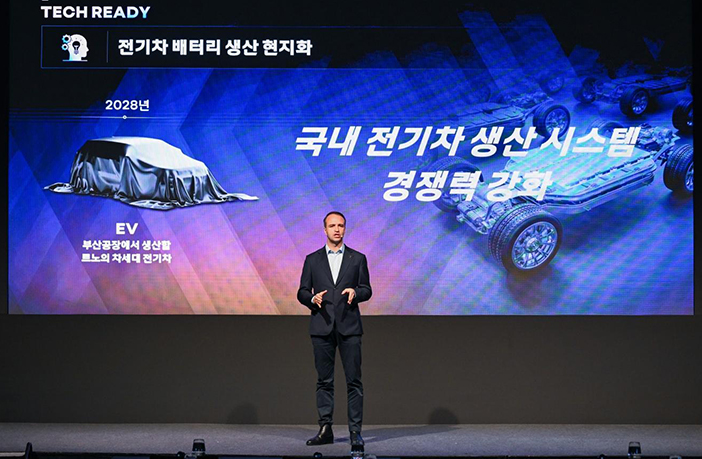
Speaking at his first press conference since taking office in September, Renault Korea CEO Nicolas Paris announced the company’s plans to introduce one new model every year through 2029 under Renault Group’s “futureReady” strategy. “Renault Korea’s mid-term strategy is one new model per year through 2029”, said Paris, stressing the company’s goal is to lead in quality and the premium segment, while gaining the capability to design and mass-produce flagship models for the group. Paris outlined four pillars of the strategy for South Korea: “Growth Ready”, “Tech Ready”, “Operational Ready” and “Trust Ready”. Under the growth strategy, Renault Korea aims to position itself as Renault Group’s hub for D- and E-segment vehicles. Paris said the company will begin producing Renault’s next-generation EV at its Busan plant in 2028. To that end, he stressed that localizing EV battery production and building a domestic EV ecosystem are among Renault Korea’s priorities, stressing the need to catch up in electrification compared with other brands in Korea. “The localization of full EV battery production is a key priority for the future. We will therefore focus on developing a competitive EV ecosystem in Korea to support this strategy”. Renault Korea plans to launch a fully software-defined vehicle, or SDV, in 2027, though he declined to provide details on the model type or specifications. With the SDV, the carmaker seeks to move toward what Paris called an “AI-defined vehicle”. The company plans to offer Level 2++ autonomous driving across both urban areas and on highways, while equipping the vehicle with Renault’s next-generation AI-based OpenR Panorama system, which Paris described as transforming the vehicle into an “intelligent companion”. He also said Renault Korea would target a vehicle development cycle of under 2 years, noting the Grand Koleos, built in just 24 months, as an example. Amid concerns that faster vehicle development could harm quality, Paris stressed quality remains Renault’s top priority and that it will strengthen collaboration with partners to optimize existing technologies in the market for Korean customers. +++
+++ TOYOTA ’s electric SUV lineup is already expanding with new additions like the compact C-HR+ and the 3-row Highlander, alongside the updated BZ4X. Naturally, that raises the question: Is the RAV4 next in line for a fully electric version? The answer: Probably not. In an interview, RAV4 chief engineer Yoshinori Futonagane said an EV variant isn’t currently a priority. According to him, the team hasn’t even given the idea much serious consideration. Instead, Toyota says it’s focused on maintaining a range of powertrain options across its lineup, offering gas, hybrid and electric models side by side rather than combining everything into a single vehicle. As Futonagane explains: ‘When Toyota says we have a multi-pathway strategy, we don’t want to have multiple paths all crammed into one vehicle. We’re trying to do it with a vehicle line-up. The Toyota thinking at the moment is we want to use the BZ4X as the vehicle where we explore and discover the most advanced expression of BEV technology’. That said, the RAV4 isn’t lacking in electrification. It comes standard as a hybrid, featuring a 2.5-liter four-cylinder engine producing 226 horsepower. There’s also a plug-in hybrid version, which pairs the same engine with two electric motors for a combined 320 hp and up to 80 km of electric-only range. For buyers set on a fully electric Toyota SUV, there are other options. +++