
+++ It’s finally happening, folks. The world’s first commercially available, production-ready all-solid-state BATTERY is here, and it promises to revolutionize the electric vehicle world, from cars and motorcycles to big rigs and construction equipment. At least that’s what Donut Lab, the company that makes the battery, claims. The startup, which is known for its sci-fi in-wheel electric motor that powers Verge’s electric motorcycles, claims the game-changing liquid-less battery cells and modules are available now at a gigawatt-hour level production capacity to companies worldwide. Verge Motorcycles said that its updated TS Pro two-wheeler will become the world’s first production all-solid-state-powered EV when it reaches customers in the first quarter of this year. So, what makes this battery special? Well, pretty much everything. It’s lighter, more energy-dense, safer, lighter, faster-charging, more resilient and (most importantly) promises more range than conventional lithium-ion batteries with liquid-based electrolytes. According to Donut Lab, its production-ready all-solid-state battery has an energy density of 400 kWh and can be fully charged in as little as 5 minutes for as many as 100.000 cycles, without having to limit charging to 80%. By comparison, some of the top-tier traditional Li-ion batteries available today have an energy density of around 250-300 kWh and can last for up to 5.000 full cycles, while limiting the maximum state of charge to 80%.
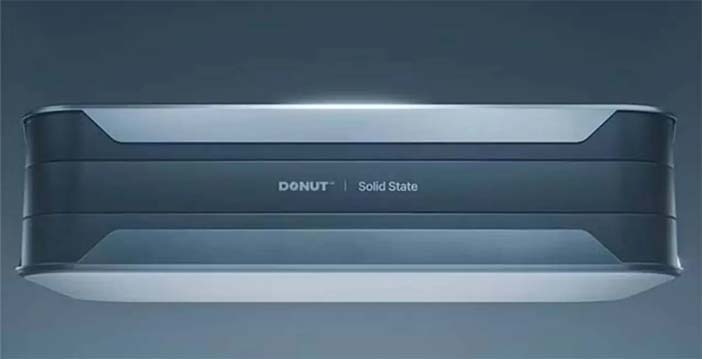
What’s more, extreme temperatures have little to no effect on Donut’s solid-state battery, with the startup claiming its product retained over 99% of its capacity at temperatures as low as -30°C and as high as 100°C. Safety-wise, the startup claims the battery will not ignite if it’s damaged, and that it can be built pretty much anywhere in the world because it doesn’t use rare materials. Donut Lab didn’t specify what materials are needed to make the solid-state cells, but it did say that it’s “100% green, made from materials that are found everywhere”, making it immune to geopolitical issues. The startup also claims its solid-state cells are cheaper to build than comparable lithium-ion batteries. In the real world, we have Verge’s TS Pro motorcycle as a reference for what solid-state batteries can offer. The previous model year was available with a conventional lithium-ion battery that enabled a city driving range of 350 km, while the charging time was touted as less than 35 minutes. The new model, which is powered by Donut’s solid-state battery, is also capable of 350 km in standard guise, but a Large Battery option, which fits in the same cradle, can increase the range to 590 km. But the charging time has been dramatically reduced to less than 10 minutes, with Verge saying that it has deliberately designed the new bike to take longer to charge, so that riders can enjoy a coffee while waiting.
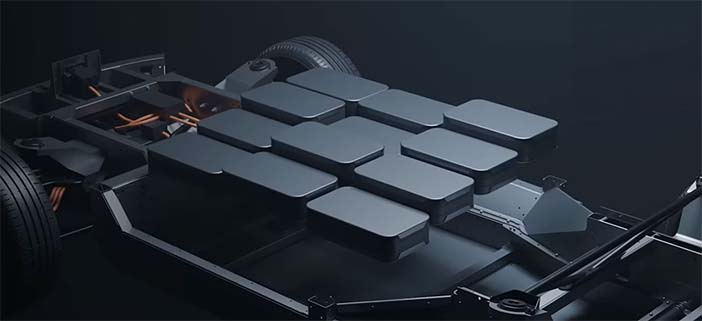
“While the advantages are obvious, the future of solid state batteries has been a moving target constantly delayed when companies working in electrification are asked about when they will become a reality”, said Donut Lab CEO Marko Lehtimäki. “At Donut Lab, our answer on solid-state batteries being ready for use in OEM production vehicles is now, today, not later. Donut Lab has engineered a new high-performance solid-state Donut Battery that can be scaled to major production volumes and is now seen in real-world use in the Verge Motorcycles bikes out on the road in Q1”. Donut Lab’s all-solid-state battery will be on display at CES 2026 in Las Vegas, which opens its doors on January 6. +++
+++ Europeans, yours truly included, once looked down on Americans because we preferred smaller cars to gas-guzzling SUVs. However, the past few years have shown we’re not any better. Oversized, high-riding models have also taken over the Old Continent. SUVs held a 41.3 percent market share in 2020, but that figure is now approaching 60 percent. A report from market research company Dataforce shows that SUVs now account for 59.2 percent of new vehicle sales in EUROPE . Volkswagen is the undisputed leader in this hugely popular segment with the T-Roc and Tiguan. The former grew by 4.5 percent through the first 11 months of 2025, reaching 196.123 units. During the same period, its bigger brother blossomed by 1 percent to 180.562 units. However, as I’ve tried to explain in an op-ed a while ago, low-riding cars haven’t been completely defeated yet. Through November, 2 non-SUVs were the most popular vehicles in Europe. Despite falling by 8.7 percent, the Dacia Sandero grabbed the number-one spot with 225.862 units sold. Dataforce lists the mechanically related Renault Clio in second place, with 206.583 vehicles sold, or 5.2 percent more than in the same period of 2024. The French hatchback is likely to have a strong 2026, considering the next-generation model is hitting the streets this year. Although the Sandero and Clio are still going strong, the hatchback segment is on a downward spiral. It represented 35 percent of all vehicle sales at the beginning of the decade, but now accounts for just 23.9 percent. In raw numbers, hatchback sales fell from 4.2 million units in 2020 to a projected 2.9 million in 2025. The rise of crossovers and SUVs has also taken its toll on sedans. The traditional body style held a 4.7 percent share in 2020 when sales reached 565,244 units, but has since dropped to 3.5 percent or about 426.000 vehicles. Similarly, wagons have suffered a setback, with market share shrinking from 10.2 to 7.1 percent over the same 5-year interval. But numbers don’t necessarily tell the whole story. Automakers and journalists alike may have broadened the definition of an SUV too much. The Toyota Yaris Cross may be the 6th most popular vehicle in Europe in 2025, but the fact of the matter is, it’s a jacked-up hatchback. Likewise, the Peugeot 2008, which ranks 8th, is also a hatch on stilts. Marketing teams have done an excellent job of luring customers into crossovers over their equivalent (and usually cheaper) hatchback siblings. Still, not everyone has been pulled onto the SUV bandwagon. Pricing remains the dominant factor, which helps explain why the Sandero and Clio continue to sell in droves. Cars such as the Peugeot 208, Opel Corsa, Toyota Yaris, Citroën C3 and Skoda Octavia all made it into the top 20 of Europe’s best-selling vehicles in 2025. +++
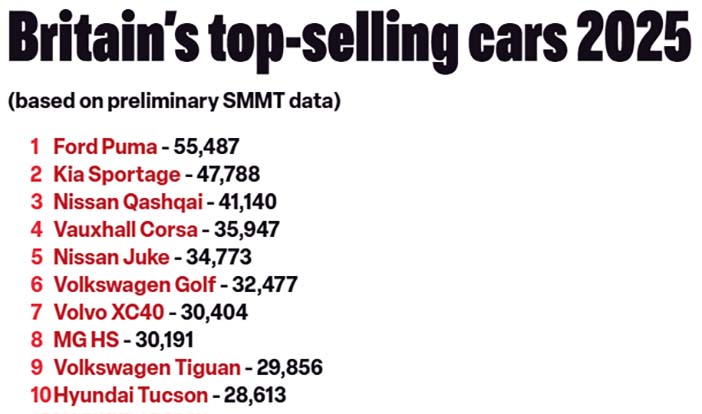
+++ The FORD PUMA was the United Kingdom’s best-selling car in 2025, according to new data released by the SMMT (Society of Motor Manufacturers and Traders), making it 3 years on the trot that the small cross-over has topped the sales chart. In total, 55.487 new Ford Pumas were sold last year; up from 48.340 in 2024. It certainly will have helped that an all-electric version of the Ford (the Puma Gen-E) arrived in showrooms last year, as demand for EVs continued to rise in 2025. The Kia Sportage had a good innings, but came in second to the Ford once again, with 47.788 sold. Similarly, the British-built Nissan Qashqai took third place in the rankings again, with 41.140 examples finding new homes. Meanwhile, the Vauxhall Corsa, which failed to crack the top 10 best-sellers list in 2024, made quite the comeback by claiming 4th place, with 35.497 units leaving showrooms last year. The Nissan Juke wasn’t far behind in fifth, with 34.773 sold. The Tesla Model Y was the fifth most popular car in the UK in 2024, however, it didn’t make it onto the top 10 list this time around as sales dropped by more than 8.500 units year-on-year. Nevertheless, with 24.298 examples sold, it remained the most popular EV in the UK, followed by the Tesla Model 3 in second and the Audi Q4 e-Tron in third. In total, 2.020.373 new cars were registered in 2025. This is the first time sales reached such levels since the Covid-19 pandemic hit in 2019, and represents a 3.5 percent increase on the year before. Some 1.19 million cars (or roughly 6 out of every 10) went to fleets, while 779.524 were private sales, which was a 4.5 per cent increase. Despite sales of petrol cars dropping by 8 percent last year, it remained the preferred choice among Brits, accounting for more than 46 percent of the total market share. Electric cars were second (23.4 percent), followed by full hybrids (13.9 percent), plug-in hybrids (11.1 percent) and finally diesels (5.1 percent). Unsurprisingly, the biggest decline was in sales of diesels, which dropped by nearly 16 percent, whereas sales of plug-in hybrids shot up by 34.7 per cent compared with 2024. Meanwhile, 473,340 new electric cars were registered in 2025. That’s more than in the whole of 2021 and 2022 combined, and means they accounted for almost one-in-four cars sold in the UK last year, potentially making it the second biggest market for EVs in Europe. That said, sales failed to reach the 28 percent target set by the British government as part of its ZEV Mandate.
+++
++ An electric version of the MERCEDES S-CLASS is on its way and will replace the EQS, which was once heralded as a guiding light for the brand, but has proved to be a critical and commercial disappointment. However, before any industry titans, A-list celebrities, world leaders or other high-net-worth individuals send their assistant out to place an order for an electric S-Class (or S-Class with EQ Technology, as it will officially be called) it’s still a few years away from launch, a source inside Mercedes told. The current iteration of the S-Class is set to receive a mid-life facelift early this year. There is some anticipation around the executive limousine’s refresh after Mercedes CEO Ola Källenius said the company had “invested a lot more in the model update of the new combustion-engined S-Class than we normally spend on a facelift”. However it appears the all-new, 8th-generation S-Class will be the first to be offered in zero-emissions guise. It’s expected to arrive towards the end of the decade so we’ve got to wait a little longer to find out how Mercedes hopes to trump the BMW i7, the next-generation Audi A8 or any EVs Bentley might launch in the meantime. Importantly though, the next S-Class will be available with combustion engines as well. Since the EQS was launched, Mercedes has scrapped its strategy of launching electric-only alternatives to its long-established models. Instead, it’s going down the same route as BMW, by offering combustion and electric versions of its cars, including the GLC, C-Class, E-Class and, of course, the S-Class, with the EVs using the brand’s new MB.EA architecture. Ola Källenius spoke to us in late 2024 about the brand’s future EV plans, including a zero-emissions S-Class, which at the time he indicated was going to be launched by the end of 2028. “If you don’t believe that when the next S-Class comes, the market is 100 percent electric at that point in time, you have to have the choice for both. I think this is certainly one of the lessons learned from our first-generation electric vehicles in the whole market. You need to offer the electric and the hi-tech electrified ICE version without compromise”. He added: “You don’t want to have a very big car that is then kind of small-ish on the inside, in relative terms. You want to have that fully uncompromised packaging and you want the performance to be uncompromised. Hence, the only solution that we think is viable in that scenario is that you have 2 platforms”. This unwillingness to compromise will offer big advantages for the S-Class EV, as Källenius explained: “The packaging advantages on the electric one are so obvious. It’s not even funny how obvious they are. And if you would shoehorn a combustion engine car into an electric car, you sacrifice space that you wouldn’t want to do. We’ve worked for 100 years plus in perfecting the combustion car. If you take a luxury sedan like the S-Class, it’s the best packaged car in the world. How you sit in the back seat or in the Maybach version, it is the benchmark full stop. We don’t think the customers would accept going backwards on that”. This approach, with 2 versions of a car on 2 different platforms, will require more money from Mercedes, which Källenius did acknowledge: “Investing in 2 versions puts some burden on your investment. If you do it in an intelligent way, the marginal additional investment can be kept on a manageable level and that’s what we’re trying to do”. The 2 versions of the S-Class should look almost identical, and we expect the pair will stick to the traditional 3-box saloon shape, rather than the futuristic, aerodynamic design of the EQS. Especially following the recent departure of design boss Gorden Wagener, who was responsible for that car and its so-called “one-bow” shape. However, we’re hoping that the design of the next S-Class will be inspired, at least to some degree, by the jaw-dropping Mercedes Vision Iconic concept that was unveiled last year. Källenius also told me that, regardless of whether customers opt for the electric or combustion version of the next S-Class (or any of Mercedes’ latest models for that matter) they will be treated to the company’s latest, most innovative technology, from infotainment to autonomous driving. +++
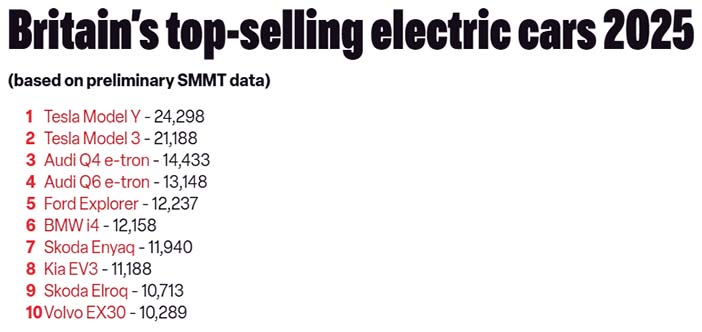
+++ The TESLA MODEL Y was the best-selling electric car in the United Kingdom in 2025, with its saloon sibling the Model 3 not far behind. The Tesla duo took first and second spot in the EV sales charts for the year released by the SMMT (Society of Motor Manufacturers and Traders). 473.340 new electric cars were registered in the UK last year; 23.9 percent more than in 2024 and more than were sold in 2021 and 2022 combined. 24.298 of those were Model Ys while 21.188 were Model 3s, meaning Tesla alone accounted for almost 10 percent of all the EVs that Brits purchased in 2025. It’s worth noting that nearly 33.000 Model Ys were sold there in 2024, which made it the fifth most popular car overall in the UK and put it ahead of the likes of the Volkswagen Golf, Hyundai Tucson and Volvo XC40. With roughly 8.500 fewer examples sold in 2025, the electric SUV failed to make it onto the top 10 best sellers list this time around. And despite shifting more Model 3s in 2025 than it did the year before, Tesla’s total sales dropped by nearly 10 percent year-on-year. Elsewhere, the Audi Q4 e-Tron and Q6 e-Tron claimed the third and fourth spots in the EV sales chart, with 14.433 and 13.148 examples sold, respectively. Rounding out the top five was the Ford Explorer, 12.237 examples of which left showrooms, meanwhile the Skoda Elroq, claimed 9th place. Interestingly, the Elroq, Q4 e-Tron and Explorer are all based on Volkswagen’s MEB platform, however none of VW’s own electric models (of which there are 7) were among the top 10 best-selling EVs last year. That’s particularly surprising when you consider Volkswagen remains the most popular car brand in the UK in terms of total sales. Despite EVs accounting for practically 1 in every 4 new cars sold last year (23.4 percent of the total market share, to be precise) and there now being more than 160 zero-emissions for motorists to choose from, as a whole sales still fell short of the 28 percent target set by the British government under its ZEV Mandate. That target has risen to 33 percent for 2026. The introduction of the new Electric Car Grant (ECG) in July 2025 will certainly have helped boost the appeal of EVs among buyers. However, according to the SMMT only about a quarter of all electric cars are eligible for a Government discount and it says manufacturers continue to subsidise the sales of EVs themselves to try and meet the Government’s targets. The SMMT claims brands forked out roughly 6.5 billion euro in discounts last year alone, which equates to 12.500 euro per EV sold. “This level of subsidisation is clearly unsustainable”, the organisation reiterated. Mike Hawes, chief executive of SMMT, referred to the discounting as the “cost of compliance” for the ZEV mandate, and pointed out to us that the fine a brand faces for every EV it misses the Government’s target by is 14.000 eur. He also highlighted that the gap between the number of EVs sold and the ZEV target was 4.6 percent last year, up from 2.4 percent in 2024. The British government did launch a consultation into the ZEV Mandate in late 2024, but has yet to complete a review of the policy. “We think that the review needs to be brought forward and definitely completed in 2026 because you need to have an assessment about whether this is delivering what it needs to deliver, and the wider impact that will have on the industry”. The SMMT has also said the announcement of a new ‘eVED’ tax on EVs (more commonly known as pay-per-mile) has sent “a confusing message to consumers, undermining rather than encouraging market confidence”.
+++
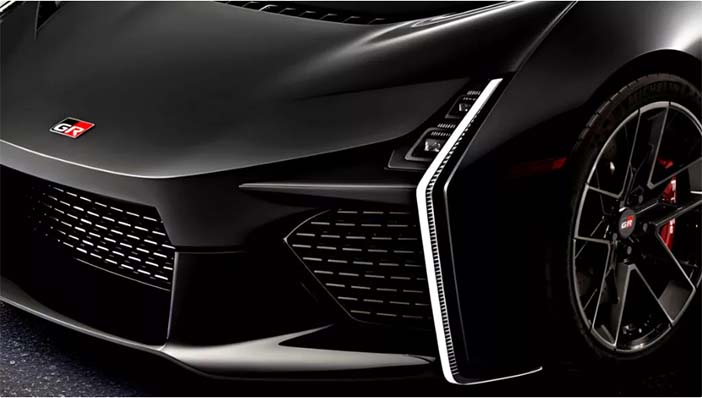
+++ With just days to go before the Tokyo Auto Salon, TOYOTA chairman Akio Toyoda has taken a hands-on role in a teaser campaign that hints at more than just another concept car. Under his Morizo pseudonym, he revealed that he acquired a mid-engined, 2-seat vehicle that will be customized for display at the event. Toyota’s Gazoo Racing arm released the teaser with few specifics, but it was enough to fan the flames of ongoing speculation. Though the car’s name and silhouette were kept hidden, the setup points to one familiar possibility: the return of the MR2. The timing lines up with Toyota’s recent trademark filings for the ‘GR MR2’ nameplate. Another option on the table is a follow-up to last year’s GR Yaris M concept, which also appeared at the Tokyo Auto Salon. The teaser came in the form of a cryptic video posted on X by the Toyota Gazoo Racing account. It features a brief exchange between Morizo and a staff member, translated from Japanese:
Staff: Morizo-san, I hear you got a new car?
Morizo: Ehhh!
Staff: What kind of car is it?
Morizo: A mid-engined two-seater!
Staff: That one?
Morizo: Yeah, yeah, that one.
Staff: So, what are you planning to do with it?
Morizo: It’s fine as is, but…
Staff: Don’t you want to do something more with it?
Morizo: Something more… yeah.
Staff: I want to have it ready in time for the Tokyo Auto Salon, but…
Morizo: Will you make it?
Staff: Let’s exhibit it!
Morizo: Is that okay?
Staff: The rest is up to the car!
Unsurprisingly, the clip drew plenty of attention from Toyota fans, most of whom quickly latched onto the idea of an MR2 revival. Then again, Morizo’s latest acquisition could just as easily be an older-generation MR2 brought back to life with a round of upgrades. Either way, we’re inching closer to an official reveal that will shed more light on what Toyota Gazoo Racing has planned next. The original MR2 was produced from 1984 until 2007, spanning 3 distinct generations. Each version stuck with the car’s core layout: a mid-mounted engine and 2 seats. Speculation around a 4th-generation MR2 picked up momentum in late 2023, following the debut of the FT-Se concept, short for Future Toyota Sports electric. It gained more traction in early 2025 when Toyota revealed the mid-engined GR Yaris M prototype. That car was built around a new turbocharged 2.0-liter 4-cylinder engine paired with an all-wheel-drive system. During last year’s Tokyo Auto Salon, Toyota engineers hinted that the prototype could form the basis of a future production car. They stopped short of naming it directly but suggested it might evolve into an ““MR-something”. The company also dropped a few visual breadcrumbs in its GRIP anime series, including a veiled silhouette that bore a striking resemblance to the FT-Se. Besides the MR2, there’s growing speculation that the upcoming Celica might adopt a mid-engined layout as well, potentially blurring the boundaries between the 2 nameplates. Toyota has confirmed the Celica’s return, but details on its technical specs and release timeline remain under wraps. The mystery is expected to be cleared up at Toyota Gazoo Racing’s Tokyo Auto Salon press conference on January 9, with Akio Toyoda set to deliver the reveal in person. +++
+++ VOLKSWAGEN is the United Kingdom’s favourite car company in terms of outright sales for 2025, with the German brand selling a total of 178.599 units during the year; up nearly 7.4 percent on its 2024 total. This comes despite having no single model with a top-5 sales ranking, suggesting that customers from across the spectrum are showing the love for Volkswagen and its models.Next up in the charts was BMW with 122,721 units sold, followed closely by Ford with 118.997 and Kia with 113.429 units. Each of these marques showed subtle swings compared with the 2024 totals, with BMW down 2 percent, Kia up by 1 percent and Ford up around 10 percent. However, take a look at the percentage changes from other brands and you’ll notice one particular trend, and that’s the increase in sales from domestic Chinese brands such as Jaecoo, Omoda and BYD. The percentage change year-to-date figures are heavily skewed, because the variety of new models from these brands continues to grow at a huge pace, but collectively 10.5 percent of all the new cars we purchased in the UK last year came from a domestic Chinese brand. The strongest of these was BYD with 51.422 units sold, while sister companies Jaecoo and Omoda sold a combined 48.178 units. However, there are other big movers in 2025, including massive growth at Polestar with a 95 percent increase in yearly sales, at 16.959 units. The A290 hatchback also drove Alpine’s total sales up 369 percent with 1.742 units sold. Other movements of note include Stellantis cousins Peugeot and Citroën, which had contrasting fortunes. Peugeot sales were up 20 percent, but Citroen dropped 31 percent. However, the impressive new C5 Aircross and a full year of the new C3 should see this trend reversed in 2026. Stalwarts Toyota and Tesla saw drops of 11 percent and 10 percent respectively, the latter coming as something of a surprise considering the arrival of the refreshed Model 3 and Model Y. These two models continue to outsell their EV rivals by huge margins, but their sales growth has definitely stalled in the past 12 months. Across all brands, a total of 2.020.373 units were registered in 2025 in the UK, which represented a 3.46 percent increase over 2024. All is not lost for the European brands, but they’ll need to keep up their momentum in order to keep ahead of new Chinese alternatives. +++
+++ Some VOLVO EX30 owners have been asked to limit their charging to 70 percent to reduce the risk of battery-related fires. Having been approached by a EX30 owner who received a warning message from their car about the possibility of a fire, Volvo was contacted. The company responded: “Volvo has identified a potential issue with high-voltage battery cells manufactured by a particular supplier on certain model year 2024-2026 EX30 Single Motor Extended Range and Twin Motor Performance cars. “In rare cases, the battery can overheat when charged to a high level, which could in a worst-case scenario lead to a fire starting in the battery”. A recall will be put in place soon, according to Volvo, with the firm adding: “We are contacting all affected owners to ask them to limit their cars’ maximum charge level to 70 percent. We will contact them again as soon as a fix is available”. Volvo added that not all EX30s are affected and the issue does not involve other Volvo models. The SEA2 platform that underpins the EX30 is similar to the one found in the Smart #1 and #3, although the 69 kWh NMC battery in the EX30 Single Motor Extended Range and Twin Motor Performance cars is different to the 66 kWh unit found in Smart’s models. In addition to its statement, Volvo reiterates that “while the number of reported incidents is very small (representing around 0.02 per cent of the cars we have identified as potentially affected) and we have no reports of related personal injuries, we are treating it very seriously”. +++