
+++ Riding the wave of rising oil prices and aggressive pricing strategies, China’s largest electric vehicle maker BYD is making bold inroads into South Korea, a market traditionally dominated by Hyundai and German luxury marques. Just 15 months after entering the market in January 2025, BYD has emerged as one of the fastest-growing imported car brands. BYD sold 1.664 vehicles here in March, ranking 4th among imported brands behind Tesla, BMW and Mercedes-Benz, according to data compiled by the Korea Automobile Importers & Distributors Association. It is the highest ever ranking by a Chinese carmaker in Korea. The carmaker’s total sales have now crossed the 10.000-unit milestone. BYD’s swift rise has largely driven by its aggressive pricing. The Atto 3, the brand’s flagship compact crossover, is priced at approximately 33 million won for its top trim before subsidies, roughly 7 million cheaper than comparable domestic offerings, Hyundai’s Kona Electric and Kia’s EV3. The Dolphin, a subcompact hatchback launched in February, comes with an even striking price tag of 24.5 million won. When factoring in government EV subsidies, the cost falls into the low 20 million won range. Despite its lower price, the Dolphin comes with advanced features, such as advanced driver assistance Systems, large touchscreen displays, ventilated seats and heated seats, even on its lower trims. “BYD has firmly established itself in Korea with the launch of the Dolphin”, said Kim Pil-soo, an automotive engineer professor at Daelim University. “By introducing a highly competitive model, the company is likely to further increase its market share”. The company’s growth has accelerated further this year. In this first quarter alone, BYD sold 3.968 vehicles, accounting for nearly 65 percent of its entire sales volume of over 6.000 from last year. The Sealion 7 led the charge during the January-March period, with 2.084 units sold, followed by the Atto 3 with 784 and the Dolphin with 684 units after its February launch. “Verification of battery safety and the expansion of a nationwide service network have helped address early concerns”, a BYD Korea official said. “Consumers are positively evaluating not only the price competitiveness, but also their overall product quality”. Behind the company’s rapid growth is its agressive showroom expansion. BYD now operates 32 showrooms in South Korea, trailing only BMW, Mercedes-Benz and Volvo among imported brands, and tying Audi for fourth. It plans to expand its number of dealerships to 35 by the end of the year. BYD appears to be deliberate about where it opens its showrooms, targeting emerging affluent neighbourhoods and districts popular with younger consumers, in an effort to raise brand visibility among buyers who are more open to new technology and less attached to traditional brands. The recent rise in oil prices may also be working in BYD’s favour. Industry officials said demand for EV had increased as global crude prices climbed following tensions in the Middle East. In Korea’s imported car market, electric vehicle accounted for 47.8 percent of all new registrations in March, overtaking hybrids for the first time, according to KAIDA. “Amid higher oil prices and cautious consumer spending, more consumers are seeking affordable electric vehicles, and that has contributed to our strong performance”, the BYD official said. Kim echoed the stance, adding with rising oil prices, affordable Chinese EVs are becoming more attractive. “The global EV slowdown has not disappeared, but in South Korea, the combination of higher EV subsidies and expensive oil prices is helping EV gain momentum again”, he said. BYD’s growing success is also paving the way for other Chinese EV brands to enter the South Korean market. Zeekr, premium EV brand uner China’s Geely Automobile Holdings (which also owns Volvo and Polestar) is entering the country with the launch of its 7X in the first half. Another EV brand Xpeng is preparing to make debut this year, following setting up a local unit last June. +++
+++ As competition in CHINA ’s auto market grows fiercer by the day, an analysis said that automakers have entered a phase in which profits fall despite rising sales. As the number of companies increases and the technology gap narrows, oversupply has deepened, severely eroding even the leaders’ profitability, while some have slipped into full-year losses, making the slowdown in the industry more evident. Experts predicted that only a handful of companies that solve their profitability problems will survive. On the 15th, BYD’s 2025 sales came to 803.965 billion yuan, up 3% from a year earlier. However, net profit over the same period fell 19% to 32.619 billion yuan. BYD’s net profit rose 446%, 81% and 34% in 2022–2024, respectively. The company said in its earnings report, “The pace of replacing old and new products is accelerating and market competition has become unusually intense. Intensifying price competition and excessive marketing are squeezing profitability across the industry”. Over the same period, Changan Automobile saw net profit fall 44% despite sales rising more than 2% and Guangzhou Automobile Group (GAC Group) posted a net loss of 8.784 billion yuan, recording its first annual loss since listing. Li Auto, which once achieved quarterly and annual profits, also swung back to a loss. SAIC Motor saw net profit top 10 billion yuan, rising more than 500% from a year earlier, but this was due to a low base from large asset impairment charges the previous year, making it actually the second-lowest net profit since 2021. The decline in China’s automakers’ profitability has continued into this year. The auto industry’s sales margin in 2025 was 4.1%, down 0.2 percentage points from a year earlier, and fell further to 2.9% in January–February this year. Against this backdrop, first-quarter auto sales fell more than 20% from a year earlier. China Business News attributed the cause to oversupply driven by a growing number of market participants, narrowing technology gaps among companies, and more frequent new product launches as competition intensifies. Wei Jianjun, chair of Great Wall Motor, said last year, “Homogenization among automobile corporations is severe, making it difficult to widen the technology gap, and it is hard for anyone to generate revenue”, adding: “The industry is caught in a vicious cycle”. Niirij, chair for China at consulting firm McKinsey, also pointed to the excessive number of automakers, saying, “Some companies lack competitiveness to the point that they have no value even for mergers and acquisitions (M&A). During the era of rapid growth, many corporations could survive, but as growth slows, the market is shifting toward profitability”. Experts predicted that corporations that fail to secure competitiveness will be forced out of the market or merged within a few years, leaving only a few players. Zheng Yun, global senior partner at Roland Berger, said: “By 2030, the Chinese auto market will be left with 5 to 7 companies selling more than 2 million units annually, about 10 companies selling more than 1 million units, and a small number of others”. In fact, in recent years, startups such as WM Motor and Zhiwei Auto, as well as foreign brands such as Jeep and Mitsubishi, have already exited the Chinese market. Amid these limits to domestic growth, companies are turning to overseas markets. Chery Automobile, China’s largest auto exporter, recorded exports of about 1.29 million units last year, up 33%. BYD, in second place, surpassed 1 million overseas sales for the first time last year, offsetting a decline in domestic sales. This year’s goal is 1.3 million units. However, exports also face region-specific risks. Unlike Australia, where Chinese-made new cars are expected to exceed a 40% share by 2030, the European Union (EU) is pushing to impose tariffs and tighten investment regulations, raising entry barriers. In October 2024, the EU imposed anti-subsidy tariffs on Chinese electric vehicles, and in March this year it raised barriers to investment by Chinese corporations. +++
+++ At the end of March, the Chery-JLR joint venture unveiled a rugged SUV concept, previewing the revived FREELANDER brand. Now, the Chinese carmaker has offered the first glimpse at the production variant.
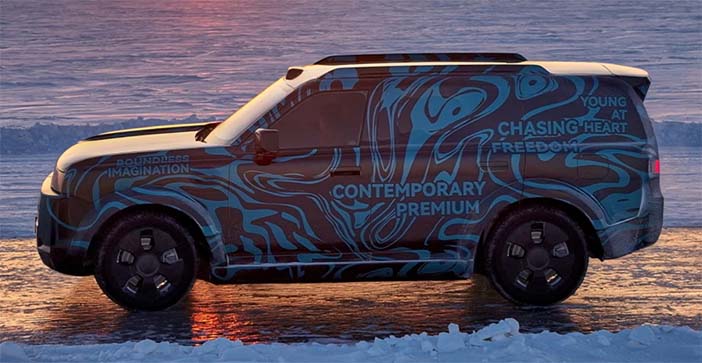
The images depict the upcoming Freelander during the winter test session. Jaguar Land Rover sales in China aren’t going well, and its local partner, Chery, had a brilliant idea to energize them. The Cheri-JLR joint venture acquired the rights to use the Freelander name for a new brand sold outside JLR’s portfolio. Freelander will not only become an independent carmaker run separately, but it will also replace current JLR models in production in China. On March 31, this marriage of convenience became official as Freelander introduced Concept 97, a nod to the original Land Rover Freelander, which launched in 1997. The concept has a boxy design reminiscent of the Freelander DNA. Still, it features exaggerated details, including a missing B-pillar and suicide doors. We already knew these would not make it into production because pictures of a crash-tested Freelander had leaked to the press earlier. Now we have the official confirmation, as Chery-JLR published the first pictures and videos from the winter test session. The pictures reveal a more conventional SUV, with standard doors that feature mechanical handles. These are mandatory for all new cars in China. While still heavily camouflaged, it’s clear that the production SUV retains much of the Concept 97’s design. The winter tests were conducted in Northern Sweden. The new pictures reveal the proportions and size of the Freelander, which will offer 6 seats in a 3-row (2+2+2) configuration. The boxy silhouette, with upright lines and a flat roofline, remains true to the Land Rover Freelander DNA. Chery-JLR plans to launch 5 other models under the Freelander brand over the next 5 years. The Chinese carmaker partnered with Huawei to develop advanced driver-assistance features, as well as the i-ATS intelligent AWD system. This includes pre-emptive shock absorbers and 3 lockable differentials to cope with the most demanding all-terrain conditions. The Freelander will also be among the first car models to adopt Qualcomm’s Snapdragon 8397 automotive chip. The Li-ion battery is supplied by CATL and features 6C supercharging, capable of charging at up to 360 kW. The battery also incorporates second-generation non-thermal propagation technology and third-generation CTP (Cell-to-Pack) technology for enhanced safety and cooling performance. The Freelander will come standard with Huawei’s ADS 4.1 intelligent driving system and a 896-channel LiDAR sensor. Huawei will provide more details about this technology at an event in China later this month. The Freelander will be officially unveiled in June. The market launch in China is planned for the second half of the year, with other markets following shortly thereafter. +++
+++ HONDA will discontinue gasoline vehicle production at 1 of its 4 plants in China and may do so at another plant as part of restructuring in the world’s largest auto market, a source close to the matter said Friday. Honda will terminate output of gasoline vehicles at a plant jointly run by its local partner Guangzhou Automobile Group and will consider ending production at another joint venture plant set up with Dongfeng Motor. While Honda will keep running 2 electric vehicle plants as demand shifts in China to zero emission vehicles, the beleaguered carmaker aims to cut back its annual capacity of 960.000 gasoline vehicles in the country. Honda is in the midst of revamping its EV operations and is expected to have plunged into a net loss in the year ended March 2026 for the first time since its listing in 1957. Japan’s second biggest automaker built 680.000 vehicles in 2025 in China, down 16.4 percent amid intensifying price competition with local EV makers such as BYD. Honda’s sales in the country stood at 36.000 vehicles in March, falling for the 26th straight month and far below more than 150.000 in the same month in 2021, as it falls behind Chinese rivals in launching new models. +++
+++ HYUNDAI ’s potential success in China will depend on the carmaker’s ability to release more localized models with competitive pricing, as Beijing Hyundai struggles to achieve a meaningful sales rebound even after its much-hyped launch of the China-specific Elexio last year, industry officials said.
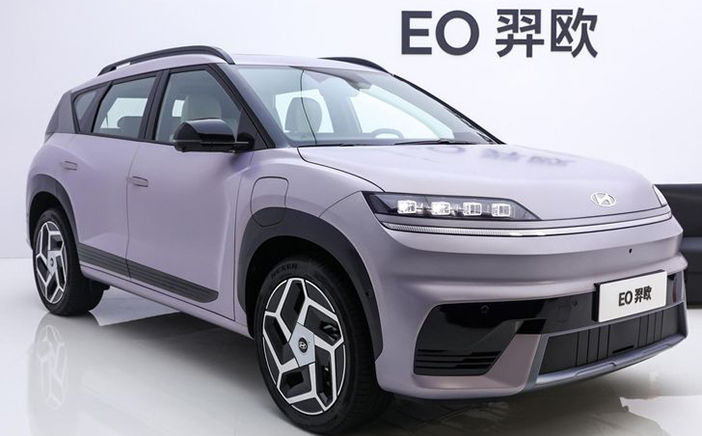
Beijing Hyundai launched its first all-electric Elexio midsized SUV in October last year, displaying its renewed signal to widen its footing in the lucrative Chinese EV market. The vehicle, however, has made little impact there largely due to its ambiguous positioning in terms of its commercial value. The model is struggling to compete against price-competitive Chinese EVs, with just hundreds of Elexio’s having been sold there. This has raised concerns that upcoming models from Beijing Hyundai could face similar challenges if their positioning remains unclear: neither distinctly premium nor price-competitive. According to data from the China Passenger Car Association, Elexio’s monthly sales in China reached merely 221 in November and 228 in December. China was once one of the most profitable markets for Hyundai, with its auto sales surpassing 1 million vehicles in 2016, but the figure is on the steep decline. Beijing Hyundai’s auto sales fell to around 180.000 in 2024. “Chinese EVs offer advanced technology at a highly reasonable price, making it difficult for foreign brands to penetrate into the market” an industry official said.“For Hyundai, it will be essential not only to differentiate its vehicles from Chinese rivals, but also to lower prices to secure competitiveness. The Elexio looks to have failed to appeal to Chinese customers in both of the elements”. Hyundai plans to officially launch its electrification strategy for China at the upcoming Auto China 2026, which runs from April 24 to May 3. Last week, the carmaker held the launch event for its flagship Ioniq brand in Beijing, releasing 2 concept models for local customers. At the upcoming auto exhibition, Hyundai will unveil the design and key specifications for its Ioniq-branded mass-production models in China. The carmaker will also present its comprehensive road map to tap deeper into the Chinese EV market by covering not just the EV purchase to its after-sales services. The renewed push to China is in line with Hyundai Motor CEO Jose Munoz’s strong commitment to the market. In a letter to shareholders last month, Munoz shared the carmaker’s plan to introduce 20 new models in China over the next five years, and increase its auto sales to more than 500,000 vehicles there by 2030. Last year, Beijing Hyundai appointed Li Fenggang as head of its China operations. It marked the first time in 23 years that the company has named a Chinese national as president of the firm. “The move is widely seen as part of the carmaker’s efforts to strengthen its market responsiveness and better align with local customers”, another auto industry official said. +++
+++ A year after taking charge of ailing automaker NISSAN , chief executive officicer Ivan Espinosa has unveiled a makeover to freshen its aging line-up and set ambitious targets to boost U.S. and China sales to levels not seen in years. The Japanese automaker plans to reduce the number of models from the current 56 to 45 and streamline 80% of its volume into 3 main “families” of vehicles that are built on shared platforms and that are geared for its biggest regions, it said in a statement. The long-awaited strategy marks Espinosa’s first effort to reshape Nissan after scaling back its troubled, 2-decade partnership with Renault and, more recently, an aborted merger with Honda. The company is suffering from steep losses and mountainous debt, while its outdated range has failed to keep up with changing tastes and a shift to electric vehicles and hybrids in its key markets of Japan, China and the U.S. “This is how our portfolio strategy comes to life, anchored in profitability and built around a leaner, stronger line-up”, Espinosa told reporters at Nissan’s headquarters in Yokohama. As part of its reboot, the Yokohama-based manufacturer aims to sell more than 1 million cars each in the American and Chinese markets by 2030, reaching a level it hasn’t hit since its 2019 fiscal year in the U.S. and the 2021 fiscal year in China. It hopes to do so with fresher products, including V6-engine hybrid versions of its best-selling Rogue and a resuscitated Xterra for the U.S. The renewed push into hybrids comes after the company abandoned them in 2019, forcing it to sit out a recent boom in sales of petrol electrics by rivals Honda and Toyota. Unlike hybrids from those 2 peers, Nissan is using a technology it debuted a decade ago in its home market that uses a gas engine to charge batteries which propel the vehicle. Nissan said it will prioritize fast vehicle development and cost efficiencies in China, strengthening its all-electric vehicle offerings and using the country as an export hub to overseas markets such as Latin America and Southeast Asia. It plans to target those 2 regions with shipments of its Chinese-made N7 midsize sedan and Frontier Pro pickup. In Japan, Nissan said it will push deeper into smaller vehicles with a new compact car it expects to sell 550.000 units of annually by the fiscal year ending in 2031. The carmaker also reiterated plans to upgrade its advanced driver-assistance systems, starting with an enhanced version of its ProPilot technology in its latest Elgrand minivan due out this summer in Japan. That will deploy “end-to-end autonomous” technology by early 2028, which aligns with an announcement last year to upgrade cruise control and lane-keeping functions. +++
+++ RENAULT KOREA will begin production of next-generation electric vehicles (EVs) at its Busan plant starting in 2028, marking a central pillar of the automaker’s mid-term strategy to adapt to the accelerating shift toward electrification, its CEO said. As part of its broader product road map, the company also pledged to introduce one new model annually through 2029, aiming to strengthen its foothold in the Korean market with a more diversified line-up. In 2027, Renault Korea plans to debut its first software-defined vehicle (SDV), equipped with advanced artificial intelligence (AI) technologies. “We need to catch up on electrification for our brand in Korea, and our first fully electrified model will be produced in Busan from 2028”, CEO Nicolas Paris said during his first press conference since beginning his role in September 2025. “Renault Korea is also running toward our group-wide goal of reaching 50 percent in hybrid cars and 50 percent in EVs by 2030”. In recent years, Renault Korea has focused on reviving its sales through strategic model launches. The Grand Koleos marked the company’s first major initiative under this strategy, contributing significantly to its earnings recovery. Since its launch in September 2024, the model has recorded sales exceeding 50.000 vehicles within its first year. Building on this momentum, the company last month introduced its second key hybrid model, the Filante, with the goal of sustaining the success of the Grand Koleos. Since becoming CEO, Paris has been tasked with steering the company’s transition toward electrification while simultaneously expanding its hybrid portfolio. Renault Korea plans to equip its upcoming SDVs with Level 2++ autonomous driving capabilities, alongside a suite of AI-powered features designed to position the vehicle as an “intelligent partner” for drivers, the carmaker said. The company also intends to accelerate its evolution into an AI-driven mobility provider by strengthening technological collaborations with Korean partners. Regarding EV production, Paris emphasized that securing a stable and localized battery supply chain will be a top priority. He also praised consumers in South-Korea for their high level of technological sophistication and sensitivity to design trends, expressing confidence in the market’s unique characteristics. On a mid- to long-term basis, Renault Korea will position its Busan factory as a key production and export hub for its D- and E-segment vehicles. “What impressed me most upon arriving in Korea was the consumers’ keen awareness of advanced technology and contemporary design”, Paris said. “This distinct market environment reinforces our focus on delivering D- and E-segment vehicles with an optimal balance of innovation and sophistication”. +++
+++ In SOUTH KOREA , Tesla and BYD have emerged as the biggest disruptors on the imported car market, posing threats to established players, particularly to Volvo and Audi; 2 mid-tier premium carmakers that have recently lost their spots to the 2 rapidly growing electric vehicle (EV) makers, according to data and industry official. Tesla topped the list in the imported car sales between January and March by selling 20.964 EVs, according to data from the Korea Automobile Importers and Distributors Association. BMW Korea followed the list with 19.368 and Mercedes-Benz Korea came in third with 15.862 cars sold. Of particular note is the rapid ascent of BYD Korea, which ranked fourth by selling 3.968 EVs during the same period. Volvo Car Korea and Audi Korea followed the list with auto sales of 3.628 and 3.138, respectively, in the first quarter. Volvo and Audi, which have long cemented their upper mid-tier position in the imported car market, ended up losing their market spot to the Chinese EV maker, only a year after BYD Korea made its market debut in January 2025. Industry officials said there is still room for the 2 premium carmakers to win back their glory and surpass sales from BYD Korea, once their new strategic models make decent success here. Audi Korea pins its hopes on revving up its sales with the upcoming launch of the fully redesigned A6 sedan. The German carmaker is also scheduled to launch the third-generation Q3 this year. Volvo is also stepping up efforts to maintain its recent sales momentum, initiated by a strong promotional campaign for its EX30. The carmaker recently cut the price for the compact electric SUV by up to 7.61 million won ($5.111) here in response to BYD’s emerging presence and Tesla’s aggressive discount for its Model Y. The EX30 has since drawn strong responses from customers by securing 2.000 orders within just 2 weeks of the discount announcement. The carmaker has also launched its EX90, aiming to attract more customers seeking large luxury electric SUVs. “For now, Tesla’s price-competitive Model Y is enjoying unmatched popularity particularly from consumers in their 20s and 30s, making it difficult for such legacy automakers to reclaim their rankings in the short run”, an official from the auto industry said. “However, there is ample room for changes in the rankings, once new models from the traditional premium brands gain traction and the so-called Model Y boom fades”. +++